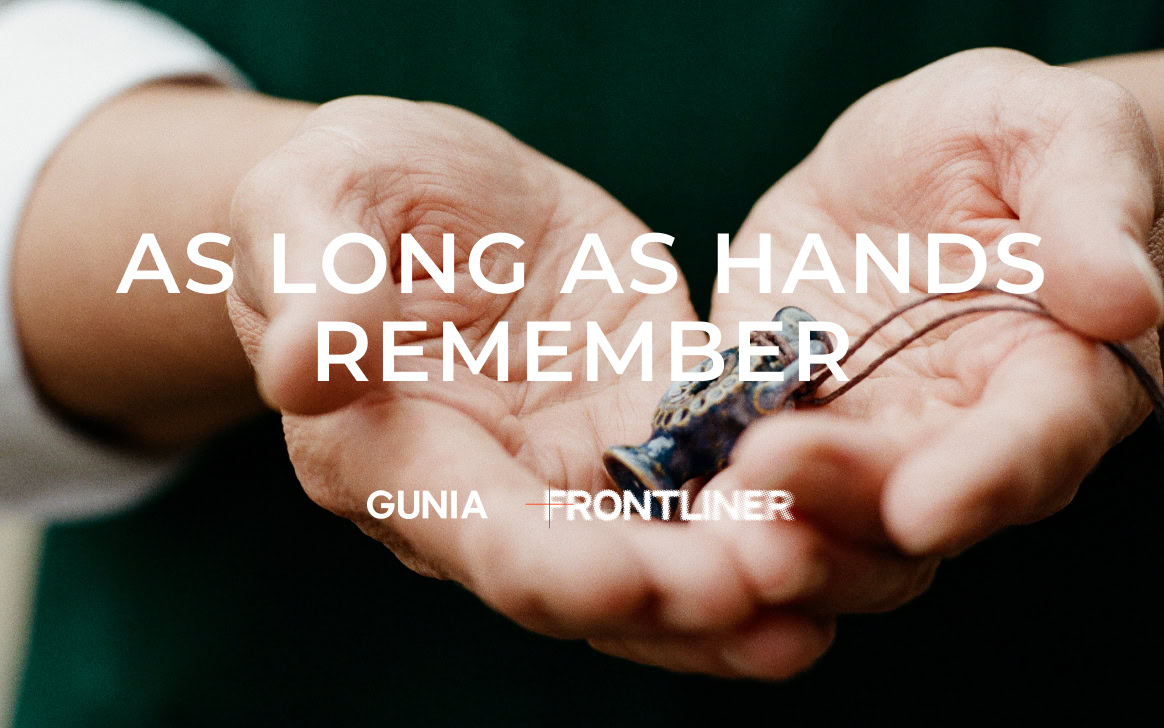
As long as hands remember: Stories of artisans shaping Ukraine’s modern renaissance
A Frontliner documentary series about the hands reviving Ukrainian crafts and weaving cultural memory back into daily life.
As long as hands remember, artisans aren’t just recreating old techniques. They’re restoring the knowledge that shaped Ukrainian identity. They’re weaving the nation’s history into its present.
Today, ancient crafts are being revived. Not so Ukrainians can live in the past, but so the future has something to stand on. Knowledge passed down through the centuries makes that possible. Every stitch, every clay jug, every keptar, every carved cross. These are not just objects. They are tangible proof: Ukrainians have spent centuries building their own culture, not inheriting someone else’s. Proof that we existed, we exist, and we will go on existing as a people.
When a craft disappears, we lose more than just a technique. We lose cultural continuity: the living thread connecting Ukrainians today with those who came before us, and those who will come after.
“As long as hands remember” contains ten stories about the people who won’t let the thread between generations break. These are the artisans shaping Ukraine’s modern renaissance. They aren’t pulling the country back into the past, they are restoring Ukrainian culture to its proper place in the 21st century.
Hutsul wood inlay work around the globe: The craftsman keeping his grandfather’s tradition alive
“Our culture will never disappear. We pass these crafts on to our children just as they were passed on to us. No matter how difficult things get, we must never forget our heritage.”
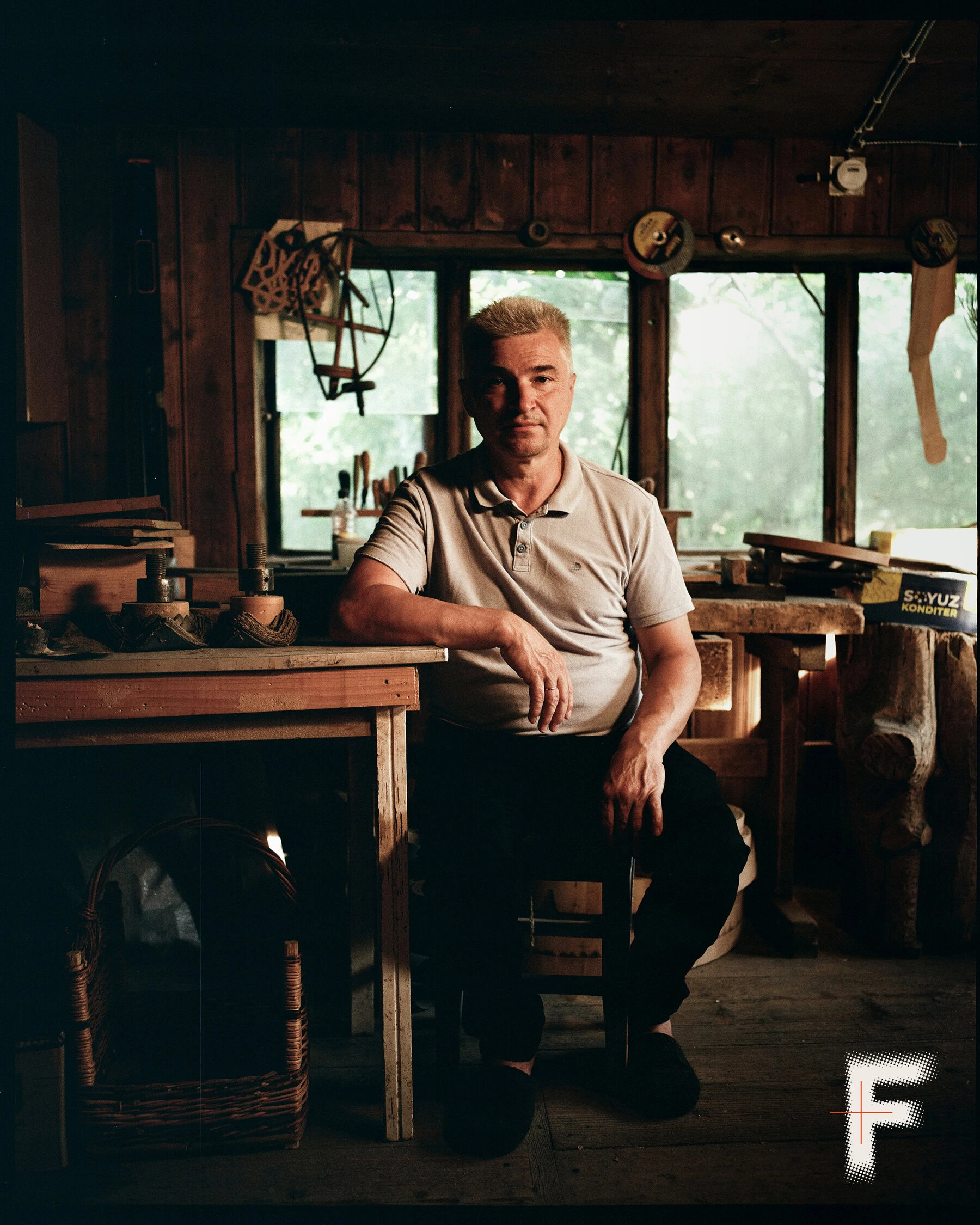
The workshop smells of wood. Sunlight falls across the workbench, an old table worn smooth at the edges. Here, in his native village of Richka, in the Frankivsk region, third-generation master Vasyl Hrepiniak revives the ancient craft of inlay work.
Carving history: How a veteran revives traditional banduras and kobzas
“Too often, people lack a foundation; they don’t understand good and evil, or why any of it matters. But once you understand where you grow from, you know where to grow to. You only get the motivation to do anything once you understand where you came from.”
The workshop in the Kyiv region smells of wood and dried varnish made from linseed oil and propolis. Wooden blanks are laid out everywhere, from which war veteran Ihor Bezverbnyi recreates traditional banduras and kobzas, following in the footsteps of Ukrainian master craftsmen of centuries past.

‘Not the nation’s DNA, but Ukrainian tradition’: Modern embroidery and an ancient craft
“It truly is a defining feature of our tradition. There have been changes over generations, but today, it’s hard to imagine any Ukrainian who doesn’t know what an embroidered shirt is.”
Late into the night, a light is on in the window of a high-rise building on the outskirts of Lviv. A desk lamp, a needle, and thread are essentials for artisan Hanna Rohatynska’s evenings. She is recreating yet another antique embroidered shirt.

A unique bridal accessory: Craftswoman revives the tradition of wax wreaths
“I want to revive our Poltava wreath, the one I remember from childhood, and reconnect with our roots.”
Preparing the materials for a wax wreath is a painful process: a needle pricks fingers until they bleed, the wax burns the skin, and her eyes grow weary. Artisan Oksana Pozniakova endures the pain and burns to create traditional Poltava wedding adornments.

Glass from the flame: The Ukrainian master keeping ancient glassblowing art alive
“Glassblowing is experiencing a revival, but very few people actually practice it in Ukraine. If the craft is not developed, it will simply die out.”
The master gathers a portion of molten glass from the furnace and blows into the blowpipe, rotating it continuously in his hands. Since ancient times, the blowing and hand-shaping of molten glass on Ukrainian lands has been called hutnytstvo. Now Marian Talanchuk is reviving this craft in Krasiv, his grandmother’s native village in the Lviv region.

From wheat fields to woven angels: Artisans craft didukhs from nurtured straw
“They smell like Ukraine. For some, they bring the scent of the Kherson steppes. For residents of Kharkiv, they smell like the frontier fields. To some it smells like home, and to others, like childhood.”
Didukhs, angels, and wreaths flutter in the wind while Liubov Lytovchenko sorts the rye stalks. Years passed before the straw finally yielded to her, but today, she does not even get splinters in her fingers. Now the artisan is passing down to her daughter Anna a craft that was born three thousand years ago.

A forgotten brand: A weaver brings woven kots back to life
“This craft is over 400 years old. It needs to be brought back from oblivion. The craft of kots weaving has a bright future.”
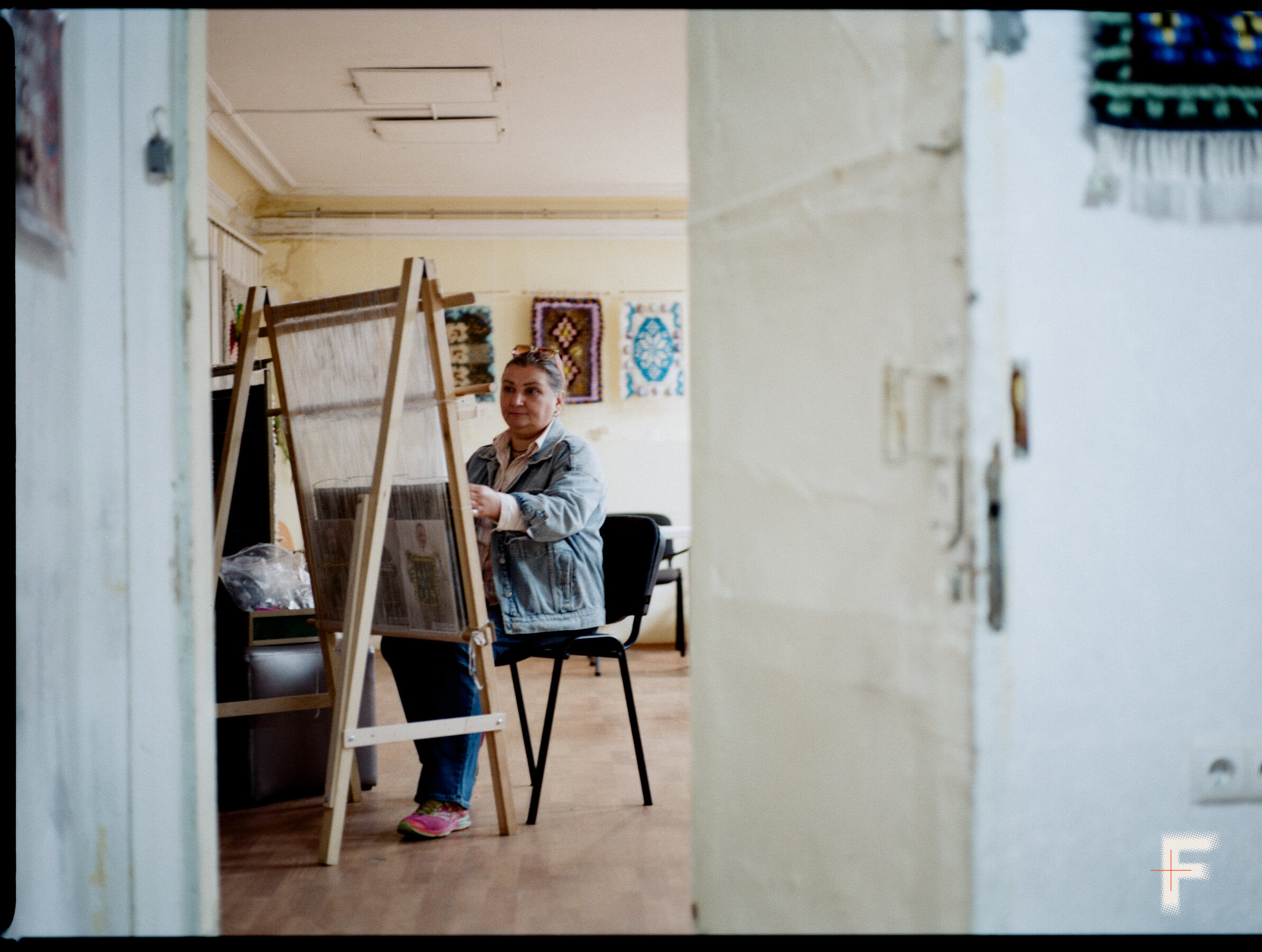
A traditional Kharkiv kots does more than keep people warm: it has to look right at home too. It takes a long time to select the right material. The base must be strong, and the thread must not fray or tear. Iryna Shehda weaves kots on an authentic loom, one that has kept the same look her great-grandmothers would have known.
The language of decoration: A Crimean Tatar potter pieces tradition together from the shards
“When a person is torn from their home, they lose more than land or a workshop. They lose a profession. And when you live 60 years in deportation, that continuity simply stops.”
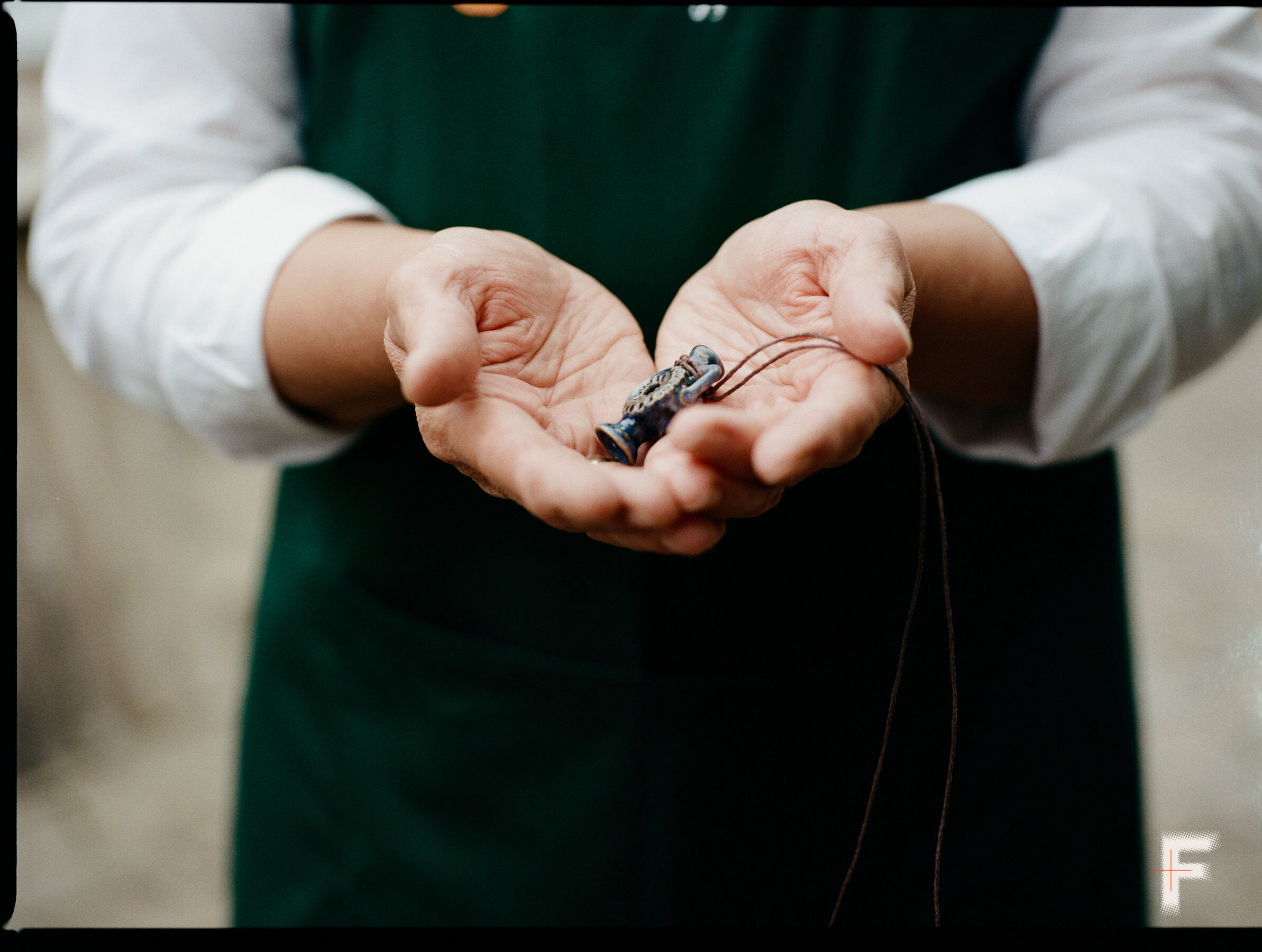
Dozens of plates, jugs and ceramic panels sit on wooden shelves in the workshop. Some pieces already shine under a layer of glaze, others remain matte and rough, still waiting for the kiln. Buckets of different clay types, jars of glaze and dozens of pottery tools line the wall. This is where Crimean Tatar artist and potter Rustem Skybin works. He studies the ornamental patterns, works with his signature technique, and gathers knowledge about a craft that had to be rebuilt after the deportation.

The craft of needle and leather: A furrier brings historical attire back to life
“I want to preserve furriery for future generations. And I really hope that there will always be artisans who are interested in this. I dream with all my heart that this craft will live on.”
Mykhailo Vintoniuk bought his first authentic Hutsul keptar for his 30th birthday. Keptars are traditional sleeveless sheepskin coats that have long been worn in the Prykarpattia region. At that time, Mykhailo did not sew sheepskin coats himself. Instead, he earned a living working in construction. And then one day a single vintage photograph changed his life. Now the artisan is reviving furriery and has already made more than 400 keptars.

Pottery takes years to mature: How a family of potters craft ceramic animals
“It comes from tradition. You need a trained eye and knowledge of the craft’s history. If the proportions are off, it’s no longer an authentic Opishnia lembyk.”
Clay bulls, rams, goats, and roosters were once Ukraine’s calling card abroad. Today, only a handful of people still know the craft. In the Poltava region, Oleksandr Shkurpela makes lembyky. He has also passed the thousand-year-old tradition of shaping zoomorphic vessels onto his eldest son, Anatolii.
***
“As long as hands remember” — a documentary multimedia project
Created in partnership between the Ukrainian media outlet Frontliner and the Ukrainian design brand GUNIA.
Project team:
Reporters: Alina Evych, Mariia Lavriv, Ruslana Sushko
Photographers: Anna Zubenko, Marharyta Fal, Marysia Mianovska
Videographer: Ivan Baliuk
Video editors: Ivan Baliuk, Yevhen Chak
Producers: Alina Bozhniuk, Mykhaylo Palinchak
Translators: Vladyslav Tsurkov, Svitlana Urbanska, Yuliia Yakibiuk
English-language editor: Irena Zaburanna
Digital team: Katarina Bouchen, Valeriia Dolia
Concept by: Yelyzaveta Kovtun
***