Pottery takes years to mature: How a family of potters craft ceramic animals
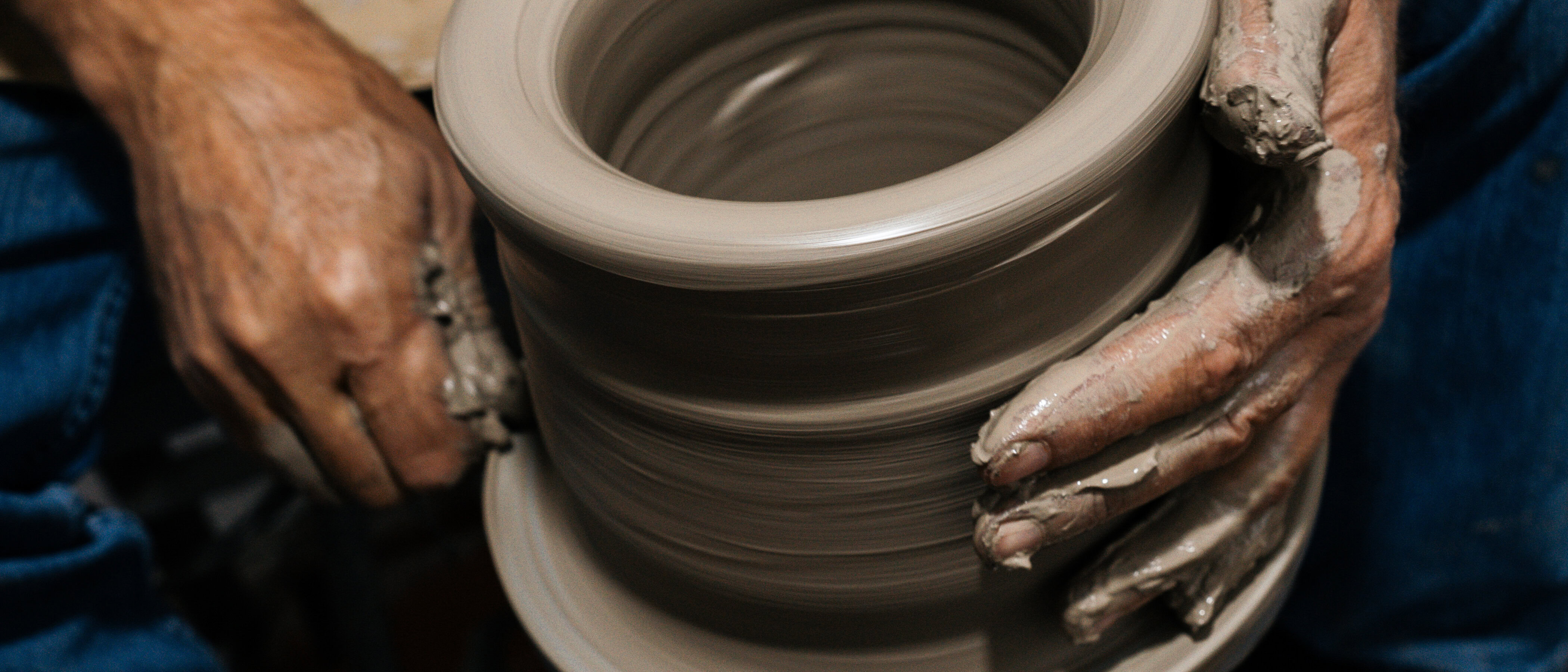
Rough, cracked hands, white with clay and weathered by years of pottery, knead the pliable clay. The master’s hunched back goes stiff within the very first minutes of work, but there is no room for distraction. If he pauses for even 10 minutes, the unfinished clay ram will turn into a dry, useless mass. Weeks of preparation along with kilograms of aged clay will go to waste. So with one hand, Oleksandr Shkurpela wipes the sweat from his forehead, while the other continues pulling the vessel. Frontliner witnesses firsthand how raw clay is transformed into a traditional lembyk in a Poltava workshop.
In the Poltava region, ceramicists began making lembyks at the beginning of the 20th century. Clay bulls, rams, goats, and roosters became a calling card of Ukraine abroad, cementing Opishnia as the country’s pottery capital.
[Editor’s note: Lembyks are traditional Ukrainian zoomorphic ceramic vessels.]
Following the collapse of the Soviet Union, thousands of artisans who made zoomorphic vessels were forced to find other work when the Khudozhnii Keramik (Artistic Ceramics) factory shut down. Ceramicist Oleksandr Shkurpela was working there when it happened. He then began extracting his own clay and making decorative pottery. Few potters dared to take such a step, as working with ceramics was difficult, demanding, and costly.
People stepped in to support us,
and that’s the only reason we didn’t give up,
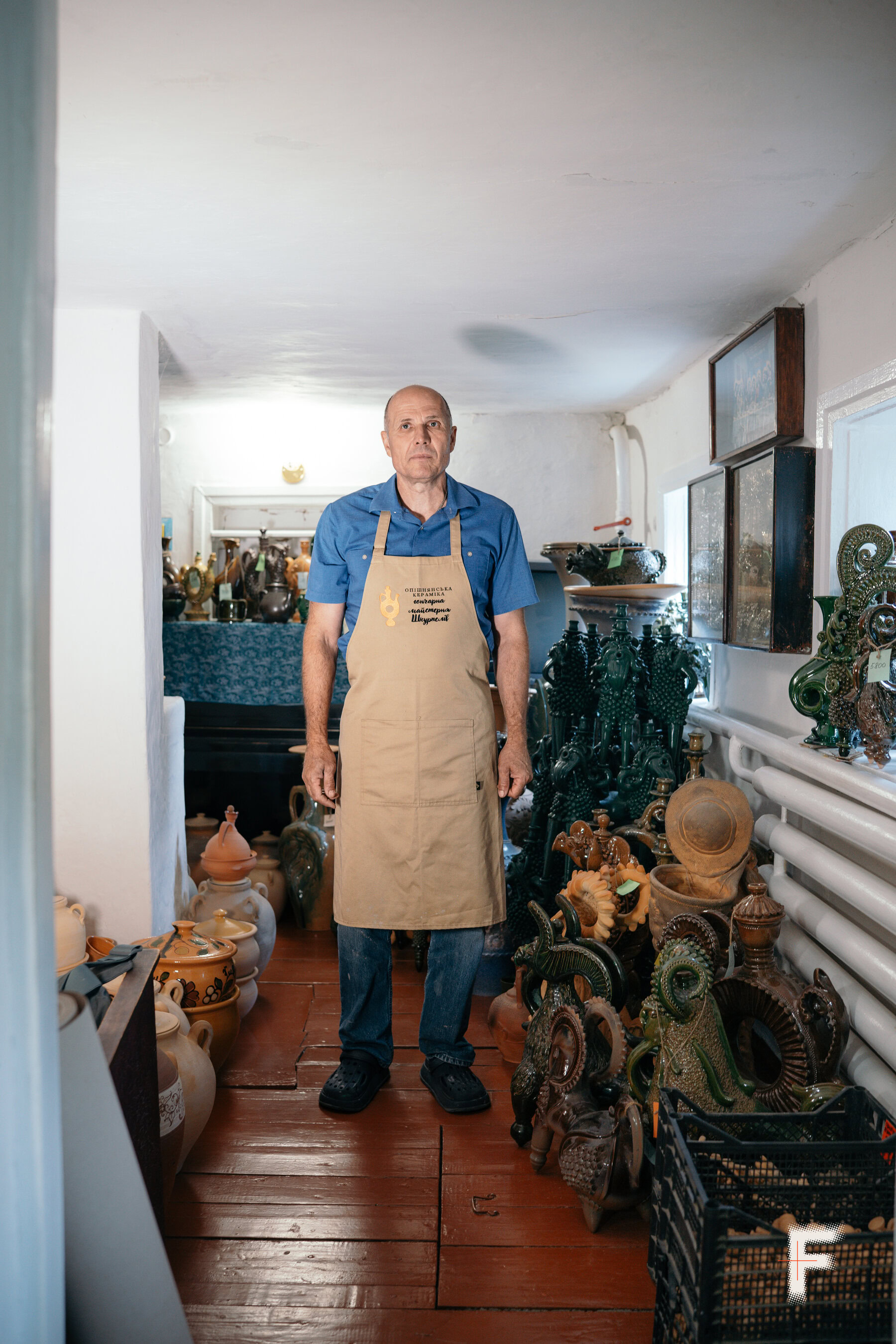
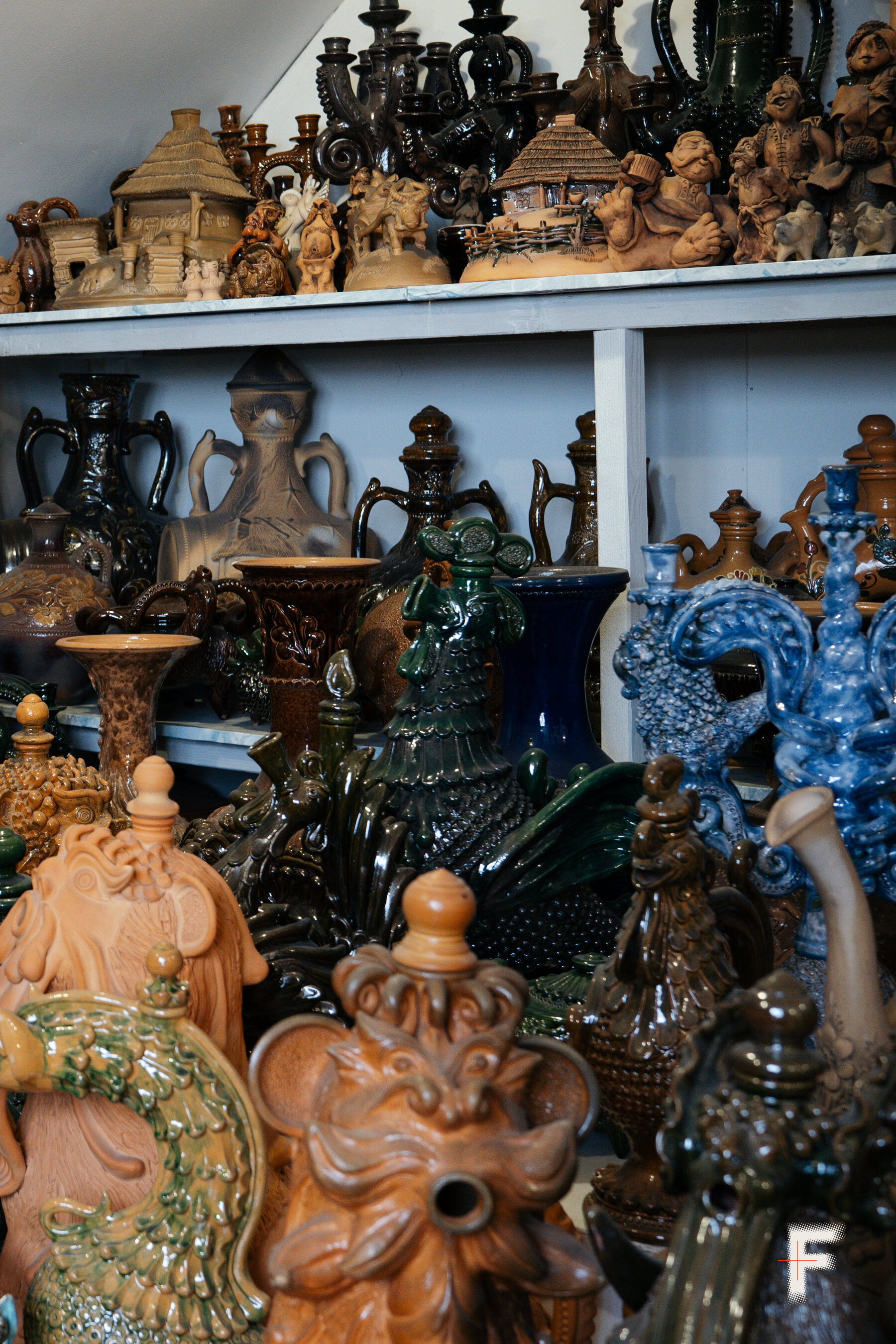
“At first, I teamed up with my child’s godfather. Together, we shaped the pottery, extracted the clay, and prepared it. Later, we went our separate ways. When the war broke out, we even thought about quitting pottery because of all the problems with clay. I wanted to join the Territorial Defense, but they didn’t take me. Back then, people stepped in to support us, and that’s the only reason we didn’t give up,” the artisan says.
Oleksandr and Anatolii Shkurpela, a father and son from the village of Opishnia, have been passing down the craft of pottery from generation to generation. They are among the few artisans who still know how to make traditional animal-shaped vessels.
We don’t just make this up out of thin air;
it comes from tradition.
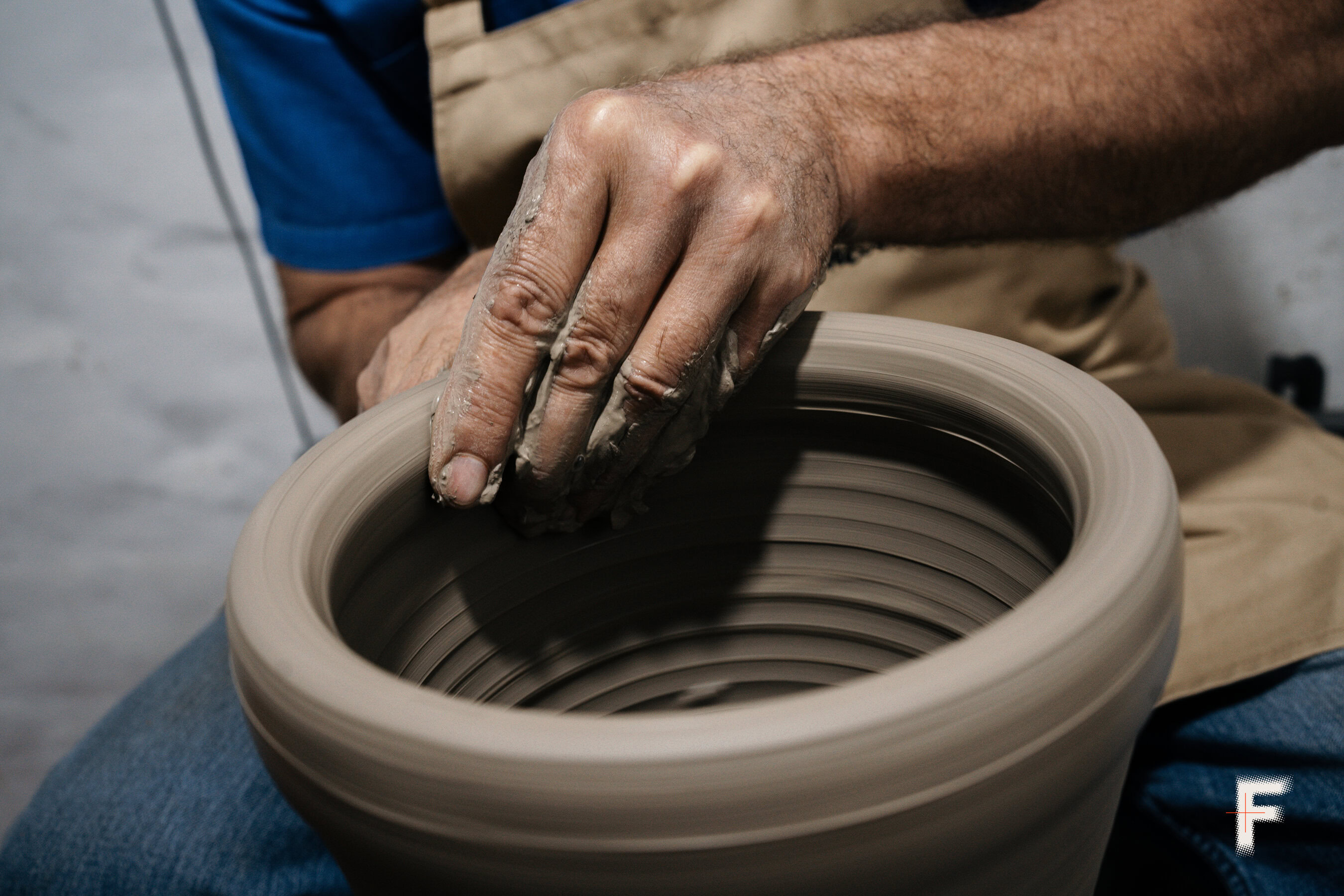
“It’s creative work, but there’s a lot of engineering involved: you have to sketch the lembyk and meticulously work out the patterns, proportions, and curves. We don’t just make this up out of thin air; it comes from tradition. You need a trained eye and knowledge of the craft’s history. For instance, if the proportions are off, it’s no longer an authentic Opishnia lembyk,” Oleksandr Shkurpela says.
There are almost no potters left who know how to make traditional lembyks
Today, only a few artisans truly master the craft. That is why Oleksandr Shkurpela passed down his knowledge to his eldest son, Anatolii. So far, he is the only one of five sons who has decided to dedicate his life to pottery. The youngest, Mykola, is still deciding whether he wants to pursue it.
“Opishnia artisans are known for making lembyks in keeping with tradition. But if you place two identical clay rams side by side, connoisseurs will immediately tell which one is mine and which one my father made. Every artisan has their own signature style,” Anatolii Shkurpela says.

Doing pottery alone is extremely difficult: you always need another artisan by your side to back you up, keep an eye on the vessels, and remind you when to take them out of the kiln. You have to build your life around the clay: once work on a lembyk begins, you have to finish it before leaving your worktable. You have to plan snacks and bathroom breaks in advance; you cannot even send a quick text or get distracted by social media.
Today, Anatolii and his father help each other, while Mykola is learning to make pottery. But even if his brother does not become a ceramicist, Anatolii plans to pass the craft down to his own children to ensure the lineage of artisans lives on.
Sculpting a lembyk takes several years of waiting
Sculpting a lembyk takes more than just manual dexterity — you need the right clay. In the yard of the Opishnia ceramicists lies the clay they dug up before the full-scale invasion. Sourcing it is difficult: deposits suitable for making lembyks have to be extracted from depths of 1.5 to 15 meters. It is impossible to tell whether it is suitable simply by looking at it. You have to send it to a laboratory for testing, and only then dig it out by hand, says Svitlana Shkurpela, Oleksandr’s wife. In the past, when such testing was not available, artisans had to search for it at random. If the clay failed to hold its shape, they used it for other types of pottery.
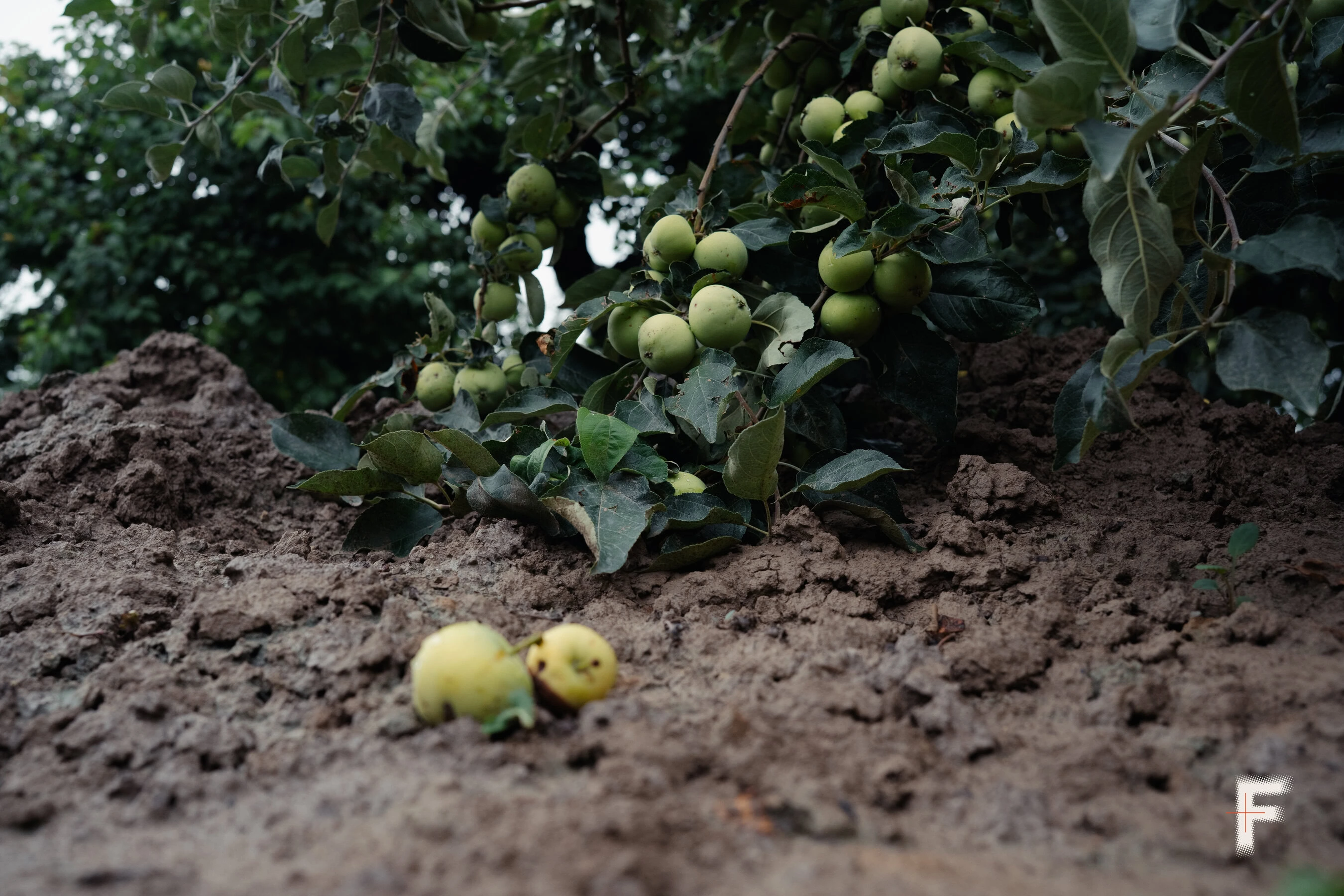
“If the deposit was right, you had to dig with shovels as the terrain wouldn’t allow machinery in. All our relatives and friends would gather because the clay had to be extracted in a single day: dig down to it, collect it, haul it up, and load it. If it rained, the clay would become too heavy, and we’d have to abandon it. There’s nowhere to buy it — no other clay is suitable for the work,” the woman explains.
After the clay is extracted, it has to sit for several years to reach the point where it can be sculpted into pottery. If you use fresh clay, the vessels will not hold their shape and will collapse.

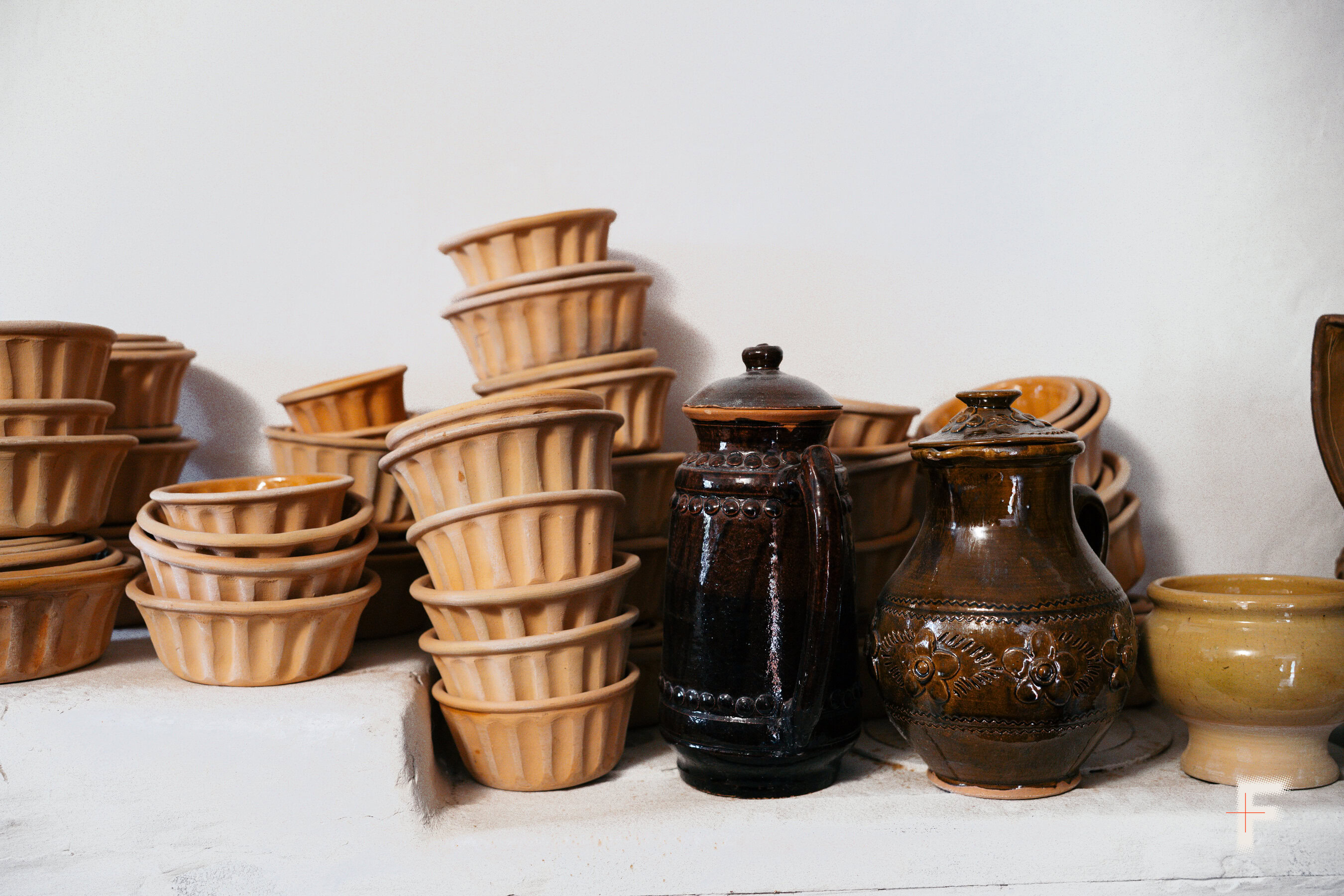
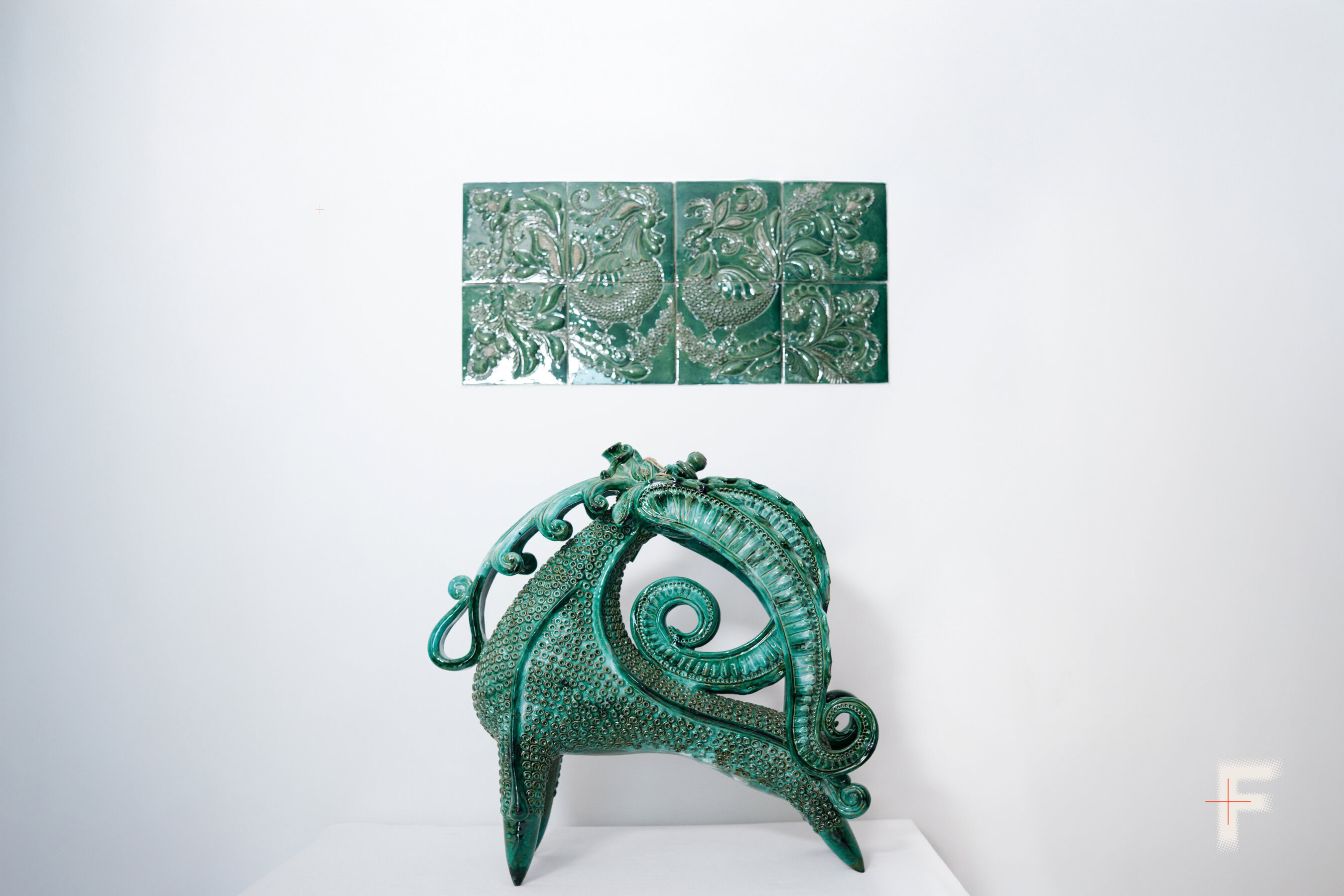
The clay must be kneaded to the right consistency so it can hold its shape. It has to be ground four times, and only then can it be shaped into lembyks. It takes artisans anywhere from a week to a month to make a single piece: small ones take a few days while large pieces require several weeks. The lembyks go into the kiln two to three months later, once the clay has dried and been painted. The glaze used to coat the pieces is natural: green comes from copper oxide, and brown from iron oxide.
Thousands of artisans knew and practiced this,
but now there are almost none of us left…
Even when the pottery goes into the kiln, it is impossible to predict how it will turn out when it is pulled out weeks later. The glaze takes on different shades depending on where the lembyk sits inside.
“The clay and the kiln always make their own adjustments. The sizes will be different, because the pieces shrink by 10 to 15 percent. It’s a very long and complicated process: creating a clay ram takes four years,” Svitlana Shkurpela says.
The craft became a family affair
Pottery is a craft that takes a lifetime to learn, yet even after decades, you’ll still feel that you have more to learn, says Oleksandr Shkurpela. It takes at least five years of practice to achieve mastery, and at least 10 years to make a traditional lembyk.
“I’m one of the last representatives of the old school that passed down this craft from generation to generation. I know everything: how to extract, process, and knead the clay, how to position the legs of a clay ram or lion, what thickness the handle should be, and how to attach it so it doesn’t crack. When I was young, thousands of artisans knew and practiced this, but now there are almost none of us left… I just don’t want this craft to end with my family line, with my sons,” the ceramicist says.

There are only a few artisans left who make traditional lembyks. Young people are not taking up the craft, as it takes at least five years to learn how to make lembyks. Sourcing the clay is a long process, and access to deposits is limited. What’s more, ceramicists can go years only dreaming of a vacation or time off. There is barely any time for family. Oleksandr and Anatolii stay in the workshop late into the night when sculpting lembyks. Their wives have to be their pillars of support, while their children have to come to terms with seeing their fathers only in the morning or at work. Few artisans who take up pottery are truly ready for such devotion to the craft.
Pottery is an endless pursuit of perfection,
of creating that one perfect piece. And in all the 43 years that I’ve been working,
I still haven’t made my finest lembyk. I still have it all ahead of me,
***
A multimedia documentary project “As long as hands remember”
Created in partnership between Ukrainian media outlet Frontliner
and Ukrainian design brand GUNIA.
***