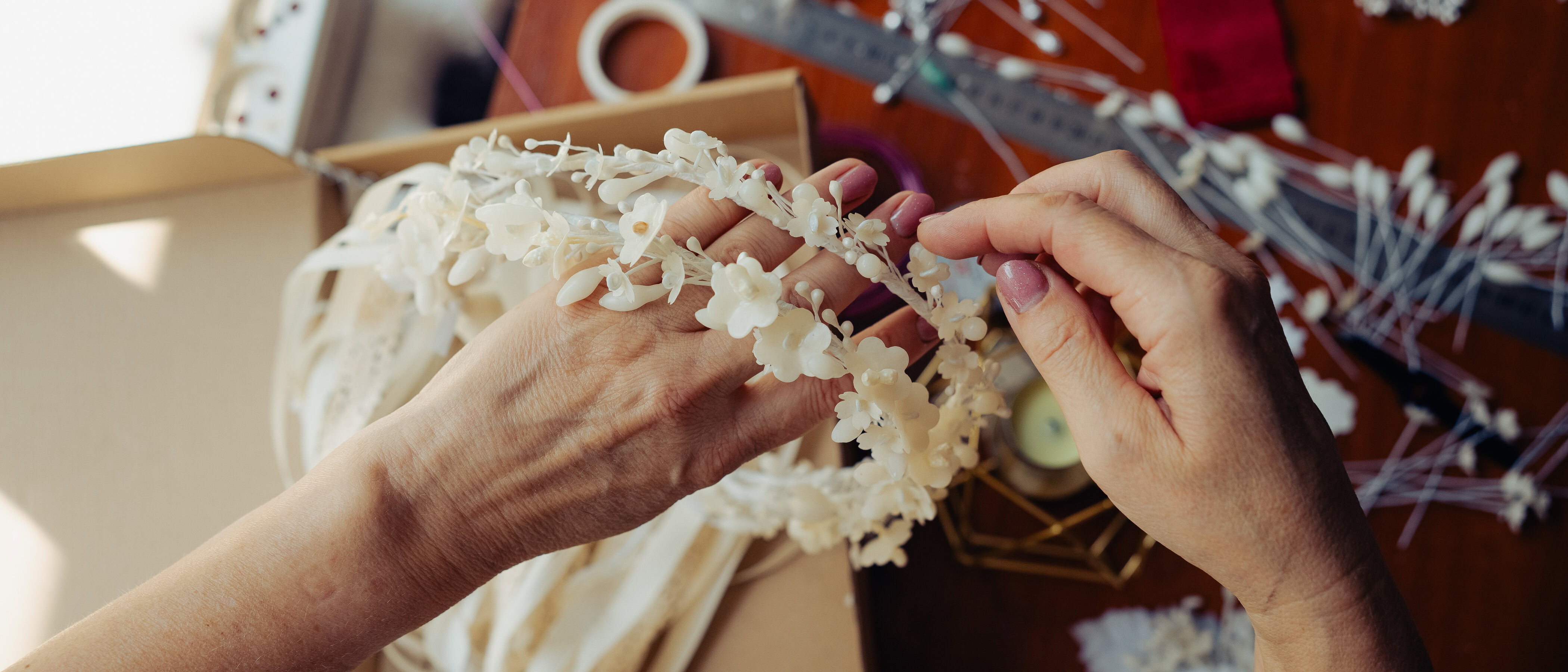
A unique bridal accessory: Craftswoman revives the tradition of wax wreaths
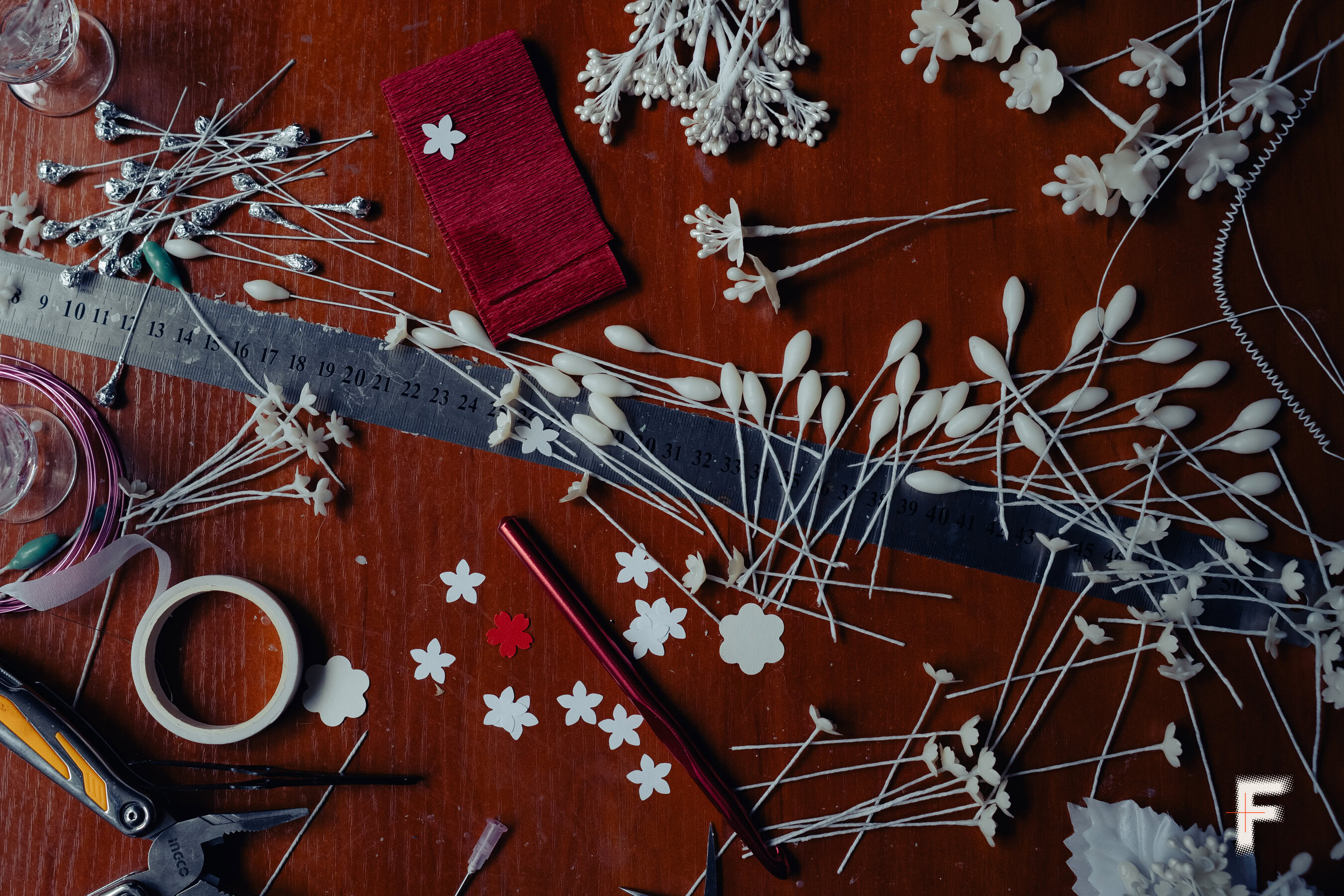
Preparing the materials for a wax wreath is a painful process: a needle pierces Oksana Pozniakova’s fingers until they bleed, hours of sitting make her back ache and go numb, and her eyes grow weary. She spends hours making paper flowers before immersing them in wax. She dips each flower into the wax and when she pulls it back out, hot drops burn her fingers. It takes days of pain and burns before the craftswoman can begin weaving the flowers into a bridal wreath. Frontliner witnessed the making of this traditional Poltava accessory.
Just a few decades ago, every bride in Poltava would wear a wax wreath. They served as a family talisman, which women would tuck behind the glass of their icon frames after the wedding, treating it as a relic. According to folk beliefs, the wax flowers from the wreath had healing properties, so they were gifted to children to keep them healthy. As a child, Oksana Pozniakova even collected the flowers that brides gave her.
When I attended weddings the greatest joy was getting
a flower from the bride’s wreath.
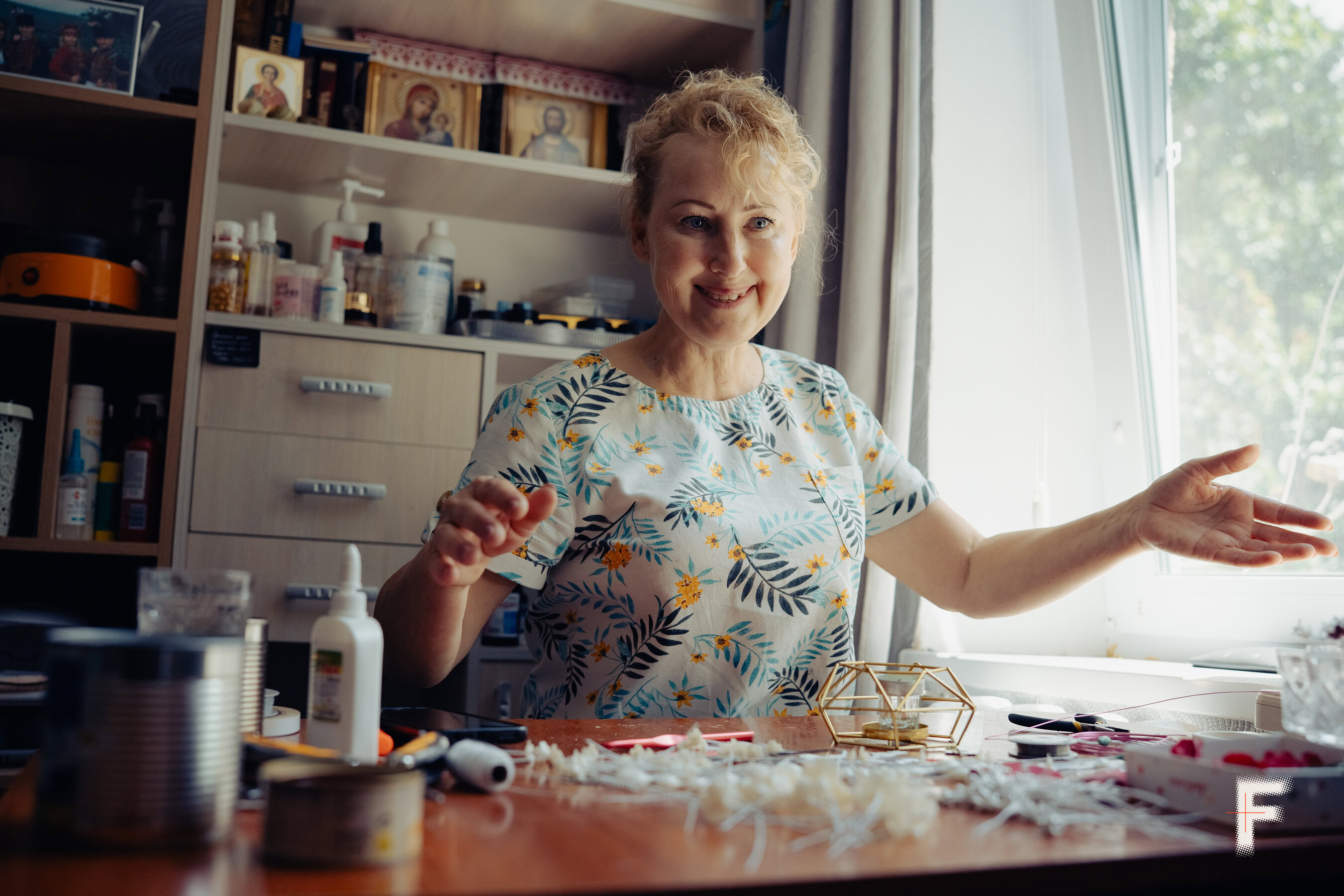
“When I attended weddings, what we called svaiby, the greatest joy was getting a flower from the bride’s wreath. Ribbons were woven into it as well: sometimes short, sometimes long. When they put on a long one, you’d walk around with it all day, trailing on either side of you. Oh, how happy I was back then… I had a wall hanging above my bed where I hung all the flowers and ribbons I had been given. My collection was huge! Our grandmothers used feathers in their wax wreaths, too, and they would dye them,” the craftswoman says with a smile.
Every wreath carries a drop of the maker’s blood
Oksana Pozniakova created her very first wreath and wax boutonniere in 2025 for her own son’s wedding. It took two tries to get her daughter-in-law’s dream wreath right. The flowers were too big the first time, so on her second try, Oksana joined two delicate wreaths together to make one. She figured everything out as she went, cutting her fingers on the wire, pricking them till they bled and burning them with hot wax.
“I was so determined, because I’d promised her, ‘Mom’s got this!’ I learned everything on the go: how to shape the center, make the waxed petals, coat the flowers in wax, and wrap the wire with just the right amount of tension so it wouldn’t come undone a few days later,” Oksana Pozniakova says.
I put a piece of my soul, my energy,
and a little bit of my blood into every wreath.
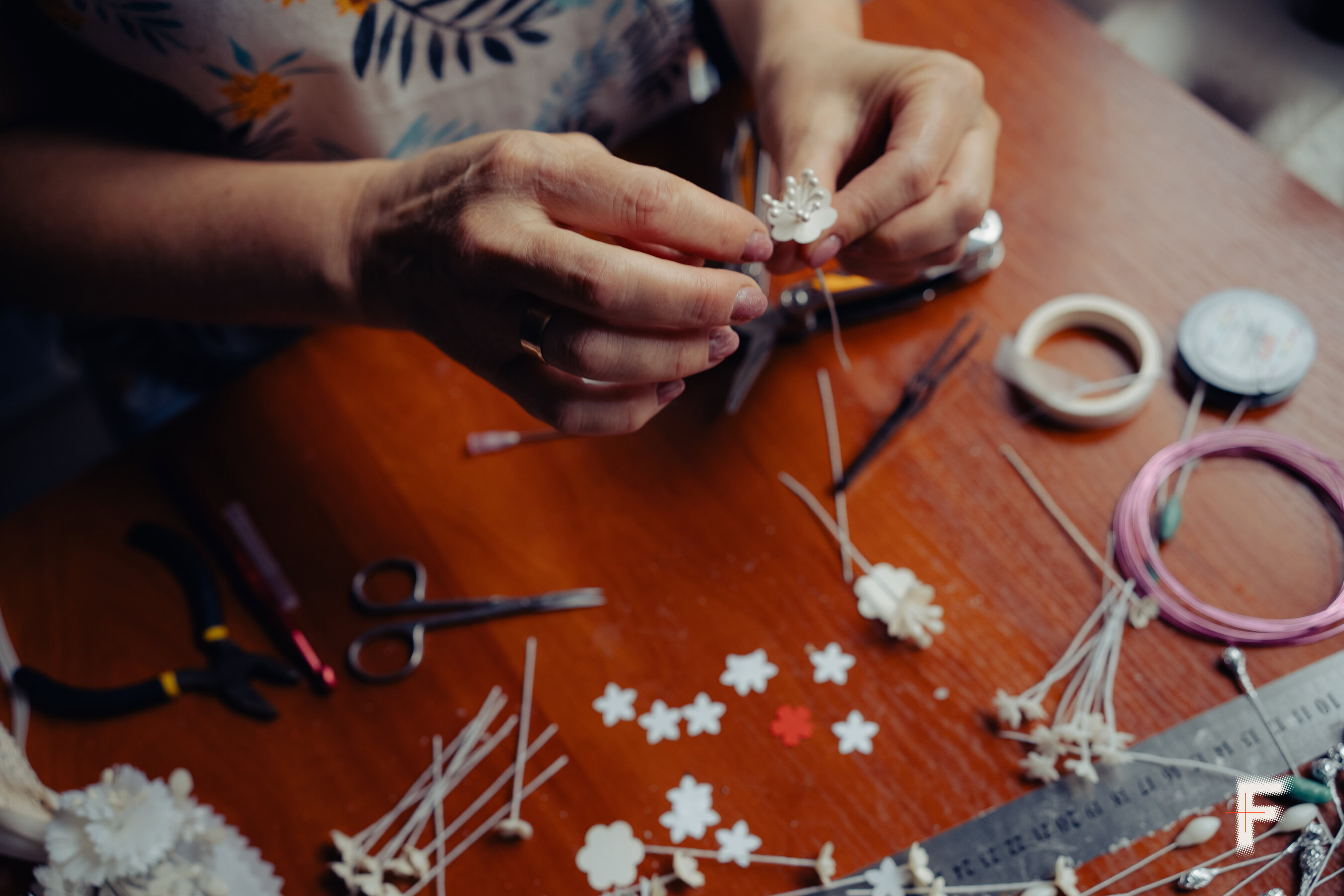
It’s still impossible to avoid injuries while making wreaths. Blisters constantly form on one’s fingers from winding the wire. You can’t pop them, to avoid infection, and for about a week it hurts just to touch things.
“One wreath requires several dozen flowers. I cut them out of paper using a stencil, then I have to make a hole in each one for the wax caps. I pierce the hole with a syringe needle. I have to work quickly because it’s tedious work. The longer you sit, the more your back hurts. However, if you start piercing them too quickly, you’ll prick your finger. That’s why I put a piece of my soul, my energy, and a little bit of my blood into every wreath,” the artisan says with a smile.
Every wax wreath she creates is one of a kind, and she never makes them to order. As the craftswoman explains, the image she first imagines for a wreath almost always turns out different from the finished piece. While working, she reworks the flowers and their colors, and adds or removes ribbons. A client might not be pleased with that, but she isn’t willing to make a wreath that goes against her own aesthetic.
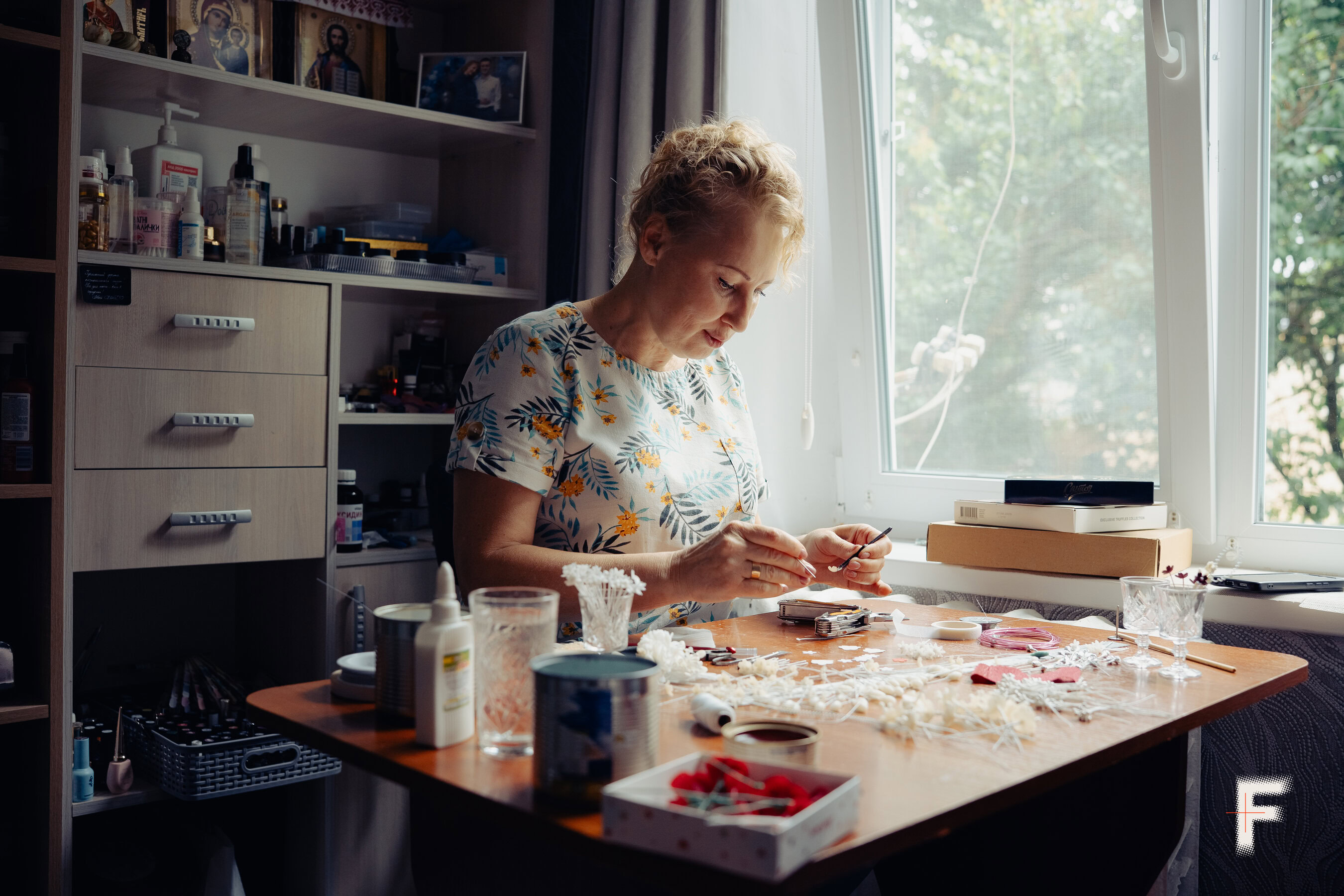
“Every wreath I make has something new in it. I’ll spot a wildflower outside, rush to recreate it out of paper, and try waxing it. If it turns out well, I make a whole set of these pieces, and then I might not even use one of them in a wreath. It could go the opposite way as well: I’ll cover the entire wreath in just those flowers. I like experimenting with size, too. Sometimes I want a wreath to look soft and delicate, with tiny blooms; other times I want it grand, almost like a crown. Girls just pick whichever one speaks to them,” she says.
Making waxed wreaths requires taking care of health
There’s no way to predict how long a wreath will take to make. Some days Oksana finishes one within a single day; other times, a wreath remains unfinished for a whole month. Winter is when the work goes faster, since there’s no gardening to take care of. In the summer, however, she also has to tend the garden, gather the harvest, and put up preserves, alongside her main job as a manicurist.
Sometimes it’s one in the morning, and I’m still making a wreath
because I’m totally fired up. But give it an hour, and that spark
just dies out. Sometimes I wake up in the middle of the night
and spend two hours just thinking about what kind of wreath to make next,
building the whole composition in my head,
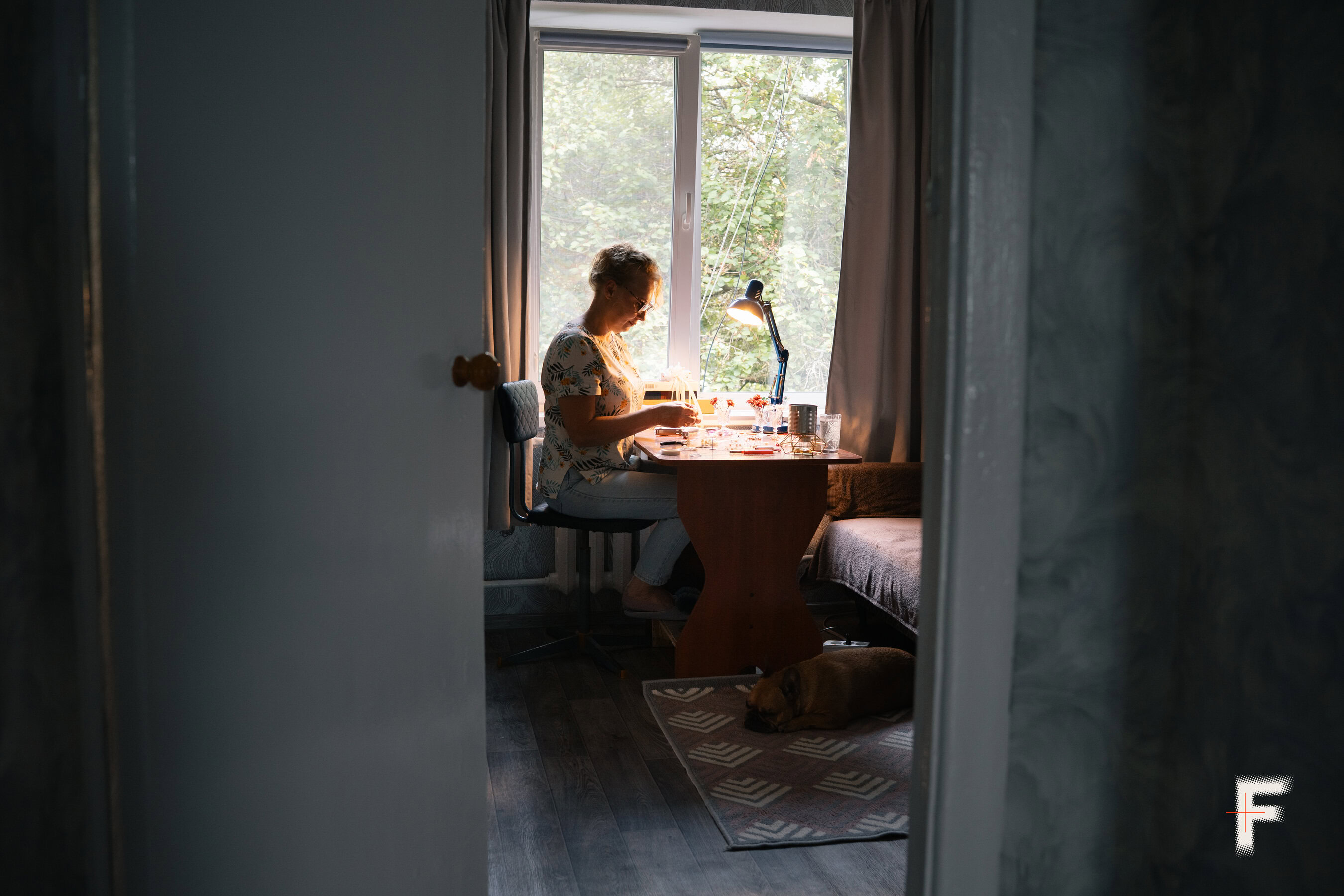
Painstaking wax-wreath work takes a heavy toll on the body. Last year, a craftswoman had to spend months lying flat on her back: her sedentary job had left her in that much pain. After a long course of treatment, doctors gave her a stark warning: if she kept ignoring her health, she’d have to quit wreath-making for good.
“This kind of work means you really have to look after your back and your health. So every morning, without exception, I do an hour of stretching and yoga. While I’m working, I keep my back straight: no slouching, or I won’t be able to straighten back up. And whenever I notice I’ve been sitting too long, I get up and move. I’ll grab a coffee, take the dog for a walk, or even hop on my bike for a ride,” the artisan says with a smile.
Wax wreaths fear no competition
In live streams on social media, the craftswoman shows how she cuts flowers and makes wax forms, assembles compositions, and picks ribbons for wreaths. Inspired by her videos, one viewer made her own wax wreath and messaged Oksana about it. She isn’t worried about competition: quite the opposite, she’s glad that the traditional craft is gaining popularity among artisans.

“I dream of having an exhibition of my wreaths someday, but that’s still ahead of me. Right now, I just enjoy following the pages of the girls who buy my wreaths. They’re all so beautiful, so unique. It’s not even about the wreath itself: it’s their energy. They’re choosing tradition, and even through a screen, you can sense their strength and warmth. It’s hard to explain, it’s something you just feel. I still feel a bit shy asking them how they felt wearing the wreath on their wedding day. I hope someday someone will share that with me,” Oksana says with a smile.
Oksana Pozniakova’s ultimate dream is to make the waxed wreath popular among Ukrainian brides nationwide, not only in her home region. She may even grow the business and look for assistants to help make the wreath components, since that stage eats up the most time and a lot of good ideas never make it past it.

I want to revive our Poltava wreath, the one I remember from childhood,
and reconnect with our roots. Every wreath is unique: it carries a soul,
a mood, and love. Even to those who buy it purely as decoration,
it serves as a kind of talisman. That’s what I put into
every flower I make with my own hands,
***
A multimedia documentary project “As long as hands remember”
Created in partnership between Ukrainian media outlet Frontliner
and Ukrainian design brand GUNIA.
***