Hutsul inlay around the globe: The craftsman keeping his grandfather’s tradition alive
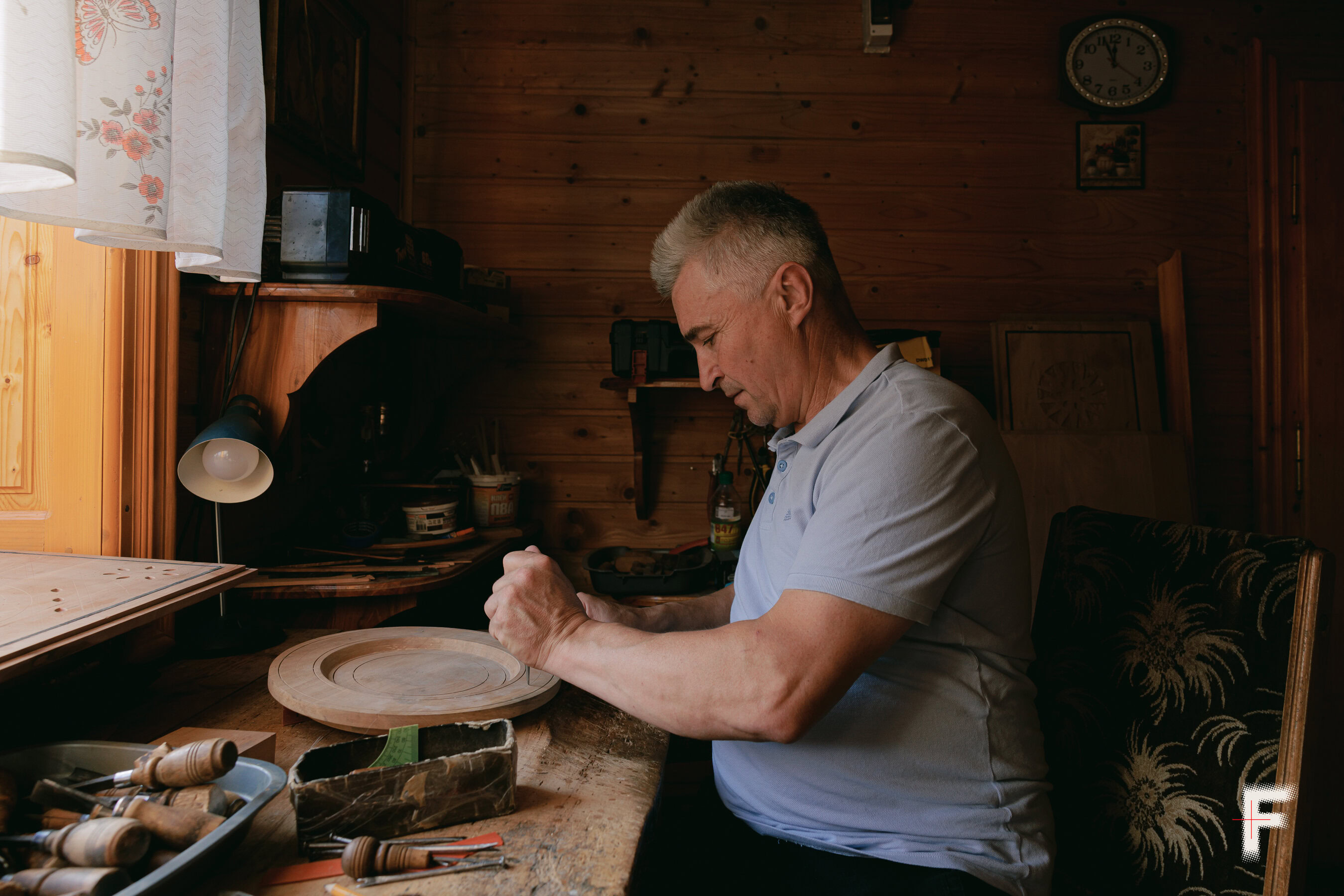
A chisel taps on wood as an old machine, in use for almost 50 years, keeps running in the village of Richka in the Frankivsk region. Every day, Vasyl Hrepiniak wakes up at 8 a.m. and walks to his favorite spot in the family yard. Once the site of his grandparents' house, it is now a workshop he built himself. There, together with his wife, he makes wooden items with inlay work. Frontliner's reporters visited the craftsman to see firsthand how he is reviving this ancient craft.

I make these things with all my heart,
and I’ve never once regretted learning this craft.
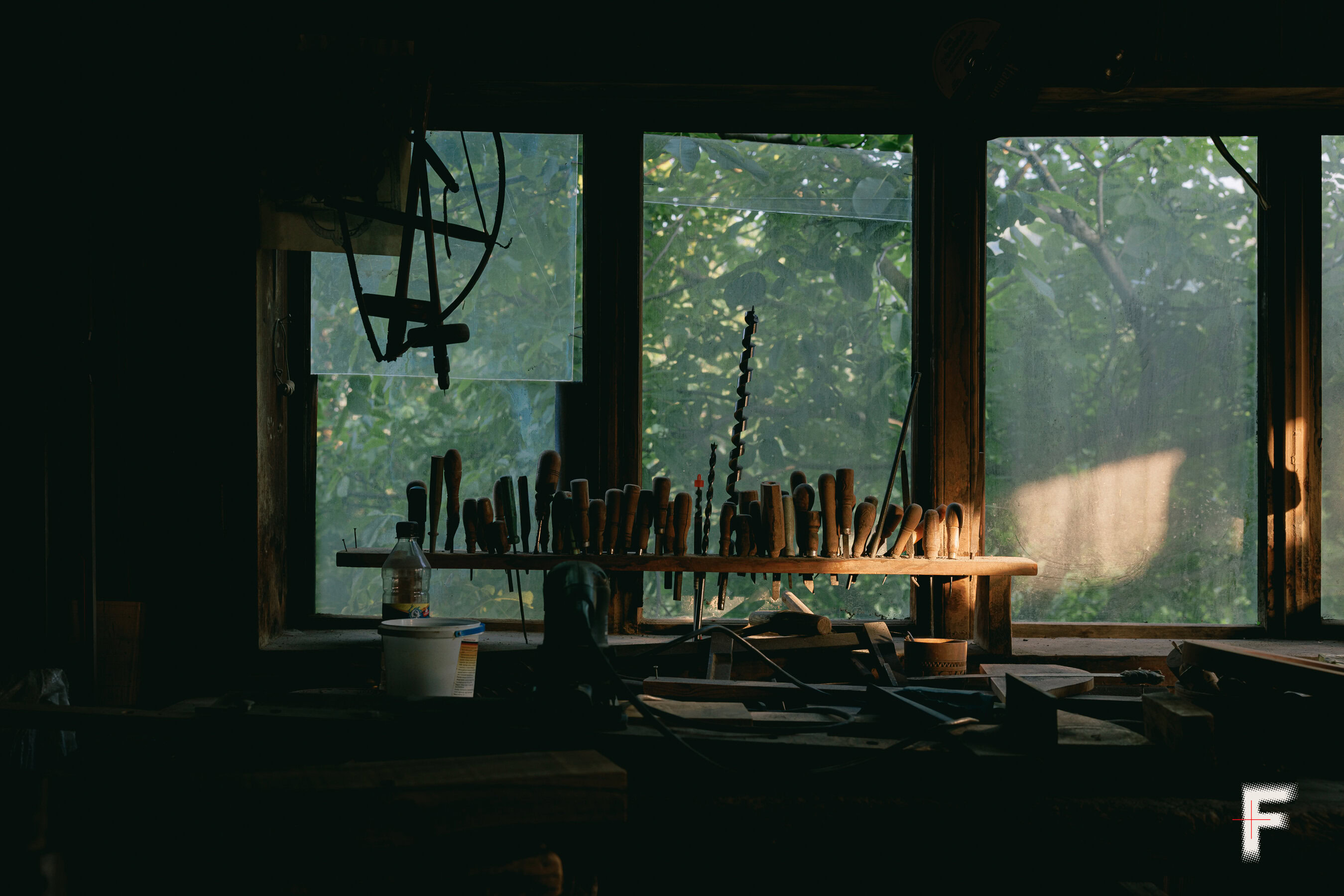
The fragrance of wood fills Vasyl’s workshop. Sunlight illuminates the workbench: an old, worn-down worktable whose edges have been smoothed by years of use. Since childhood, Vasyl Hrepiniak has lived amid this almost magical combination of mountain air, the scent of wood and the steady tapping of a chisel against timber. He is a third-generation inlay craftsman. More delicate than traditional woodcarving, inlay is the art of decorating wooden objects with intricate patterns made from different materials.
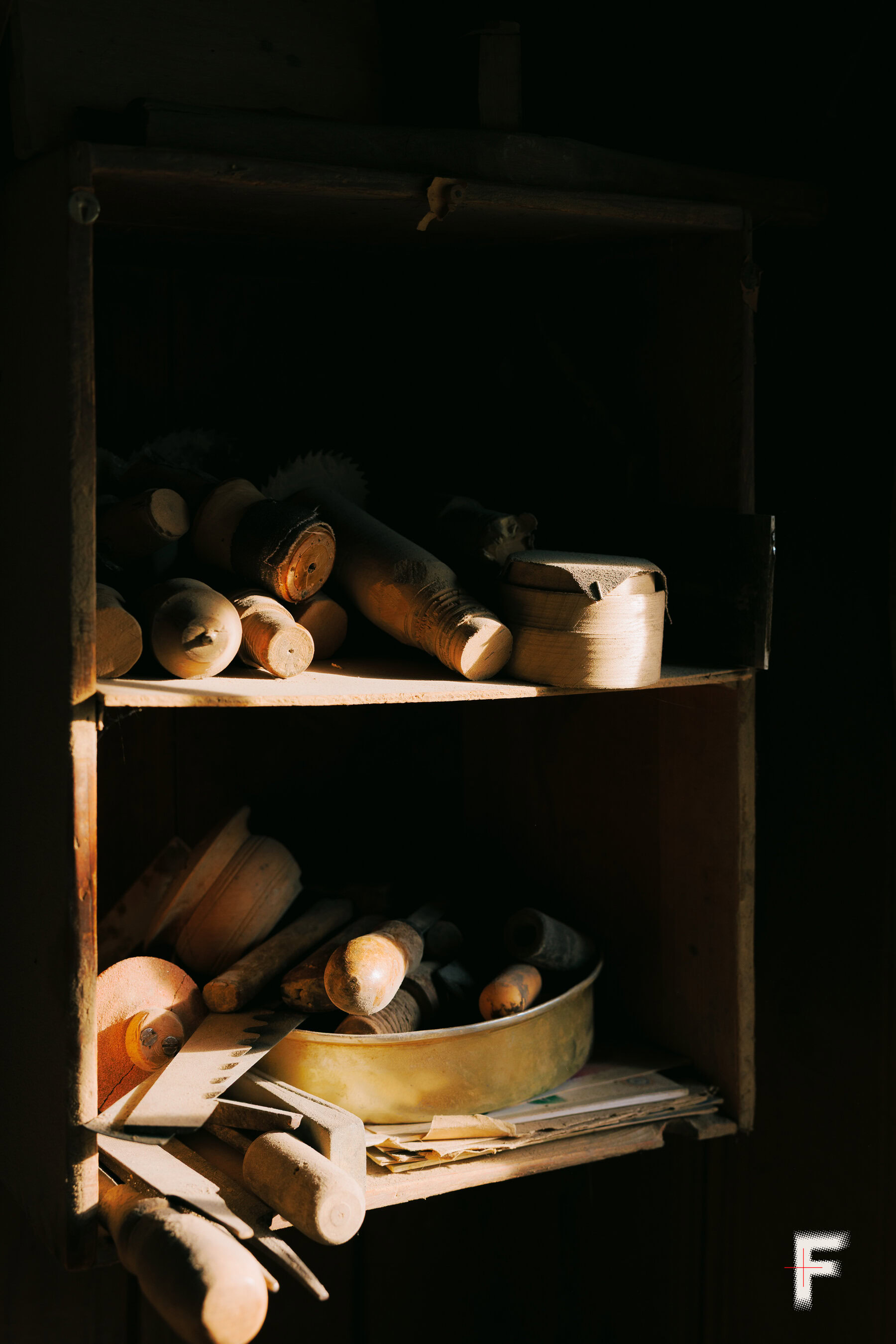
His workbench is covered with chisels in different shapes and sizes, small tools and scraps of wood. There is also a part of his latest project, a large wooden chest. Traditionally, parents would give such chests to their daughters as part of their wedding dowry: a piece of home to take with them into a new life.
Vasyl has heard people say that there is nothing difficult about his work: just sketch something on the wood and start tapping with a chisel. But Vasyl is as patient with such remarks as he is with his craft, which requires perseverance and precision.
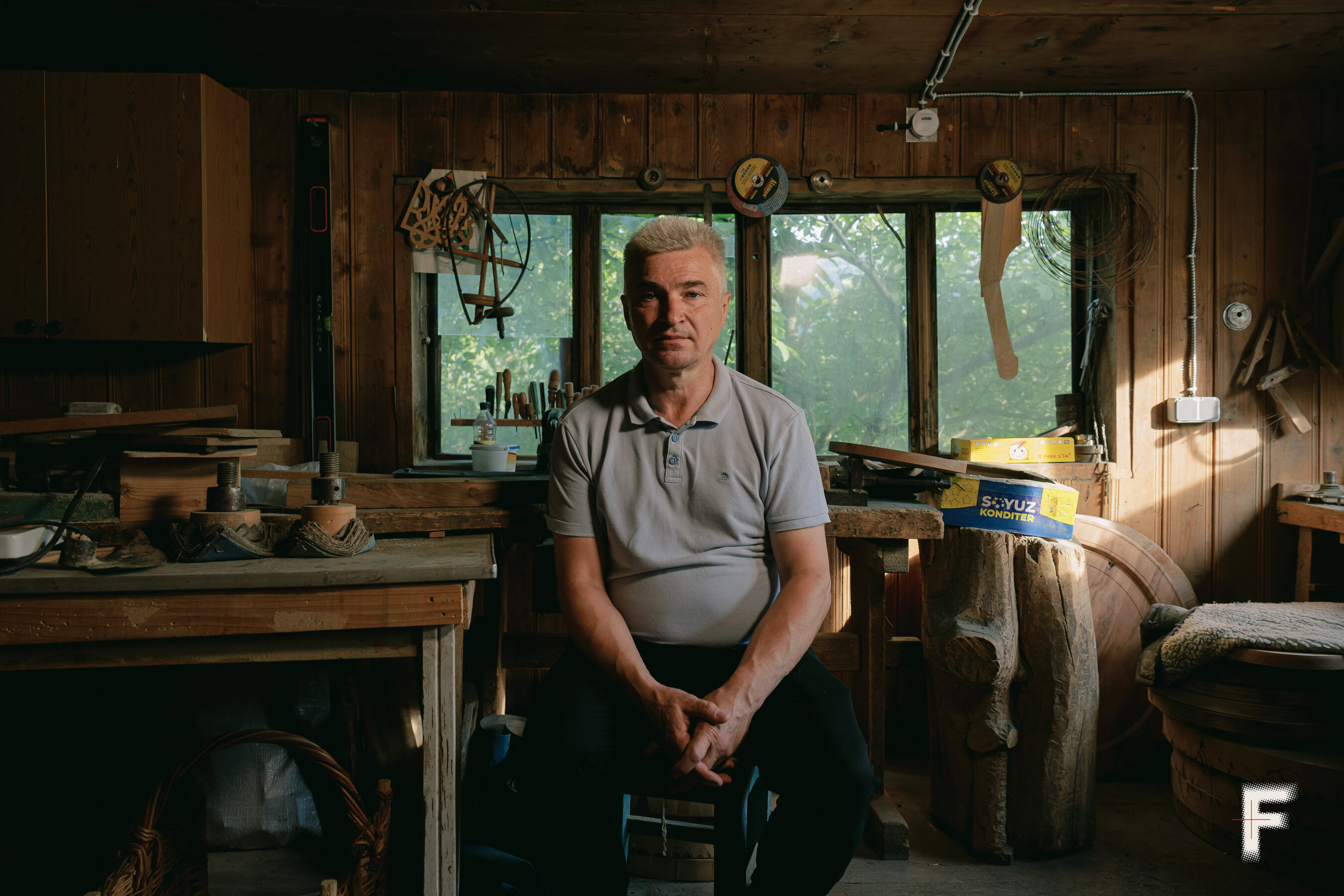
“I make these things with all my heart, and I’ve never once regretted learning this craft. I want to make a big, beautiful table and bed to pass down to my kids, so they’ll know their dad made them. My hands know this work so well that I can do it almost by feel,” the craftsman says.
Chests, plates and inlaid beds
Inlay is an ancient Hutsul craft. Traditionally, artisans made small household objects, mostly plates, powder boxes and small chests. But Vasyl and his father decided to create larger pieces. Several years ago, they made an inlaid bed that they sold for $8,000 to clients from Kyiv. Vasyl and his wife spent over a year building the second one.
[Editor’s note: Hutsuls are an ethnocultural group native to the Carpathian Mountains in western Ukraine, known for distinct traditions in woodworking, textiles and folk art.]
When you make something big, you can really see the result.
Once you sell it, you can really feel the money in your pocket.
The money from smaller pieces doesn’t stay with you for long,
but one large piece can bring in enough to build something.
We’ve got plenty of plans: we’d like to build a gazebo. Besides,
you can’t just sit around with nothing to do. You have to keep working,
Among his larger pieces are a table and a meter-tall inlaid Tryzub ordered by Ukrainians living in Canada.
[Editor’s note: Tryzub, Ukraine’s national coat of arms, a trident-shaped emblem dating back over a thousand years to Kyivan Rus.]

The diaspora from our region often says that if they don’t have
an inlaid item, they don’t feel like Hutsuls. They call, write
and tell me that these chests and plates keep them connected to home,
Some of the more unusual orders include inlaid baskets and clocks. Others opt for statement pieces rooted in Hutsul tradition: inlaid plates, icons and picture frames.
The wood takes 6 to 8 years to dry
Sourcing the right wood is one of the most important parts of making inlaid pieces. Only pear, walnut, cherry and maple are suitable. The craftsman travels through villages, sometimes covering dozens of kilometers a day, looking for the right trees and buying them from their owners. He then cuts them down, brings the wood home, strips off the bark and stores it in his attic, where it dries for 6 to 8 years.
Once you find a good tree, you’re set:
you’ve got something to work with,
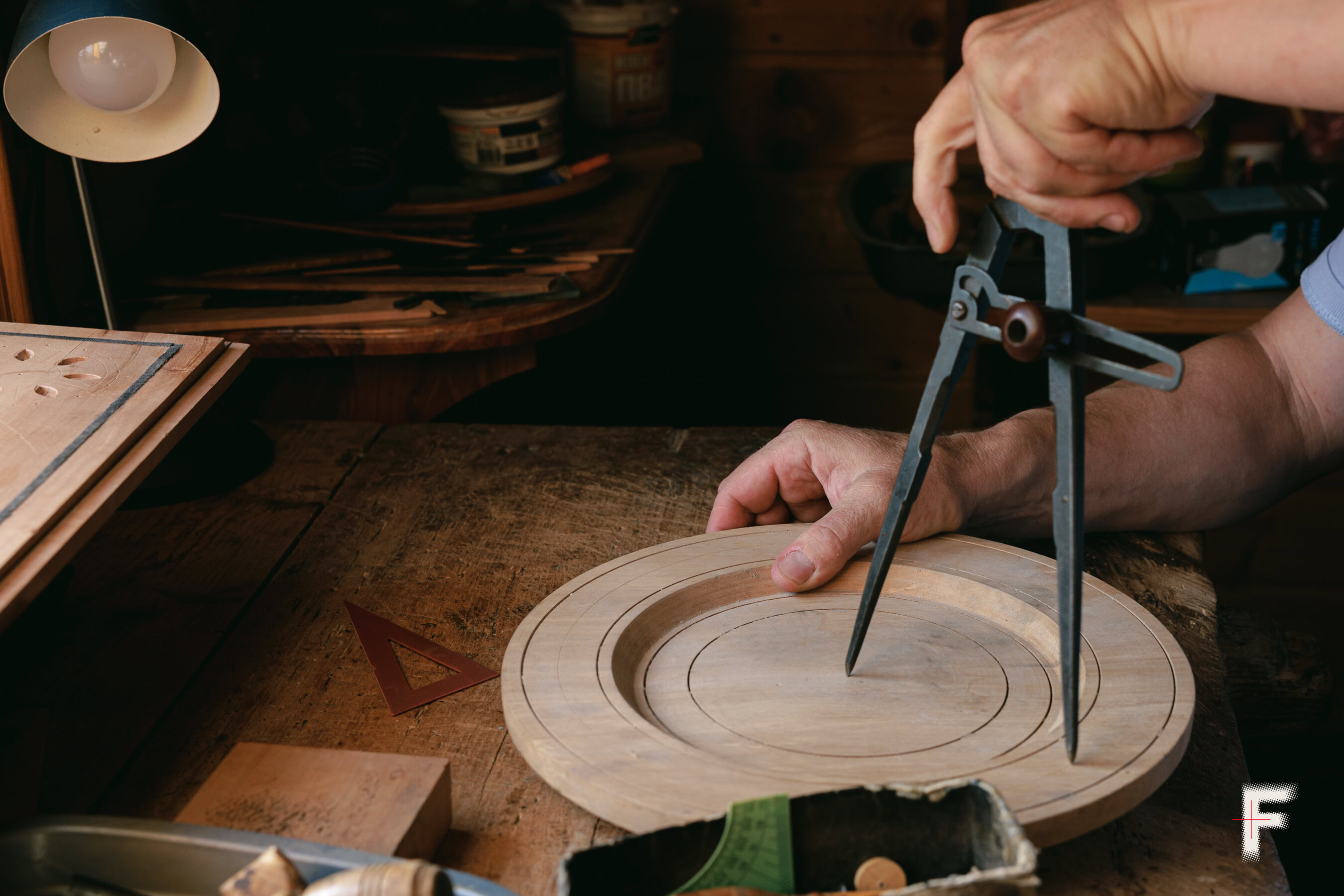
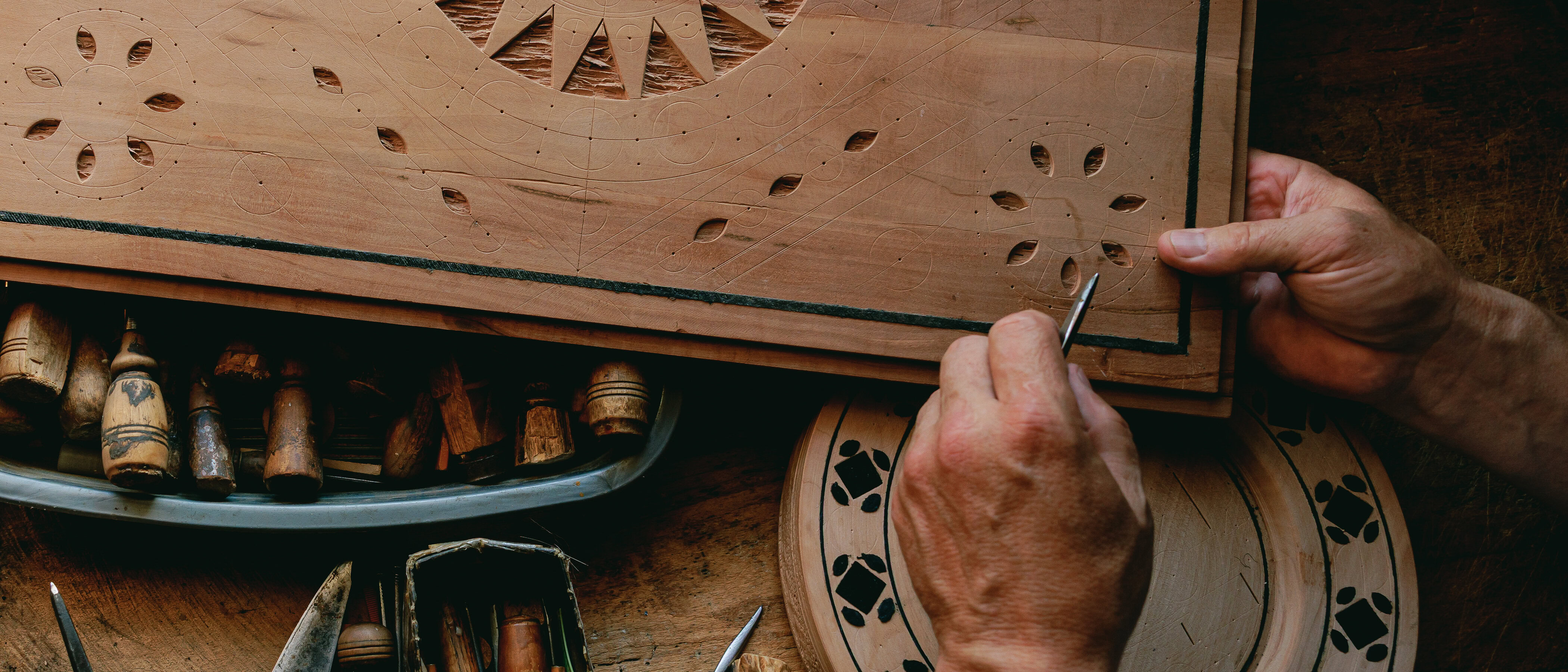
Vasyl starts by marking out the design, dividing a decorative wooden plate into eight sections with a compass. Vasyl’s concentration is absolute as he marks each intricate motif. Every millimeter matters: one wrong mark can disrupt the symmetry of the entire ornamentation. Once the design is marked out, he reaches for a straight chisel. With a steady rhythm of taps, he removes the wood, gradually bringing the recessed patterns to life. For leaf-shaped motifs, he switches chisels, tapping into the wood before clearing the cut pieces by hand. The finished piece is then sanded on a lathe. He has several of them, all passed down from his father and grandfather.
To decorate his pieces, the craftsman uses dyed birch, maple, artificial mother-of-pearl and metal. He then sands the piece again and adds patsiorky, as Hutsuls call beads.
More than 1,000 inlaid pieces created
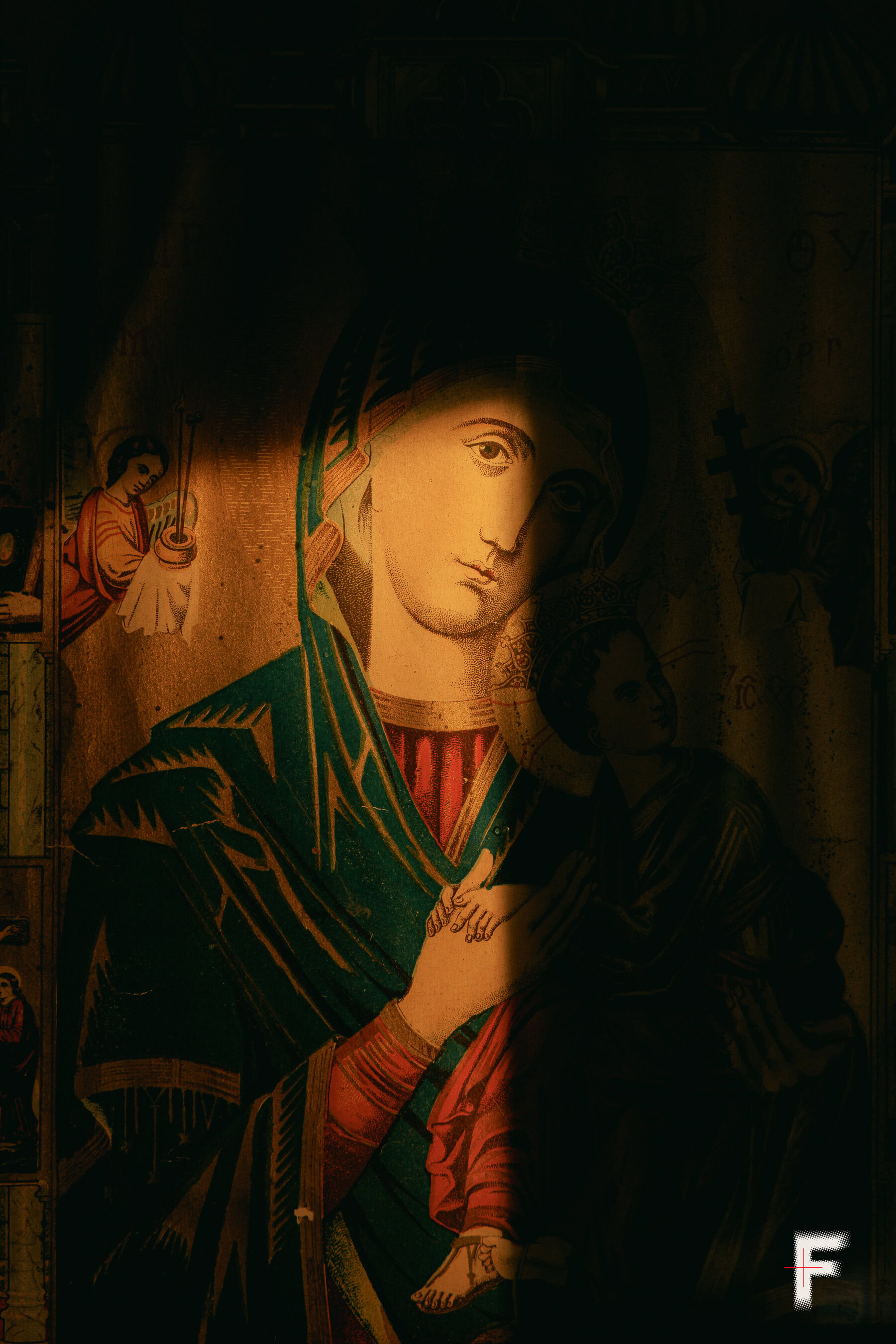
An icon hanging on the workshop wall catches the last rays of sunlight toward evening and gives the place an almost magical atmosphere. On another wall a portrait of Vasyl’s grandparents hangs. His grandfather was the one who passed the family craft on to him.
Grandfather Vasyl was also the first person to buy a piece from the young craftsman: a powder box Vasyl Hrepiniak made under adult supervision when he was only 10 years old. His grandmother would take his creations to the market to sell, so from an early age, Vasyl already felt like a businessman with his own money to spend on whatever he wanted.
When we went to the Kosiv market,
people would practically snatch the pieces from our hands,
After school, Vasyl spent every free minute in the workshop watching his father and grandfather work. They believed there was no better way to earn a living than with your own hands, and that belief became his, too.
Vasyl Hrepiniak spent nearly two decades working at a state art workshop in his native Kosiv district, in Ivano-Frankivsk region. Then perestroika began, and as the Soviet Union started coming apart at the seams, Ukrainians living abroad began returning home.
“My father and I worked day and night, sleeping for just two hours. But we were seeing results, so how could we not keep going? People would line up to come to us and buy something. Some even waited outside the workshop for us to finish a piece. When we went to the Kosiv market, people would practically snatch the pieces from our hands,” the craftsman shares.
Over 45 years of craftsmanship, Vasyl Hrepiniak has created more than 1,000 inlaid pieces. These days, he no longer needs to take his work to the market. People order his pieces in advance, pass his name on to their acquaintances, and that is how new customers find him.
They dream of making pieces for themselves
Everything Vasyl Hrepiniak has today, his spacious home, his workshop and the beautiful yard around it, he earned with his own hands and determination. He provided his children with a good education. His son now works for a travel company in Kyiv, while his daughter designs embroidery in their native village of Richka. He even built a small chapel near his home for his neighbors, giving them a place to come and pray.
Vasyl is not one to boast about himself or his creations. The thing he is most proud of is meeting his wife, whom he courted for years and who has since become his indispensable partner in the craft.
At first, Liliia was not particularly keen on helping with the inlay work: she more than once ended up striking her fingers with the chisel. But she still spent many nights alongside her husband, working on chests, tables and plates. In time, she mastered the craft herself and now cannot imagine her life without it.
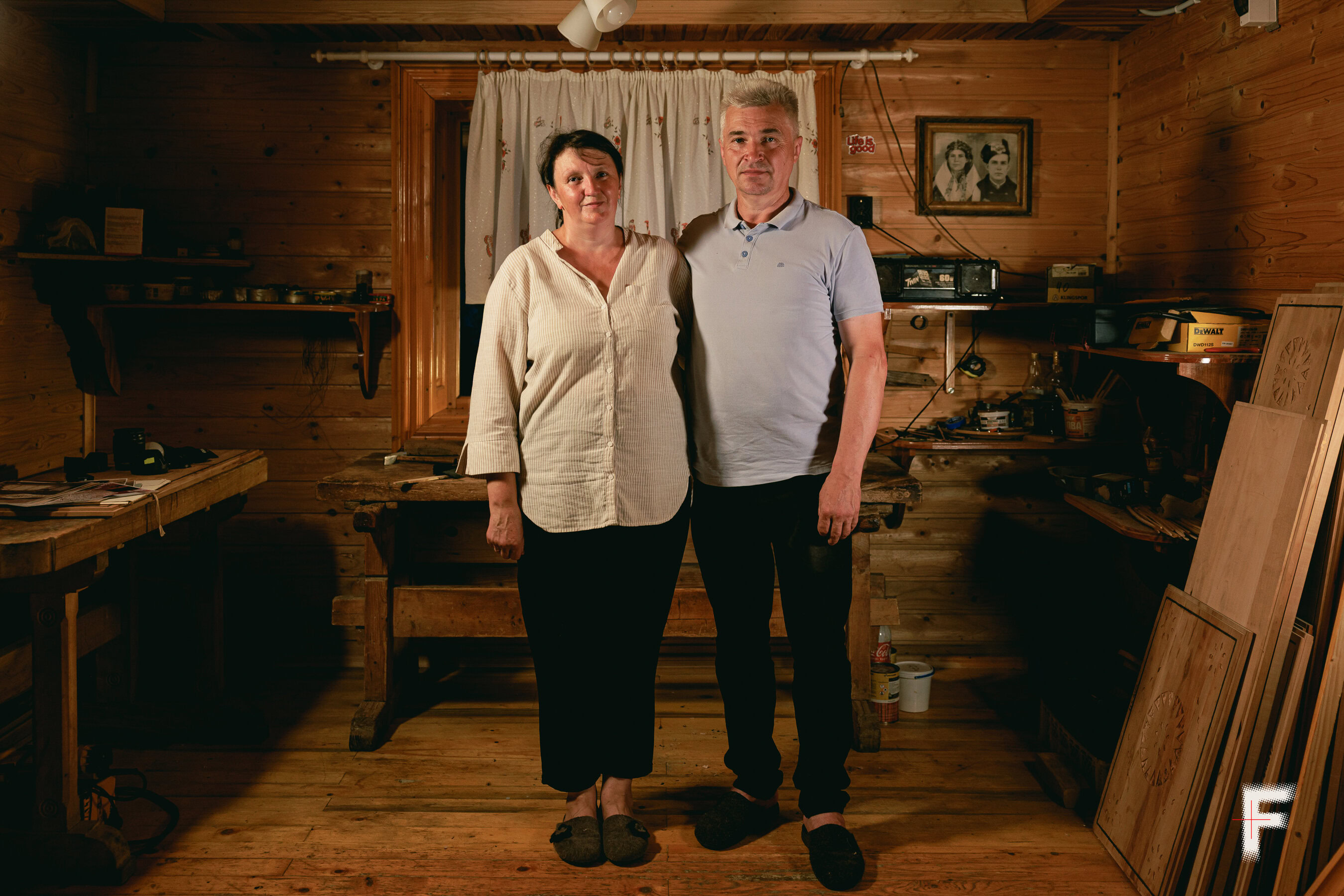
“When I was younger, I didn’t think much of it. Now, as I get older, I value it more and more, since I’ve realized that it is part of who we are, something that is truly ours. Especially now, when so few people still carry on the tradition of inlay,” Liliia Hrepiniak says.
The woman enjoys cooking, takes care of the pets, a cat and a dog, and loves going into the forest to pick afyny, the Hutsul name for bilberries. Her dream is to have their own inlaid pieces at home: icons, a large framed family portrait and plates. But for now, everything they make goes to customers or family members.
Inlaid Tryzubs, gifts for the military
Before the full-scale war, Vasyl’s son would bring groups of tourists to the family home. As many as 50 people at a time would take part in workshops and discover the centuries-old craft. Now, Vasyl has found another way to put his craft to work: supporting Ukraine’s defenders. He has already passed several inlaid Tryzubs to soldiers through volunteers, hoping to lift their spirits and show his respect. He is currently making his sixth Tryzub, almost a meter tall.
Only a few families across Ukraine still carry on and develop this ancient craft. But there are young people interested in learning it, too. Recently, several young men from Richka have been coming to Vasyl, asking him how they can get started with inlay.
I believe our culture will never disappear.
We pass these crafts on to our children just as they were passed on to us.
No matter how difficult things get, we must never forget our heritage,
***
A multimedia documentary project “As long as hands remember”
Created in partnership between Ukrainian media outlet Frontliner
and Ukrainian design brand GUNIA.
***