The craft of needle and leather: A furrier brings historical attire back to life
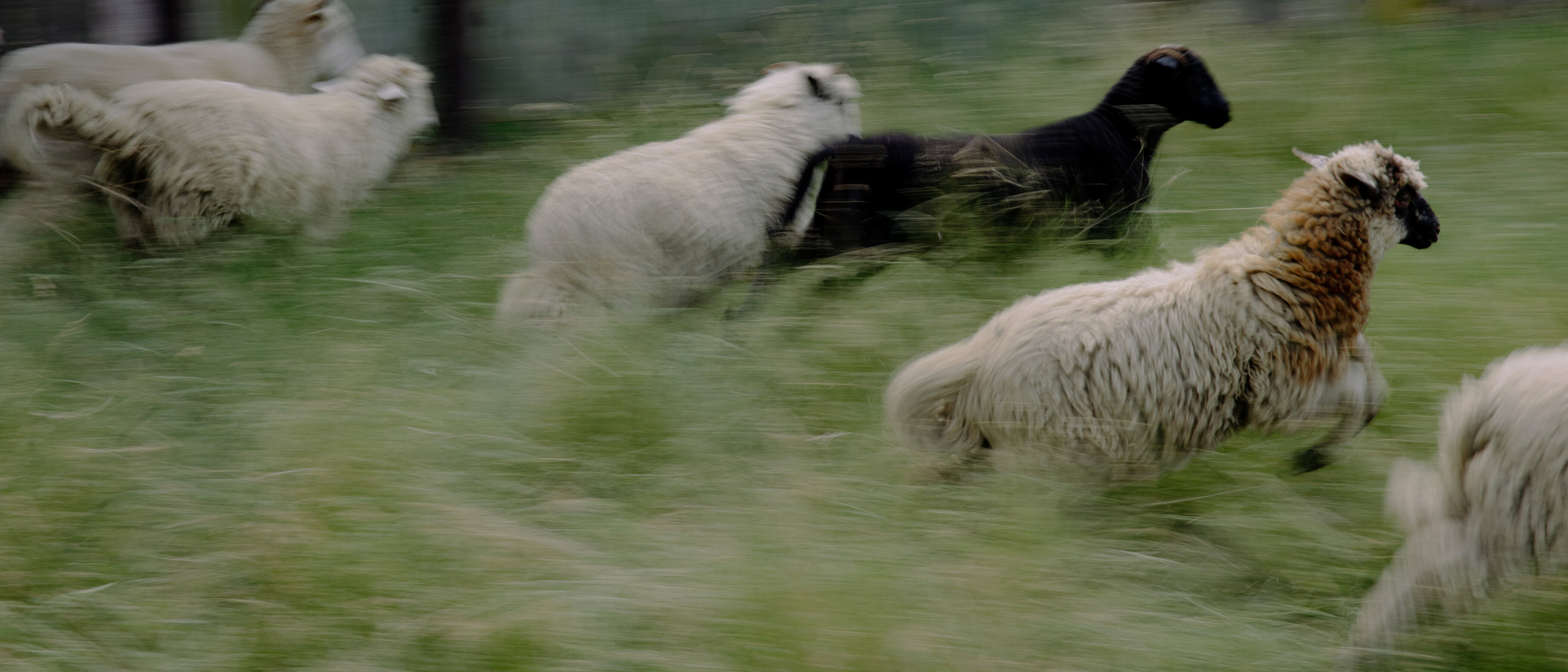
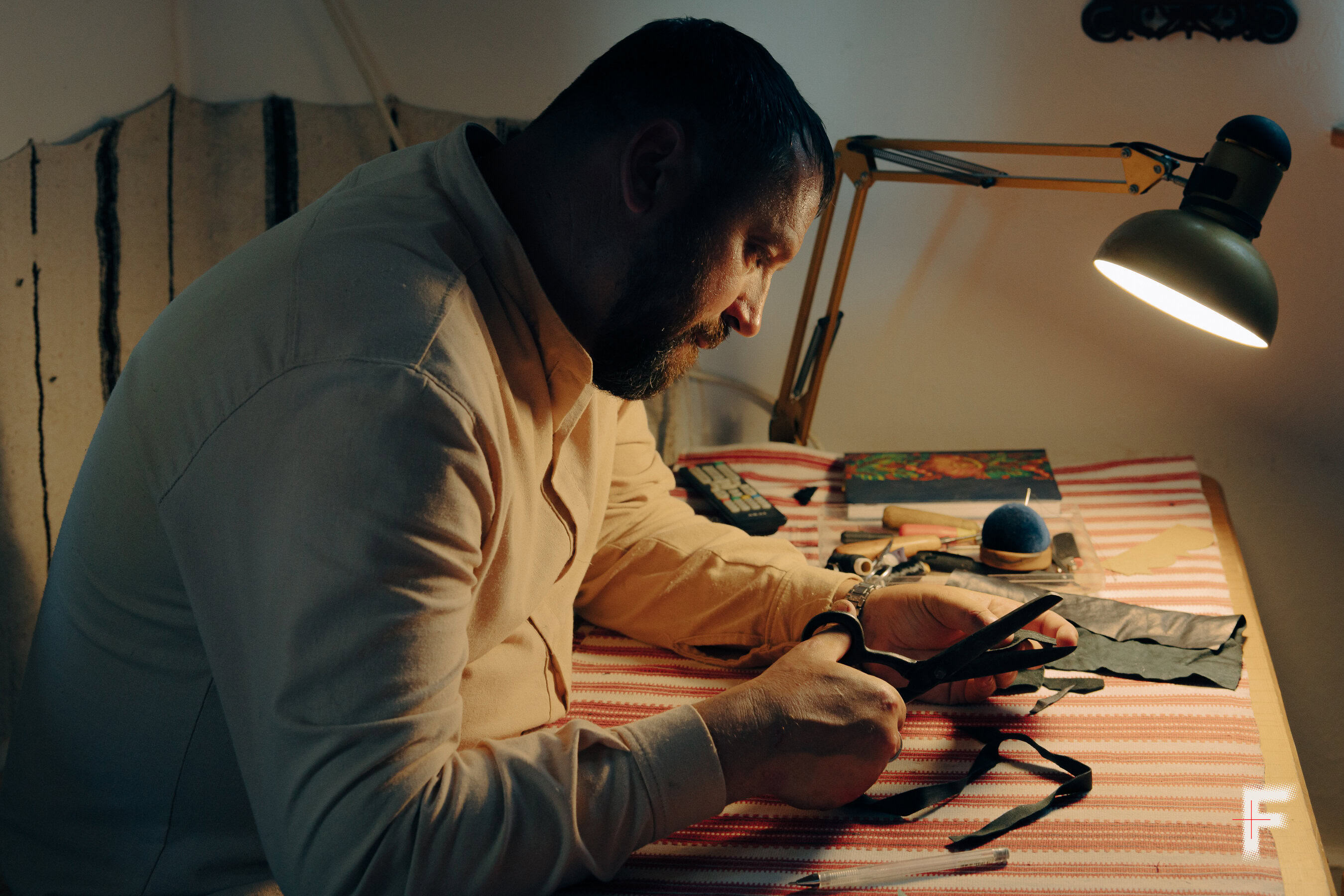
A flock of sheep grazes near the homestead of furrier Mykhailo Vintoniuk in the village of Kornych in the Ivano-Frankivsk region. There are two workshops in the yard. In winter, the craftsman works at a table inside an authentic hut he outfitted himself. It features a traditional stove, a woven Hutsul lizhnyk blanket, and walls lined with photographs and shelves of furriery tools. The second workshop is for the summer. Inside this small, reed-thatched gazebo, Mykhailo has gathered antiquities from his native village, including old photos, paintings, traditional postoly shoes worn by locals, and his grandfather's massive table. Frontliner reporters visited the master furrier.
Mykhailo Vintoniuk bought his first authentic Hutsul keptar for his 30th birthday using money borrowed from a friend. Keptars are traditional sleeveless sheepskin coats that have long been worn in the Prykarpattia region. At that time, Mykhailo did not sew sheepskin coats himself. Instead, he earned a living working in construction, at a sawmill, and at a gas station, while embroidering women’s dresses in his free time. He spent many nights at a sewing machine after an exhausting day at work. It was then that a single vintage photograph changed his life.

Mykhailo might never have become a furrier if not for an elderly woman in a neighboring village who needed her yard mowed. Her daughter happened to ask Mykhailo for this favor and he agreed to help, not even suspecting how it would affect his life.
Became a furrier because of a vintage photograph
Once Mykhailo finished his work in Mariia Antoniuk’s yard, he went inside the house to talk with the homeowner. There, on the wall, he saw an old photograph that he had often come across before on social media, in books, and in magazines. The picture showed a newlywed couple, Sofiia and Mykhailo Hnatiuk, wearing Hutsul keptars.
As it turned out, these were Mariia’s parents. They had dedicated their entire lives to furriery and passed the trade down to their daughter. She, in turn, later helped her own furrier husband sew the garments. Mykhailo looked at the photo for a long time and thought that this was no mere coincidence. He asked Mariia to teach him the craft of furriery.

He first wanted to sew the keptar he had seen in the photograph. His mentor did not object, even though it was a difficult task, especially for a beginner.
Mariia is a God-given teacher because she was both willing and able
to pass on her knowledge. She never said that I did something poorly.
On the contrary, if something did not work out, she praised me but
immediately showed how it could be done better. Before me, she had never
passed her knowledge on to anyone else, not even to her own grandson.
Mykhailo began sewing his first keptar with great enthusiasm. The artisan cut the leather for him and told him to stitch it together for the first fitting. But Mykhailo did not know that there were special needles for leather. So he worked with ordinary needles. He sewed for a long time, struggling to pierce the leather, and pricked his fingers. He would forever remember the surprised look in his mentor’s eyes when he told her about it.

They would take two buckets of chicken manure,
add water, and soak goatskins in it,
After making a keptar for himself, Mykhailo sewed a garment for his brother. Wearing their brand-new sheepskin coats, the two of them went to church on Easter. Following the festive liturgy, a fellow villager approached the brothers, having taken a liking to their coats. That was how Mykhailo landed his first client and realized he could earn a living at this craft.
Crafting over 400 keptars and sheepskin coats
Mykhailo quickly learned that furriery was no easy craft. His mentor Mariia not only taught him how to sew but also shared stories about the trade. For example, she told him about saffian, a durable leather used to make keptars.
“This saffian was made like this: they would take two buckets of chicken manure, add water, and soak goatskins in it,” Mykhailo explained. “After two or three days, the fur would come off, and then they had to wait for the stench to disappear. Also, in the Pokuttia region, leather was cured using bran. They would soak it in a solution of water, salt, and vinegar. Then they would coat the skin with bran and leave it for a few days.”
Tanning the hides for the sheepskin coats manually was a difficult task, as it involved soaking them in the river, washing them there, and dragging them back out. Therefore, the men handled this labor, while the women helped with the sewing. In the past, there were four furriers in Kornych who raised sheep and tanned the hides themselves. Mykhailo also raises sheep and rams for meat, but he does not tan the hides himself. Instead, he purchases the raw materials from Poland.

The artisan spends between two and six weeks sewing each keptar. However, there are times when working up the courage to begin a project takes longer than crafting the garment itself. For five years, the furrier hesitated to sew a traditional garment from the village of Mykulychyn. He finally completed it this year, and it is now his favorite creation.
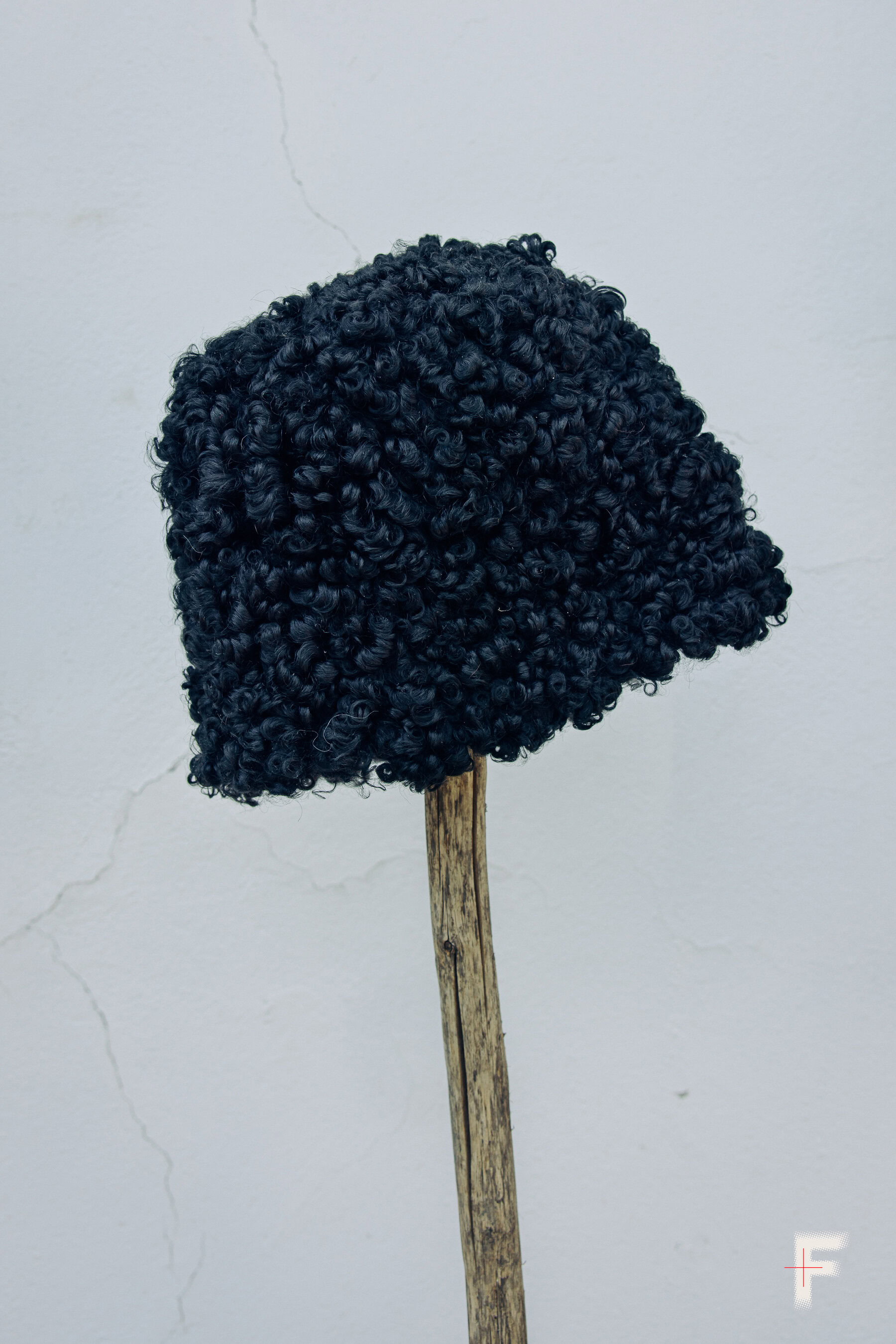
In his eight years as a craftsman, Mykhailo Vintoniuk has sewn and restored more than 400 items. Among them are 12 new keptars based on ancient designs, representing the traditional garments worn in Pokuttia, Boikivshchyna, Mykulychyn, Horodenka, Kosmach, and Bukovyna.

I take great pride in these replicas because I try to reproduce the thickness
of the leather, the true color, the authentic thread, and the original
stitching to make sure everything looks exactly as it did in the past.
I want to preserve furriery for future generations. And I really hope
that there will always be artisans who are interested in this.
Restoring a 140-year-old keptar from a film
In the village of Kornych, two people already wear keptars made by Mykhailo. However, the majority of his clients are Ukrainians living abroad.
“Once, a friend’s wife called me and says she had been saving money for a fur coat,” Mykhailo Vintoniuk says. “But when she saw my keptars, she realized she no longer wanted a fur coat. Somehow, people can just sense that this is our native craft. The most rewarding moment in my work is when a person comes to my house and sees what I have sewn for them.”
Mykhailo is very proud to have restored a 140-year-old keptar from the film “Shadows of Forgotten Ancestors,” which was worn by the main character’s mother.
There were also mishaps in his work. Once, a man brought the artisan a family heirloom for restoration, a keptar inherited from his father, but there was a stain on it. Mykhailo tried to remove it and applied a chemical solution with a cotton swab, accidentally burning a hole right through the leather. He lost sleep for several nights until he finally found a solution. At the local market, he found a keptar with rotted shoulders. He detached a pocket from it and sewed it onto the restored item.
“I show every new piece of work to Mariia, and I thank God that I have someone to test my skills,” Mykhailo says. “And she is very happy that I am succeeding. Though I do wonder what kind of artisan I would have been had I lived 100 years ago when every village had four working furriers. Today, almost no one does this kind of work anymore.”
The revival of furriery through modern photo shoots
Mykhailo has a niece, Nadiia, who initially helped photograph the keptars before and after restoration. Later, she suggested doing photo shoots with models in antique Hutsul attire. That is how the Vidrodzhennia (Revival) project began.
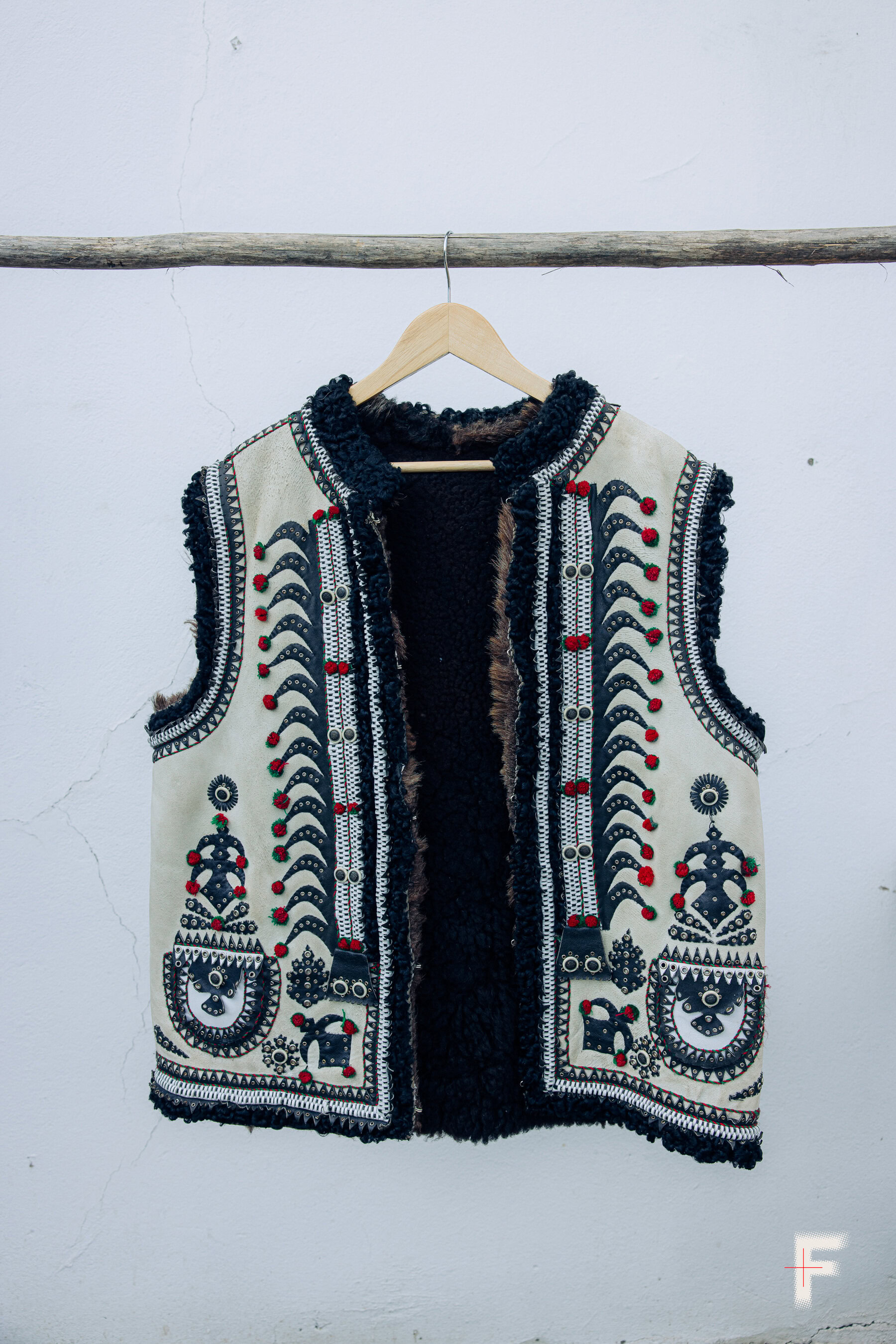
Mykhailo says they organized the first photo shoot in 2021. Last year, they took the initiative to the next level by hosting an ethno-festival right outside the artisan’s home, featuring folk artisans, a showcase of antique keptars, a bonfire, and music. During the festival, they raised funds for the military.
Mykhailo frequently participates in charity festivals with his keptars. After the runway show featuring models in Hutsul clothing, the artisan came out to the crowd to introduce them to his craft and explain how he creates the keptars.
In the last century, there used to be four master furriers in his native village of Kornych. Mykhailo recognizes the work of each of them because he has already restored their pieces. He is even friends with the son of one of these artisans. That man gifted Mykhailo a 100-year-old needle used for crafting sylianky, the traditional beaded ornaments for keptars.
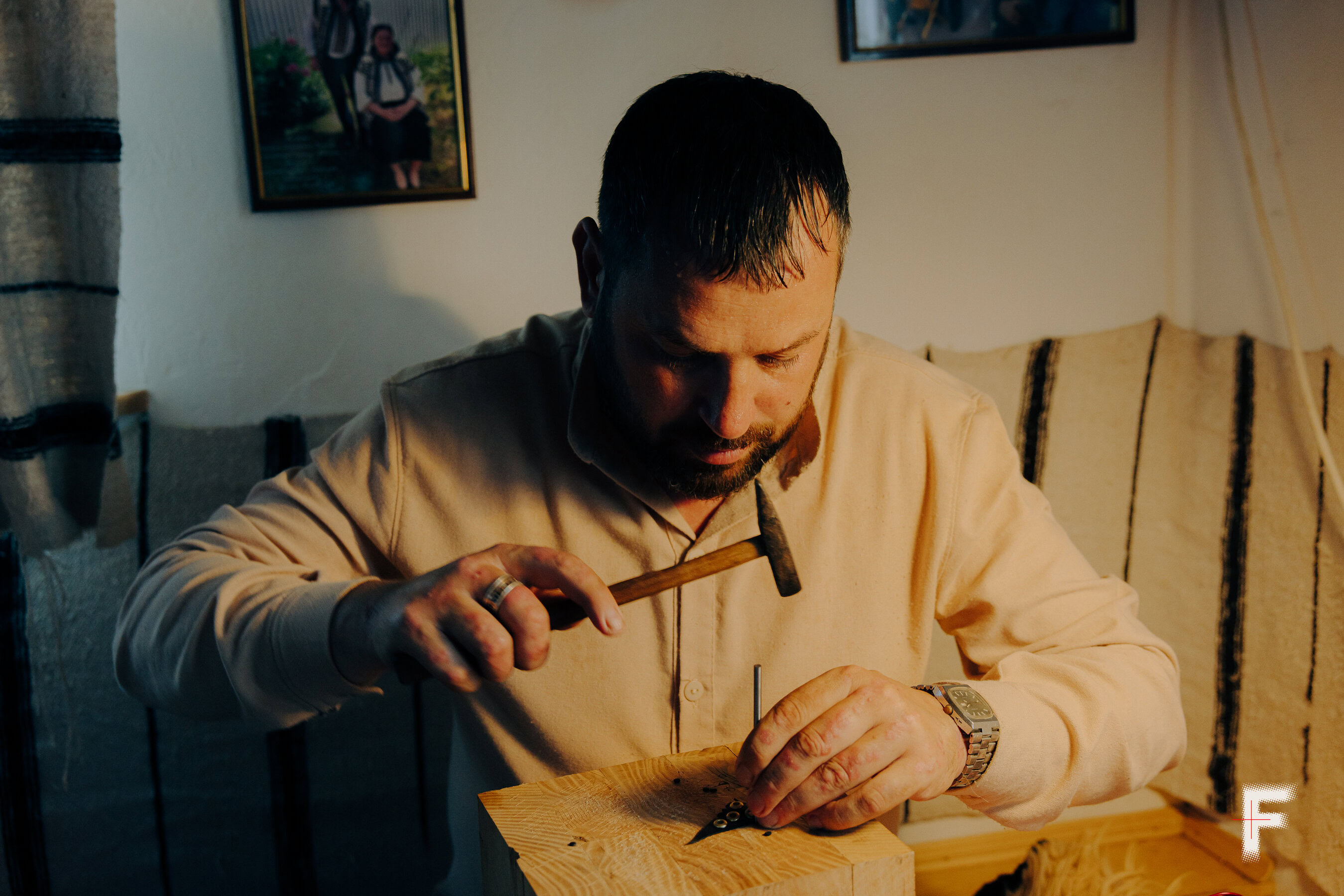
Furriery is my life.
I want to revive as many keptars as possible and someday
create my own original design. And I dream with all my heart that
this craft will live on. That is why I am asking
my 17-year-old son to sew at least one keptar.
***
A multimedia documentary project “As long as hands remember”
Created in partnership between Ukrainian media outlet Frontliner
and Ukrainian design brand GUNIA.
***