Carving history: How a veteran revives traditional banduras and kobzas
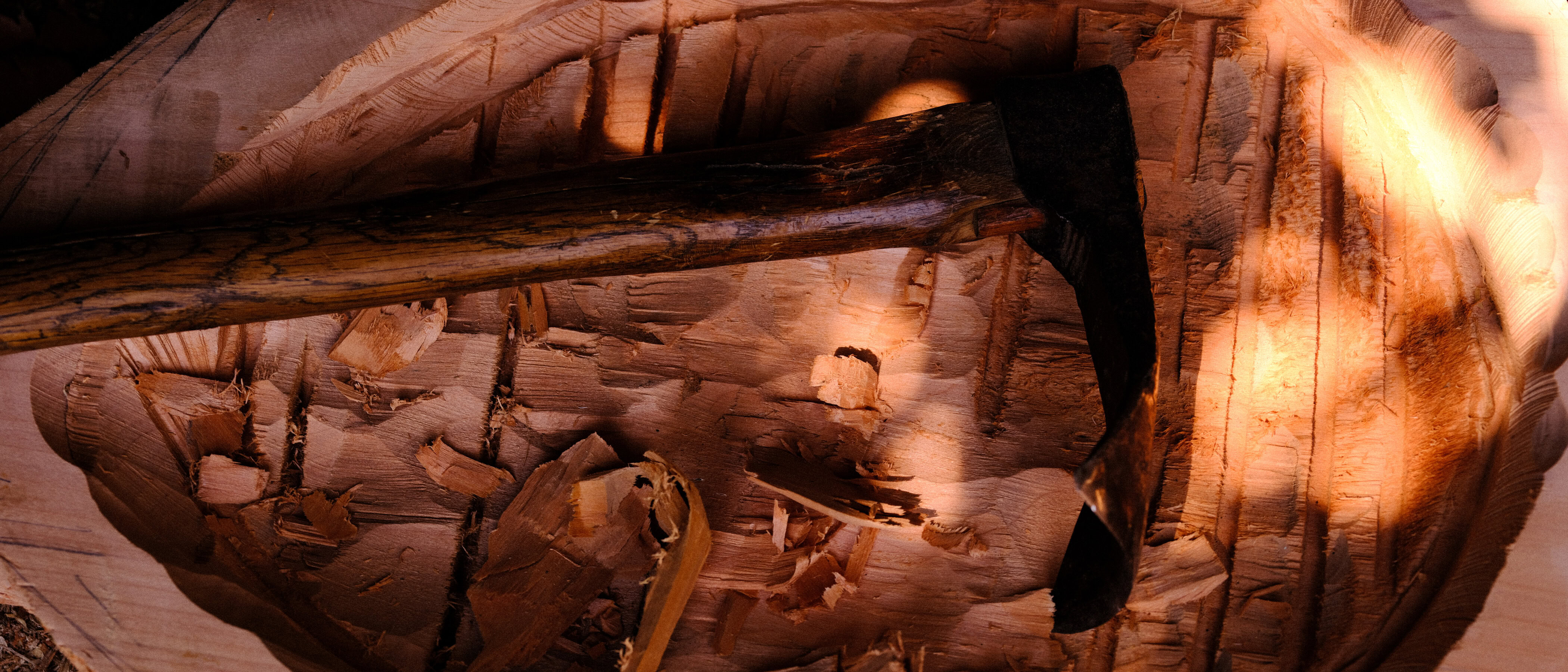
Fresh shavings scatter from beneath the chisel as the scents of linseed oil and propolis mingle in the air. Inside a workshop in the Kyiv region, a block of wood is slowly turning into a bandura. In a few months, this wood will become a musical instrument that will sound almost exactly as it would have one or two hundred years ago. This is where Ihor Bezverbnyi revives the ancient tradition of crafting banduras and kobzas:from harvesting wood in wintertime to applying the final coat of natural varnish. He relies on historical techniques used by Ukrainian artisans long before the advent of factory production. Frontliner reporters visited his workshop to see how this ancient sound is born.
The workshop in the Kyiv region smells of wood and dried varnish made from linseed oil and propolis. Wooden blanks of various species of wood, modeled after antique examples, are laid out everywhere: maple and willow, dense pear wood, and textured elm. Eventually, they will become banduras and kobzas.
Ihor Bezverbnyi works in the workshop of his like-minded friend, Yurii Kocherzhynskyi, where together they recreate traditional Ukrainian instruments using historical techniques.

My kobza is made of willow, and the bandura is maple.
Maple gives a sharper, more punchy sound,
while willow has its own distinct, interesting sound,
Hardwood is traditionally used for the body, and the bandura itself consists of several essential parts: the soundboard, neck, sides, and strings — both the longer bass and shorter treble strings. It is this construction that defines its voice: the body shapes the fullness of the sound, the soundboard resonates with the strings, and together they produce a deep, rich tone.
Bezverbnyi recreates these instruments using authentic historical sources, photographs, and museum exhibits. Printed archival photographs of banduras once played by renowned kobzars lie on the table in Kocherzhynskyi’s workshop. They serve as a blueprint: the artisans enlarge the photos, study the proportions, and recreate the shapes of historical instruments.
“There are some really great photos of Ostap Veresai. We enlarge them to maybe 20 centimeters. That’s so we can make replicas and see all this variety, the authentic pieces that existed 100 years ago,” Kocherzhynskyi says.

For the artisans, it is not merely about replicating the technical form, but about returning to traditional crafting processes. The wood is sourced at a specific time of year: in December, when trees are dormant and the sap has fully receded into the roots, the wood becomes dense and stable. This ensures it will not split, neither during the rough hewing nor over the years.
“First, you find the right tree, split it into slabs with wedges, lay down the instrument’s template, and then shave it away layer by layer, fiber by fiber,” Bezverbnyi says.
Hand planes, adzes, chisels, and other woodworking tools lie on the worktables and shelves. The craftsman places a template on the wooden blank, marks out the outline, and then, step by step, removes the excess wood. The process of crafting a traditional kobza or a diatonic single-row bandura unfolds slowly, governed by the laws of nature.
Where are the true roots?

“Wood dries on the outside while remaining wet on the inside. That’s why you have to remove that dry layer millimeter by millimeter. You can’t just sit down and make a bandura in a single day because it will crack,” the craftsman says.
In the final stage of crafting, the surface is thoroughly sanded and primed. Linseed oil, egg white, or liquid glass is used to seal the pores of the wood. If needed, the body is tinted with natural dyes: yellow from turmeric or red from madder. Afterward, the instrument is finished with a natural varnish made from linseed oil and propolis.
In search of true roots
Ihor Bezverbnyi’s passion for traditional music arose in his teenage years, at a time when the Soviet regime sought to reduce Ukrainian culture to secondary folklore.
For decades, it suppressed the traditional kobzarstvo: the old-world kobzars were persecuted, and the authentic tradition was gradually replaced by a staged version tailored to Soviet cultural policy. That is why, for Bezverbnyi, discovering the historical bandura became a way of returning to an almost lost heritage.
“I was born in the Kherson region. Today, those lands are occupied. My father is from the Kherson region, my mother is from the Vinnytsia region, so I’m from Ukraine. Even back in school, I would listen and wonder: why is authentic epic poetry, the dumy about Samiilo Kishka or Kozak journeys, being replaced by artificial pop versions? Where are the true roots?” the craftsman says.
[Editor’s note: Dumy are traditional Ukrainian oral epic poems that originated during the Kozak era in the 16th century. The word literally translates to “thoughts” or “reflections”.]
His search led Ihor to the legendary master Mykola Budnyk, who effectively revived both the authentic construction and the Kharkiv (Zinkiv) style of playing the bandura and kobza. It is a distinctive way of holding and playing the instrument.
The left hand carries the melody, while
the right provides the rhythm,
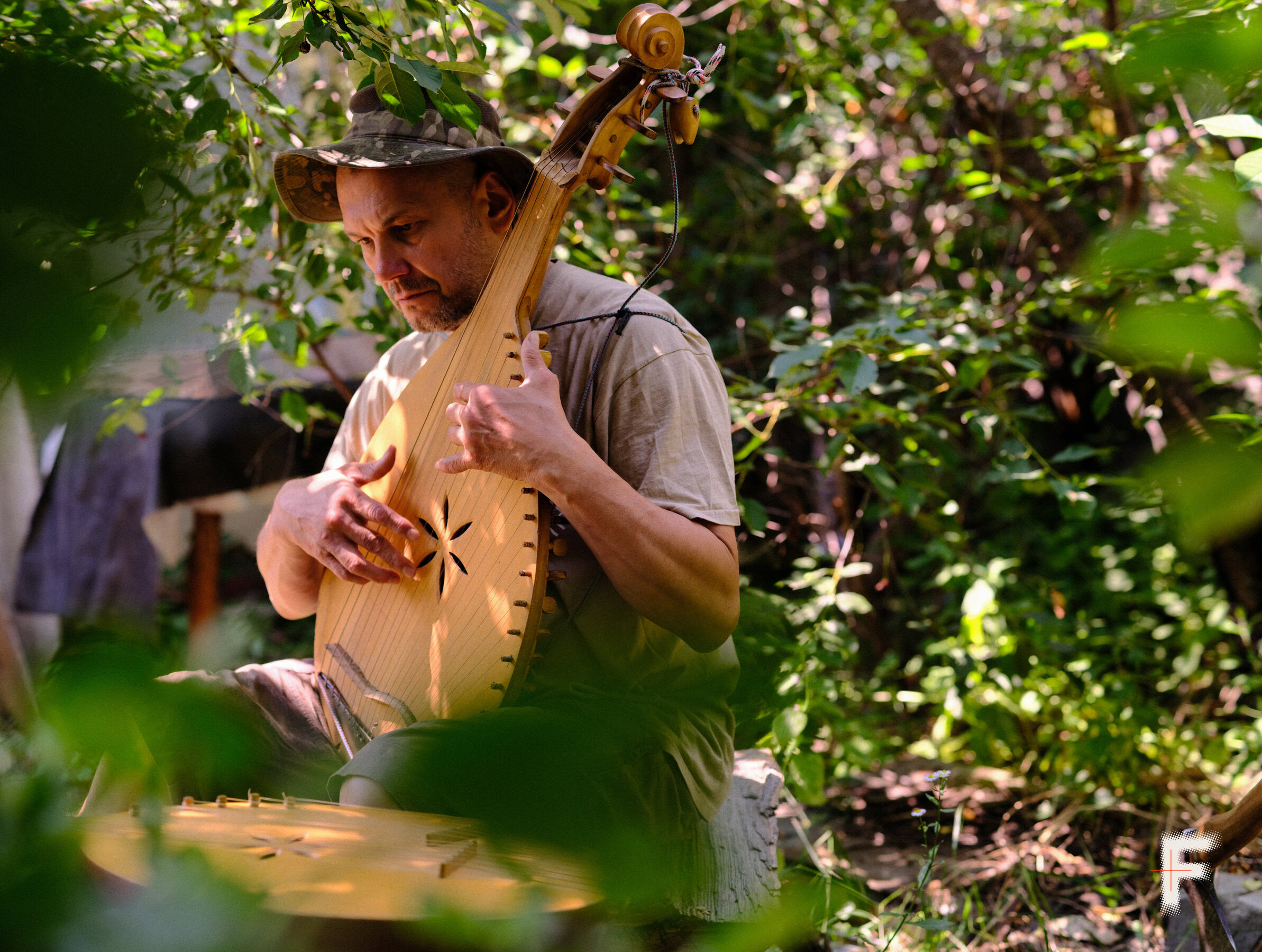
“The bandura is held differently than in modern academic schools: directly against the chest, rather than resting sideways on the lap. The left hand rests on the upper edge of the body, called the briamka, making it easy to reach the highest treble strings. In this system, the left hand carries the melody, while the right provides the rhythm,” Bezverbnyi says.
Budnyk welcomed the future craftsman like a mentor, pouring him tea, showing him the instruments, and sending him into the forest to harvest wood. While handicrafts had drawn him in since childhood, his principle, ‘if you want something done well, do it yourself,’ grew out of those meetings with Budnyk. After returning from the Soviet army in the early 1990s and preparing for student life in Kyiv, he made his very first bandura on his own.
“I came back, and it felt like it was all over. What Soviet Union? A new life was beginning, a truly new life where you could finally play and sing Ukrainian songs. I thought: I’ll make a bandura and sing koliadky to it,” Ihor says.
[Editor’s note: Koliadky are traditional Ukrainian winter and Christmas carols.]
Returning to the craft after the war
Since then, the craft has become an integral part of Ihor Bezverbnyi’s life, despite the war, which temporarily forced him away from the workshop. In 2022, he volunteered for the front. While serving in an assault unit in the Donetsk region, he was severely wounded in both legs. After months in hospitals and rehabilitation, he was discharged from military service for health reasons.
Despite the break and a long recovery of his memory and motor skills, Ihor returned to his chisels, strings, and centuries-old dumy. Today, the craftsman also introduces other veterans to the craft, showing them how to work with wood and how sound is born from it.
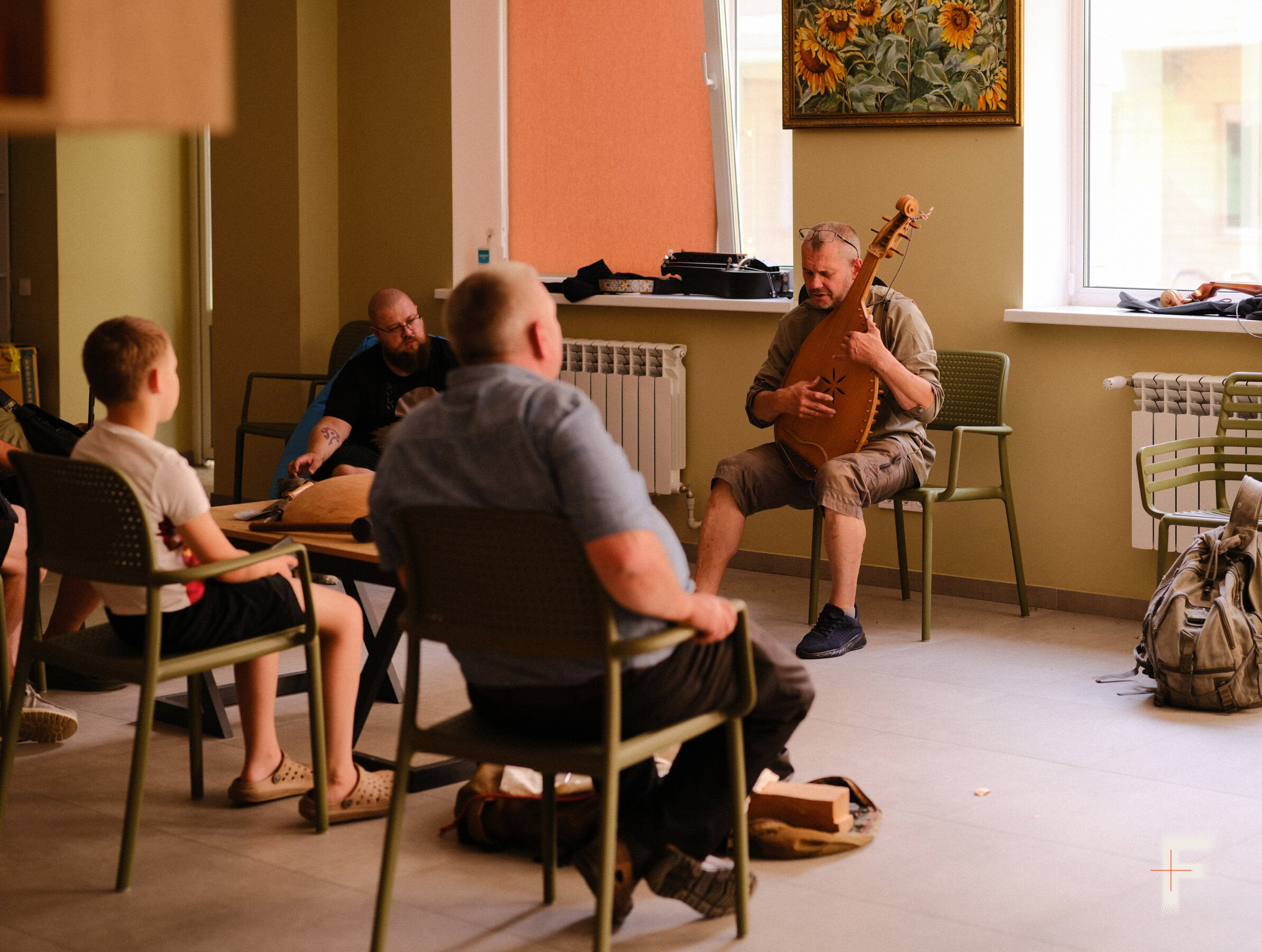
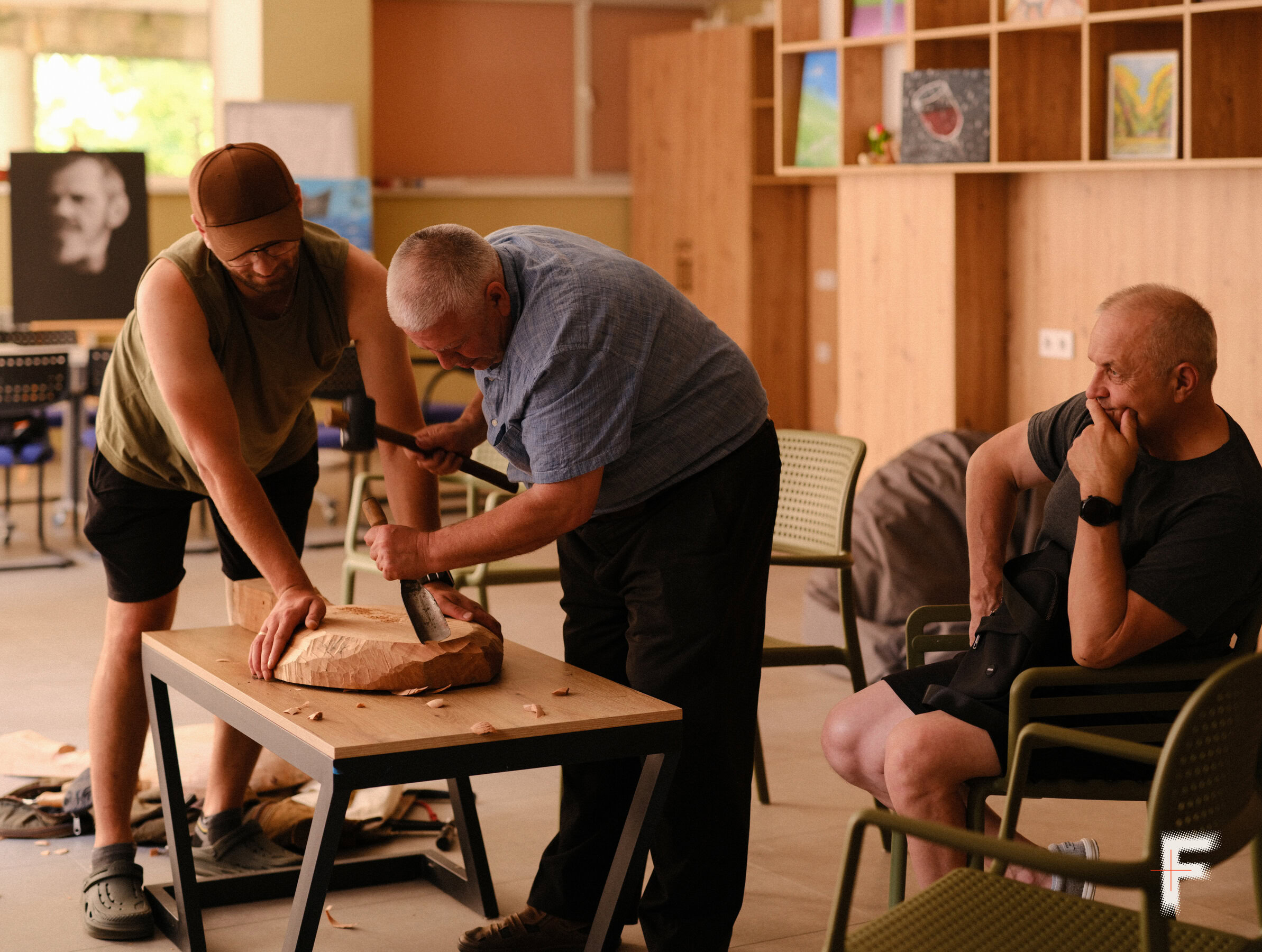
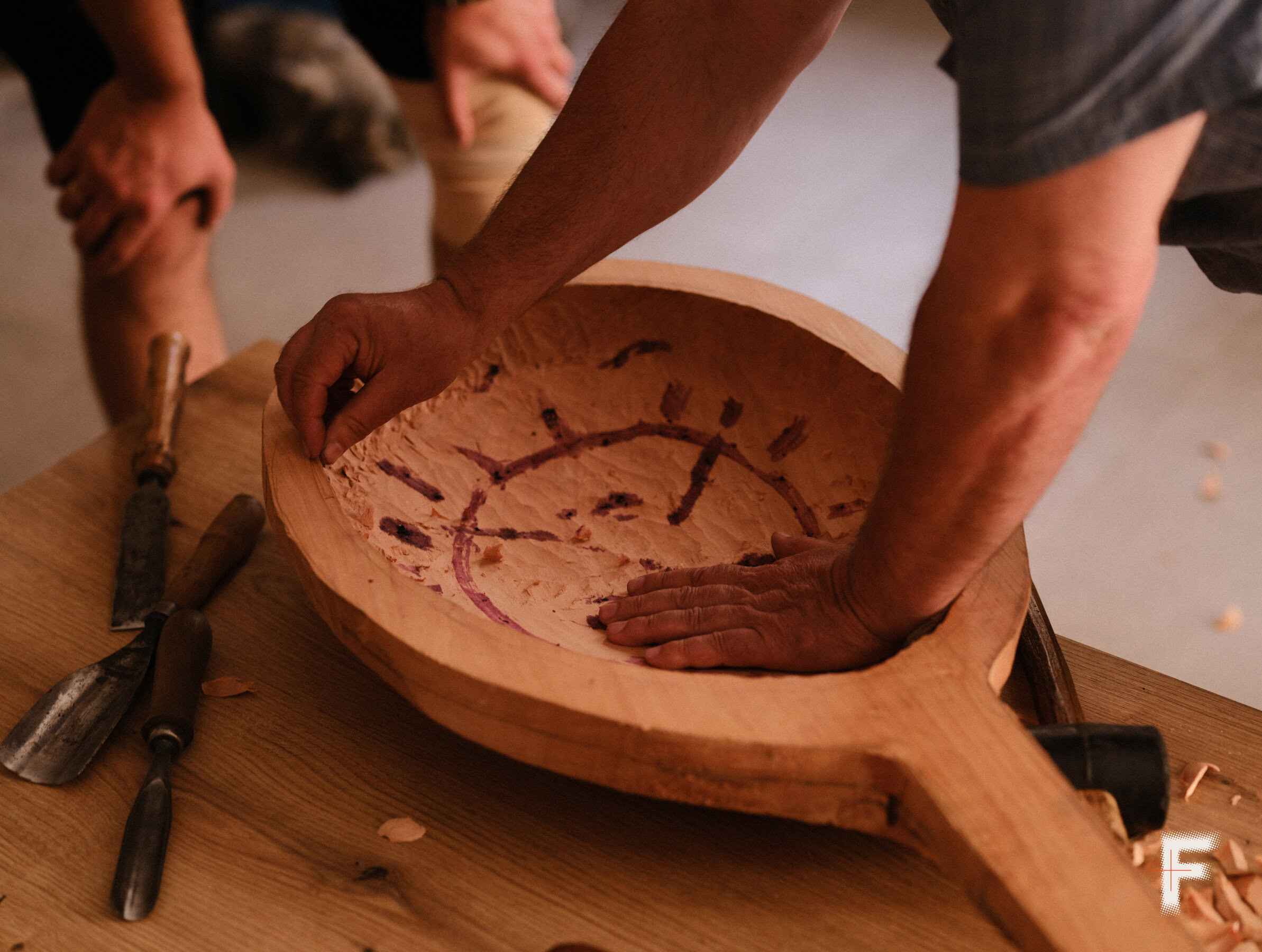
Music and instrument making have become an anchor for Ihor. At times when he needs to find inner peace, he takes up his bandura or kobza.
Too often, people lack a foundation; they don’t understand good and evil,
or why any of it matters. But once you understand where you grow from,
you know where to grow next. You only get the motivation to do
anything once you understand where you came from,
As the clatter of tools grows quiet in the workshop, the man picks up a maple bandura and rests his left hand on the briamka. The first few chords fill the room with a deep, tense sound. Then come flowing arpeggios, each harmony made up of just two to three notes, as was customary in the ancient bandurist tradition.
A moment later the craftsman begins to sing: “Oh, on the Black Sea, there upon a white stone, stood a stone dungeon…”
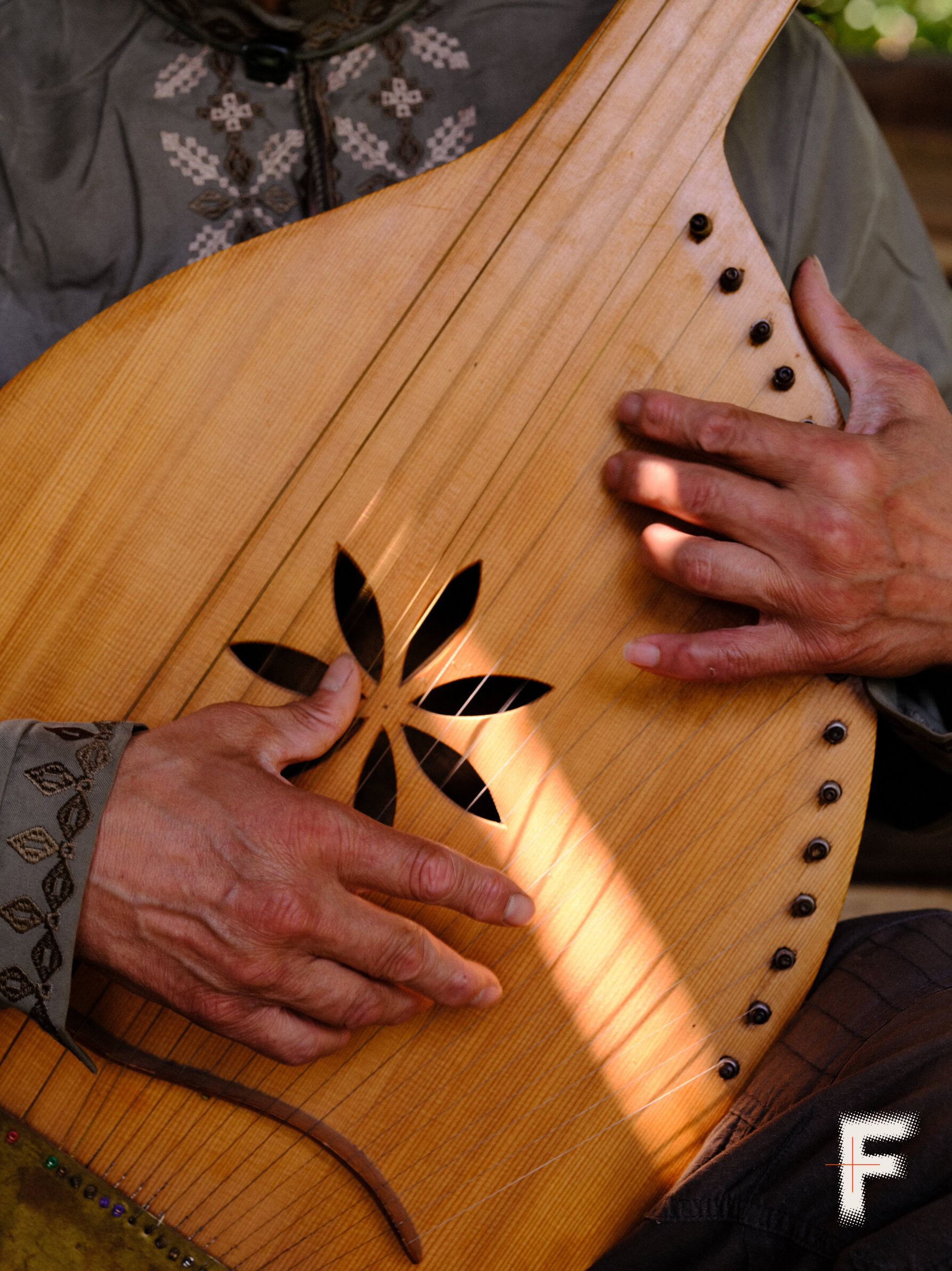
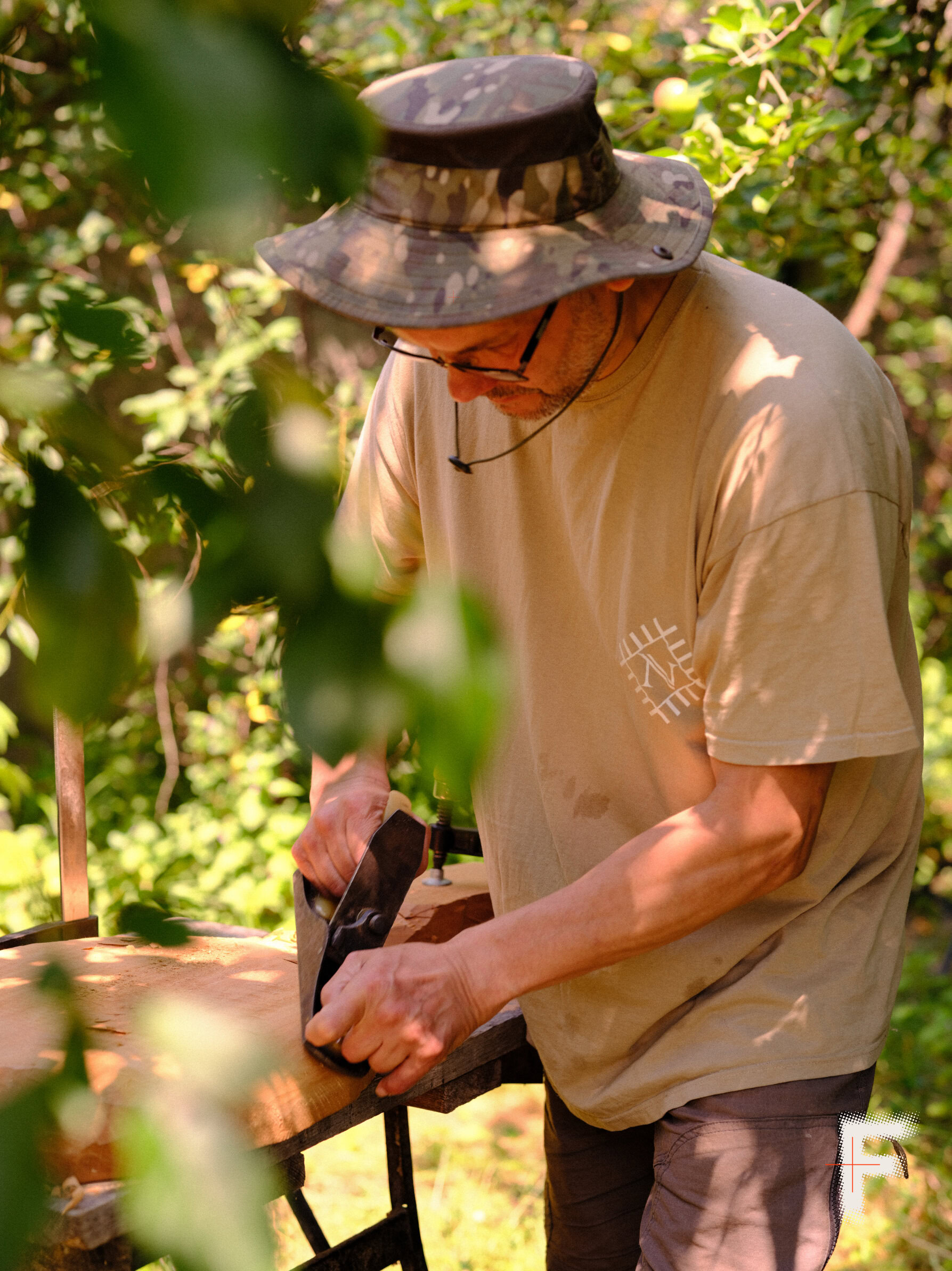
Having finished the duma, Ihor Bezverbnyi explains its meaning and how the historical memory of Ukrainians was preserved in such works. For him, recreating historical instruments is inextricably linked with reviving the kobzar tradition itself.
Few artisans in Ukraine today make banduras and kobzas using historical techniques. That is why, with every instrument he shapes, Ihor Bezverbnyi strives to preserve not only the centuries-old method of crafting and its authentic sound, but also the culture to which it belongs. In this way, the boundary between centuries dissolves, and an ancient duma comes alive in the heart of a Kyiv workshop.
***
A multimedia documentary project “As long as hands remember”
Created in partnership between Ukrainian media outlet Frontliner
and Ukrainian design brand GUNIA.
***