The language of decoration: a Crimean Tatar potter pieces tradition together from the shards
With one swift stroke of a sharp tool through the colored engobe on wet clay, Rustem Skybin draws a clear line. Within minutes, the scratch becomes the outline of a tulip, pomegranate or grapevine. After glazing and firing, it will become Crimean Tatar ornamentation: the same decorative tradition that took decades to reconstruct from broken museum pieces and fragments that survived in people's memory. Frontliner visited the potter's workshop to see his signature technique.
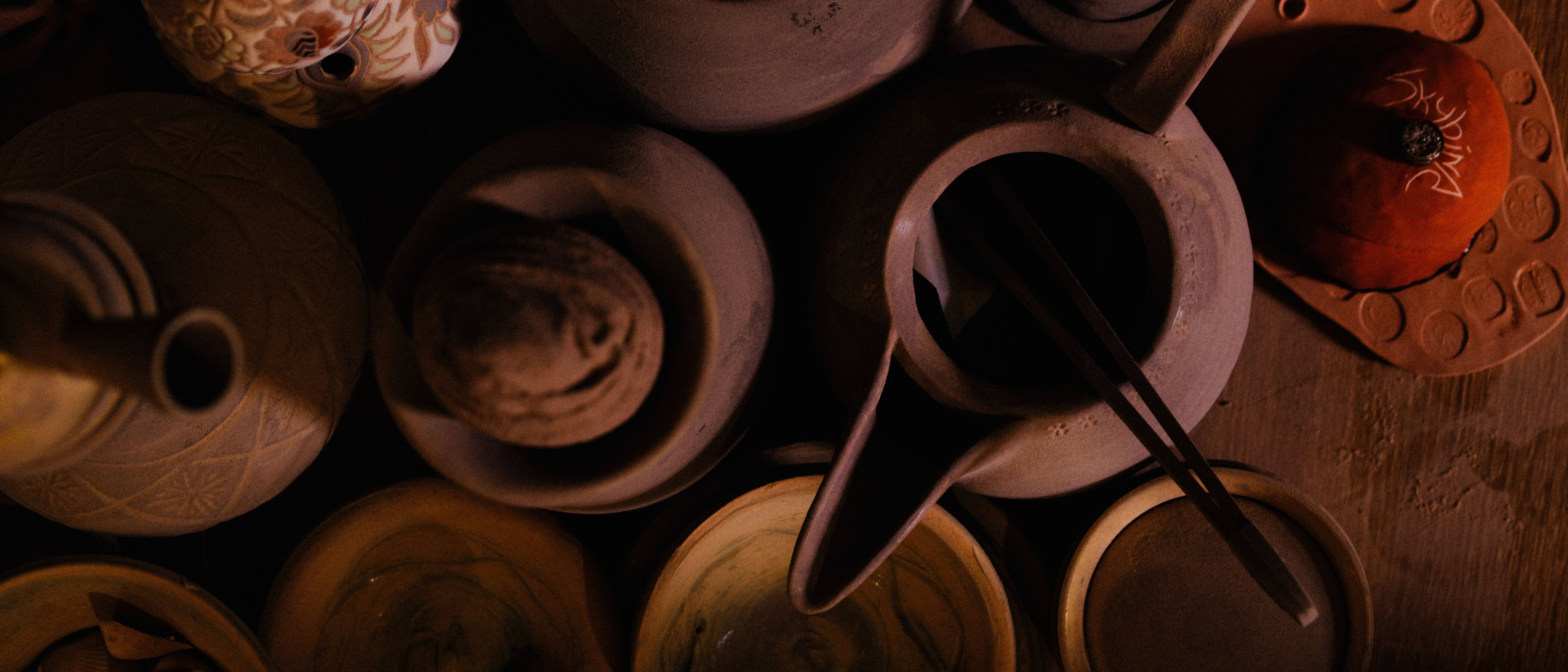
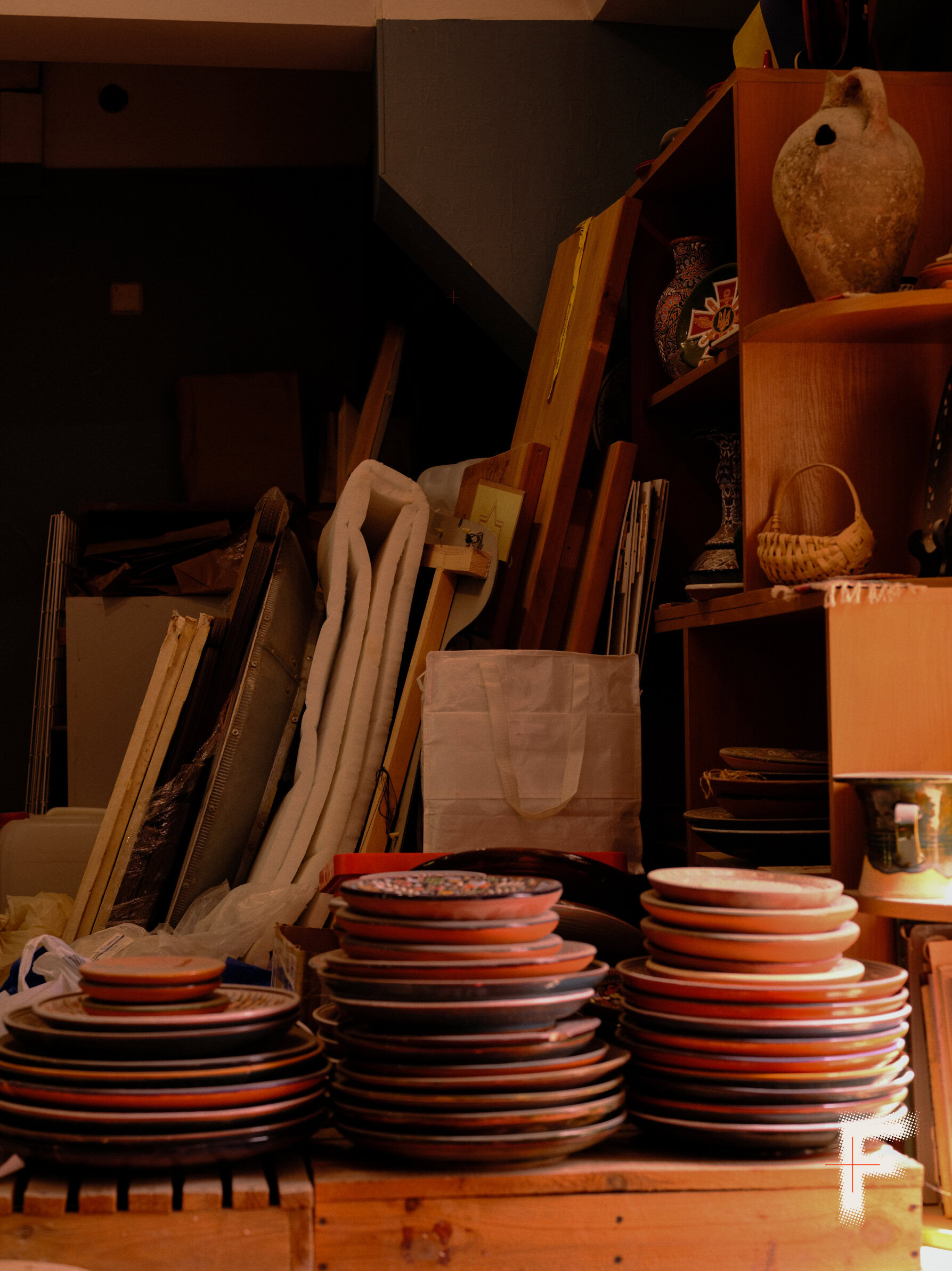
Dozens of plates, jugs and ceramic panels sit on wooden shelves in the workshop. Some pieces already shine under a layer of glaze, others remain matte and rough, still waiting for the kiln. Buckets of different clay types, jars of glaze and dozens of pottery tools line the wall. This is where Crimean Tatar artist and potter Rustem Skybin works.
Most of my life happens here, both creative and personal.
It has everything I need to work,
Skybin keeps working even as he talks. As he answers questions, plates at different stages of completion pass one after another through his hands. Some are only beginning to take shape, others already show a clearly scratched-in ornament.
“What I make most is tableware and decorative plates. Then wall panels. And I really love sculpture, though that’s more for inspiration,” he says.
He has rented a workshop in Kyiv since 2014; since then, he has added a kiln, a pottery wheel and a computer for sketches. But that sense of impermanence never left, Skybin says:
Back then it felt temporary. That feeling never went away.
So I don’t put down roots here. I’m planning to return home.

The only thing I managed to take with me
was experience,
Before Russia’s occupation of Crimea, his workshop was in Bakhchysarai. He worked there for almost 20 years: teaching children and students, building his own library of Crimean Tatar art, and gradually acquiring equipment.
After moving to Kyiv, he had to leave all of it behind. Still, he says, it wasn’t the first time he had to start life over.
“When we came back from Uzbekistan in 1996, we had nothing: no house, no electricity, no water. We built everything from zero. By 2014, we had rebuilt our life. Then we had to start over again. The only thing I managed to take with me was experience,” Skybin says.
From clay to firing
The conversation about the workshop drifts naturally into a conversation about the ceramics themselves. Skybin says the sequence of work is always the same. Only the shape and the technique change.
Everything starts with material. For different pieces, the potter uses different types of clay. Some he shapes on the wheel, others he casts from slip, a liquid clay mixture poured into a plaster mold. Once the clay reaches the right thickness, the mold is taken apart, and the piece dries for several more days.
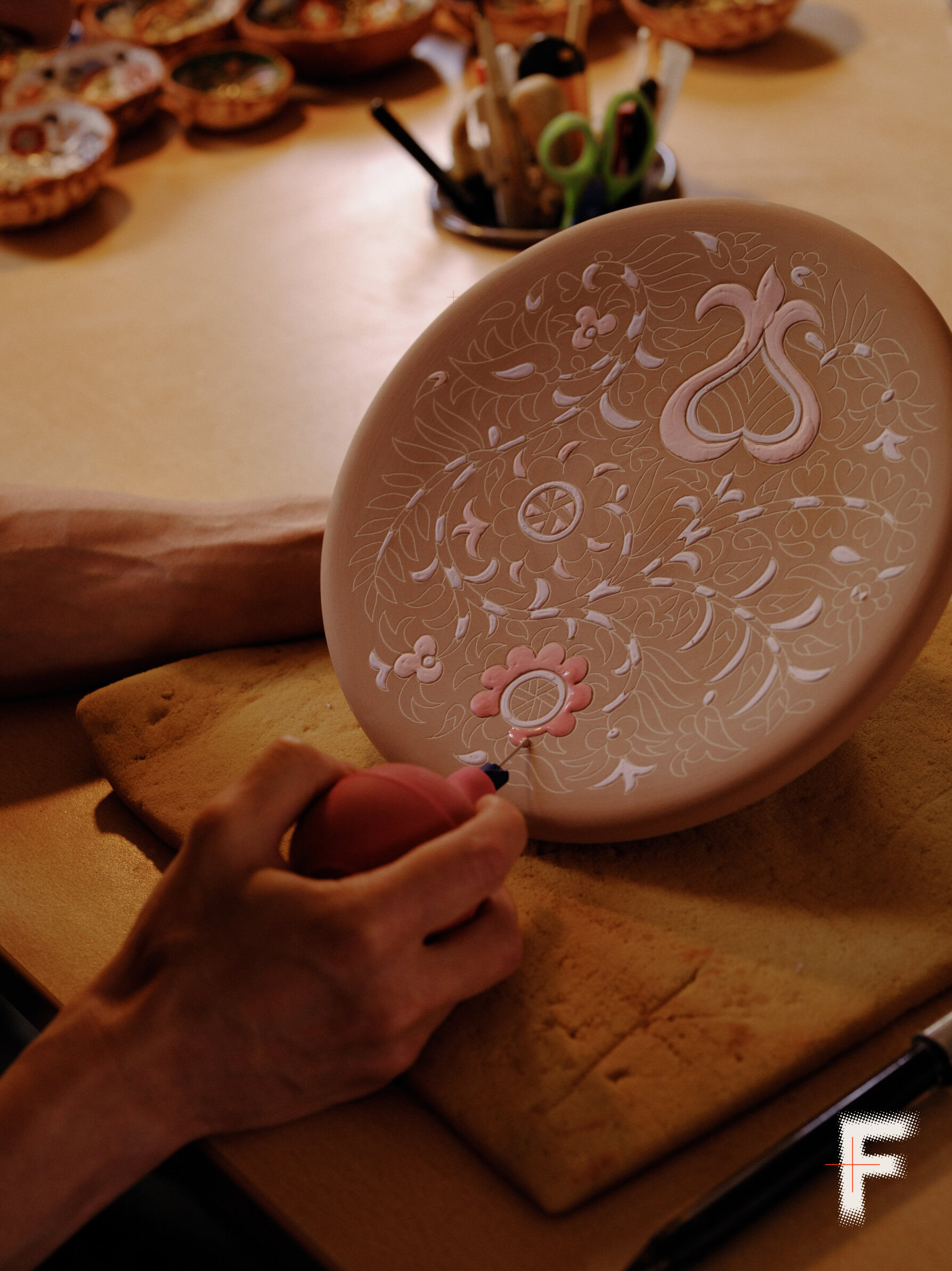
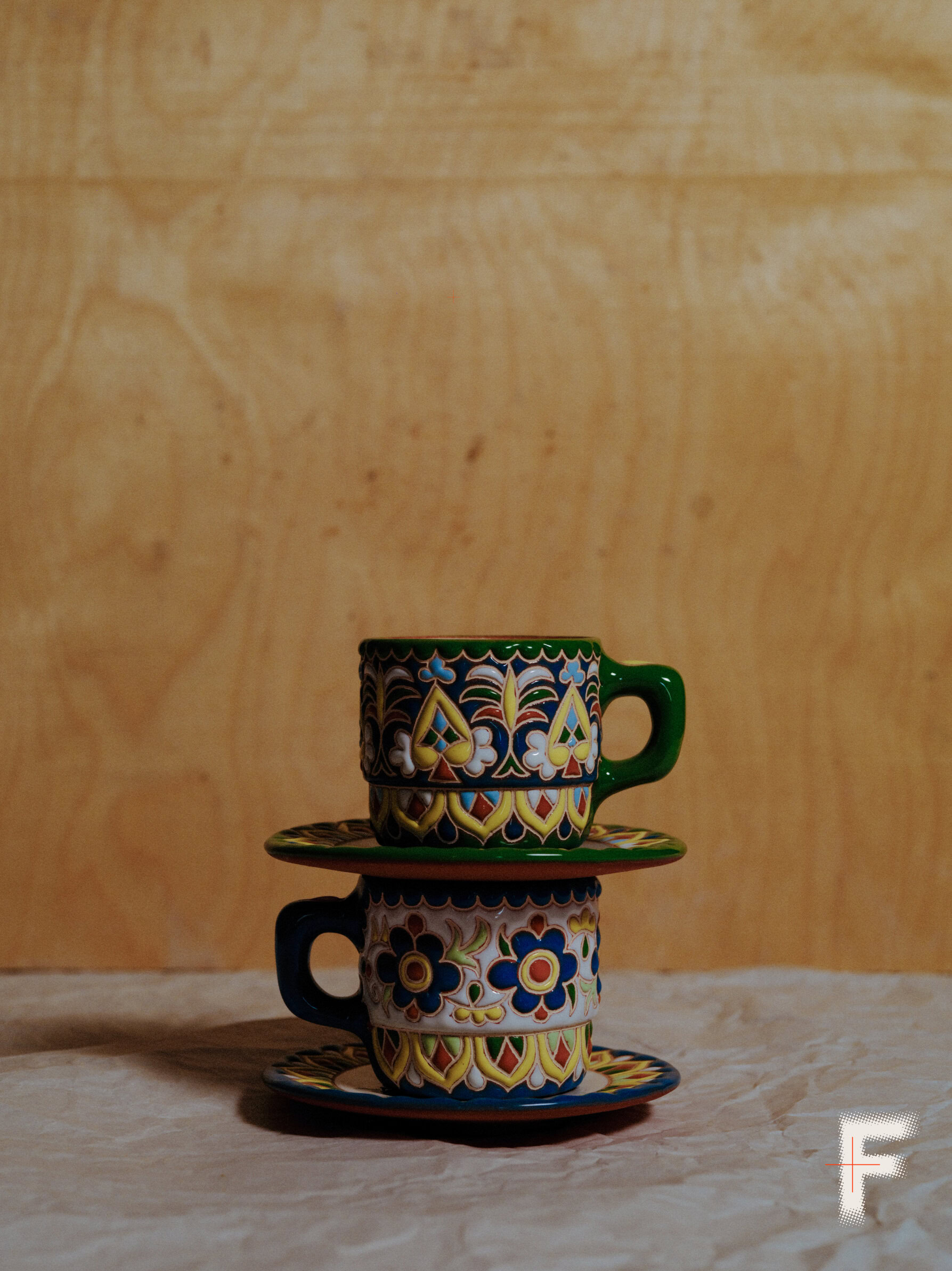
Next comes the stage that defines how the finished piece will look. The surface is coated with engobe, a liquid clay-based paint. It’s through this layer that Skybin scratches the ornamentation: using a stylus, he gradually removes the top layer, revealing the clay’s natural color underneath. This is how the pattern emerges, barely visible at first. After that, the piece is glazed and sent into the kiln. One firing cycle lasts 6 to 12 hours.

“Usually one firing is enough. But if it’s an everyday object, something we use daily, it needs to withstand thermal stress and physical wear. That’s why a second firing affects its quality,” Skybin says.
How the “Quru Isar” technique was born
At first glance, this craft seems to be all about skilled hands. In reality, Skybin says, the work on a piece begins long before he touches the clay. First, he works out the logic of the design that will eventually appear on the surface.
You can make it in an hour.
But it takes decades to learn how to make it in an hour,
Before developing his own technique, the artist studied Crimean Tatar ornamentation in its many forms: not just on ceramics, but on antique embroidery, wood carving, metalwork and architectural decoration too. He saw them not as separate folk art traditions, but as different expressions of a single artistic language.
Once he had mastered the craft of ceramics, he tried to carry that language onto a new material. That’s how his signature technique, “Quru Isar,” was born. Its name comes from the Crimean Tatar language: “quru” means “dry,” and “isar” means “wall.”
The name describes the working principle: the scratched lines act as a kind of barrier that keeps the liquid glaze from spreading and mixing together. After firing, the lines stay sharp, as if holding the design within set boundaries.
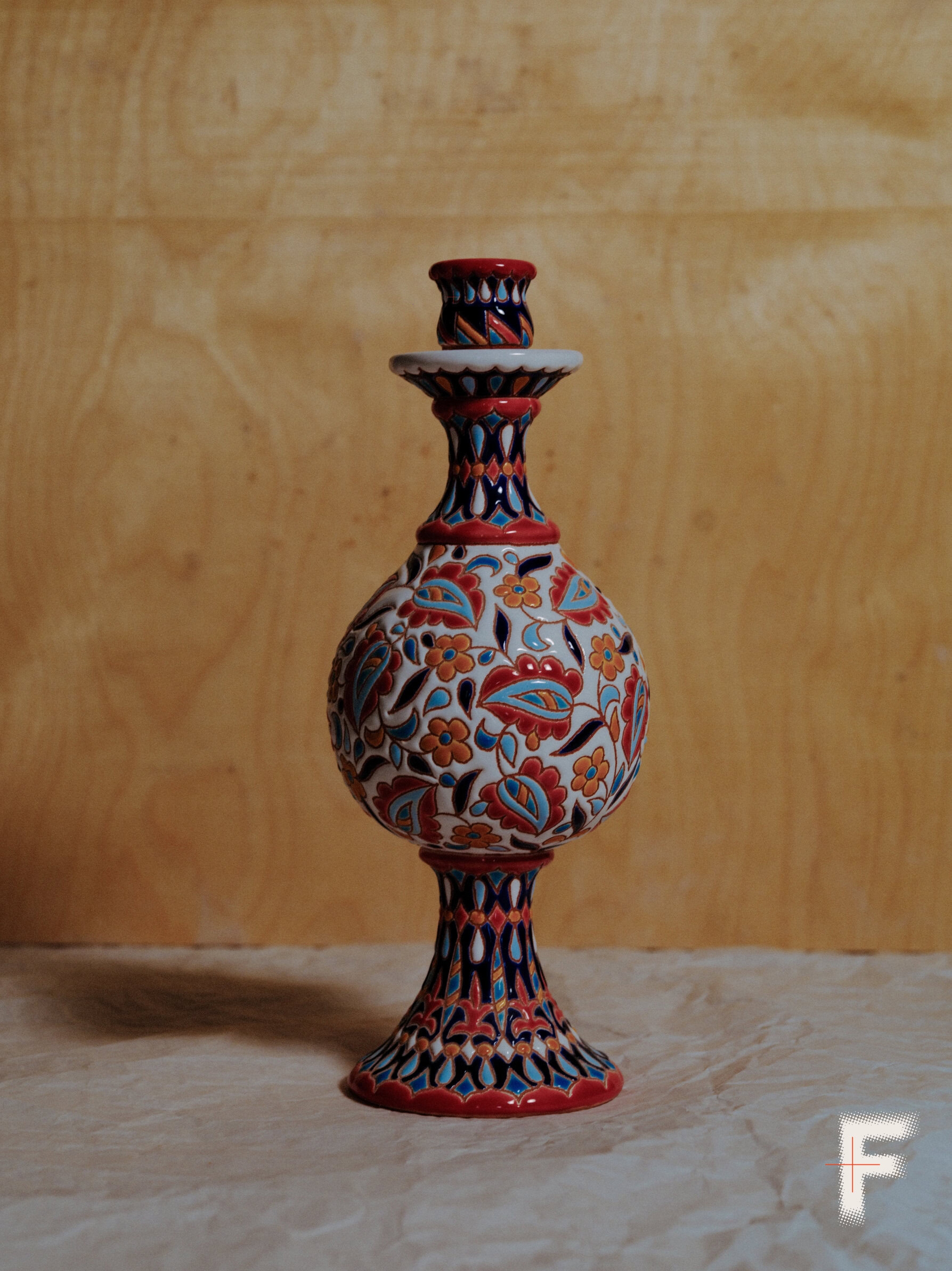
Although “Quru Isar” is his own invention, Skybin would rather not have his work called a modern interpretation or reconstruction of traditional ceramics. He says his goal isn’t to reproduce historical examples. What matters to him is understanding the design’s underlying principles and building his own work from there.
Traditional ornamentation is like a language. It’s already formed. If you know it,
you can use it to tell new stories. But if you just repeat
someone else’s words without understanding them, that’s just copying,
What is Crimean Tatar ornamentation?
Asked to explain the Crimean Tatar decorative tradition in a few words, Skybin just smiles. It can’t be summed up in a single sentence, he says.
“Ornamentation is a philosophy. If you just make a glossary and say this element means one thing and that one means another, it won’t reflect how it actually took shape,” he says.
For him, the designs never exist in isolation. Their meaning depends on the material a piece is made from, how it was made, what it was made for, and the environment the maker worked in.

At the same time, some symbols in Crimean Tatar ornamentation have endured for centuries, the tulip among them. Skybin doesn’t speak of it only as an image with a fixed meaning. To him, the motif emerged naturally in Crimean Tatar art simply because the tulip was part of the Crimean landscape.
“There are plants that shaped this land. The tulip is endemic. Craftsmans see it all around them, so it appears naturally in the ornament too,” Skybin says.
The ornamentation also carries the memory of different peoples who once lived side by side. For centuries, their cultures shaped one another, and that history survives in the patterns, just as it does in music or cuisine.
“Some elements came from Persian, Ottoman and Arabic traditions, but over time they became part of the Crimean Tatar artistic language,” he adds.
The deportation, and the ban on national identity
that came with it, made that information disappear.
Piecing tradition together from the fragments
But before he could even begin working with the tradition, it first had to be pieced together, quite literally, from fragments. Skybin and his colleagues traveled on expeditions across Ukraine and abroad, worked with museum collections, combed through catalogs and photographed artifacts. But finding an old piece is only half the battle. Proving that Crimean Tatars actually made it is far harder.
“The main sources are written records. But we constantly run into objects that were never attributed as Crimean Tatar. The deportation, and the ban on national identity that came with it, made that information disappear. So we work with ethnographers, local historians and researchers to confirm where these pieces came from,” Skybin says.
Some of the knowledge was recovered not from books, but directly from people. Until 2014, Skybin and others who shared his mission traveled through Crimean villages, recording conversations with elderly residents who still remembered the names of motifs, the decoration methods and the techniques local craftsmen once used. Some of what they heard was never recorded anywhere else.
Skybin says testimonies like these helped fill the gaps left by decades of erasure. Those gaps trace back to the 1944 Soviet deportation of Crimean Tatars from Crimea. As the people vanished, so did their workshops. Craftsmen lost their tools, kilns and homes. But what suffered most was the chain of knowledge passed from one generation to the next.
When a person is torn from their home, they lose more than land or a workshop.
They lose a profession. And when you live 60 years in deportation,
that continuity simply stops,
After Crimean Tatars returned to their homeland in the late 20th century, many crafts had to be rebuilt almost from scratch. Skybin is convinced that creating new work would be impossible without it. Every piece made today helps keep alive the knowledge that someone managed to preserve despite deportation, prohibition and occupation.
Why preserving the craft matters
Rustem Skybin’s workshop already holds more than a hundred pieces. But when asked which one matters most to him, he answers without hesitation:
“The one I haven’t made yet.”
For him, a finished piece was never the point. As soon as one work is done, another idea takes shape: a new form, a different combination of colors, a new way of working with the ornamentation. It’s this constant search that brings Skybin back to the workshop every morning.
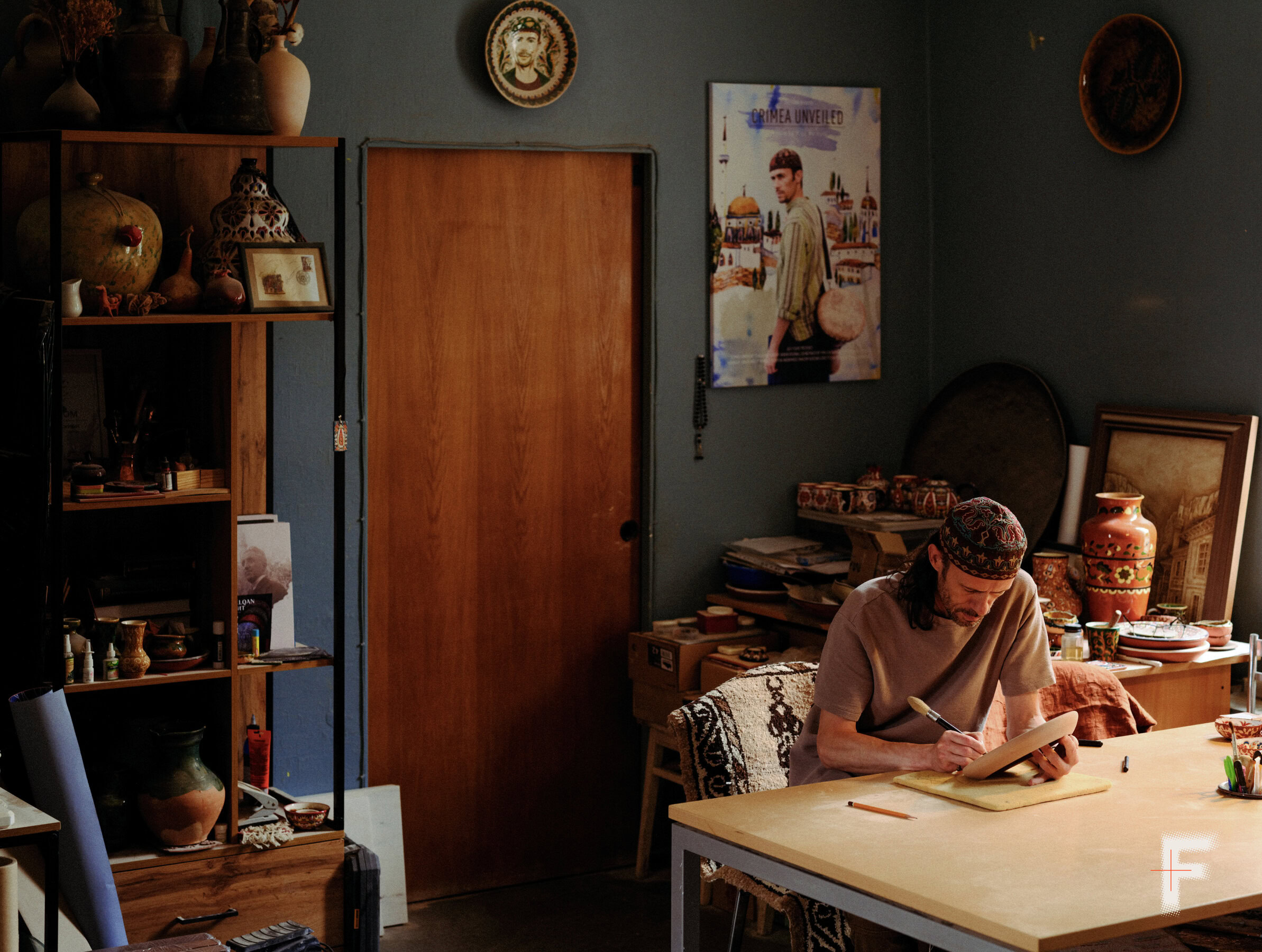
“What drives me is the process. From the birth of an idea to bringing it to life,” he says.
He wants people not just to see the finished pieces, but to understand how this tradition took shape, and that it’s far bigger than any single ornament or technique.
“It’s about understanding who you are. How deeply you can look inside yourself. That’s what shapes our identity,” Skybin says.
The school he founded in Bakhchysarai no longer exists. But knowledge can still be passed on, he says, just in other ways. He gives lectures, runs workshops, and consults for museums and universities. When people take an interest in their own culture and start asking questions, the craft stays alive, he says:
What I do comes back to me through people, through their emotions,
through connecting with them. That’s what matters most to me.
***
A multimedia documentary project “As long as hands remember”
Created in partnership between Ukrainian media outlet Frontliner
and Ukrainian design brand GUNIA.
***