‘Not the nation’s DNA, but Ukrainian tradition’: Modern embroidery and an ancient craft
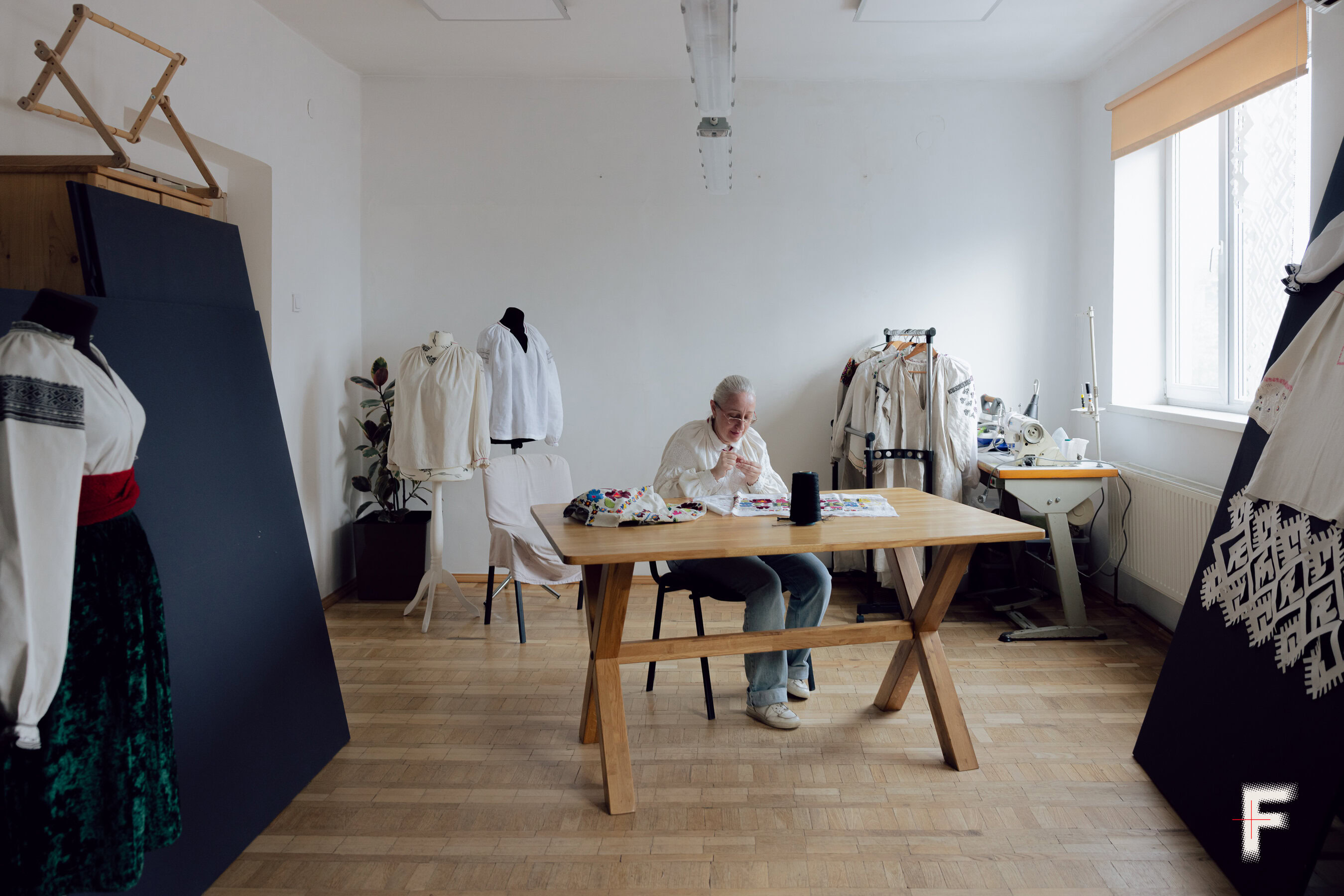
Late into the night, a light is on in the window of a high-rise building on the outskirts of Lviv. A desk lamp, a needle, and thread are essentials for artisan Hanna Rohatynska’s evenings. She is recreating yet another antique embroidered shirt. The collection at Magda Dzvin's Workshop, where Hanna works, holds nearly four hundred antique embroidered shirts from Ukraine’s various regions. Frontliner looks into how folk craftswomen in Lviv preserve this collection of traditional embroidery.
Hanna Rohatynska learned to embroider back in school. She mastered the techniques from books but longed to see authentic antique shirts rather than just imagine them based on sparse printed descriptions. Working in the printing industry and later studying programming left her with hardly any time for her passion. But when her brother asked her to embroider a shirt for him, it became the impetus that changed her life.
In a Lviv shop, she found an embroidery pattern and materials, and created a shirt that blended the traditional with the modern. Working on her brother’s shirt revived a long-standing passion.
There was no single standard. Books say one thing,
but when you hold an actual shirt in your hands,
it’s completely different.

In 2014, Hanna discovered Magda Dzvin’s Workshop, a research and creative space that had just opened in Lviv. She became one of its very first students and realized that antique embroidery was an entire world she wanted to explore more deeply.
“It was hard to get used to the fact that there was no single standard. Books say one thing, but when you hold an actual shirt in your hands, it’s completely different. So I had to forget what the books said and look at how the shirt itself was made. Sometimes I’d occasionally come across something interesting, but I wasn’t sure if it was traditional. So I had to find a few more shirts stitched in the same way to confirm the tradition,” Hanna Rohatynska says.
The largest collection of embroidered shirts in Lviv
Magda Dzvin’s Workshop creative space was established in 2014 by Oksana Pecharska, taking its name from its founder’s literary pseudonym. Following the Revolution of Dignity, she and other Lviv craftswomen came together to explore and promote folk culture. At the workshop, they teach pysanka egg decorating, wax wreaths, beadwork, and weaving. However, the researchers focus mostly on traditional embroidery.

The space’s extensive collection now holds nearly four hundred antique embroidered shirts from various regions of Ukraine. They also collect rushnyks (traditional embroidered towels), plakhtas, skirts, and embroidered belts. People buy these items at auctions, via social media, or occasionally receive them as gifts from private collections.
[Editor’s note: A plakhta is a traditional, non-sewn wrap-around skirt worn as part of female Ukrainian national attire.]
Hanna Rohatynska says that traditionally, shirts were long, narrow around the neck, and buttoned up. The Soviet occupation of Ukraine forcibly interrupted the tradition of embroidery.
“If this hadn’t happened, our traditional shirts from the late 19th and early 20th centuries might not have survived because they would have simply been worn out. So it’s fortunate that they have survived and made it to us in this form. But it’s unfortunate that it happened this way,” Hanna Rohatynska says.
From a student to a teacher in just a few months
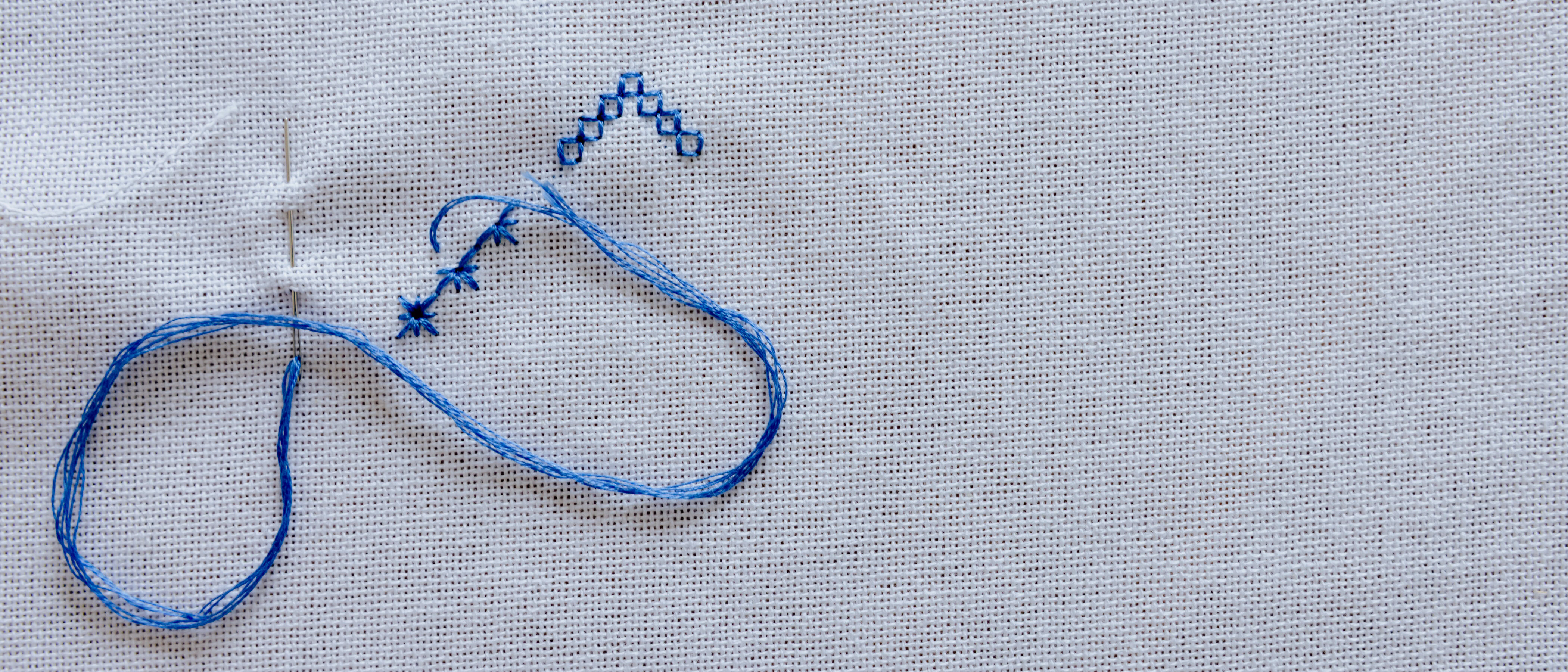
When Hanna first attended a class at Magda Dzvin’s Workshop, the instructors wondered what else they could possibly teach her, as she already knew so much about embroidery techniques and traditional shirts. Yet instructor Iryna Slipetska managed to pique her interest with the nastyl (pearl stitch) — an antique embroidery technique that creates a textured pattern.
As I’m drawing, I instantly realize
that I want to embroider one myself,
At the time, they were studying a men’s Borshchiv shirt worn in the Ternopil region. Since Hanna’s father was originally from there, the classes captivated the embroiderer so deeply that she fully immersed herself in the subject. Just a few months later, she was offered the opportunity to teach there.
Hanna teaches shirt-making techniques to anyone interested. Some people attend just a few classes, other groups meet for a full year. In every class, Hanna demonstrates a new technique to her students and encourages them to try embroidering a shirt of their own.
“Our classes motivate me to make my own shirts. When the students like a shirt that doesn’t have a pattern, I draw one for them. Usually, as I’m drawing, I instantly realize that I want to embroider one myself. When the girls are working alongside me, it feels like they’re keeping me moving, because I want to explain everything to them in detail,” Hanna Rohatynska shares.
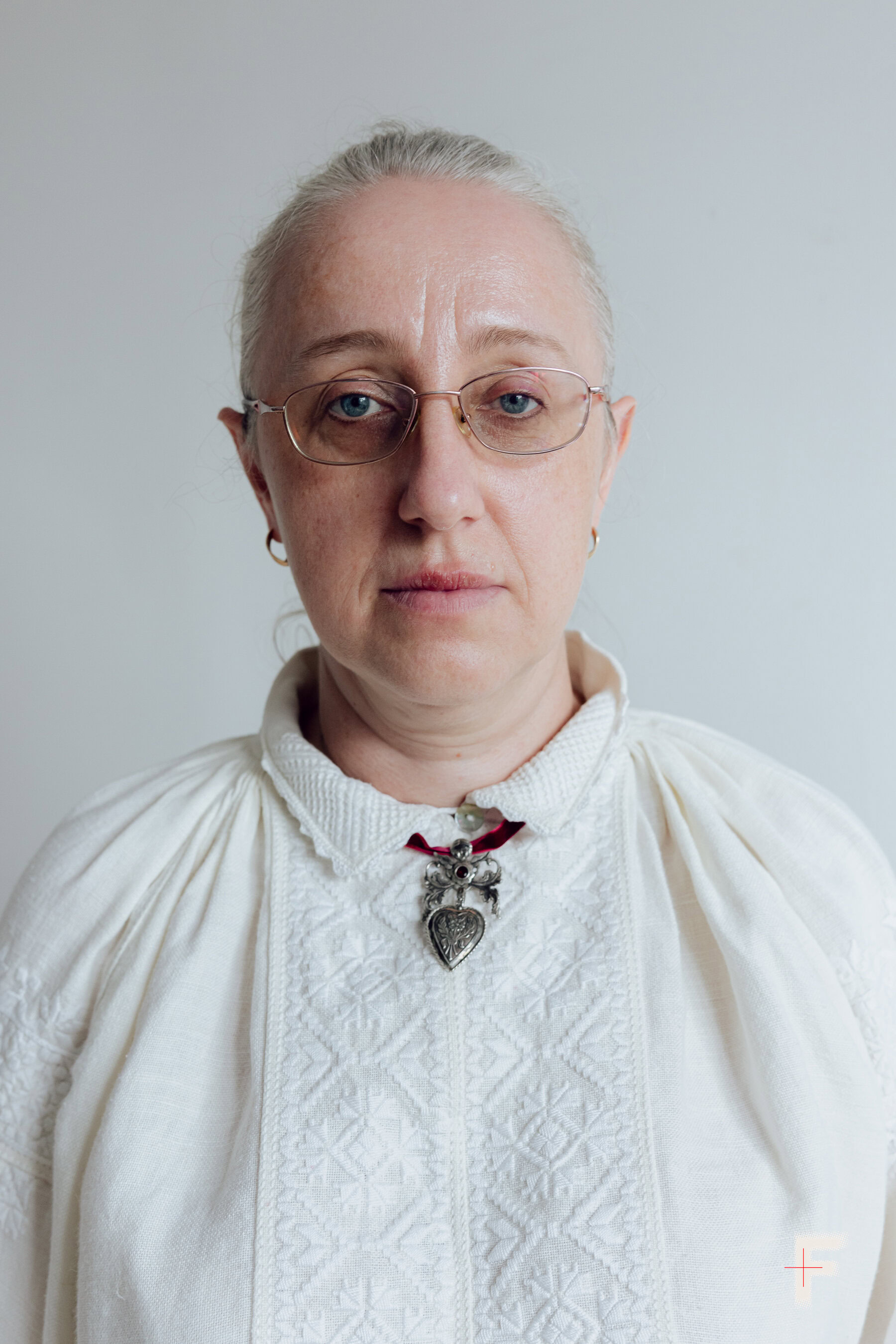
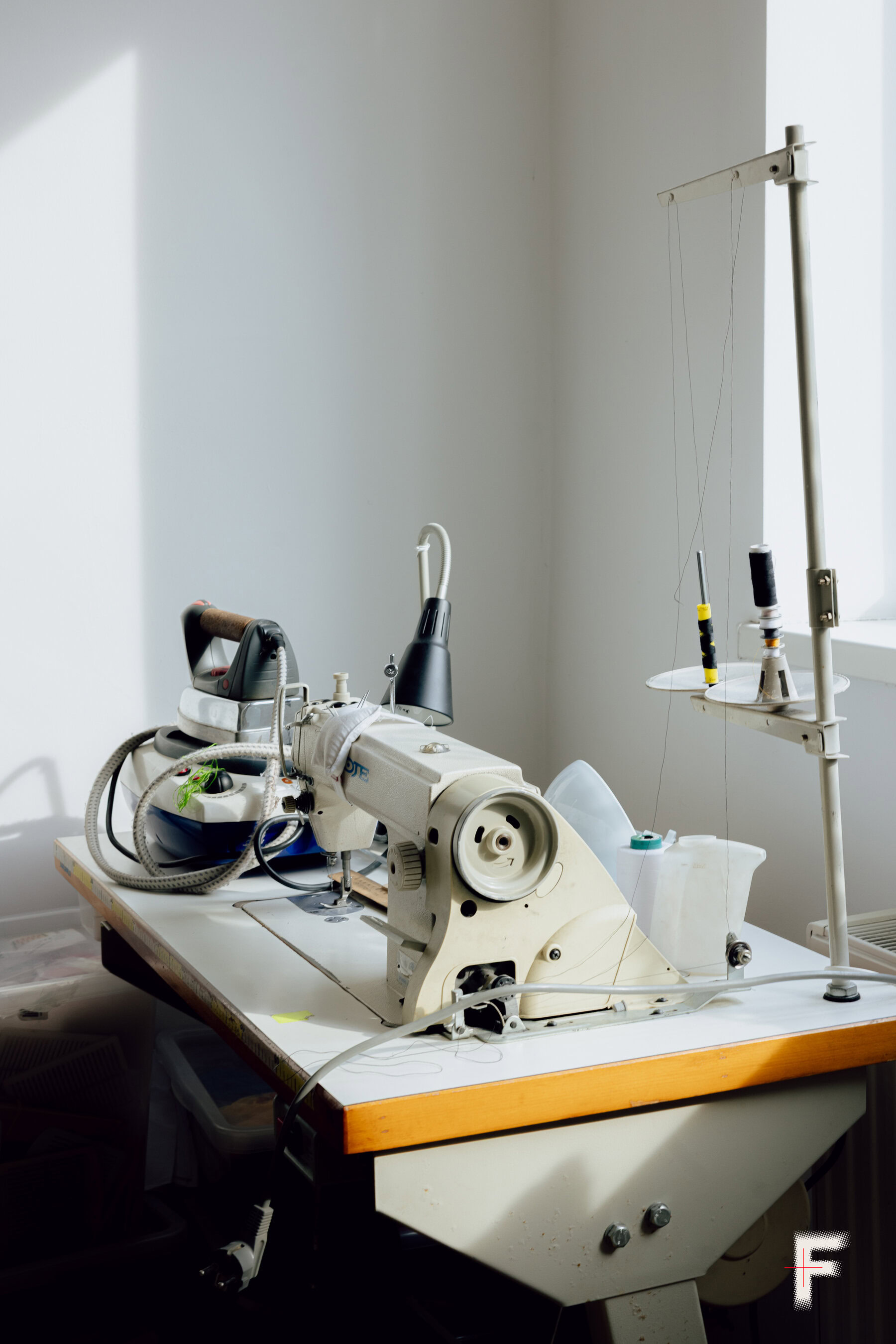
I don’t like calling
these shirts vyshyvankas,
For Hanna, the greatest joy after classes is when her students show her the shirts they have made, though not everyone does, as most are too shy. However, some embroiderers go on to research shirts made by their own relatives. According to the artisan, embroidery unexpectedly becomes therapy for many and a chance to escape everyday worries.
Today, Hanna Rohatynska is also a co-owner of the workshop, overseeing its financial matters. However, most of all, she enjoys working with the collection, cataloging each shirt with its own number, detailing its origins, cut, and stitching techniques. The workshop also regularly organizes themed exhibitions.
It’s impossible to simply recreate embroidered shirts
The craftswoman has already embroidered 29 shirts. The fastest to create was a Baranivka shirt, taking just three months. She was so engrossed in the process that she was eager to see how her color combination would turn out.
“I don’t like calling these shirts vyshyvankas, because it immediately reminds me of those mass-produced factory items with big red poppies. I don’t study the history or ethnography of shirts in detail, though I do read scholarly papers sometimes. I’m much more interested in the technique, specifically how it was cut to fit the narrow width of old handwoven cloth,” Hanna Rohatynska says.

At times, the craftswoman aims to recreate every single detail. Other times, she changes a color if it makes the piece look more interesting. The embroiderer notes that it is impossible to recreate absolutely everything today because authentic antique materials are simply no longer available. Fabric density, drape, bleaching techniques, and composition — everything is different.
In her classes, Hanna explains to her students what is typical for shirts from specific regions, but she also encourages them not to be afraid to experiment with their creativity, even if that means pink embroidery. However, in that case, one shouldn’t call it traditional, but rather a shirt with an artistic vision.
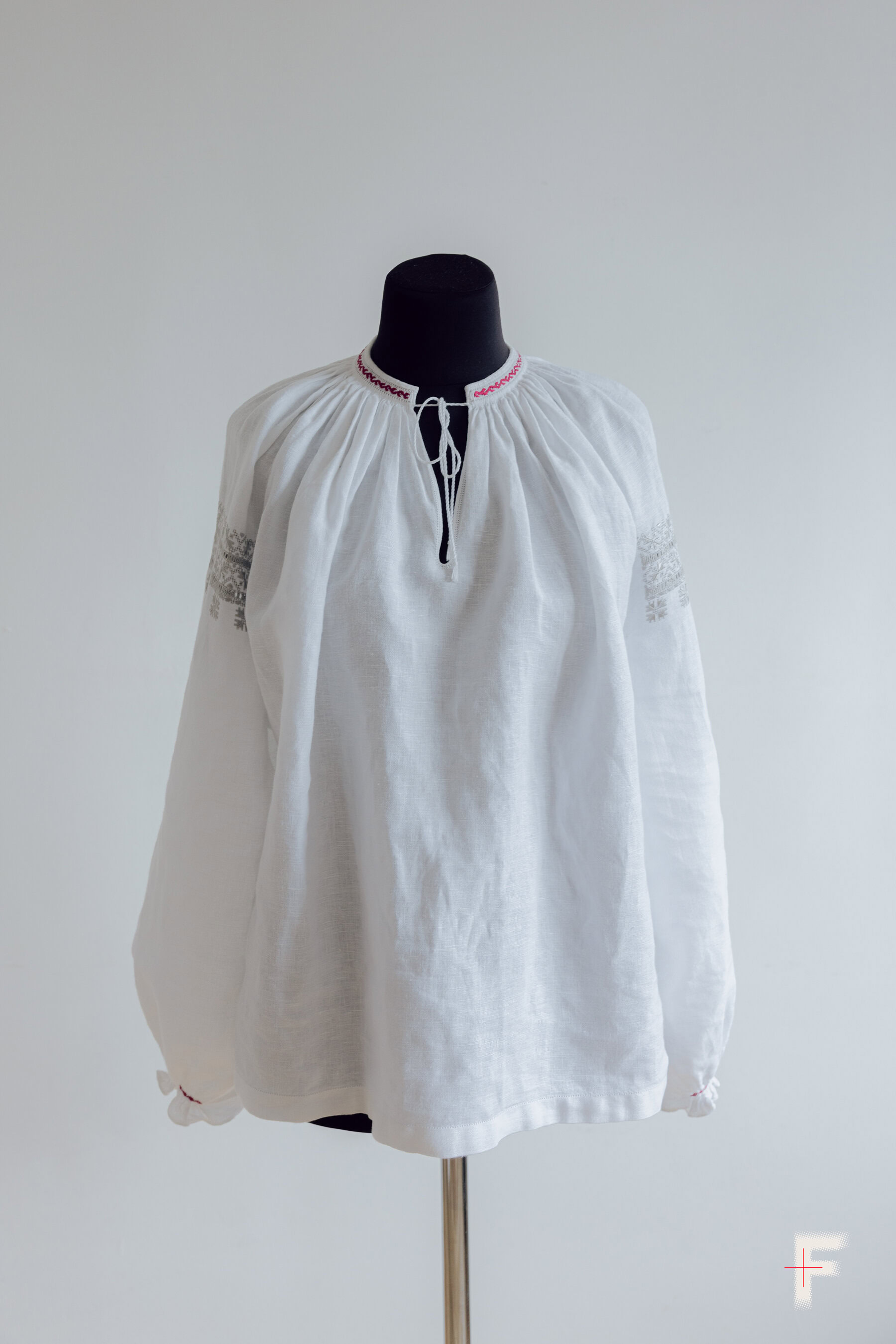
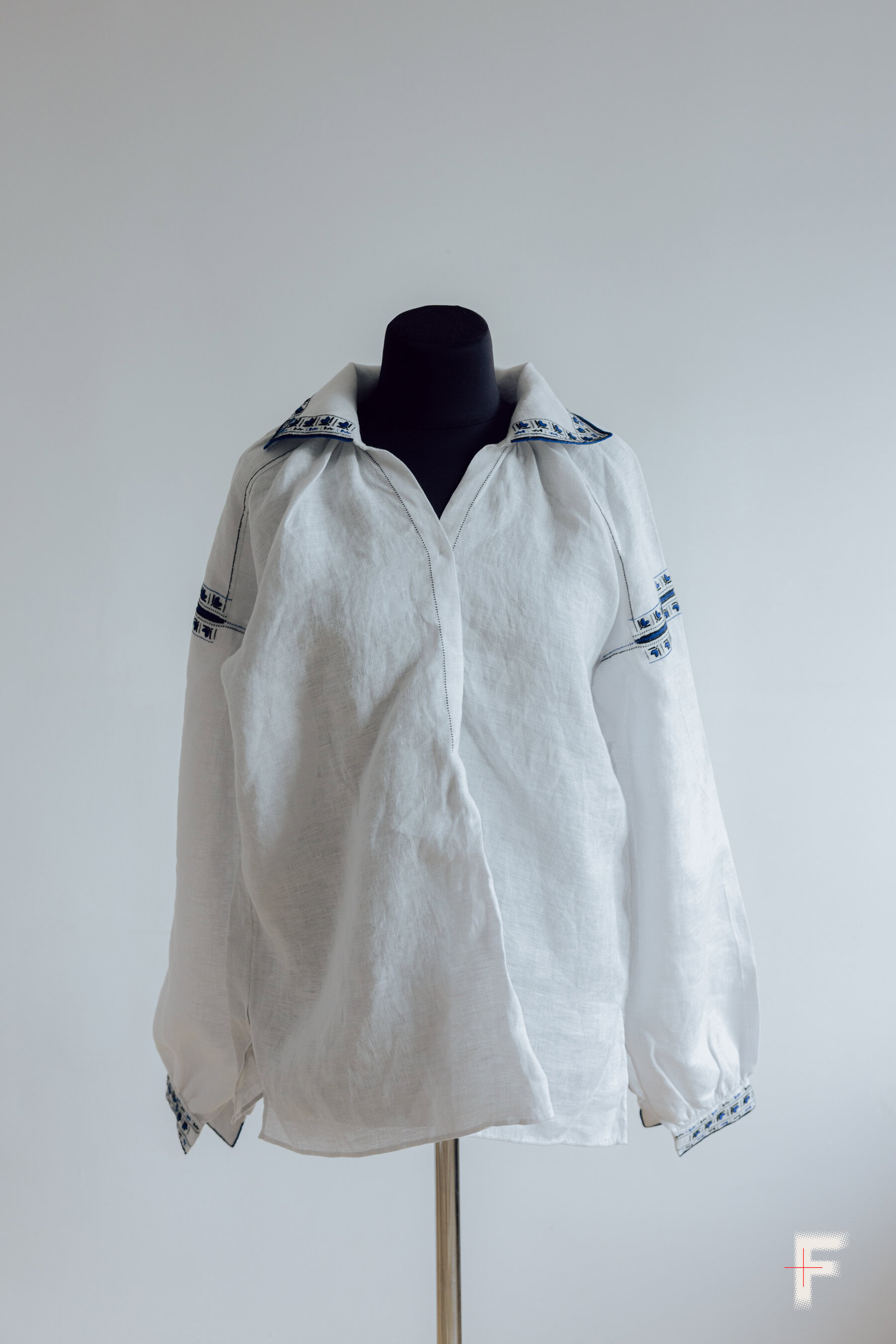
When researching antique garments, what interests Hanna most is discovering unique constructions or cuts that have not been used before.
Embroidery is a part of traditional Ukrainian attire.
I’m not one to call it the ‘DNA of the nation,’ but it truly is
a defining feature of our tradition. There have been changes over generations,
but today, it’s hard to imagine any Ukrainian who doesn’t
know what an embroidered shirt is,
***
A multimedia documentary project “As long as hands remember”
Created in partnership between Ukrainian media outlet Frontliner
and Ukrainian design brand GUNIA.
***