A forgotten brand: A weaver brings woven kots back to life
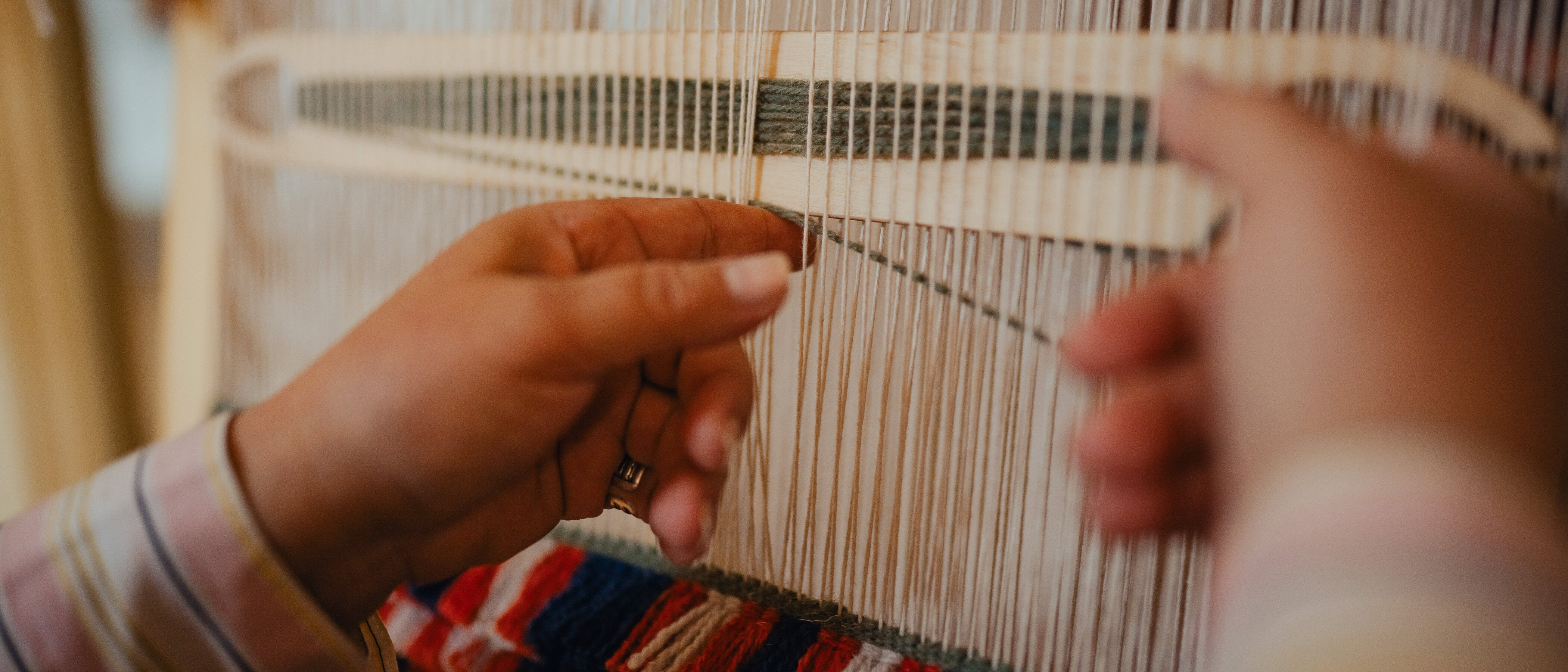
Her hand slowly sorts through wool threads in a bowl. Her fingers dip into shades of yellow and red, pushing aside green and white threads. Master weaver Iryna Shehda is looking for a color to match the blue she has already woven into the kots. Her great-grandmother did not fuss over that kind of precision, weaving in whatever threads she could find at the market. Now that the choice of material and color has grown by dozens of times, picking the right thread takes more care. A traditional Kharkiv kots does more than keep people warm: it has to look right at home too. The weaver's fingers settle on a skein of soft yellow. She turns the thread over thoughtfully, then pulls it out to weave into the rug. The choice is made: this kots will be blue and yellow. Frontliner watched a third-generation kots weaver bring a forgotten craft back to life.
As far back as 400 years ago, kots were found in nearly every Kharkiv home. People used them as blankets, as covers for long trips, or laid them in sleighs.
[Ed. note: Kots — a traditional handwoven wool rug or blanket.]
“In 1883, researcher Anatoliy Tverdokhlibov described archival correspondence from the 1720s between the tsar’s stables near St. Petersburg and the Bilhorod and Kharkiv military administrations. The tsar’s stables were presented with two Kharkiv horse blankets, and Tsar Peter I liked them so much that he ordered his men to find craftsmen and commission 500 more,” Iryna Shehda says.
But the 15 to 16 kots weavers who were found never completed the tsar’s order in 10 years. The administrations couldn’t agree because delivering the order over such a long distance was difficult and risky.
“The buyers even agreed to compromise on price and simplify the pattern, because kots weavers of the past worked with just one design, one loom and one tsynka for their entire lives,” she says.
[Ed. note: Tsynka — a wooden stick used to measure and cut the wool pile.]
By the late 19th century, the craft was already in decline. Researcher Vasyl Babenko managed to find a kots weaver in Kholodna Hora whose loom had been sitting unused in the attic. After some persuading, she wove him fragments of a kots and explained how they were made, Iryna says. Those accounts were among the last records of the craft.
Iryna herself learned she came from a family of kots weavers when she was young and was studying a similar craft. Her great-grandmother was a kots weaver and was able to pass the craft on to Iryna Shehda’s grandmother.
Kots weaving would have almost been lost if not for research work.
Almost no kots weavers are left, and only a rare few craftspeople
still make them, even though the craft is more than 400 years old.
It needs to be brought back from oblivion,
A ‘historic’ frame for an authentic kots and wool thread
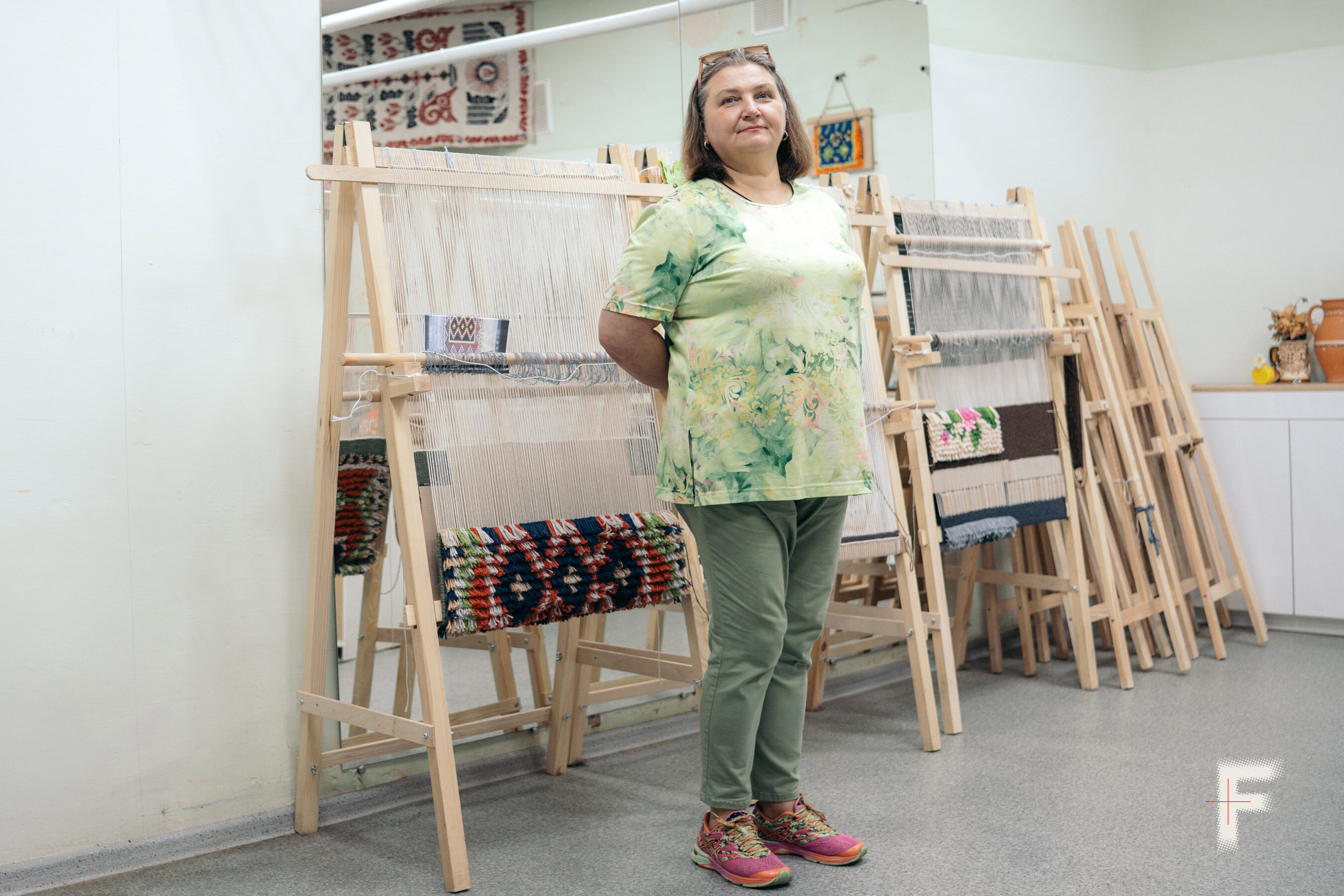
Iryna Shehda weaves her kots on an authentic loom that has kept the same look her great-grandmothers would have known. Traditionally, the wooden frame was leaned against a wall and, when needed, moved elsewhere to free up space. But the weaver’s custom-made frame has an extra leg, so she can weave away from walls too. A stool sits next to it. Sitting for long stretches makes her back ache, and the poor lighting tires her eyes as well. Every 10 minutes, she should get up to stretch or at least walk around a bit, since the repetitive work takes a real toll on her wellbeing.
Weaving a traditional kots requires a long search for materials: few people in Kharkiv make wool thread, and there is no substitute for it. Iryna Shehda also makes the base of her kots from butcher’s twine, which she buys in three-kilogram spools.
My first piece, for example, came out crooked,
so the kots came out skewed,

“A kots cost less last year. Now it’s no less than 12,000 hryvnias, because everything has gotten twice as expensive, especially wool. I already know from experience that cutting corners on materials never ends well. In some spots the weave will be too sparse, in others it will just look bad. Technique matters too, because once you get used to weaving with one kind of thread, it’s hard to switch to another. My first piece, for example, came out crooked. Back then I used polyester thread for the first row because it didn’t tear, but it slipped on the loom, so the kots came out skewed,” Iryna says.
The base of a kots has to be strong: when the weaver “beats” the weave into place with a special comb, the thread must not fray or tear. Otherwise, it has to be tied off or rewound, or in the worst case, weeks of work have to be unraveled.

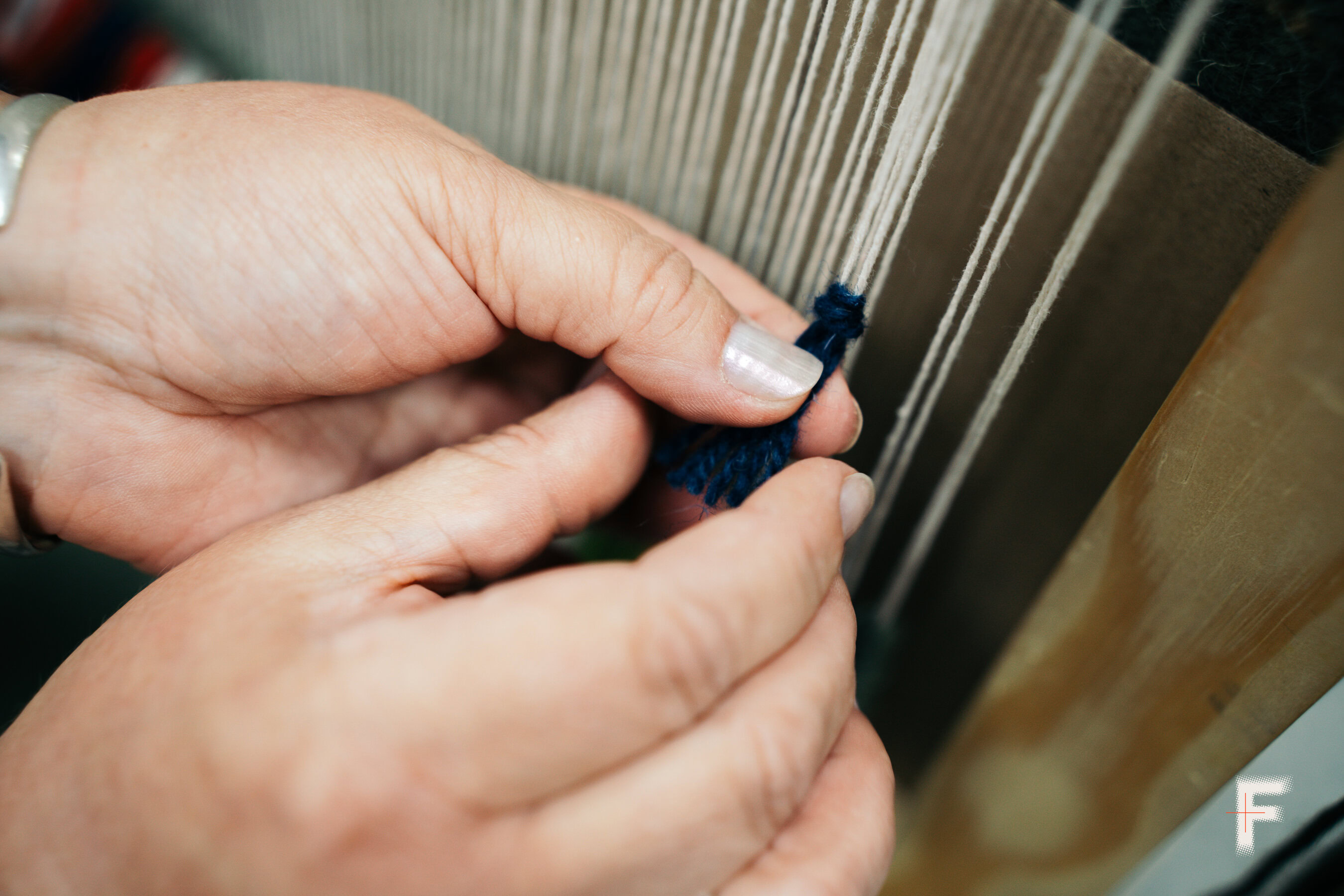
“It takes me two weeks to weave a kots that measures 80 by about 120 to 130 centimeters, working from morning to evening, provided the pile is already cut. To cut the pile, weavers use a wooden stick called a tsynka. The pile thread is wound evenly across it in a single row, then cut with a knife or scissors into equal pieces called ‘pods.’ Once all the pile has been cut and sorted by color, it’s called the kots’s ‘bloom.’ Weavers of the past kept the pieces in small wooden boxes divided into compartments, with each color stored separately so they could find and weave in the right one quickly. It was tedious, time-consuming work back then. People made their living from it,” Iryna Shehda says.
Few people willing to take up kots weaving
In 2018, Iryna Shehda founded a program to preserve kots weaving and won an award at the Zhyva Tradytsiia (Living Tradition) national competition. The program was added to the regional list of intangible cultural heritage, and in 2022, to the National List as a best practice for safeguarding the craft. Still, Iryna is convinced the craft can no longer be fully revived. Only a handful of people want to take it up. She teaches most of them herself, but students often don’t stick with the training long enough to finish.
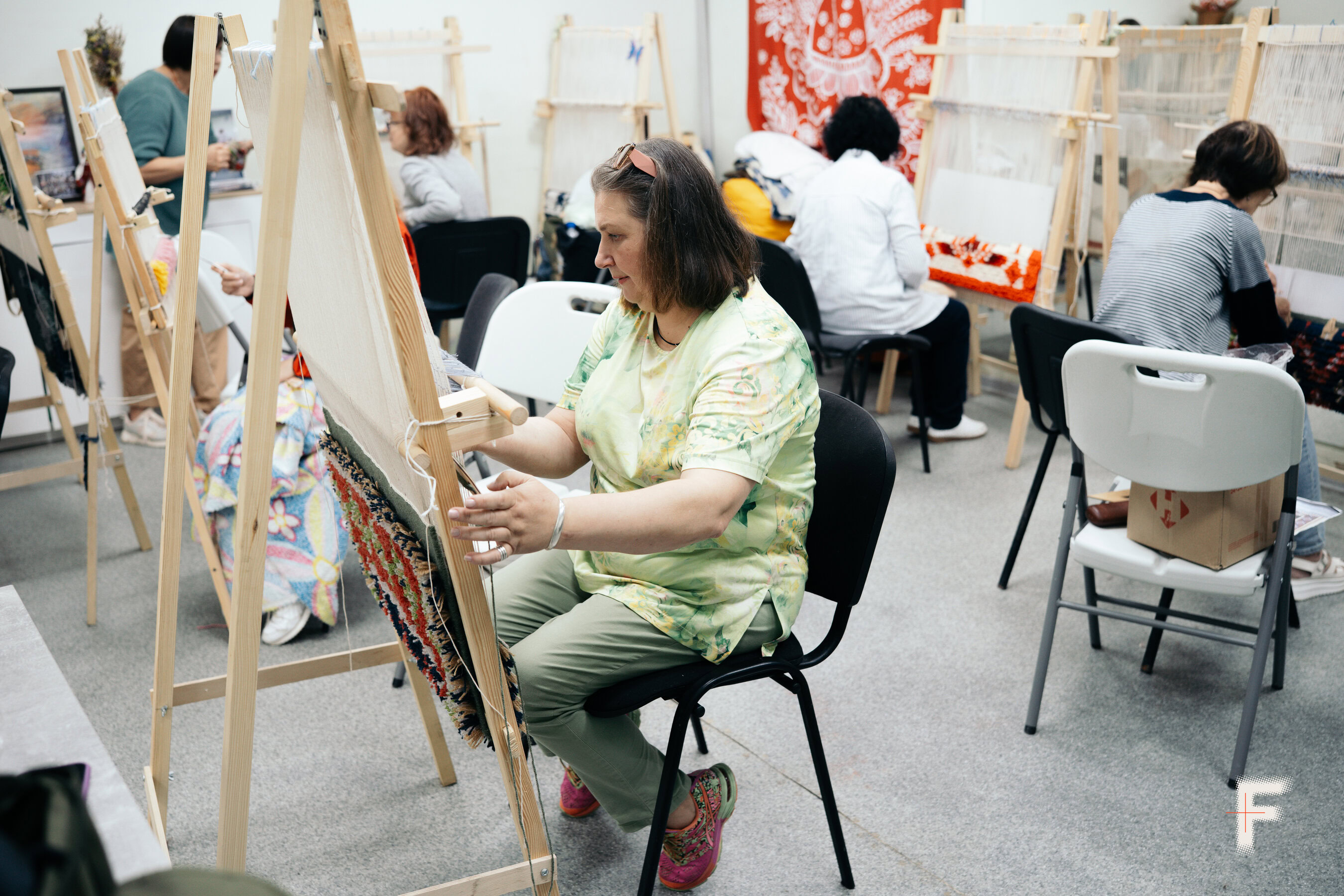
“In September 2023, I opened a studio. Right now 29 people are training at different levels, and about 60 students have come through in total. I teach them in four stages: first we cover basic skills and wind the base for a kots. It’s the hardest and most tedious part, and few people enjoy it, but you can’t make a kots without it. That base is enough to weave a rug measuring 40 by 40 centimeters,” Iryna says.
In the second stage, students learn to choose colors for their kots and create a sketch together with their instructor.

“Students usually want to make interesting patterns or pictures, but the pile doesn’t allow for that: if it leans to one side, the pattern or image disappears. That’s why a traditional geometric design works best, it’s the easiest to weave, and it doesn’t change much even when the pile tilts,” Iryna explains.
Once students master the basic skills, they’re split into pairs. Each pair works on one kots together, so they catch each other’s mistakes and hear about their own. Iryna Shehda says this is the best approach. Weaving together builds a stronger sense of responsibility for the kots.
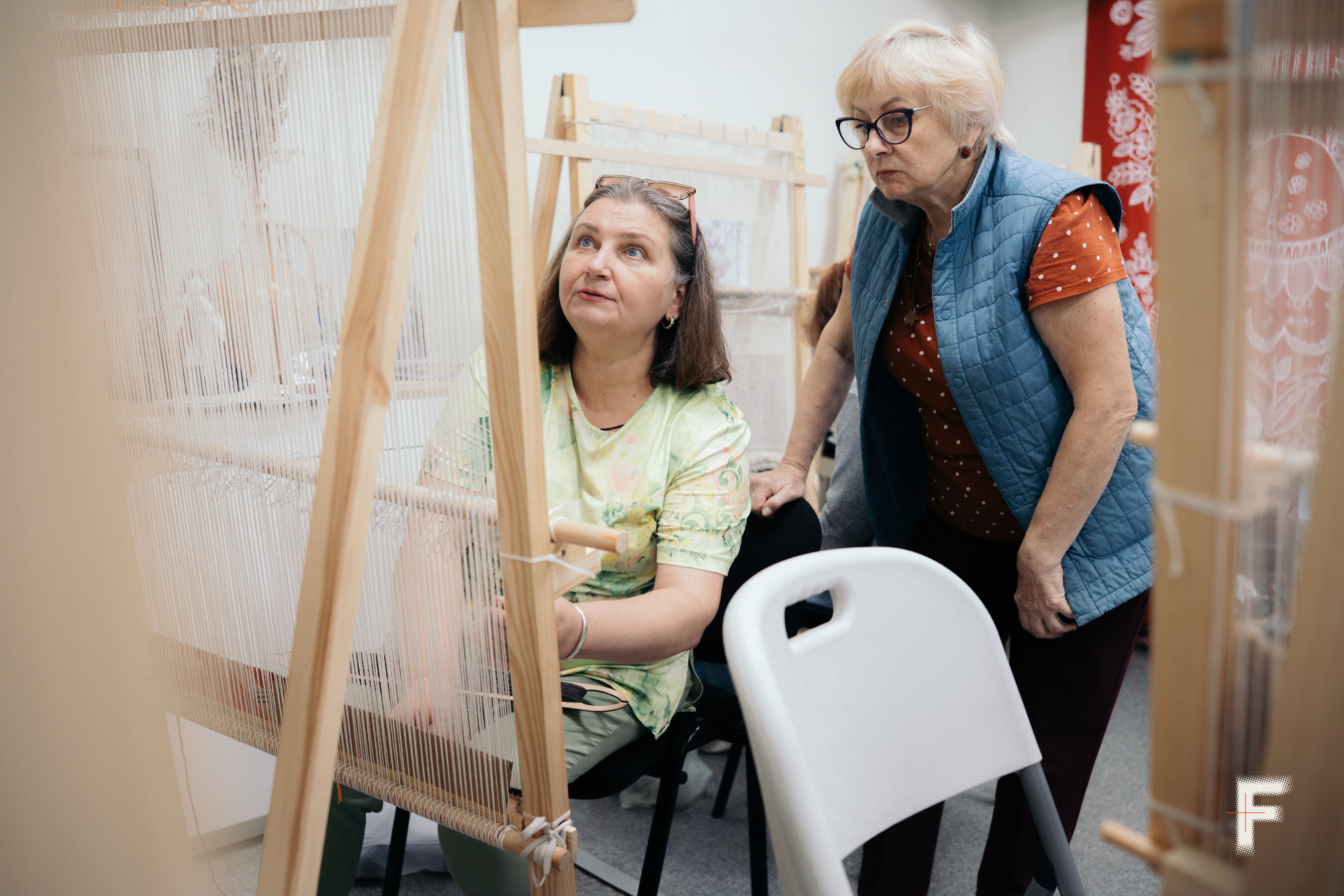
The fourth stage is the most creative: students design and weave a kots on their own, based on an individual sketch and their own preferences. By this point, they’re comfortable working the frame and know how to weave the base, cut the “pods” and weave them into the kots. But far from everyone makes it this far.
Each stage takes about a month and a half. So in about six months,
you can fully master this art if you attend classes regularly,
Today, all that’s left of this traditional regional craft in Kharkiv is a street named after the city’s kots weavers, Kotsarska Street, and the classes taught at Iryna’s studio. Iryna Shehda says the trade can’t be revived as an industry, since it isn’t even profitable under current conditions. But it needs a second life, she says, in the form of interior décor items, throws, or bags and pillow covers.
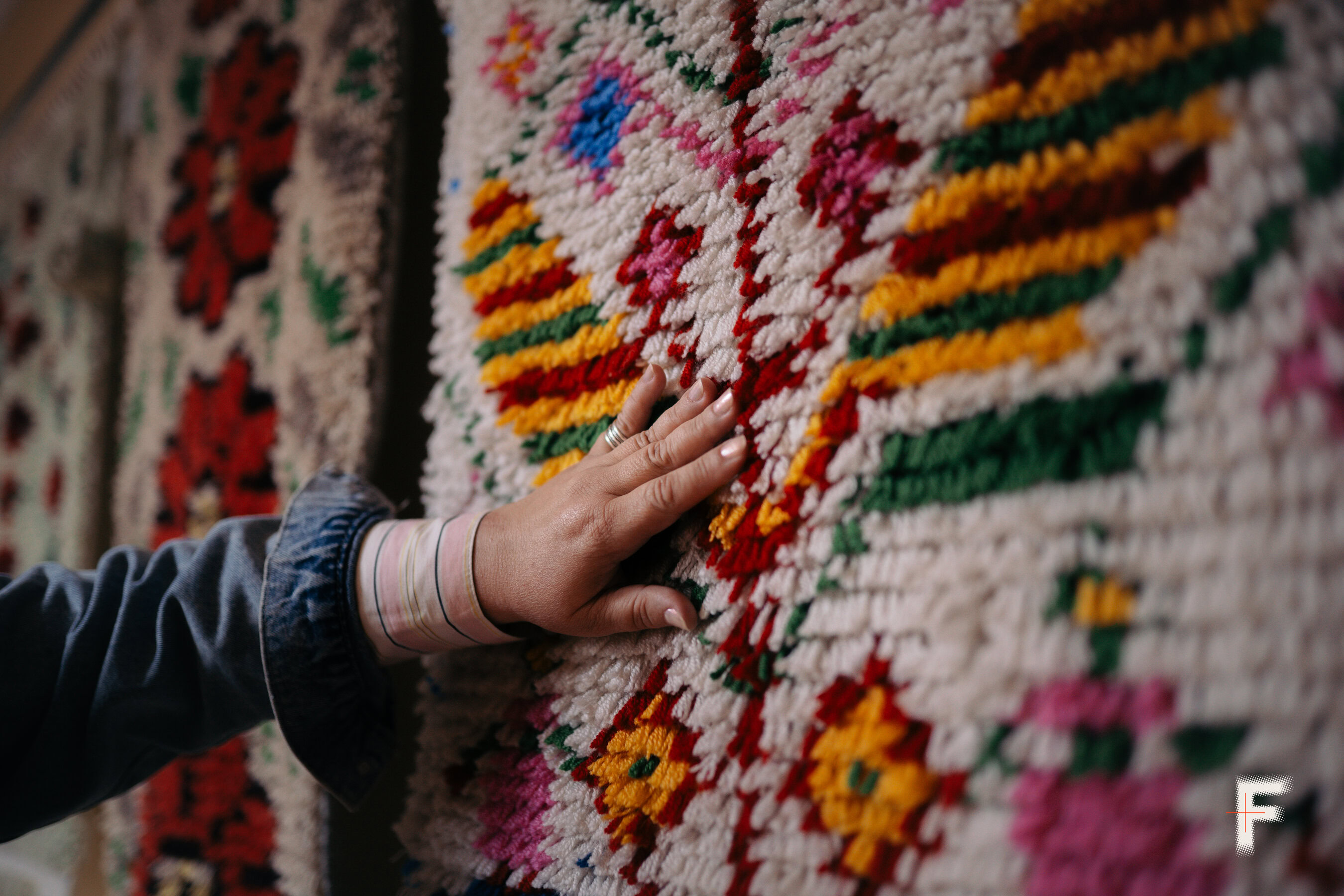
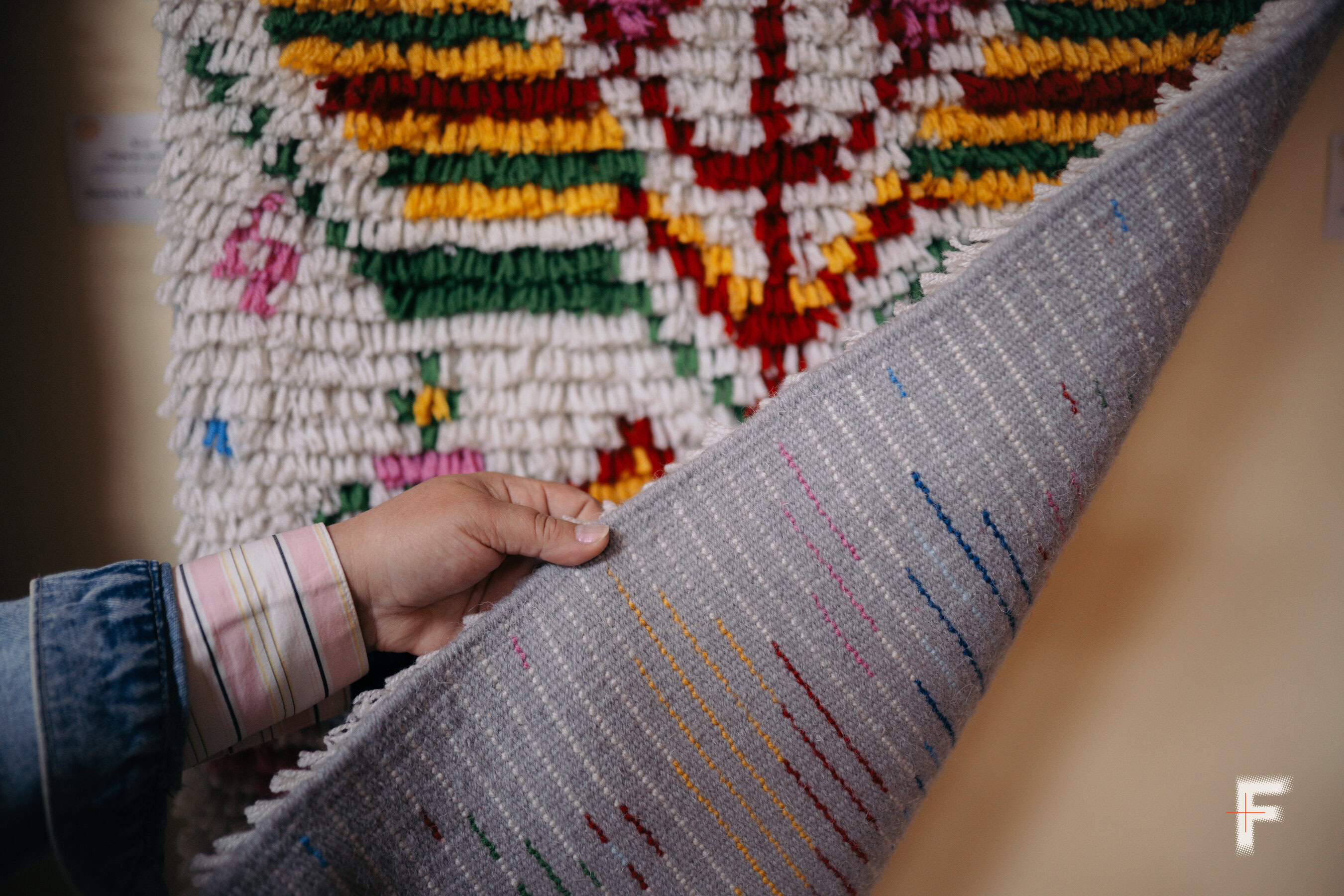
In the 19th century, the Kharkiv region produced up to 26,000 kots a year.
Each rug took about 5.5 kilograms of wool, which meant shearing three sheep.
That required enormous flocks of about 80,000 sheep and vast pastures.
Still, kots weaving has a great place in the future of our culture.
It’s our forgotten heritage,
***
A multimedia documentary project “As long as hands remember”
Created in partnership between Ukrainian media outlet Frontliner
and Ukrainian design brand GUNIA.
***