‘I hope my mom doesn’t read this’: Who is joining the military under the ‘18–24’ contract, and why
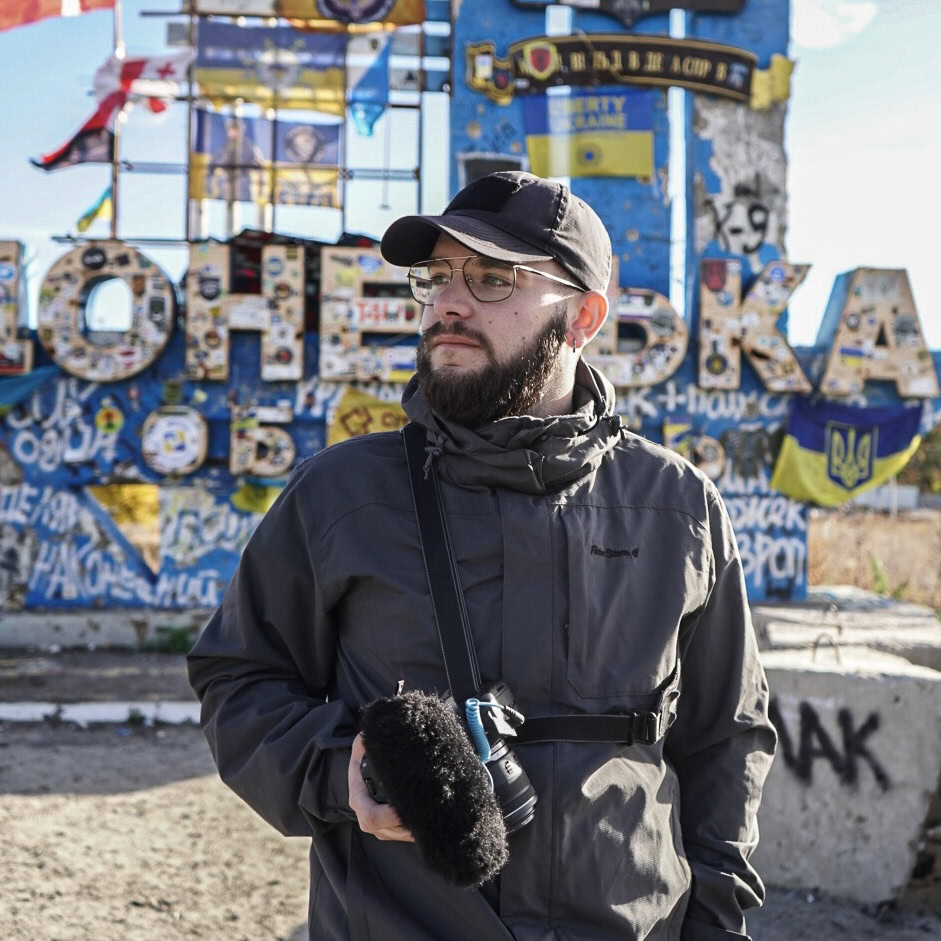
Ivan Akimov signed the “18–24” contract, having dreamed of joining the military ever since 2014. Back then, his hometown of Kreminna ended up right on the line of demarcation between the sides of the conflict. Ivan kept playing online games with Russians. He didn't yet see any difference between them and himself. When the Russian army closed in on Kreminna in 2022, the young man made the most important choice of his life. Frontliner reporters tell the story of what he lost on the way from home to the military and what he gained.
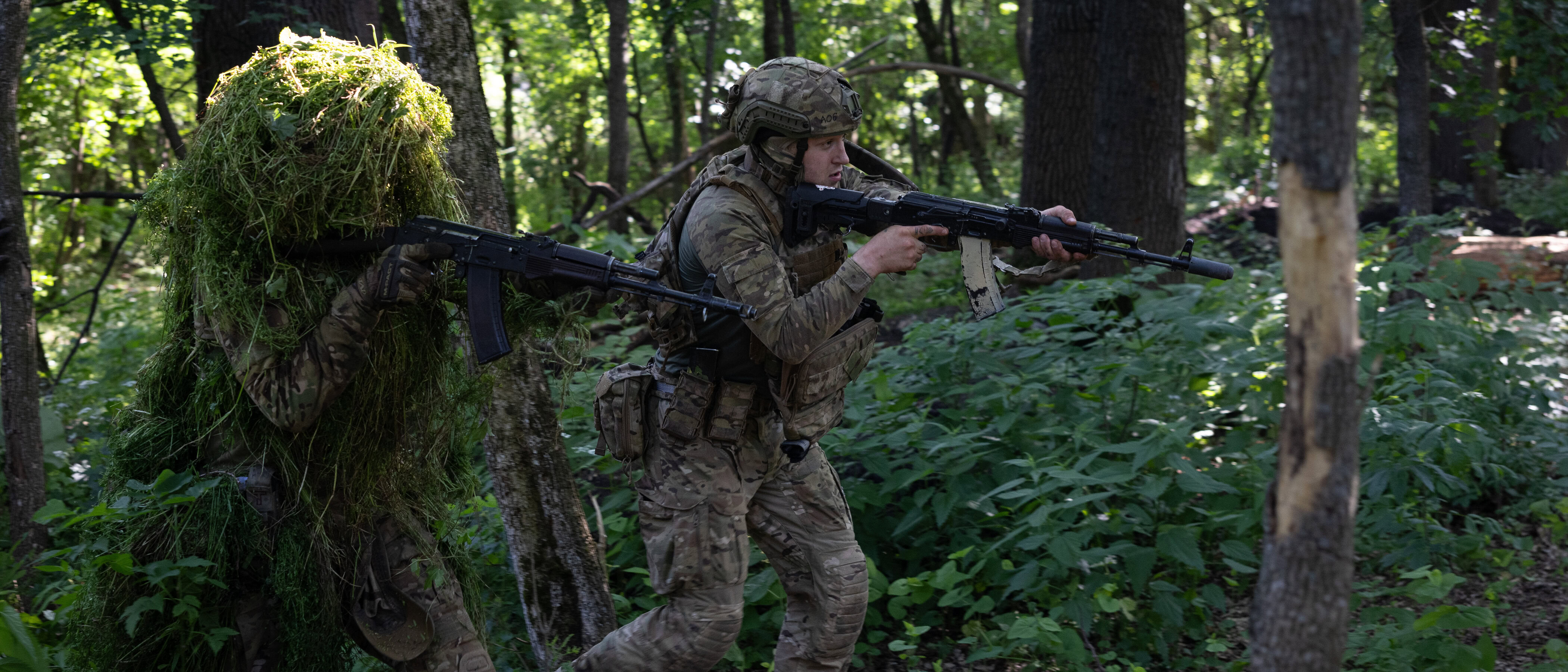
Recruits in full gear move in single file toward the training ground. They have just practiced woodland camouflage, so branches still stick out from some of their helmets. After the exertion, the heat drains their remaining strength, but the young men will have to push themselves a little further. This will be their second weapons handling session of the day.

“A39” stops to help “A06” adjust his body armor. The recruits have no call sign patches yet; for now, they only have the letter A and a few digits. After all, they still have many call signs ahead of them, which they will have to change for various reasons. The young men are 18 to 24 years old, with two years of contract service ahead of them.

Each gives his own reason for joining the military: some came to avenge a loved one, while others consider themselves patriots. Nothing to suggest how young they are. Almost nothing.
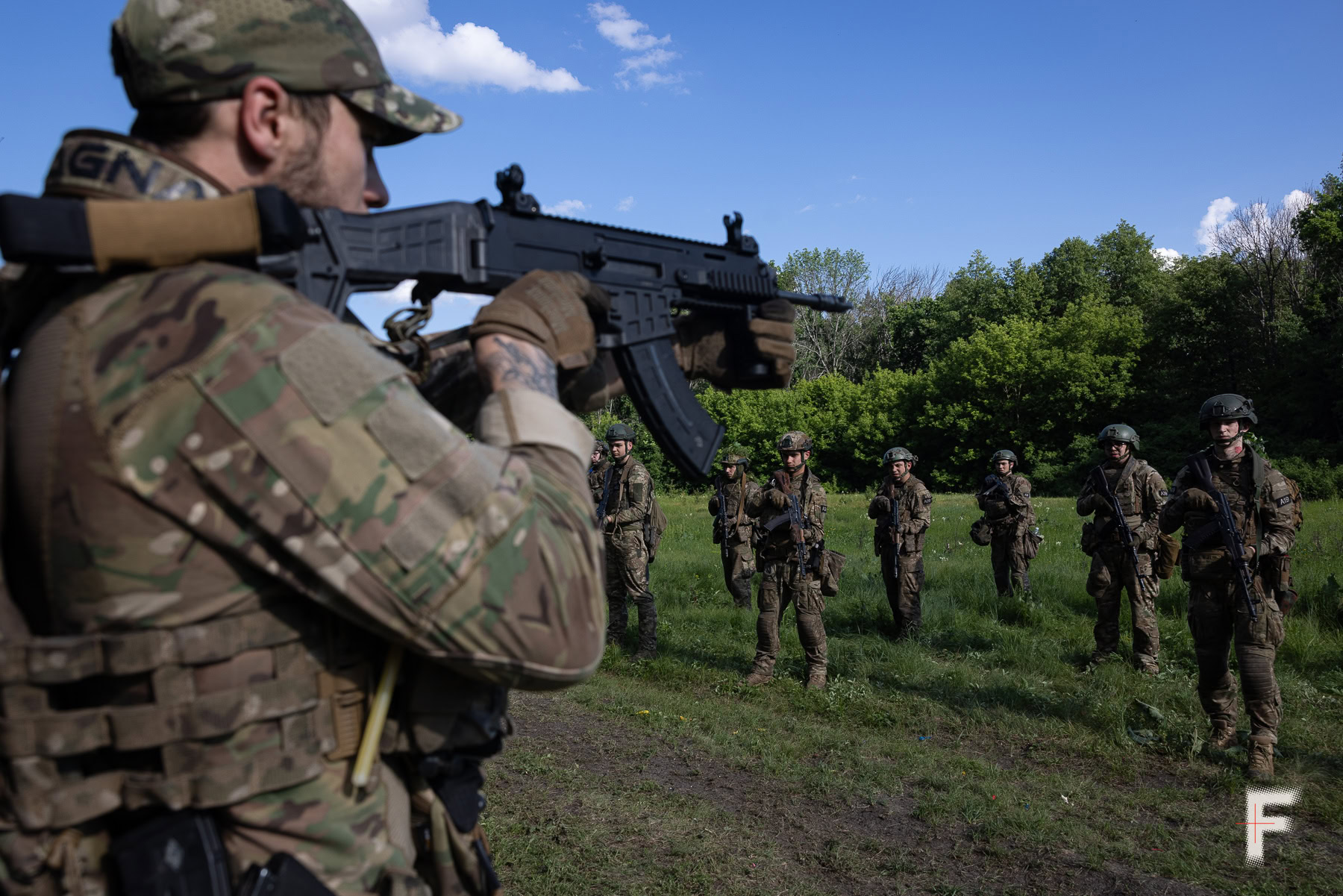
After the training session, instructor Bohdan Demydenko, call sign “Mars,” briefly drops his stern demeanor and jokes with the recruits. Bohdan is 22 years old, but he already has experience in assault operations and has lost a limb. Despite this, he is still a 22-year-old guy who loves to laugh.

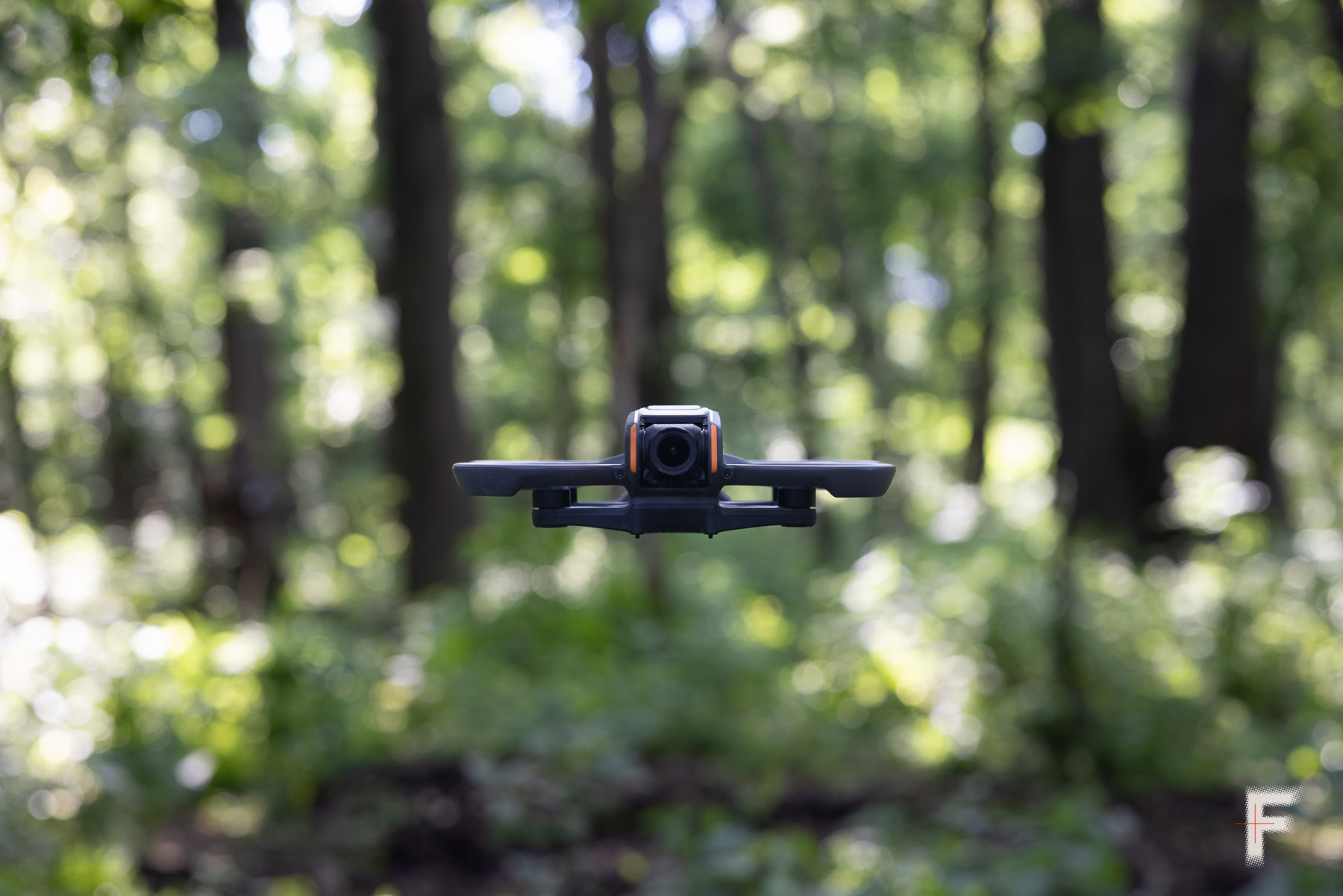
In a few days, the recruits will take exams, after which they will be sent for specialized training. Only then will they begin combat operations. All of them will work with drones: some will become engineers, while others will be strike drone operators.
Bohadn is already training his fourth group of contract recruits aged 18–24. He says the benefits of the contract attract many recruits: a mortgage at 0% annual interest, state-funded education, and the right to travel abroad. But above all, there is the prospect of receiving 1 million hryvnias over two years of service, as well as decent compensation for combat missions.
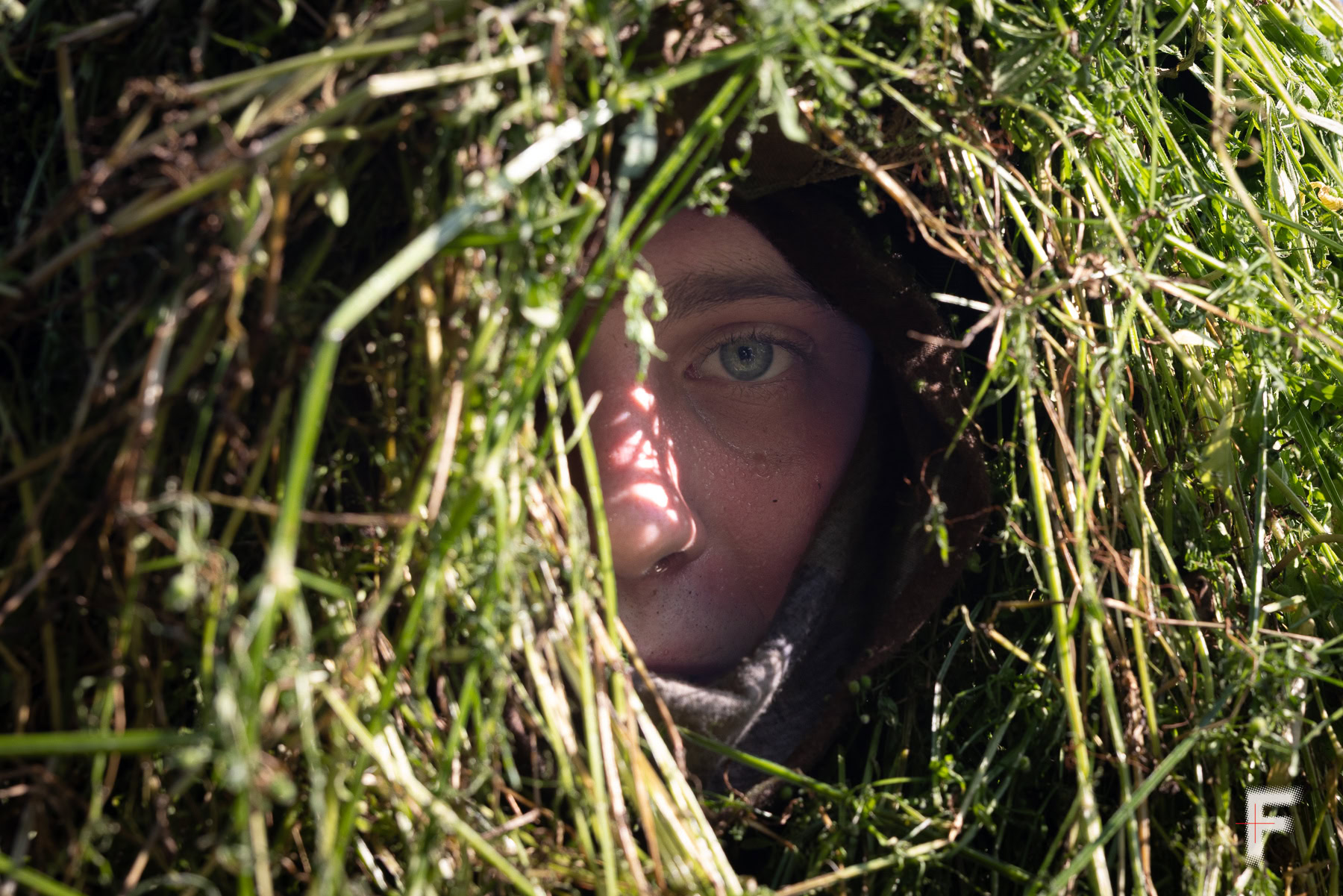
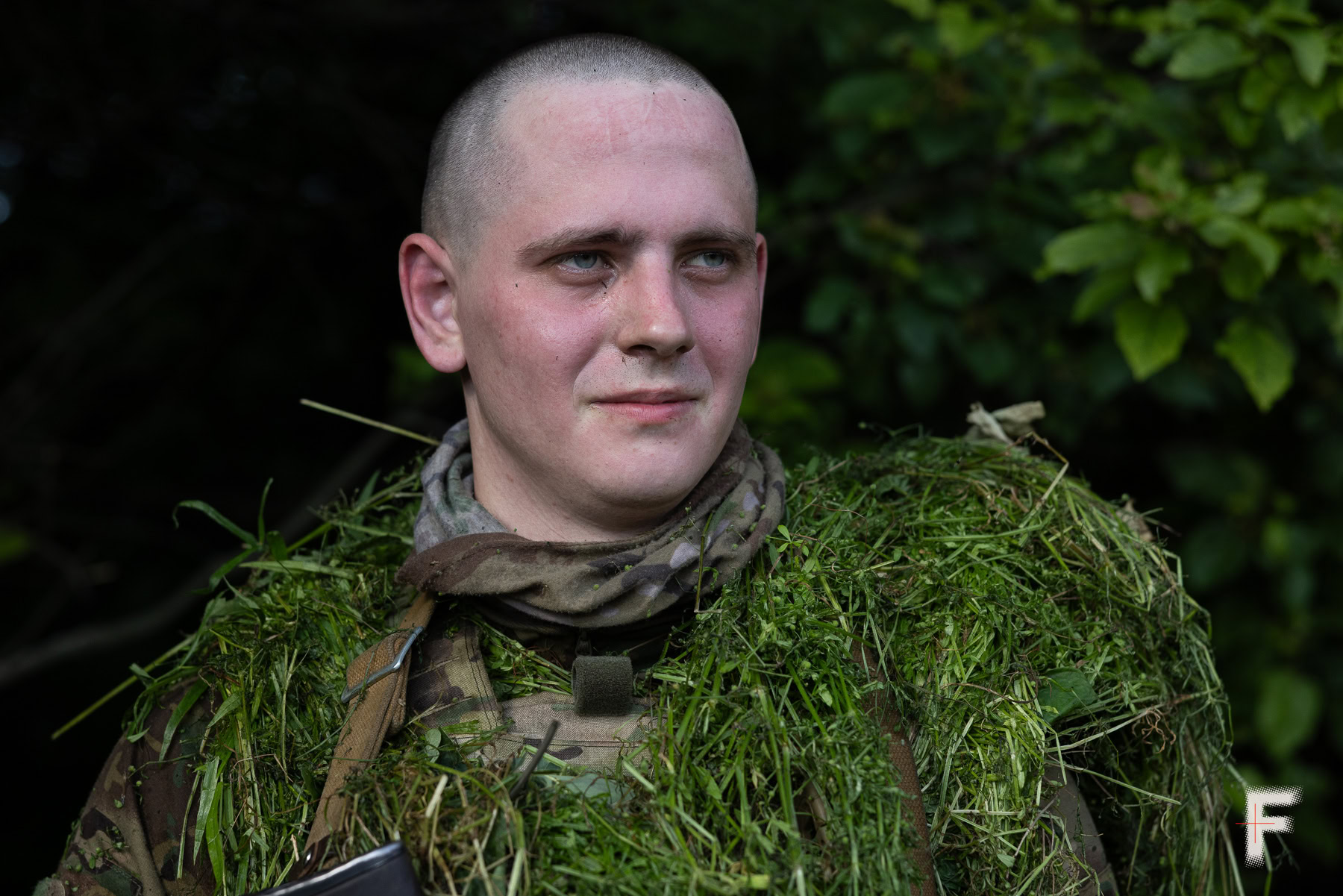
“Mars” asks the recruits if anyone is willing to share their own experience. “A29” is among the first to raise his hand. The young man has the most camouflage of all: clumps of grass cover his head and parts of his body. Only his eyes and sweat-soaked forehead are visible beneath the grass. He is so well-camouflaged that it is impossible to tell what he actually looks like.
Bohdan allows “A29” to step away from training for 20 minutes to talk with the journalist. The other recruits finish their weapons drills and disappear once again into the thick of the woods. “A29” extends his hand and gives his real name: “Ivan.” All this time, it seems as though he has been speaking with his eyes, with grass covering his mouth.
I always sleep ready for action so I can wake up,
put on my body armor right away, and be ready to go.
‘Ukrainians have a mind of their own’: Ivan’s first monologue
“I expected training to be like a smoke break — you know, relaxed. But it turned out to be completely different: it’s nonstop chaos. I always sleep ready for action so I can wake up, put on my body armor right away, and be ready to go.
The instructors might rush into the dugout in the middle of the night and start night combat drills. Some of my fellow soldiers are sure of themselves and sleep out of uniform, but not me.
Sometimes they throw gas and grenades at us, not real ones, obviously, but training ones. They also take mock prisoners sometimes, so you always have to keep an eye on your fellow soldiers. In short, the team and the mentors are great. Of course, there are things you have to adapt to, but 51 days should be enough for a civilian to settle in.
I’ve always been interested in military stuff, ever since 2014 when I was in the sixth grade. Back then, in Kreminna, we could hear explosions from Siverskodonetsk. The fighting mostly took place at night, so I would fall asleep to the sound of MLRS salvos or tank fire. Before that, I’d only ever seen the military in movies, and in 2014, it was the first time I saw checkpoints and actual soldiers in real life.
People around me basically had only two positions: pro-Ukraine, and “just so people don’t die.” Maybe some 80-year-old grandparents wanted to join Russia, but all the young people tried to leave for Ukraine.
In class, we spoke Ukrainian, but in the hallways, everyone spoke however they wanted. Our teachers tried not just to dump information on us, but to help shape us as Ukrainians. We often dressed up for Christmas and sang koliadky.
[Editor’s note: Koliadky are traditional Ukrainian Christmas carols sung during the winter holiday season.]
When the full-scale invasion started, I was already 20 years old. By then, I’d gotten used to living under Ukrainian laws and had no desire to adjust to new ones. I don’t like sudden changes, I like stability, and that’s why I chose Ukraine.
Ukrainians have a mind of their own, meaning if you try to impose
something on someone, they’ll start arguing with you.
You don’t see that among Russians.
How do I know? Well, I had friends on the other side that I used to play online video games with all the time. And it wasn’t just my peers; there was even a grown man, the owner of some construction company.
Once, we were playing Grand Theft Auto V, and he invited me out to the Caucasus, but I told him: “Dude, the war has started.” He doesn’t support the war against Ukrainians, but he can’t do anything about it, and that’s the whole difference between us, between Ukrainians and Russians. I’ve always noticed that Russians are more submissive. They’re used to just silently resigning themselves to things.”
‘No need to say sorry — this is war’: Ivan’s second monologue
“I don’t know what’s going on with my relatives in Kreminna. No need to say sorry — this is war. I lost contact with them back in 2023, a year after I left the city. Sure, I can tell you about it.
It was around February 28, I think. I’d already been living with my girlfriend at the time for a couple of days. There wasn’t enough room for her in her parents’ car. All the relatives fit in, but not their own child. Can you imagine that? So I asked them: “How about I take her?” And they agreed.
At first, the power went out, but we still had water. Thank God, Kreminna has plenty of natural springs, but I knew that food and water could soon run out. So my girlfriend and I started figuring out how to get out of the city.
There were no evacuations, so the only option left was to walk about 20 kilometers to the village of Torske. From there, I figured I’d find a way to get my girlfriend to her family. After a few days, we finally decided to go.
My family cried when I told them I was leaving. They kept saying someone could kidnap me or kill me. No, no, they don’t have a pro-Russian stance, my parents just have a different view: as long as nobody dies. People were simply in a panic. There were already destroyed houses in the city; a strike had hit the gym where humanitarian aid was being stored.
As for me, I felt strong enough to walk those 20 kilometers to Torske. Nobody was thinking about the risks.
Back then,
I saw myself as a hero.
Luckily, everything went smoothly: we reached Torske and caught a bus to Dnipro. A week or two later, Kreminna was completely occupied. My girlfriend reunited with her parents in Dnipro, and I went to Poltava, where our university had relocated.
Then came a sad turn — my girlfriend and I broke up. She was heading to Italy on some program and told me: “A long distance relationship will be too difficult.” I lost contact with my family around New Year’s 2023. By then, mobile service in Kreminna had completely disappeared.
To find out if my parents are alive, I could pay people over there. They’d go to the address and check on them. But I hesitate to use services like that: on the one hand, I want to know, but on the other, it means funding the other side. So right now, I can’t bring myself to do it. I don’t want any extra trouble.
My family doesn’t know I joined the military,
and they never will.
If they ever get in touch and ask where I am, I’ll tell them: “Sitting in a cafe, drinking coffee.” They don’t need to know. My parents are 50 years old, and they can’t do as much for this war as I can.”

For a future family: Ivan’s third monologue
“I’m 24 years old now. I signed an “18–24” contract, but not because I’m about to turn 25. Back when the full-scale invasion began, I went to the Territorial Recruitment Center (TRC) in Poltava. They just told me: “Run along, boy.” So I did, taking time to grow up mentally. On top of that, I needed to get back to my healthy weight; stress had made me drop from 100 kilograms down to 60.
So that’s what I did for four years: I studied to become a swim coach at university and worked different jobs. Then one day, while visiting my current girlfriend in Kyiv, I saw an advertisement for a “test-drive” in technical reconnaissance run by the 3rd Army Corps. It’s a free one-week course where instructors immerse you in a new field every day: communications, analytics, Unmanned Aerial Vehicles (UAVs), Unmanned Ground Vehicles (UGVs), Electronic Warfare (EW), Signals Intelligence (SIGINT), and decoding. I’d always wanted to try my hand at it, so I took the opportunity.
After finishing the course, I went up to a sergeant and asked where he’d recommend going next. I chose the 3rd Assault Brigade. The paperwork took a month, and here I am.
I spent part of my enlistment bonus
on quality gear and clothing.

These bonuses are a nice perk, but not the main motivation. Nobody here signed up just for the money. The guys have engineering mindsets, so everyone knew exactly why they came here.
As for me, I joined the military to gain skills that can protect me and the family I’ll build in the future. And yes, I do believe skills forged in wartime have a place in civilian life.”
Of course, some of them will fade,
but I’ll never lose my head in critical situations.
He has no regrets
Ivan completed basic military training in June 2026 and is already involved in combat operations. His task is “assembling Lego”: he works on modernizing equipment and implementing new technologies. To put it simply, Ivan’s job is to assemble the UAV and get it in the air.
He proudly mentions acing his exams. In his new unit, Ivan is the youngest of all his fellow soldiers, but he has not experienced hazing even once. Still, for now, the young man gets quite nervous before missions: he runs through every scenario and imagines the worst. Yet the moment he moves into positions, the anxiety fades. “I have no regrets,” he says.
Combat operations turned out to be exactly what he expected when he signed the contract. He hasn’t lost any of his enthusiasm, nor have his views changed. Only one thing has changed: Ivan has finally reached his optimal weight of 100 kilograms.

Even without the “18–24” contract, he would have gone to war anyway. Ivan says those who joined the armed forces in 2022 bought him the time he needed to grow up. Now, he has stepped up to take their place. A motivation well beyond his years.