‘I’m fighting for my leg’: The reasons soldiers with prosthetic limbs go back to the front
Their paths had never crossed. They grew up in different places, fought on different parts of the front, and rebuilt their lives in different ways. Each had to learn to stand again: balancing on one biological leg and one prosthetic. Some leaned on a friend's shoulder to keep from falling, while others relied only on themselves, because that was the only way they knew. At first glance, their shared experiences seem limited to the flash of an explosion and the loss of a limb. In reality, they have much more in common: they returned to the ranks. Their stories echo one another in their motivation, their character and the choices they made. Read the stories of soldiers who continue serving after amputation in a new report by Frontliner.
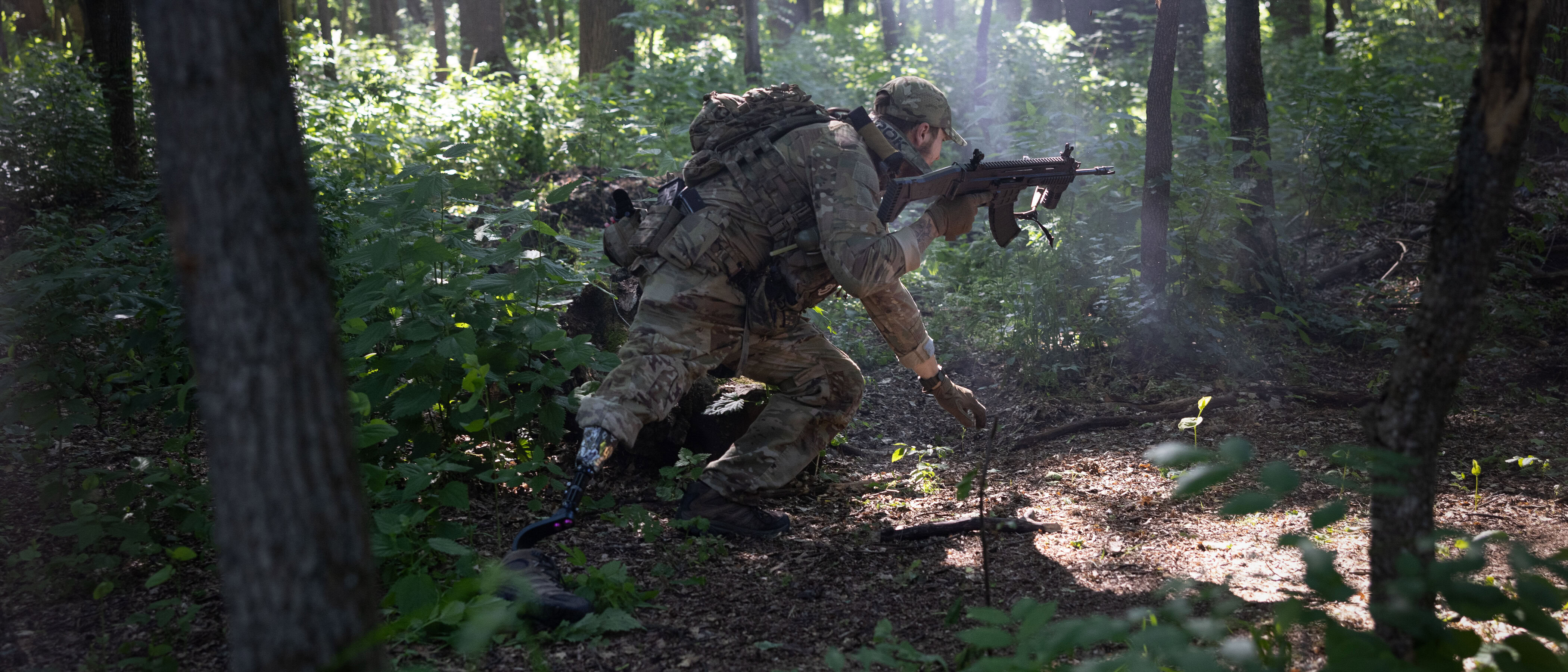
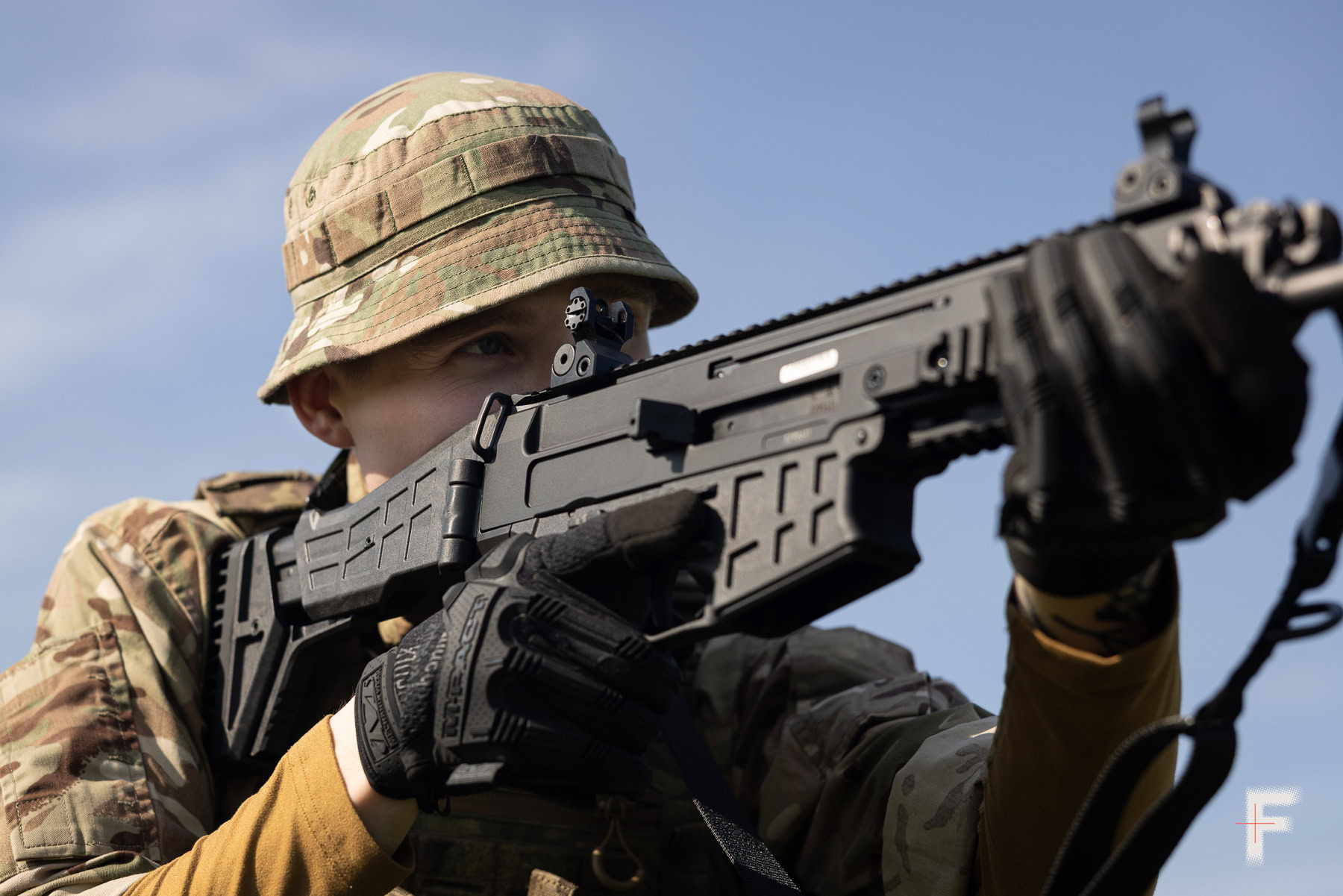
He sees his comrades in each of them. But he has never looked for someone just like himself. Bohdan Demydenko, call sign “Mars,” serves as an instructor in the 3rd Army Corps.
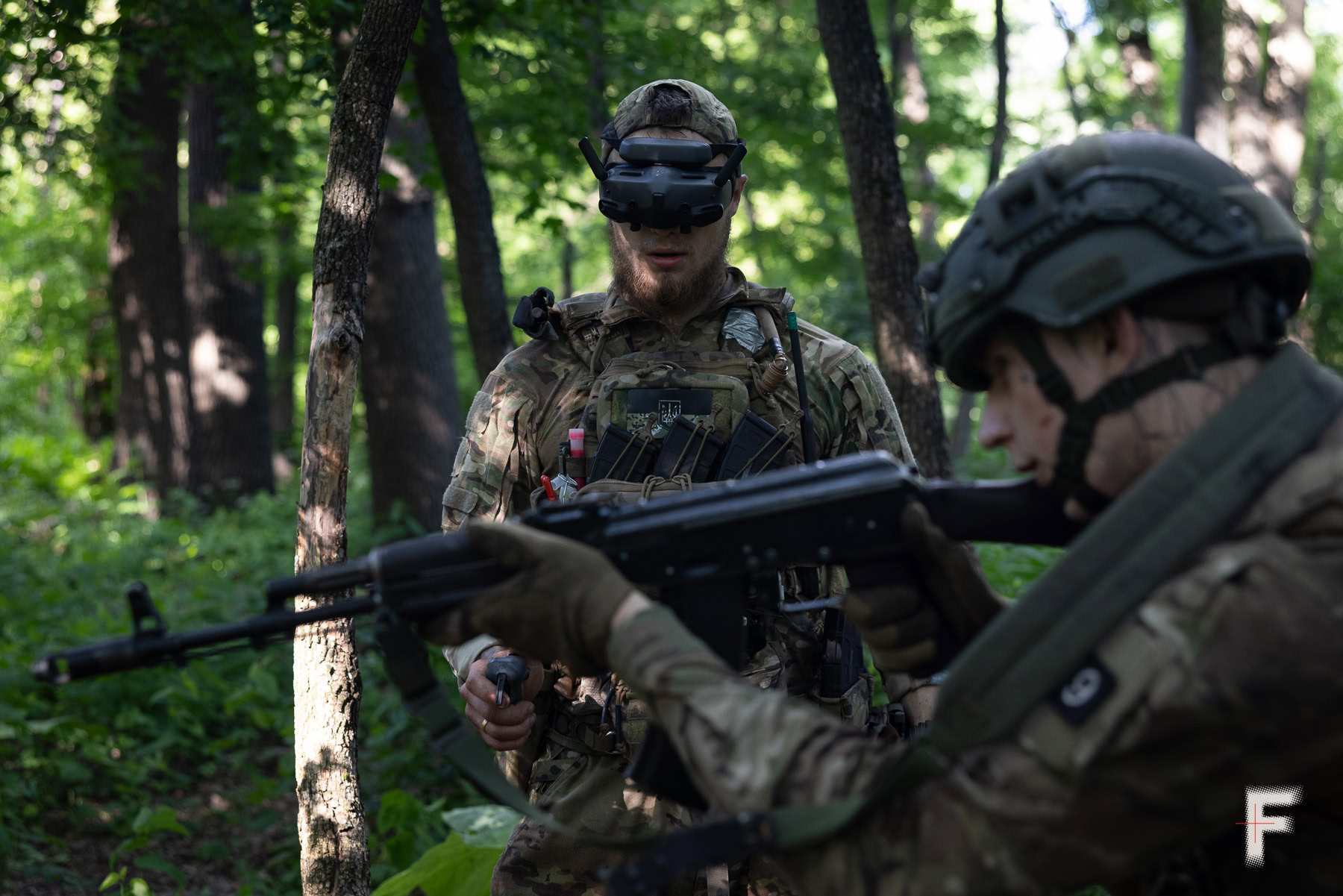
Currently, he trains recruits who have signed the “18–24” contract. This is already the fourth group of young people Bohdan has worked with, so he has drawn some conclusions:
They all want to look all adult. Some think they’re tougher than
they really are. But war reveals who you truly are.

Bohdan is almost the same age as the recruits he trains, and with some of them, there is no age gap at all. “Mars” is just 22. The real difference lies in what they have already lived through.
Before joining the army, he took a week-long assault training course organized by the 3rd Assault Brigade. By the following day, he had already collected his paperwork and applied at a recruitment center.

“Mars” signed his contract back in 2024, before the millions were being handed out. At the training center, he intentionally tested his limits. Sometimes he felt he was about to pass out, but he refused to stop. Bohdan wanted to know how far he could push his limits.
“What could stop me? What could break me?” he wondered.
Soon after, Bohdan was deployed to the Kharkiv front near the Luhansk regional border. His first mission was to relieve another unit holding defensive positions.
After the training center, he thought the war itself would be manageable. A 15-kilometre march sounded like little more than an evening walk.
What turned out to be difficult was navigating the terrain in the darkness. After a long trek through the fields, they finally completed the rotation and stayed to defend the position for the next 11 days. That was when “Mars” saw the enemy for the first time, and he wanted more adrenaline. It wasn’t long before he got the opportunity.
“Who wants to join the assault squad?” the platoon commander asked after the first combat mission.
My combat experience was relatively short,
but I applied everything.
As the 3rd Assault Brigade expanded into a corps, Bohdan exchanged a glance with his fellow soldiers and volunteered.
After his first assault, he wanted to move to a mortar unit because he had had enough action to last for years. Instead, he remained with the assault infantry. On his second assault mission, he lost his leg.
“My combat experience was relatively short, but I applied everything I had learned at the training center,” Bohdan says. “Reporting information, plotting fire positions, conducting assault operations and clearing enemy positions.”
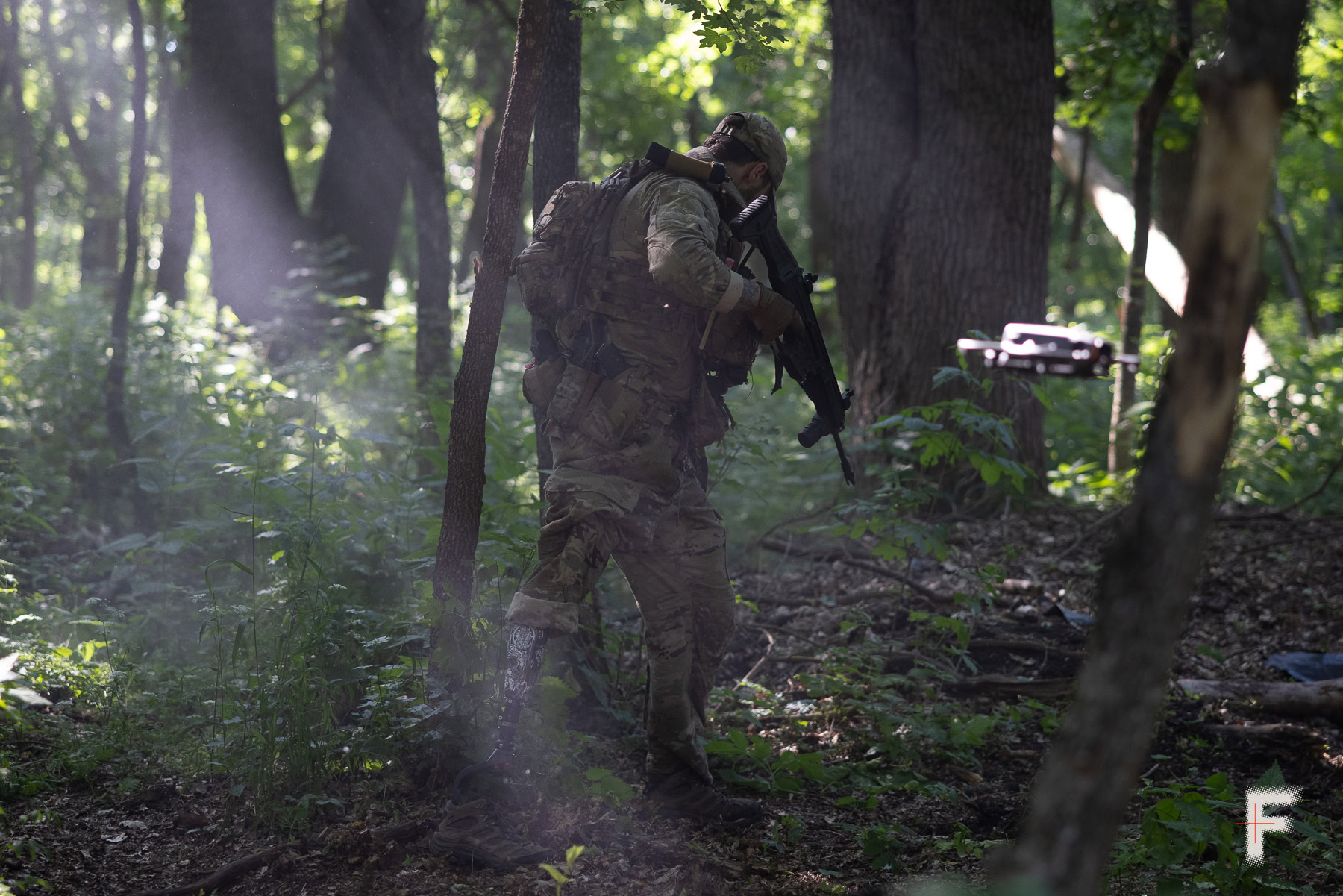
Today “Mars” shows recruits how to clear a dugout. Despite a slight limp caused by his prosthetic, he never cuts corners, and always goes all out. After rehabilitation and prosthetic fitting, Bohdan returned to the training ground as an instructor.

“My experience has little use in civilian life,” he says. “But here I can pass it on to people whose lives it may one day save.”
Some recruits complain: “Why should I dig trenches if I’m going to be flying drones?” Whenever someone from the 18-to-24 volunteer cohort refuses to do a task, “Mars” reminds them: “You came here of your own free will.”
He feels that for many of them the one-million-hryvnia signing bonus has overshadowed the realities of war.
Perhaps that’s why Bohdan can’t find anyone among them who’s like him. Because the young man has been competing with himself his whole life. And it’s been that way since childhood.
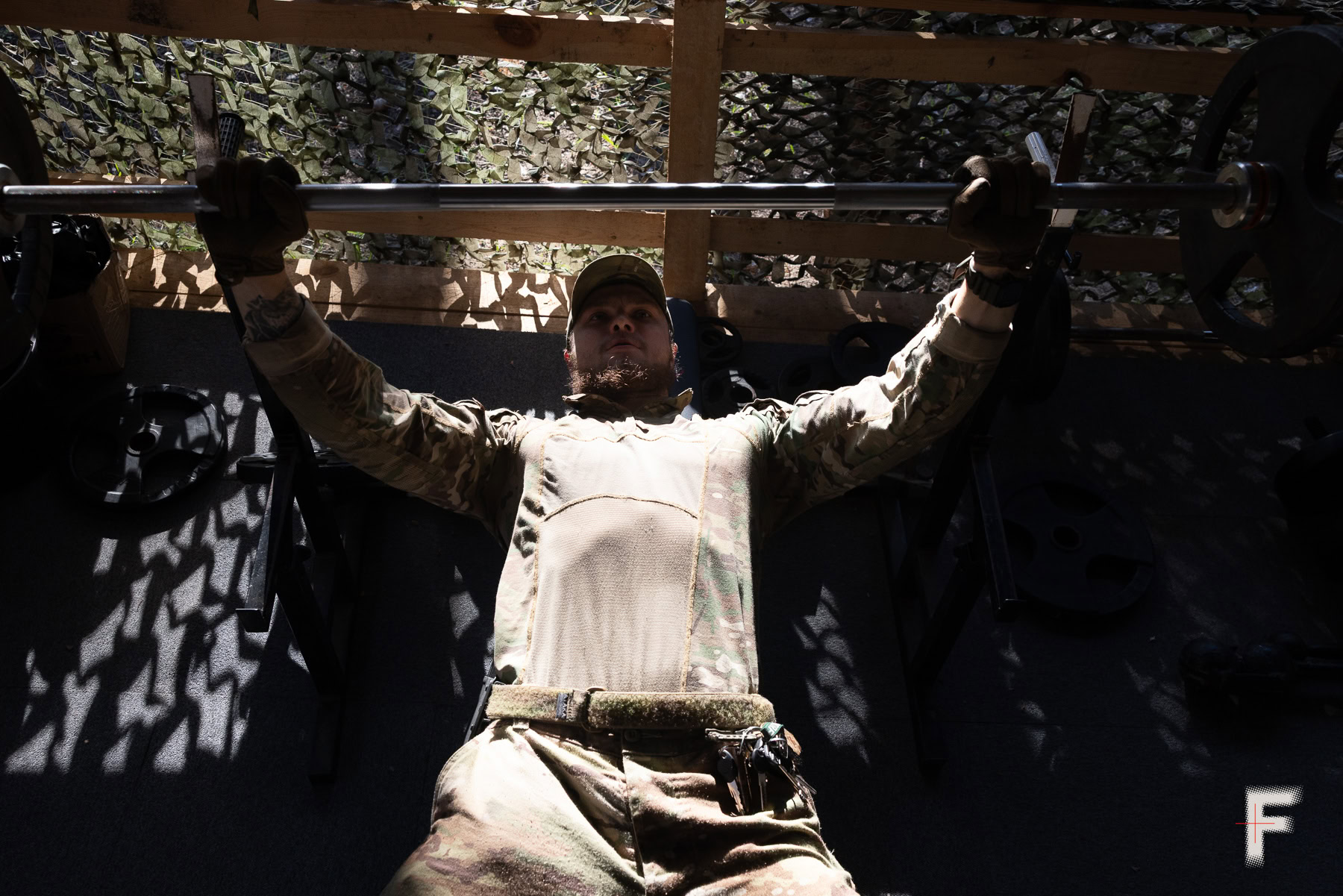
There was a time when even this tough guy was afraid of blood tests. Needles scared him more than anything, so he constantly came up with excuses and avoided doctors whenever he could. Eventually, though, he realized: “I can’t keep dodging this for the rest of my life. I have to face my fear.”
He plucked up the courage and went to get tested. Bohdan didn’t tell his grandmother, with whom he was living at the time. He didn’t want to embarrass himself in front of her by crying or fainting. After all, why make his grandmother worry for no reason?
He got the injection without any trouble. Bohdan didn’t pass out. He made it through just fine. From then on, needles no longer frightened him. But there was still one fear he couldn’t shake: heights.
The boys were climbing all over the trees, as if they’d been born not in Kyiv but somewhere in the jungle. Bohdan watched his friends from below. “I don’t want to get all dirty,” he said, but to himself he thought:
“If only I could get dirty…”
He had no choice but to overcome his fear when a kitten got stuck on the roof and needed help. “I’ll do a good deed and conquer my fear,” the boy thought, and climbed up onto the house with the other young rescuers.
Standing on the roof, Bohdan looked down at the ground below. For some reason, he found himself thinking about firefighters: “They’re probably afraid of heights too. But they still do their job.”
Only fools feel no fear.
We knew that if there was a job to be done, we had to do it.

That’s why he went in for the second assault. Bohdan lost his leg, but he still believes he hasn’t reached his true potential.
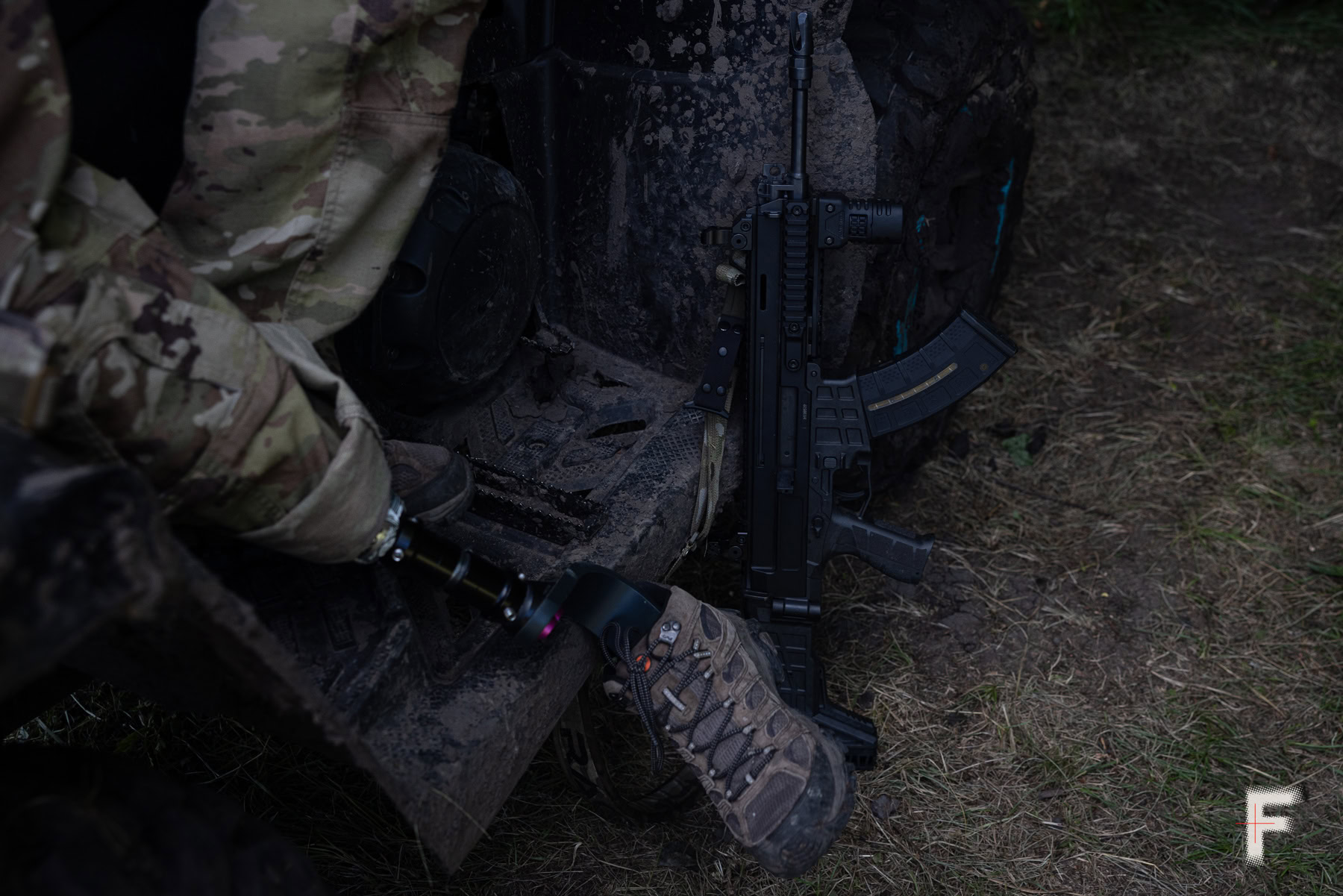
At the training center, Bohdan tried assault drills from a boat for the first time. He noticed a group practicing on the water, asked if he could give it a try, and ended up enjoying it. Now he’d like to try sniping instead, where patience counts more than speed, and that’s one thing he doesn’t lack.
“I still don’t know where my limit is,” he says. “I just want to see how far I can go.”
Revenge as motivation
“What are you fighting for?” his comrades sometimes ask.
“For my leg,” Yehor Oliinyk replies, then adds, “Well, you know, we have to defend the country.”
But he doesn’t explain what he’s really fighting for: that answer would take more than a single line.
Yehor lost his leg near Yehorivka. Yehorivka is a village near Vuhledar in the Donetsk region. Back in 2022, he was 19 years old and serving as an infantryman in the 72nd Mechanized Brigade.
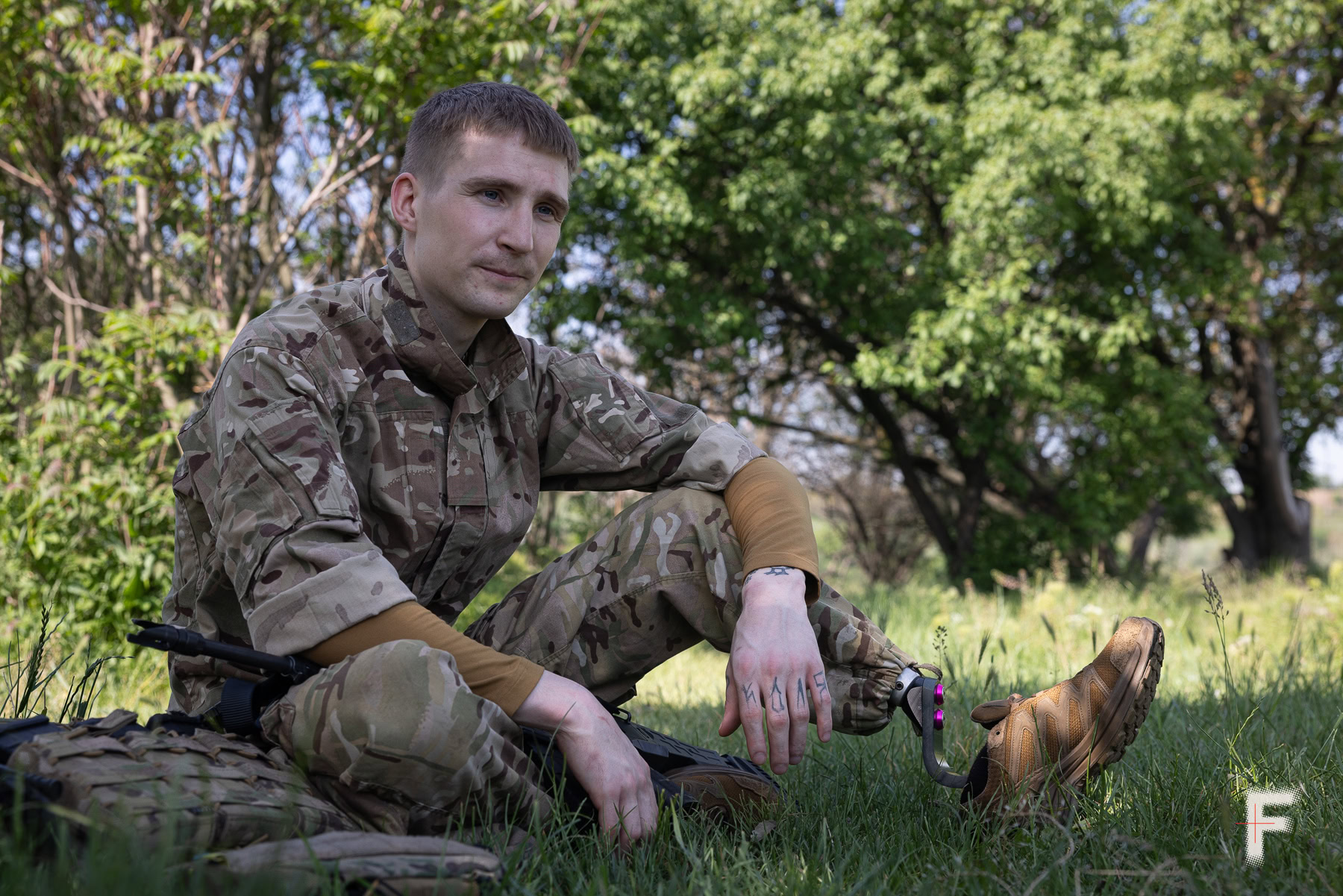
When Russian troops breached the defensive line and captured the positions where the 72nd Brigade’s soldiers had been holding ground just days before, their planned rotation was suddenly called off. “You’re young — can you handle the assault?” the commander asked.
The young soldiers felt fear. But they understood that if they failed to retake the area, Russian troops would continue advancing. The arguments did not diminish their fear, but the guys pulled themselves together, grabbed their stuff and went to their commander to plan the assault.
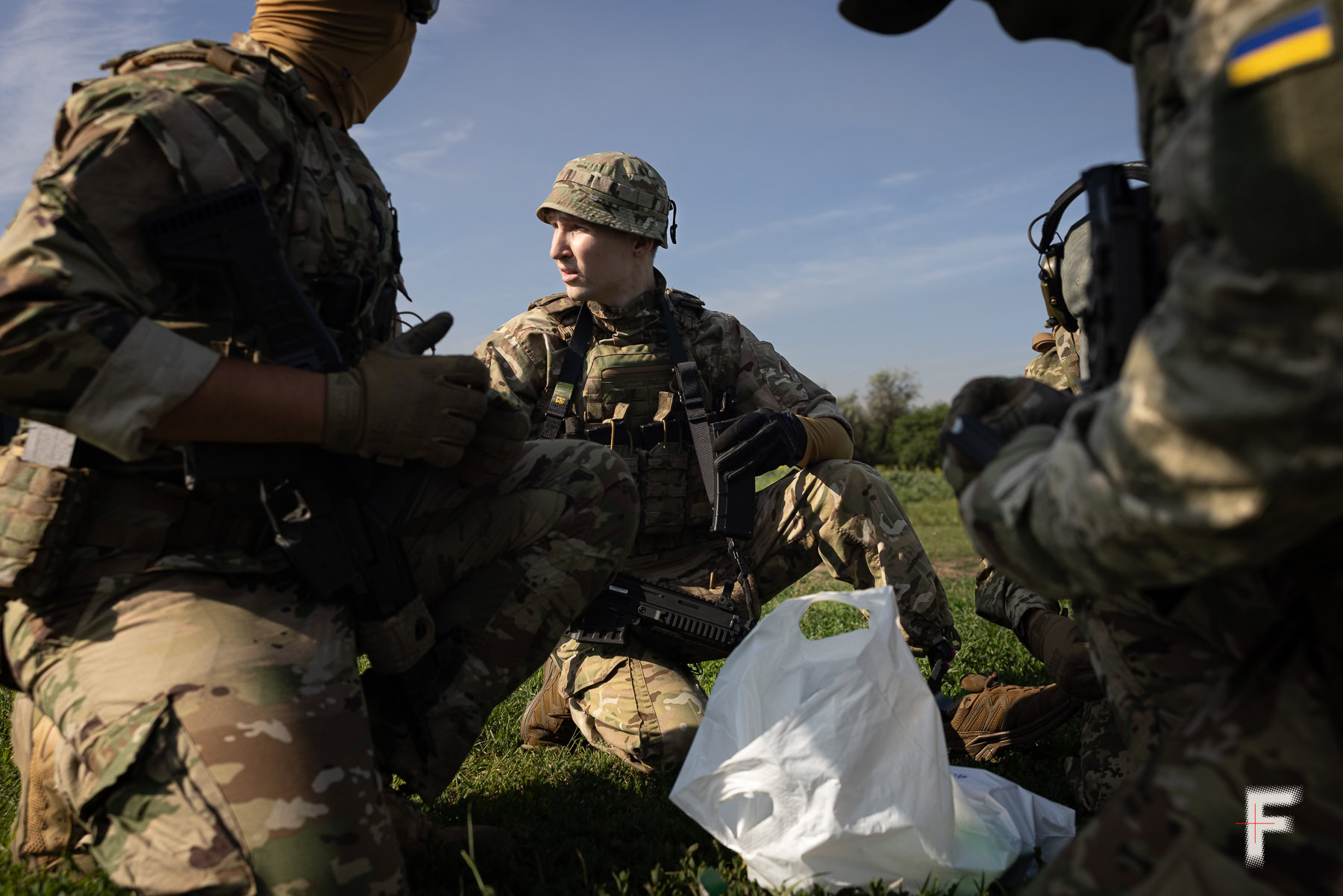
Everything went smoothly: they regained their positions and captured two Russians. Yehor sustained a minor injury: a small piece of shrapnel from a grenade lodged in his arm. He went to arrange his evacuation: his fellow soldiers could already handle things without him, but on the way, he stepped on an anti-personnel mine.
He called out to the guys, who applied a tourniquet and dragged him to the vehicle. The branches scratched Yehor’s face, as if even the forest was trying to take the last of his strength. He closed his eyes and sank into darkness, a fragile space between life and death.
When he pushed the blanket aside, he saw the reality: his left foot was gone. He found the phone between his legs and called Mykola, his brother. They shared no blood, but they had called each other brothers since childhood. Mykola asked only one thing: where should I come?
Yehor was asleep while he was being transported to Mechnikov Hospital. When he opened his eyes in a bright, still unfamiliar hospital room, Mykola was sitting next to him. He had taken ten days off work: the young man worked for the Charity Foundation “East SOS” and evacuated civilians from the combat zone. Mykola had never touched a weapon. He had grown up in a religious family, the same family Yehor later joined.
When Yehor’s beard became too long, Mykola picked up a razor and carefully began shaving him. He was so gentle, wiping Yehor’s face with a tissue after every stroke, that Yehor finally said: “Brother, stop babying me and shave!” “I’m scared,” Mykola retorted.
During Yehor’s leave, Mykola stayed with him every day: feeding him, giving him water, trimming his nails, and helping him change his underwear. Yehor could barely move: the painkillers were taking effect, and tubes from medical devices stretched everywhere.
Then Mykola returned to work, and Yehor soon received a prosthetic leg. Once his rehabilitation was over, Bohdan went back to the front, determined to avenge the loss of his leg. The people he had grown up calling friends no longer felt close. They seemed like strangers now, listening to Russian music and singing along to songs by Max Korzh.
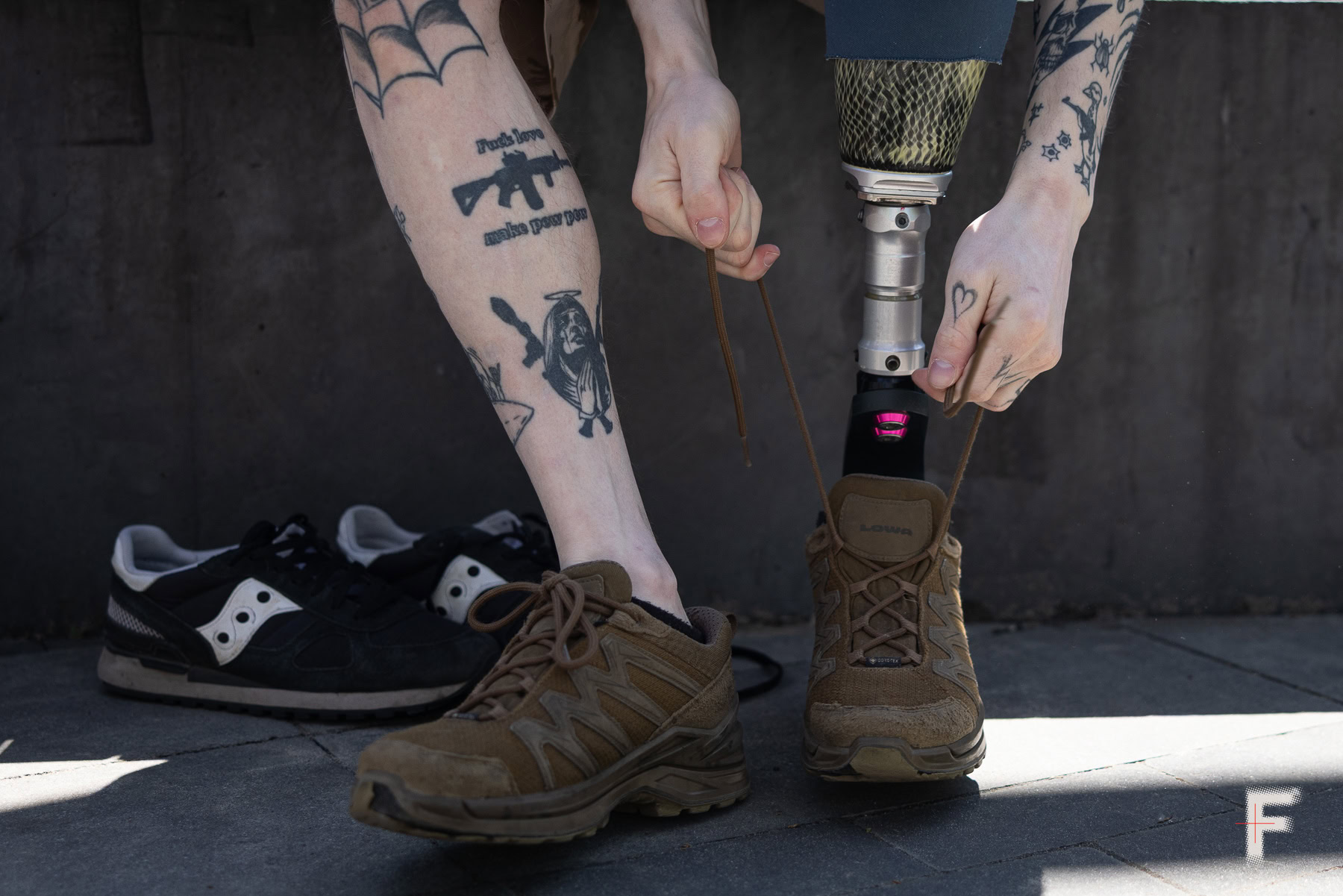
Yehor had grown up a long time ago. He knew he could not rely on people like them. He tried to explain why consuming Russian content was harmful, but eventually he lost every one of those friendships. From then on, he relied only on himself. Leaving the military on medical grounds was never an option in his mind.
“I believe that one member of the family should fight or work in defense,” says Yehor.
In his family, consisting of his mom and grandmother, he was that “one.” The young man served in the infantry despite his prosthetic leg and also took part in assault operations.
One day, Mykola called to say he was signing a contract with the 12th Special Forces Brigade Azov, where he would serve as a reconnaissance driver.
You’re fighting with a prosthetic leg.
How could I stay behind?
Yehor tried to persuade his brother not to go. “I’m afraid for you,” he admitted. His fear was well-founded, because he already knew the possible consequences firsthand.
Now, on the knuckles of Yehor’s fingers, there is a tattoo that reads “Kolia” (shortened version of Mykola) with a heart next to it. Mykola was killed on March 21, 2025, during the evacuation of a group in the Donetsk region.

“I wish it had been me instead. I’ve committed far more sins. I took lives; he saved them,” Yehor says. “Mykola was a man of God.”
Yehor’s return to the infantry was short-lived. He injured his stump, an infection set in, and doctors had to amputate the leg even higher. He was offered the chance to be discharged, since he’d already done his part. Yehor saw it differently. Now he had to avenge not only his leg, but also his brother. Or rather, first his brother, and then his leg.
He was sent to train as an FPV operator. He spent some time flying drones and assisting with his unit’s supplies before eventually transferring to Defence Intelligence of Ukraine. He cannot say much about his current work. What he can talk about, however, is how he spends his free time outside of service.
Sometimes Yehor takes part in sports competitions where the competition itself isn’t as important as the community they bring together. This year, he’ll be running an obstacle course in Kyiv. Yehor has put on a headband across his forehead and is warming up. Ready, set, go!


Recently, he was sent on a trip to Lithuania, where he met with high-ranking officials. Following the assignment, Yehor returned to Zaporizhzhia, where he is now serving. He has a compelling reason to keep going. When someone asks, “What are you fighting for?” Yehor replies, “For my leg”, while looking at his arm, which is tattooed with the word “Kolia.”

His motivation clashes with the Christian values Mykola followed throughout his life. But Yehor cannot do otherwise: he wants to take revenge.
A new image of a veteran
Oles Mosenko has accepted the fact that the war is now a permanent part of his life. He has no plans to return to civilian life and try to fit into a world that no longer feels like his own. It was different once, in 2018, when he first had the chance to leave military service.
The young man joined the military at the start of the Russian-Ukrainian war, as soon as the Russians occupied part of the Donetsk region. The options for where to go were limited. Oles chose the 12th Special Forces Brigade Azov, where most of his ultra-fan friends were already serving.

He suspected that war with the Russians was inevitable, because he had a good grasp of history and knew how to interpret facts. Ever since he was a child, Oles had gone with his godfather to Kholodny Yar and sung Cossack songs during soccer matches. He even imagined that he would fight the Russians in the Crimean mountains. However, he had his baptism of fire in Shyrokyne, in the Donetsk region.
While everyone was talking about the Minsk Agreements, and the former president was assuring the public from television screens that the Minsk Protocol would bring peace to the Donbas, Azov fighters continued fighting Russians, unofficially though. Ukrainian counterintelligence made it difficult to operate, so they had to keep a low profile even from their own people. This continued until 2018.
Gradually, the volunteer battalions were disbanded, but Azov remained. Legal changes also gave soldiers who had signed open-ended contracts the option to end their service. “I had done my part,” Oles decided.
“When demobilization began in 2018, the negative public image of the Anti-Terrorist Operation (ATO) veterans emerged,” he says.
Oles saw many veterans turning to alcohol and causing trouble. He was ashamed to put on the uniform, because he was one of them: an ATO veteran. The young man wanted to stay away from everything colored dark green.
He studied hard at Ostroh Academy, the only civilian higher education institution offering a major in “National Security.” However, after graduation, he chose a different career track, which was IT, a field where he could earn enough to support his family.
His first day at the new job was scheduled for February 25, 2022. He was already imagining the thousands of dollars he would soon earn. Then, the full-scale Russian invasion began the day before. “We’ll have a chance to live for ourselves someday… just later,” he thought, with a sense of despair. Oles already knew where he needed to go, so he got ready and set off to get a weapon.

That night was too bright: two destroyed tanks were illuminated by the moonlight, and their guns were pointed at the starry sky. Oles left with a small group to bring back the body of a fallen comrade. They had traveled that path before, but the silence that day was unlike anything they had experienced. As Oles sipped his juice, an explosion shattered the calm. The blast blinded him, sending his leg flying 50 meters into the air.
It’s hard to count how many injuries Oles has sustained over the course of his life. Once in the Caucasus, he nearly fell off a cliff; other times, he suffered repeated concussions after fights with ultras. And once, Oles was in a car accident—he spent about three weeks in the hospital with a broken pelvis.
So this time, too, he decided that the injury wouldn’t hold him back. Within a month and a half, Oles was already walking on a prosthesis, and six months later, he passed his medical commission to return to active duty.

He wanted to run and assault positions like he used to, even in a small group. But it did not work out: the prosthesis and additional gear made it too difficult. His commander offered him a new role: leading a veterans’ corps, a public platform supporting former service members. Now his mission is to help veterans start their own businesses, find jobs in the public sector, or build careers in industry.
“Right now, people love us, the guys from the Armed Forces of Ukraine. But eventually, it may become like it was with ATO veterans,” Oles says. “While we still have this almost elite status, there is a chance to do something.”
Oles knows what to do. His goal is to help veterans with their education, bring the community together, and mentor those who will serve as role models. So that he’ll never feel ashamed again. So that he’ll want to wear his uniform out on the street.
Acceptance from within
Standing firmly on your feet does not mean the inner struggle is over. For many service members, accepting their new bodies is a long journey. Finding understanding in civilian life can be difficult.
People who have undergone amputations often face inappropriate questions and sympathy they don’t need. They return to service not to prove anything to others, but to remain in a place where they are respected for their strength, experience, and ability to do their job.