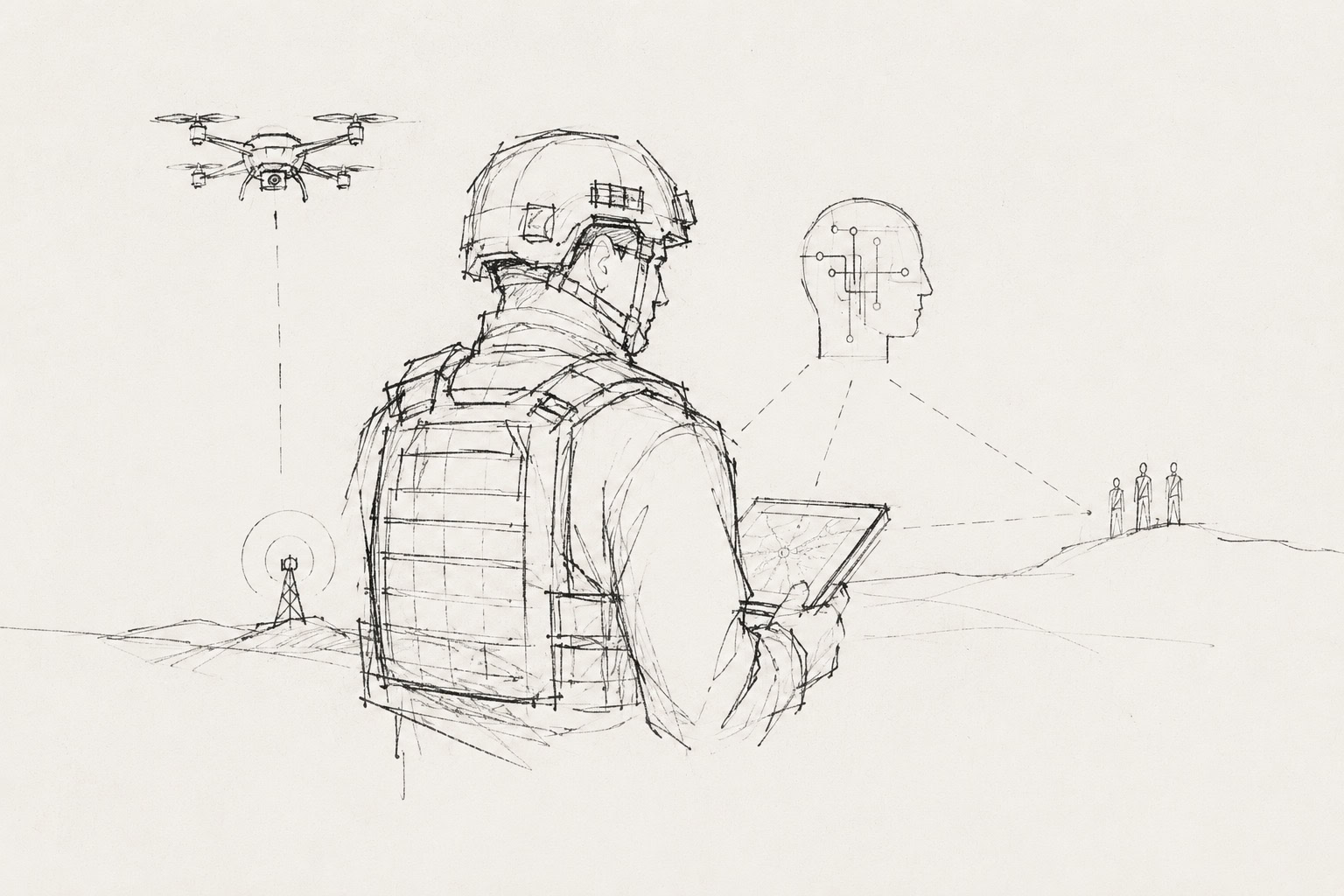
Ukraine’s soldiers in 2026: Reshaped by years of war
Ukraine's military is widely seen as one of the most technologically adaptive armed forces in the world today. Over the course of the war, drones, artificial intelligence, digital combat-management systems and constant training have become just as essential to fighting as weapons or ammunition. As the military has transformed, so has the soldier: today's Ukrainian fighter isn't just a combatant, but also an operator of complex technology, an analyst, and someone who has to withstand the psychological weight of a long war. Frontliner looked at how this technological shift has changed Ukraine's soldiers, and why advances in technology haven't made people any less important on the battlefield.
Ukraine’s military in 2026 is a completely different force than the one that existed before the invasion. It has gone from improvised resistance to becoming one of the most technologically advanced armies in modern history. During the Hedgehog 2025 exercises in Estonia, ten Ukrainian drone operators, playing the role of an opposing force, managed to knock out two NATO battalions, including U.S. units.
According to Ukraine’s Ministry of Defense, since the start of 2026 the country’s Defense Forces have used drones to strike more than 800,000 confirmed targets, with drones now accounting for more than 90% of all hits on enemy forces.
By comparison, the United States looks modest: as of May 2026, the U.S. Marine Corps had just 3,500 FPV drones. Ukraine, meanwhile, plans to produce 7 million military drones this year, which is twice as many as in 2025. It amounts to a full-scale revolution reshaping military doctrine itself.
New skills: From infantry to tech operator
The drone as the primary weapon
In 2026, cheap FPV drones and artificial intelligence have turned the war into a technological race, where the ability to adapt quickly has become the most important weapon. Today’s Ukrainian soldier is learning skills that, just a few years ago, were considered purely civilian or highly specialized: programming flight routes, analyzing satellite imagery, and countering electronic warfare.
Small drones have become a full-fledged combat tool: they spot ambushes, help direct artillery fire, and assist with mine clearance. As Frontliner has previously reported, new drones equipped with machine vision can now lock onto targets on their own, even when radio signals are fully jammed. At the same time, every soldier now needs to understand how to counter enemy drones, as it’s become a basic part of training.
Change is happening so fast that training never really stops. New drone models, software, AI-driven tactics and ways to counter enemy systems are all emerging faster than training programs can keep up.
Artificial intelligence in the trenches
Neural networks are already helping pilot drones, plan combat operations, and analyze data on missile attacks. Ukraine’s military wants to go a step further, moving away from fragmented programs toward a single operating system where AI gathers data and instantly suggests ready-made solutions, from individual battles to overall strategic command.
That means today’s soldier isn’t just someone following orders, but the operator of a complex system, requiring technical know-how and the ability to switch quickly between different roles. A soldier in the trenches in 2026 has to master skills that, not long ago, took years to learn.
The cost of change: Psychology pushed to the limit
Experience as a strategic advantage
Ukraine’s military has built up a level of experience that can no longer be measured simply by the number of operations carried out. That experience is passed down through instructors, combat commanders, training centers, and the daily work of units on the ground. It’s carried by people who have now lived through combat conditions for four years running. Their skill can’t be separated from the psychological and physical toll they’ve paid for it. That’s why preserving experienced troops today has become just as much a strategic priority as producing new equipment and ammunition.
Exhaustion without rotation
Unlike the first months of the invasion, the problem now isn’t just how intense the fighting, but how long it’s lasted. Ukraine’s frontline units often operate at around 30% of their intended strength. Some brigades face a critical shortage of infantry and are struggling to hold their defensive lines.
Constant danger, intense combat, responsibility for fellow soldiers, losses, and the need to make life-or-death decisions every day all take a cumulative toll. A soldier fighting without relief breaks down not just physically, but mentally as well.
The most common concerns brought to military psychologists are conflicts at home, insomnia, nightmares, and a kind of emotional shutdown where a person withdraws and struggles to connect with loved ones. That’s why psychological support needs to start before trauma takes hold, not just after combat ends. But the system still isn’t keeping pace with what’s happening on the front line.
The military and society: Between trust and disconnect
Measuring support
The Armed Forces enjoy near-universal trust among young Ukrainians. 94% say they trust the military fully or mostly. That’s a striking figure, especially against the backdrop of widespread distrust in other state institutions. But trust and actual willingness to serve are two different things.
The number of draft-age citizens wanted by authorities hit a record 2 million at the start of 2026. That gap points to a deeper divide between what the front line needs and the home front’s readiness for further sacrifices. Society respects the military, while many people also try to avoid serving in it.
Trust can’t be ordered
Beyond military necessity, mobilization in Ukraine has exposed deep fractures between the state and society, the law and how it’s perceived, between the logic of daily life and justice. Trust isn’t something you can restore by decree.
This isn’t about betrayal or cowardice. It’s about the fact that four years without a clear end in sight wear down even the most resilient people. Ukrainian society needs an honest conversation about the challenges of mobilization, troop rotation, rehabilitation and the return of veterans.
What can help Ukraine keep its soldiers
- Continuously update training so it keeps pace with changes on the battlefield.
- Expand the use of drones and robotic systems to reduce risk to personnel.
- Ensure effective rotations and enough time for physical and psychological recovery.
- Build up psychological support and make it a standard part of military service.
- Strengthen support for military families, since their resilience directly affects the resilience of soldiers themselves.
- Maintain trust between the military and society through honest communication and respect for the experience of those who serve.
Ukraine’s soldier in 2026 stands at the intersection of two realities: a technologically advanced army built for the future, and deep uncertainty about their own. They’ve learned to fight with drones and algorithms. But they still haven’t been given the one thing they need most — the chance to rest.
Technology doesn’t replace the human factor
Even so, people remain Ukraine’s greatest strength on the battlefield. In just a few years, its soldiers have learned to master new technology, adapt tactics faster than the enemy, pass on combat experience, and make quick decisions. The war has made them far more skilled, but it has also shown that even the most advanced technology can’t replace human endurance, responsibility and the ability to adapt.
That’s why the government needs to focus on building new weapons and protecting the people who use them. Ukraine’s success on the battlefield, and the kind of country it becomes after the war, both depend on that.