Summer, the sea and anti-landing barriers: The reality of Chornomorsk’s resort season
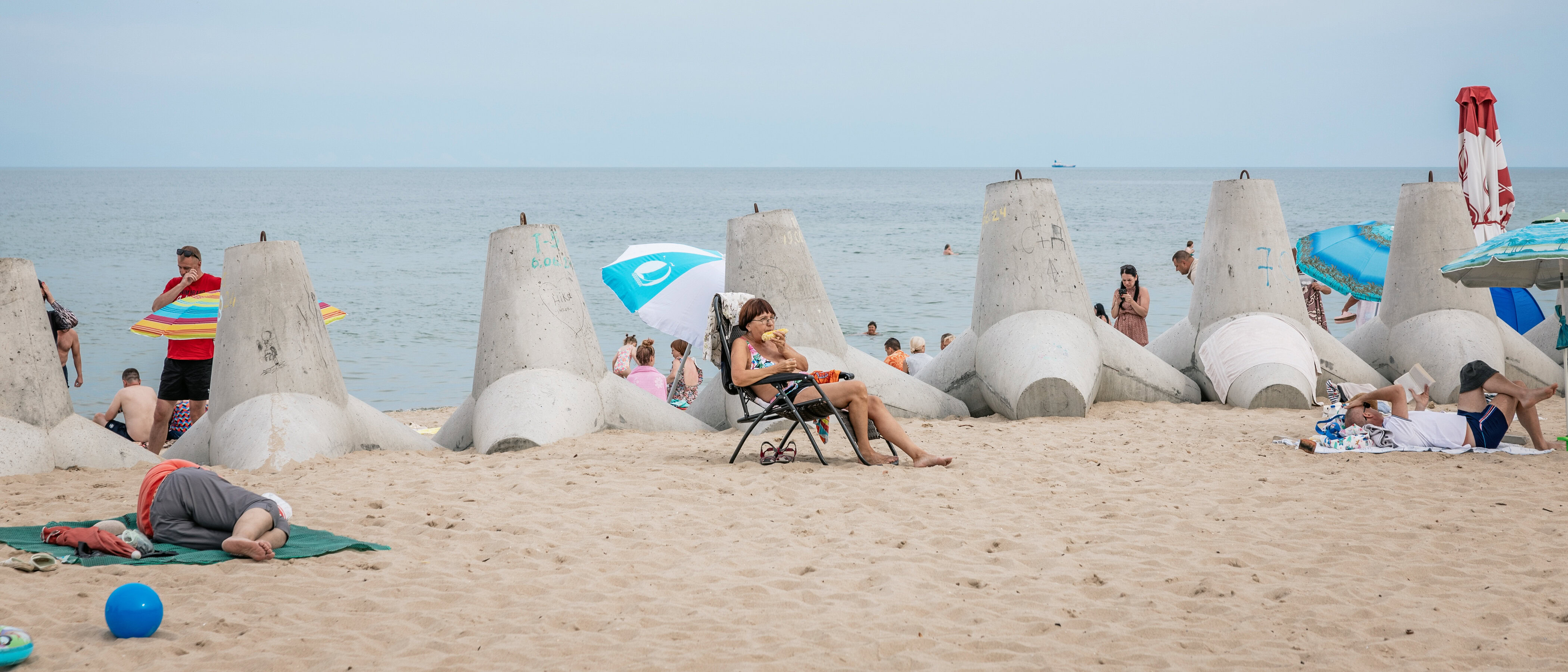
The wartime summer 2026 has brought its usual heat to the resort town of Chornomorsk, warming the sand and the people who lie on it. The only shade on the beach comes from rows of concrete anti-landing barriers. Despite the constant threat of Russian strikes, tourists still come and seasonal businesses continue to operate. At the same time local residents have gotten used to the sounds of air-defense systems in operation. See how war has reshaped a resort town in a new Frontliner report.
The sun beats down on Chornomorsk just as it would in any peacetime summer. Children with inflatable rings crowd the shoreline, sand sticks to vacationers’ wet feet, and the air smells of salt and iodine. Vendors call out their familiar offers. At first glance, it is an ordinary day at the beach.
Corn on the cob,
shrimp, and baklava!
The illusion of a normal summer day ends when you look beyond the rows of sun loungers.. For more than 12 kilometers, the coastline is lined with massive concrete anti-landing barriers known locally as “hedgehogs.” They became part of Odesa region’s coastal defenses after Russia launched its full-scale invasion. Together with anti-tank ditches, dugouts, and barbed wire, they were meant to prevent Russian troops from landing on the coast.
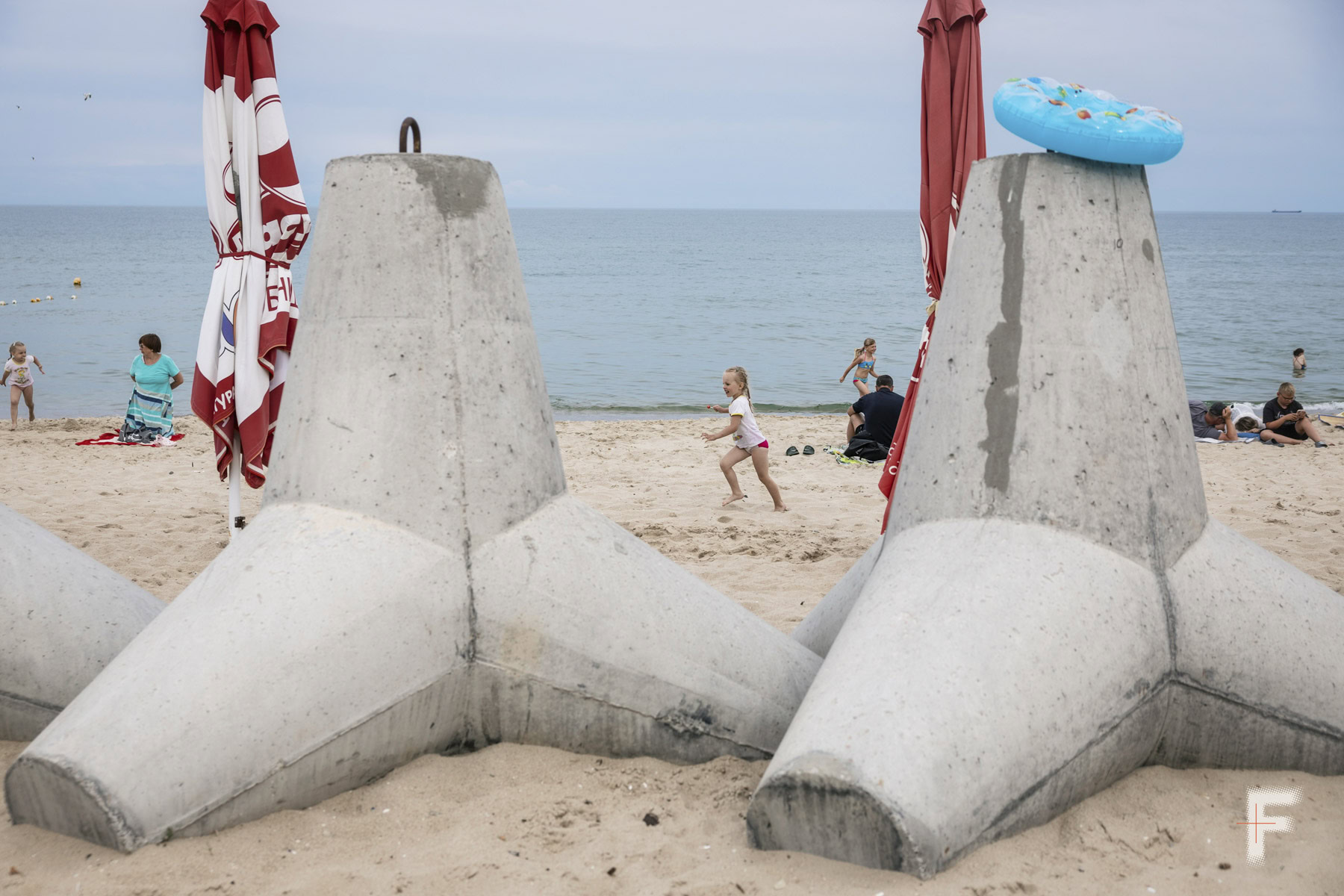
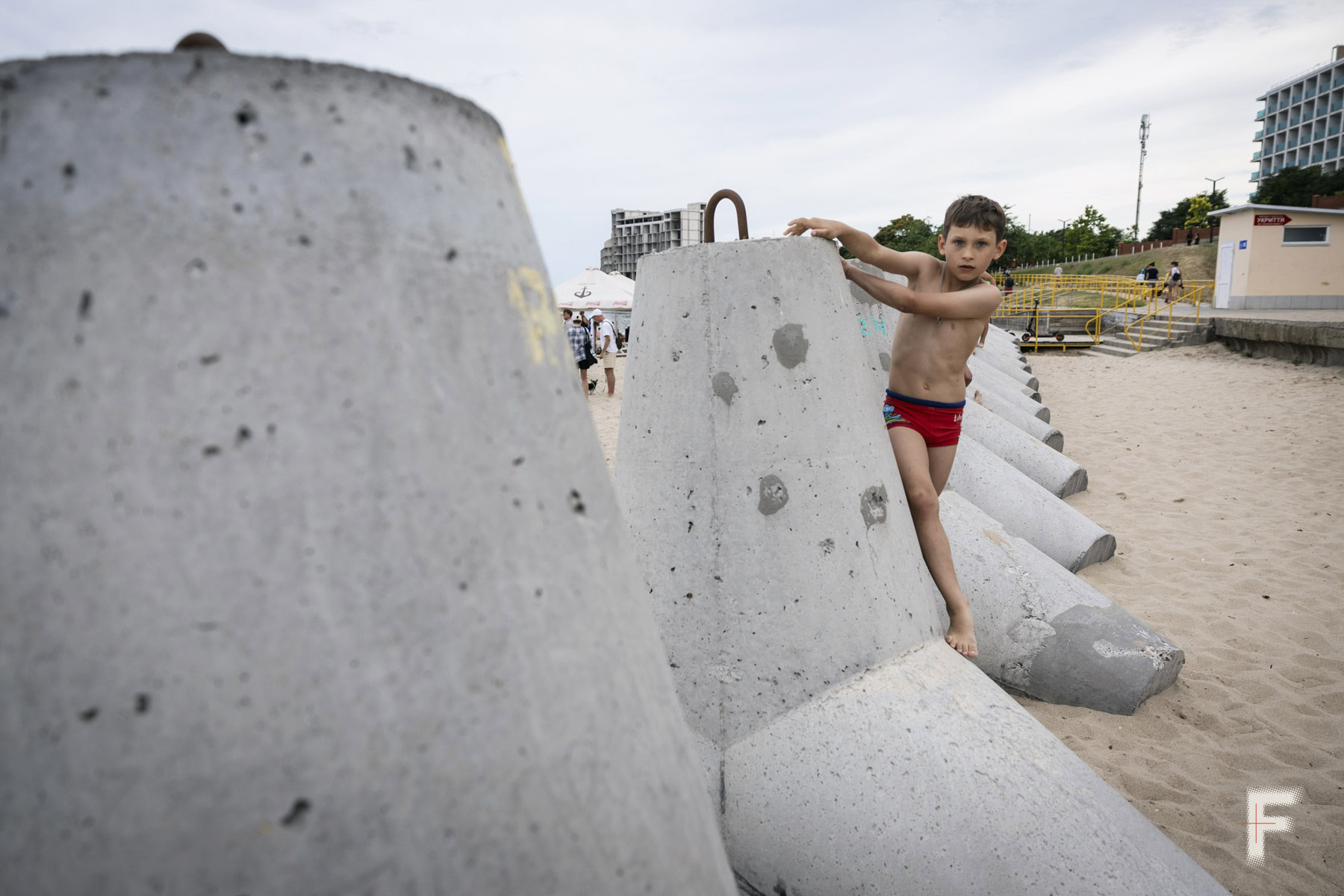
Bright orange beach umbrellas dot the space between the barriers, while colorful inflatable slides stand nearby. Children build sandcastles next to the concrete pyramids, commonly known as dragon’s teeth, play hide-and-seek among them, and rest against the cold concrete. The very structures meant to repel a possible sea assault have become part of the scenery of a summer beach day.
Tourists keep coming to the seaside despite the threat of attacks
This is how Ihor Sotnichenko sees Chornomorsk for the first time this year. He and his family arrived from Cherkasy region only a few hours ago. They had been searching for the right place to spend a short two-day holiday, comparing prices and options in different seaside towns in the Odesa region. In the end, they settled on Chornomorsk: it offered affordable accommodation, and the town felt safer and quieter than the others.
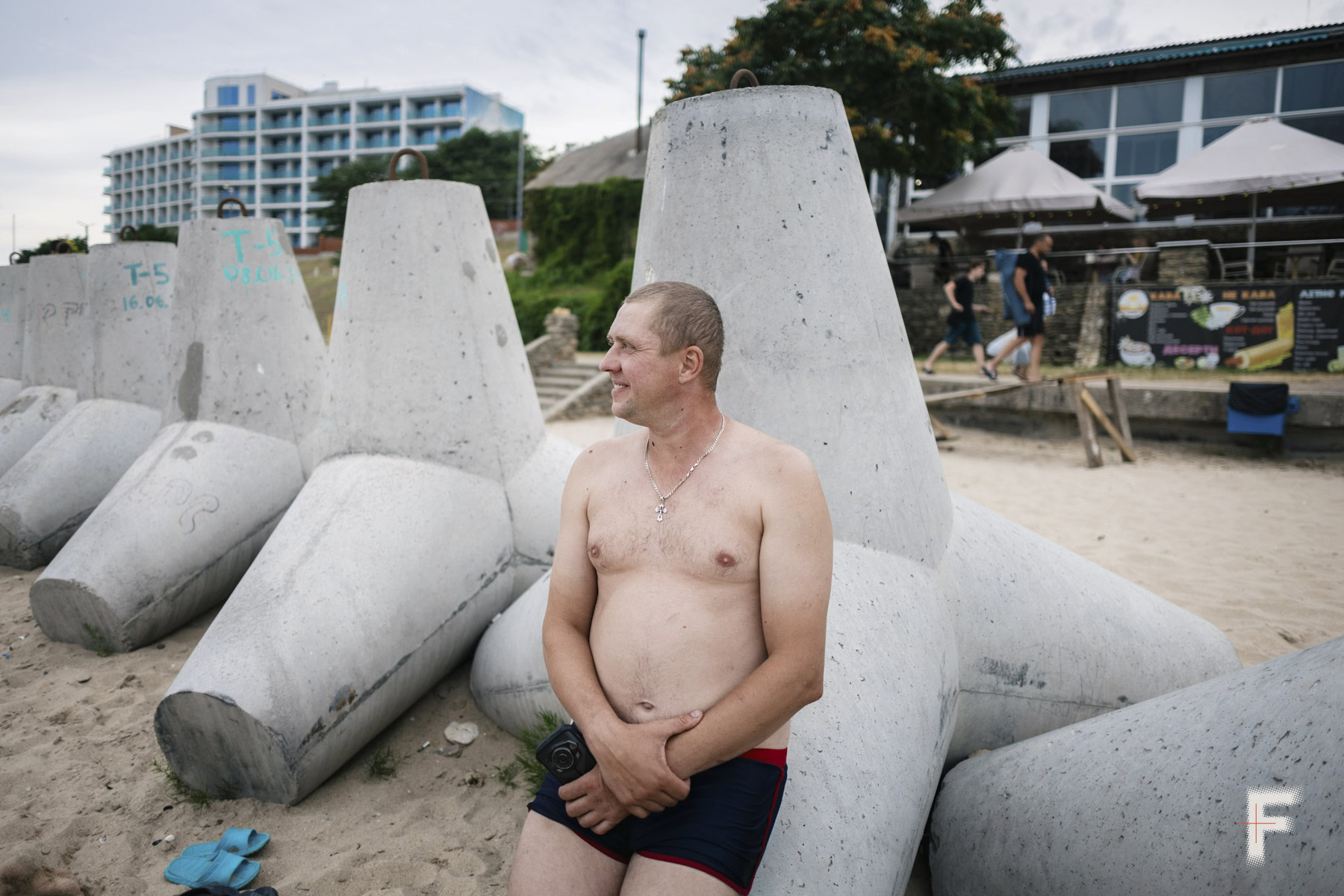
The suitcases remain half-unpacked, and they have not decided where to go or what to see yet. But the sea comes first. Ihor rests his elbow on a concrete pyramid and looks out at the horizon. The water is cool, there are still few people around, and overall, he says, he likes it here. The barriers do not bother him. He believes they have long become a necessity:
“Well, it’s there, and that’s that. We can’t do without it. God forbid something happens: it’s better to have at least some kind of barrier than to try to run away with no protection at all,” Ihor says.
Last summer, the family also vacationed in the Odesa region. At that time, they witnessed Russian strikes on Odesa. The house close to where they stayed was attacked shortly after they left. But even that experience didn’t make them cancel this summer’s trip.
“Summer is short. What are we supposed to do? Russia can strike anywhere,” he says.
Still, the war has changed their travel habits. When checking into a hotel, Ihor doesn’t ask about Wi-Fi or breakfast hours first. He wants to know if there’s a shelter, where the fire escape is, if the elevator works, and how quickly he can get downstairs if the power goes out at night or a Russian strike starts.
When asked about safety, the man responds cautiously. He says it’s too early to draw conclusions:
We just got here. It’s been quiet so far.
We haven’t seen any Shaheds or missile attacks yet.
Why local residents stay in Chornomorsk
After a few hours in Chornomorsk, Ihor sees the city the way most vacationers do. But local residents see it differently. They understand that this is a place that could come under Russian attack at any moment.
Mariia Danylenko (name and surname were changed — ed.) walks along the shoreline on her way home after a shift at the port. She describes the port as the heart of the local economy: once operations resumed, thousands of residents returned to work, and the city’s everyday life was restored. However, this very facility is a constant target for enemy attacks.
If a year ago Chornomorsk was targeted approximately once a week, now attacks have become much more frequent. Russian Shaheds can come in dozens: sometimes as many as 20-25 in a single night, she says. “Sometimes it’s terrifying. Sometimes it’s not. And sometimes it’s quiet,” Mariia says, describing everyday life in Chornomorsk.
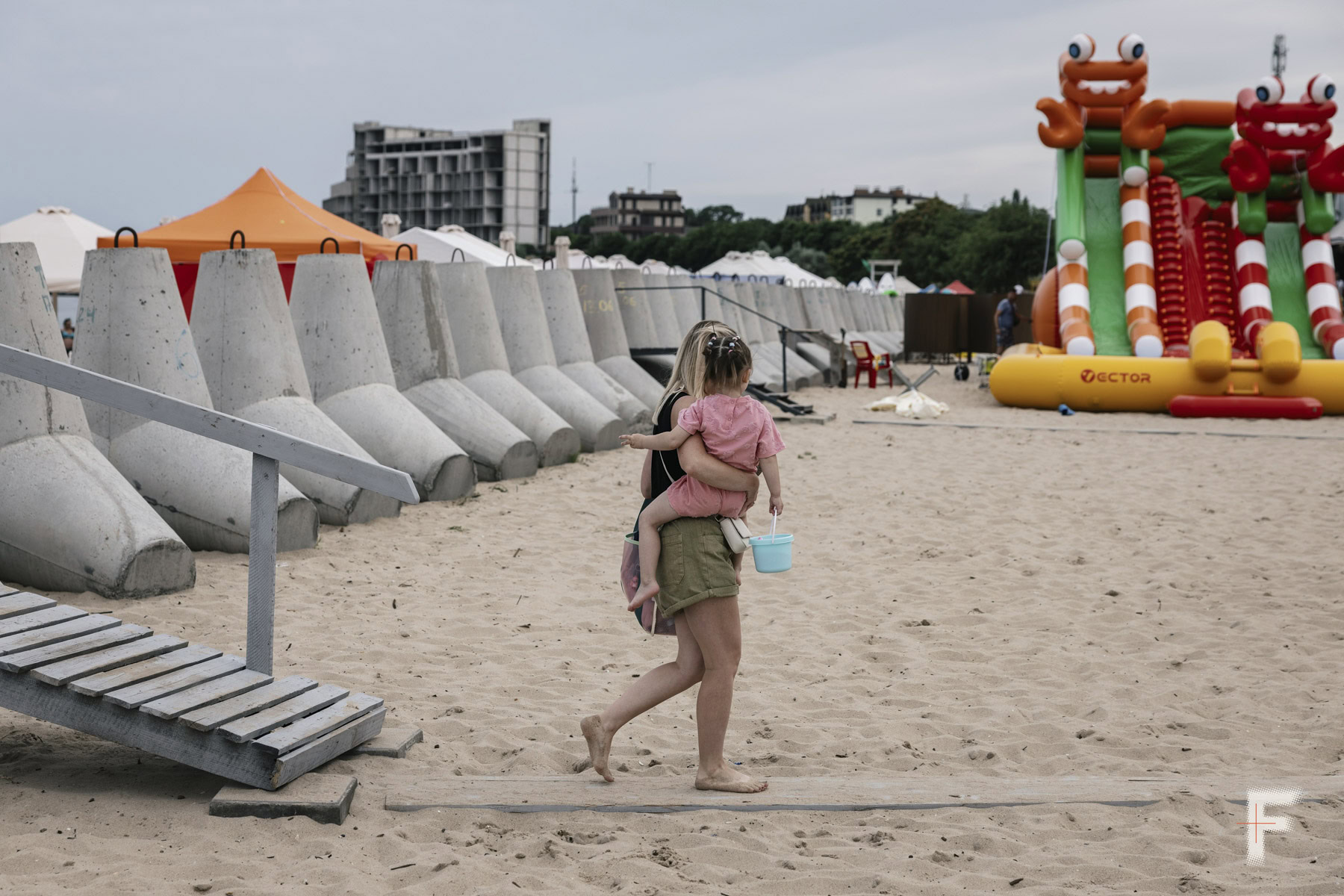
As a result, some local residents have left Chornomorsk, with many relocating abroad. In their place came people displaced from the occupied parts of Kherson and Zaporizhzhia regions. The seaside town has gradually transformed into not only a vacation spot, but also a place of shelter for those who have lost their homes. However, Mariia herself has no plans to leave, even despite the constant threat.
“Why should I leave? I’m already in my sixties. I don’t want to start my life over,” the woman says.
How the resort season has changed for the beach business
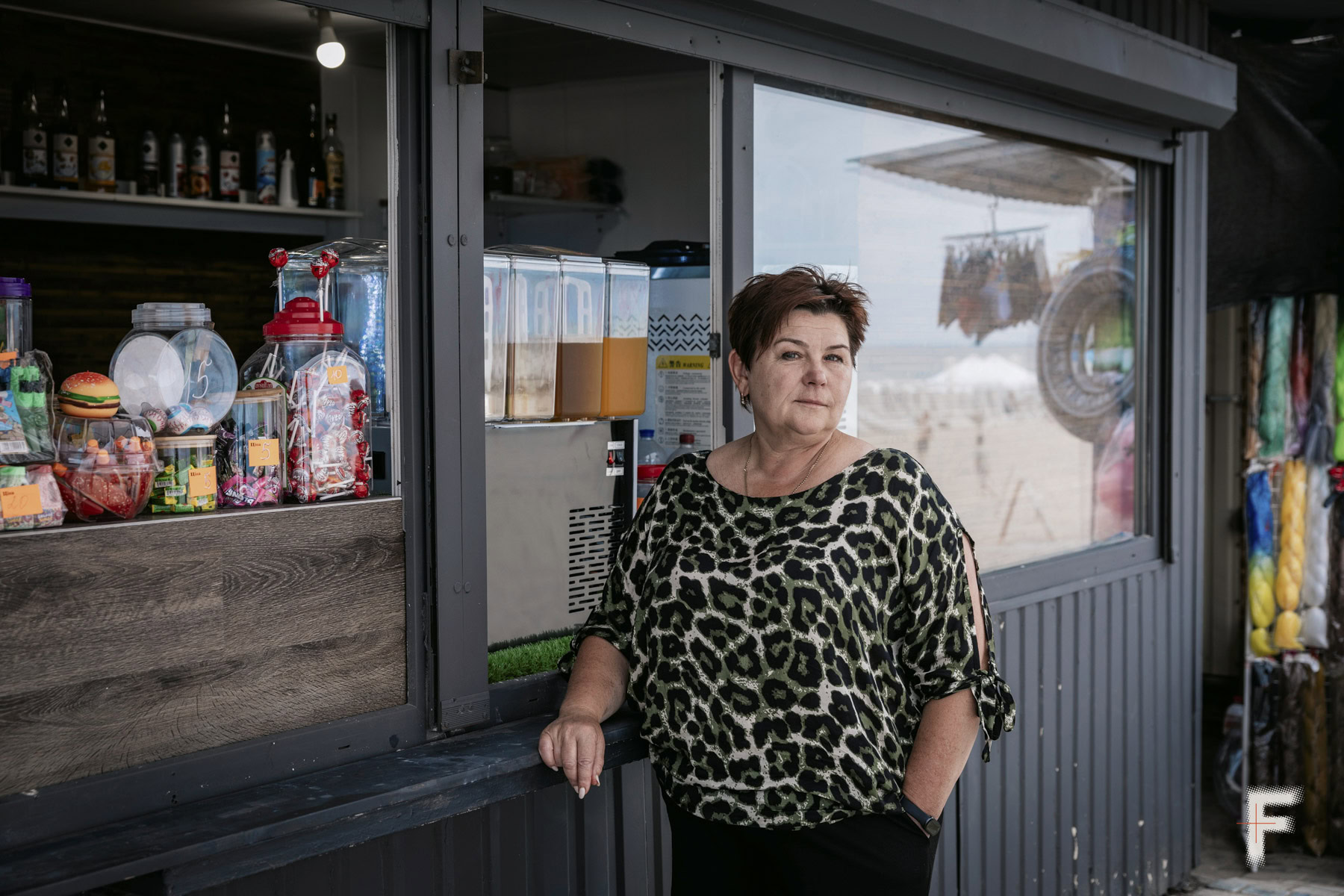
Denys Beliaiev works at a small kiosk selling snacks and drinks on Chornomorsk’s central beach. He has spent several summers behind the counter, so he quickly notices changes in the holiday season. This summer visitor numbers are slightly higher than they were last year, though, he says, it’s still too early to draw any conclusions.
“Last year we opened on June 17. There were very few people then. Now, it seems, there are more, but a lot depends on the weather.”

According to Denys, the tourist season has not fully begun yet. Accommodation remains widely available at hotels and holiday resorts, indicating that the biggest influx of visitors has yet to arrive.
“There are still many places available to rent. During peak season, you rarely find that,” he says.

Ruslana Beliaieva works at this same kiosk. She explains that Chornomorsk is primarily chosen as a vacation destination by residents of Kyiv, Dnipro, Kharkiv, Zaporizhzhia, Poltava, and Chernihiv regions. There are also quite a few military personnel among the vacationers who come to the seaside during their leave.
Ruslana says that everyone who visits the beach for the first time asks the same question: “Is it safe here?” Over the years of full-scale war, she has had to answer this question dozens of times.
Compared with Odesa, things are quieter here, thank God.
Most Shaheds are shot down over the sea. Any strikes usually happen at night,
when there are no people on the beach,
The fifth wartime summer has not significantly changed the tourist season. But over the years, Ruslana has noticed that the mood of visitors is no longer the same.
“People have become more depressed,” she says.
According to her, this is evident in everyday conversations. Whereas people used to ask more often about places to relax or entertainment options, they now talk about air raid alerts, the war, their loved ones on the front lines, and exhaustion.
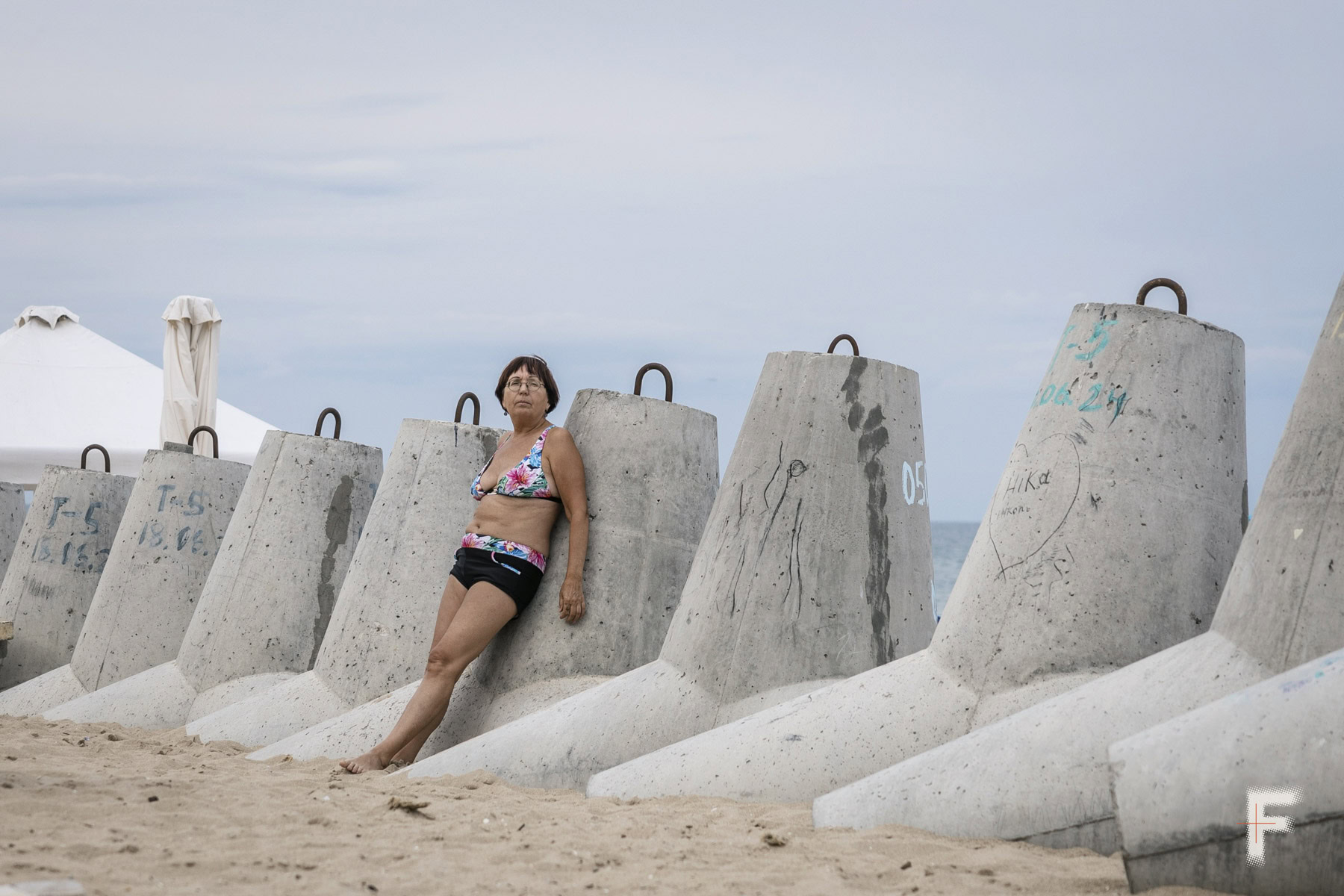
People still travel to Chornomorsk to spend a few days by the sea and to escape their everyday surroundings. But even here, on the beach, the war remains a part of their vacation. For a little while, it is softened by the sound of the waves, the laughter of children, and the familiar noise of beach summer life.