Swords instead of rifles: Medieval combat is helping veterans heal
Though it may seem counterintuitive, swordfighting has become an effective rehabilitation tool. Veterans and active-duty soldiers recover from wartime experiences by mastering the basics of medieval combat and buhurt. Here, participants are able to release accumulated stress, connect with others who share similar experiences, and develop new skills. This volunteer-led initiative offers veterans and active-duty soldiers a place to train, as well as the practice weapons and equipment they need. Explore how the training sessions work and what participants gain from the sport in Frontliner’s report.
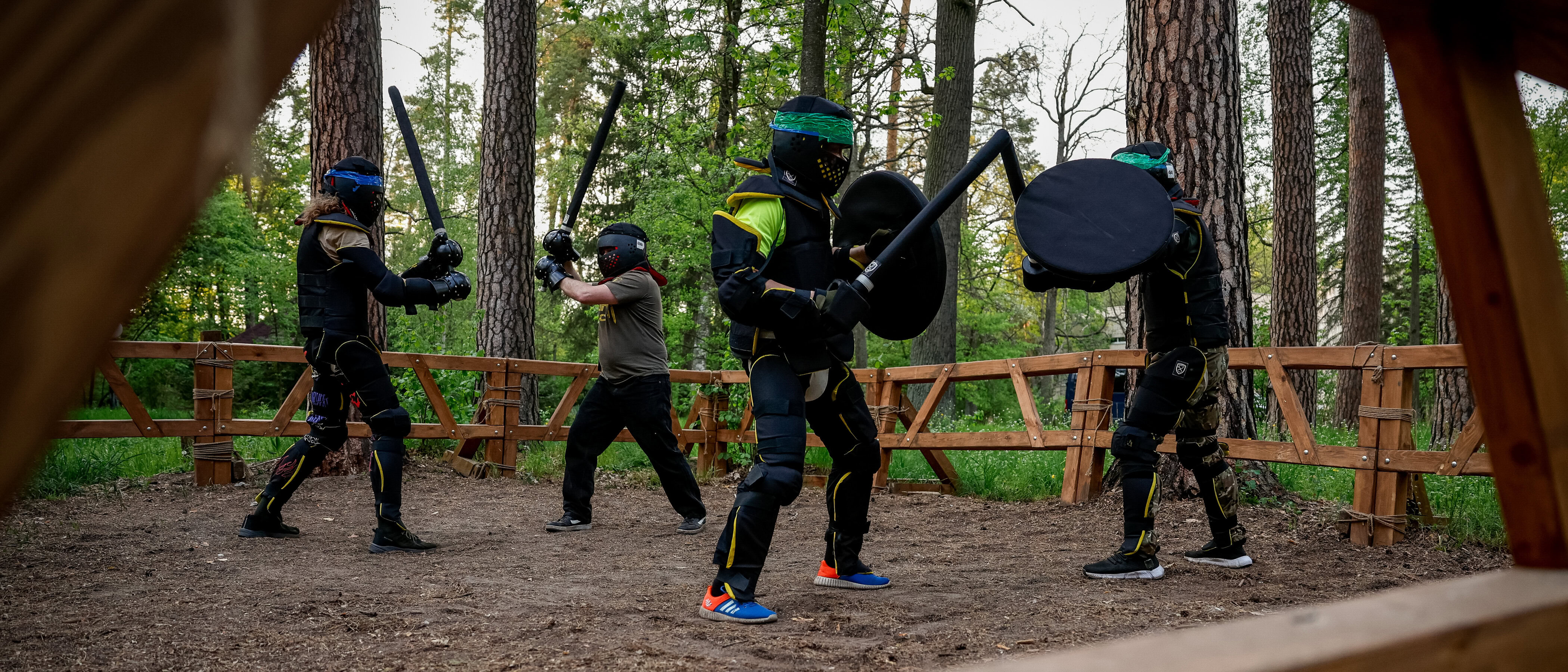
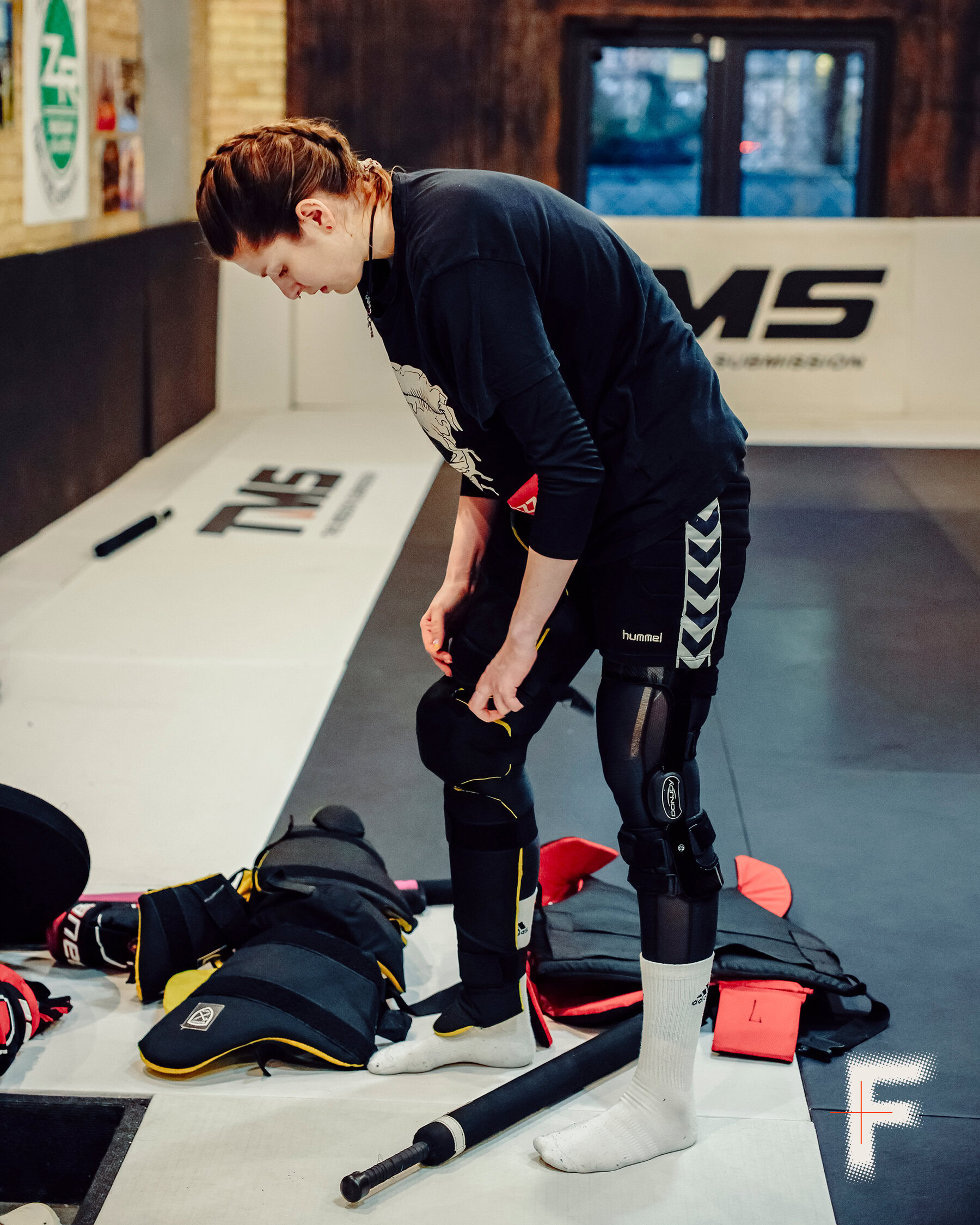
The gym is filled with military patches and war artifacts. Before training begins, the coaches and participants warm up, put on protective gear, split into pairs, and start sparring with training swords, halberds, and axes. Each sparring session lasts about five minutes, followed by a break and feedback from the coach.
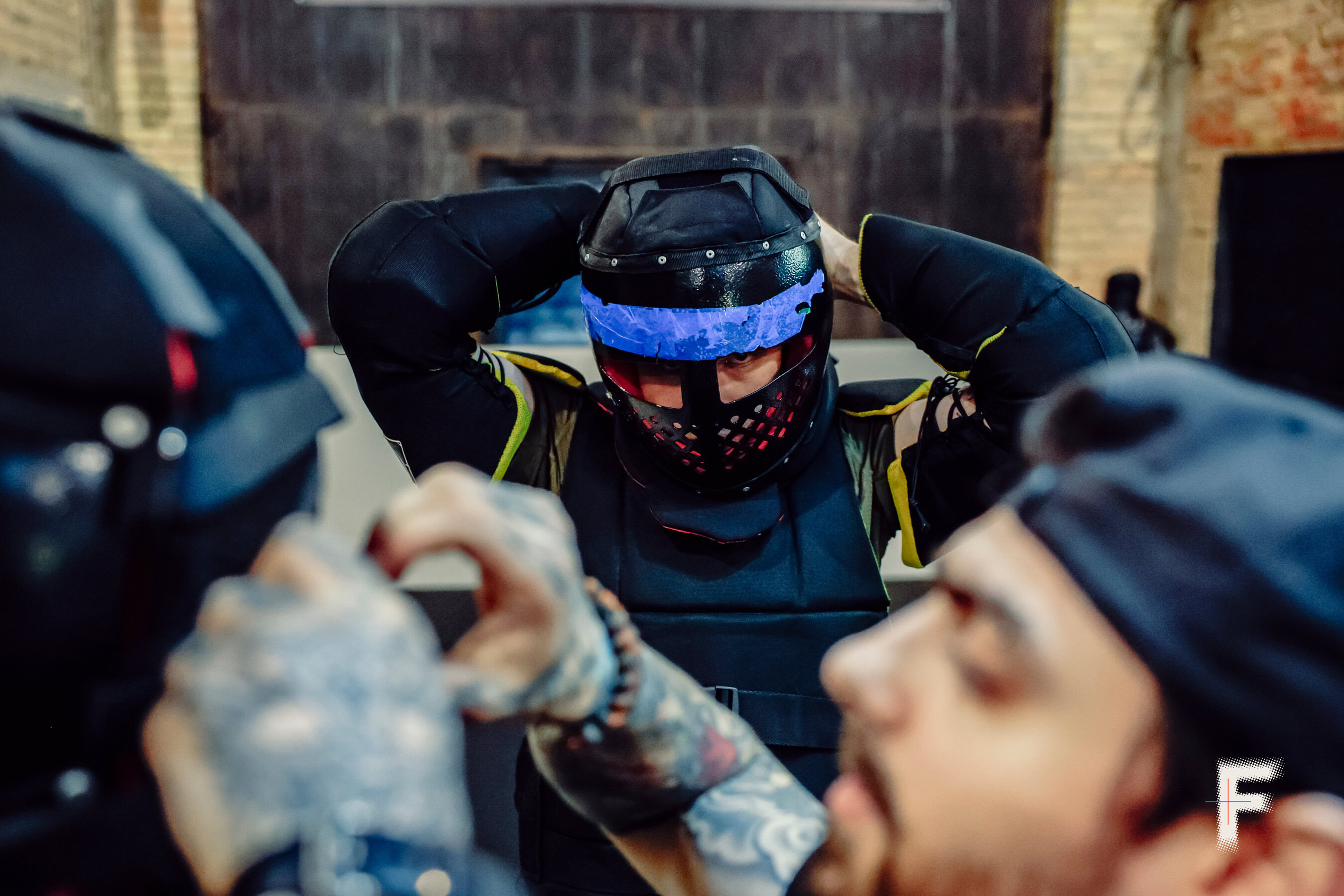

“Friendly vibes”
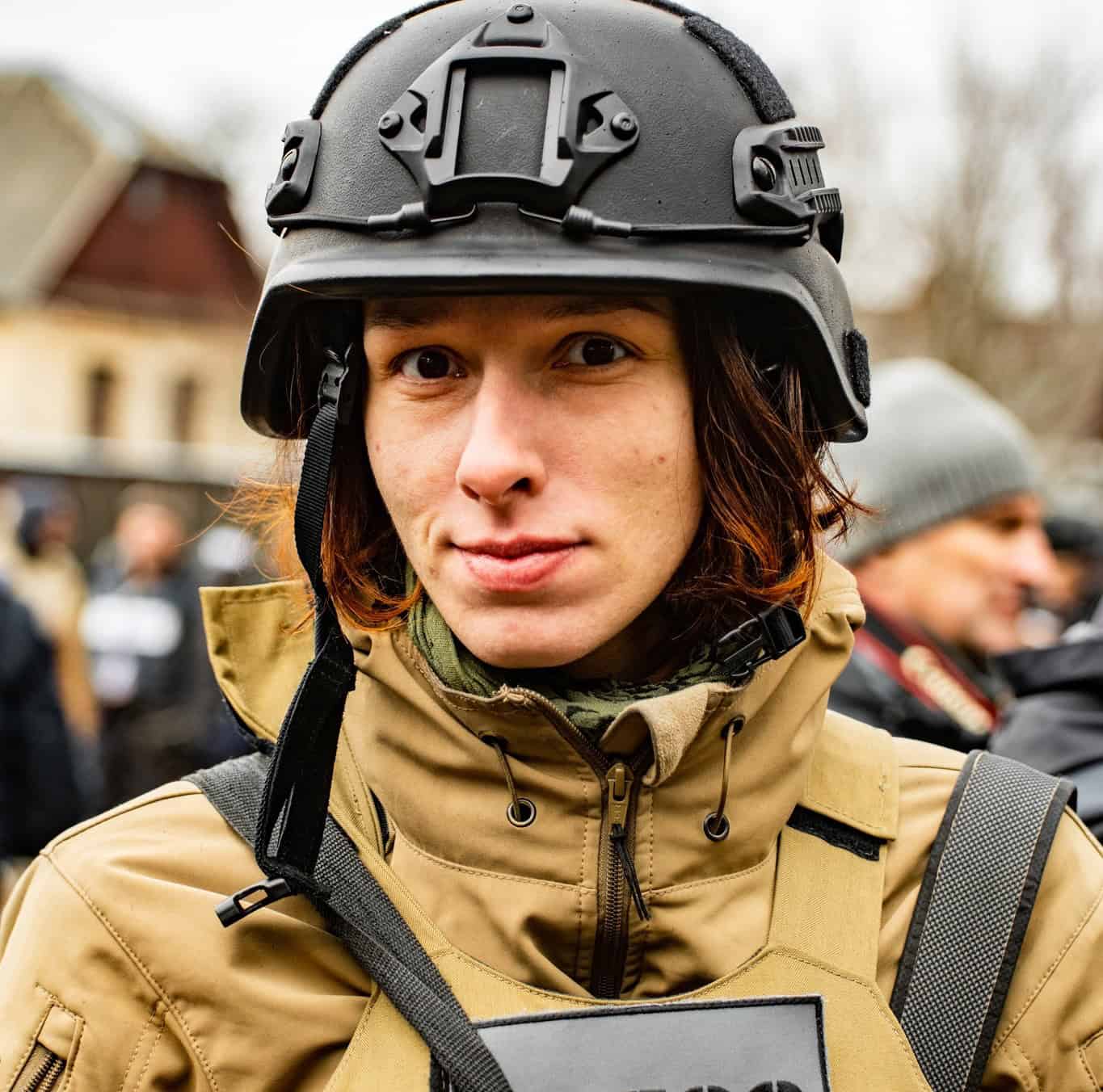
Kateryna Doroshenko, a veteran and combat medic, wields an eye-catching pink training halberd. She served in a military hospital in Kyiv and had frontline deployments. She says she only recently got into buhurt, however, she has been part of the reenactment movement since 2019:
“I have a full metal kit and have been competing (in tournaments – ed.) since 2019. I was out of training for quite a while due to an injury, and my service also kept me from practicing. Gradually, I returned to tournaments, and now I am training again,” says the veteran.
Without harming anyone:
everything is safe and technically regulated,
She explains that, given her adrenaline-dependent personality, these sessions are an ideal way to channel emotions and recharge.
“I am always after some kind of adrenaline rush, I need constant activity. The atmosphere here is very friendly, everyone knows each other, everyone is so nice. It is a legal way to release emotions without harming anyone: everything is safe and technically regulated. So it is especially relevant for guys with PTSD who feel out of place.”
“Something that keeps you going”
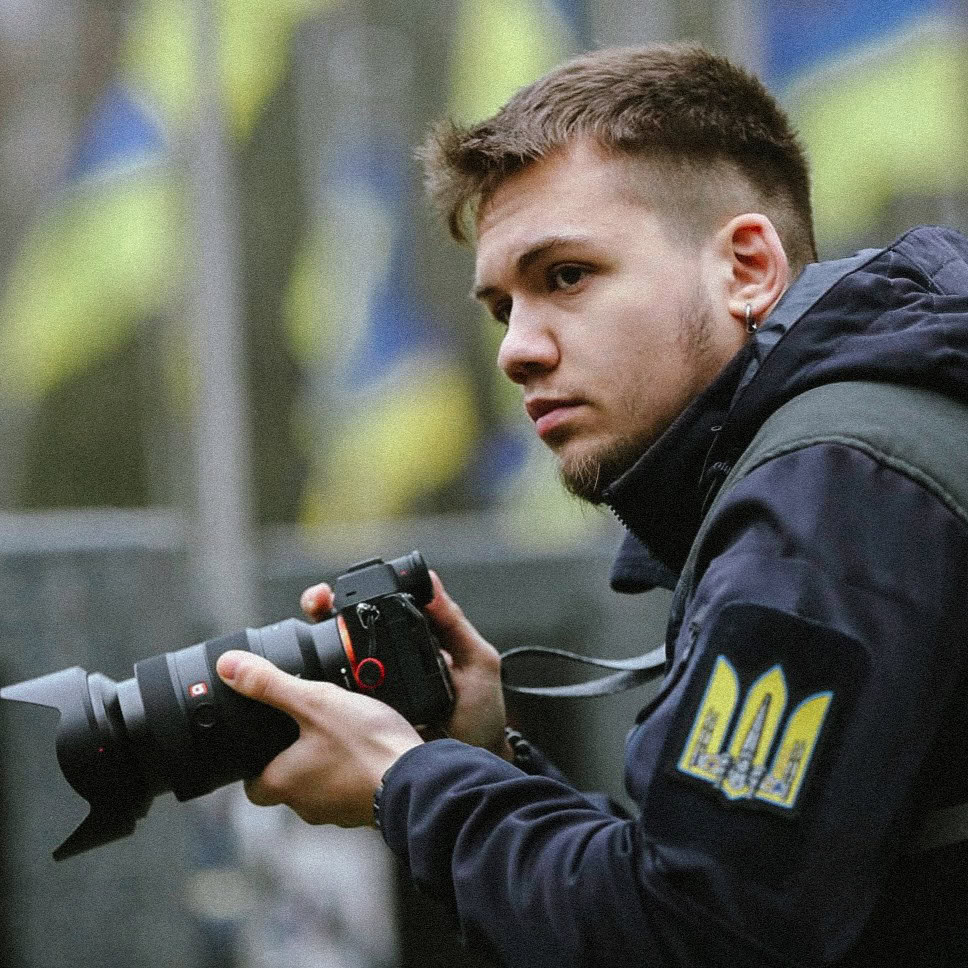
Another participant in the training sessions is Dmytro, an active-duty soldier who, for security reasons, asks for his last name and unit not to be disclosed. The young man barely had time to experience civilian life: after finishing his studies, he worked a little as a barista and soon received his draft notice. He’s been attending training for just over a month. He first got interested in buhurt during the war, while scrolling through Instagram.
“It was my first deployment. Between shifts I watched videos of our team kicking ass. You’ll have to censor that, right? They were really giving the Russians a solid beatdown, it was quite impressive.”

He grew curious, and almost as if in response to that curiosity, information about “Buhurt Sich” came up on a social media feed. He describes the training as a way of keeping him going.
“I was in a very difficult depressive state. And then I realised: oh, this is great, I can hit people!” the soldier laughs. He then adds more seriously:
This is not war, it is sport: we are not enemies here.
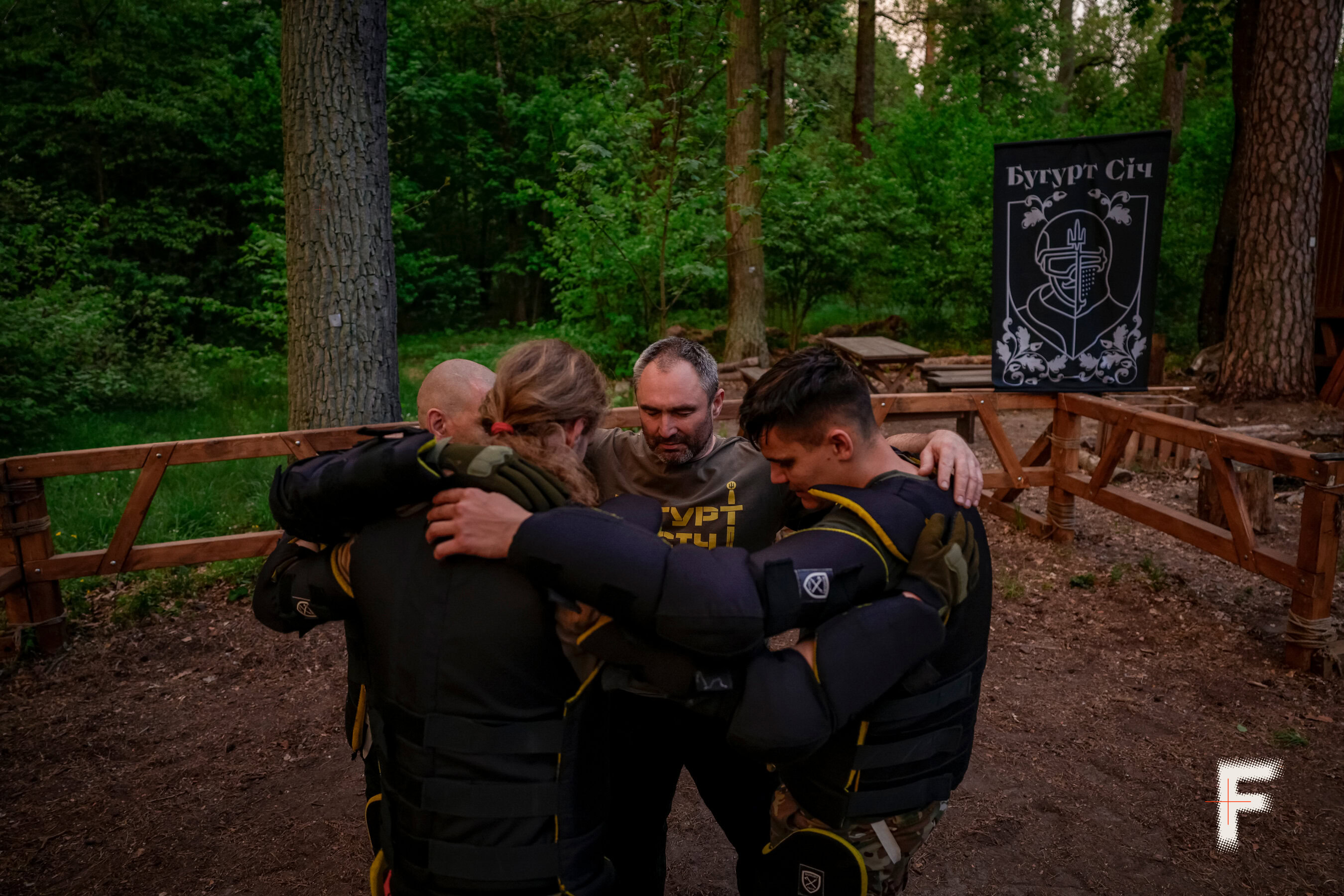
One minute we are sparring, and the next we are hugging.

“It overcame suicidal urges”
Coach Maksym Petrishchev, call sign “Ber,” is a serviceman. He coaches during rotations in Kyiv. He been involed in buhurt sport since he was 13, and he received his call sign during his time in the reenactment community:
“It comes from the word ‘bear,’ but I was a kid at that time, so it was maybe more like a bear cub. And when I joined the military, I decided not to make anything up. The commander said, ‘Everyone has to have a call sign,’ and I was like, ‘I already have one,’” recalls Maksym.
“Ber” worked as a lawyer and IT specialist. With the full-scale invasion, he joined the 63rd Separate Mechanized Brigade and transferred to another unit a year later. His current service allows him to combine the military with his favorite hobby.
I come to Kyiv on rotation,
it serves as a release for me.

He says the concept of buhurt-based rehabilitation dates back to 2020 and was shaped by experience in the United States:
“In the U.S., for years, around 60 to 80 percent of their team in our sport has been made up of veterans or active servicemen. American veterans say that buhurt helps them transition into civilian life. Some have even openly said it helped them overcome suicidal urges.”
In 2021, enthusiasts created a nonprofit organization, but the outbreak of full-scale war put everything on hold. Later, several founders themselves became veterans and returned to the idea.
“2022 was essentially a lost year for us, but even at the front we kept discussing how we would make it happen. The belief that we would win the war and then launch the project kept us going. In practice, when I come to Kyiv on rotation, it serves as a release for me. I spend all my free time on the project, and it genuinely helps,” the coach explains.
We do not go easy on each other.
The armor provides a high level of protection,
Safe space
At first glance, it seems paradoxical that a sport based on simulated combat could aid recovery after war. At the beginning of the project, its creators even received criticism for this idea. However, Maksym Petrishchev notes that psychologists are involved, working with participants and studying the mental condition of soldiers and veterans and how it evolves. They confirm the sport has a positive effect. One important aspect is that it creates a supportive environment of like-minded people, something many veterans miss in civilian life. After returning from the front, reconnecting with pre-war social circles can be challenging. But in this environment, they can rediscover a sense of brotherhood, Maksym notes. Some people do not train due to physical or psychological injuries: they simply socialize, and help others put on their armor. Others sit in silence, but after training, they smile and say thank you. The second aspect is captured by the saying “once a warrior, always a warrior.”
“A person who has been through war becomes a warrior in every sense: mentally, morally, and physically. Here, they can continue to practice and apply their military skills through training. It is full-contact combat; we do not go easy on each other. The armor provides a high level of protection, and the training weapons are relatively soft. Due to the lightweight and flexible gear, even people without special physical training are able to participate,” he explains.
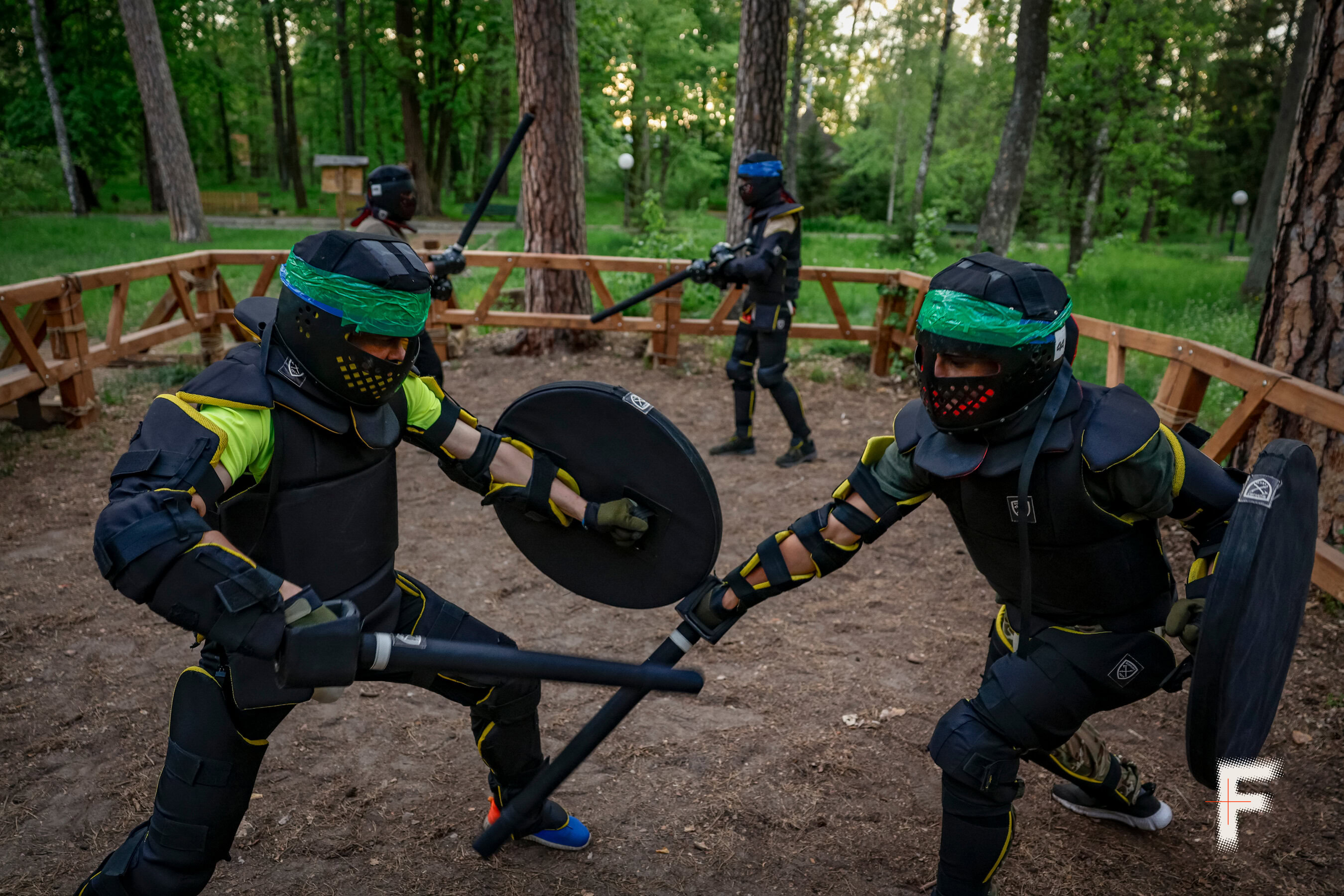
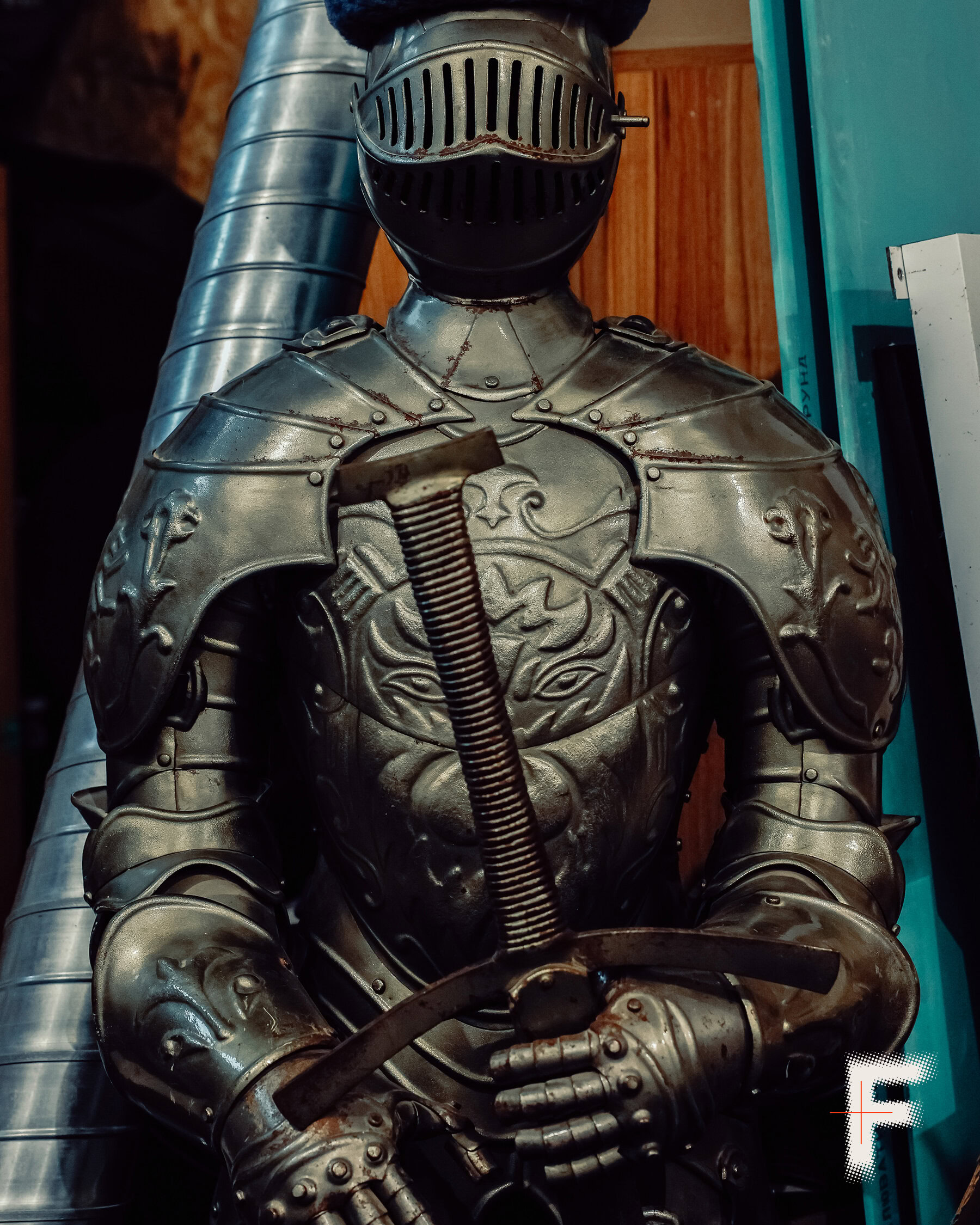
Those who become seriously involved can take it further by trying their hand at fencing in reenactment armor and competing in tournaments. Unlike training gear, this is tailored to the individual and can weigh between 25 and 35 kilograms. Working in it is more demanding, however, it delivers a different kind of experience and atmosphere, says “Ber.”
“It is more authentic; it looks cool. It is precisely in metal armor that you feel most like a true warrior.”
Maksym explains that soldiers with amputations, and even those in wheelchairs, participate in the training:
“Guys with arm amputations have competed in tournaments. If a person has only one arm, the opponent simply removes their shield, and they fight using only swords. In other words, everything is adapted here. For guys in wheelchairs, their opponent sits in a chair and fights under the same conditions as they do. Last month, we started collaborating with the Medical Center Orthotics & Prosthetics (MCOP) . We visited them for an open training session. Participants with high-level amputations, some of them in wheelchairs, were sparring, and they were happy,” says “Ber.”
Maksym notes that one of the defining features of today’s war is that soldiers are often unable to respond to threats in any way other than sheltering and waiting out shelling or drone strikes.
“You are sitting in a dugout, being bombarded, and there’s nothing you can do. You just sit there and wait for the shelling to stop. But nature has made us such that adrenaline is released during stressful situations. And we feel the sense of ‘fight or flight.’ But in modern warfare, you can’t always do that. And it’s this lack of this activity that causes stressful situations. So what are we
doing here? We are simply releasing this built-up stress through physical activity. Doctors at the ‘Lisova Poliana’ rehabilitation center say there’s a very positive trend among the guys,” says the coach.

“Buhurt Sich” operates at two locations in Kyiv: in Podil, as well as at the “Lisova Poliana” medical center, where soldiers undergo rehabilitation. Civilians can also join the training sessions for a voluntary donation. The coaches and volunteers are receiving requests to open branches in other cities. So now they are conducting separate training sessions to prepare coaches who will work with military personnel and veterans. A center recently opened in Kharkiv, with Rivne next in line.
When the long-awaited warmer weather finally arrives,
training continues outdoors, on a sunny lawn. The atmosphere there is more cheerful than in the gym, and there are more participants. Sometimes these sessions come with a bonus: a bonfire, fresh tea, and a pot of kulish.
[Editor’s note: Kulish is a hearty, traditional Ukrainian campfire porridge made with millet.]
Once the sparring ends, the participants hug and shake hands. Replacing combat gear with fencing armor, they also replace the enemy they face. Here, the opponent is their own exhaustion, despair, and emotional burden. And here, they learn to win.