One Prostir Turboty instead of dozens of offices: Odesa’s new support hub for veterans
People returning from the front and facing long-term rehabilitation in Odesa, no longer have to make their way through different institutions and offices on their own. In July, the Prostir Turboty (Care Space) officially began operating at the Odesa Regional Clinical Hospital. The region's first project of its kind brings medical care, social services and psychological support together under one roof for veterans, both men and women. Frontliner reporters went to see how the new space works.
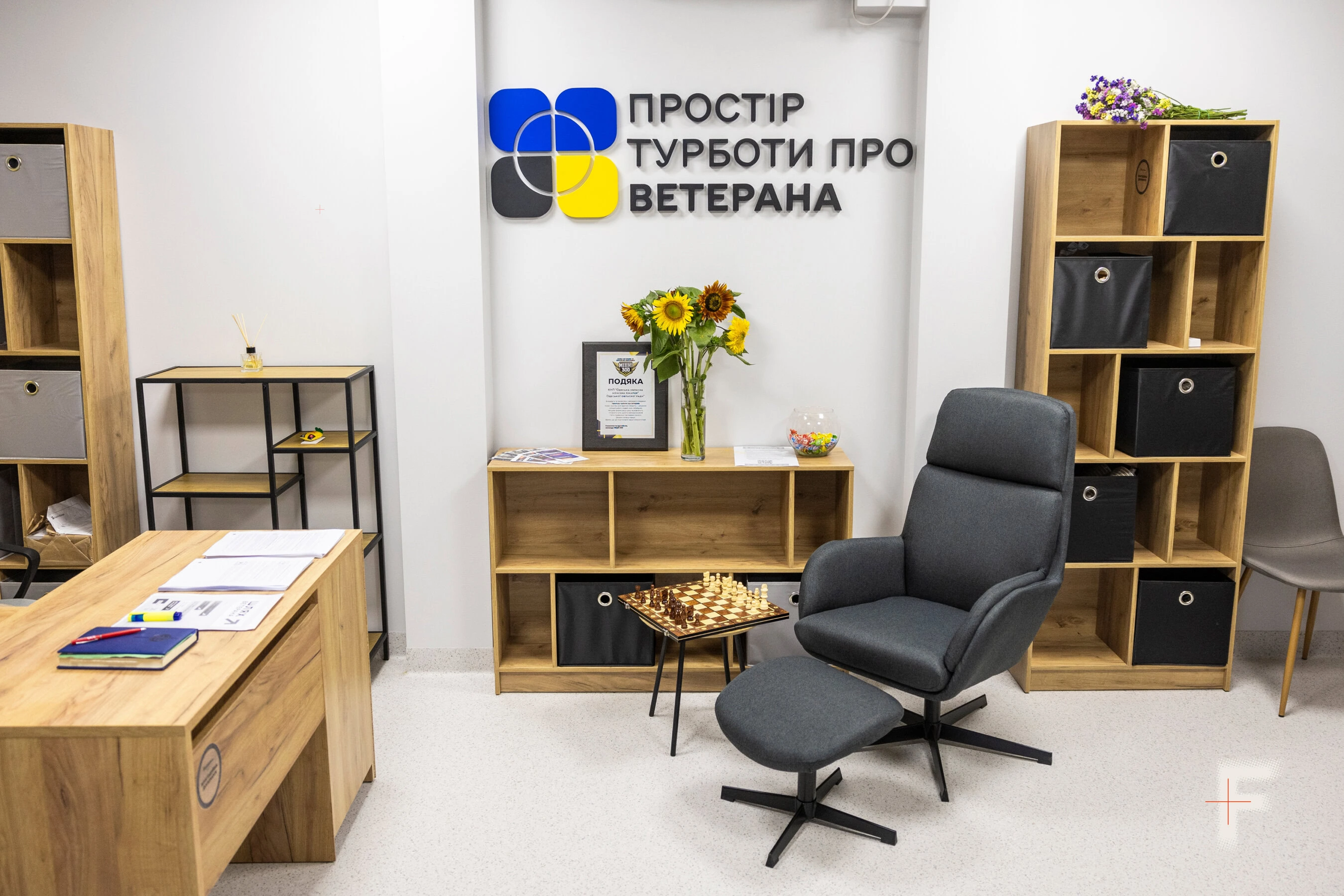
Until recently, veterans and their families could get lost in the Odesa Regional Clinical Hospital’s maze of offices and queues. Now, a corridor holds a separate space marked Prostir Turboty. A few comfortable armchairs stand inside, coffee sits on a small table, and a chessboard waits nearby with its pieces already set up. Service members, veterans and their relatives drop in after their medical appointments. Some come to sort out paperwork, while others simply want to chat or sit down at the chessboard to forget, if only for a while, that they are in a hospital corridor.
This is where the war’s most seriously wounded are treated. The hospital has multidisciplinary teams, the RECOVERY rehabilitation program, the POVERNENNIA (RETURN) Mental Health Center and a Pain Treatment Center.
Such initiatives are often made possible through the support of individual donors. But the Prostir Turboty project is the result of a partnership between the Ministry of Veterans Affairs, the Ministry of Health and PrivatBank. PrivatBank funds the creation of the spaces and is directly involved in their work, including helping make them more comfortable and welcoming for veterans. The bank also runs a mobile service, so veterans and their families can access essential banking directly at the Prostir Turboty.
The project was later joined by the Mitsni 300 NGO and the International Renaissance Foundation. One of these spaces is based at the Odesa Regional Clinical Hospital, where veterans can receive the support they need without having to leave the hospital. The concept is straightforward: someone who has survived a war injury or returned from the front should not have to face yet another exhausting round of financial and government bureaucracy after leaving the hospital ward.
The project team believes the model is helping shape a new culture of how veterans are treated. Supporting those who have defended the country is no longer viewed as a task for the state or civil society alone, but as a shared responsibility across society.
This is why hospitals now have veteran support specialists on staff. According to Alina Sabatyn, a representative of the Department for Regional Veteran Support, 14 such specialists are currently working in healthcare facilities across Odesa region, and officials plan to expand the network. But the Prostir Turboty at the Odesa Regional Clinical Hospital was the first of its kind in the region and remains unique in bringing together veteran support, psychological assistance, rehabilitation guidance, and help with social and financial matters in one place.
PrivatBank employees work closely with veteran support specialists. If a veteran needs a new bank card, an update to their personal details or simply a consultation, a bank representative comes directly to the healthcare facility to provide the necessary services.

When veterans return from the combat zone to civilian life,
there need to be people by their side to support them in every way.
Therefore, there must certainly be specialists in the hospitals,
What veteran support specialists do
Renata Vatrenko, a veteran support specialist, is the first person to meet veterans. They come to her with questions that often have nothing to do with medical treatment, but answering them is essential to getting back to everyday life. Her work includes helping veterans obtain official status and benefits, replace or restore documents, communicate with the Pension Fund of Ukraine, social protection authorities, administrative service centers, educational institutions, as well as assisting people with disabilities to adapt their vehicles to their needs.
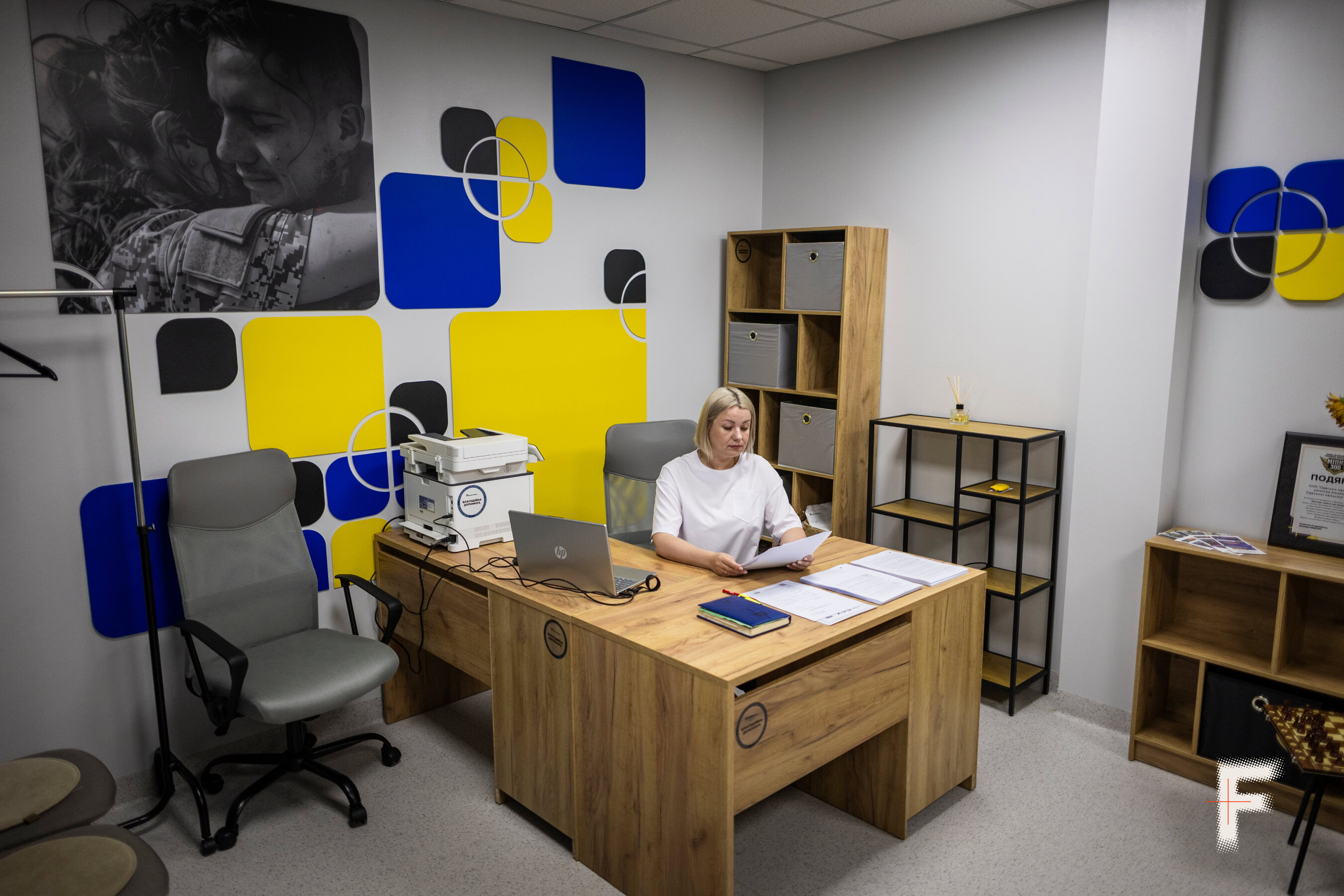
Sometimes work comes to a halt because of what might seem like a minor detail. A single mistake in the paperwork is enough to prevent a person from receiving benefits or entitlements. For example, after restoring a lost passport, an incorrect letter might appear in the documents. In that case, the specialist may even have to contact the Civil Registry Office to correct the discrepancy so the person can move forward.
According to Renata Vatrenko, the Prostir Turboty tries to handle these bureaucratic issues so that doctors can focus on their work.
“Doctors should treat patients. I believe everyone should do their own job,” she says.
But most requests are about more than documents. For some veterans, the support specialist helps find a new profession; for others, she becomes the person who explains where to begin the process of returning to civilian life.
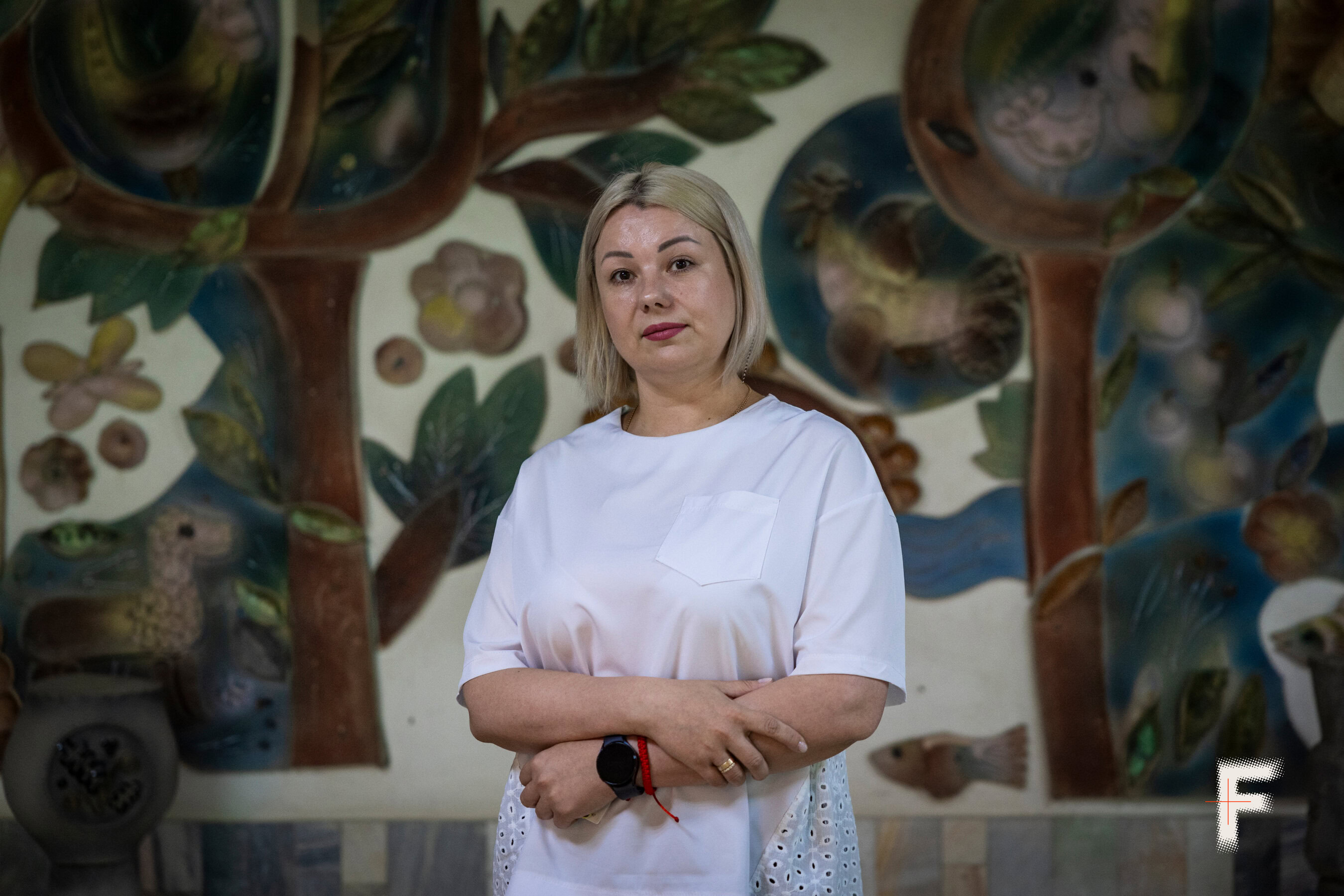
“My responsibilities cover a very wide range of services: helping veterans apply for benefits as well as assisting in obtaining official status. If a service member has been discharged and is struggling to find their place, I can help with career guidance, refer them for training or retraining, or help them gain a new qualification,” Renata says.
But no two stories are the same. Every veteran comes with their own experience, challenges and pace. That is why the most important part of this work is understanding the person rather than following a standard template, she says:
What makes this work special is the need to approach every service member
with great care and sensitivity. This is not a conveyor belt.
Each service member has their own needs, their own personality and
their own red flags that we have to keep in mind.
How veterans used to navigate the return journey
Veteran Artem Hesman went through the process of returning to civilian life at a time when dedicated veteran support specialists did not yet exist. After an arm and leg amputation, he spent almost six months undergoing rehabilitation. At the same time, he had to handle dozens of documents on his own: applications for disability status, a pension and other benefits.
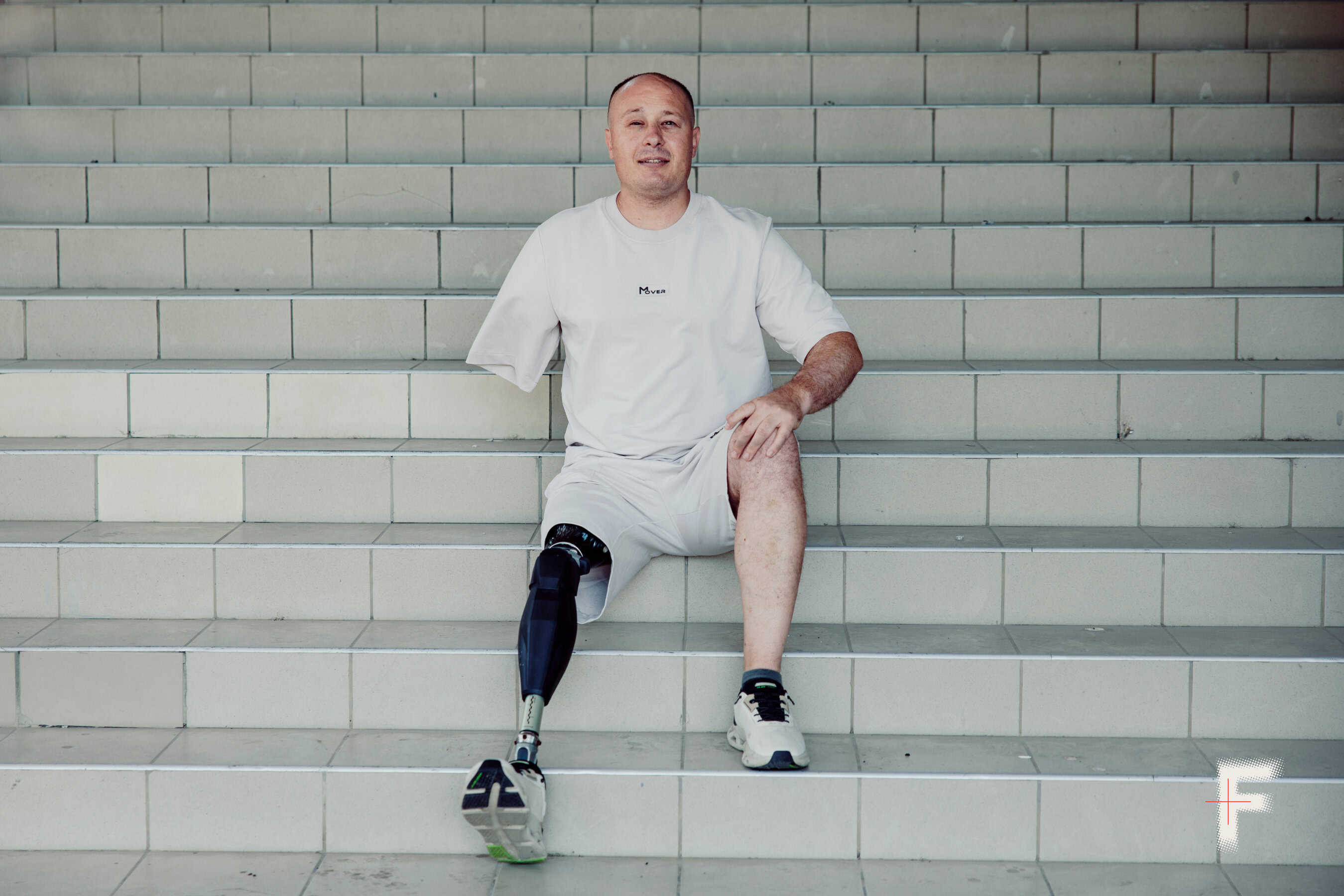
“I call it the ‘veteran’s quest.’ You know you are entitled to benefits, payments and support. But no one tells you how to actually get them. You have to find someone you know, a lawyer or simply someone who can explain in plain language what to do,” he says.
The problem, he says, was not that the state failed to provide support. The hardest part was figuring out where to start, whom to contact and which document was needed at each step.
“You collect the required documents, travel all the way there, and they tell you: ‘You’re missing this one document.’ You’re a person with a disability, it’s difficult to get around on a prosthetic limb, but you still have to make the trip all over again. It’s incredibly frustrating,” he says.
It makes a person feel that
someone cares about them,

Today, Artem comes to the Prostir Turboty for different reasons: mostly to get advice about new government programs. Had this kind of support existed during his rehabilitation, he could have avoided many of those exhausting trips between institutions.
“A veteran can feel a little more at ease when someone comes to them and explains things in plain language: this is what you need to do now, and this is what we can help you with. It makes a person feel that someone cares about them,” Hesman says.
Psychological and physical rehabilitation for veterans
But completing paperwork is only one part of the transition back to civilian life. After being wounded or spending months at the front, many service members must learn to live with the experiences they carry home with them. For this reason, another component of the Prostir Turboty is the POVERNENNIA Mental Health Center, which operates at the Odesa Regional Clinical Hospital.
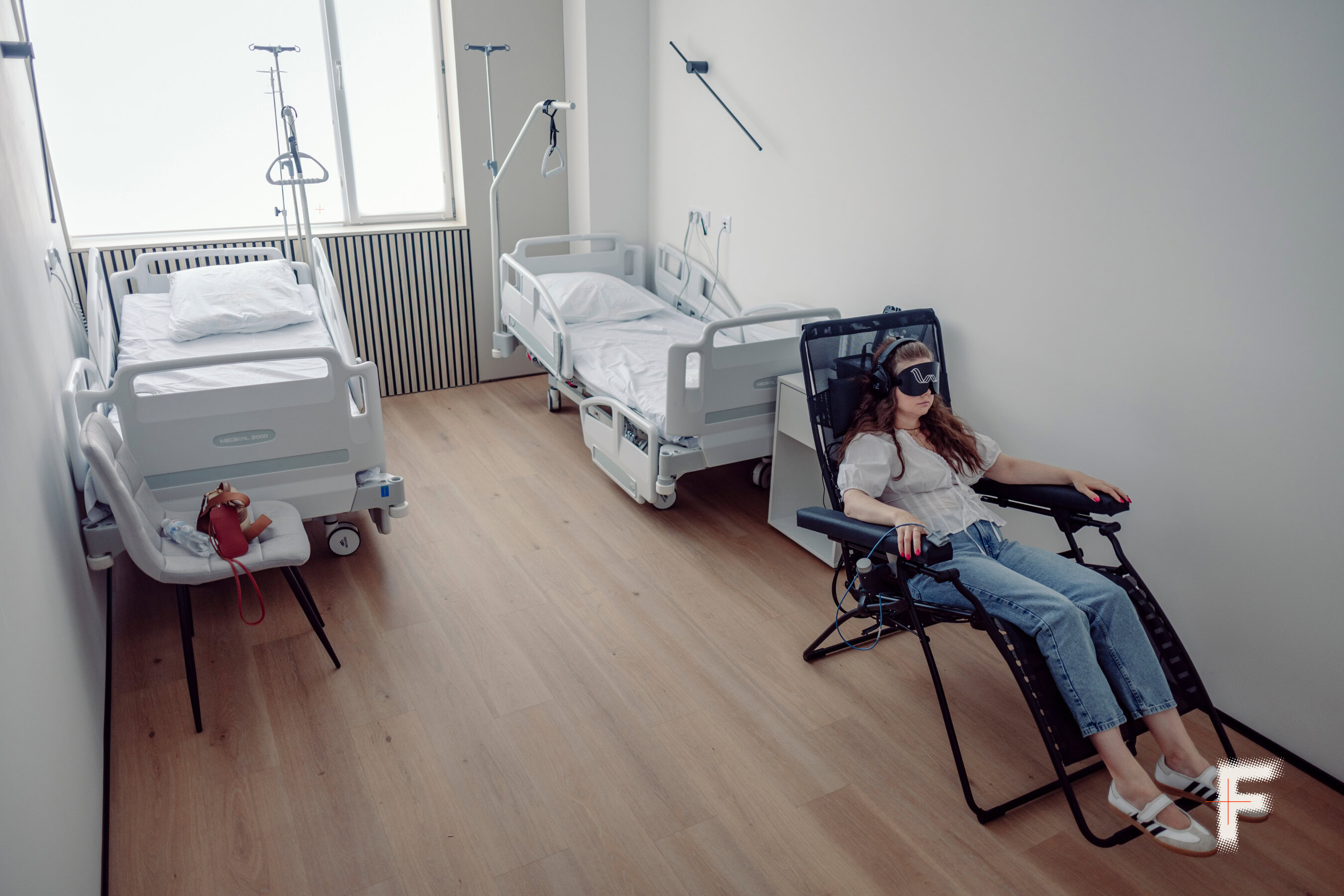
Kateryna Sharyi, acting head of the Mental Health Center, explains that psychologists most often work with the consequences of combat experience: post-traumatic stress disorder, concussions and complicated grief among the families of service members who have been killed, been captured or reported missing.

The biggest problem is often not treatment itself, but the fear of asking for help. One of the center’s tasks, the doctor says, is to destroy the stereotype that seeing a mental health specialist is something to fear or be ashamed of:
“People used to think: ‘If I’m diagnosed, I’ll be considered mentally ill, I won’t have a future, I’ll lose legal rights.’ We explain that it’s their choice. We provide recommendations, but they decide how they want to be treated: with psychotherapy alone or together with medication.”

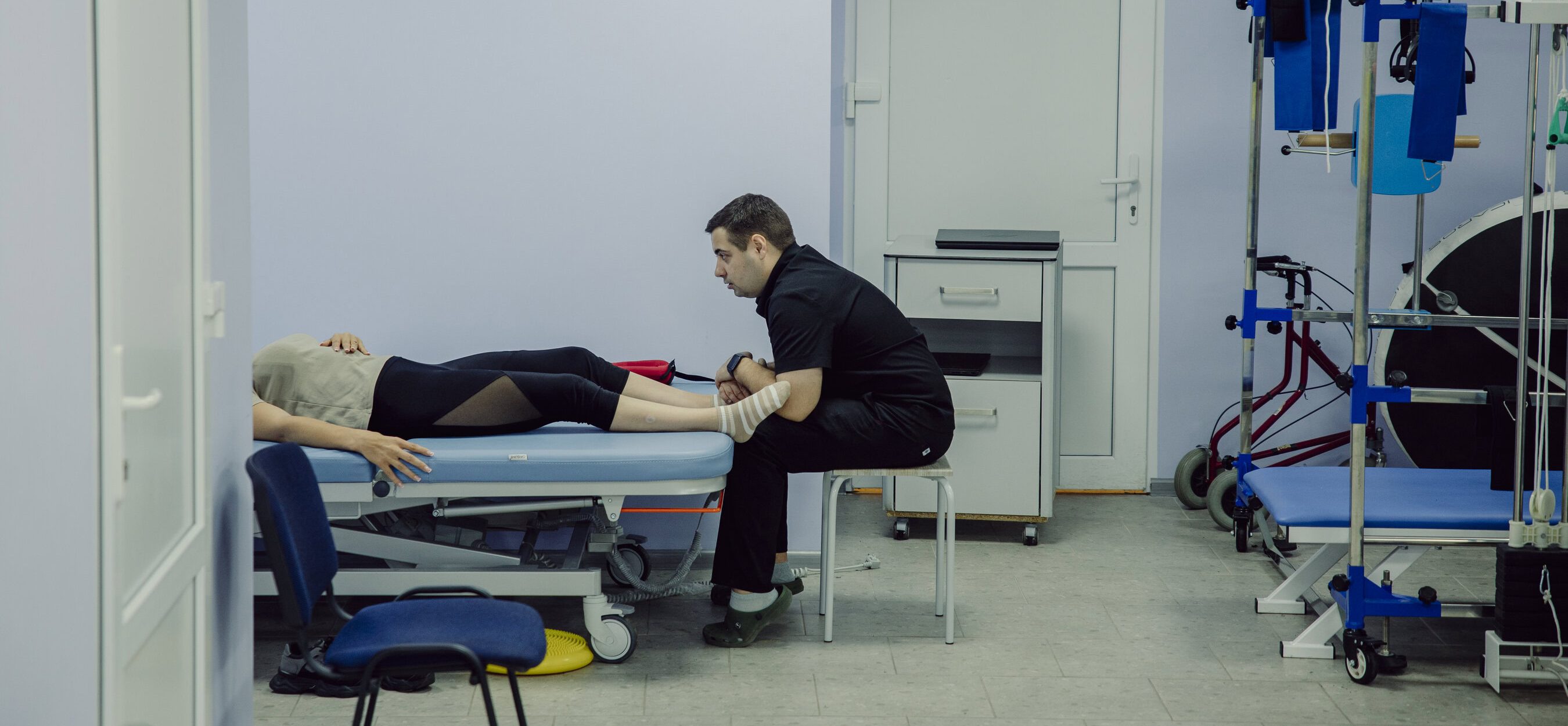
Alongside psychological support, physical rehabilitation is another important stage of recovery. Lidiia Banna, Head of the Rehabilitation Department, emphasizes that recovery does not begin after a patient is discharged: it starts within the first few days, once the patient’s condition has stabilized.
If a veteran comes to the Prostir Turboty and requires further rehabilitation, the support specialist does not leave them to search for the appropriate department or doctor themselves. The specialist coordinates the referral, after which the rehabilitation team examines the medical documentation, assesses the person’s condition and develops an individual recovery plan.
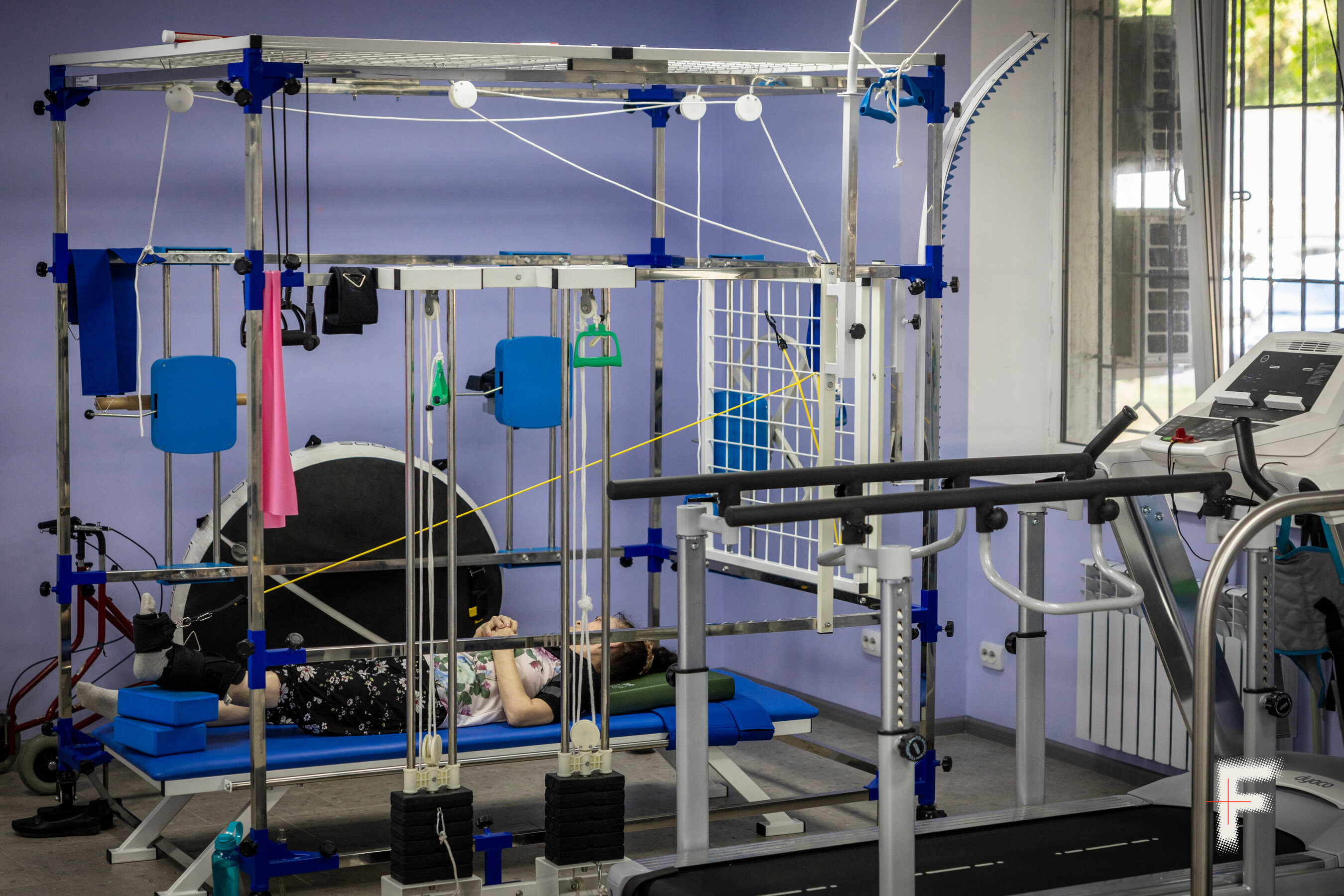
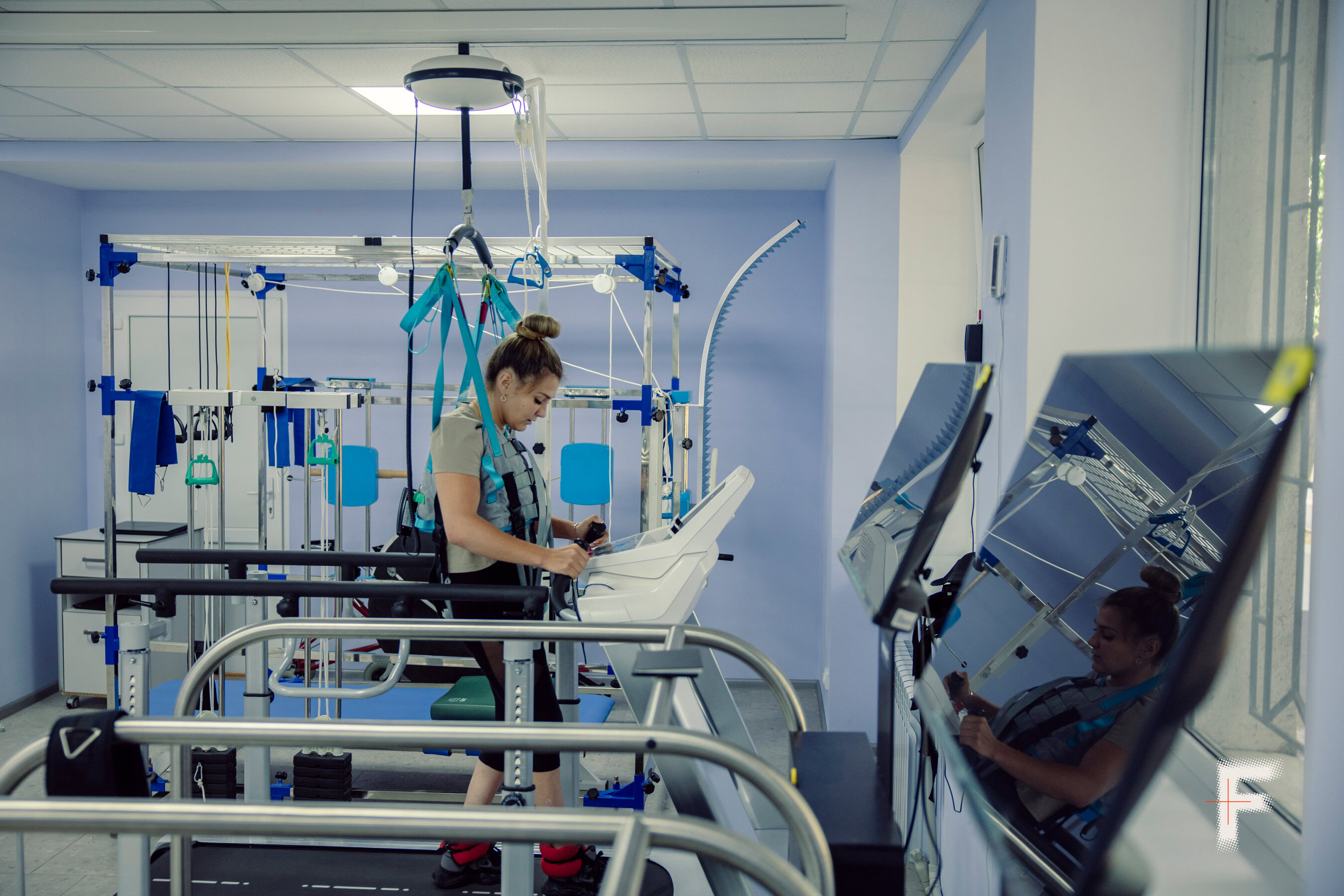
“We try to be there at every stage and work with patients throughout their recovery. We don’t wait until their condition has stabilized. We start when they are going through one of the most difficult periods: in intensive care,” Lidiia says.
She adds that successful rehabilitation depends not only on modern equipment, but also on the specialists who work directly with the patient.

For every person, especially a service member or veteran,
nothing can replace the work of a physical or occupational therapist.
The way they work with patients, through hands-on care, words and support,
cannot be replaced by any piece of equipment,

Veterans can access banking services at the hospital
After being wounded or discharged from the military, veterans often face a range of issues unrelated to medical treatment. They may need to replace a bank card, complete identity verification and arrange payments they are entitled to. For some veterans, getting to a bank branch independently can be challenging or even impossible.
PrivatBank became the project’s main donor, but its involvement goes beyond funding. The bank sees its role as being part of a joint effort involving the government, civil society and business to strengthen the support system for veterans, share expertise and develop solutions tailored to their needs. One area of this work is helping veterans deal with financial matters that may arise after an injury or their return from the front.
That is why the bank’s inclusive service team has become part of the Prostir Turboty initiative, says Olha Bezpalko, PrivatBank’s Head of Diversity and Inclusion. If, during a conversation with a veteran support specialist, it becomes clear that a person needs banking assistance, the specialist contacts the dedicated service. A bank employee then comes directly to the hospital and helps resolve the necessary issues there.
“It’s the right approach. We have a mobile service and work with the Ministry of Veterans Affairs to establish these centers. It is more convenient for us to provide services this way, and it is much easier for veterans because they don’t have to make their way to a bank branch on their own,” Olha says.
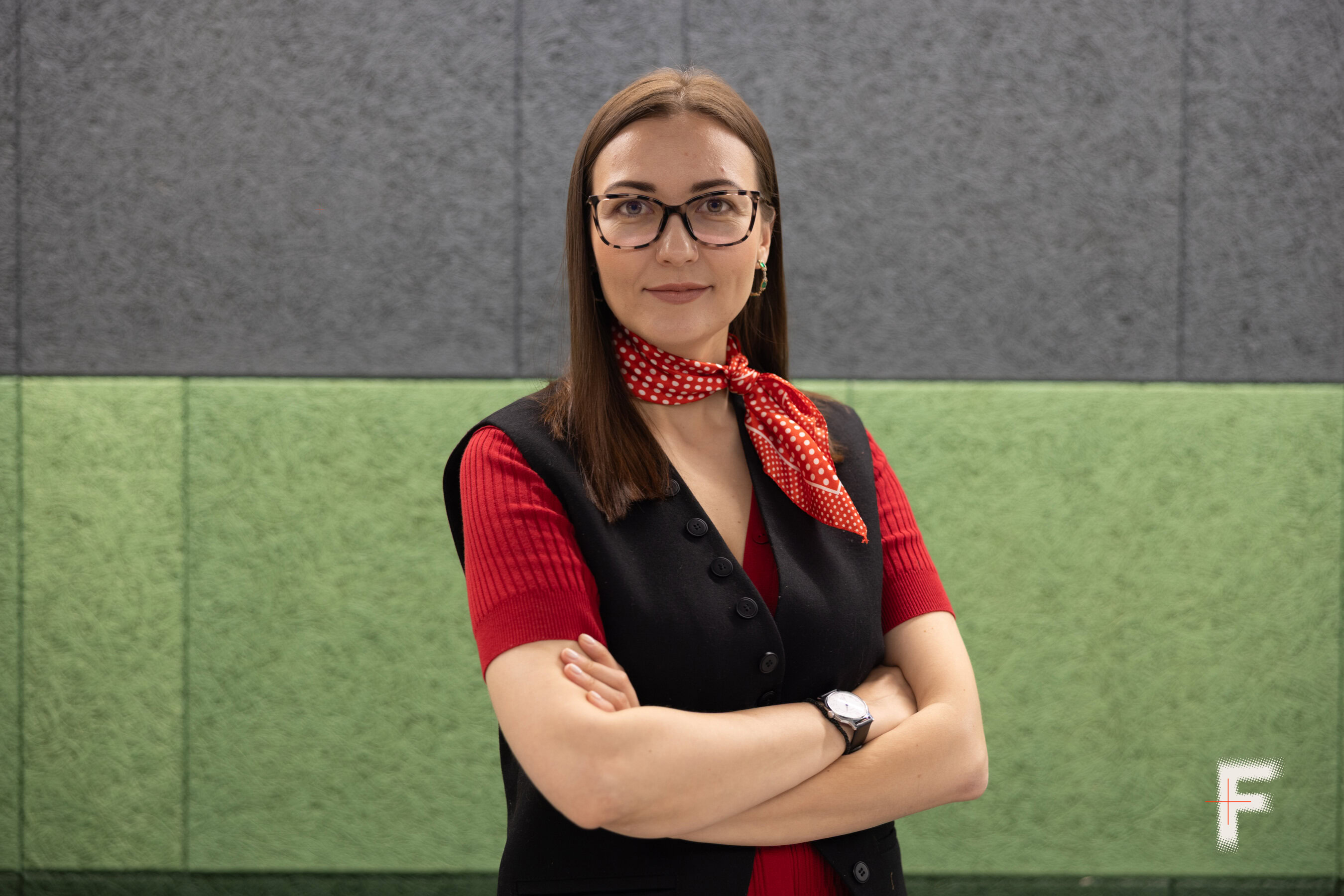
The bank believes that the way a service is provided matters just as much as the service itself. For this reason, employees undergo specialized training in trauma-sensitive communication.
In the military, people learn to live with the knowledge that a delay or an unclear decision can cost someone their life. This creates a combat mindset: the habit of assessing situations quickly, expecting clear answers and constantly monitoring what is happening around them.
These habits can persist after returning to civilian life. As a result, people may sometimes react strongly to uncertainty, delays or vague answers. Employees’ role is to understand the reasons behind such reactions, remain calm and help the person resolve their issue.
“We also needed to teach our staff that, for veterans, one of the most important ways to show gratitude is to provide a high-quality service. We need to demonstrate that we have taken this responsibility seriously, that we care, and that we are not going to leave them on their own,” Olha says.

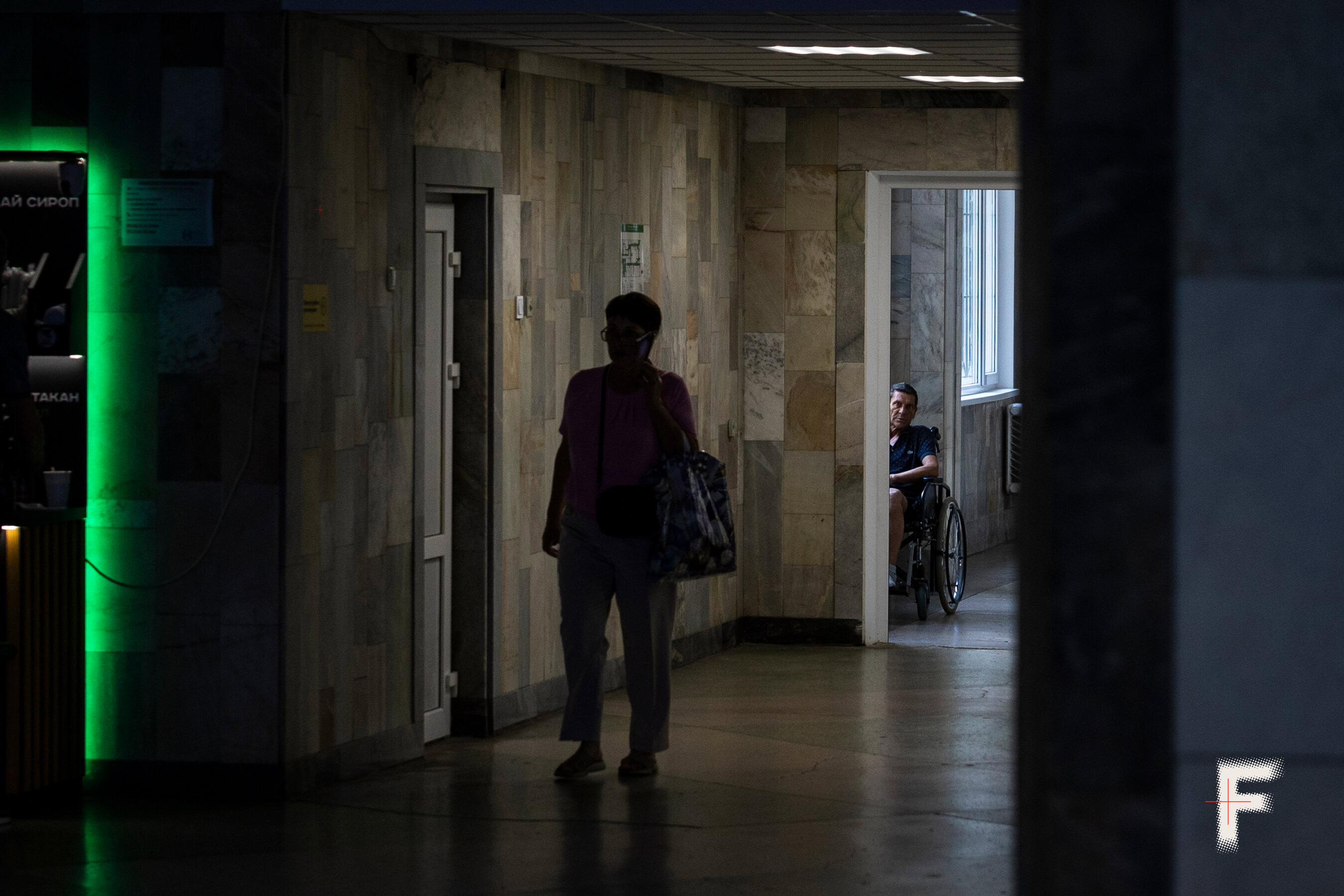
Meanwhile, the hospital corridor remains as busy as ever: patients wait in line, medical staff rush between departments, and doors swing open and shut. Then a veteran in a wheelchair arrives at the Prostir Turboty. The support specialist immediately puts her paperwork aside and goes to meet him. A few minutes later, they sit together over coffee, talking.