‘The world has changed while I was gone’: The story of a Mariupol defender who returned after a four-year captivity
He blew up three bridges in besieged Mariupol, survived bombings at the Azovmash plant, and endured four years of Russian captivity. This is the story of Dmytro Yeshchenko, an engineering and sapper platoon commander, who returned from Russian imprisonment in May 2026. Now, the veteran is adjusting to everyday life. He is surprised by the price of groceries and is still learning about technologies like artificial intelligence. Dmytro spoke with Frontliner reporters about what he went through and how he is learning to navigate the world all over again.
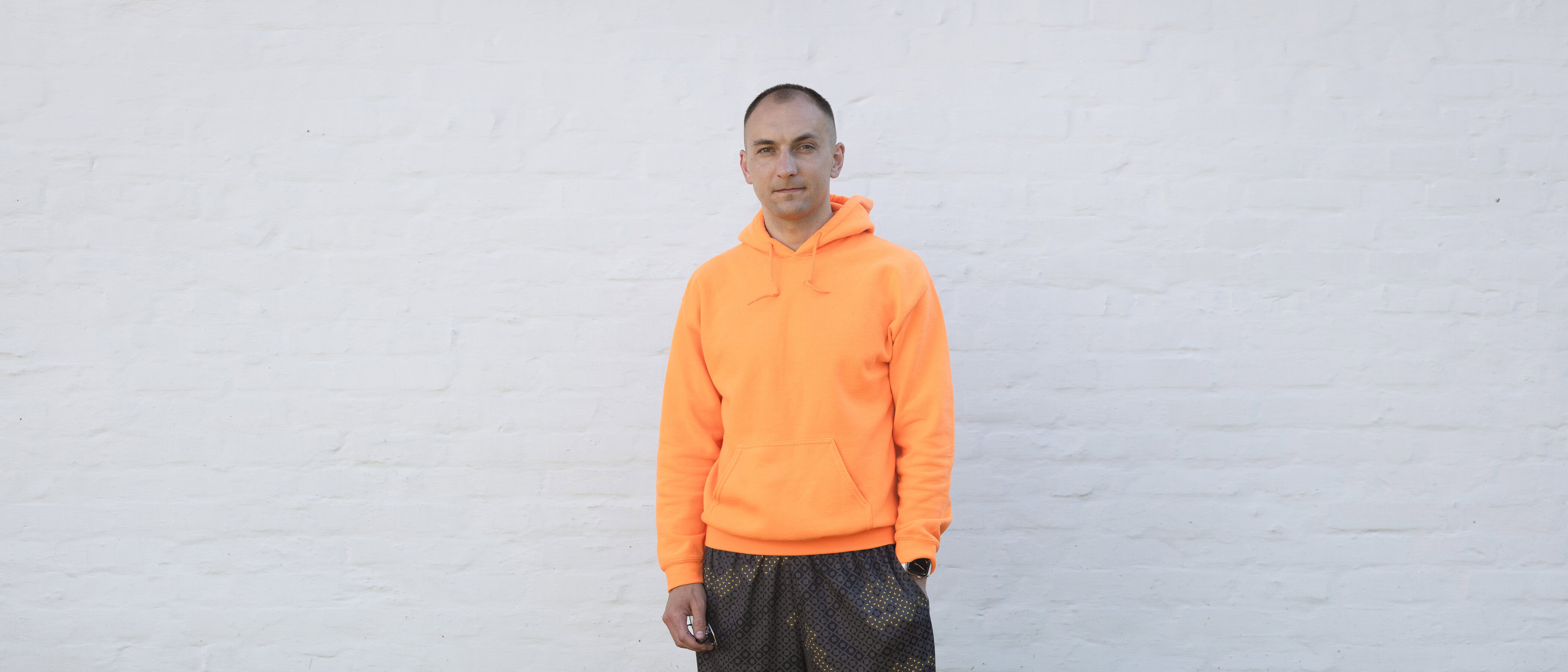
Dmytro Yeshchenko, a Mariupol defender and commander of an engineering and sapper platoon, returned home after four years in Russian captivity.

Following the exchange, the freed Ukrainian service members boarded evacuation buses heading to the hospital. The second Dmytro stepped inside, he half-jokingly asked the driver about the price of fuel and the current dollar exchange rate. The driver’s answer stunned the soldier, and that was exactly when he first started to wonder just how drastically the world had changed while he was locked away.
The day of the big exchange
When the bus arrived at the meeting point, Dmytro kept his distance and essentially fled from the crowd of Coordination Headquarters representatives, volunteers, and journalists waiting for the released defenders. Over his years in captivity, he had simply lost faith in the sincerity of human emotions. It was hard for him to comprehend why complete strangers could be so deeply and openly happy about his return.
The exchange itself, an event Dmytro had anticipated for over four years, along with his first meeting with his parents, went nothing as he had imagined. He shared that during his imprisonment, he had visualized coming home and hugging his family far too often and in great detail. When it finally happened in reality, Dmytro felt only emotional numbness. At that exact instant, he experienced almost no feelings inside.

After we surrendered into honorable captivity in Mariupol,
we believed we would be exchanged very quickly,
“But as the years went by, I stopped thinking about it. Maybe that is the very point they ‘break’ you. Not when you lose faith, but when you reach a stage where you simply do not care about what happens tomorrow.”
Defending Mariupol and slowing the enemy advance
Before his captivity, Dmytro Yeshchenko and his fellow soldiers held the line at the Azovmash plant. Dmytro was 22 years old at the time. As the commander of an engineering and sapper platoon, he was responsible for mining and destroying infrastructure that Russian forces could use to advance. However, the sappers constantly faced a severe shortage of munitions, meaning every explosive charge had to be used as efficiently as possible.
He and his fellow soldiers transported anti-tank mines in an old 1991 Mercedes E300 and planted them under small bridges on routes where Russian troops might advance. In this way, the defenders managed to blow up at least three crossings. Dmytro said this delayed the Russian advance by about ten days. The situation with larger bridges was more complicated. They did not have enough explosives to blow them up. The sappers had to resort to another method. Dmytro shared that they used heavy machinery left behind at the plant. By doing this, the troops blocked the approaches to large overpasses and created physical obstacles for Russian armored vehicles.
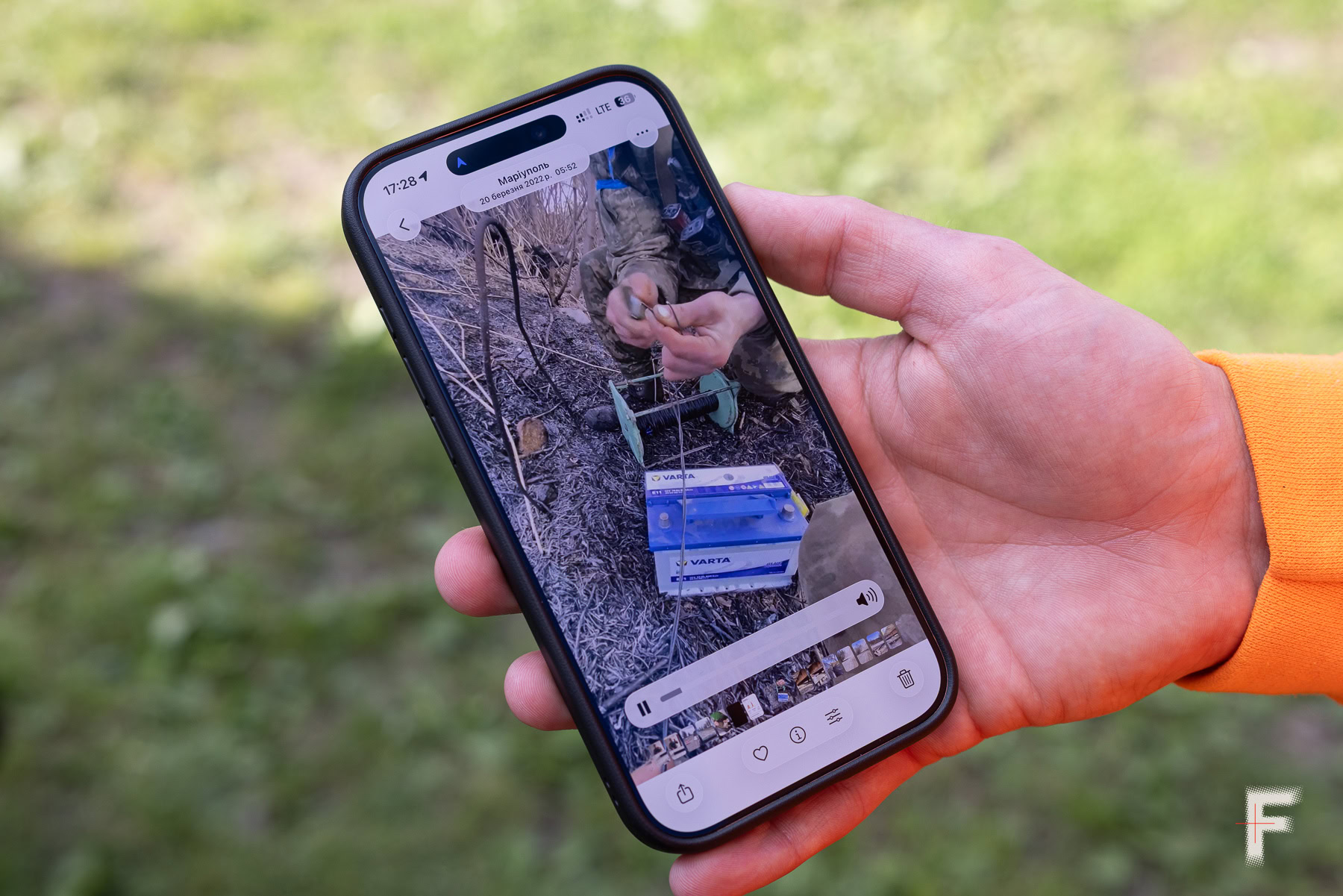
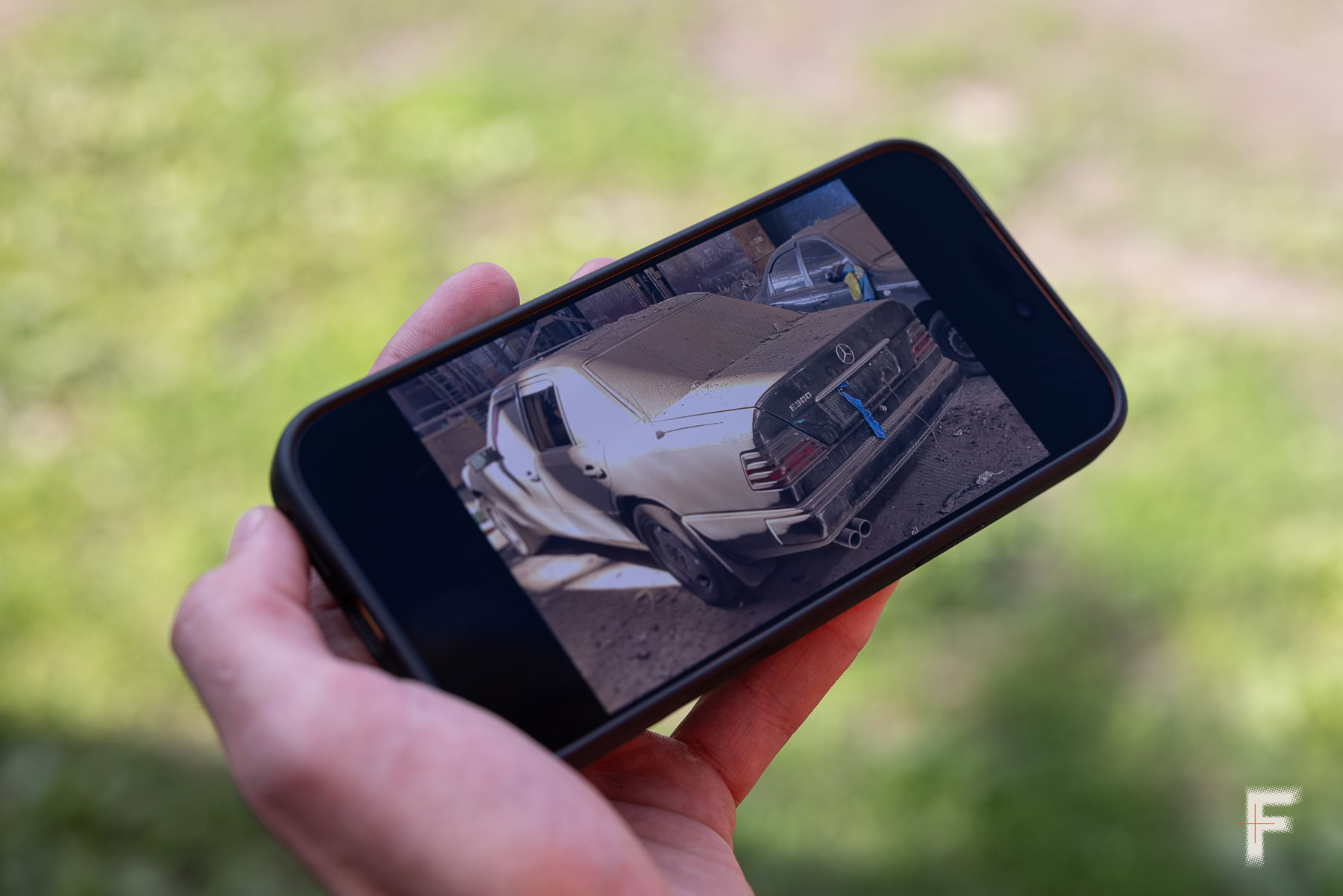
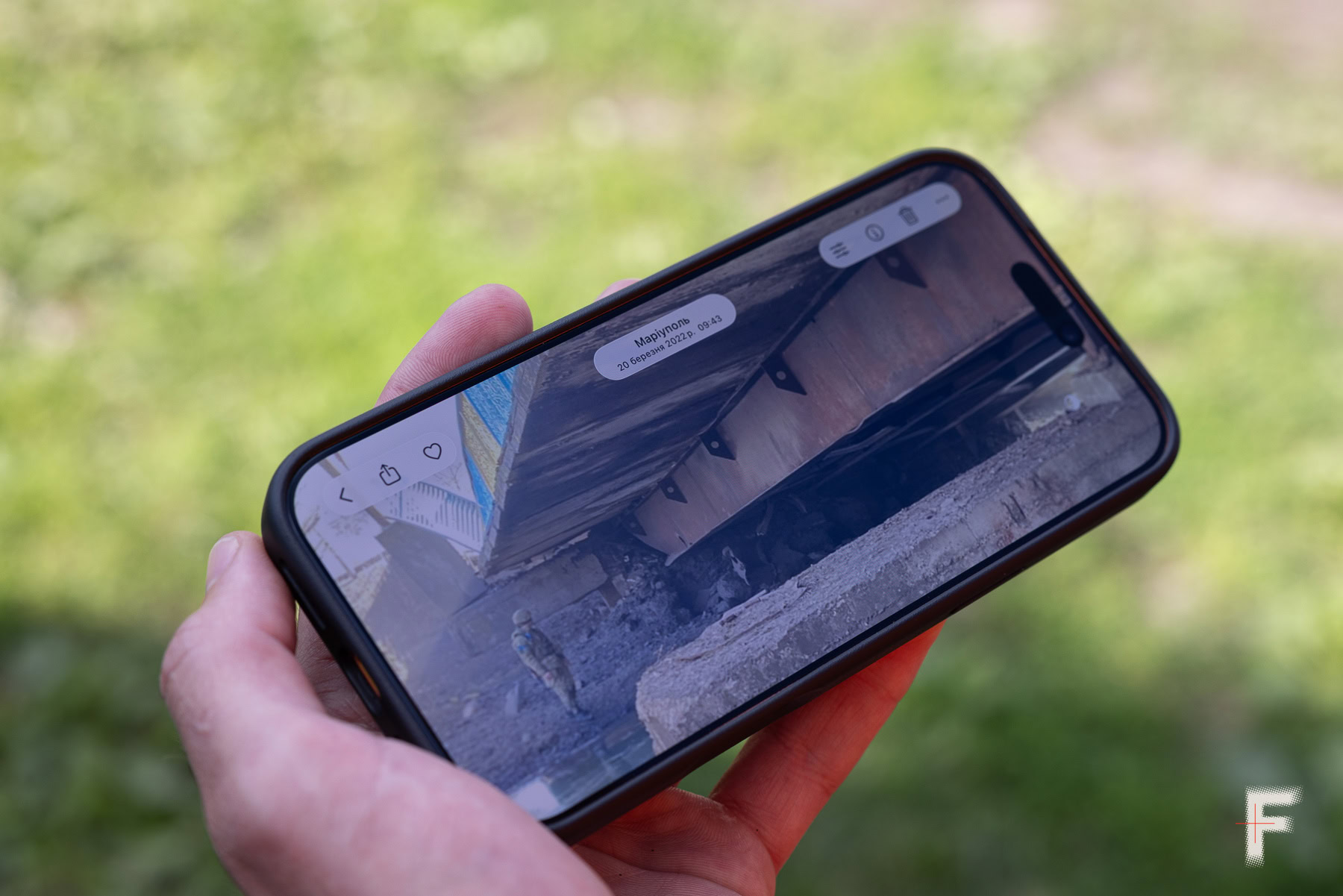
“I had just graduated and suddenly found myself facing the reality of war,” Dmytro said. “The things we ended up doing were never taught in the classroom, much less written about in textbooks. I am pretty sure no one has ever blown up a bridge using a Mercedes before. I never thought I would be sharing these stories, because in captivity, I quickly realized that it is much better when no one considers you a hero among your fellow soldiers, and no one knows anything about your exploits.”
Russian penal colonies and initial interrogations
After surrendering, Dmytro and his fellow soldiers were held for at least three days in disused former cowsheds in the village of Sartana in the Donetsk region. Later, the soldier was transported to Olenivka in the Donetsk region, where the first interrogations began. During one of these sessions, a Russian soldier put a gun to Dmytro’s head and demanded to know what he had been doing during the defense of Mariupol.
[Ed. note: Olenivka is a village in the Donetsk region of Ukraine, site of a Russian-operated detention facility where dozens of Ukrainian prisoners of war were killed in an explosion on July 29, 2022.]
I had only seen things like that in World War II movies,
where the fascists tortured prisoners.
Even before their capture, Dmytro had made an agreement with his commander: if they were interrogated separately, they would tell the truth, but without any details or mentions of their successful combat missions. This decision turned out to be the right one. The commander kept his word and shared the exact same version of events. However, this was only the beginning of his years in captivity. Over four years, Dmytro went through pre-trial detention centers in Taganrog and Novozybkov, as well as a penal colony in Donskoy. He spent more than two years there. According to him, the prisoners were forced to stand for hours with almost no chance to sit or lie down, and they were only allowed to sleep for a few hours a day.
“It is terrifying to think that I just stood there every single day,” Dmytro said. “The constant beatings, the forced lessons in the Russian anthem and history, and the terrible food were all grating, of course. But none of it exhausted me as much as the daily standing in that cell. One day, I could not take it anymore and asked a guard how they could treat human beings like this in the 21st century. I had only seen things like that in World War II movies, where the fascists tortured prisoners. They beat me so badly for asking that question that I ran a fever and was shaking all over. That was when the Russians told me that justice does not exist in the place where we were.”
The first letters from family and the return of hope
His background in sports played a major role in helping him endure the daily beatings and physical exhaustion, Dmytro said. Before the full-scale war, he had practiced wrestling for many years, so he was physically fit and knew how to withstand pain. However, with each passing month in captivity, Dmytro’s belief that he would ever return home faded.
One day, he received letters from his family. They gave him the motivation he needed to hold on to hope. Dmytro managed to save one of the letters and bring it out of captivity with him. It was a drawing by his nephew, Maksym. The boy had drawn a Mercedes, a car the serviceman had dreamed of buying for a long time. Dmytro also regularly wrote letters to his loved ones. But when he received their replies, he could not understand why they wouldn’t answer any of his questions.
It turned out, everything is still ahead of me,
because the world changed drastically while I was in there.
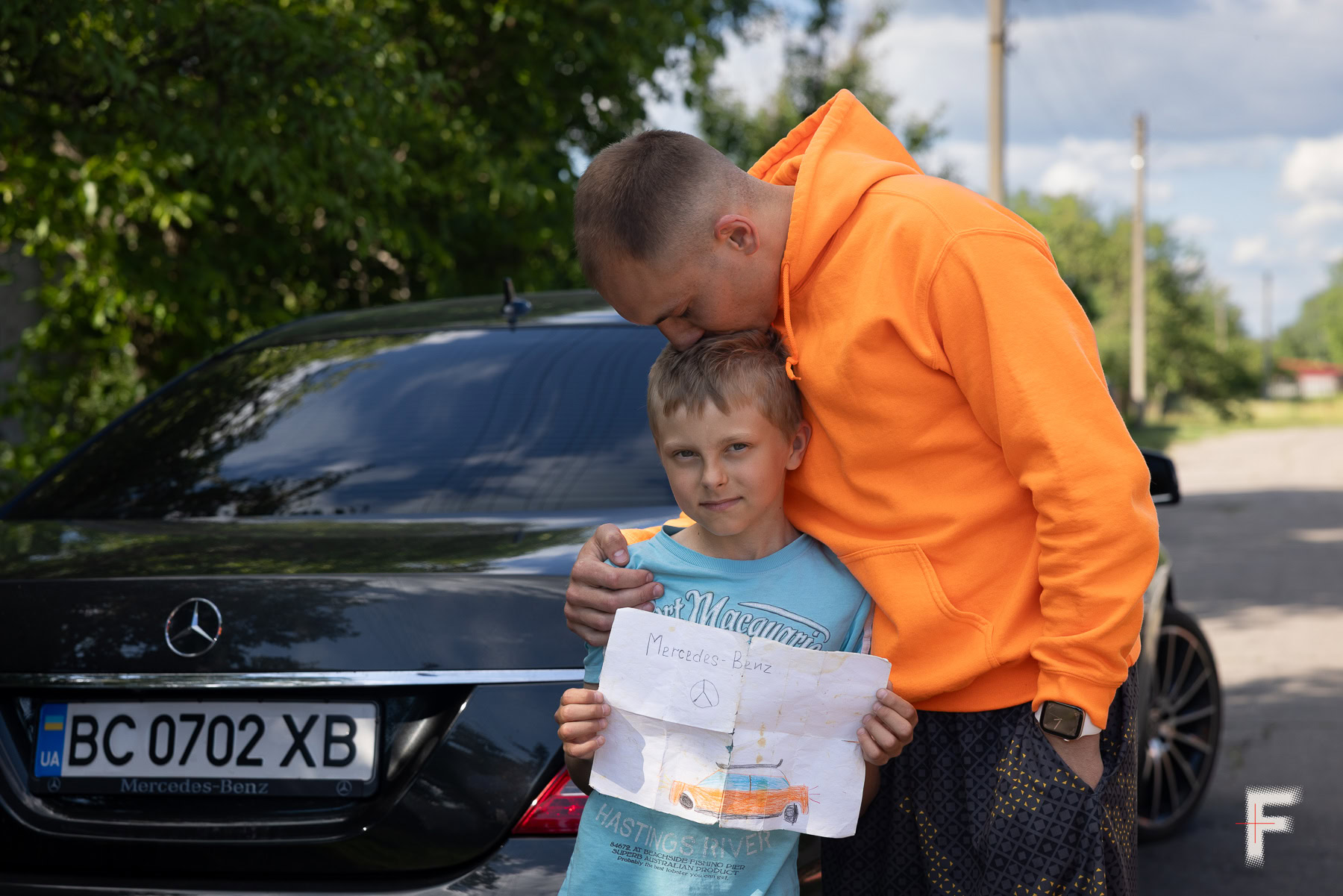
“What gave me strength was knowing my family was alive and well, and I looked at this drawing every single day,” Dmytro said. “When we were being transported for the exchange, all the letters I had received from my relatives were taken away, but this one survived. When I returned, I bought myself a 2011 Mercedes S350 to bring this story full circle. But as it turned out, everything is still ahead of me, because the world changed drastically while I was in there.“
After four years of isolation
Dmytro says that following his captivity, he feels like a man out of time. He was 26 years old when he returned from Russian imprisonment. The world around him has changed so much that he cannot fully grasp everything that happened during his years away. The serviceman admits that he can only look forward now, but everything around him feels like a blur. He has to rediscover everything, from news, technologies, and prices to people’s habits and even everyday conversations. To avoid getting lost in this stream of new information, Dmytro started keeping a journal. He writes down everything that surprises him, amazes him, or makes him think. Recently, after a trip to Lviv, he wrote almost two pages of his impressions. He recorded the smells of the city, the street noise, the crowds, the news he heard for the first time since his release, and even his emotions during the nationwide minute of silence.
In captivity, they kept telling us
that Ukraine no longer existed.
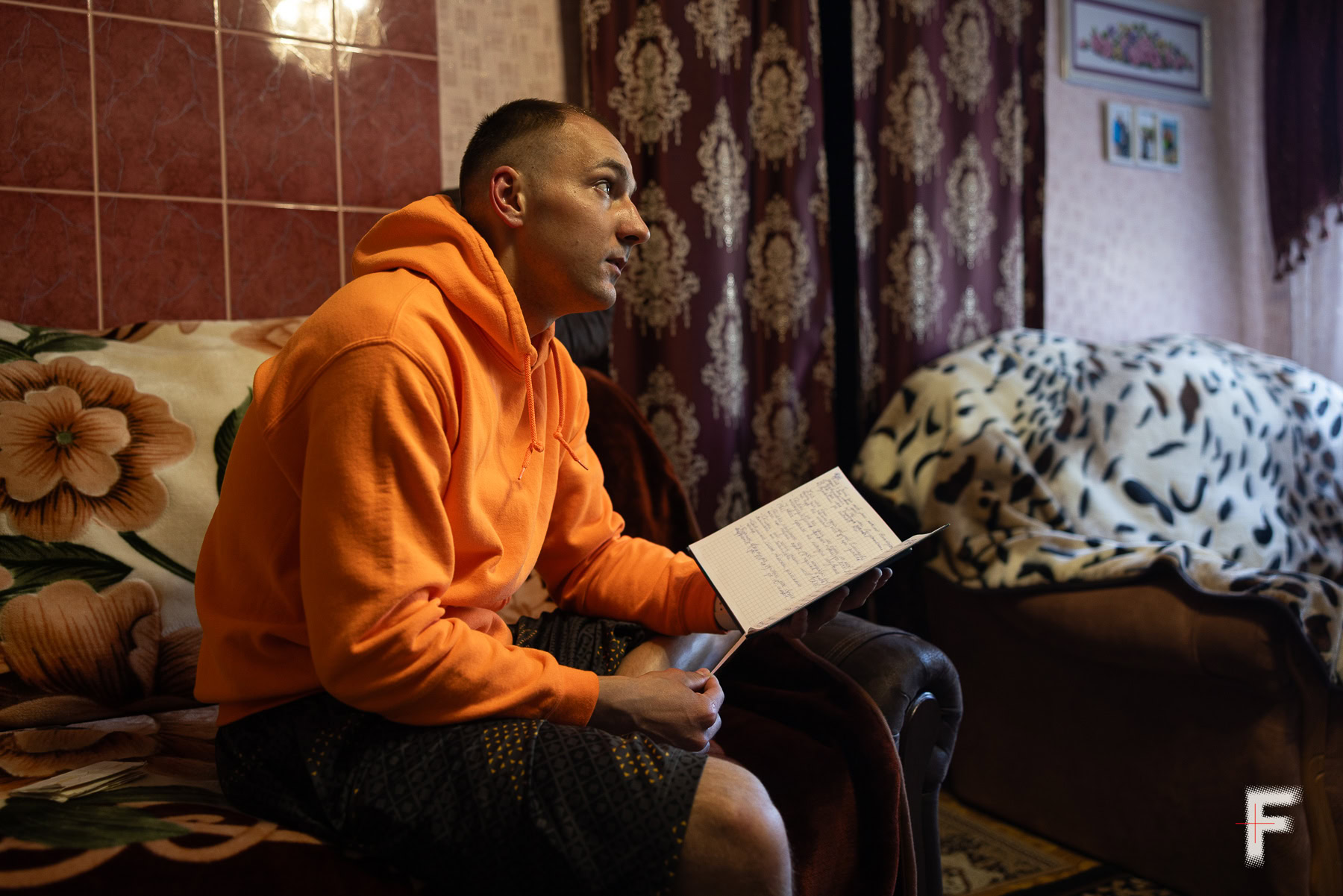
“When I heard that a haircut is 250 hryvnias now, I said to just give me the clippers, and I would do it myself,” Dmytro said. “It is like that with everything. In captivity, they kept telling us that Ukraine no longer existed, and then I arrive, and people are paying that much for haircuts. Take this DeepState map, for example. When they told me about it, I wanted to see a result no worse than how we held the line. And overall, it is unbelievable. Anyone can watch the war like it is a computer game.”
Coming home to a world reshaped by AI
One of the biggest discoveries for Dmytro following his return was the rapid development of artificial intelligence. He said that hearing about AI’s modern capabilities for the first time was truly mind-blowing. The freed serviceman admits that he still finds it difficult to tell the difference between a real photo or video and an image or clip generated by artificial intelligence. Because of this, he has become more cautious about the information he sees on the internet, and he is gradually exploring new technologies to learn how to use them and better understand what they can do.
I am 27 years old,
but I feel like a 70-year-old man.
Dmytro believes that the development of artificial intelligence also carries new risks. In his view, Ukrainian prisoners of war who spend years in an information vacuum can become easy targets for manipulation upon their return. People who are unaware of how realistically AI can generate photos, videos, or even voices today might easily believe fake materials. That is why, the soldier says, adapting after captivity is not just about restoring physical health, but also about getting to know the world all over again.
“For instance, I am a fan of Usyk, and now, when I come across short videos featuring him, I am simply shocked by how they are processed and edited,” said Dmytro Yeshchenko. “But when they tell me that a human did not exactly make them, it is hard to believe. Therefore, I cannot shake the feeling that there is a lot of deception on the internet right now, making it hard to absorb new information. And then there are those automated answering machines with voices that sound so much like a real person. And the music… I am 27 years old, but I feel like a 70-year-old man.”
Why, after captivity, Dmytro stopped judging people
Just as much as the technology, Dmytro was struck by how people themselves have changed over the years of the full-scale war. He said that upon returning, he began to notice that many Ukrainians had become more emotional, quick-tempered, and intolerant of each other. One such incident took place during his trip to Kyiv. While Dmytro was driving, he accidentally pulled slightly onto a pedestrian crossing. This angered a woman crossing the street, and she started loudly scolding the soldier. However, Dmytro says he did not feel offended. After all, following his captivity, he has become much more consideration toward people.
Every Ukrainian has their own experience now,
and comparing each other’s grief is wrong.
The serviceman is convinced that behind a harsh reaction or rude words, there is often an experience others might not even know about. That is why today he tries not to jump to conclusions and remembers that the war has changed everyone in their own way.
“Perhaps that person has lost someone, or they currently have a loved one in captivity,” Dmytro said. “Maybe not everyone thinks the way I do, because to truly understand this, you probably have to live through it. Every Ukrainian has their own experience now, and comparing each other’s grief is wrong. Therefore, I think the only thing we can do right now is avoid making hasty conclusions and just listen to one another.”
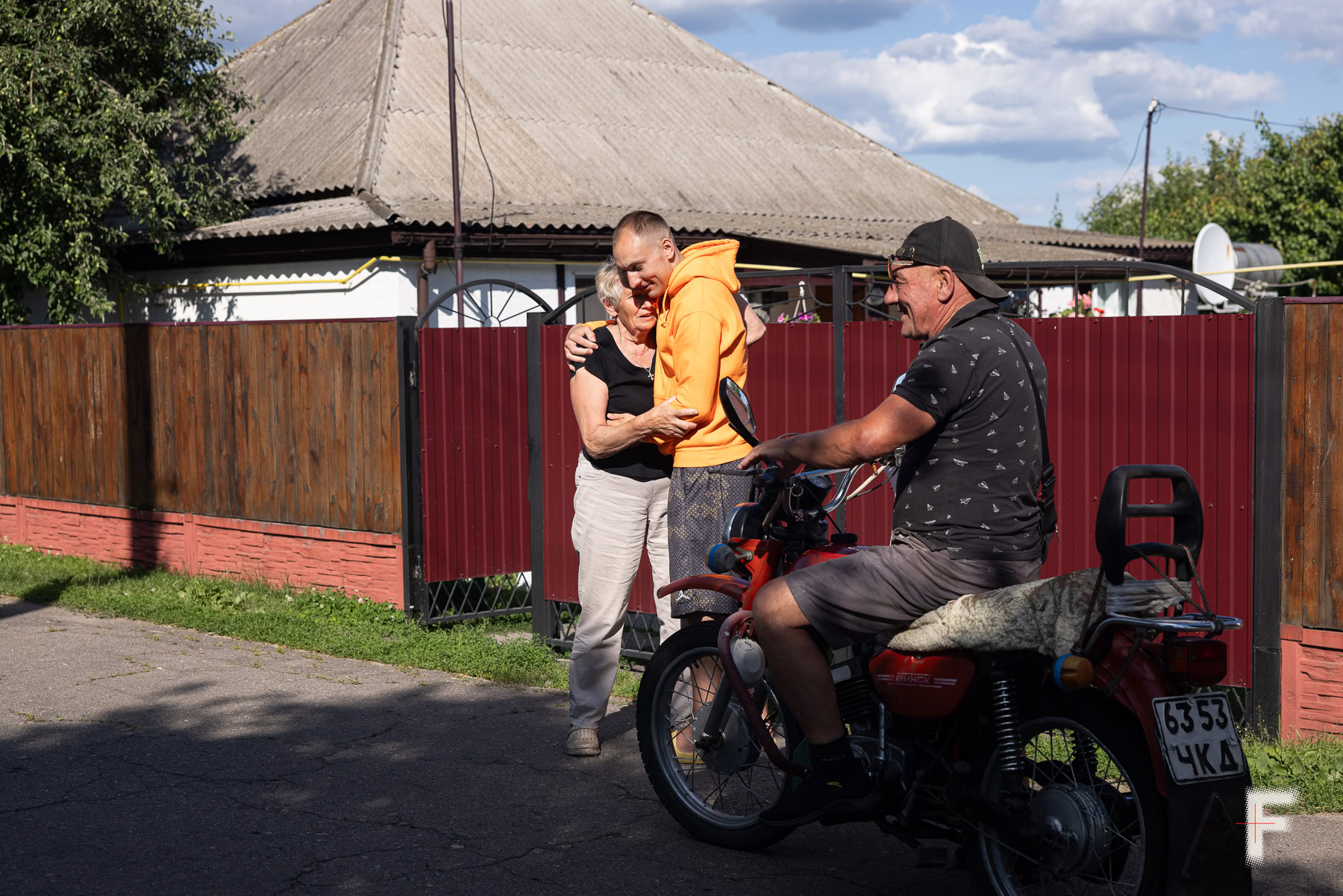
Today, Dmytro continues his rehabilitation and is gradually adjusting to civilian life. He has many plans. One of them is to make a lifelong dream come true and finally see the Atlantic Ocean. At the same time, he is thinking about a book he wants to write once his rehabilitation is complete. He says it will not just be a memoir of his four years in Russian captivity or the defense of Mariupol. First and foremost, he aims to preserve and pass on the experience he gained in the war, which could save the lives of other service members. Dmytro wants to dedicate special attention to the work of sappers. According to him, many of the decisions they had to make during the defense of Mariupol under a severe shortage of munitions and equipment could be useful for those carrying out similar combat missions today.
***
Hi, we are Artem and Danylo, the authors of this article. Thank you for reading to the end.
Every time there is a prisoner exchange, heroes return home with unique stories. While we go about our lives, even in the midst of war, as we plan for tomorrow and read the news, thousands of Ukrainian prisoners of war live in complete uncertainty. They do not know if they will live to see another day. That is why we decided to tell the story of a young man who is almost our age. Specifically, to talk to him about his reaction to how the world has changed over the past four years he spent in total isolation.
Every story starts with your support. Join the Frontliner community so we can keep up documenting Russia’s war against Ukraine from the front line and the rear.
***