‘I’m the only person Vitia can count on’: How the right to search depends on a marriage certificate
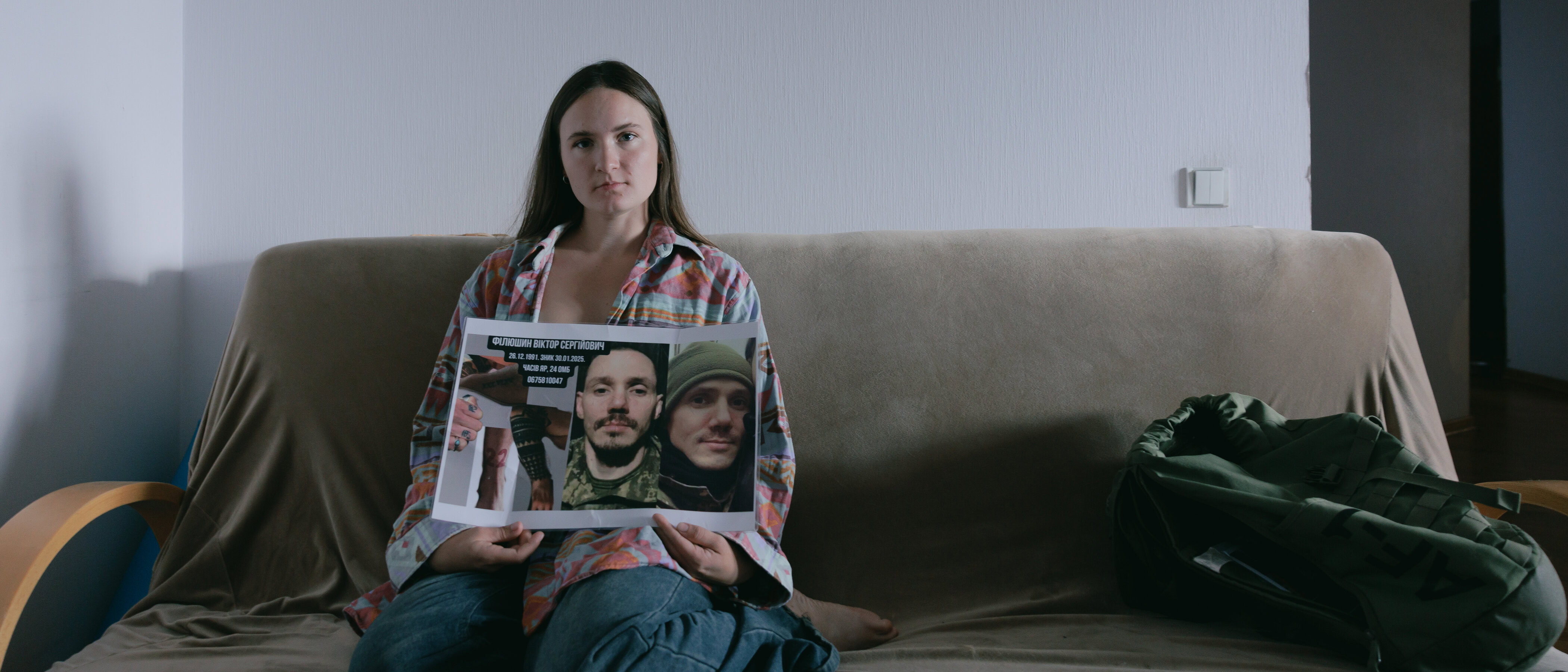
Vira Shyltsova travels to a prisoner-of-war exchange with a single hope in mind: to meet someone who might have seen her partner. For a year and a half, she has been gathering any clues about Viktor Filiushyn, who went missing in action just five days after reaching the front. The couple did not get a chance to marry, so she faces the exact same obstacle every time: legally, Viktor and Vira are strangers. As a result, she has to fight for the right to search for her beloved. Frontliner looks into what complicates the search for those missing in action.
When Viktor went missing in early 2025, Tofi cut her paw on a walk. Since then, the dog has been constantly licking the wound, keeping it from healing to this day. Vira, the missing soldier’s partner, now wryly jokes:
“The paw will heal when Vitia comes back,” the woman says with a smile.

Everyone knew they could rely on him.
They actually met because of their dogs, running into each other while out walking their pets. Aside from their love for four-legged friends, they did not have much in common. Back then, Vira was 19 and wanted to become a jeweler. Viktor was older — 30 years old — and taught jiu-jitsu to kids and volunteered.
“I’ve honestly never met anyone like him. He’s just so serious. Everyone knew they could rely on him. If anyone asked Vitia for a favor, it was a hundred percent guaranteed to get done. Yet, he never wanted anything in return or expected others to act the same way. So many people said that in tough times almost everyone else disappeared, but he always stayed,” Vira shares, recalling how Viktor won her heart.

These occasional yet long-awaited encounters went on for months. It took half a year before they had a real date. Viktor approached it creatively and prepared thoroughly, bringing brushes, paints, and canvases. Two canvases still hang in Vira’s spacious apartment, empty without her beloved, quiet reminders of that day. One preserved Viktor’s neat and precise brushstrokes, while the other captured Vira’s impulsive movements, forming vibrant flowers.

Vira is searching for her missing partner
In January 2025, Viktor was mobilized. This prompted the couple to officially register their marriage while he was undergoing basic military training. But they could not make it happen as the waiting list for wedding appointments stretched all the way to October.
After that, Viktor was deployed to the front line. Back during training, he had been appointed as a group leader — he had always wanted to lead people, but never got the chance to realize his full potential, Vira notes. Just five days later, the commander notified her of Viktor’s death. Later, since his body was not recovered, Viktor was officially listed as missing in action.
In response to the news that her son was missing, Viktor’s mother merely asked to have his TV and sewing machine sent to her. Thus, Vira was left the only one still looking for Viktor.

Once she began searching for her beloved, she learned that profiles are automatically generated for every missing soldier in the databases of the Security Service of Ukraine (SSU), the Ministry of Internal Affairs, and the Coordination Headquarters. However, she cannot add any information to Viktor’s profile. The first requirement for filing an application is proving kinship. But an unfulfilled intention to marry cannot be documented. Meanwhile, the court can only recognize cohabitation if a couple has lived together for at least three years — and Viktor and Vira had been together for only two.

As a result, the profile for missing soldier Viktor Filiushyn remained without a photo or any other details that could help identify him. This, of course, further complicated the search process.
“For probably a year, I couldn’t do anything,” Shyltsova says.
However, she could not forget Viktor or come to terms with his disappearance, so she resumed her search. She started sending emails to the Coordination Headquarters, the SSU, and the Ministry of Internal Affairs. Every message received the same standard reply: proof of kinship is required. But that did not stop Vira. She decided to be more proactive and began calling all these institutions. Through her sheer persistence, Vira finally convinced officials to accept the data and add it to Viktor’s profile.
According to Vira, communication with state authorities regarding missing soldiers only happens because of pressure from relatives and loved ones — you have to pry every single update out of officials.
All these years, they’ve been saying that
they include the missing in POW exchanges,

“All these years, they’ve been saying that they include the missing in POW exchanges, assuring everyone. But putting 100,000 missing people on exchange lists is impossible, and everyone understands it. When they were pressed and asked how long they were going to pull the wool over people’s eyes, they backed away from this story,” she explains.
Trips to POW exchanges
When the opportunity arose, Vira began traveling to POW exchanges. Every time, she arrives with a single hope — to meet a released soldier who might have seen Viktor or at least know something about him. For many families, such chance conversations become their only opportunity to get new information.
On March 6, 2026, one such trip brought Vira hope. During a brief conversation, one of the released soldiers mentioned that he had presumably seen Viktor in a Russian prison. Vira only had time to take a photo of the young man. Armed with the photo, she reached out to the Coordination Headquarters so they could debrief the former POW in more detail. After numerous calls and reminders, they promised to do so. Months have passed since then, but Vira still has not received any new information about Viktor. His official status also remains unchanged.
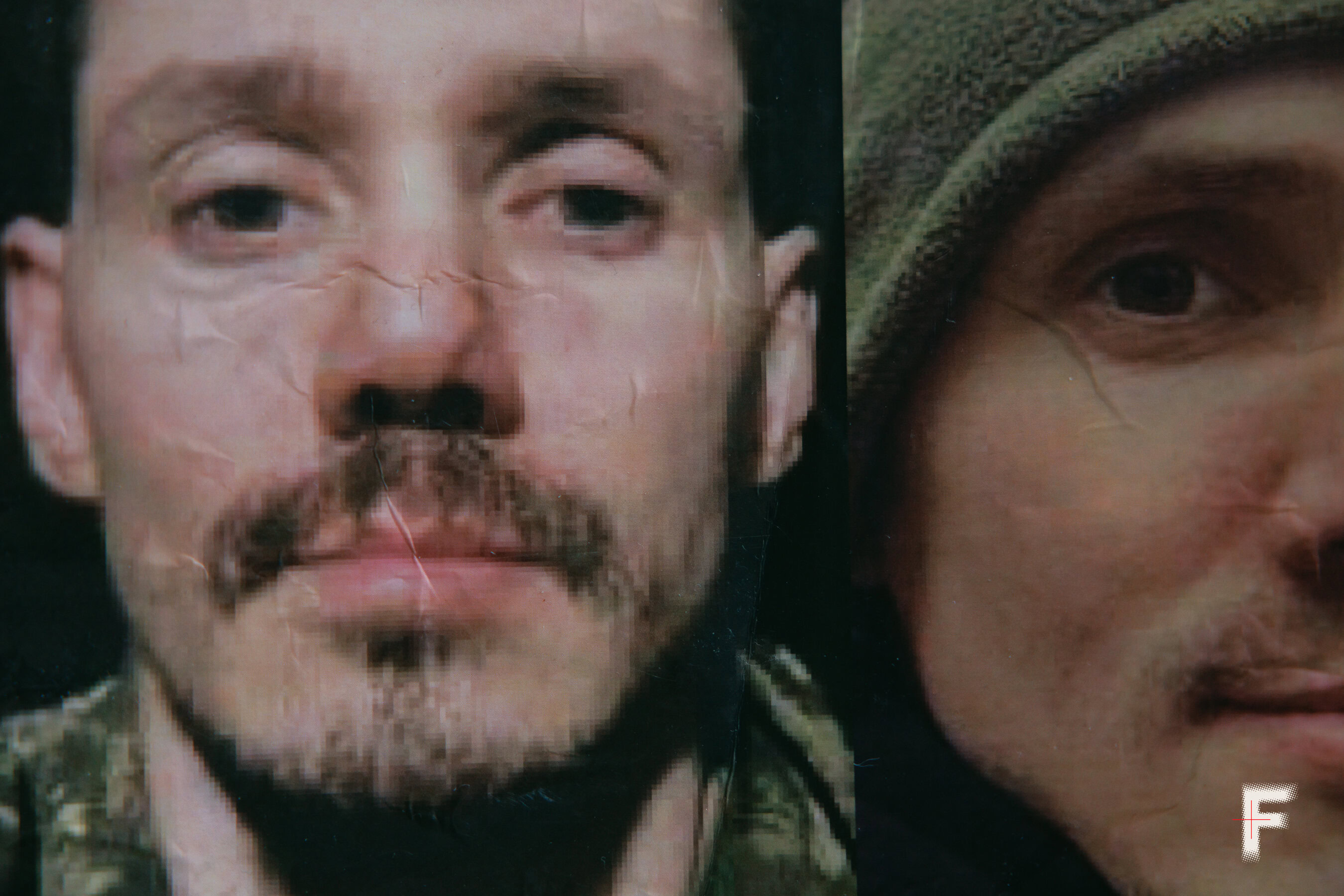
Now, Vira is clinging to this lead, trying to track down that soldier on her own through social media. She hopes to speak with him again to learn more. Despite the lack of news, Vira continues attending every single exchange.
Through a year and a half of searching, she was forced to master things she had never even imagined before. She learned to navigate captivity status, came to know Russian penal colonies, and understood the standard operating procedure of search services. She became an expert not by choice, but because she had no alternative.

Given that I’m the only person Vitia can count on,
giving up is probably not an option,
***
Hi, we are Myroslava, Anna and Yurii, the authors of this article. Thank you for reading to the end.
This story is important as an example of a systemic issue that has long needed change. Partners of missing-in-action soldiers should not have to face such obstacles in their search for their loved ones. I also wanted to tell this story for those women who, like Vira once was, feel lost and don’t know what to do next. Vira’s story shows that there are paths forward, even if they aren’t as simple as we would hope.
Every story starts with your support. Join the Frontliner community so we can keep up documenting Russia’s war against Ukraine from the front line and the rear.
***