‘He’ll come back, if your God is alive’: Russia sentences Berdiansk pastor to 22 years in prison
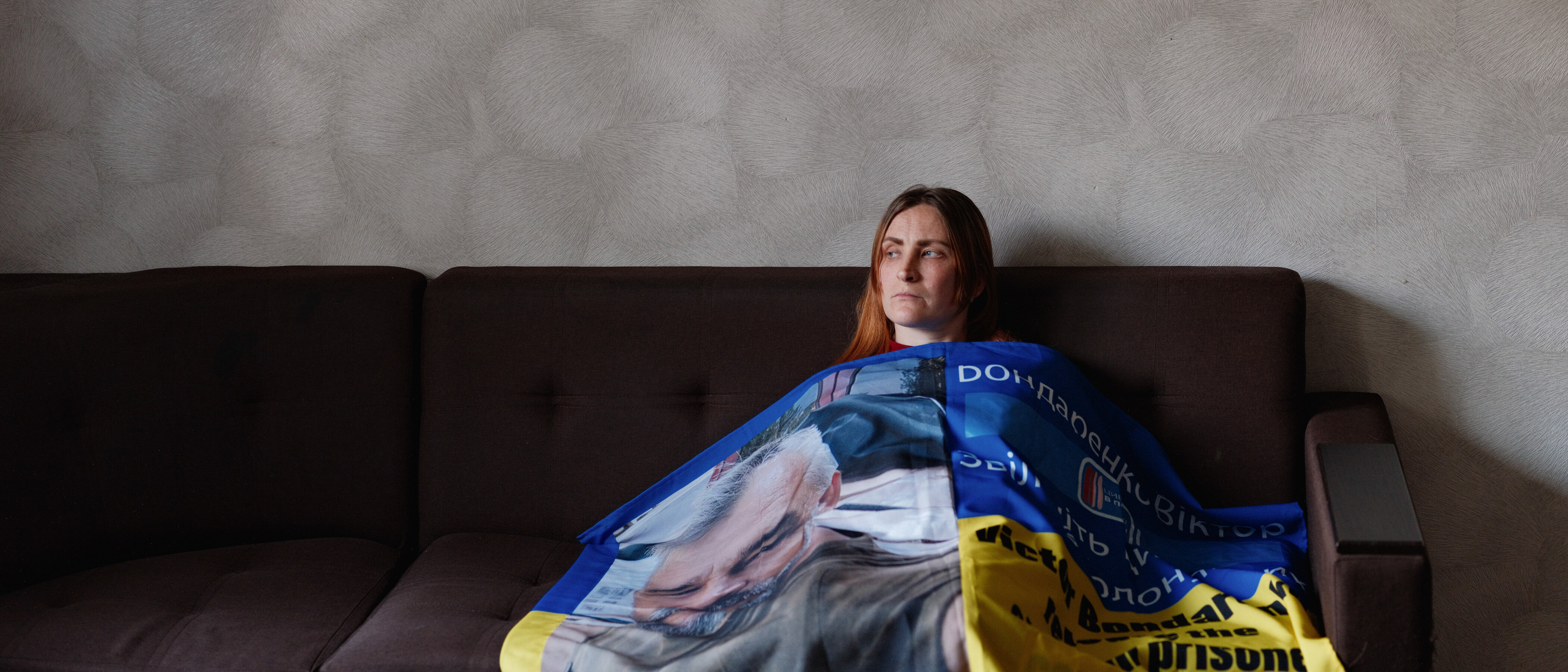
Dozens of armed Russian security forces rushed into the home of Mariia Sizonova and her family in occupied Berdiansk and took her father, pastor and volunteer Viktor Bondarenko, away for questioning. In April 2022, a FSB officer told her, "If the God he serves is alive, he'll find his way back to you." Nine days later, her father returned and resumed his volunteer work. But on May 7, 2024, the Russians detained him for the second time. This time, they fabricated a case against him and sentenced him to 22 years and 2 months in prison. Viktor Bondarenko is one of thousands of civilian prisoners held by the Kremlin, and bringing such people back from captivity is an extremely difficult task. Frontliner met with Viktor’s daughter, Mariia, in Kyiv and discussed the challenges Mariia’s family has faced, where Viktor is now, and what helps them not to lose hope that he will return home.
We didn’t know anything at all.
He simply disappeared.
On May 7, 2024, Viktor Bondarenko left his home as usual to walk his dog in Berdiansk, but he never came back. For the first few hours, his family hoped it was just some kind of misunderstanding. Then the hours turned into days. No information was received from him.
“At first, we didn’t know anything at all. He simply disappeared. Later, the neighbors said they had seen him being forced into a vehicle. They kept quiet, though, for many days. It wasn’t because they didn’t want to help. People were simply terrified. Under occupation, everyone understands what’s happening, but fear often outweighs everything else,” Mariia recalls.
For nearly three weeks, the family was left completely in the dark. There was no official statement or confirmation of where Viktor was or what was happening to him. The Russians themselves released information about him 20 days after he disappeared.
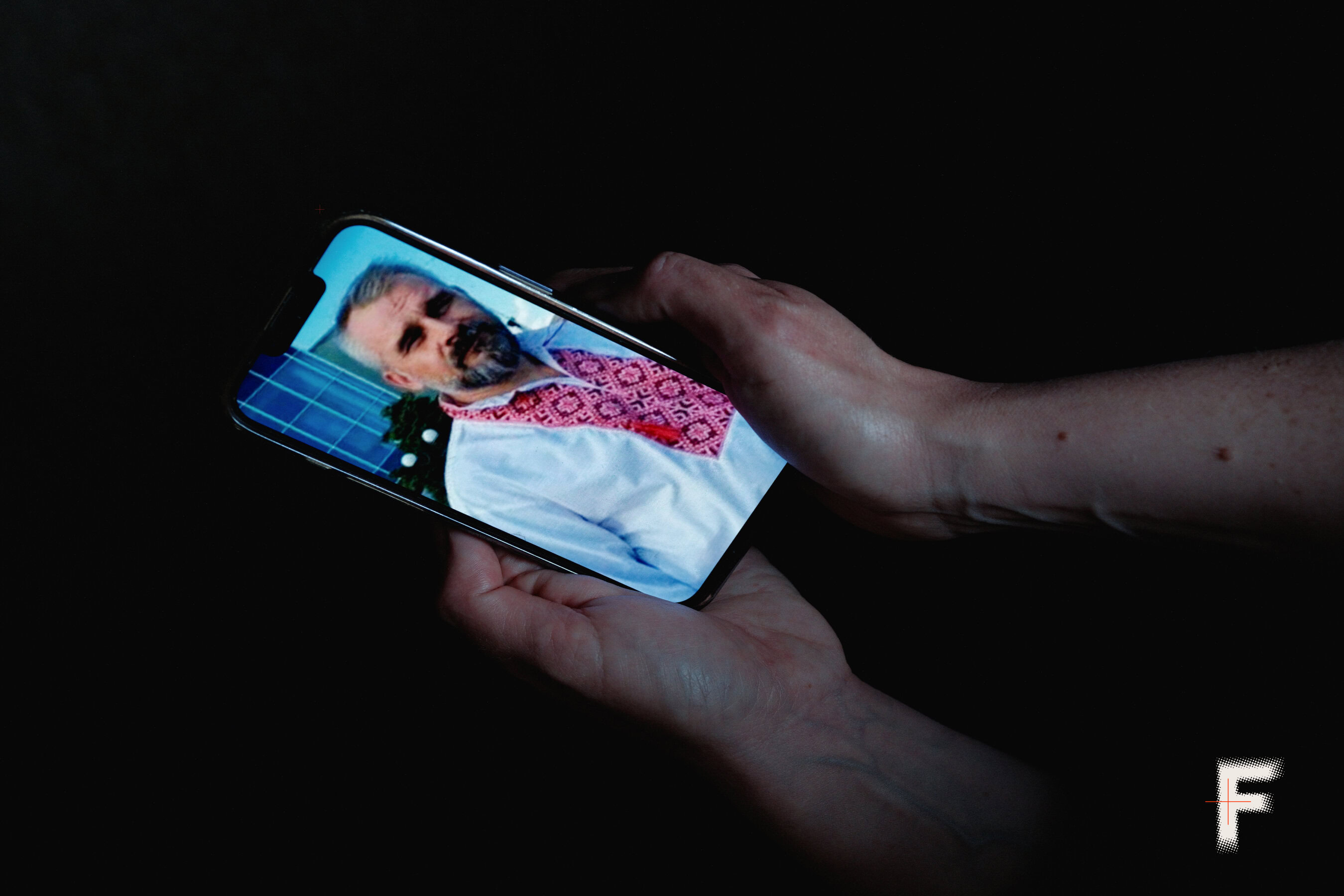
“They themselves released information about him. That’s how we found out he was detained in Melitopol. They accused him of terrorism and sabotage. It’s a strange feeling when you read something like that about your own father, but at the same time you realize: he’s alive,” Mariia says.
Along with the reports of his detention, Russian security forces also released videos featuring what appeared to be forced confessions. The occupation authorities later based their case against him on those videos.
There are these videos where he supposedly admits his guilt.
Let’s not forget that people are tortured there.
According to the so-called investigation, Viktor allegedly had joined a sabotage group, photographed a power transmission tower, and passed the collected information to an officer of the Security Service of Ukraine (SBU). Investigators further alleged that he had later received components from the SBU to assemble an explosive device and used it to blow up a transformer substation as well as a wastewater pumping station.
“There are these videos where he supposedly admits his guilt. But we understand perfectly well the conditions under which such videos are recorded. Let’s not forget that people are tortured there. We must also remember that, by that point, the person was already being held by those who had captured him,” Mariia says.
A lawyer appointed by the Russian side contacted the family. To back up his claims, he sent a note written in Viktor’s own handwriting. His relatives immediately recognized the handwriting. This was followed by lengthy court proceedings, transfers between detention facilities, and the sentencing.
At first, Viktor was held in Melitopol, where the initial investigative proceedings took place following his arrest. He was later taken to court hearings in occupied Donetsk. In December 2024, a so-called court run by the occupation authorities in Donetsk sentenced Viktor to 22 years and 2 months in prison on charges of alleged terrorism and sabotage.
This place. If you look at its history,
it becomes clear that it has always been used for repression.
Catherine II established this prison.
After the verdict, the defense filed an appeal. The hearing took place on April 17, 2025, in a Russian appeals court. However, the appeal was unsuccessful and the sentence remained unchanged.
The man was transferred to Vladimir Central Prison, one of the most notorious and oldest Russian prisons.
“I started reading about this place. If you look at its history, it becomes clear that it has always been used for repression.
Catherine II established this prison for those who refused to comply with the authorities. Later, opponents of the Russian Empire and the Soviet regime were held there. Political prisoners from various eras have passed through the Vladimir Central Prison. It’s terrifying when you realize that your father is now imprisoned there,” Mariia says.
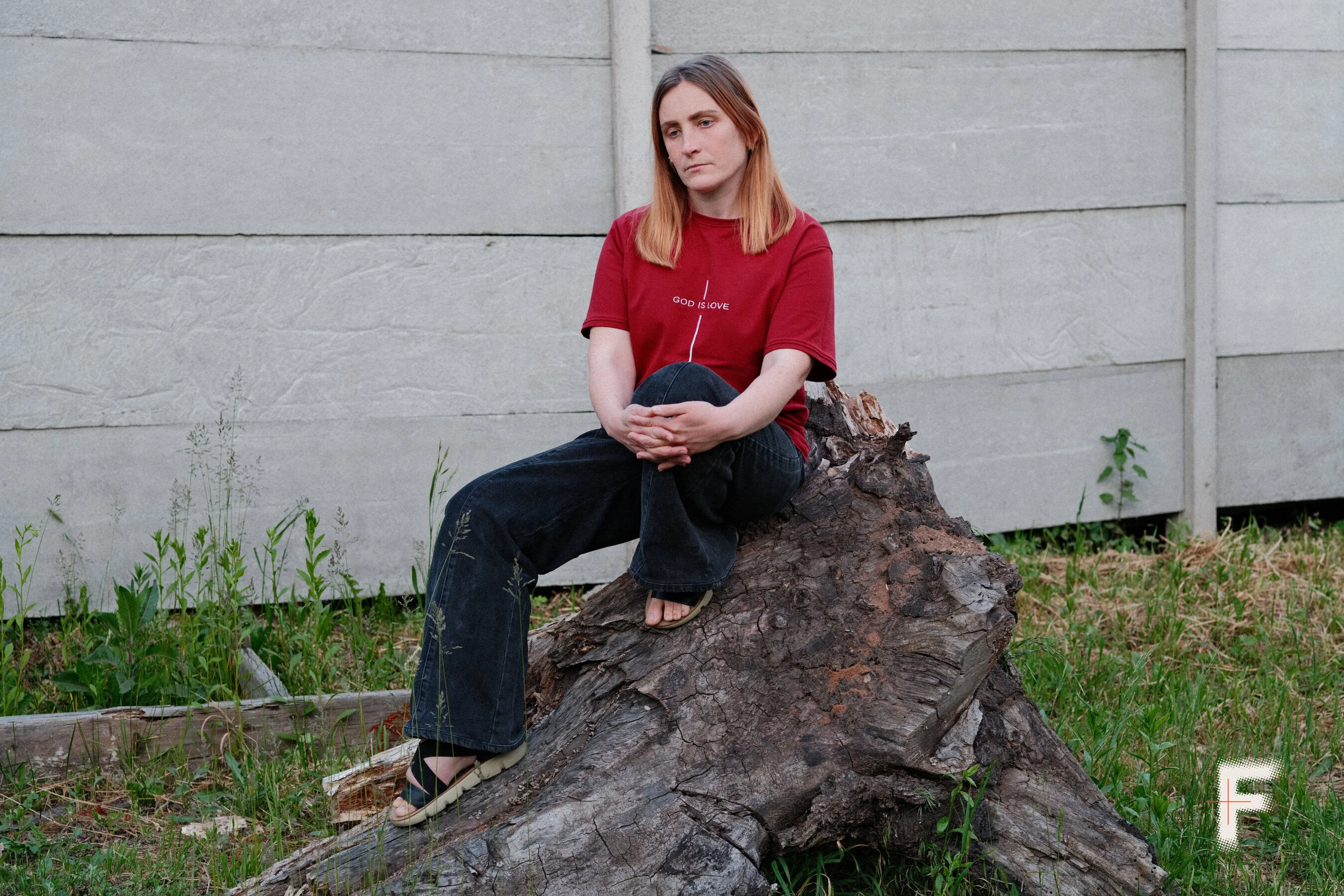
Viktor’s family hoped he would not end up in prison. Given the complexity of negotiating the release of civilian detainees, they chose not to speak publicly about his case at the request of Ukraine’s Coordination Headquarters for the Treatment of Prisoners of War to avoid compromising the process. Currently, Viktor is serving only the first part of the sentence imposed on him. Mariia says:
This is the second time the Russian Federation
has illegally detained my relatives.
The Russians were looking for saboteurs, but found children
Before the full-scale invasion, the Bondarenko family had spent over 10 years helping people who found themselves in difficult
life circumstances. Every week, they fed the homeless in Berdiansk and worked on rehabilitating people suffering from addiction. Viktor was a chaplain and priest, and often visited the Anti-Terrorist Operation zone. Together with his wife, he opened several rehabilitation centers in the city.
According to Mariia Sizonova, over the 10 years they did this work, there were dozens of people who were able to return to their families, find jobs, and rebuild relationships with their children. That is why, at the start of the full-scale invasion, her family decided to stay in Berdiansk to help people in need. Together with other volunteers, they managed to establish several humanitarian aid distribution hubs across the city, which, after being seized, ended up in apocalyptic conditions, lacking food, basic hygiene supplies, or shelter. In addition, Viktor and Mariia’s husband, Oleksandr, evacuated people from Mariupol and provided shelter to those who had lost their homes. Everything changed on April 15, 2022.
At 5:40 a.m., Russians entered the house where the family was living: 40 armed security forces were searching for a sabotage group and weapons. Later, in a conversation with an Federal Security Service (FSB) officer, Mariia learned that the Russians had lists of suspects who allegedly threatened their authority even before they occupied the city.
From Viktor and Oleksandr’s social media accounts, they knew that the men served as chaplains and provided spiritual and psychological support to Ukrainian soldiers. The Russian military had photos of them in uniform. But when they rushed into the house, instead of weapons and saboteurs, they saw children and an ordinary family. They appeared surprised.
Viktor and Oleksandr were immediately detained and transported to an undisclosed location.
“An FSB officer talked to me and asked whether we had weapons. I don’t know where the courage came from, but I replied: ‘Their weapons are the Bible and Christ.’ In response, he said, Are you saying that if any of my guys needed prayer or help, they wouldn’t turn them away? I said, According to my country’s Constitution, doctors and priests help everyone,’” Mariia explains.
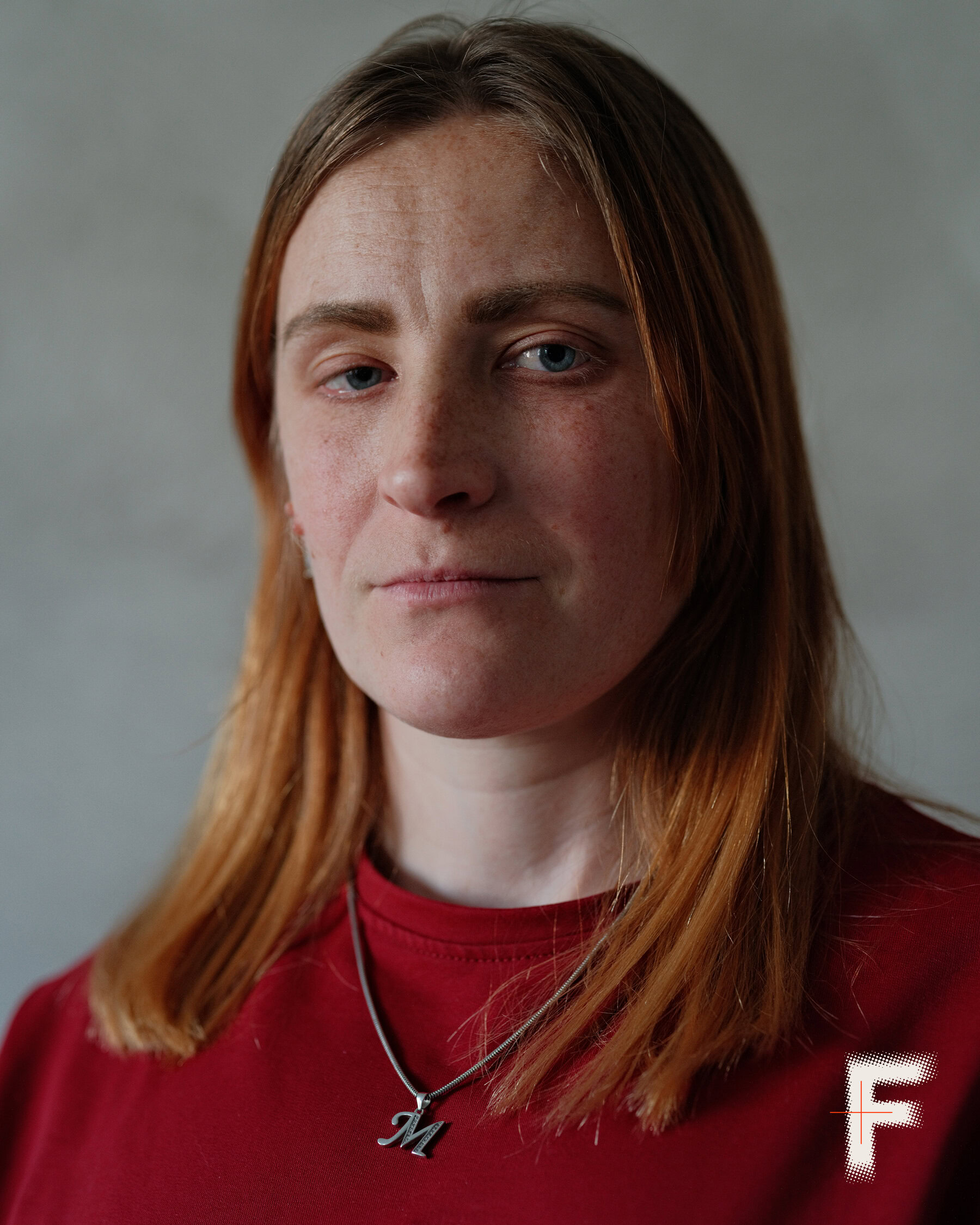

She continues to quote her conversation with the Russian.
“He asked me, ‘Why are you not afraid of me?’ And I told him, ‘Because you came to my home, not me to yours.’ Then he asked, ‘Do you believe in God?’ I said I did. And then he said, ‘If the God they serve is alive, they will return to you.’ My answer became something that grounded me in that moment: ‘My God is alive.’”

The children struggled the most. Mariia’s four-year-old son rushed after the soldiers as they were taking his grandfather and father away. She recalls this incident emotionally.
David was shouting,
‘Don’t touch my grandfather! Don’t touch dad!’
One of them then knelt down beside him and said, ‘Don’t cry. We’re just going to play war games with them and come back,’” she says. The Russians refused to say where they were taking the men. According to Mariia, the only thing they said was that it was for the so-called investigative process:
“Within the first 24 hours, we informed everyone we could: the SBU, the Red Cross. The following morning, I went to the commandant’s office.” The officer on duty asked for their surnames and disappeared. “About an hour later, he came back and said, ‘I have three lists. The first is one you wouldn’t want them to be on…they’re not there. They’re not on the list of people being taken out of the city either. As far as I can see, they’re not on any list at all.’”
Together with her mother, she went to the Russian police to file reports of the abductions, which duty officers at the station tore up one by one. Upon returning to the commandant’s office, the women waited for any information. It wasn’t until the evening that they were told that Oleksandr and Viktor were in Berdiansk and were supposed to return home.
“I got a call from an unknown number. They said my father’s blood pressure had spiked and asked what medicine he needed. That’s when I heard his voice. He said, ‘My dear, you’ve already caused panic. Now stay quiet and let us do our part. We’ll be home soon,’” Mariia explains.
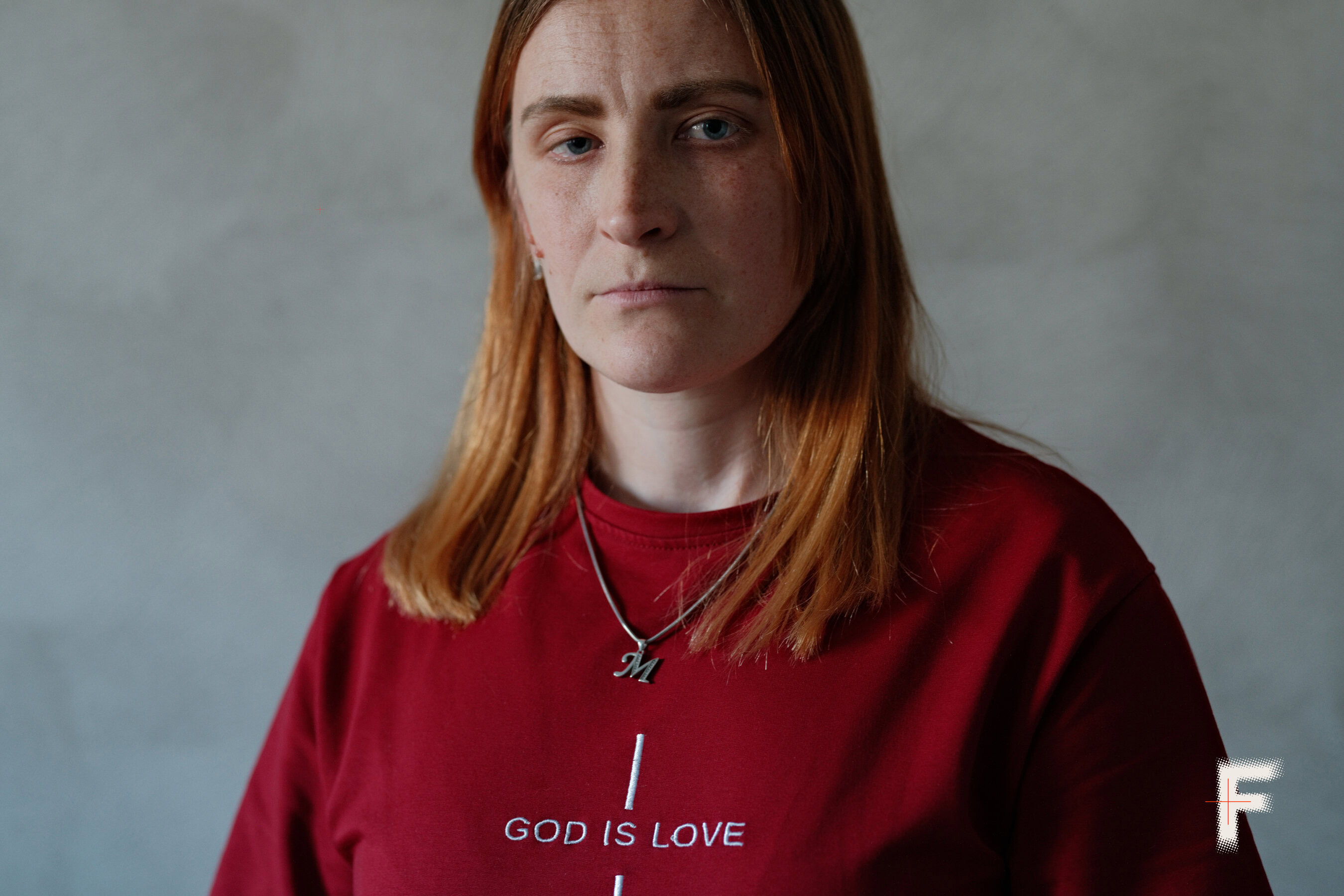
I was helping him take off his outer clothing and
saw his back covered in bruises from the beatings.
As it turned out, the Russians had taken Oleksandr and Viktor to the warehouses where the family stored humanitarian aid. Realizing that the men were unarmed, they let them go. Viktor returned on the ninth day. Oleksandr came back on the fifteenth.
“When my father returned, I was helping him take off his outer clothing and saw his back covered in bruises from the beatings. Oleksandr had bruises across his chest after he came back. Both of them had lost a lot of weight. On top of that, my father already had health issues. However, we couldn’t go to the hospital because they had been released on the condition that they wouldn’t get medical care. My sister, my mom, and I took care of them for several weeks. After they recovered, they continued to evacuate people,” Mariia says.
The last trip: when the Russians stopped letting volunteers through
After the siege of Mariupol, Viktor and Oleksandr were already transporting people from Berdiansk to Zaporizhzhia, as well as delivering humanitarian aid. These trips lasted for months and gradually became increasingly dangerous. According to Mariia, each trip meant passing through seventeen Russian checkpoints, dozens of inspections, searches, and interrogations.
“They would come to Zaporizhzhia, where our partners would load the cars with food, diapers, hygiene supplies, medicine, and blankets. Then they would head back to Berdiansk, get a little rest, and set off again the very next morning,” Mariia says.
The last such trip took place in August 2022. It was after that trip that the family decided to leave the occupied territory.
“That trip lasted 15 days. To give you context, the drive from Berdiansk to Zaporizhzhia takes a few hours. But this trip took 15 days. At first, our side wouldn’t let them through because of heavy shelling. Then they spent another nine days stuck in the buffer zone. They let almost everyone through, except for volunteer vehicles. And when they returned home, they were told outright: ‘This is your last trip; they won’t let you through again,’” she says.
That’s when the family began seriously considering leaving. The situation with the children was the final determining factor. The occupation authorities were increasingly trying to identify those who maintained pro-Ukrainian positions. Schools became one of the tools they used for this.
“This was especially the case in the lower grades. The children didn’t understand the consequences and would answer any question honestly. People would come into the classroom and start talking to the children. At first, it was about everyday things: who could be let out earlier, and the students’ general performance. And then they would casually ask who was still studying at a Ukrainian school. The children would raise their hands and answer. Later on they would come for the parents. That’s how they looked for those who maintained ties with Ukraine,” Mariia says.

He refused to cooperate with the occupation authorities
and did not betray his principles.
According to her, it was then that she and her husband finally realized they could no longer stay with their children under occupation. In September, the family moved to Kyiv. However, Viktor stayed in Berdiansk.
“We kept asking him to leave with us. But he would quote the Bible: ‘Strike the shepherd, and the sheep will be scattered.’ For him, it was more than just a phrase. People in need were still there: the elderly, the church, and those unable to leave. He felt responsible for them,” Mariia says.
For nearly two years after his daughter’s departure, Viktor continued to live in occupied Berdiansk. Public worship services were no longer held, but the church community continued to exist.
“They no longer met in the church building. Instead, people visited each other at home, constantly changing meeting places. But the community continued to function. Her father meanwhile made no secret of his position. “He refused to cooperate with the occupation authorities and did not betray his principles,” Mariia says.
Daughter exchanges letters with her imprisoned father
Currently, letters are her only connection to her father. Mariia exchanges letters with Viktor through a special electronic system.

For me, it is a loss.
Not death, but a loss.
“I write a letter, and it is delivered to my father electronically. He writes his response by hand on a standard form. It is then scanned and sent back to us. We’ve been communicating this way for almost two years. Sometimes I’ll write a letter today and get a reply in three days. Other times, I wait for weeks. Sometimes he’d write, ‘Why haven’t you written to me in so long?’ That’s when I realized that one of the letters simply didn’t get through,” Mariia explains.
When asked what it is like to live knowing that a close relative is in a Russian prison, she pauses for a long time before responding.
“For me, it is a loss. Not death, but a loss. The person is alive, but you cannot call them, you cannot hear their voice, you cannot simply talk to them when you need to. I’m a daddy’s girl. I always needed to hear him say, ‘It’s okay, we’ll get through it.’”

Mariia finds the constant uncertainty the hardest to bear.
“You wake up and don’t know what’s happening to him today. Whether he’s in good health. Whether he received your letter. Whether he’s been fed. Whether his condition has worsened. And this fear is always with you,” she says.
Mariia is fighting for the release of thousands of Ukrainians from Russian prisons
The Bondarenko family has long ceased to view their own story as an exception. As of today, thousands of Ukrainian civilians remain in Russian prisons and detention centers. The Coordination Headquarters for the Treatment of Prisoners of War has repeatedly stated publicly that the process of securing the return of civilians from captivity is, in some cases, more difficult than that for prisoners of war.
“Especially if a civilian is from the temporarily occupied territories, they (the Russians – ed.) consider them their own citizens and act in accordance with their laws. This makes the process twice as difficult,” Mariia notes.
That is why, together with other families of prisoners and illegally detained civilians, she founded the nonprofit organization “Civilians Free.”
Together, we can speak for those Russia is trying
to erase from public view.

“We united because we realized that alone, no one would hear us. Together, we can speak for those Russia is trying to erase from public view. We attend advocacy meetings, tell the stories of civilian detainees, and speak about them both in Ukraine and internationally. We do everything we can to ensure they are not forgotten and that they return home,” Mariia says.
June 21, 2026, Viktor’s birthday, fell on Father’s Day, celebrated annually in Ukraine. On her social media, Mariia posted a touching message to her father.
“We’re waiting. We believe. We’re working. We will definitely wait it out,” Mariia wrote.