‘New methods of torture no longer surprised me,’ says marine released from captivity
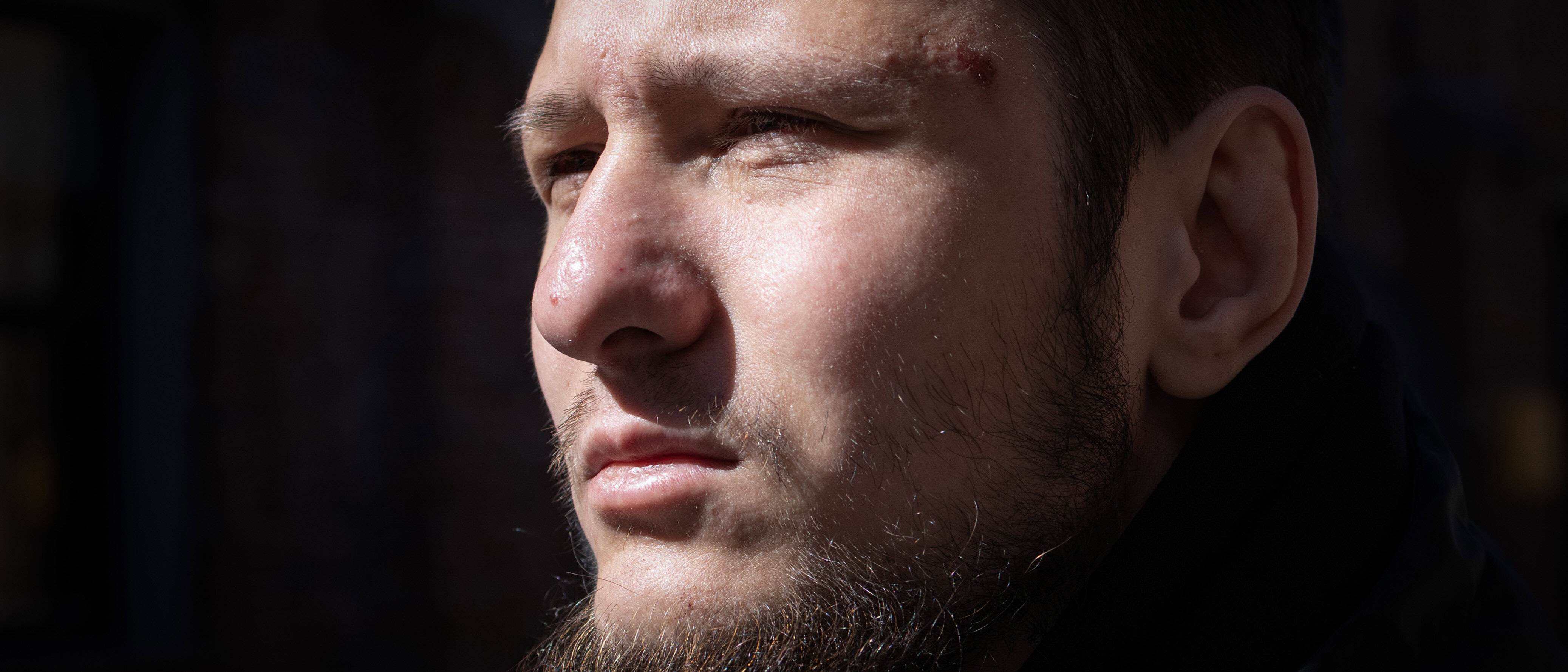
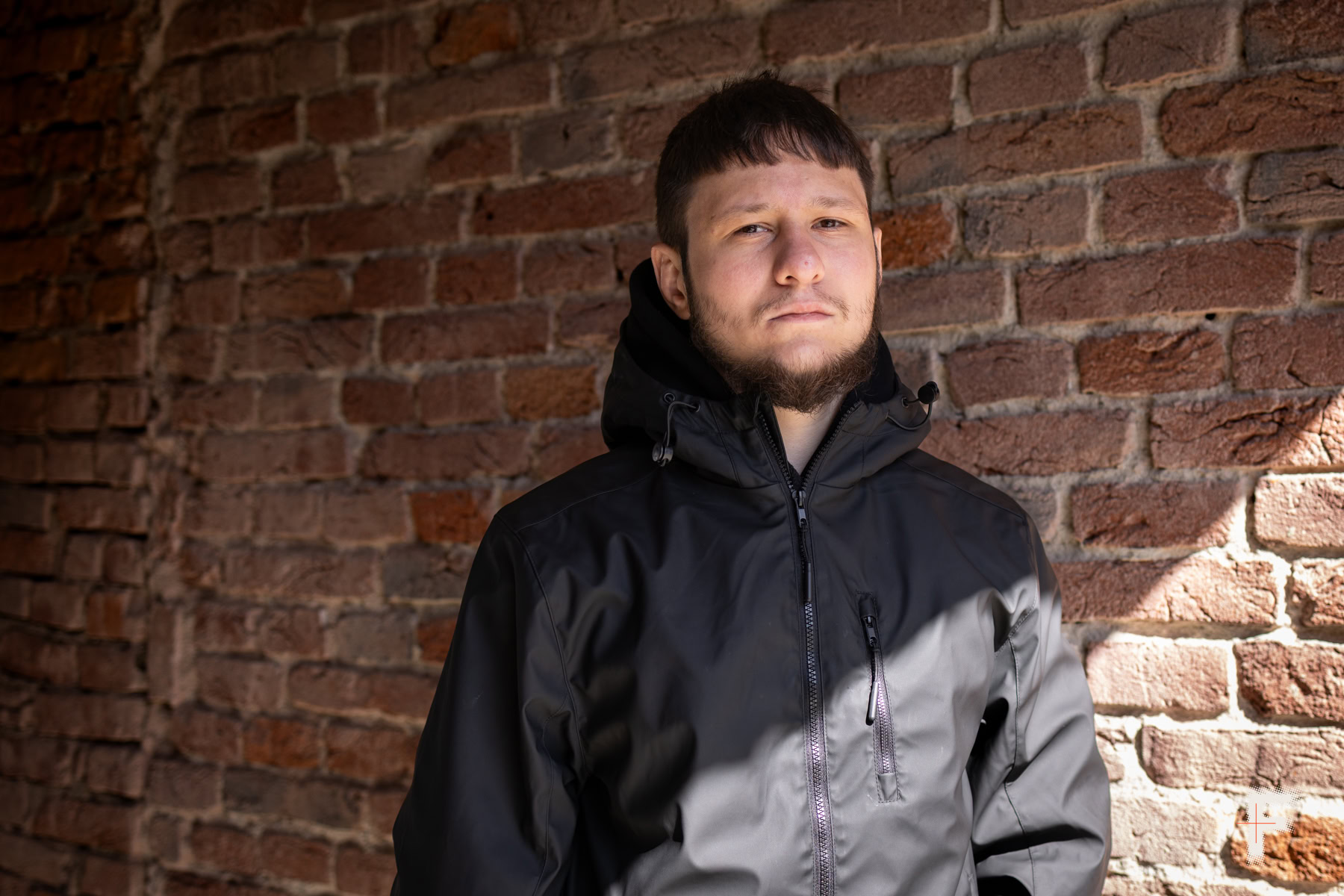
Vladyslav was released from Russian captivity, but his twin brother Stanislav remains held. The Chuhuienko brothers defended Mariupol together. After their city was occupied, they were sent to different prisons and never saw each other again. Frontliner tells the story of 26-year-old marine Vladyslav Chuhuienko, who spent 1,227 days in captivity and is now learning to live in a world that has changed while he was imprisoned.
Vladyslav returned home on Aug. 14, 2025, along with several comrades from his battalion, other defenders of Mariupol, and dozens of civilians held captive by the Kremlin. Stanislav was not there.
“I was convinced that my brother and I would be exchanged together. But he did not come out that day. It was tough,” says Vladyslav.
The day of release
As soon as the bus transporting the freed prisoners arrived at the hospital, it was surrounded by several hundred people holding flags and photos of people reported missing and the prisoners of war. They chanted, “Thank you!” and shouted, “Guys, you are home!”
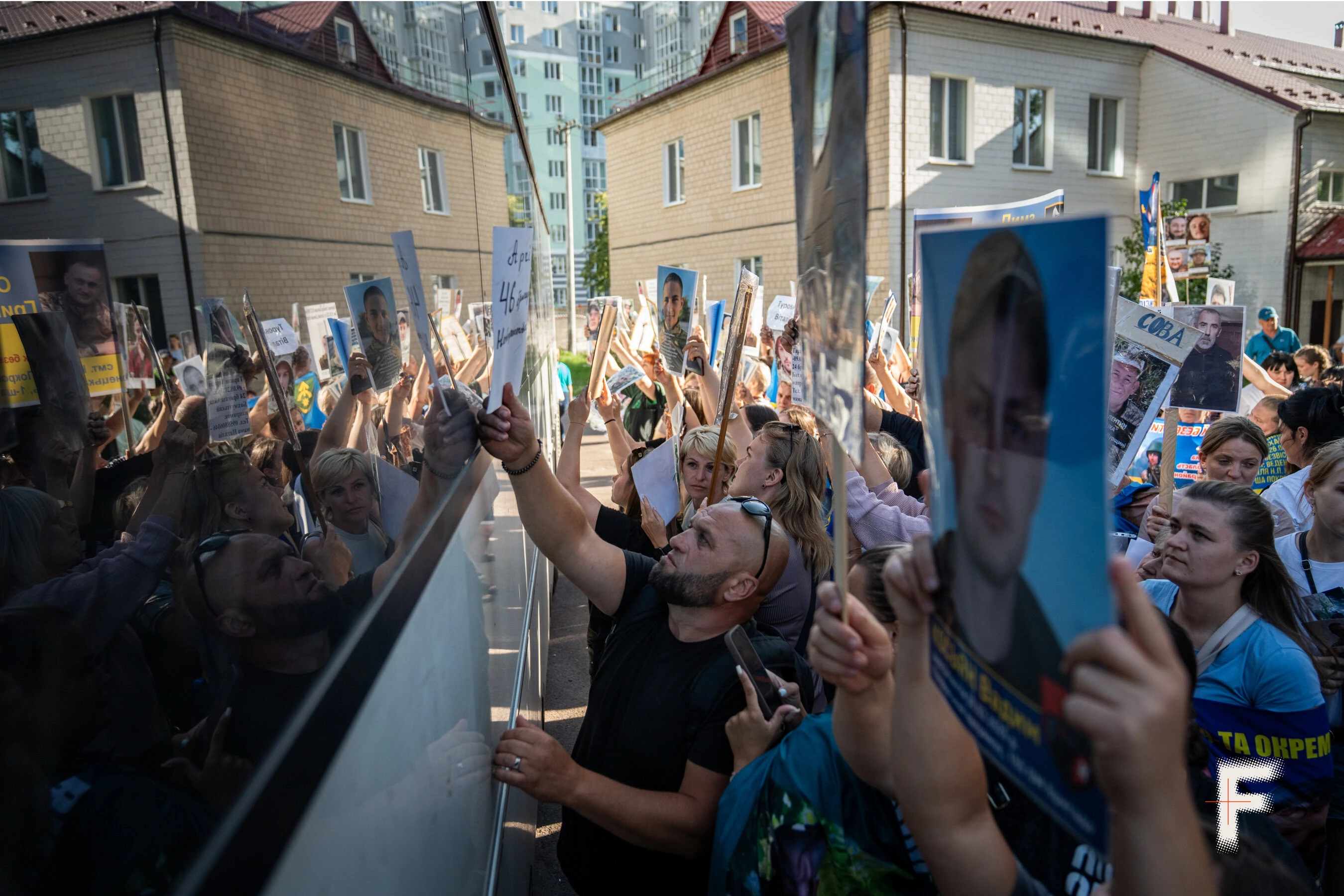
“When we got off the bus, it felt like we were going to be torn to pieces. Everyone wanted to hug us,” Vlad recalls.
Security formed a corridor through which the released prisoners of war could walk to the hospital. From all sides, people were shouting the names of their missing relatives. They were showing photographs.
The veterans would stop in front of the photos and shake their heads as they had not seen these people in the camp.
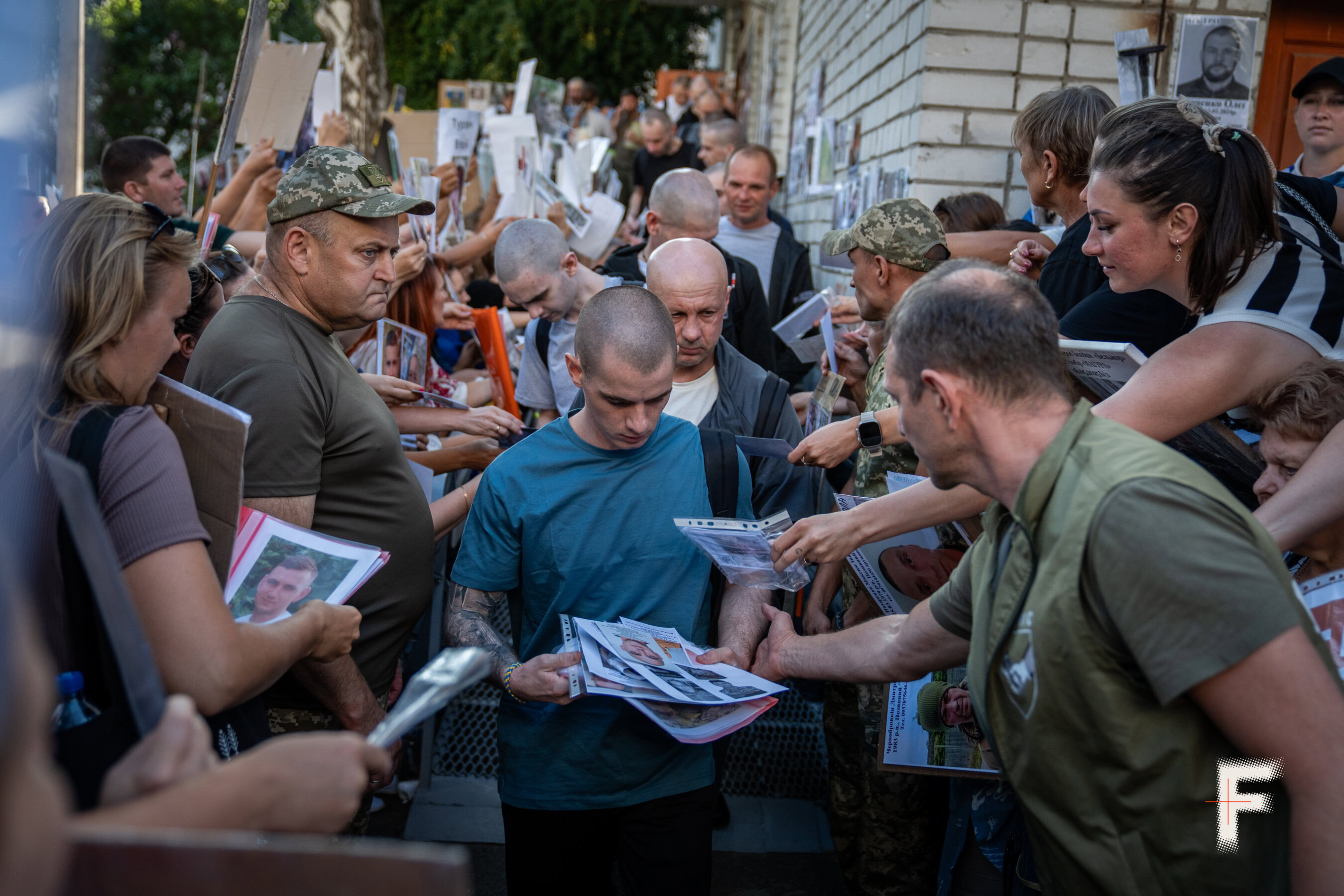
“I was shocked. I realized that even though the Mariupol garrison is one of the largest, there are many other garrisons and many other prisoners,” says the marine who was released from captivity.
Vlad was examined at the hospital and given what he needed for the time being. The men put on identical gray tracksuits and headed off to rehabilitation. On the way, they stopped at a gas station. There, Vlad looked with curiosity at the prices on the store shelves.
“Looks like there is an extra number on the price tag,” Vlad noted to the shop assistant, possibly joking, possibly not.
But she just smiled gently and replied:
“I have heard that before. There is no mistake.”
Thousands of soldiers released from captivity have already traveled this route. They wore the same gray suits, identical haircuts, had the same sense of confusion, and the same questions.
Letters from captivity
At the beginning of the year, the Chuhuienko family received a letter from a correctional colony in Torez, Donetsk region. Stanislav wrote: “I have no information about my brother, whether they have transferred him somewhere or not.” For Vlad, this was yet another shock.
“My brother does not know that I am already free,” he says.
The family receives letters from Stanislav from time to time. But not all correctional colonies allow correspondence. Vladyslav recalls that while in the pretrial detention center in the Volgograd region, he received a letter from his mother only once. This is because the Federal Penitentiary Service and Russia’s Human Rights Commissioner Tetiana Moskalkova had arrived for an inspection on that day.
“My mom wrote to me once a fortnight: two letters a month, twenty-four a year. Only one ever reached me,” says Vladyslav.
Once he was free, he began to realize that many families simply do not know how to write letters to prisoners of war. Some gave up because they never received a reply. But Vlad constantly reminds them that they must keep writing. After all, he knows from his own experience that a single letter could be read by all his cellmates. And that was a source of support.
“The hardest thing in captivity is being left alone. You simply will not survive on your own,” Vladyslav shares.

Vlad recalls how he was once moved to a solitary confinement cell. At first it was bearable, as he could think things through alone. But soon, he ran out of things to think about. Vlad started to overthink and spiral.
He did not have to stay in isolation for long, but he saw how people came out of solitary confinement after weeks or months. Those were completely different people.
“You could just go crazy in there,” the marine says.
Friendships formed among cellmates for the sake of survival. The interests they had before captivity kept them going. Vlad retold his cellmates the stand-up routines he had watched as a young man while studying at the military academy. They shared stories, both real and made-up. But eventually, they ran out of things to talk about after a year and a half in the same cell. The prisoners would wake up and stare silently at the walls.
However, it was not always easy to build trust. Some people might let you down, keep their distance, or even engage in open conflict. Moreover, the conditions of captivity themselves constantly increased tension and suspicion among the prisoners of war.
Tension in the prison
“A prisoner is constantly hungry. We lived in nonstop stress, day and night, and the body started to burn itself from within,” Vlad explains.
A Russian convict served food in the dining hall. He did his job carelessly: he would scoop out a spoonful for one person, twenty-five for another. Vlad and a few prisoners at the table began dividing the food equally, but the guards intervened and forbade them to do so. The so-called violators were beaten for repeated attempts to share food. Despite this, the prisoners devised ways to ensure there was enough for everyone.
A similar situation existed with walks: some had a few minutes outside, while others had hours. Because of these differences, Vlad began to suspect someone of collaborating with the Russians. People distanced themselves from one another.
It is unclear whether this is a deliberate strategy on the part of the Russians, and they did not rely solely on incentives to encourage cooperation. Pretrial Detention Center No. 2 in Kamyshyn, where Vlad was held, is known for systematic torture. The Ukrainian Prosecutor General’s Office has notified the staff of this detention center of suspicions of cruel treatment of prisoners of war and civilians.
“New methods of torture no longer surprised us. A human being adapts to everything,” says prisoner Vladyslav.
Vlad’s scars serve as a constant reminder of his captivity. He still has trouble sleeping, though until recently he could not fall asleep at all.
“Two weeks after my release, my body came out of survival mode. And my health started to deteriorate,” the veteran says.
Adjusting to a different world
Vlad was surprised by his bank account. Throughout his more than three years in captivity, he had received combat pay deposited into his card. Moreover, every penny had been saved. Later, Vlad heard other stories where families had spent all the money from the captives’ accounts, leaving them with nothing to start over.
“It really gets to me when people say the state gave them nothing. Ukraine did not let me down. The state gave me everything,” explains the marine.
Over the past few months, he has encountered acts of kindness from strangers. In stores, people insisted on giving him discounts as soon as they found out he was a defender of Mariupol. During his rehabilitation, he was walking through downtown Vinnytsia and saw volunteers there collecting donations for drones. Vlad approached and asked:
“Explain how the drones work; I am curious. When I was fighting in 2022, we did not have that.”
“But you were fighting: how come you do not know?” they asked in surprise.
“I was a prisoner of war.”
“Where did you fight?”
“In Mariupol.”
“When passersby heard ‘Mariupol, captivity,’ they all surrounded me and started shaking my hand and thanking me. But I felt extremely uncomfortable,” says the veteran.
Vlad believes that those who volunteered to go to war deserve gratitude. But he himself is a career serviceman. He studied at a military academy during the Anti-Terrorist Operation and then continued his service.
“People thank me for simply doing my job. I did not abandon my family; I did not make a difficult choice,” Vladyslav says, surprised.
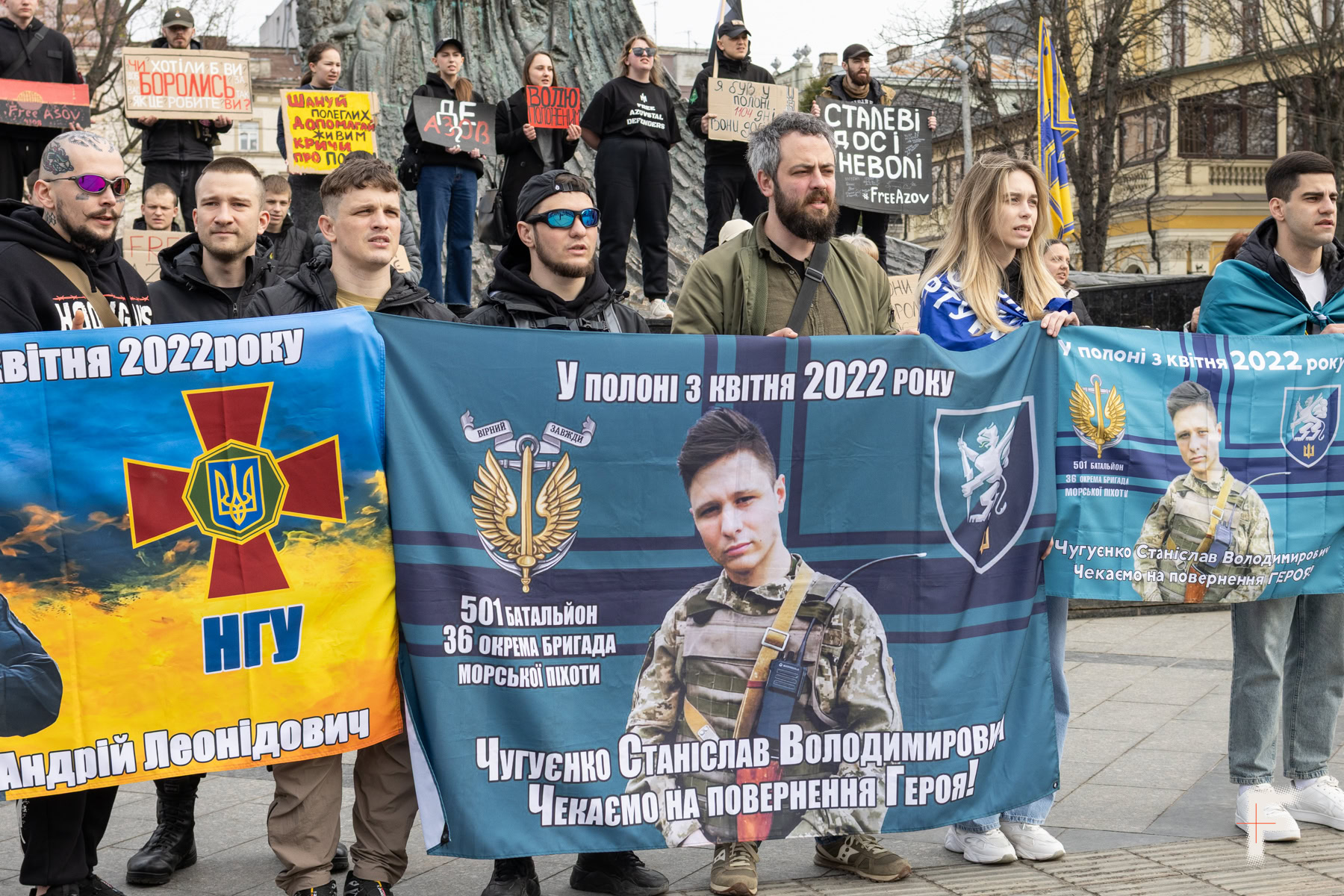
Every Saturday, the veteran attends demonstrations in support of prisoners of war and those missing in action. More than a hundred people meet in the square, holding signs that serve as reminders of prisoners’ of war fate. Vlad greets everyone who comes to the square, because this is a community where everyone already knows each other.

Mothers of those reported missing, wives of prisoners of war, and veterans who themselves were held captive gather to remind people of captivity and the fate of people who are reported missing.
Vlad holds a flag with a photo of his brother. If you look closely at the face on the banner and then shift your gaze to the person holding it, they are almost indistinguishable.
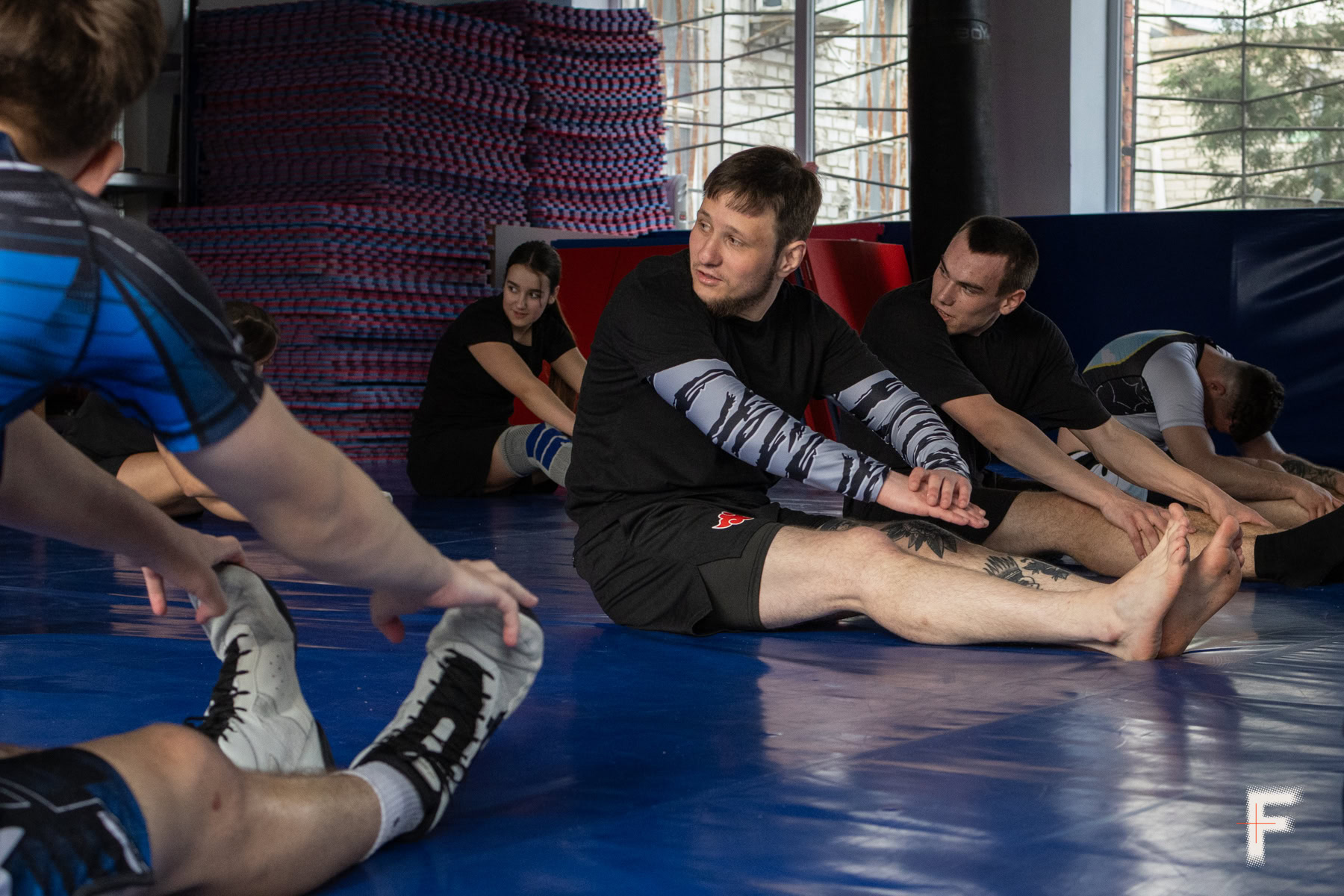
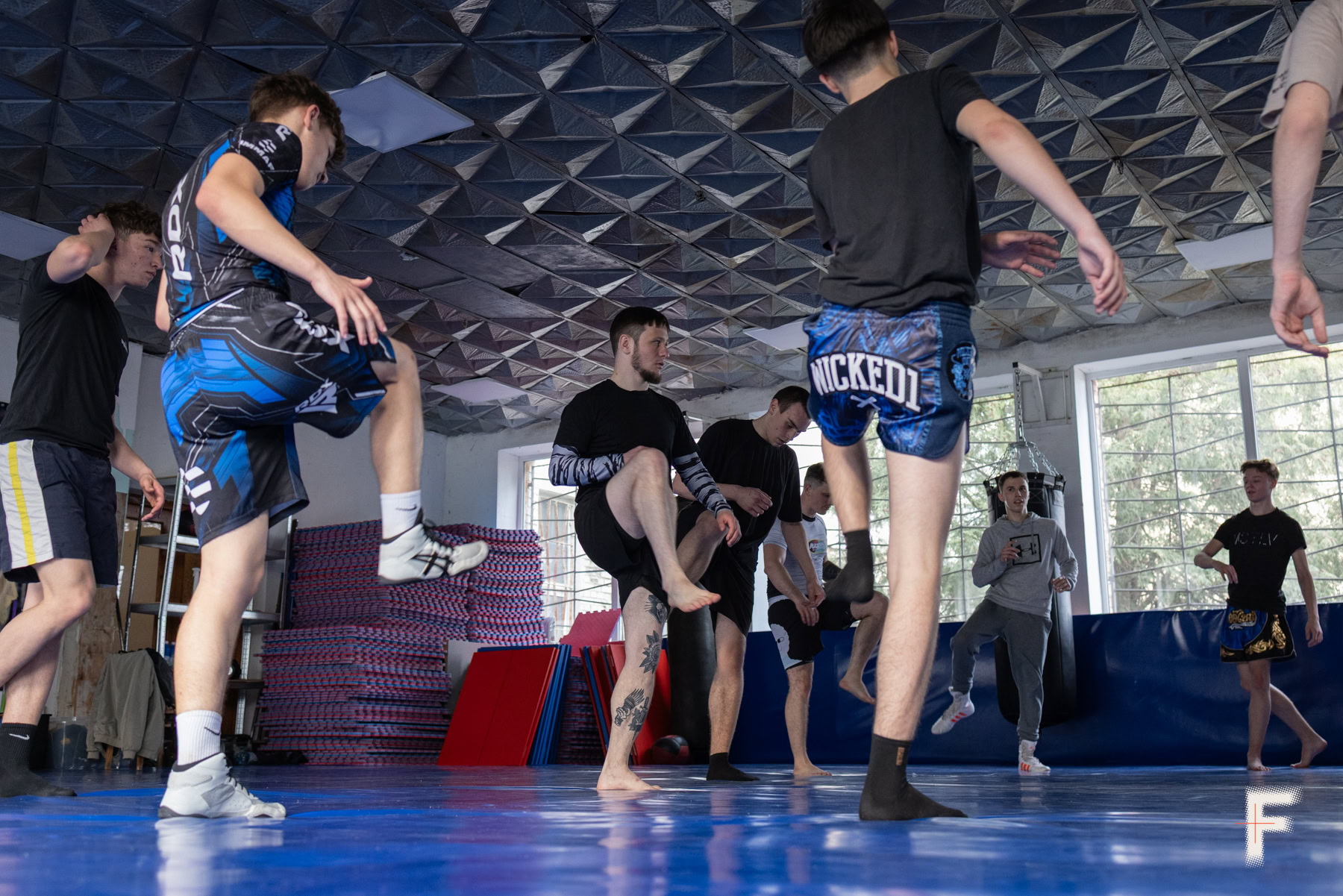
After the demonstration, Vlad heads to the other side of town. He walks between the college buildings, opens a door in an annex, and enters a hall. He teaches a class in mixed martial arts in this small room. Once a week, many young men, women, and veterans come here. For Vlad, training serves as a consolation: he does what he loves and he is surrounded by his community.
-
Martial arts training for veterans and youth led by Vladyslav Chuhuienko, a marine released from captivity. Lviv, Ukraine, March 28, 2026. (Diana Deliurman/Frontliner)
-
Martial arts training for veterans and youth led by a marine released from captivity. Lviv, Ukraine, March 28, 2026. (Diana Deliurman/Frontliner)
***
Hi, we are Diana and Maksym, the authors of this article. Thank you for reading to the end.
Every story starts with your support. Join the Frontliner community so we can keep up documenting Russia’s war against Ukraine from the front line and the rear.
***