“You’re running across fields with a knife in hand”: How drone pilots’ work has changed near Kupiansk
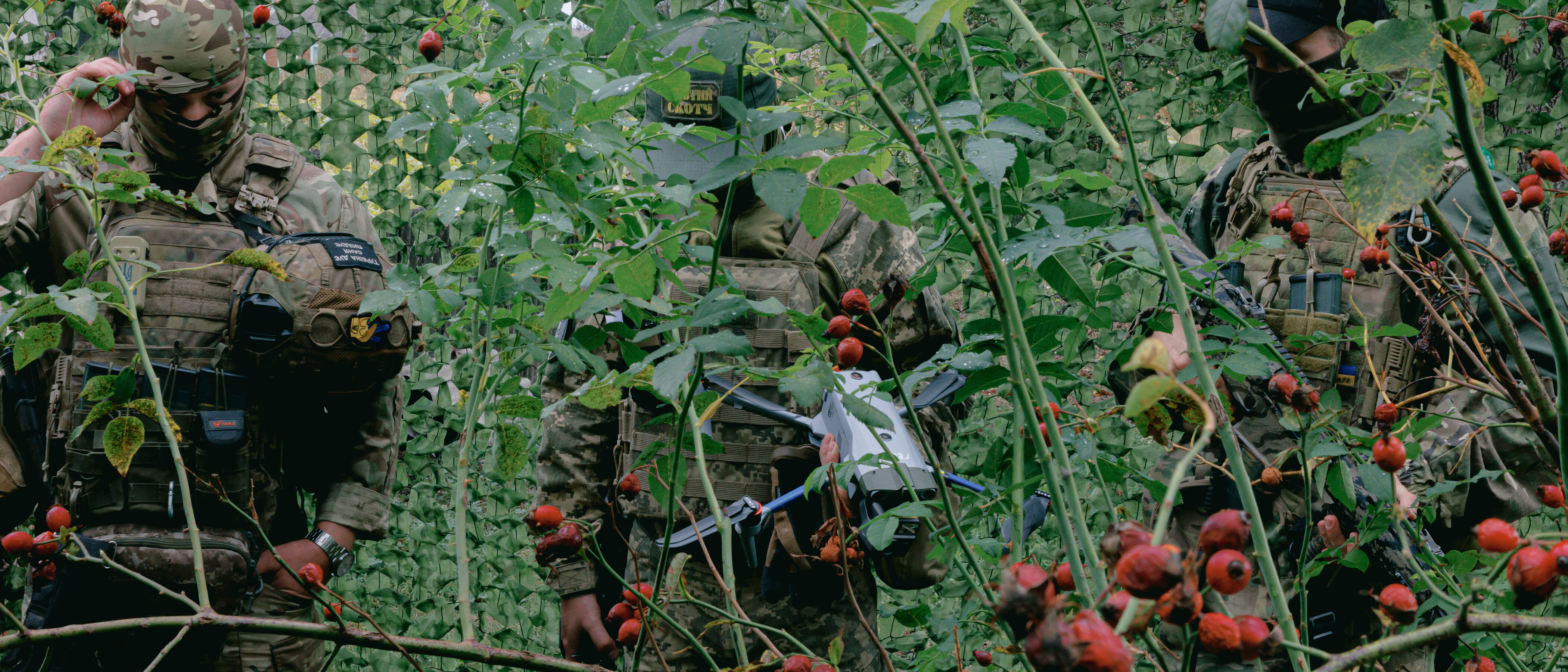
Kupiansk burns on the monitor screen of a Ukrainian drone. Russian infantry sit in hiding. Local residents continue their work in their yards. But the drone pilots’ work isn’t just what they see on their screens. Before they can launch their drones, they have to get to their positions on foot. Russian attacks interrupt deliveries of drones and payloads, and constant danger wears the soldiers out. Find out how pilots of the 41st Mechanized Brigade’s unmanned systems battalion work on the Kupiansk front in this Frontliner report.
Through the thermal imaging camera of a reconnaissance drone, the front line near Kupiansk looks like a continuous network of burned out tree lines and abandoned buildings. Here, the hunt for anything emitting heat continues around the clock.
For the pilots of the 41st Mechanized Brigade, this is a routine job: weather permitting, they make several dozen flights a day to spot Russian infantry movements or adjust fires.
UAV company commander Serhii, call sign “Shelby,” sees to it that this process works nonstop. Awarded the rank of second lieutenant after training, he and his unit fought for Kupiansk, Chasiv Yar, Toretsk, Sudzha and Yunakivka.
When I received my rank, my one goal was not to become a ‘suit.’
I’m not a bit interested in yelling ‘Attention!’
Trust and authority aren’t something you get because of your stripes.
You have to earn it every day. My guys aren’t just some subordinates.
They’re my kozaks, my brothers,

The character of the war changes with each passing year, and it is harder than ever now, Serhii says. In 2023 and 2024, teams could drive to their positions, calmly unload their gear near hospitals or other buildings and get straight to work. Now, that is impossible.
“They’re crawling all over the place, constantly changing tactics. They mine our roads, we mine theirs. The battle happens remotely: who gets whom, who’s sneakier. I can’t even imagine what it will look like a year from now. But whatever technologies we have then, without people, it’s just stuff,” Serhii says.
Most of his team are fully formed adults with their own professional worldviews. They won’t just follow orders blindly, Serhii says:
“If you’re too soft, they’ll walk all over you. If you’re a despot, they’ll come back from missions with some choice words. We have an iron rule: don’t confuse humanity for weakness. Humanity is our foundation. We sleep together, eat together, do everything together 24/7.”
Serhii recalls an incident when he had to take a soldier off a mission literally as they were getting into the truck. That soldier was usually the one setting the mood for the whole team, but Serhii noticed that he was unusually distant.
“I spoke with him and realized he was an emotional wreck. His head was in problems he had back home, not in the mission. If I’d sent him out on the road with all the drones flying around while he’s lost in his thoughts…if he’s two seconds late to react, that’s the end of the team,” Serhii says.
A commander has to feel his team,
Serhii believes that there is a mobilization crisis; most new recruits arrive disoriented and scared. But you don’t have much time to find your feet in the unmanned systems. Either you figure things out fast and learn the technologies, or the team pushes you out, “like antibodies would a foreign object.”
“Just recently some guys from a neighboring unit drove smack into the center of Kupiansk in their armored vehicle and took six hits on the armor. Can you imagine the nerves of steel they have? They just jumped out and kept going with their mission. Some other guys were walking back from their positions barefoot in the winter, through barbed wire and knee-deep in mud. They got in and were laughing about how they’d lost their boots to the mud. The main thing is they were still alive,” Serhii says.
“Art”: he view from above and civilians under fire
The soldiers serving under Serhii come from widely varying backgrounds. One, a reconnaissance drone operator named Dmytro, call sign “Art,” already has significant combat experience. Prior to the full-scale invasion, he worked as an art director in the Kyiv office of one of the world’s largest advertising agencies, which is how he got his call sign.
In February 2022, he went to the enlistment office in Kyiv but was rejected due to his lack of military experience. He didn’t even have a driver’s license. Once he’d saved up enough vacation days at work, he went back to try again.
“I came to work and asked if I could take at least ten days’ vacation. They told me that was too much, that I could take eight. I said all right, eight it is. And I went and joined the army,” Dmytro says.

Dmytro initially served in a tank battalion before transferring to unmanned systems. Now, he peers through his drone’s camera to see things that soldiers on the ground cannot. On one flight, after an enemy armored vehicle was destroyed, the surviving occupiers rushed to loot the wreck.
“This Russian runs up. I see him from a few kilometers away, I’m flying in from a long distance. There are KIA all over the place, and he decides he’ll play dead. I fly up, put the camera right on his face. My entire screen is just his face. I think to myself, ‘Busted, bro.’ The strike drones were already on their way,” Dmytro says.

Combat is underway, buildings are burning.
And next door there are civilians beating dust out of their rugs.
It might seem that nothing could surprise an experienced pilot at this point. But Dmytro still can’t get used to seeing civilians in Kupiansk. He watches the surreal scenes every day on his monitor: local residents going about their business right next to positions that are under fire every minute of the day.
Once, while making his rounds of the city with his drone, Dmytro saw a family hurriedly carrying their belongings out of the house, which had caught fire after a direct hit. The recon team corrected the fire so as not to hit the civilians, and once the barrage ended, they loaded up a drone with food and delivered it to the family.
“You have these situations where combat is underway, buildings are burning, infantry are running from one house to another and tossing explosives inside to destroy the enemy along with the house, because it’s too hard to go inside. And next door there are civilians beating dust out of their rugs. I’m watching all this through the drone camera: fire here, a battle there, and this person’s just standing there calmly beating a rug. I see this and just can’t believe it,” Dmytro says.
“Kukhar”: From restaurant kitchens to piloting FPVs
Serving side by side with the experienced pilots are recent recruits. UAV operator Andrii, call sign “Kukhar” [Ukrainian: кухар for “cook”], has been serving only a few months but treats his new job with the same responsibility and care he developed over ten years as a restaurant sous chef.
“Everything in the kitchen has to work without a hitch – one person makes the rolls, another cuts them, and a third packs them up. If someone falls behind, the whole process collapses. It’s the same exact thing here with the drones,” Andrii says.
When Andrii began his service, he decided that he’d give up pots and pans and join the unmanned systems forces. While still at basic training, he would borrow a laptop from a brother-in-arms and spend hours on a first-person-view (FPV) simulator.
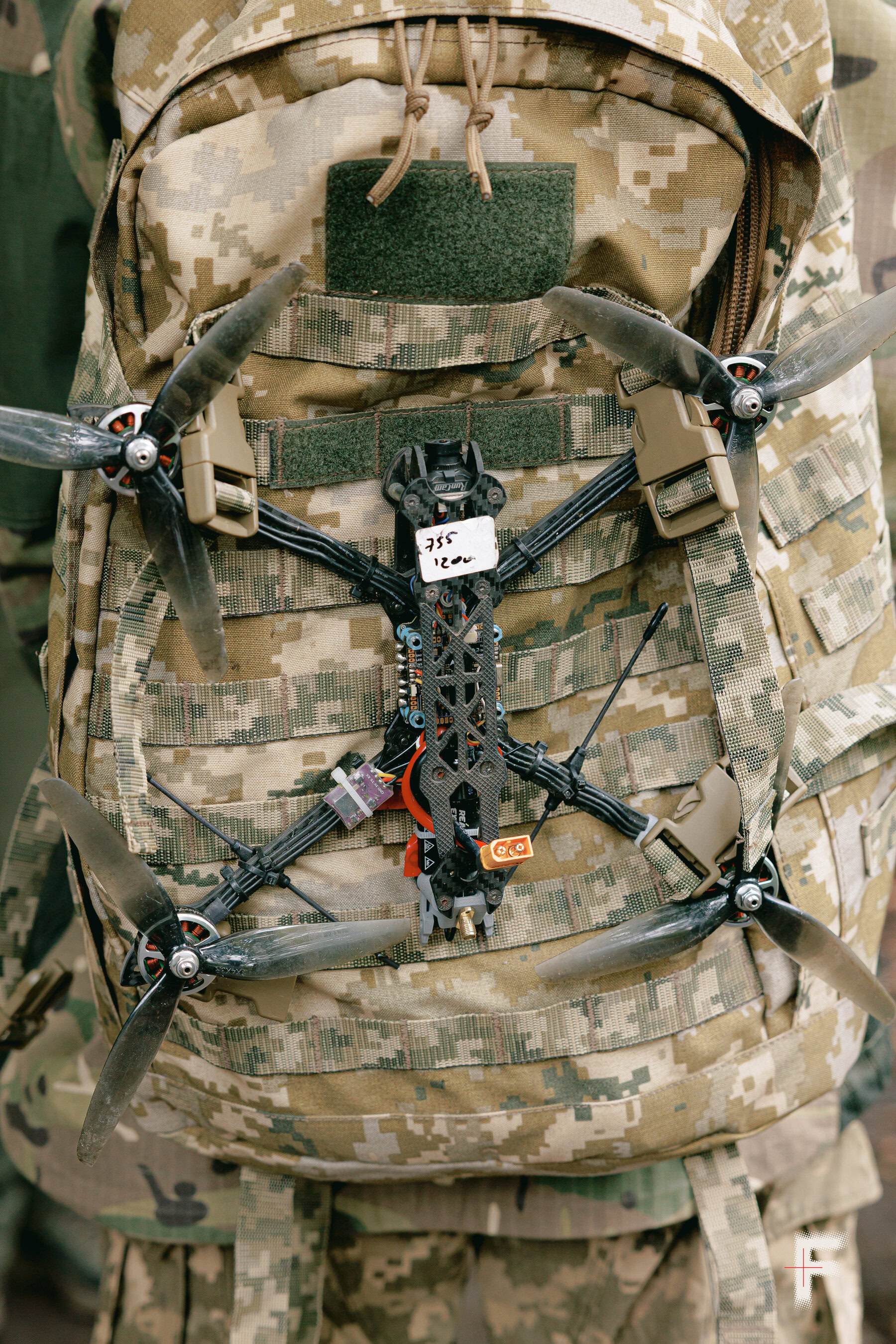
Now, Andrii works with both radio-controlled and fiber-optic drones. In addition to piloting them, he also does setup work: soldering contacts, reflashing motherboards, and selecting propellers and motors.
“You can fly with the factory settings, but the drones are not as stable that way. In real life, every millimeter matters. If your hands are shaking, or the drone is listing, you’ll miss,” Andrii says.
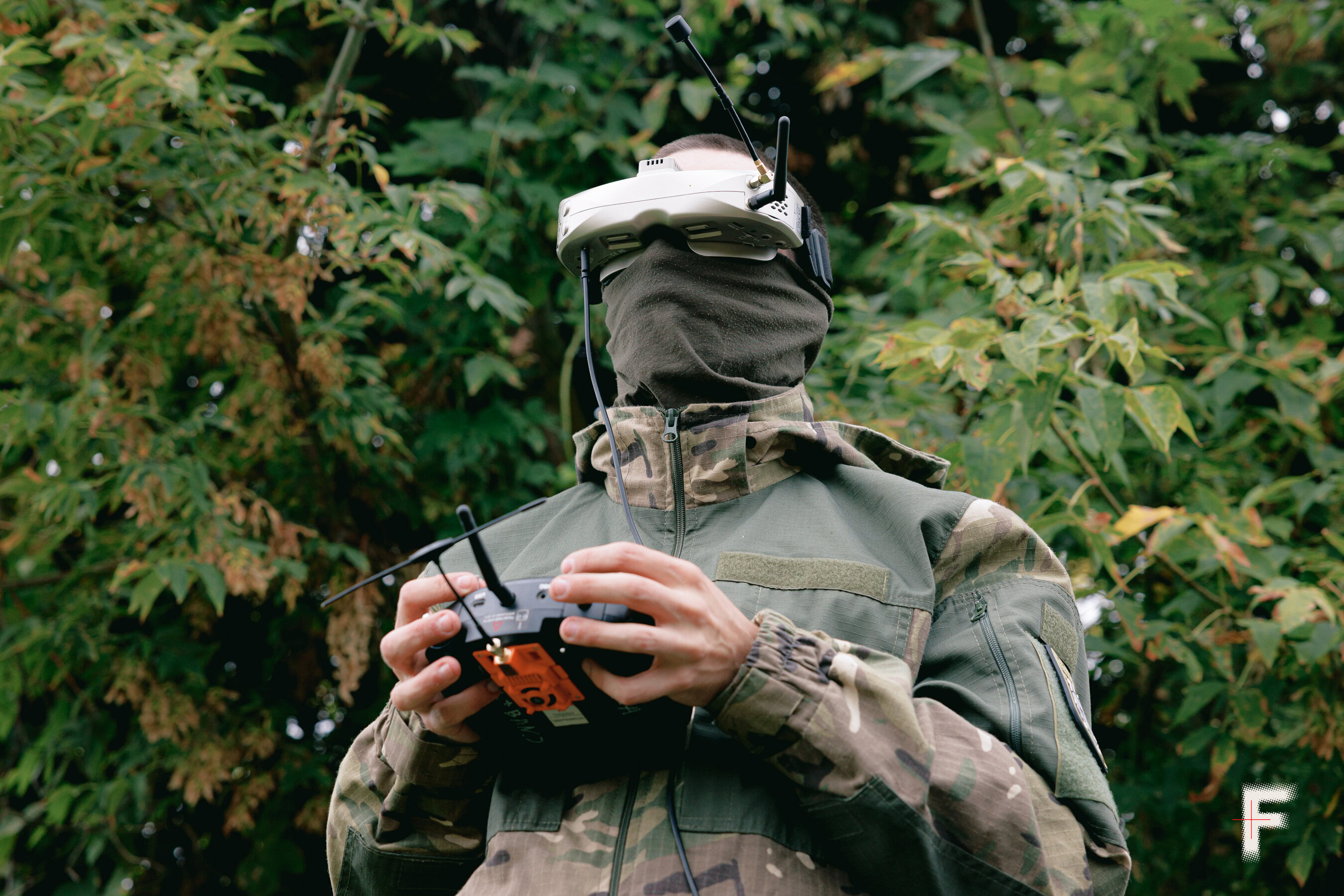
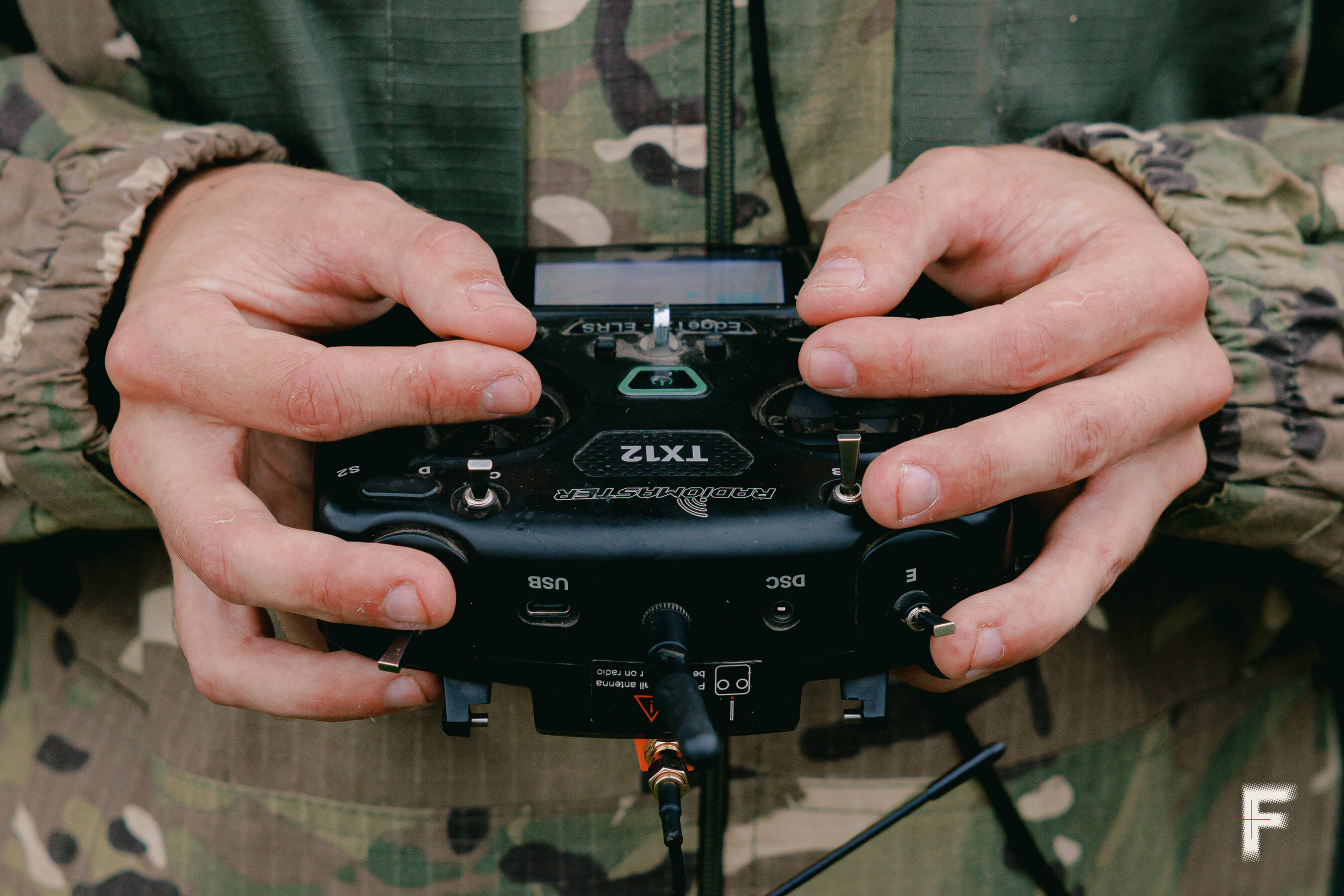
Fiber-optic cable ensures a clean picture despite enemy EW, but it is also vulnerable: strong gusts of wind rock the trees, and the cable can go taut and break in a matter of seconds. Andrii remembers every detail of his first successful combat flight. His orders were to land a heavy drone in an ambush position and wait for a target.
“It was during the day, but the drone had a thermal optic. Regular optics don’t always work in the summer since a person in camo blends in with the trees. All of a sudden, the command came in over the radio: ‘They’re on the move, get them!’ I take off the drone and fly outside, and I hear ‘To the left, to the left!’ I turn the drone around and see the enemy raising his rifle and shooting straight at me. Thankfully, he was a bad shot,” Andrii says.
This isn’t some war on a monitor.

The situation at the front, and what to expect further
Now, the teams’ work is complicated not only by enemy fire, but also by the distance between positions. The so-called kill zone has expanded to dozens of kilometers in either direction from the line of contact. Cars stop ten kilometers out from the positions, and the soldiers cover the rest of the distance on foot, says “Art:
“This isn’t some war on a monitor. There are open fields you have to run through, and they’re tangled with optical fiber from all the drones. There’s so much of it, and it feels like being cut by paper. If it’s a big field, you have to run with a knife in hand to cut through it. You’re running fast, with your weapon, a rucksack, drones on your back, in a helmet and body armor.”

Even once they’ve hauled all that hardware in on their backs, the work doesn’t let up. Sometimes, deliveries get interrupted, and work stops while the pilots wait for a new batch of drones or payloads. But as soon as they get them, all other problems go on the back burner, says Andrii:
“The main thing for me is to show results. I understand that things sometimes don’t arrive because the Russians hit our logistics, and unfortunately work stops sometimes. As crazy as it sounds, when I’m flying and doing some damage, it’s like I’m doing quests in a video game.”
There are no illusions about a quick end on the front; the soldiers say the war is far from winding down. Production of drones and weapons on both sides is only increasing, making the line of contact an even deadlier place.
“If they’re making weapons and developing technologies for people to wage war, then what should we expect? If I make myself food for the week, it means I plan to live at least two more weeks, right? They’ll come up with things that will threaten our logistics for a hundred kilometers. I hope that doesn’t all end up on the line of contact,” says Serhii.
On the Kupiansk front, as in all others on the front, the decisive factor is human endurance. Despite all the technological advances, the essence of war hasn’t changed, says Serhii:
“The Russians have one goal: for us not to be here, and for them to take our place. They don’t want to capture six kilometers of farmland and sow wheat. They want to destroy us.”
***
Frontliner is independent. Our readers help fund our reporting on the war and the people living through it. Subscribe on Patreon to keep us on the road.
***