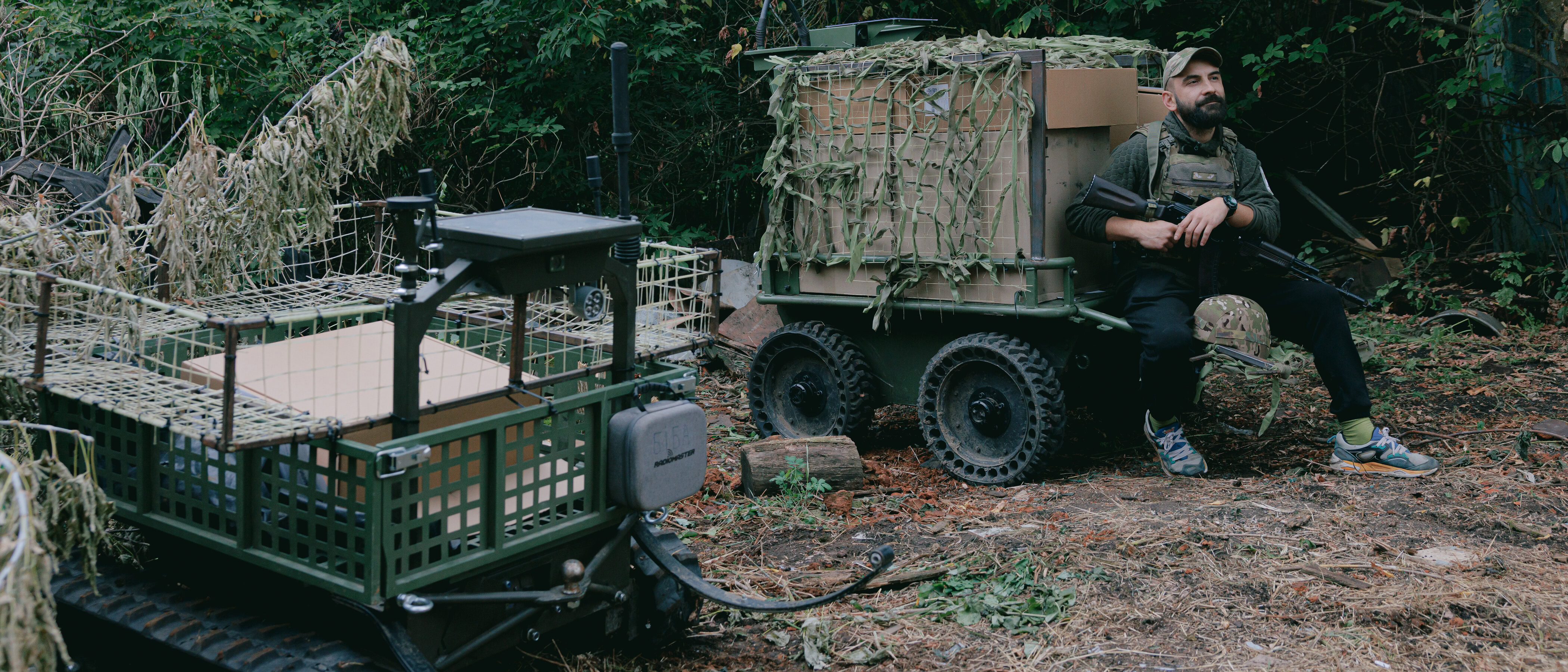
Delivery to the front line: How a robot platoon keeps soldiers supplied near Kupiansk
Wheeled and tracked unmanned ground vehicles (UGVs) navigate rough terrain on the Kupiansk front every day, delivering food, water and ammunition to frontline positions. But when a Russian drone strikes a UGV, or the robot hits a mine, supply runs are disrupted. Evacuation teams must then risk their lives, covering kilometers on foot to reach the wrecked vehicle. Read how the soldiers of the 428th Unmanned Systems Regiment “Shadow” keep remote logistics running under constant fire in a new report by Frontliner journalists.
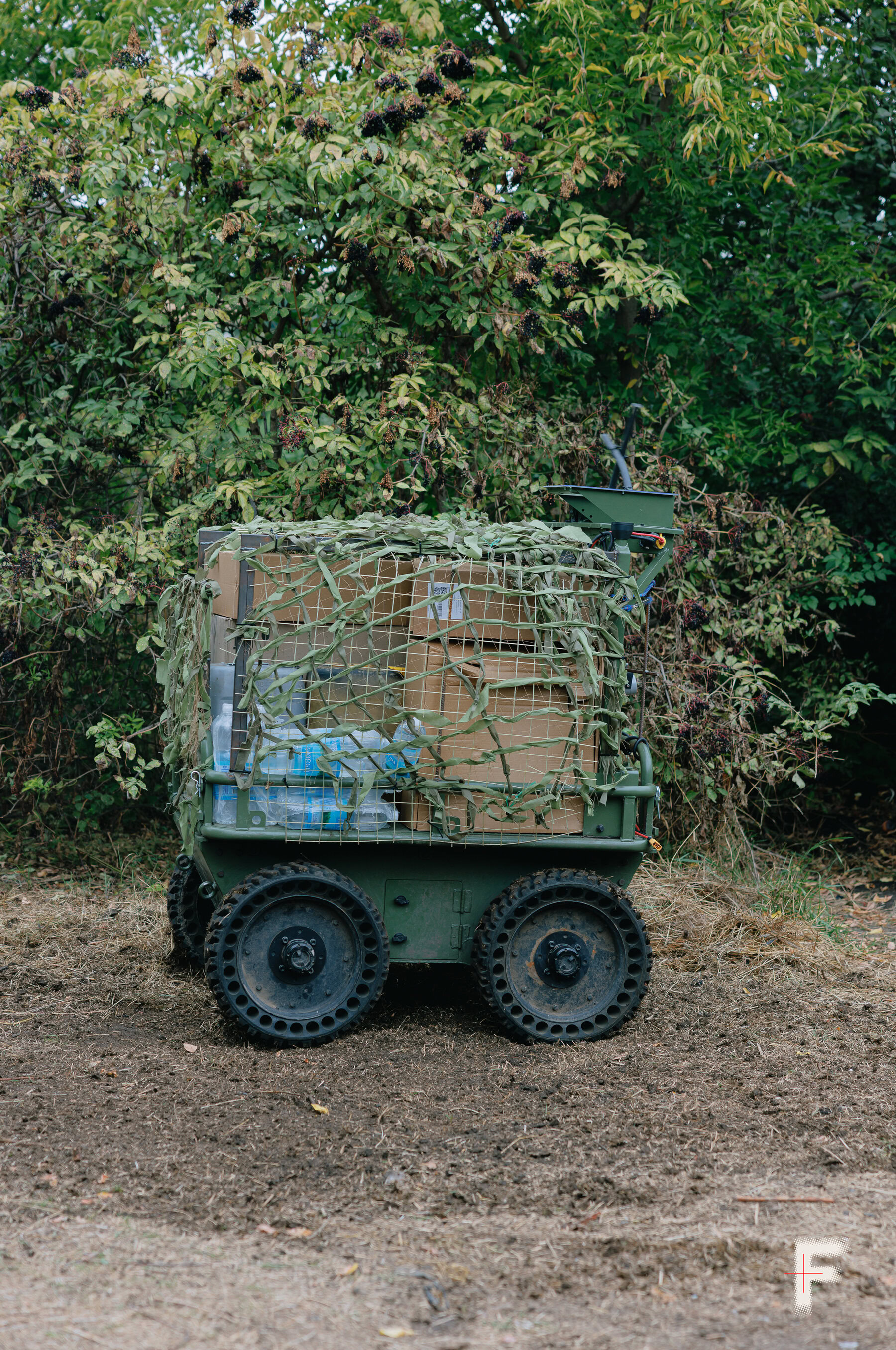
The unmanned ground vehicle, nicknamed Frodo by soldiers of the 428th Unmanned Systems Regiment “Shadow,” came under Russian attack three times. After hitting a mine for the first time, it made it back to base on just three wheels. It also made it out after the second strike. But after the third, it burned out completely.
For the UGV platoon on the Kupiansk front, such losses are not uncommon. When a UGV is destroyed or damaged, frontline positions are left without food, water or ammunition. The entire logistics chain has to be rebuilt: sourcing new cargo, moving it under the threat of drone attacks and planning the routes all over again. This routine but critically important work falls to the people who keep the supply base running.
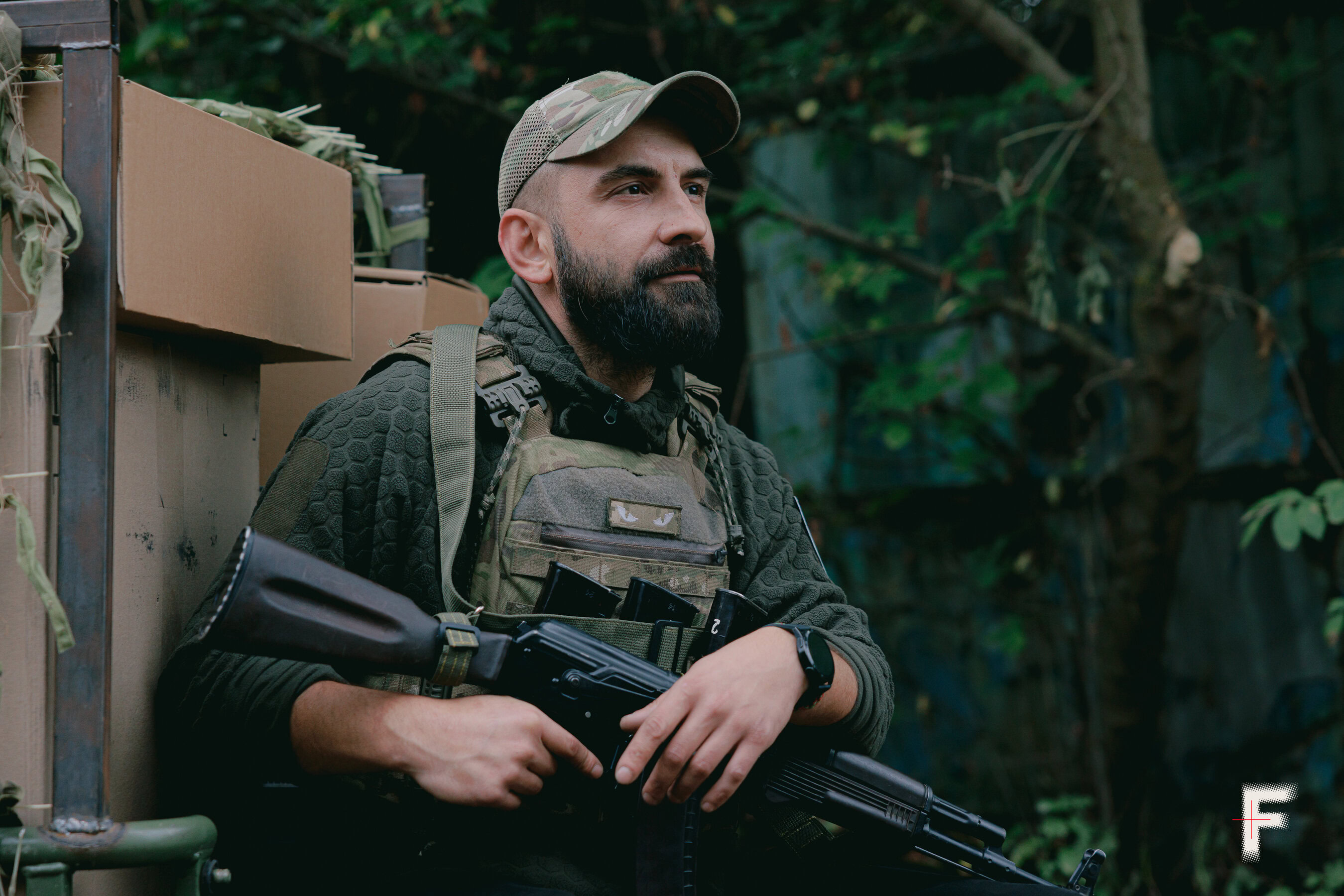
One of them is Vitalii Zukhar, call sign “Chechen,” the platoon supply sergeant. Amid the bustle of the garage, he glances down at his hands. Black grease has worked its way into the skin around his fingers. From early morning until late at night, he is constantly fixing things, carrying fuel cans and preparing equipment for the next mission.
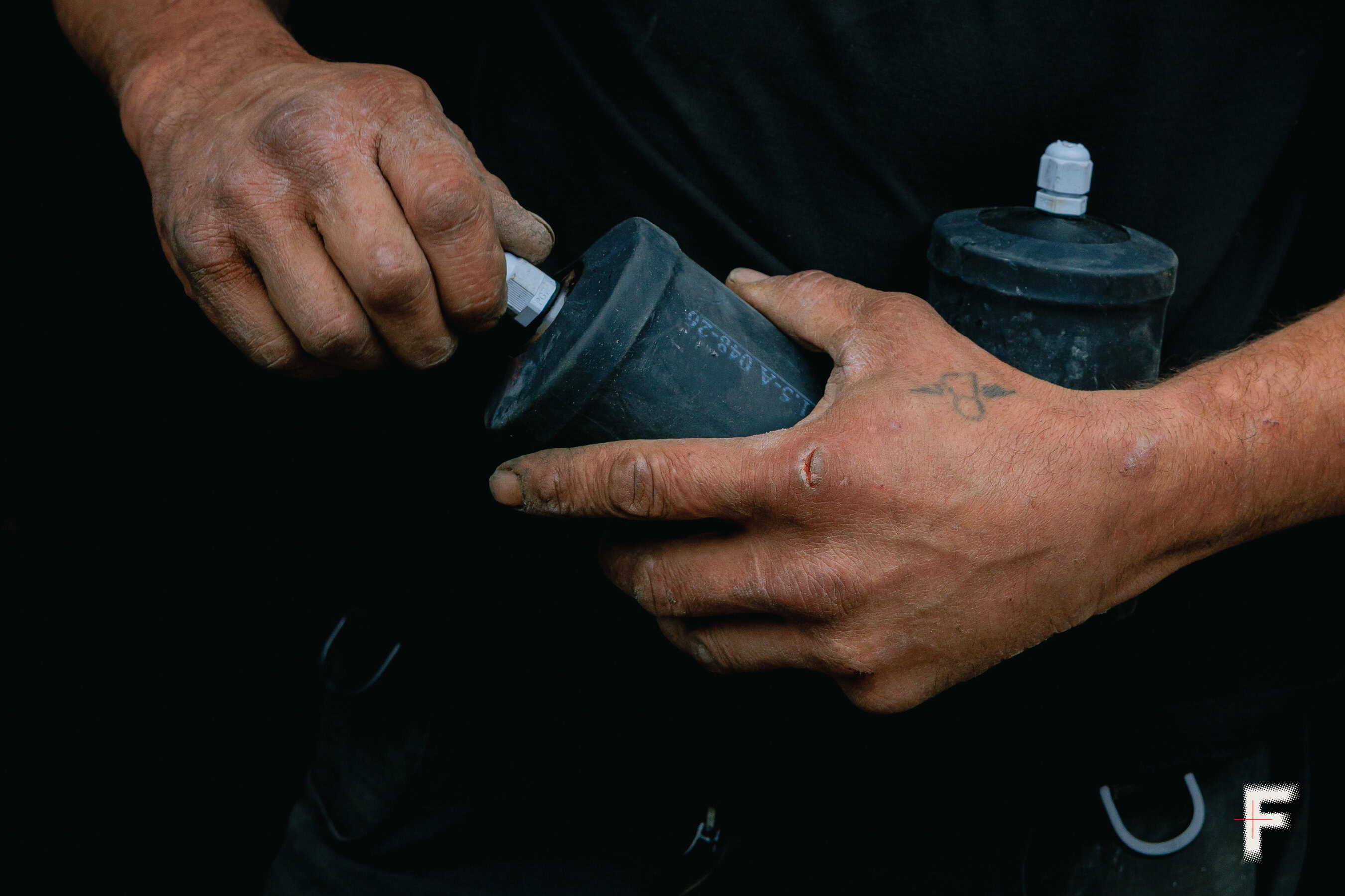
“Look at how filthy my hands are. It’s awful. If someone had told me, I’d have gone and washed them. They’re always covered in grease or soot. Now I’m sitting here wondering where to hide them so no one can see,” the junior sergeant jokes.
“Chechen” had been trying to join the military since the first days of the full-scale invasion. With no prior military service, he was repeatedly turned away. “Stay out of the way. We’ve got trained people,” he was told. Eventually, in 2024, he got a draft notice at a checkpoint while driving home.
He initially served in a rear-area repair battalion before transferring to a drone unit. There, he trained to operate the Vampire heavy bomber drone, worked with reconnaissance drones and served as a duty operator of unmanned ground vehicles.
On the way back,
we were driving around wrecked UGVs when we hit a mine.
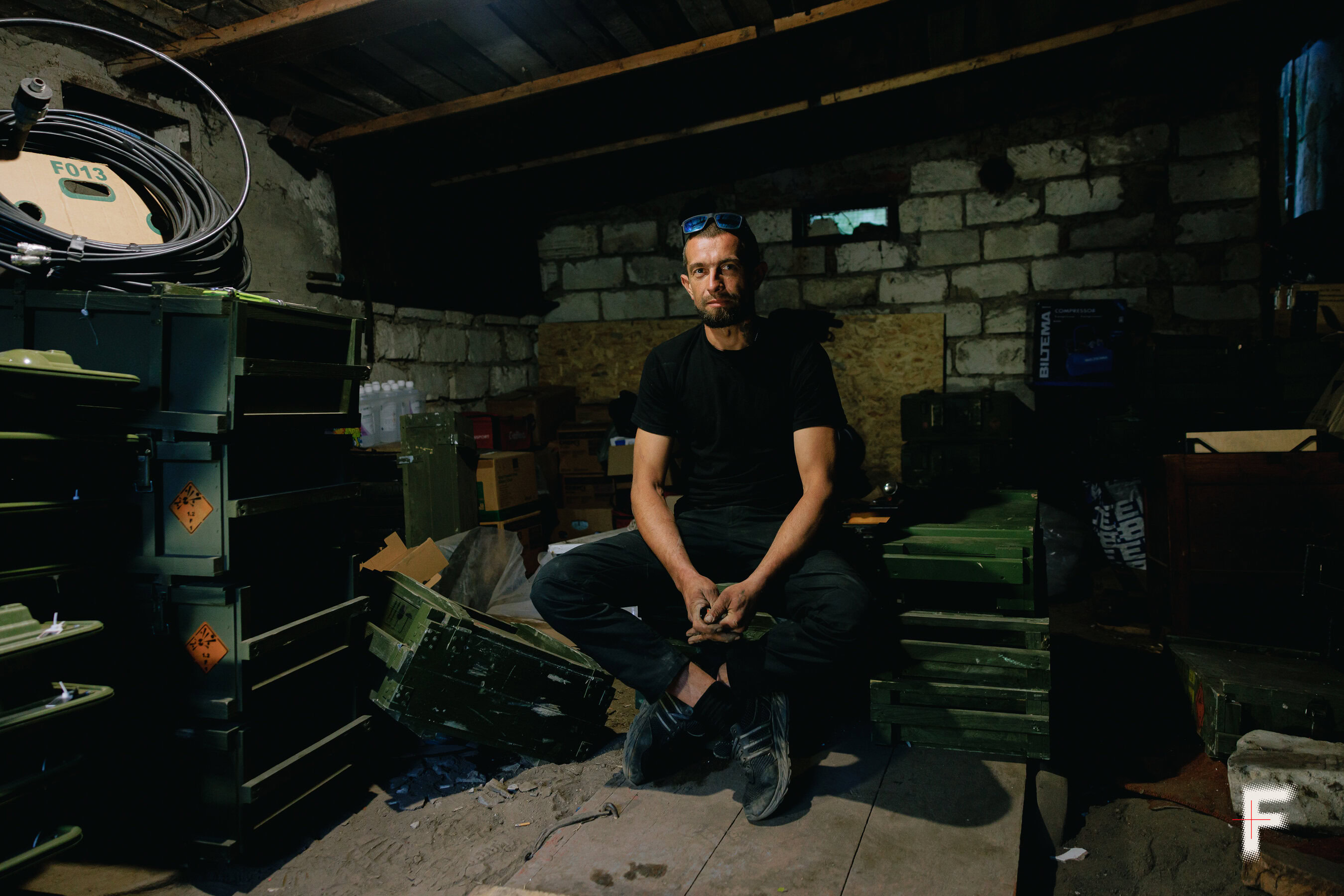
“I’ve loved shooting since I was a kid. Back then, we ran around with wooden guns. Now we’ve grown up, and they’re made of metal. But this is serious business. If you screw up or fail to load enough supplies, the guys out there could be left with nothing. I like the constant motion, though, always packing things, sorting supplies and driving out to the guys,” says “Chechen.”
Technically, a supply sergeant isn’t supposed to go to the front line, but Vitalii knows the situation on the ground firsthand. He recalls one trip when he escorted a supply run in a pickup to one of the most dangerous positions.
“We got there and unloaded everything. On the way back, we were driving around wrecked UGVs when we hit a mine. The Starlink was blown right off. My ears were ringing, a wheel had blown apart, and shrapnel had torn up the undercarriage. It was pouring rain, and we limped out on the rim. We were lucky.”
The behind-the-scenes work that keeps frontline logistics running
At the base, Vitalii is responsible for making every run as efficient as possible. The supply depot is 60 kilometers away. The round trip takes about three hours, and only then can the actual work of sorting the supplies can even begin.
Space inside the unmanned ground vehicle is limited, so Zukhar works out how to pack everything as efficiently as possible. He takes first-person-view (FPV) drones out of their boxes, bundles them in groups of five to ten with plastic zip ties, and packs batteries, initiation boards and spools tightly together. He also buys food based on the lists the soldiers send him every evening.
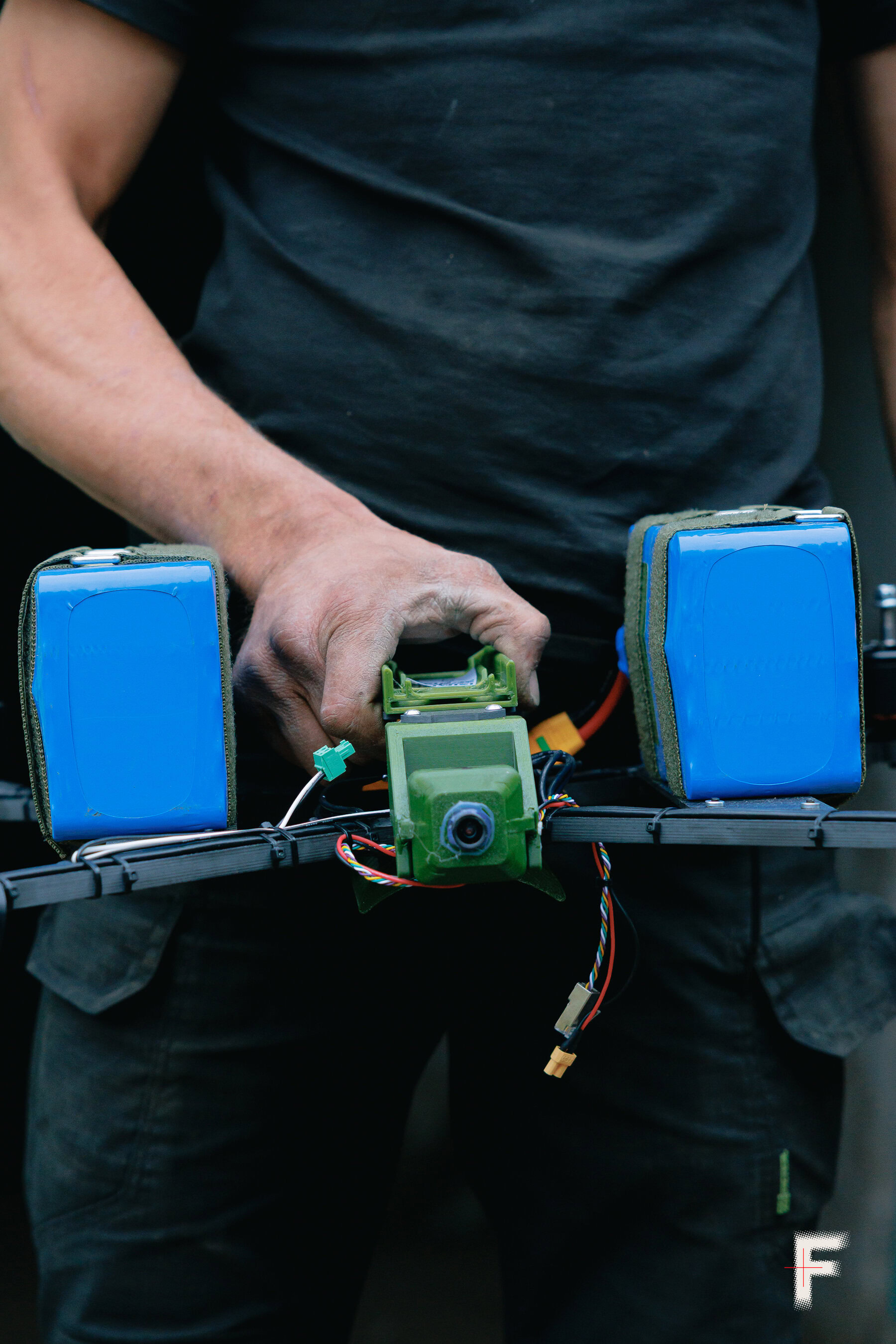
“They report every evening on what they’ve used and what they have left. We use those figures to work out what needs to be delivered to them. They want to go home. That’s probably their number-one request. Other than that, they’re always asking for little treats, especially condensed milk,” Vitalii says.
When ground transport is too risky or mines make the route impassable, the soldiers combine delivery methods. Supplies are packed for four positions at once, then heavy Nemesis drones drop the cargo directly into the dugouts, “Chechen” says.
Afterward, the guys call us to confirm delivery:
‘Package received. Five stars for postal service.’
Evacuating and repairing UGVs at the front
The UGV platoon commanded by Yevhen, call sign “Polityk” (Politician), focuses primarily on logistics and evacuation. According to him, the vehicles head out on missions every day, sometimes two or three times a day. The platoon relies on two main models: the wheeled Rys Pro and the tracked Ardal.

They have to cover kilometers on foot, figure out how to pull
the machine out safely and, above all, make it back alive.
“The Rys PRO is fast and can reach speeds of 16-18 kilometers per hour. The Ardal has better off-road capabilities, which is especially important when the roads are muddy and impassable,” the commander says.
“Problems start when a vehicle gets stuck somewhere, is hit by an enemy drone or strikes a mine. If it survives, you don’t want to just leave it there. So ground teams go out to bring it back. They have to cover kilometers on foot, figure out how to pull the machine out safely and, above all, make it back alive,” says “Polityk.”
If a delivery fails to reach its destination, the troops have to find another way to get the supplies through. Until then, the soldiers at the position are left without the essentials.

“It hits the guys at the positions hardest. They haven’t received food or water. Depending on what was being transported, they could also be left without ammunition or the means to engage the enemy,” the commander says.
When a vehicle makes it back to base safely, the technicians get to work right away. They inspect the running gear, re-tension the tracks, clean the bolts, recharge the batteries and repair any damage. Sometimes repairs, firmware updates and testing of new software after a difficult run can take several days.
“I used to own auto repair shops, so I can handle some of the work myself. We weld extra metal onto the bodies to increase their carrying capacity, reinforce trailers that turned out to be unreliable, and adjust the throttle sticks on each operator’s controller to suit their individual preferences,” “Polityk” says.

Experience working with cars helps “Polityk” adapt unmanned ground vehicles to conditions at the front. Still, even these modifications cannot solve every problem with remote operation: the camera image shakes on uneven roads, electronic warfare can cut the signal, and a UGV can roll over in a hole.
Russian drones complicate the platoon’s work
According to “Polityk,” operating on the Kupiansk front has become significantly more difficult in recent months. New Russian units have appeared opposite the UGV platoon’s positions, and shelling has intensified.
Every logistics mission has become
a race to stay one step ahead.
“It’s become much harder to operate. Molniya drones, FPVs and Shaheds are flying overhead, and there are far more glide bombs. The sky is constantly saturated with drones, and every movement on the ground is being watched. Every logistics mission has become a race to stay one step ahead,” the commander says.
Bomb craters and mines make the routes even more difficult to navigate. Drawing on his experience from daily missions, Yevhen is designing his own unmanned ground vehicle. He wants to build a more maneuverable ground robotic system that won’t overturn on rough terrain and will incorporate artificial intelligence features.
“Even an experienced operator can simply fail to notice a fresh crater from a strike after eight to ten hours on a continuous night mission,” the commander says.

For now, however, the platoon is in no rush to switch to assault versions of UGVs. Both the Rys Pro and the Ardal can technically be fitted with turrets, but for the time being, the unmanned ground vehicles are used for logistics and the evacuation of wounded.
“We don’t have combat modules yet, because that requires specially trained personnel. This is a weapon, after all, and it brings an entirely different level of responsibility: assault operations and defending positions. But I think we’ll get there soon,” Yevhen says.
The work of UGV operators and the shortage of personnel on the front line
Despite all the technology involved, the platoon lacks the personnel needed to keep its operations running smoothly. “Polityk” himself has been deployed on the Kupiansk front for more than 90 days without a rotation. Still, he believes that people without prior combat experience can also operate a UGV.
“I’d like to tell those who are still far from the front: there’s nothing to be afraid of here. This is no longer the kind of war we saw in 2022-2023. These days, you’re likely to see an enemy infantryman only through a camera or a thermal imager. You just need to use your head and work carefully,” the commander says.

At the base, another unmanned ground vehicle is being prepared for departure. On this front, vehicles regularly burn after hitting mines or break down on the way to their destinations, but for now, there is virtually no other way to reach the positions. While “Polityk” inspects the running gear, “Chechen” is once again bundling FPV drones with zip ties, loading batteries and filling fuel cans.
“We support each other here and tease one another. Without humor, you just wouldn’t make it through. If one link drops out, the whole chain breaks. So we keep working. What other choice do we have?” Vitalii says.

***
We wanted to highlight the work of soldiers that often goes unnoticed but is essential to keeping frontline positions supplied. This story explores how unmanned ground vehicles deliver supplies and pull out damaged equipment, what happens when they are damaged themselves, and how much work goes into every mission. This story is about the vehicles, but also about the people behind them: the crews who prepare the UGVs for a mission, repair them, and improvise solutions while operating under the constant threat of Russian drones.
Every story starts with your support. Join the Frontliner community so we can keep up documenting Russia’s war against Ukraine from the front line and the rear.
***