
Supply shortages and drone threats: How the 33rd Mechanized Brigade’s unmanned ground vehicle crew operates
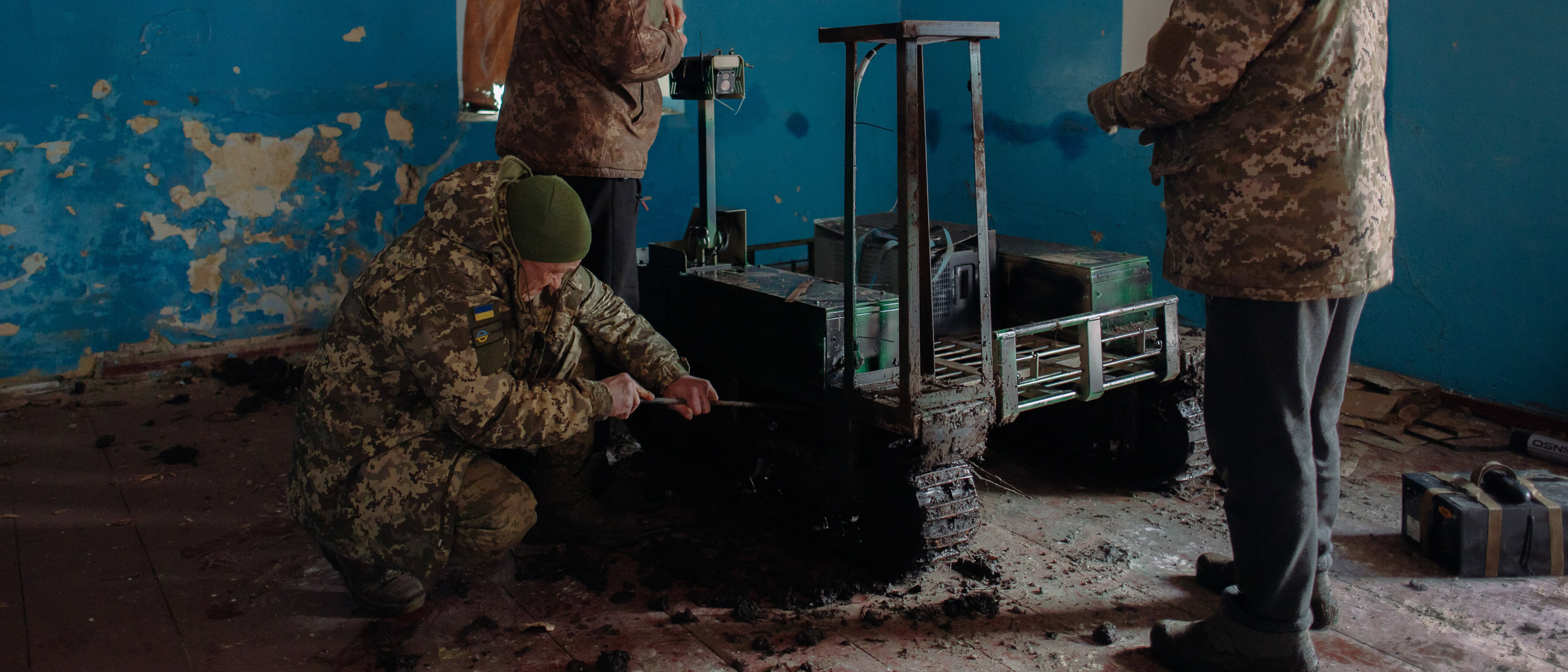
According to soldiers of the 33rd Mechanized Brigade, the need for unmanned ground vehicles (UGVs) on the front line is growing rapidly. Due to battery shortages, units are forced to spend hours charging while delivery requests continue to pile up. When a robot stops, owing to a dead battery or getting stuck in the mud, soldiers must travel several kilometers on foot under the threat of FPV drone attacks to rescue and recover it. This Frontliner report explores how the new UGV crew of the 33rd Mechanized Brigade’s artillery reconnaissance battery operates.
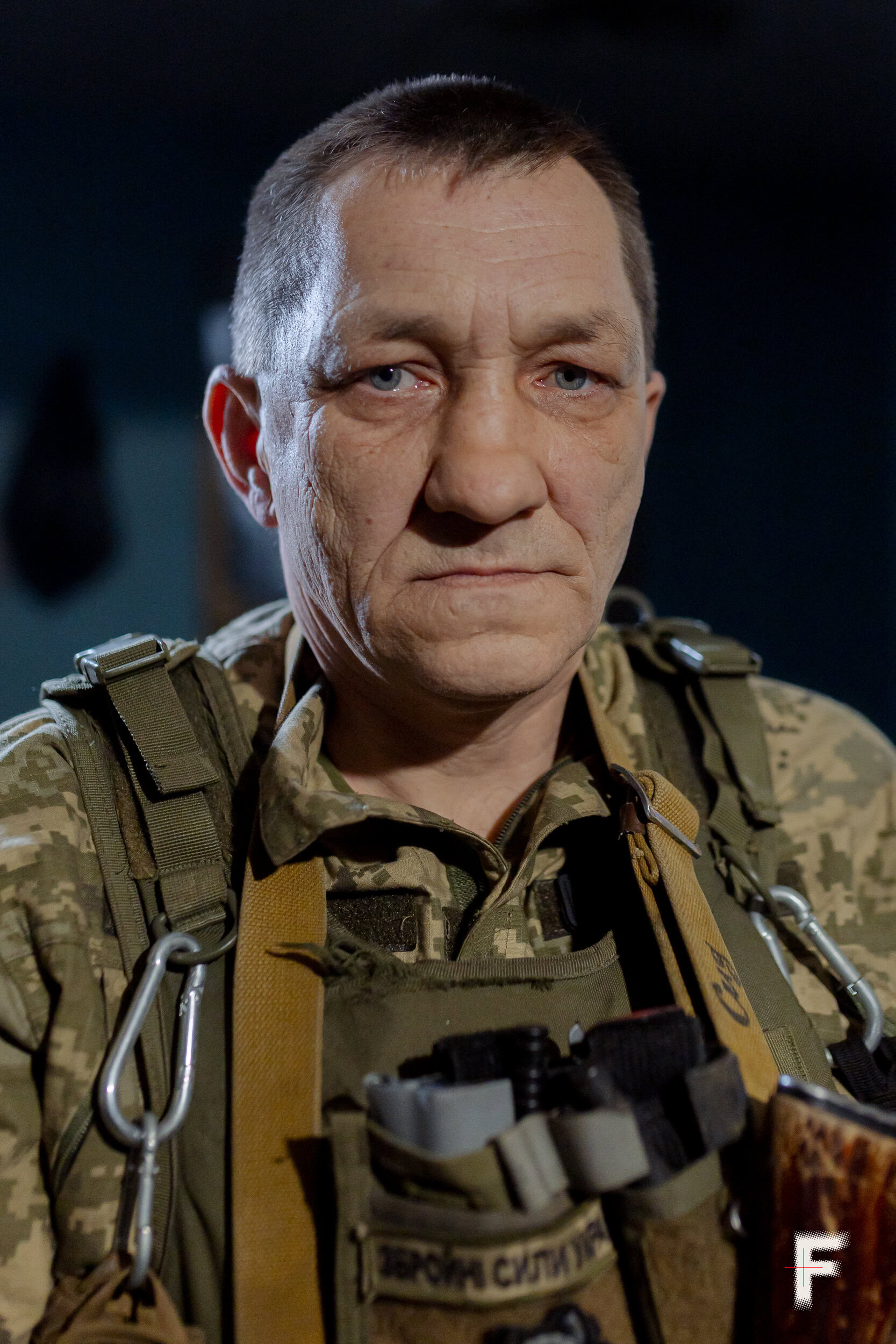
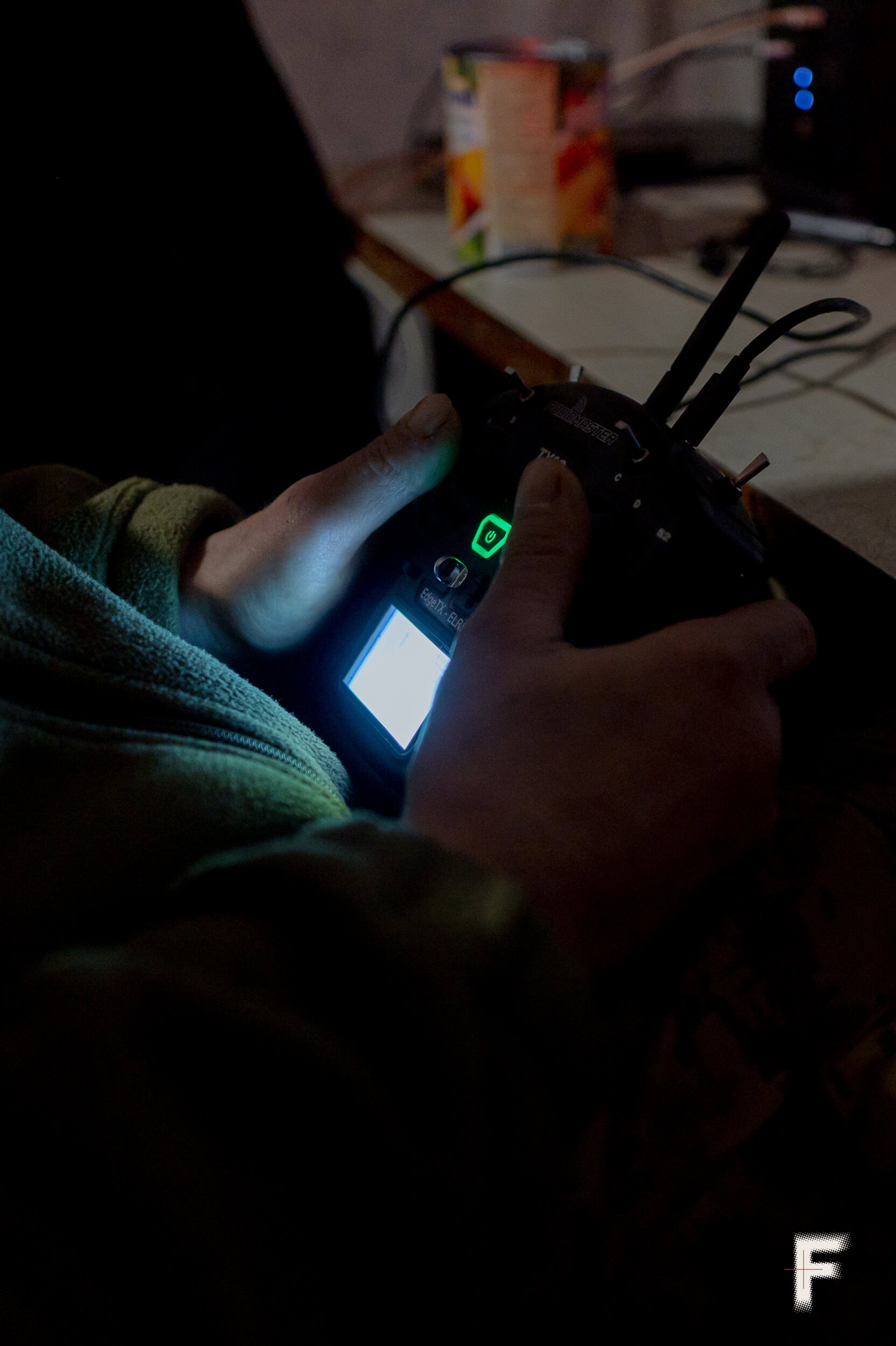
One of the operators in the 33rd Mechanized Brigade’s artillery reconnaissance battery is Mykola, call sign “Sid”. He is 54 years old and has been in the army for only six months, yet he is already operating an unmanned ground vehicle. In a cramped room packed with equipment, the soldier holds a remote control, his eyes fixed on the monitor. The screen shows a grainy image of a road several kilometers away: the robot is carrying out its mission, moving toward positions on the Kupiansk front.
The Russians hit two of our UGVs.
If it had not been for the machines,
it would have been the men,
Today, unmanned ground vehicles are increasingly taking over tasks previously performed by humans. This primarily involves delivery of provisions, water, ammunition, and other essentials to positions that are difficult or dangerous to reach. These routes are often under the constant threat of shelling and drone attacks.
“We do not go out for no reason. If there is a request, it means it is necessary. Sometimes people go for several days without water or food. By then, it is critical,” says “Sid”.
The unit explains that the growing demand for UGVs is driven by the potential to minimize risks to personnel. Robots now handle tasks that were previously carried out by people.

The limitations of UGVs
On the front line, however, equipment constantly faces issues not mentioned in the technical specifications. The main problem is the batteries. According to the manual, a charge should last for 20 kilometers, but in deep mud and snow, the battery drains much faster. It takes about four hours to charge one, and several are required for continuous operation.
“We make it one way, and that’s it. Then we are stuck waiting for it to charge. It can take six to eight hours. We essentially lose half a day,” Sid explains.

As a result, delivery speed drops while the volume of requests continues to grow. Consequently, units at forward positions are forced to wait.
The UGV moves very slowly, at roughly a human walking pace. On asphalt, it behaves as if it were on ice, skidding due to its metal track components. In mud or on challenging terrain, it often gets stuck.

-
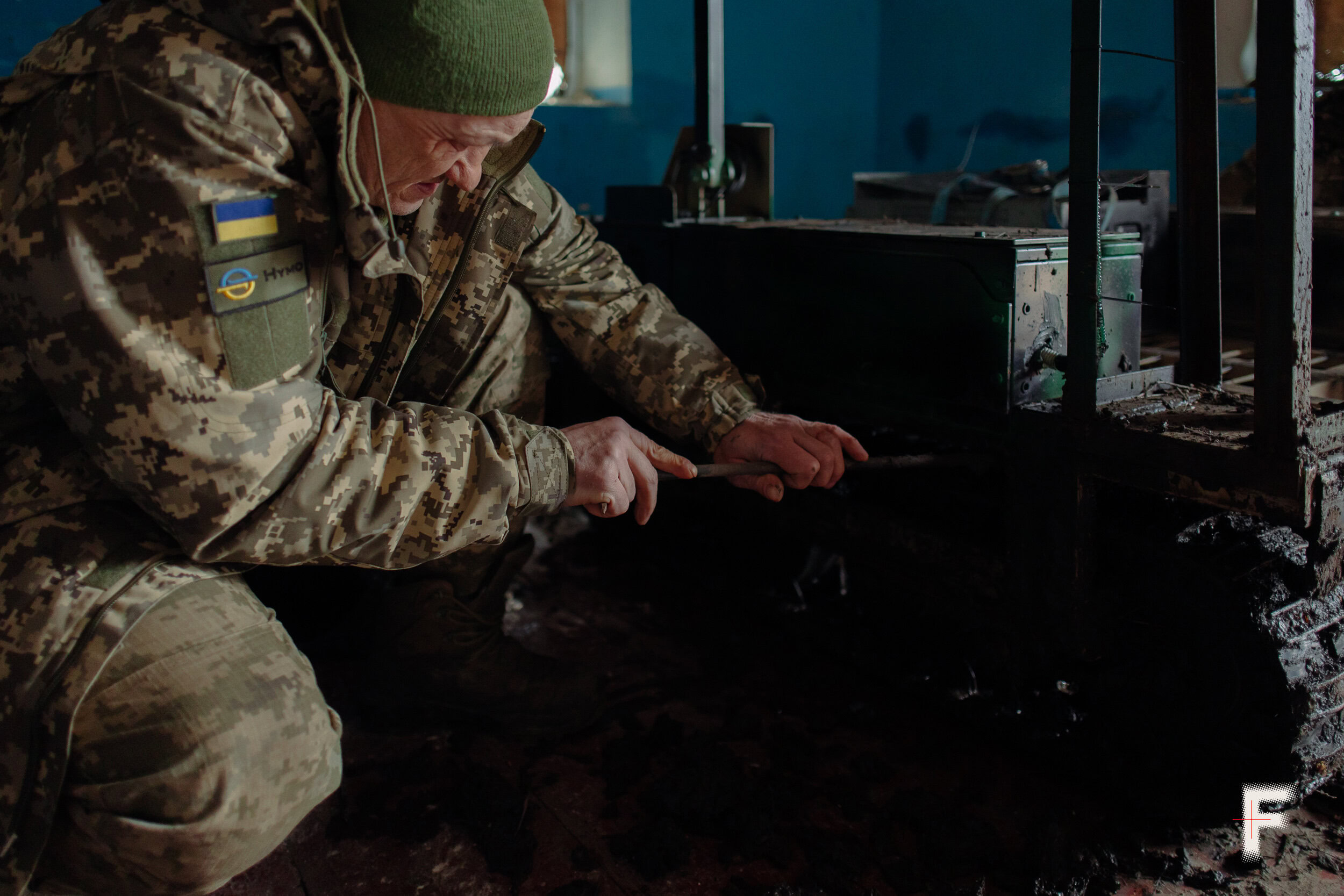
Soldiers of the 33rd Mechanized Brigade clear mud from a UGV, Kharkiv region, Ukraine, March 4, 2026
-
Soldiers of the 33rd Mechanized Brigade clear mud from a UGV, Kharkiv region, Ukraine, March 4, 2026
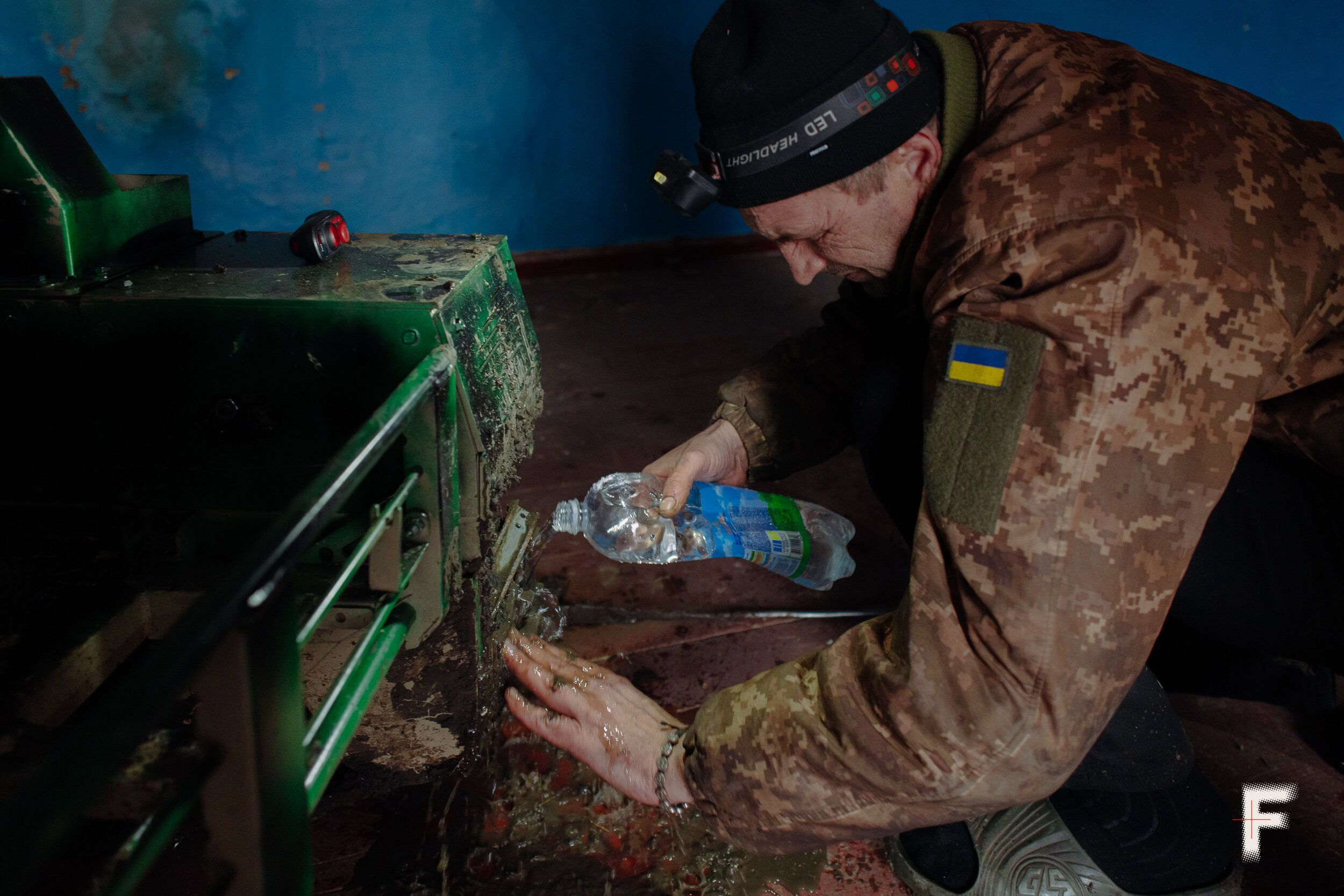
Our UGV stalled; it just got bogged down in the mud.
We were cleaning it, moving just two meters at a time,
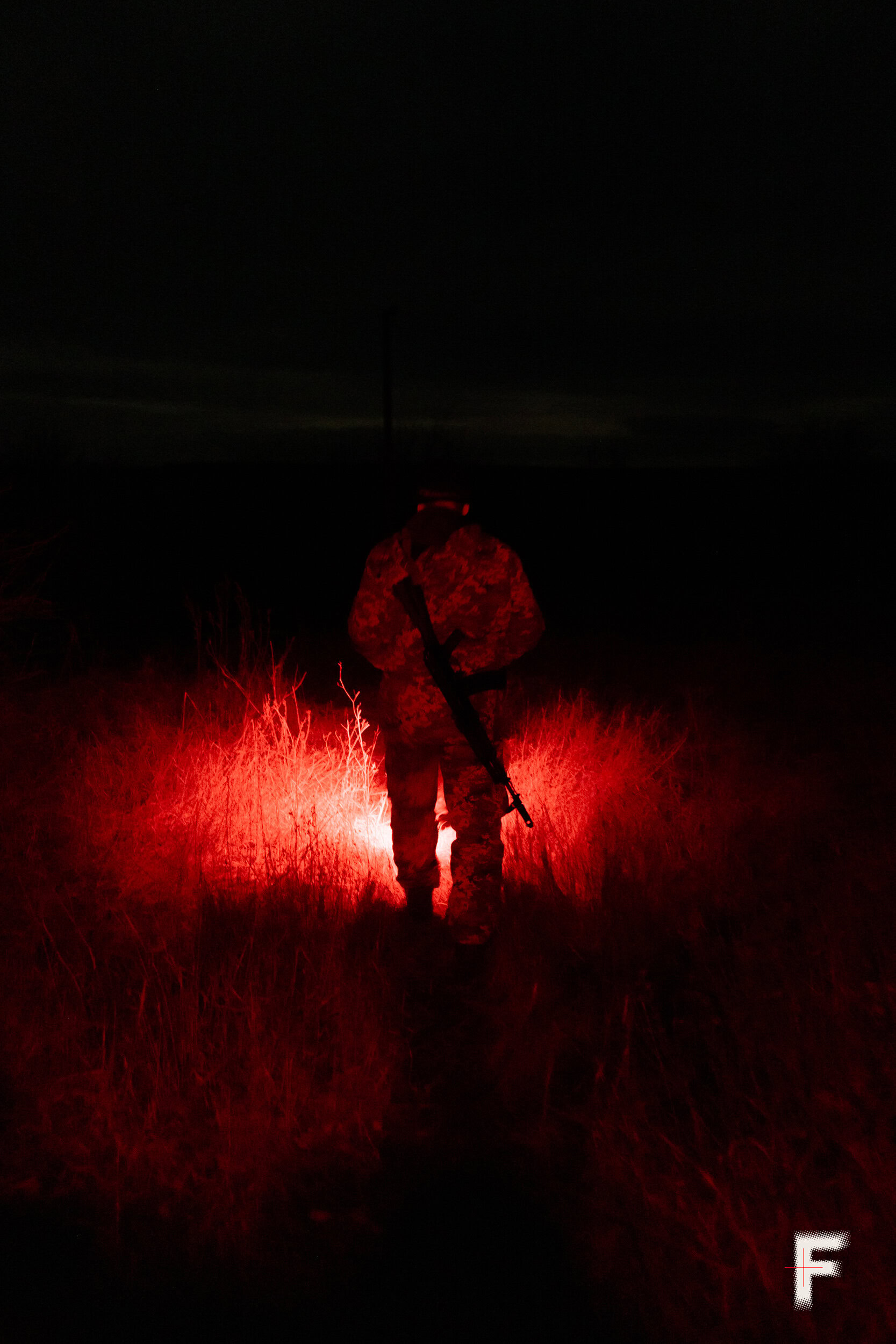

In such cases, soldiers must cover several kilometers on foot under the threat of drone attacks. The operator controls the UGV remotely and sees only the footage from the front camera. Everything happening around the vehicle remains beyond his vision and out of his control.
“We only see the road. We cannot see what is in the sky. At any moment, an FPV drone could strike,” he says.

Personnel and resource shortages
A single robot is rarely enough to cover a unit’s needs. Having several machines is essential so they can be rotated while others are charging or undergoing repairs.
“If we had more of them, we would accomplish much more. Right now, we are short on both UGVs and batteries,” the operator explains.
Alongside the need for equipment, there is a growing demand for personnel to operate it. While training once took months, the process is now being significantly shortened, sometimes to just a few weeks or even days. “Sid” himself only recently began operating UGVs –– he received his orders just a day before his first deployment.

“It was a surprise. Until the very last moment, I had no idea where I was going or what I would be doing. Just before deployment, they told me: ‘You will be operating UGVs.’ I had hardly even seen one in person before that — only in pictures on the internet.”
The training lasted several days and took place near the front line. Operators from adjacent units passed on their experience. The soldier says the process felt like a crash course in driving under extreme conditions. He was shown the basics: how to prepare the robot for a mission, maintain it, and operate the controls.
“It is like driving a car. When you get behind the wheel, if you have the desire to learn, you will. If it is not for you, you just get up and walk away. Some people pick it up immediately, while others take a bit longer,” the operator says.

The Brigade views the rapid training of operators like Mykola, call sign “Sid”, as a forced but logical adaptation. While it typically takes several months to fully train an operator, there is no such luxury of time on the front line. Tasks must be executed immediately, meaning most skills are acquired through direct experience during missions.
“UGVs are relatively simple to operate and do not require the extensive, specialized training needed for areas like sound ranging or UAV reconnaissance, where decision accuracy directly impacts fire effectiveness. These are soldiers with combat experience who underwent training before their missions. I rate their level of preparation as high. It is not about lowering standards; it is about adapting to conditions where speed and saving lives are the key priorities,” says Pasichnyk, commander of an artillery reconnaissance battery.
“Sid” himself speaks calmly about it: “I do not realize yet what I can or cannot do. It is a constant practice for me right now. But the work needs to be done already.”

While the technology is still being refined and operators are trained during combat missions, UGV operations rely on a combination of human endurance and imperfect robots that, despite their flaws, continue to save lives.
***
Every story starts with your support. Join the Frontliner community so we can keep up documenting Russia’s war against Ukraine from the front line and the rear.
***


