‘You never know where it will hit’: How Sumy copes with glide bombs
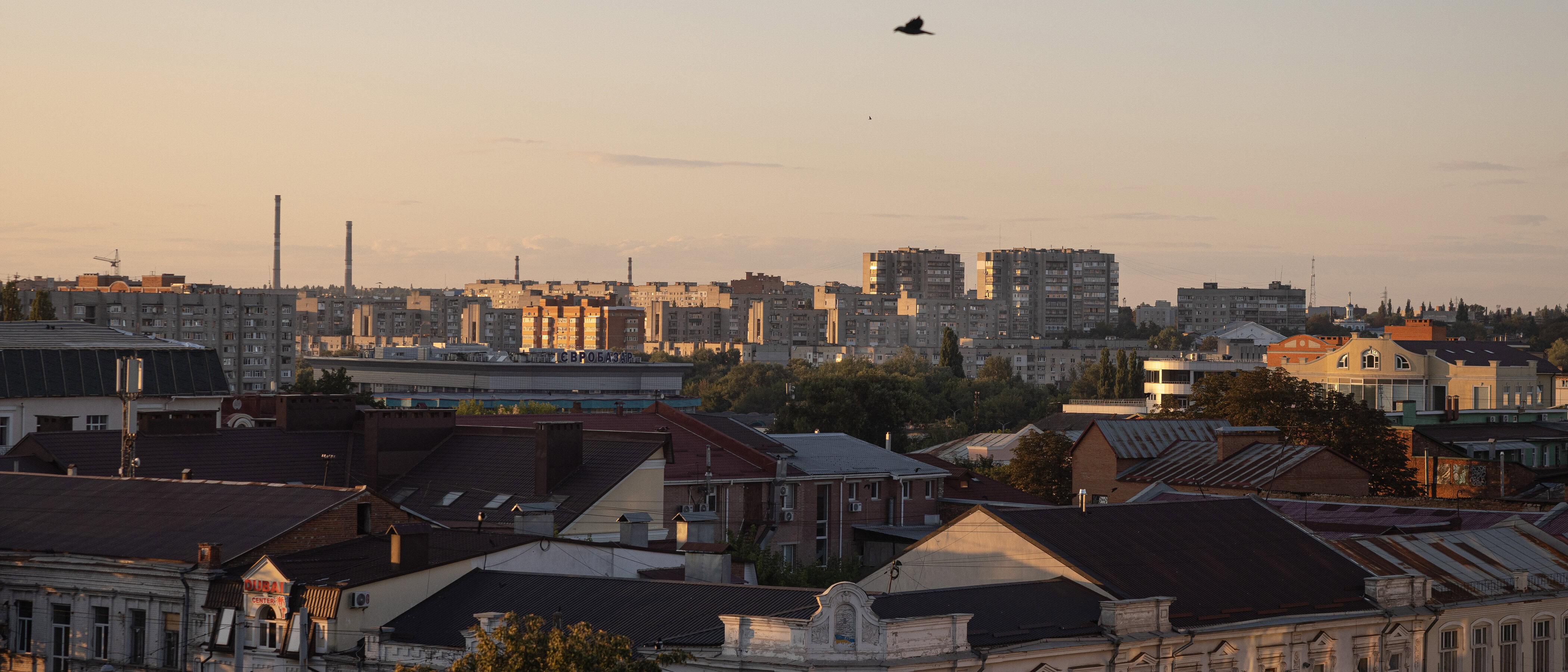
In downtown Sumy, pedal boats ply along the Psel River, and cafes and bars are sometimes completely full. When the wail of the air raid siren abruptly pierces the city's tranquility, people do not scatter, yet a tension hangs over the conversations and laughter. The city does not stop living, but the war is gradually changing even the smallest, everyday things. Frontliner visited Sumy and spoke with locals about how they adapt to the new constant danger of 2026: the threat of glide bombs.
Little Kira is afraid of the air raid sirens. When she hears explosions, she asks her mother, Khrystyna Holod, not to leave her side. In July 2026, a glide bomb hit their home. When the explosion destroyed the child’s room, Khrystyna and Kira were hiding in the hallway. A nearby shelter that could be reached in time after an air raid alert was built only after this strike. Khrystyna says that while FPV drones were attacking the city, she didn’t feel the lack of a shelter as acutely, but the glide bombs are far more terrifying.
FPV drones don’t scare me as much,
as they can be tracked,

“When the planes take off, my heart sinks, and you never know where it will hit. It’s good that there is a notification group now. FPV drones don’t scare me as much, as they can be tracked. Right after a strike, everything goes quiet, people stop walking and driving. But once some time goes by, people get used to it all over again,” Khrystyna says.

She admits that she changes her mind about her future in Sumy almost every day. She does not want to go elsewhere, as her parents, friends, and home are here. But after the strike on their home, she increasingly wonders whether it is safe for her daughter to stay. She wants her to go to school without fear. Khrystyna dreams of showing her daughter the world, just as Denys, Kira’s father, once wished. He fell in battle in 2024 while defending the village of Myropillia in the Sumy region. Her husband’s grave near Sumy has become another anchor keeping her in the city.
My husband wanted this, and I’m carrying it through.
He gave us this chance. We have to use it,

Teenagers learn to live alongside explosions
Not far from the destroyed building, in Kharytonenko Square, Sumy residents sit on benches and catch some sun. Their conversations cannot be heard even from up close due to the clamor of hundreds of local jackdaws. In the middle of the park stands the Refined Sugar Monument. Two teenagers, Anastasiia Boichuk (name changed) and Mykyta Bodiak, are perched on top. They remain still at their spot, despite the voice from the loudspeaker announcing an air raid alert just moments ago.

The teenagers chat animatedly, laughing and occasionally checking their phones to track updates on glide bombs. Anastasiia says that the city has been relatively quiet for the last two weeks. Before that, glide bombs were hitting several times a week, sometimes almost on schedule: at 9 a.m. and 9 p.m., and at 3 p.m. and 3 a.m.
On July 3, 2026, a glide bomb hit a building in the city center for the first time, and it was then that the residents felt the danger more acutely.
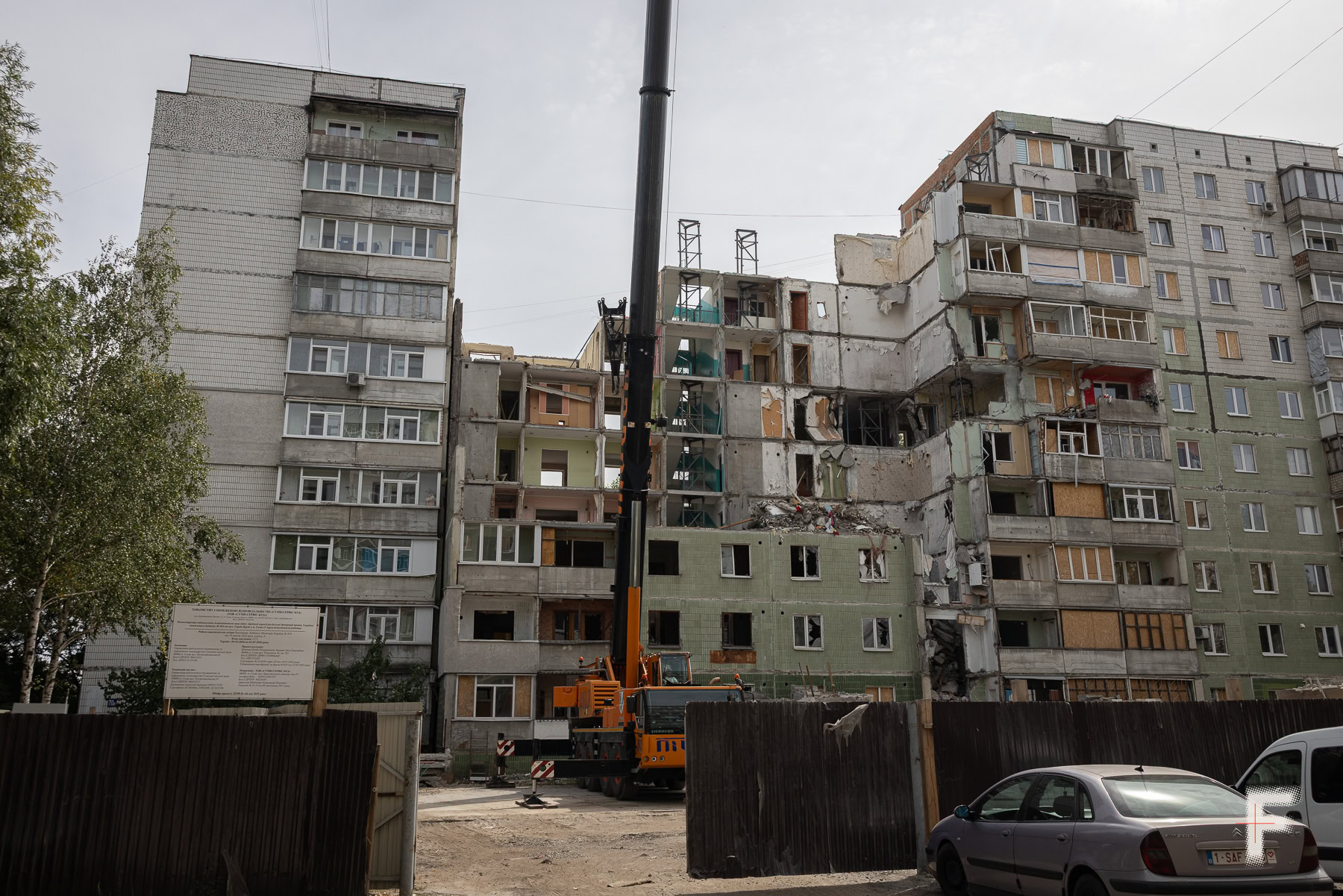
In July, when a glide bomb hit a residential apartment building in Sumy for the first time, Anastasiia was walking nearby. Suddenly, she heard a whistle and immediately ran toward a neighboring building for shelter. She never made it inside: an explosion tore through the area, shattering glass down from the building.
Her mother called immediately, as if sensing her daughter was in danger. Due to shock and a mild concussion, Anastasiia could not properly explain where she was, but she eventually managed to name the neighborhood. She wanted her parents to know her location in case something happened.
Before she could collect herself, Anastasiia heard the voices of police officers warning of a second strike. The girl ran home in what felt like only a minute.
Now she knows what to do if an explosion hits nearby: lie on the ground, cross her legs, and cover her head with her hands. Her mother taught her this after that day.
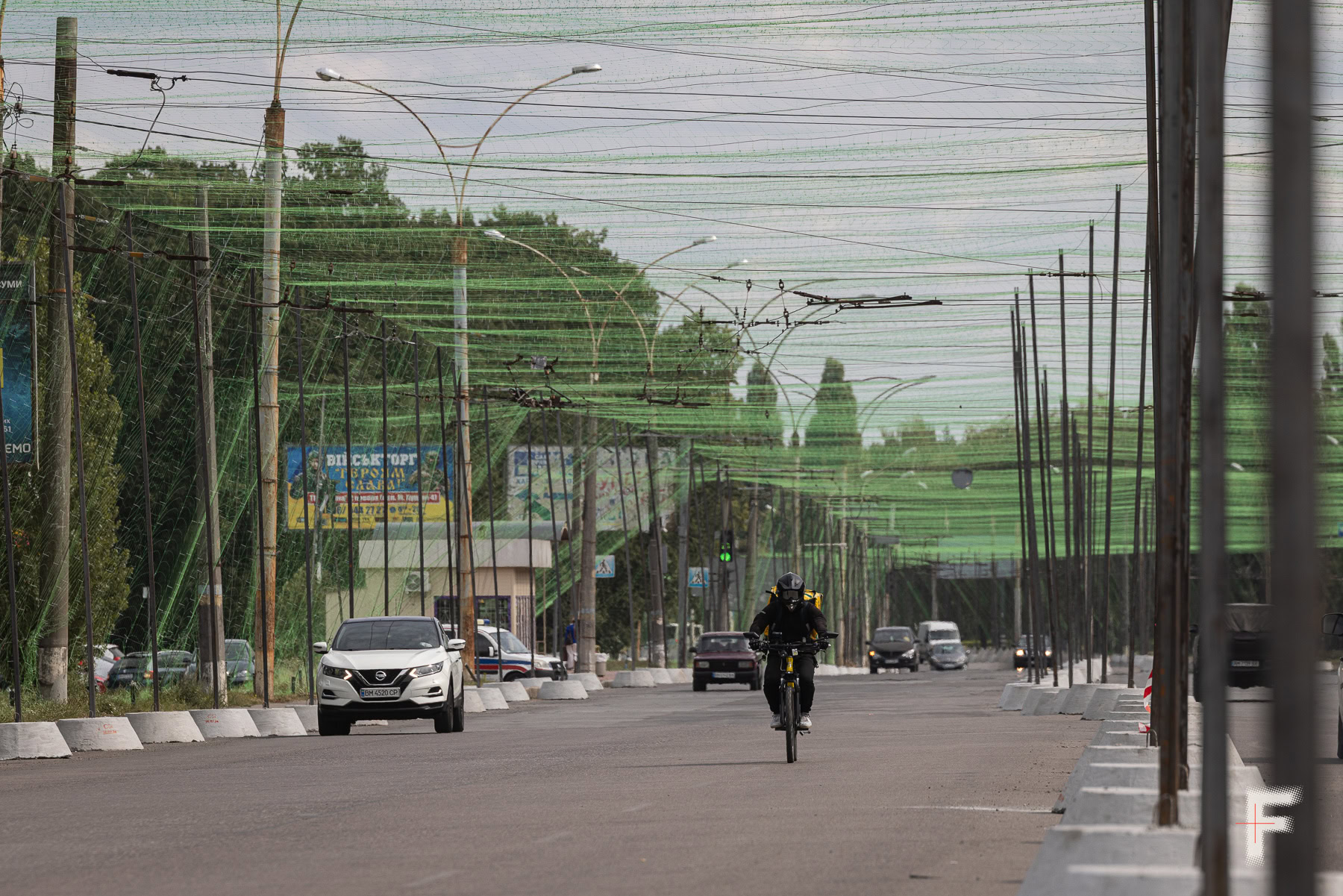
Mykyta, much like his peer, has also found himself just a few hundred meters from a strike. When a warning about a glide bomb appeared on Telegram, he ran to hide at the railway station, and a few minutes later, he heard a blast:
“It hits 300 meters away from me. I saw the smoke and immediately started running further away. Just in case there was another strike. It is scary,” he says.
Anastasiia and Mykyta are still teenagers, but both have already faced situations where a slower reaction or a few extra meters could have meant death.
Leisure in Sumy
Across the street from the square is the Kozhedub Park of Culture and Recreation. The Psel River flows through it, and people take pedal boats out on its waters. Volodymyr Sencharov is in his third year of renting them out. He notes that despite the dangers, the locals have not given up on their moments of rest:
f you think about danger all the time, that is no life.
You need to rest. Life goes on,

However, he recalls that last year there were significantly more people on the water. Over the past few months, some residents have left. Volodymyr talks a lot with his visitors, especially military personnel. They advise him not to ignore the air raid alerts. In response, he provides them with pedal boats and tries to maintain a conversation about the mundane. Volodymyr does not plan to leave Sumy for now, noting that leaving requires money and knowing exactly where to go.

Businesses struggle to stay afloat
While the pedal boat rental has no shortage of customers, other businesses in Sumy are finding it increasingly difficult to stay afloat. For Dmytro Yatsenko, the owner of a cafe and wine bar, the most pressing issue has become a shortage of staff. This became especially noticeable in the summer of 2025, when young men aged 18 to 23 were permitted to leave Ukraine. Now, there are almost no men left on his team.
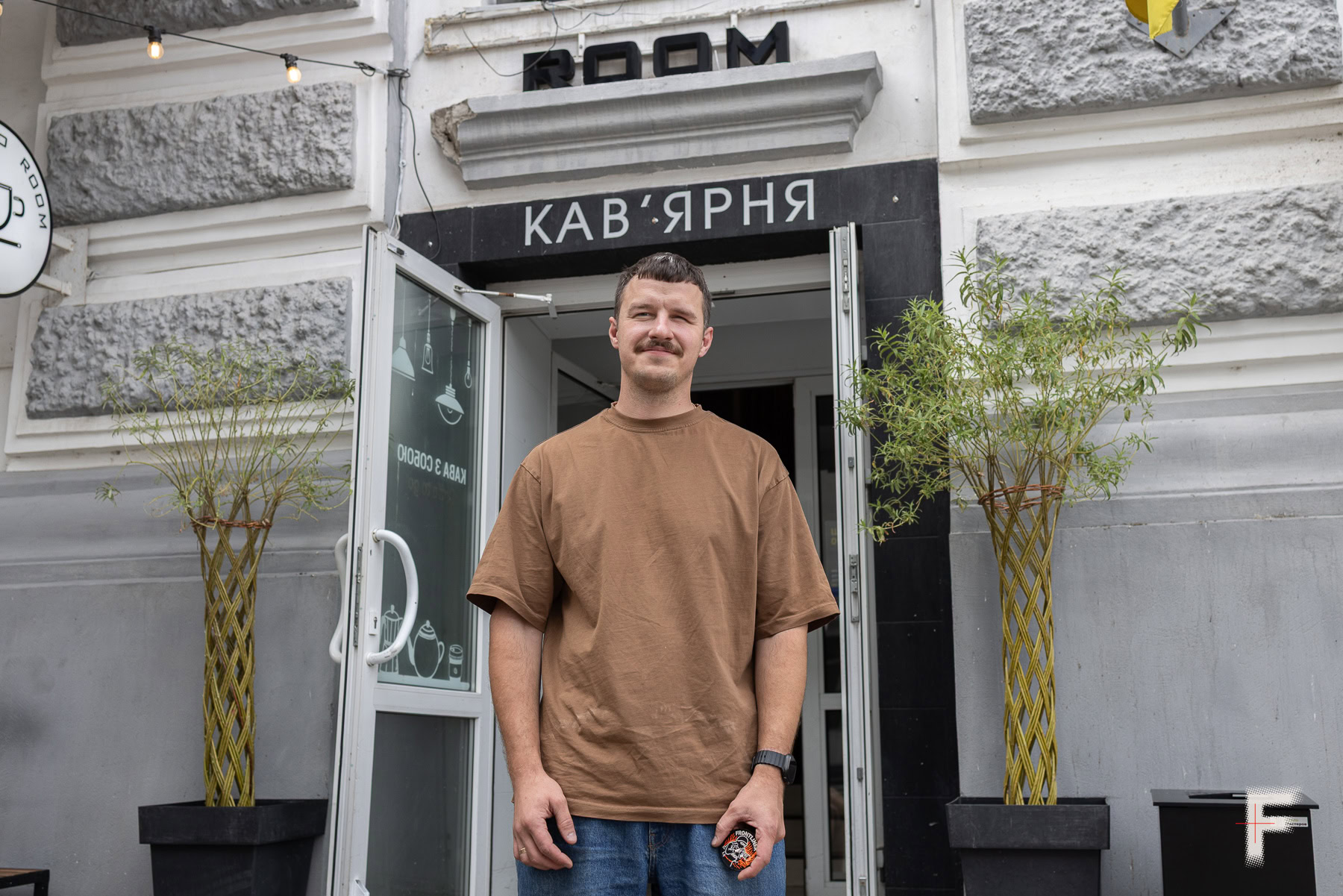
Before the July strikes, the business was still holding on, but then the number of customers dropped: “We are in a situation where there is practically no one left to work. Before the glide bombs, June felt like a normal month. July fell apart completely. Customer numbers drop instantly,” Dmytro says.

Preserving Sumy
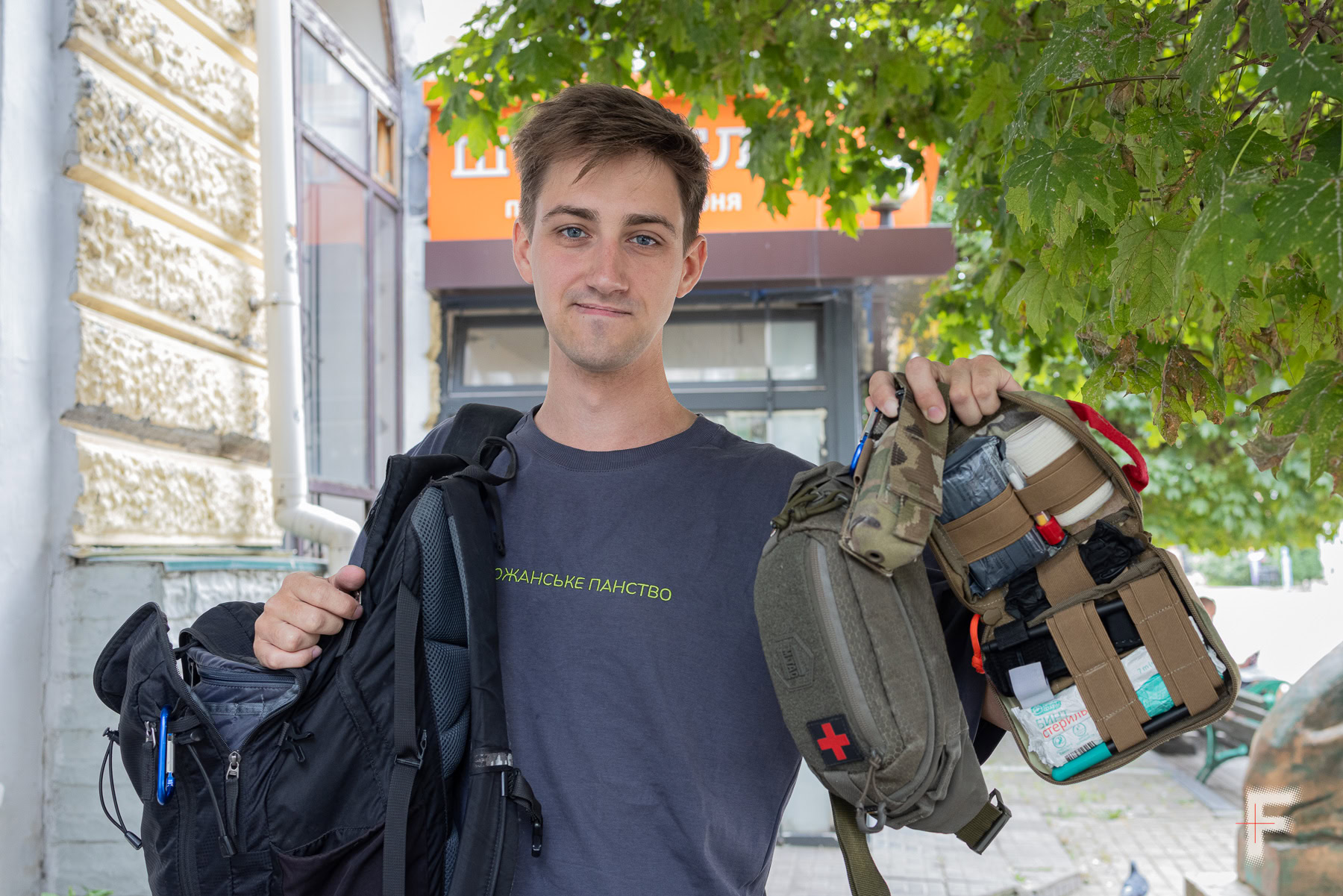
Ihor Tytarenko, head of the NGO Sumy of the Future, documents the damage to historical buildings following Russian strikes alongside the Heritage Monitoring Lab. He takes photographs, creates 3D models, and submits the materials to the archive of Russian crimes against Ukrainian cultural heritage. Ihor says he loves Sumy for its slow pace and its people:
Everything here is just so chill. It moves at its own pace,
quite slowly, but in the right direction,
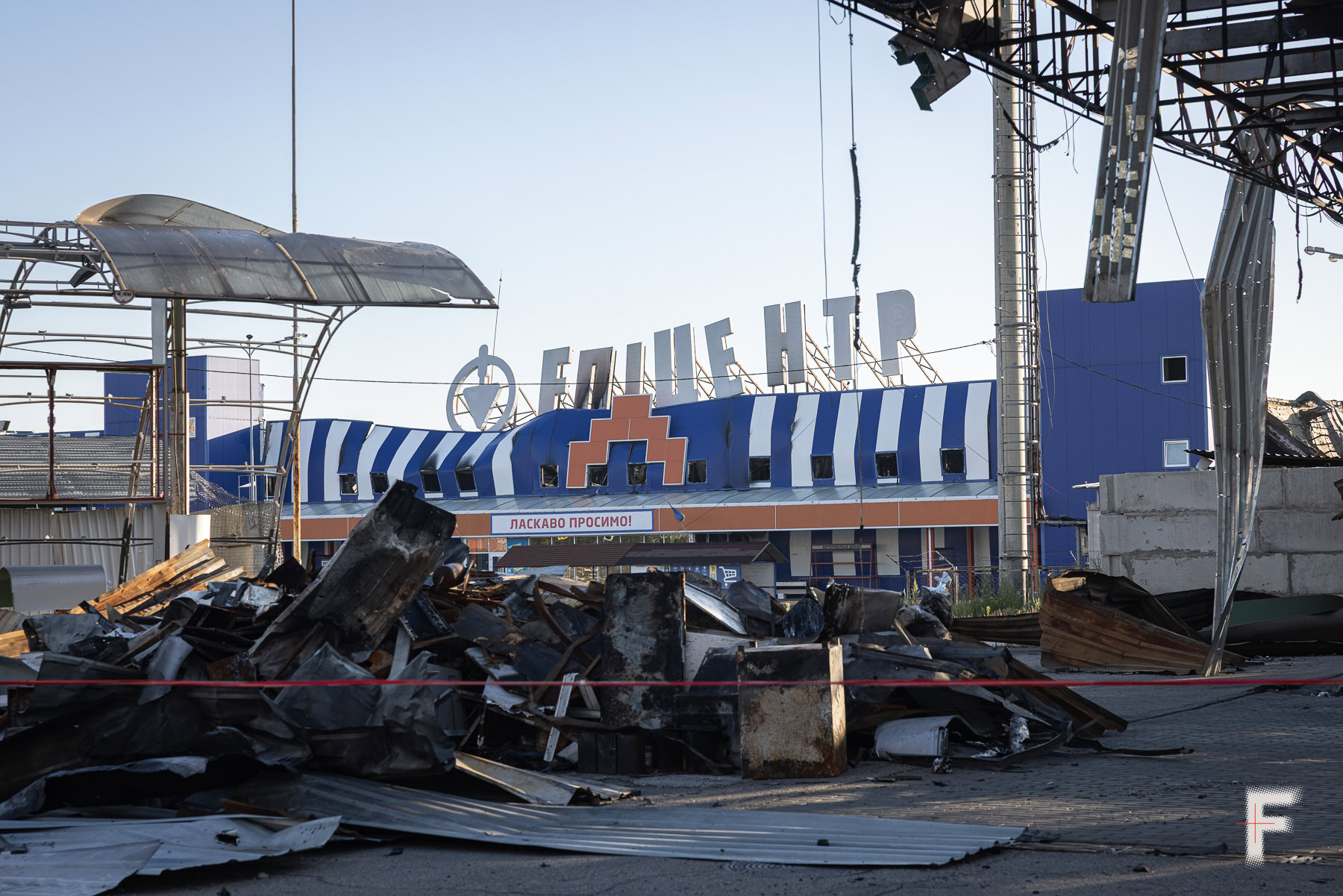
Sumy endured at least 15 strikes in the first half of September 2026 alone, according to Serhii Kryvosheienko, head of the Sumy City Military Administration. Russian forces attacked the city with FPV drones, including fiber-optic ones, jet-powered UAVs, unidentified drones, and glide bombs. The most massive attack hit a parking lot near a popular shopping center in the downtown area on September 9. That strike injured 21 people, including three children, and killed two adults.
-
The burned-out Epicenter shopping mall on Heroiv Krut Street following a Russian FPV drone attack, Sumy, Ukraine, Aug. 26, 2026. (Danylo Dubchak/Frontliner)
-
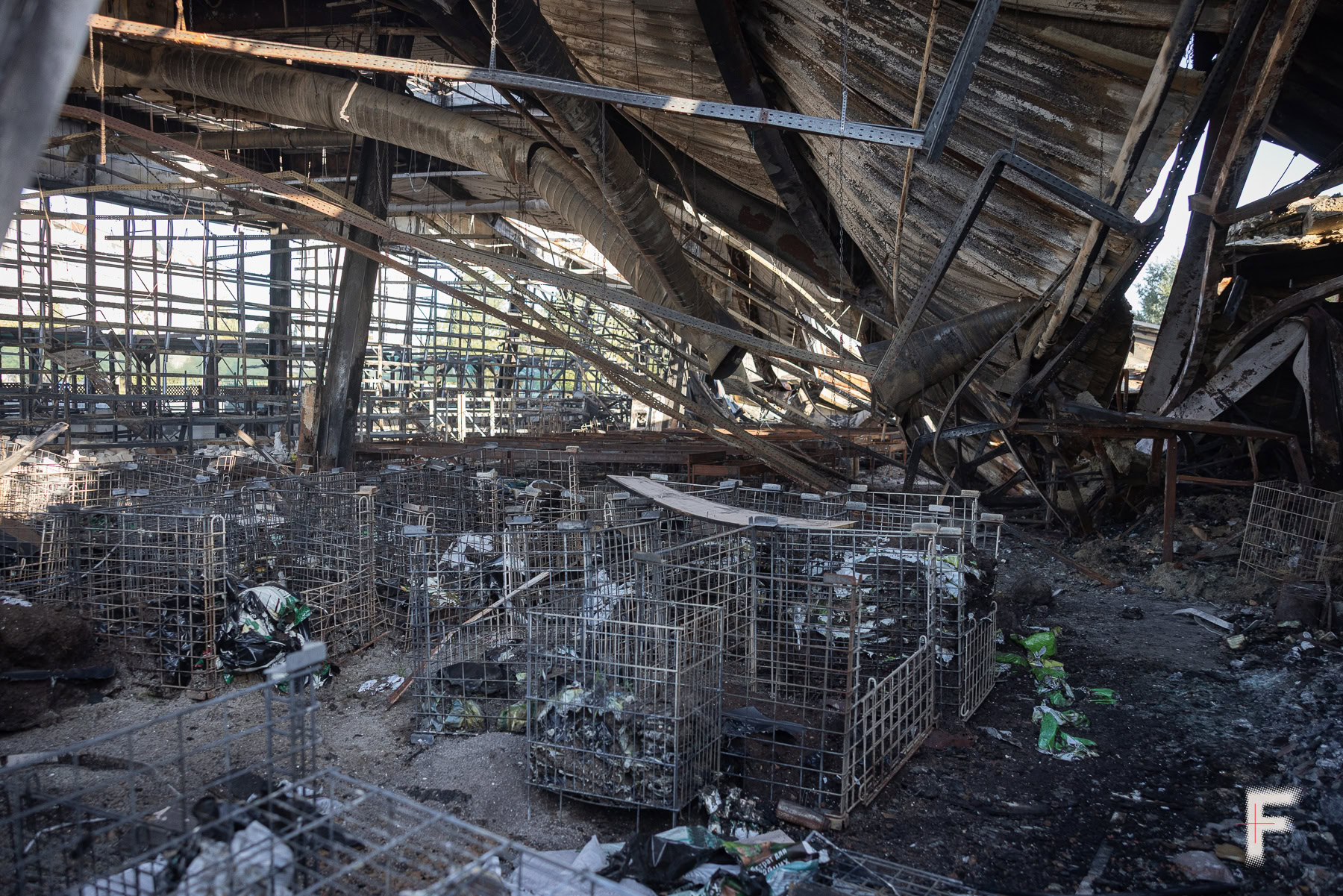
In September, the city was attacked almost every other day, with strikes hitting residential buildings, businesses, commercial facilities, and civilian vehicles. The attacks killed at least two people and injured 33 others. The toll of these strikes is heavy for a small city where about 256,000 people lived before the full-scale invasion.
***
Before the trip, I imagined Sumy to be more dangerous, but we happened to visit during a very quiet period. If I hadn’t known the city was 25 kilometers from the frontline, and hadn’t heard people talking about glide, I doubt I would have felt any danger at all. During the day, it seemed very peaceful: people were sitting in the park, riding pedal boats, and going to cafes. Only at night, when I heard the buzzing of FPV drones growing gradually louder, I was reminded of where I was. This trip made me realize that you can get used to any danger. The locals know where to hide, how to behave during explosions, and when it’s best to stay at home. Our psyche adapts, because otherwise we simply wouldn’t survive. Sumy has stayed with me as a vibrant, interesting city, deeply cherished by its people, and now I want to return.
Every story starts with your support. Join the Frontliner community so we can keep up documenting Russia’s war against Ukraine from the front line and the rear.
***