The price of the Gold Star: What is wrong with Ukraine’s highest award?
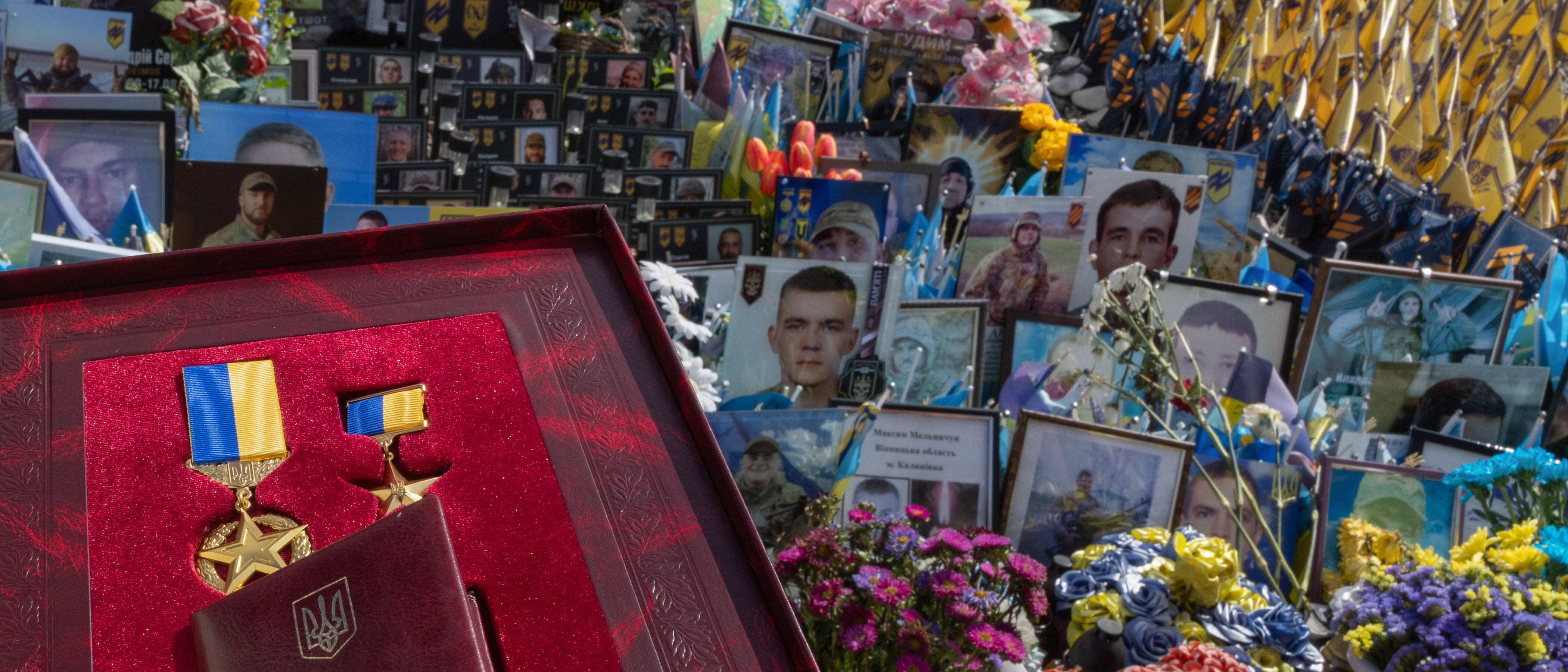
Pure gold, meticulous craftsmanship, and the highest honor the state can bestow. Since Ukraine gained independence, more than 1,300 people have received the Gold Star of the Hero of Ukraine, more than half of them posthumously. Yet this highest award still carries a Soviet legacy: from the star’s five-pointed shape to vague legal criteria for receiving it. Frontliner looked into who actually decides who receives the Gold Star, and whether Ukraine’s current awards system truly reflects the price of Ukrainian soldiers’ heroism.
The title of Hero of Ukraine is awarded for an outstanding act of heroism or labor achievements. At least, that is how the presidential decree puts it. In reality, behind that wording lie close-quarters combat, severe wounds, and split-second decisions that can cost life and limb.
The Hero of Ukraine: A 20-year-old assault trooper’s story
Among those who received the state’s highest honor is Andrii Serhiienko. At the age of 20, he rose from a sniper to an assault group commander. In September 2023, during the liberation of Andriivka, he killed 24 Russian occupiers. Later, amid heavy fighting in the Donetsk region, he was severely wounded and lost both legs. Serhiienko doesn’t like talking about his award; for this story, he refused to be photographed with his Gold Star. He says what matters more to him is not the title but what he did alongside his brothers-in-arms.

After being wounded, I went through a lot of surgeries.
While I was still in the hospital, I got a message saying I would receive a medal,
and even be named a Hero of Ukraine. At first, I didn’t believe it and thought,
‘Maybe they got the wrong person?’ Honestly, it felt strange.
I’d never received an honor at such a high level before,
Prior to the Gold Star, the soldier had already received the Gold Cross and the Cross of the Brave from the Commander-in-Chief of the Armed Forces of Ukraine (AFU), as well as the For Service and Valor medal. Despite a double amputation and complex prosthetics, Serhiienko chose not to transfer to the reserves, and continues to serve in the AFU.
“Though because of my wounds, it can feel awkward when some grandma on the subway gives up her seat for me. I’ve gained a certain status and that’s it. Fundamentally, my life hasn’t changed,” Serhiienko says.
At the same time, the soldier is convinced that anyone who takes up arms to defend their country is already a hero, yet he agrees that the state’s highest award is not for everyone.
“It’s not just about submitting a petition; it’s about the soldier’s overall record. Families sometimes exaggerate what a soldier did, while the command also puts forward a nomination, and a lot of factors come into play. I don’t know, every case is different, but handing them out left and right wouldn’t be right either,” Serhiienko says.
Families of the fallen Heroes of Ukraine
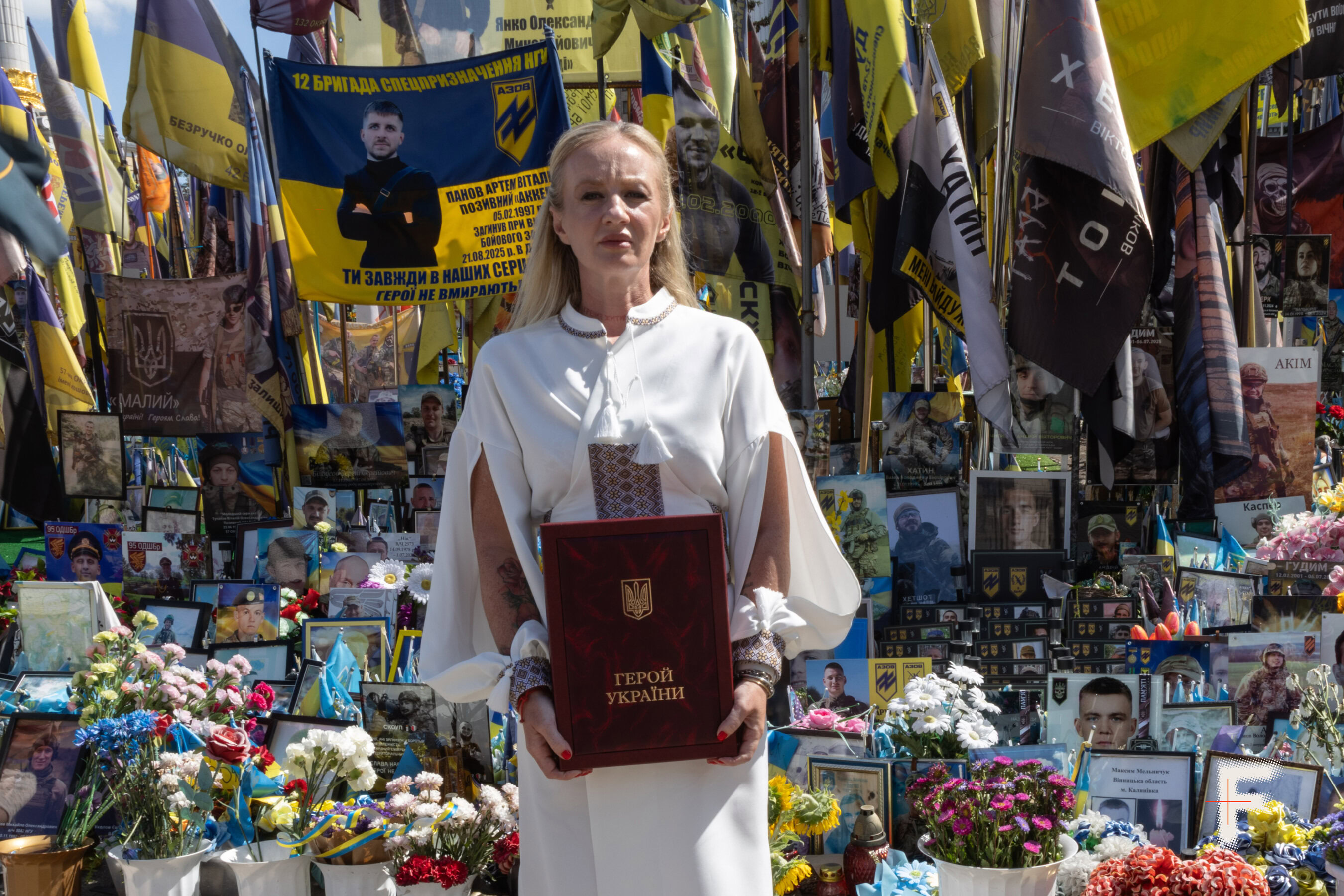
Families who have lost loved ones feel the same way. Mariia Bilash, the wife of fallen soldier Yevhen Bilash, learned that her husband had been posthumously awarded the title of Hero of Ukraine only on the day of the ceremony. During a combat mission, Yevhen’s group was caught in an ambush; he stayed behind to cover his brothers-in-arms, which cost him his life. She called him Zhenia.

“Zhenia told the guys to pull back while he stayed behind to cover them, and he was killed by a grenade blast. Later, his brothers-in-arms shared other stories: how he made his way through the night to reach the men who had found themselves partially surrounded and led them all out, how he pulled a wounded soldier from beneath the rubble. Now, when I visit his grave, I often see fresh flowers there with ribbons saying, ‘Thank you for my life,’” Mariia Bilash says.
Despite her loss, Mariia Bilash deliberately chose not to submit an online petition for her husband to receive the award. According to her, this was Yevhen’s conscious stance while he was alive: he believed the title loses its significance when its consideration turns into a bureaucratic or public campaign.
If we hand this star out to everyone,
it will simply lose its significance.

“We talked about it while he was still alive. Zhenia said: ‘If we hand this star out to everyone, it will simply lose its significance.’ And that really is the case. Anyone who defends Ukraine with a weapon in hand is a hero, and the greatest hero of all to their family. That’s completely understandable. But if the title lacks strict criteria and is awarded en masse, it loses its worth,” Mariia Bilash says.
Marianna Kolos, the mother of Nazarii Hryntsevych, call sign “Hrienka,” shares the same view. Her son was an Azovstal defender, spent four months in captivity, and later returned to the front, where he became a platoon commander in the 12th Special Purpose Brigade “Azov.” His words: “No matter what, love your mom, eat your kasha, and love Ukraine,” became a widely quoted phrase in Ukraine. Hryntsevych was killed in May 2024, just weeks before turning 22. On Independence Day in 2026, his mother accepted his Gold Star.
To every mother, her son is a hero.
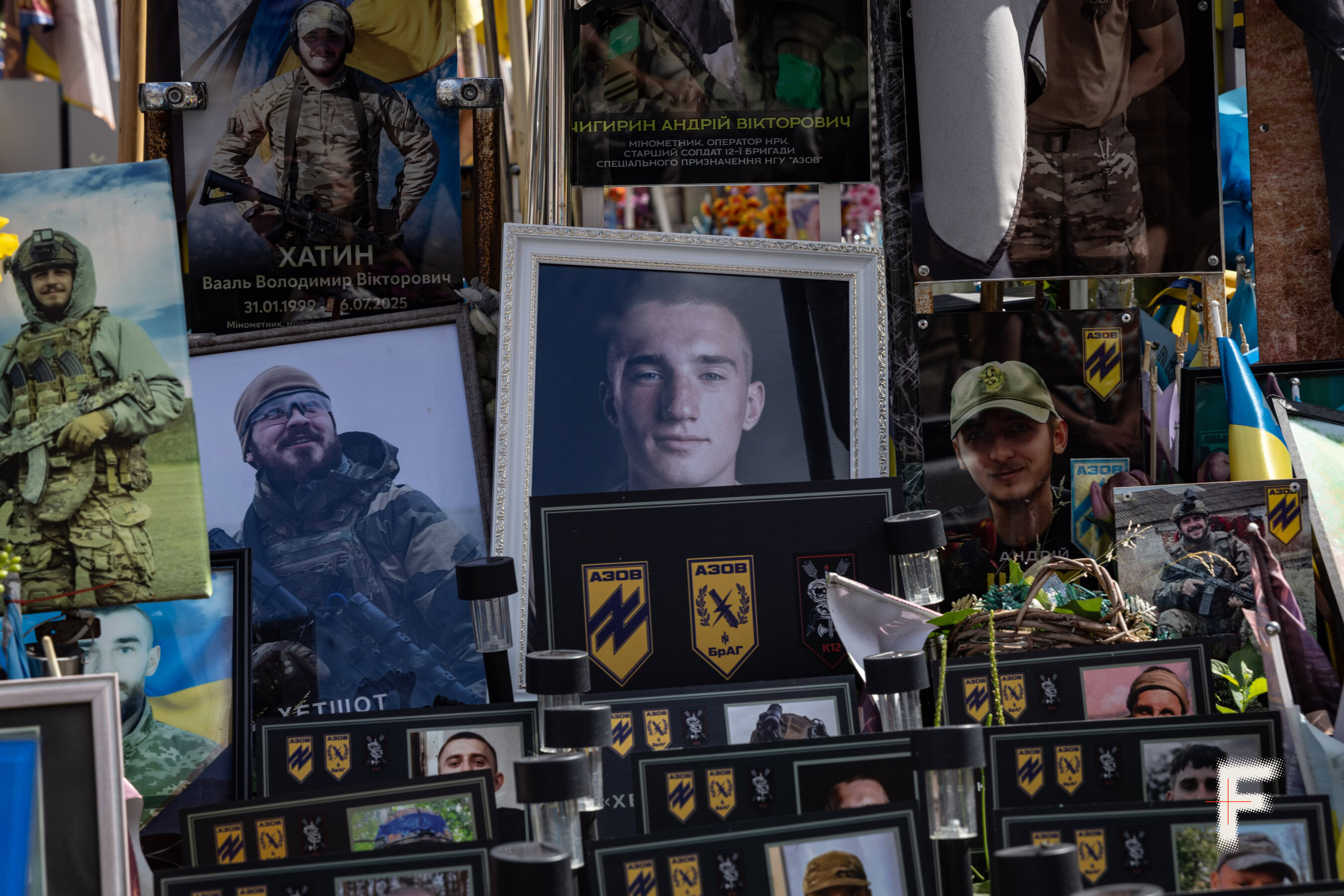
“There are many poets, but then there is Shevchenko. It’s the same here. To every mother, her son is a hero. But we as a society must understand the exceptional nature of this particular award. I never submitted a petition. My son was a hero even without a piece of paper. But the state recognized his extraordinary combat record, and I take comfort in that,” Kolos says.
Why not everyone: How to earn the title of Hero of Ukraine?
The stories of Serhiienko, Bilash, and Hryntsevych are examples of the awards system working through combat commanders. However, thousands of other families face a completely different reality. Under the official procedure, for a soldier to receive an award, the command must prepare an award citation and submit it to the president of Ukraine. The documents are then reviewed by an expert working group under the Commission on State Awards and Heraldry, currently led by Kyrylo Budanov, head of the Office of the President of Ukraine. There is an alternative path to which families of fallen soldiers are increasingly turning: online petitions. In practice, however, succeeding through this path is quite difficult. Even gathering the required 25,000 signatures does not guarantee that the title will automatically be awarded. Vitalii Haidukevych, an expert on military heraldry, says that this process has turned into an ordeal for families because Ukraine’s awards system itself has not been updated since the 1990s.
“On the one hand, we have a serious lack of information; on the other, an utterly botched execution of the existing awards system. Because combat circumstances are improperly documented at the institutional level, families are left feeling that they have been treated unfairly. So in their petitions, they don’t ask for the Order of Bohdan Khmelnytskyi; they immediately demand the title of Hero of Ukraine. That’s because lower-level awards have either been devalued in the public consciousness or are simply not understood,” Haidukevych says.
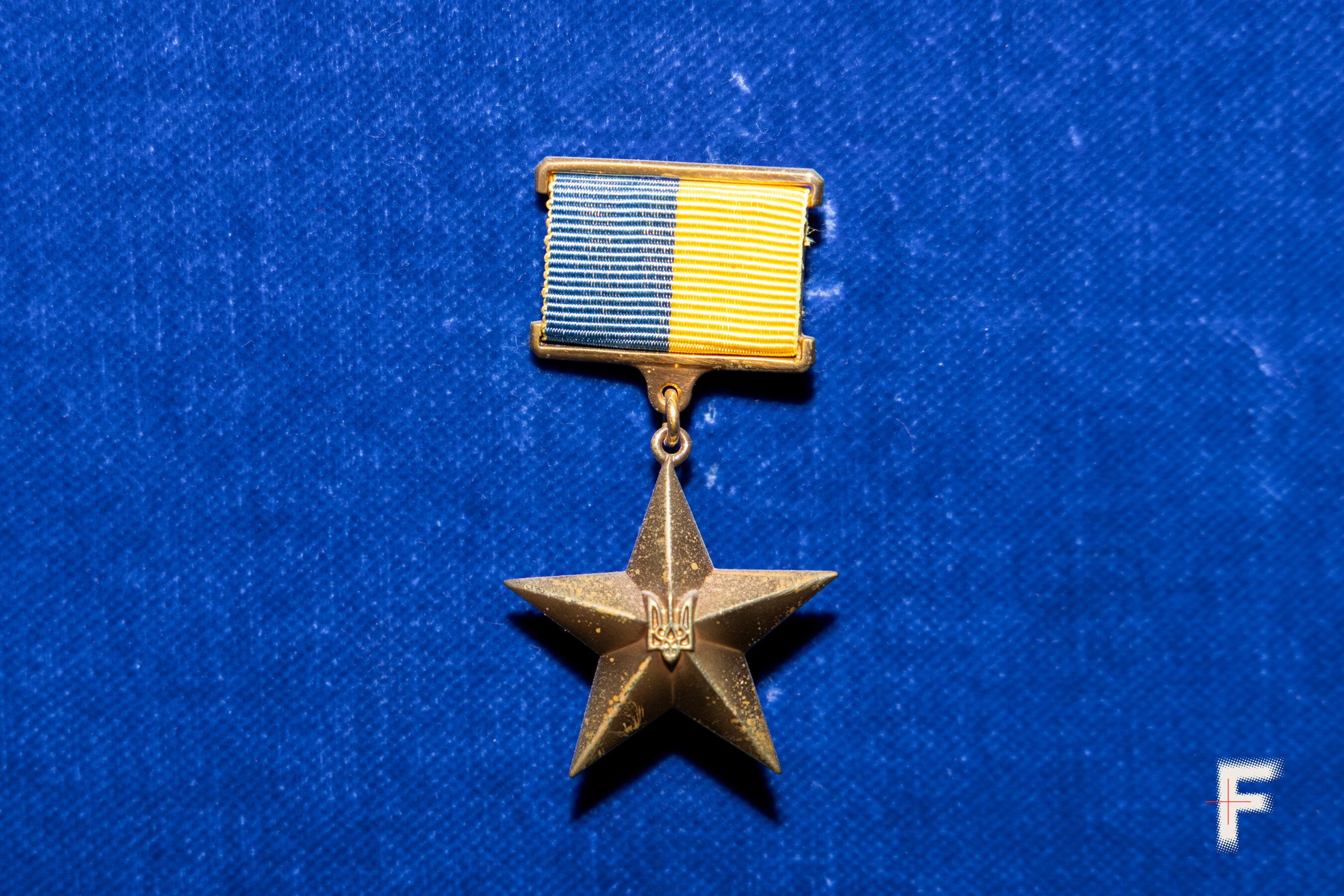
Ukraine’s highest state award in its current form dates back to 1998, when President Leonid Kuchma introduced the title of Hero of Ukraine by decree. Rather than building on Ukraine’s own military tradition, the modern system was shaped through a crude imitation of the Soviet-era Hero of the Soviet Union. A five-pointed Soviet star became the symbol of the state’s highest honor, while absurd restrictions were written into the law from the very beginning, including a ban on awarding foreign volunteers fighting for Ukraine.
As a result, we are still awarding people who give their lives
for Ukraine with the very symbol they are fighting against,
When Belarusian citizen Mykhailo Zhyznevskyi was killed during the Revolution of Dignity, the government made a one-time exception instead of systematically revising the law.
“Changing the design or the award criteria was always considered something that could wait. At the time, Poroshenko would have been torn apart by public backlash over such a reform, while Zelenskyy’s team simply lacks any understanding of the problem. As a result, we are still awarding people who give their lives for Ukraine with the very symbol they are fighting against,” Haidukevych says.
A civilian order or a military award?
The law also contains another systemic contradiction: the lack of a clear dividing line between battlefield heroism and civilian merit. Legally, the title of Hero of Ukraine has two distinct honors: the Order of the Gold Star, awarded for an outstanding act of heroism, and the Order of the State, bestowed for labor achievements. However, in the public consciousness, they blend into a single status. When a performer receives the same status for a decades-long career as an assault trooper does for shedding blood, this hardly seems fair.
“For instance, in the U.S. everything is as simple and straightforward as possible: the Purple Heart is awarded exclusively to service members who were wounded or killed in battle. No civilian, government official, or politician, regardless of their status or achievements, can receive this award,” Haidukevych says.

A clear distinction between civilian and military awards could significantly reduce the number of online petitions. At the same time, according to the military heraldry expert, one cannot ignore the fact that some petition initiators may be driven purely by financial gains, as the Hero of Ukraine title guarantees substantial state benefits. These include a one-time payment of over 150,000 hryvnias, monthly financial assistance, housing and utility subsidies, free healthcare, and public transportation. In the case of a posthumous award, payments are provided to the fallen soldier’s family. Frontliner previously detailed Ukraine’s state awards system, the different types of awards, and the benefits available to recipients in the article “State awards of Ukraine: from the “Gold Star” to personalized weapons.”
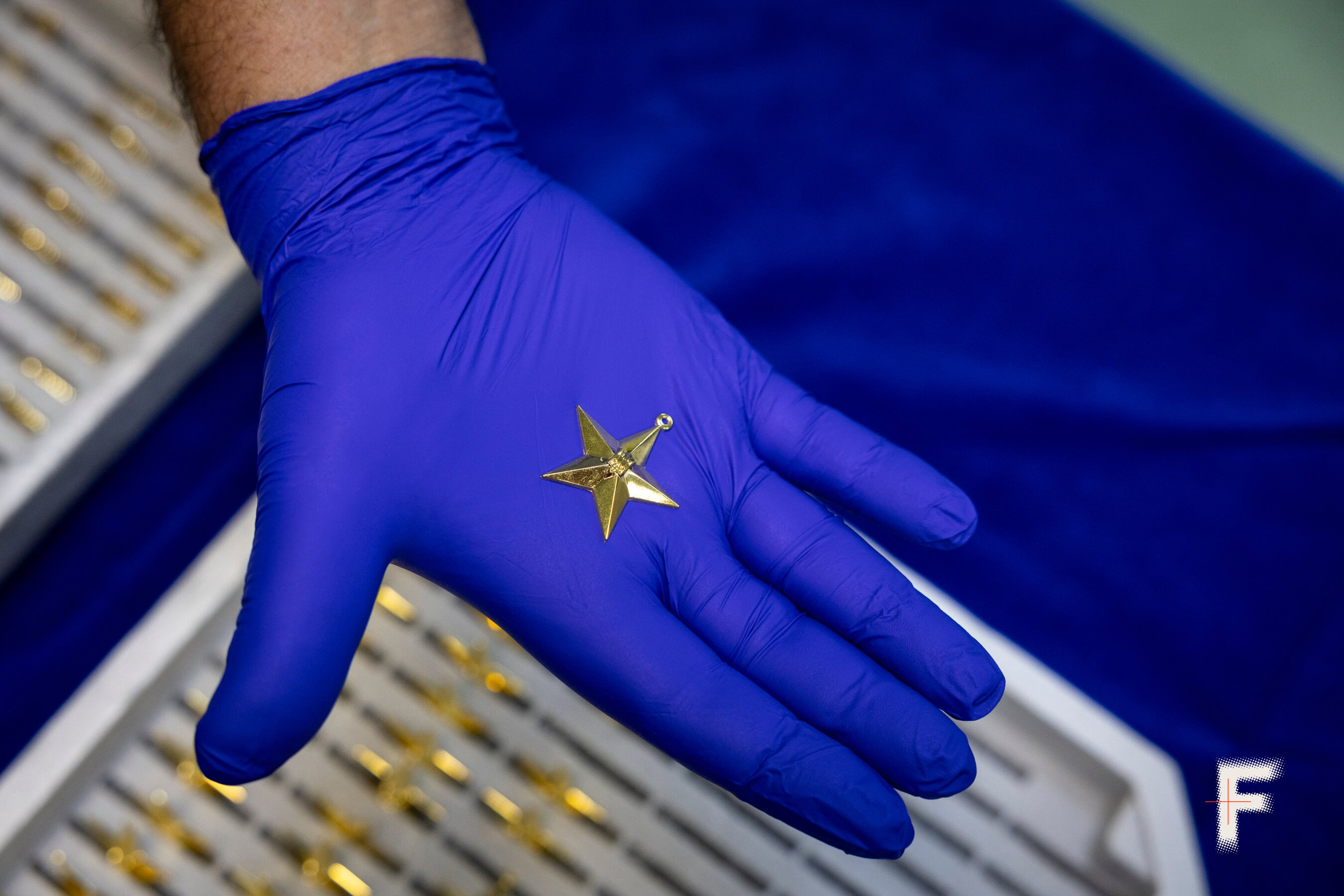
“The solution to this situation could be the implementation of a reform introducing a multi-tiered awards system with clearly defined criteria for each class. On the one hand, it may look cynical; on the other, there is no alternative approach,” Haidukevych says.
Such a model should establish a clear hierarchy of awards based on the nature of the combat situation, the level of the unit, and the outcome of the mission. This would reduce subjectivity when preparing award citations and create a transparent mechanism in which the title of Hero of Ukraine is preceded by a sequence of lower-level state or departmental awards.
“Similar multi-tiered systems were used by countries that fought in World War II: Britain had such a system, and it remains in place in the United States. We still don’t have it. If such a system were functioning, society would clearly understand and value each level. Receiving the Commander-in-Chief’s Gold Cross is no small thing; it reflects extensive combat experience. People would see that if a soldier has a Gold Cross, it means they directly distinguished themselves in combat. And if there is a Silver Cross beside it, it indicates a successful progression from commanding assault operations to operational planning,” Haidukevych says.
To find out whether the state plans to overhaul the awards system and update the statute of the title of Hero of Ukraine, Frontliner submitted a formal inquiry to the Commission on State Awards and Heraldry under the President of Ukraine. As of publication, no response had been received.