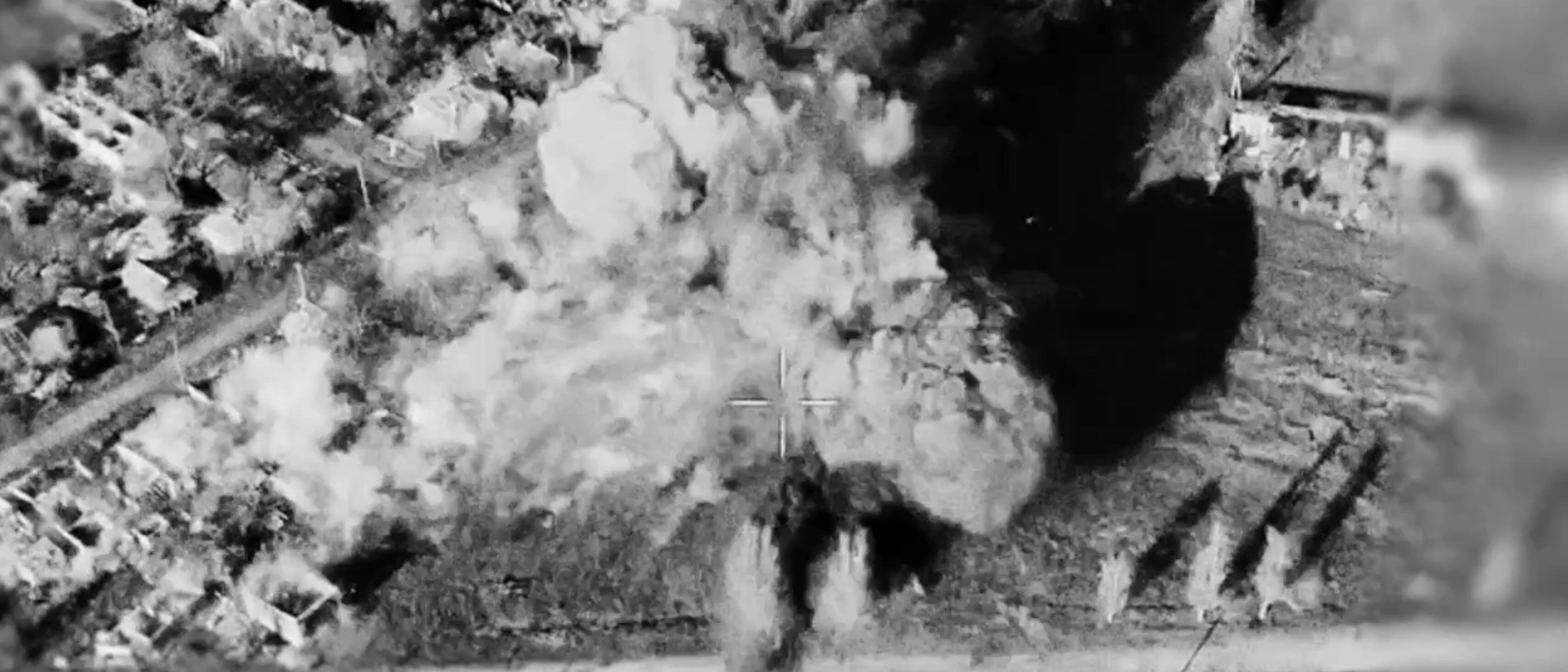
‘We took back another 51 square kilometers’: Where Ukraine’s army gained ground in September
Ukraine's Defense Forces pressed an offensive in the Lyman sector throughout September while fending off Russian assaults elsewhere along the front. The third phase of Operation Vivaldi returned 51 square kilometers of territory to Ukrainian control, bringing the total retaken since the offensive began to 176 square kilometers. Frontliner breaks down how the front line shifted across its key sectors last month.
In the Kupiansk sector, Ukrainian troops spent September beating back a wave of Russian assaults that intensified early in the month. The General Staff logged two assaults on Sept. 10, four the next day, and six on Sept. 12. Even so, the front line there held largely in place. By month’s end, the pace had slowed to a single assault toward Kupiansk on Sept. 28, with Ukrainian forces continuing to block Russia’s push toward the city.

Russia’s infantry tactics haven’t changed since spring, said Vladyslav Kolisnyk, call sign “Titan,” who commands the 1st Battalion of the 428th Separate Unmanned Systems Regiment. Troops keep moving in along the same roads, he said, trying to slip into residential areas and buildings.
“Their command reports that they’ve taken some town, then throws soldiers at meat assaults at the surrounding area at any cost,” Kolisnyk said. “It’s the same playbook they used in Pokrovsk. Every town is a priority for them. The only question is whether they can actually get there.”
Thick summer foliage, what Ukrainian troops call “zelenka”, has limited aerial reconnaissance in recent weeks, making it harder to spot Russian infantry. That’s about to change: as the season turns, the terrain will open up, giving drone operators a clearer view, though it will also leave ground troops more exposed.
Meanwhile, drone crews from the 428th Regiment have extended their range, allowing Ukrainian strikes to reach deeper into Russian supply lines. That’s made it harder for Russian forces to build up troops near the front, Kolisnyk said.
We’ve got a lot of assets working the east bank.
We’re simply not letting the enemy get close. Russian troops are now
running so short on basic supplies that they’re having water
and cigarettes dropped to them by drone.
Kolisnyk also described the fight around Kupiansk itself. Ukrainian units are gradually pushing the enemy back in nearby areas, he said, though scattered Russian groups may still be operating inside the city, something he was careful to distinguish from actual control.
“Up and down the entire front, their goal is the same: grab a major city, plant a flag, and announce it’s theirs,” Kolisnyk said. “That’s not what’s happening on the ground.”
Ukrainian forces launch the offensive in the Lyman sector
North and northwest of Lyman, Ukrainian troops did more than hold the line in September, as they took ground back. The advance was part of Operation Vivaldi, led by the 3rd Army Corps alongside units from other formations.
The corps announced the end of the operation’s third phase on Sept. 28, reporting that Ukrainian forces had liberated Nove, Ridkodub and Katerynivka and restored control over Karpivka and Novomykhailivka.
Russian losses stand at 2,000 personnel, with more than
250 taken prisoner. That’s how the third season of Vivaldi ended,
a turning point for the whole operation. We took back another
51 square kilometers of Ukrainian land, bringing the total
since the offensive began to 176 square kilometers,
The open-source DeepState map backs this up. On Sept. 28, its analysts marked Nove, Ridkodub and Katerynivka as liberated and noted restored control near Novomykhailivka and Lypove. Later in the month, DeepState also reported that Ukraine had regained 10.2 square kilometers near Kalynove.
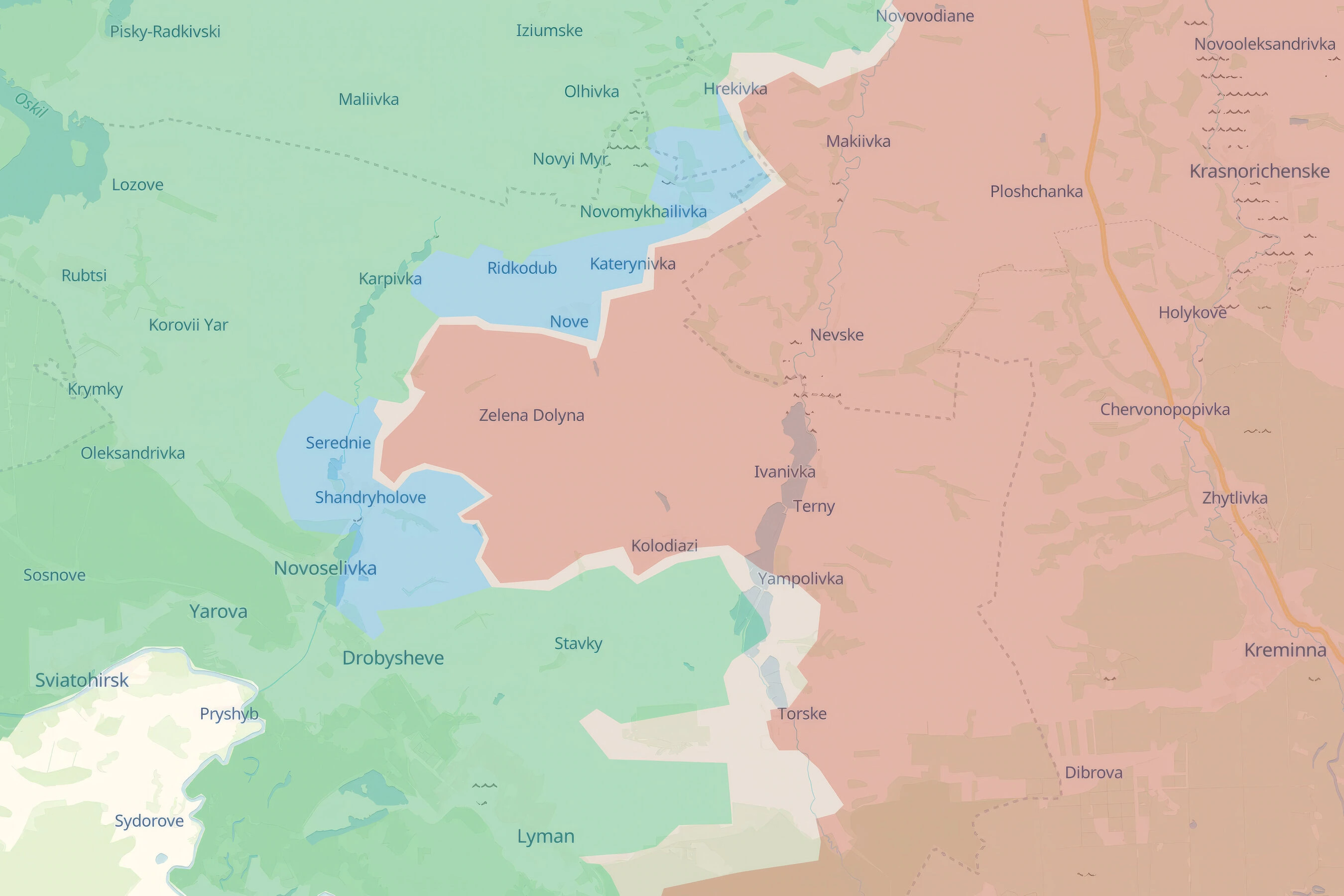
Russian forces, for their part, continue to attack in some areas and are trying to hold on west of the Zherebets River. The advance has disrupted Russia’s apparent plan to outflank Ukraine’s line of fortified towns from the north, according to the Institute for the Study of War (ISW). Analysts also note Russian attempts to retreat across the Zherebets and cling to isolated positions near Ivanivka and Zarichne.
Before the counteroffensive’s active phase began, Ukrainian forces had been hammering Russian logistics — hitting supply routes, drone crews and electronic-warfare equipment well behind the front line, aiming to choke off reserves, resupply and drone operations.

Drones and ground robots played an important role in the Lyman advance. The 3rd Assault Brigade debuted a new tactic it calls “Gryphon,” using heavy bomber drones to drop unmanned ground vehicles more than 10 kilometers behind enemy lines.
Those ground robots also cleared the way for advancing Ukrainian troops, clearing mines along roughly 30 kilometers of roads toward Shandryholove over two nights, ISW reported. At the same time, robots laid mines remotely along routes Russia might have used to resupply or reinforce its own units.
Further south on the eastern front, the Kostiantynivka sector saw no letup in assaults. Russian forces pushed not only around Kostiantynivka itself but also near Illinivka, Dovha Balka, Rusyn Yar, Vilne and Novoselivka.
Pressure has only grown in the Pokrovsk sector, where Russian troops tried to advance near Bilytske, Serhiivka, Molodetske and Udachne, as well as toward Dobropillia, Novyi Donbas and Vilne.
In the Dobropillia sector, Ukrainian forces continue to hold the city. On Sept. 26, the National Guard’s 1st Azov Corps said Dobropillia remains under Ukrainian control, dismissing false claims from Russia’s Defense Ministry to the contrary. Russian assault groups have tried to push into the gaps between positions, the corps said, but are being destroyed before they reach the city.

“Moscow’s military and political leadership plan to encircle Dobropillia this fall,” the Azov Corps said. “That plan exists only on paper, and in the false reports of Russian commanders.”
South: Russia turns up the pressure near Zaporizhzhia
In the Zaporizhzhia sector, Ukraine’s defensive lineup shifted in September as the 7th Air Assault Corps took over a new stretch of front in the Huliaipole sector, now one of the most active in the south. Russian troops have been attacking mainly in small infantry groups, probing for gaps between Ukrainian positions.
At the same time, Ukrainian forces started strikes on the roads Russia relies on for resupply. On Sept. 17, the 7th Corps’ 237th Unmanned Systems Battalion said it destroyed two Russian Grad rocket systems on the Huliaipole-Polohy highway, a route Ukrainian forces describe as a logistics artery, running roughly 15 kilometers from the line of contact and used to move personnel and equipment.

Days later, Ukrainian aircraft began striking bridges in the area, taking out four crossings near Polohy that Russia had been using to move troops, heavy equipment and ammunition in support of a push toward Orikhiv. Those strikes have curbed Russia’s ability to move forces and supplies through the sector, the 7th Corps said.
That hasn’t stopped the attacks. On Sept. 28, the General Staff counted five Russian assaults in the Huliaipole sector and five more near Orikhiv. In the first, Russian troops pushed toward Hirke, Huliaipilske, Charivne and Vozdvyzhivka; in the second, toward Novoandriivka, Yurkivka, Pavlivka and Stepnohirsk.
The Orikhiv sector isn’t purely defensive, either. Ukrainian forces have launched local counterattacks, including near Mala Tokmachka. In practice, that means Russian pressure and Ukrainian pushback are both playing out in the same stretch of front at the same time.
Further south, in Kherson region, the front line barely moved in September, but the west bank of Dnipro River remains under near-constant fire. Russian forces are hitting it with artillery, FPV drones, Molniya drones, Shaheds and aerial bombs, striking dozens of towns and villages across the region.
Taken together, the south tells two different stories. In Zaporizhzhia, the picture on the ground keeps shifting, with Russian assaults met by Ukrainian strikes on supply lines and local counterattacks. In Kherson, the front itself is more static, though that stability hasn’t translated into any letup in the fighting.