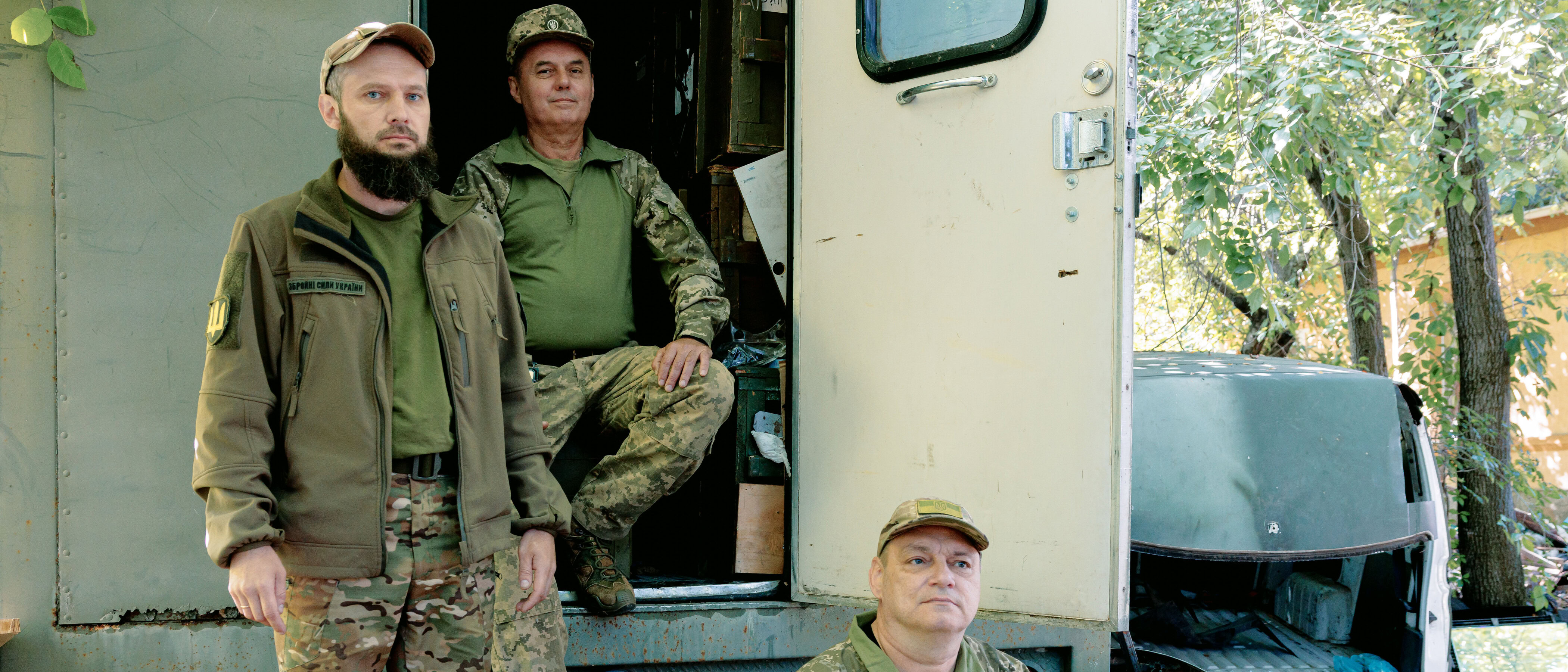
Under drones, on foot: How 41st Mechanized Brigade medics evacuate the wounded near Kupiansk
Medics pick up the wounded, lay them on stretchers and carry them several kilometers through the forest. Russian drones constantly target transport, so evacuation vehicles can no longer drive up to the positions. Near Kupiansk, the wounded now have to be evacuated on foot. Frontliner reporters spoke with medics of the 41st Mechanized Brigade about how the drone war has changed evacuation routes.
Paramedic Yevhen Kovalyk, call sign “Philosopher,” spent almost three months at the positions, from May to August 2026. He says that in all his time in service, he has never spent so long on one sector without a break. He got his call sign for his love of reflecting on history and myths. But he has almost no time for that at the positions. His thoughts there revolve around whether there are medical supplies, whether communications work, who needs help and when he can finally sleep.
The only time I had a reason to philosophize
was when we got stuck in Chasiv Yar, sort of surrounded.

“The only time I had a reason to philosophize was when we got stuck in Chasiv Yar, sort of surrounded. I remembered how in ancient Greek myths a hero goes down into hell and comes back a new man. I told the guys: if we get out of here, we all have to become different people. Otherwise, I’m busy with work and service. There’s no time for anything else,” Kovalyk says.
Everything the soldiers needed at the positions was dropped by drones, but water was the hardest part: plastic bottles often just burst when they hit the ground. When the drones failed, the soldiers could die of thirst. Soldiers from neighboring units then came to the rescue, delivering water with their own drones, the paramedic says:
“We kept in touch with all our neighbors because it wasn’t only our own guys from the brigade who came to us for treatment. We treated everyone.”
Meanwhile, the Russians methodically dismantled the sector. Heavy artillery came first, bringing down the floors and ceilings of buildings. Then FPV drones flew into the holes and cracks to set the ruins on fire. When the strikes became continuous, the soldiers resorted to a risky tactic: they deliberately switched off their communications.

There were times we shut the radios off completely for several days.
Not because communications went down, but so they would think
we were already out of action, that we had been buried.
They would relax a bit and stop pounding us, and we had a chance to survive,
Constant drone surveillance has also changed how people leave the positions. Enemy drones instantly destroy any transport, so medics no longer use vehicles. They carry the wounded themselves for kilometers, because the “kill zone” has grown much wider, “Philosopher” says:
“For 10 kilometers they buzz overhead and you hide under the branches. Then 20 kilometers of the same. The charges on the drones have become much more powerful. In 2024, if one blew up next to you, you just kept going. Now you won’t get off that easily.”

At the first stage of evacuation, the wounded have to be brought to the nearest point any vehicle can still get to. But getting them out from under fire does not mean they will quickly reach a stabilization point. Because routes are blocked and destroyed, evacuation can take days. “Philosopher” recalls a case when medics were able to give a soldier first aid only 10 days after he was wounded:
He was wounded on March 1, and only on March 10 did he reach us.
Everything was dirty. For 10 days the men were storming positions,
running around with shrapnel inside them. We had to wash everything out,
clean the wounds and put on fresh bandages,
The next stage of evacuation on blocked roads
At the second stage of evacuation, the wounded are taken to a stabilization point. Medics may carry them in their arms, pull them on improvised stretchers or transport them on whatever they can find nearby.
In August 2026, Yurii Vandziliak, a medical instructor with the evacuation section of the 41st Mechanized Brigade, evacuated a wounded soldier in exactly this way. Vandziliak’s call sign is “Sviatyi,” which means “saint” in Ukrainian.
You can’t just up and go for a wounded man.
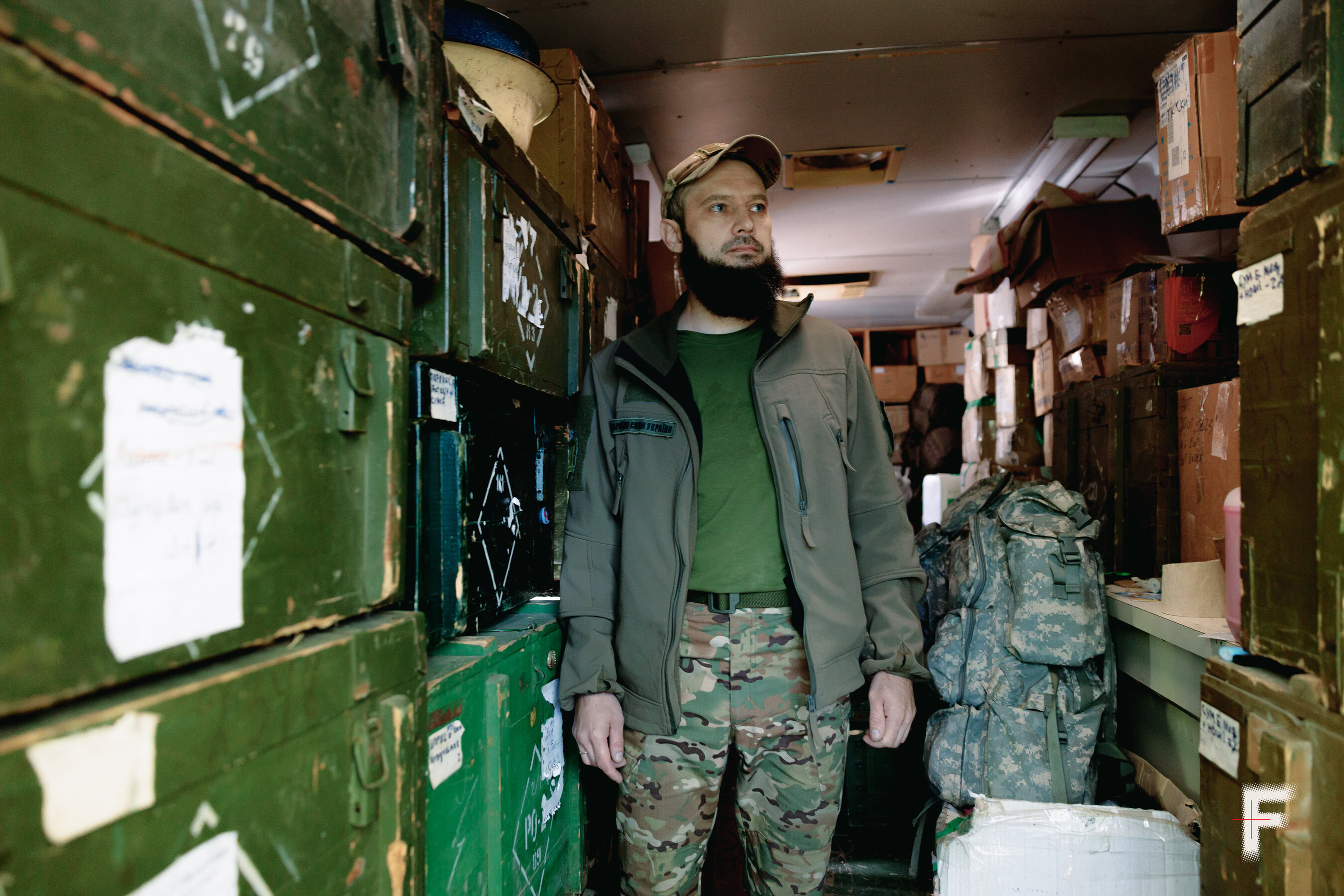
“Kupiansk is a bit tough right now. In winter you could still make a dash by car, but now it’s only on foot. You can’t get there in an armored vehicle either. They’d knock out even armor. It’s no longer possible. You can’t just up and go for a wounded man. You have to understand how you’ll get to him and how you’ll bring him back out,” Vandziliak says.
A specialized vehicle could not have reached the wounded soldier. So the medics found a cart like the ones used in warehouses or supermarkets. They laid the soldier on it, lined it with sleeping bags and pulled it through the forest.
“Fiber-optic cable wraps around the wheels. You clear it off, go about two meters and it wraps around again. Plus rain, plus embankments, plus you have to watch what’s flying overhead. So it’s two meters forward, one meter back. That’s how you pull a wounded man,” “Sviatyi” recalls.
They moved like this for almost two days. Then they transferred the soldier, first to an ATV and from there to an evacuation vehicle. “Sviatyi” says distance from the positions is no longer measured in kilometers alone:
Sometimes a kilometer is really a long way. And you have to walk it.
When you go for a wounded man, you’re not just going there.
You have to carry him back out afterward. And you have to think
how to do all of it without losing someone else.
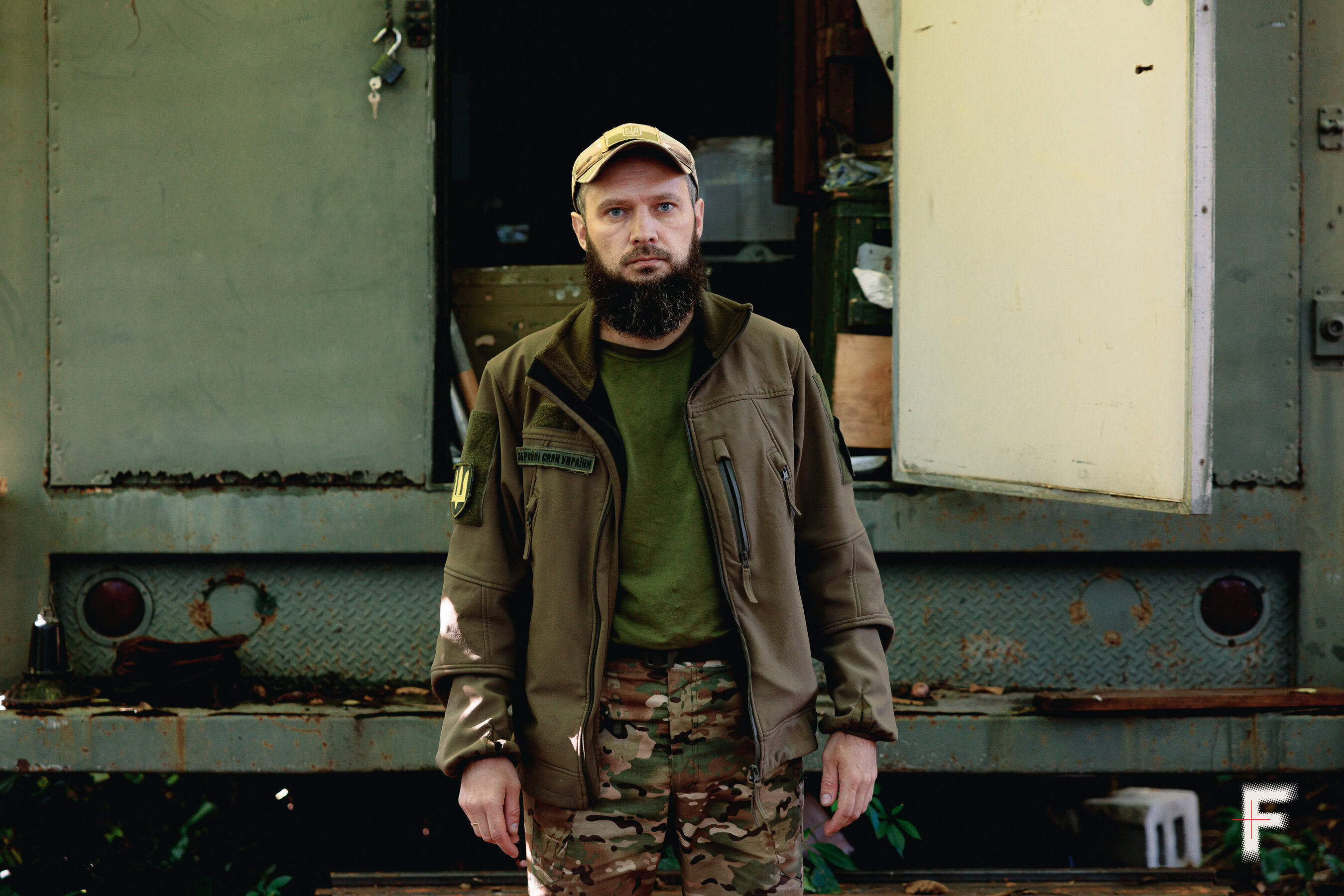
In such situations, “Sviatyi” has to do more than give aid. He also has to decide how to reach the wounded man and how to get him out of the dangerous area afterward. He recalls a time when a vehicle came under attack. About 10 soldiers jumped out and scattered across the terrain while drones kept buzzing overhead. One of the soldiers was wounded in the legs, abdomen and face.
I understood that if I didn’t go for him right then, the man would die.
I got past my fear, because I knew the lives of my brothers-in-arms
depended on what I did. If I made the wrong decision, he would die,
Stabilization and treatment of the wounded
After the wounded soldier is pulled from the front line, moved onto a vehicle and taken to the relative rear, the stage of stabilization and preparation for transfer to a hospital begins.
Capt. Kostiantyn Markov, a medical officer with the 41st Mechanized Brigade, call sign “Archi,” knows this process from both sides. He used to work in the evacuation section, from which the wounded were passed to a forward surgical team.
Markov has been in the military since 2023. Before mobilization he worked as a pediatric surgeon for 30 years. After completing reserve officer training, he joined the 41st Mechanized Brigade while it was still being formed. Since then he has served on the Kupiansk, Sloviansk, Chasiv Yar and Toretsk fronts, and in Sumy and Kursk regions. At some positions, his section received up to 56 wounded a day.

Now he is a staff physician in the treatment section of the brigade’s medical company. “Archi” served on the Kupiansk front from early July to August 2026 and saw during that time how much longer the wounded soldier’s road to the medics has become.
“Everything is much harder now. The war keeps changing. Before, artillery got in our way, but now drones give us no peace. The wounded soldier has to be brought to us, even though we are not that far away,” he says.
When a wounded soldier finally reaches the doctors, they follow a set routine: stop the bleeding, dress the wounds, give painkillers. But the hardest part for a doctor is sending the wounded soldier back out on the road.
You give aid on autopilot. But sometimes you feel helpless,
because getting him out of here is almost impossible. They set off,
and you have no idea whether he will make it to the next evacuation point,

The treatment section where “Archi” works has 30 beds. It is the brigade’s relative rear and looks much like an ordinary hospital ward. It takes soldiers with older shrapnel wounds, burns, flare-ups of high blood pressure or heart attacks after weeks in damp dugouts.
His years in pediatric surgery now help “Archi” work with soldiers. The habit of talking to young patients stayed with him, so he talks to the wounded as much and as gently as he can.
“I might say, ‘There, there, sweetie.’ I’m a pediatric surgeon. I talk to them the way I talk to children,” he says.
During his service, “Archi” has gone through almost the whole evacuation chain. He went out to pick up the wounded and worked at stabilization points and in the evacuation section. Now he works in the treatment section. He has seen how the route has changed. Before, the main obstacle between the position and the medics was distance. Now it is whether anyone can cover that distance safely.
“Sometimes people say, ‘You’re medics? You’re just medics.’ But for a wounded soldier on this road, we are most often the last hope,” “Archi” says.
Overall, evacuation and the positions near Kupiansk differ little from those elsewhere on the front, the medics say. Soldiers rarely see the sky here. They spend almost all their time in the basements of destroyed buildings or in dugouts. They go outside only for a few seconds, to pick up a package dropped by a drone. Medics, though, have to leave shelter when it is most dangerous, to reach the wounded and get them out from under enemy fire.