Saving lives while being targeted: The reality for medics in Kherson
In Kherson, a white ambulance is no longer just a rescue vehicle; it is a priority target for Russian attack drones. While paramedics put their lives in danger in high-risk areas, hospital doctors work to rehabilitate patients whose bodies and minds have been profoundly affected by the war. Read about the work of those who have become the cornerstone of life in frontline Kherson in this Frontliner report.
Vitalii Tokarev, a paramedic with 30 years of experience, is on duty with an emergency medical services team. For him and his colleagues, there have been no safe workdays since the occupation of Kherson began. He says that back then, medics operated under constant pressure and humiliation from the Russians. The occupiers could point rifles at them at any moment, demanding they revive the corpse of one of their soldiers.
It was hard to work back then. We were surrounded by strangers
and lived under constant stress. We had no protection whatsoever.
The Russians actually tried to shoot me twice.
It was especially scary at night because you had to drive through their checkpoints.
They’d stop us, search our cars, looking for something,
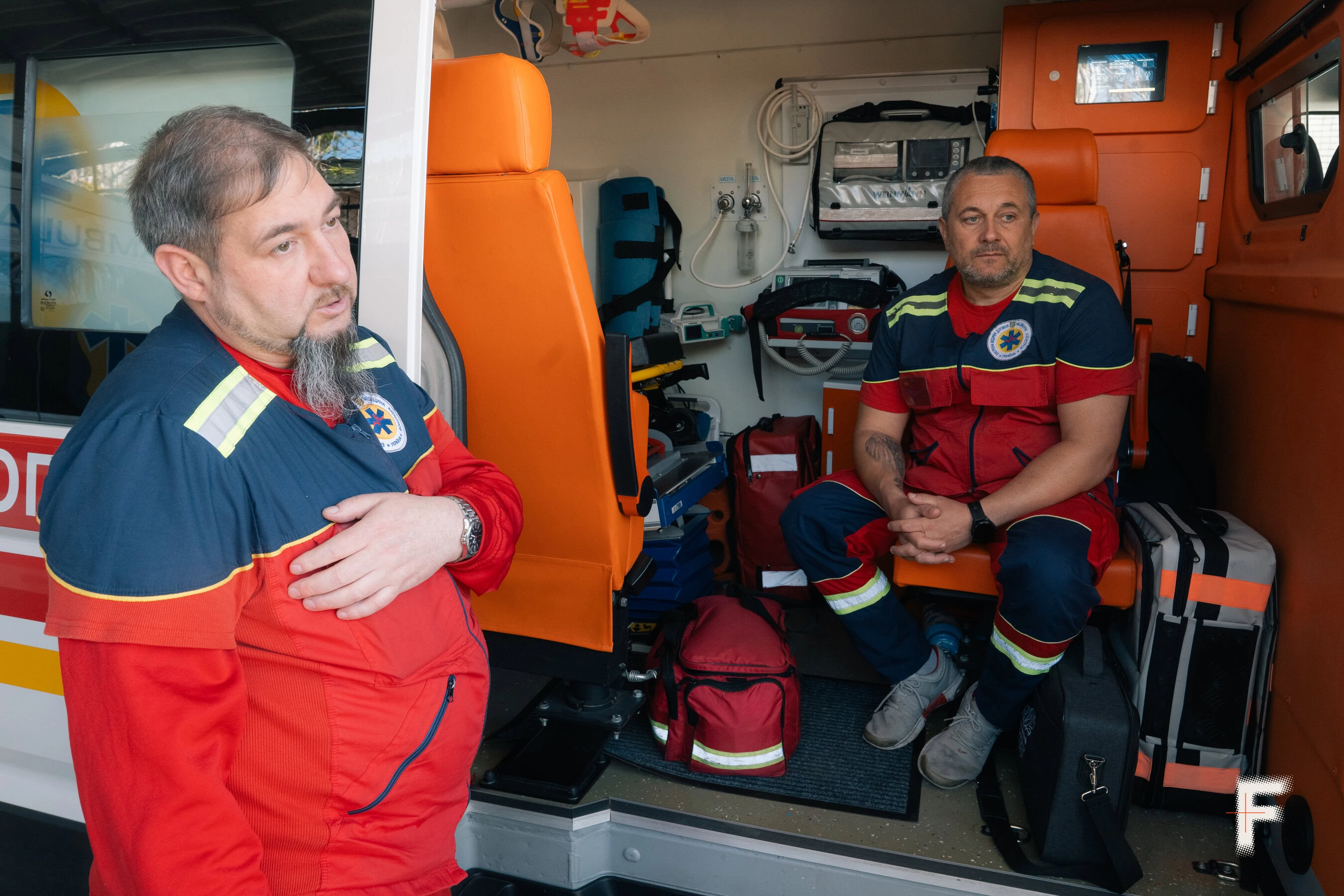
Now the enemy is hunting them from the sky. For Russian drones, an ambulance is one of the main targets. According to Vitalii, a single crew can spot up to a dozen drones hovering over their vehicle in a single day:
“We’re like a red rag to a bull for them. A white vehicle stands out, and they deliberately target it,” he says.
‘Wait, we’ll be there, but a little later.’
Because if we leave now, we simply won’t make it.
We’ll either be killed or end up needing medical care ourselves,
Ambulances are being targeted using double-tap tactics
The dispatch center at the substation acts as a command hub, tracking social media and military communication channels to assess where hostile surveillance is active. If a street is under attack or a drone is hovering above, vehicles are held back.
“Sometimes people call, asking us to hurry, but we have to call them back and say, ‘Wait, we’ll be there, but a little later.’ Because if we leave now, we simply won’t make it. We’ll either be killed or end up needing medical care ourselves,” adds senior paramedic Mykola Stepaniuk.
It is precisely during attacks on ambulances that the Russians most often employ double-tap tactics. The first strike damages the target, and the second strike is delivered just as the ambulance arrives on the spot to assist the casualties.
They wait until rescue teams arrive
to inflict maximum casualties.
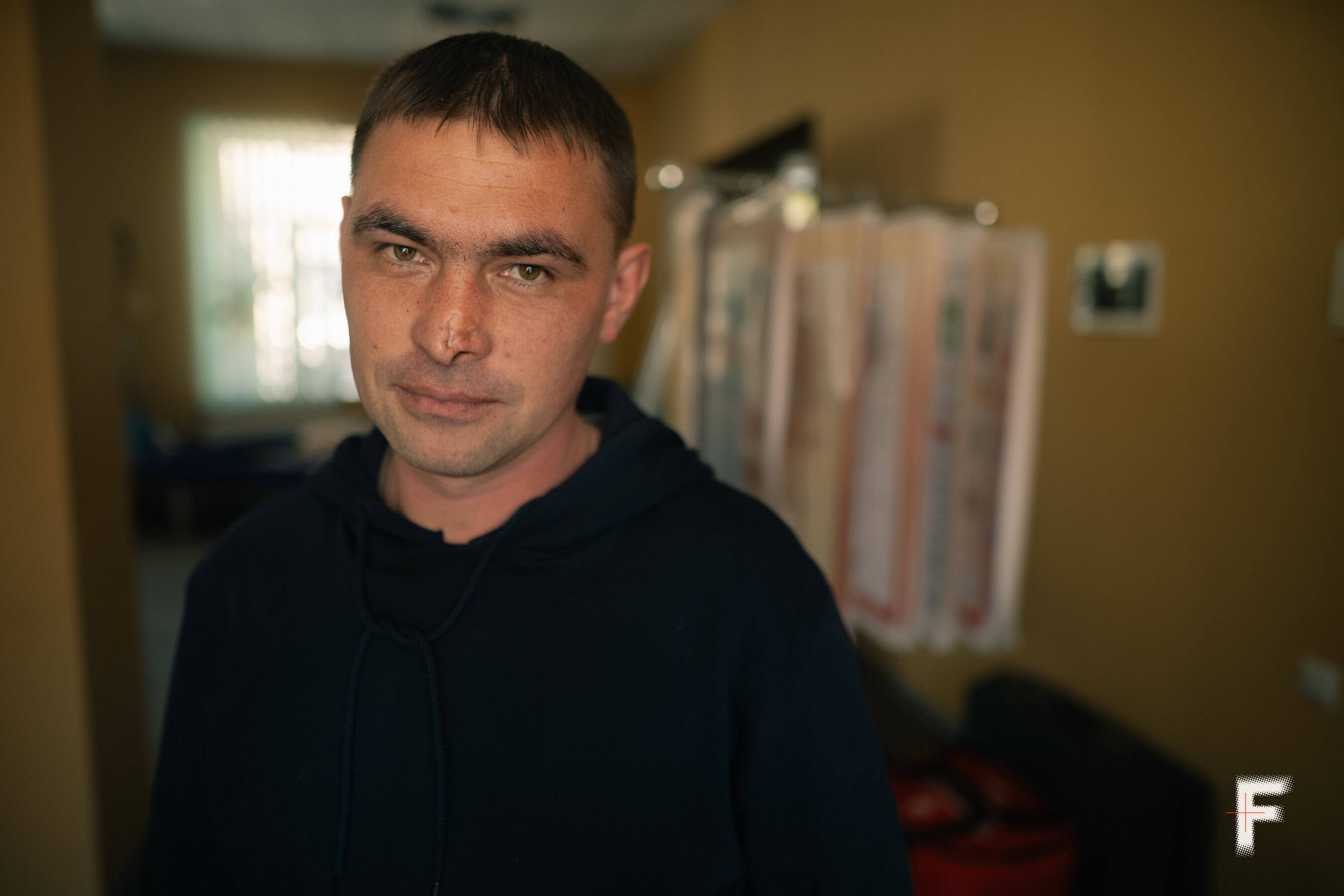
“There were cases when we would arrive at a supermarket after a shelling. I’d be providing aid, and Mavic drones would already be flying nearby. They didn’t fire right away. They were keeping track of us, seeing how many people there were and if there were any soldiers. They wait until rescue teams arrive to inflict maximum casualties,” Mykola says.
As a result, ambulances in Kherson now look like frontline vehicles: damaged and battered, with windows patched up using armour tape. The paramedic admits that he himself has already suffered acoustic trauma seven times.
“There were cases when we were driving back after a call, and a drone made a drop. But we didn’t stop and kept driving. We didn’t notice the damage to the vehicle until we arrived at the station.”

Why medics cannot attend every call
Senior paramedic Vitalii Rudakov explains that there are high-risk zones where ambulance crews no longer risk going. The concentration of drones there has become too high, so a trip there could turn into a suicide mission.
“Dnipro has become a frontline area, with artillery, mortars, and drones in constant use. Since the beginning of the year alone, ten of our vehicles have been put out of service due to attacks. In total, more than 60 vehicles have been damaged since the start of the war. That’s why we no longer go there ourselves; instead, we send police and military personnel,” Rudakov says.
But who will be left here? My family is here,
and there are elderly people here. We have no right to run away.

Despite having sufficient supplies of medicine and equipment, the center faces another problem: a critical
shortage of people. Before the start of the full-scale invasion, 25 teams were on call in Kherson; today, that number has more than halved, with only seven to ten crews on duty per shift. But when asked why these people haven’t yet left the frontline city, Vitalii replies:
“Let’s all run away and live happily ever after. But who will be left here? My family is here, and there are elderly people here who have no one to even check their blood pressure. If we abandon them, they’ll suffer strokes and heart attacks simply out of despair. We have no right to run away. We have to work; we have to provide assistance.”
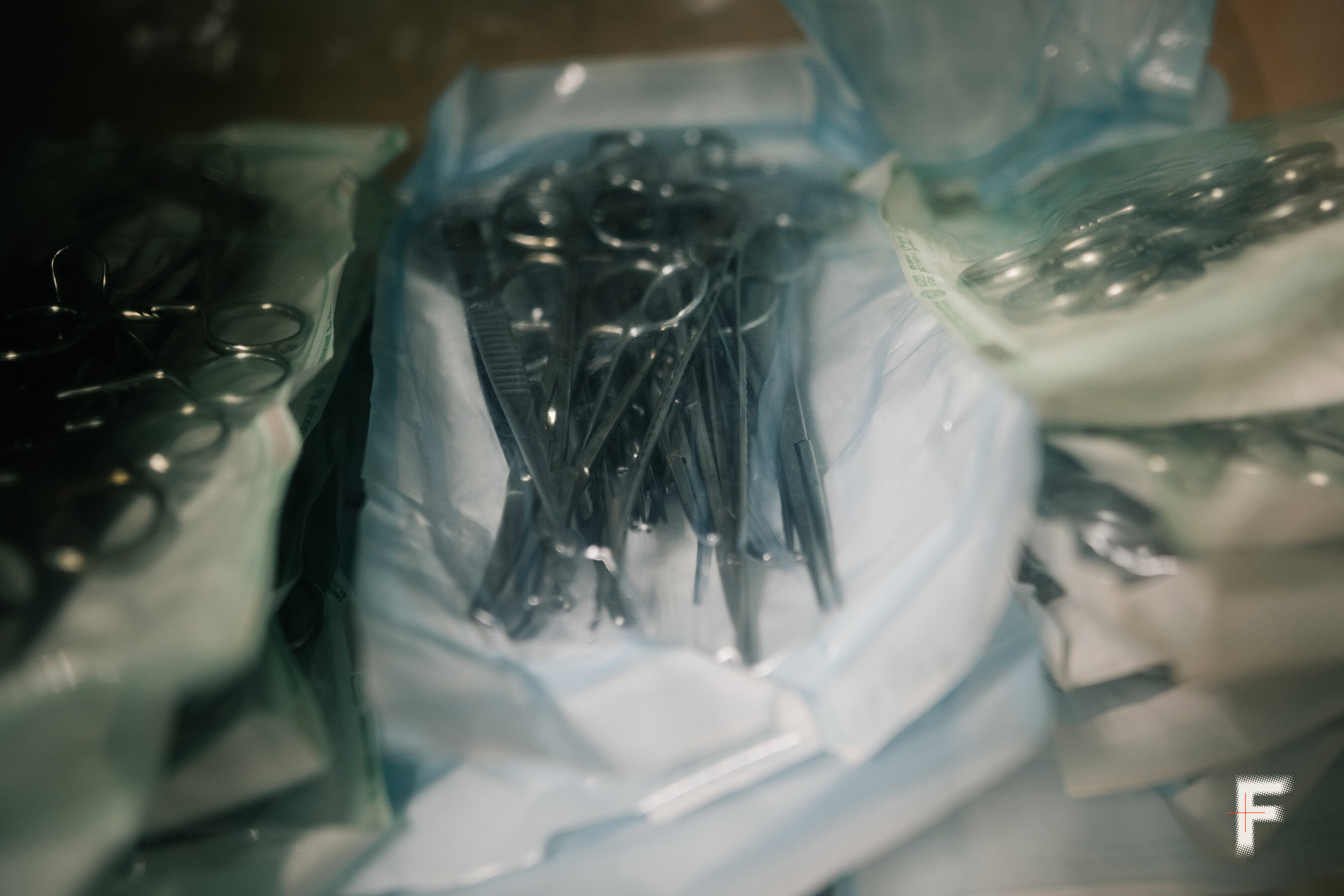
When every sound reminds you that the enemy is nearby
If paramedics are those who save lives in the middle of shelling, hospital teams take over from there. Their work is just as dangerous, though it looks different: a constant fight for life inside a building that has itself been hit more than once.
The children’s hospital in Kherson has continued to operate since the start of the full-scale invasion, despite regular shelling of the city. Stanislav Bumbu, the hospital’s deputy director for medical affairs, reports that the facility has survived about 20 shelling incidents, seven of which caused critical damage to the hospital building. In 2023, following a Grad rocket strike, the pathology department and part of the intensive care unit were destroyed by fire. As a result, some departments were relocated to the lower floors. Windows on the upper floors were covered with sandbags and protective structures to mitigate the effects of potential strikes. Following these events, the hospital’s staff has been reduced: before the war, it employed about 2,000 people, but now there are only 470.
“We experience a staff shortage. We have only one specialist left in each field: ophthalmologists, ENT specialists, and neurologists. We have no problems with medicine or equipment; thanks to the administration and volunteers, we’re well-supplied. Our biggest challenge is the lack of personnel. The number of people available keeps shrinking,” Bumbu explains.
However, those professionals who stayed in Kherson continue to work under the constant threat of attack. Olha Piliarska, head of the Department of Anesthesiology and Intensive Care, says that it’s impossible to feel completely safe here.
In the evenings, you can hear them all the time,
each sound is a reminder that we’re under surveillance,

“We simply pray there are no drones. We pray and go to work. In the evenings, you can hear them all the time, especially when it’s hot in the hospital and the windows are open. They buzz constantly, and each sound is a reminder that we’re under surveillance. It’s frightening,” says Olha.
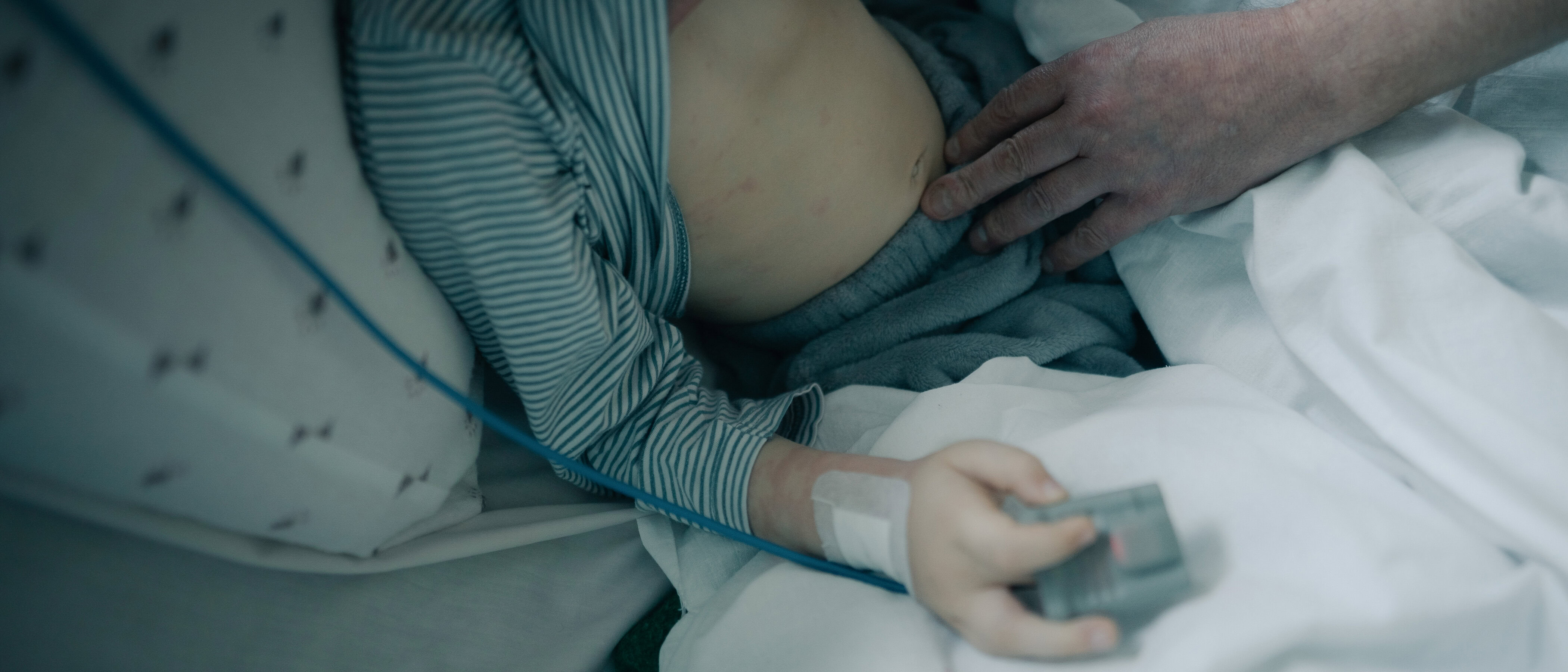
Since the start of the full-scale invasion, the hospital has admitted about 300 children with injuries due to mines and other explosives; 10–15% of them required amputations. Even today, these patients remain among the most serious cases for medical staff, as they require not only urgent care but also long-term rehabilitation.
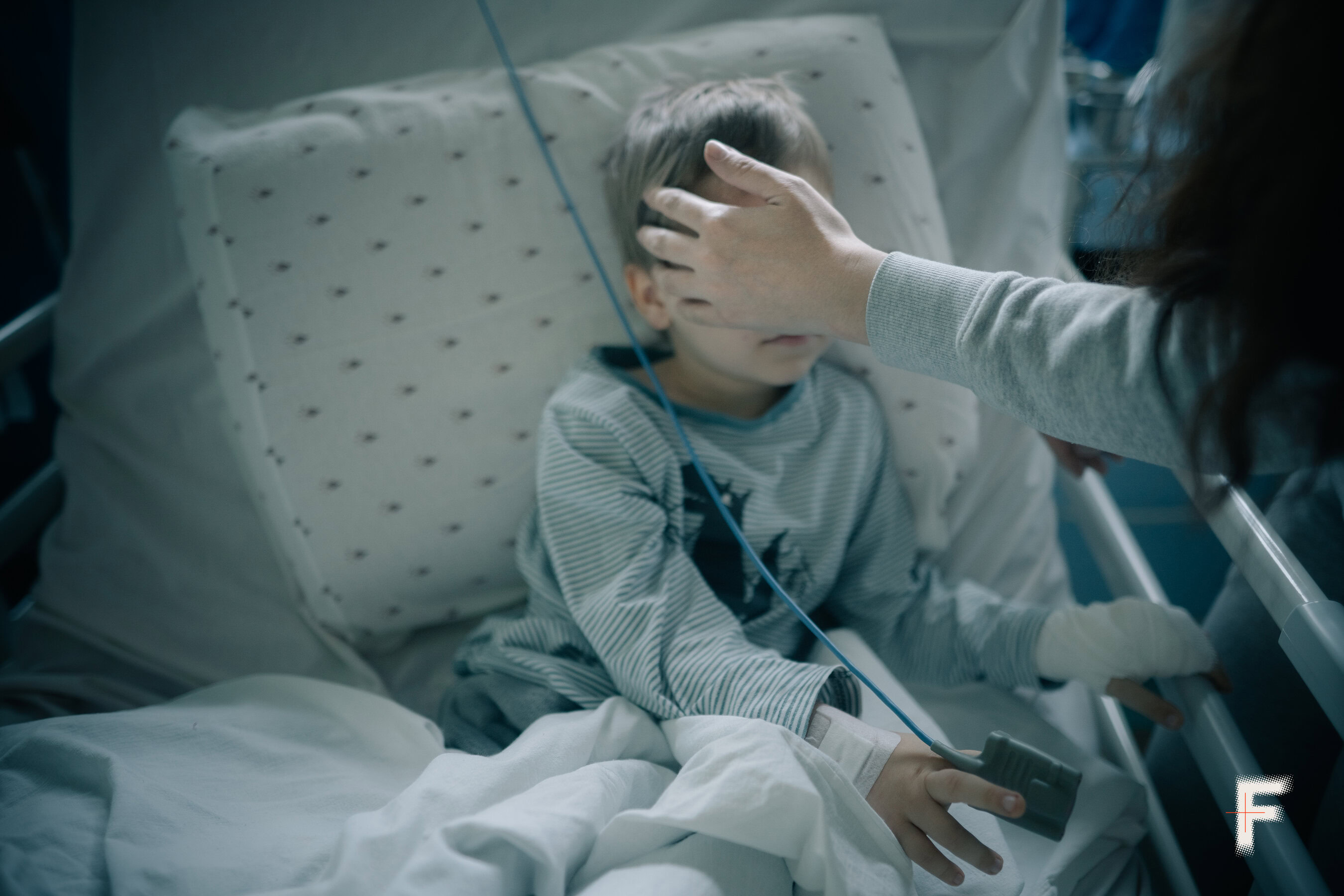
How the Kherson rehabilitation center works
As soon as a patient is pulled from the rubble or their condition is stabilized after surgery, the fight begins to ensure their quality of life. This is the focus of the rehabilitation hospital. It is not located in the high-risk zone, so patients from different parts of the city can access it more safely. However, the proximity of the front line still affects its operations.
We didn’t have such specialists before.
These are all part of modern medical practices.
The hospital currently operates largely on an outpatient basis due to a shortage of specialist staff. A fully staffed team would be required to run inpatient services. They are trying to compensate for the staff shortage by training the existing personnel, according to the acting head of the hospital, Viktoriia Buskas:
“Almost 100 percent of our medical staff has completed a mental health program. Physical therapy nurses have undergone additional training and have been requalified as occupational therapy and physical therapy assistants. We didn’t have such specialists before. These are all part of modern medical practices.”
Yuliia Tykhonenko, a physical therapist who has been working at the hospital since the first days of the full-scale invasion, is helping people return to an active lifestyle. She helps them learn to walk again, maintain their balance, use a prosthesis, or simply not be afraid of their own bodies after an injury. Yuliia explains that over the past two years, the scope of work with patients has changed, requiring the staff to constantly develop their professional skills.
“This is our physical therapy office. Patients undergo rehabilitation here following injuries, musculoskeletal trauma, and neurological disorders. We have a Cyber-360 machine for nervous system rehabilitation, and walking bars,” says the therapist as she gives a tour.
Colleagues in other cities are sometimes surprised at how quickly
our patients are ready to receive their first prosthesis.

Some of the equipment was obtained through grants and partner support. Patients can still access many services free of charge through the National Health Service of Ukraine (NHSU). Yuliia demonstrates equipment for people preparing to undergo prosthetics. It is often this preparation that determines how quickly a person can return to their normal routine.
“Usually, preparation for prosthetics takes about half a year. We’ve managed to reduce this time to two or three months. Colleagues in other cities are sometimes surprised at how quickly our patients are ready to receive their first prosthesis,” she says.
In a city that remains under constant fire, every hospital continues to help patients. Even as drones buzz overhead and explosions shake the city, medics carry on with their work, balancing emergency care with the long process of recovery.
***
Relentless shelling and nighttime mine drops. The main road into Kherson remains open, protected by anti-drone nets only. The city’s location has turned it into one of the harshest battlegrounds for drone warfare. The number of targeted strikes against medical personnel and civilians is abnormally high. How can you save someone when you and your patient are being hunted down? When war assumes unprecedented forms such as drone terror, documenting these crimes becomes essential to international justice and the preservation of collective memory.
Every story starts with your support. Join the Frontliner community so we can keep up documenting Russia’s war against Ukraine from the front line and the rear.
***