Shelled every day, rebuilding every day: Kherson’s fight to live
Life in Kherson goes on despite daily shelling. Russian forces use artillery and drones against residential areas and civilian infrastructure. Despite this, people have learned to live alongside this danger. After each attack, utility workers clear the aftermath: removing debris, patching up roofs, and boarding up damaged windows — often working under the threat of a double tap. Frontliner reports from the frontline city.
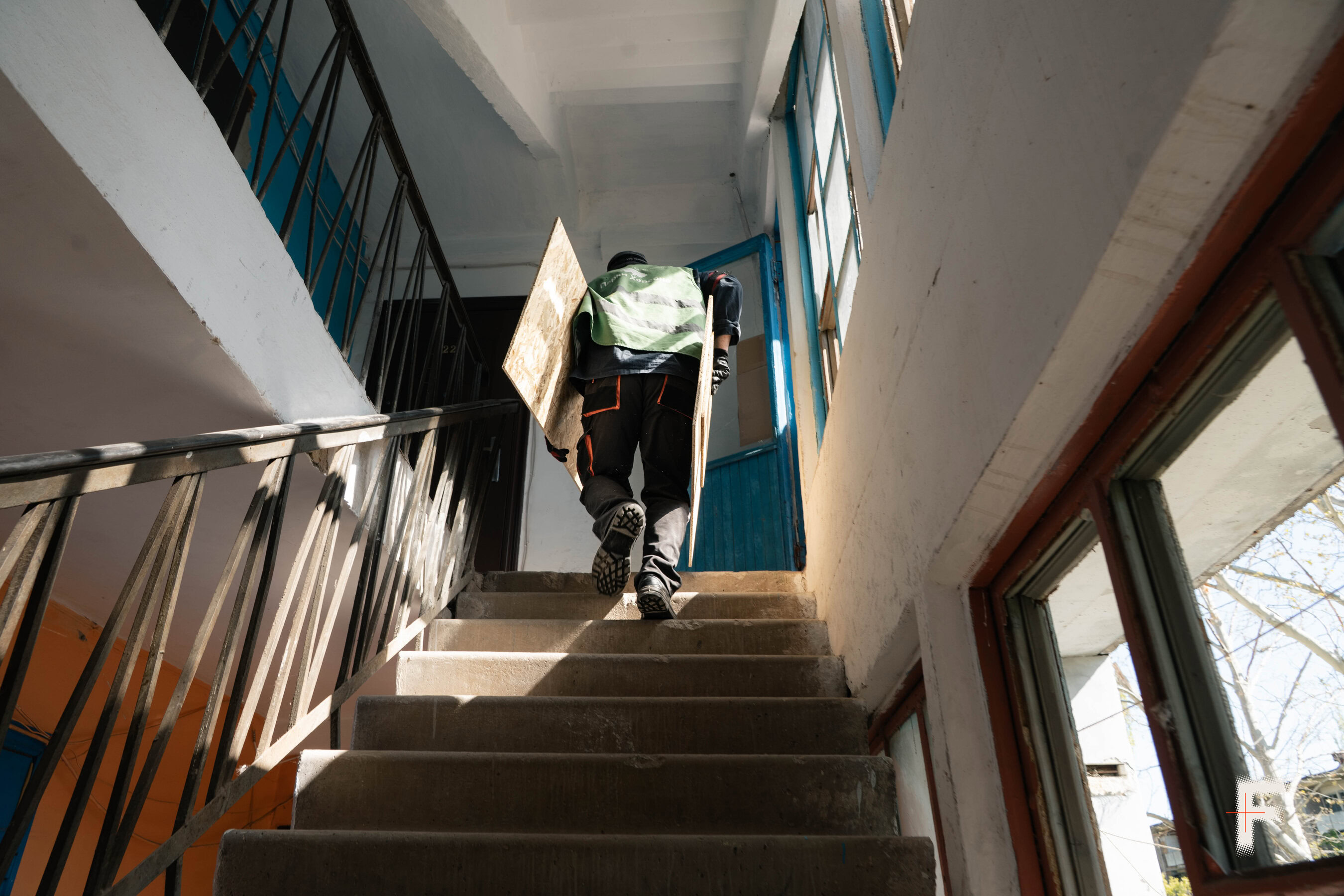
In a residential area of Kherson, the morning begins with the sound of hammers and the rustle of plastic sheeting. On the evening of May 2, Russian artillery once again hit a residential neighborhood. In the stairwell of one of the high-rises, shattered glass and congealed blood cover the floor. Several fragments injured people sheltering in the corridor.
Residents of the building, Hryhorii and Daryna Leletski (Editor’s note: names and surnames have been changed for safety reasons), arrived at their apartment in the morning. They learned from their neighbors that their home had been hit. This is not their first time making repairs after enemy attacks — two years ago, their windows on the other side of the building were blown out.

Our neighbors from the fourth floor called us around
half past seven in the evening. They said briefly:
‘There was shelling, your windows are gone.’ They were old and wooden.
We were going to do a proper renovation, but we didn’t manage to in time,

When asked why they do not leave the dangerous area, the couple only shrug — their daily lives and family hold them back.
“Who should we leave everything to? We have an apartment here, and grandchildren live nearby. And a big household — our dog. We just cannot leave everything,” Hryhorii says.

A school in a suburb of Kherson was destroyed by Russian guided bombs
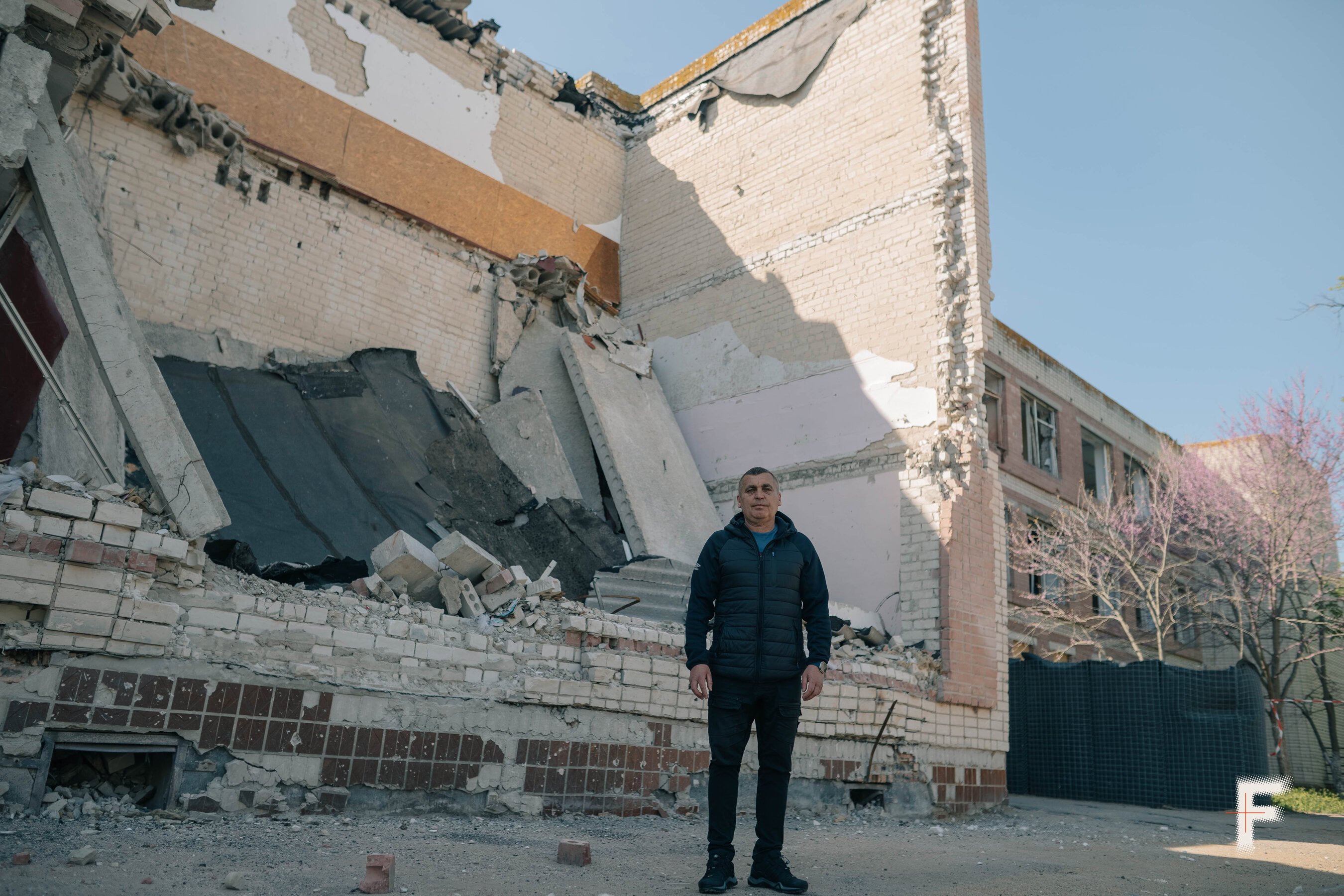
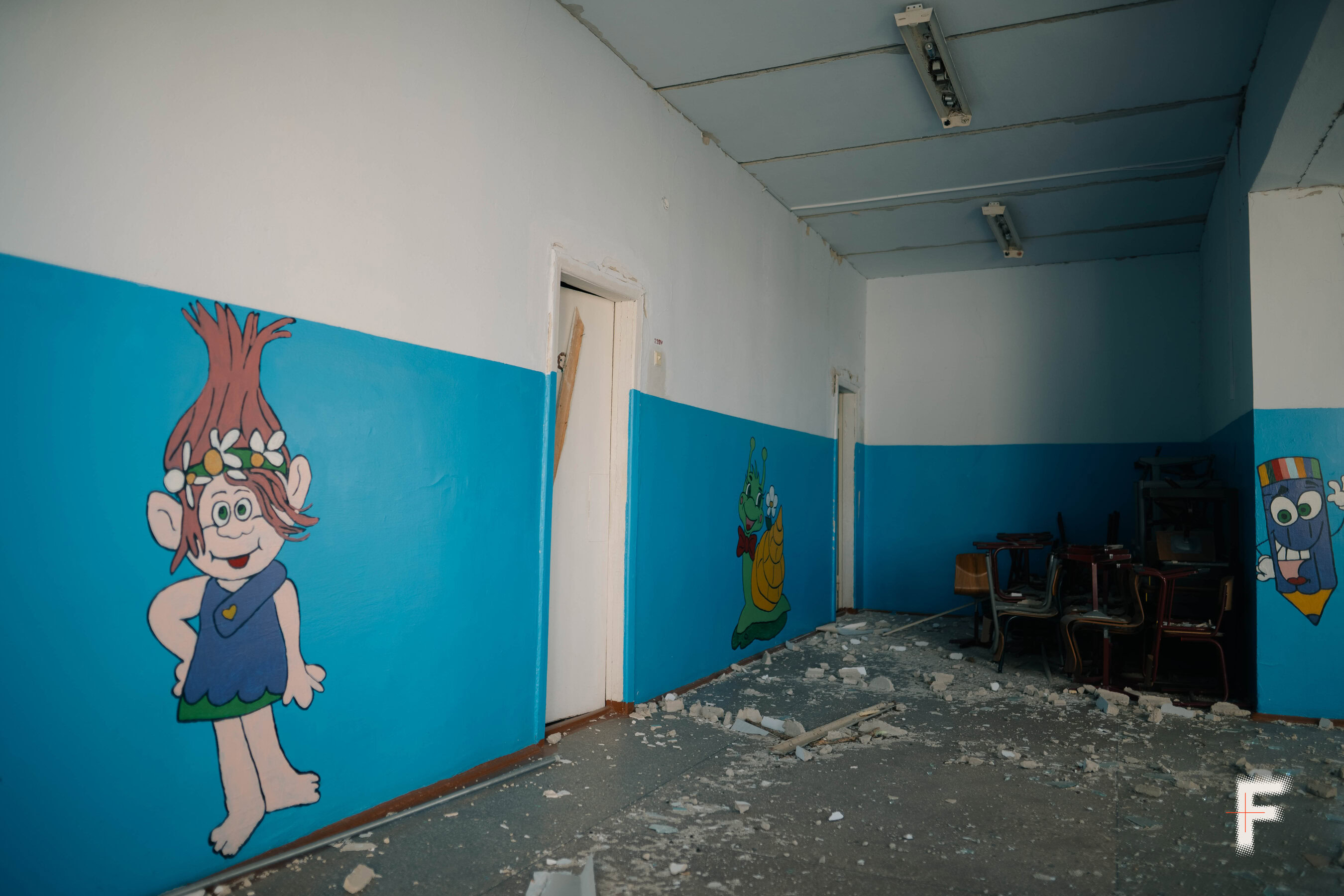
In a suburb, in the village of Stepanivka, a half-destroyed school still stands. Part of the building has been reduced to a concrete skeleton. The yard is strewn with fragments of slate, blown-out window frames, and charred pieces of walls. Three guided bombs hit here on the morning of April 7, 2026.
The strike occurred at 11 a.m.,
they [the Russians] knew that children could be there,

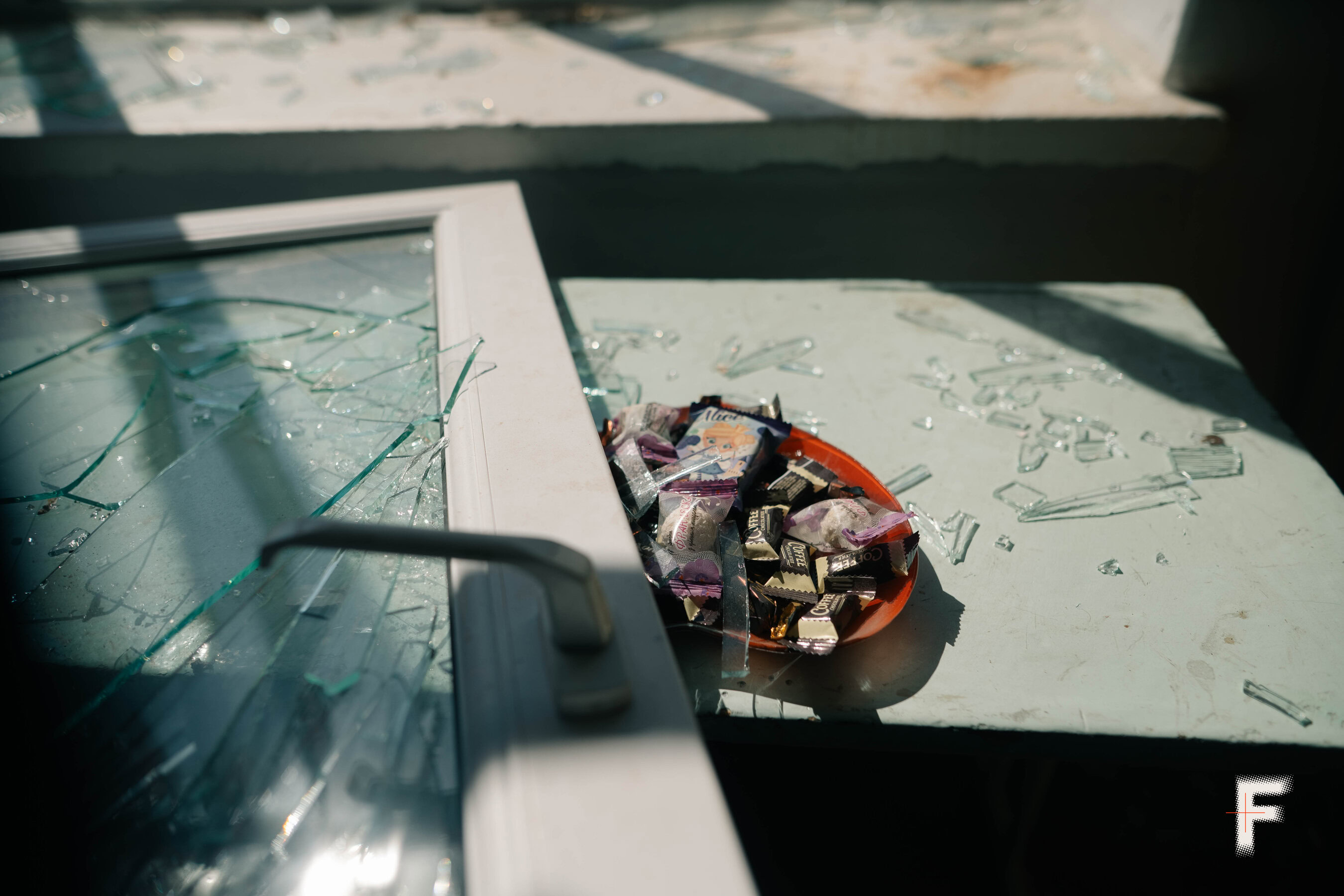
The blast damaged the hospital, residential homes, and a shop. Glass from the windows was blown several streets away. The village head, Oleksandr Yarkovyi, explains that the area around the school was always crowded at this time of day. Humanitarian aid was distributed there, and a Point of Invincibility was operating nearby. Oleksandr recalls that day:
“I sent people to a nearby shelter. If I hadn’t done that, the consequences would have been much worse, as there were a lot of people here. The strike occurred at 11 a.m., meaning they [the Russians] knew that children could be there.”
That day, a man who brought goods to a local shop was killed when his car ended up at the epicenter of the blast. Another five people were injured. Among the injured was a 14-year-old boy who was diagnosed with a concussion and a traumatic brain injury.
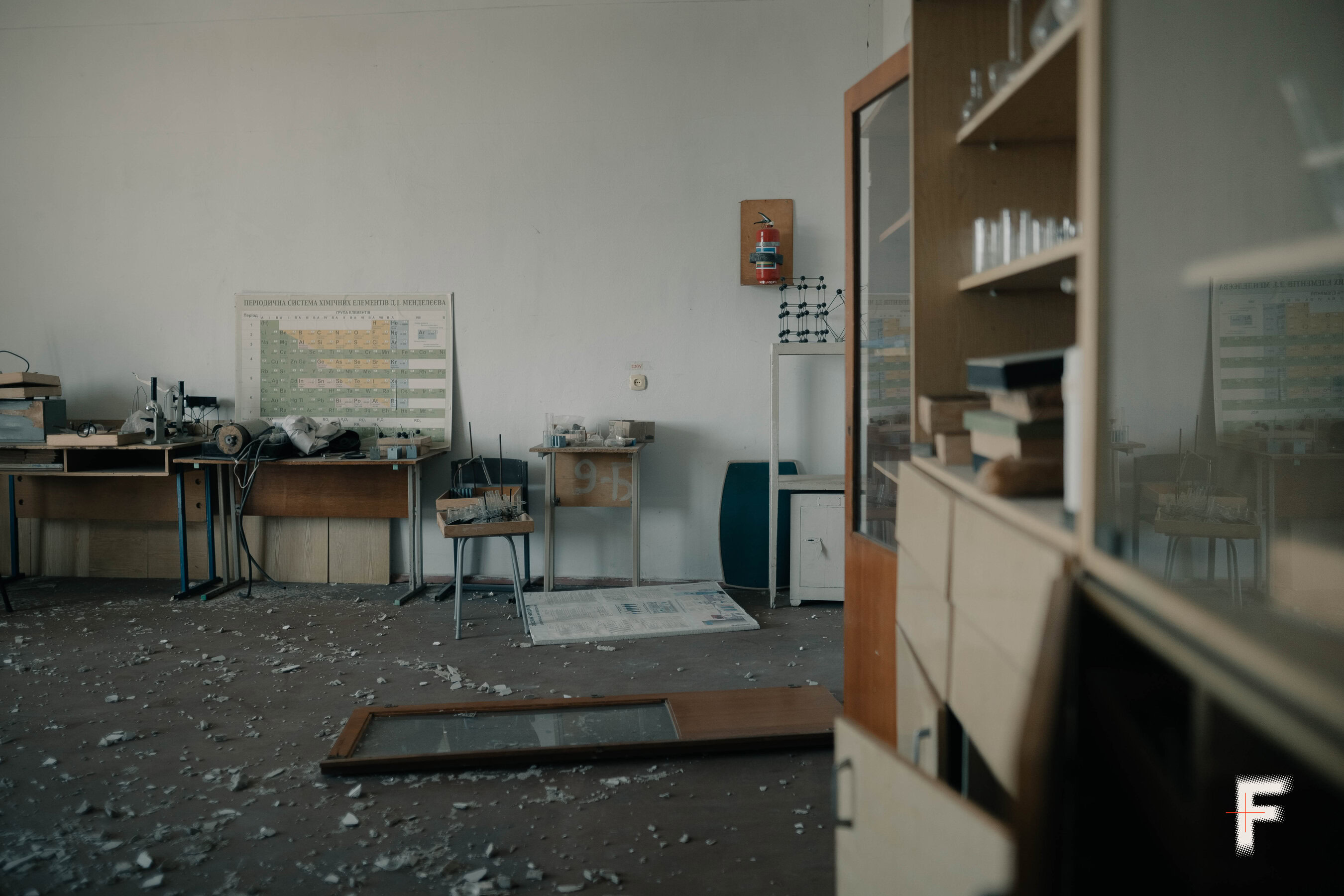
The school in Stepanivka had not operated offline for a long time. Due to constant shelling, children studied remotely. But the empty building remained a symbol for the villagers that normal life would one day return. Now, in the destroyed classrooms, fragments of desks, torn notebooks, and children’s drawings lie among the bricks. According to Yarkovyi, the school is beyond repair.
-
Hallways of the destroyed school in the village of Stepanivka, Kherson, Ukraine, May 4, 2026. (Marharyta Fal/Frontliner)
-
A school classroom in the village of Stepanivka, Kherson, Ukraine, May 4, 2026. (Marharyta Fal/Frontliner)
-
Blown-out windows of the school in the village of Stepanivka, Kherson, Ukraine, May 4, 2026. (Marharyta Fal/Frontliner)
Utility workers clean up the aftermath of the shelling of Kherson on a daily basis
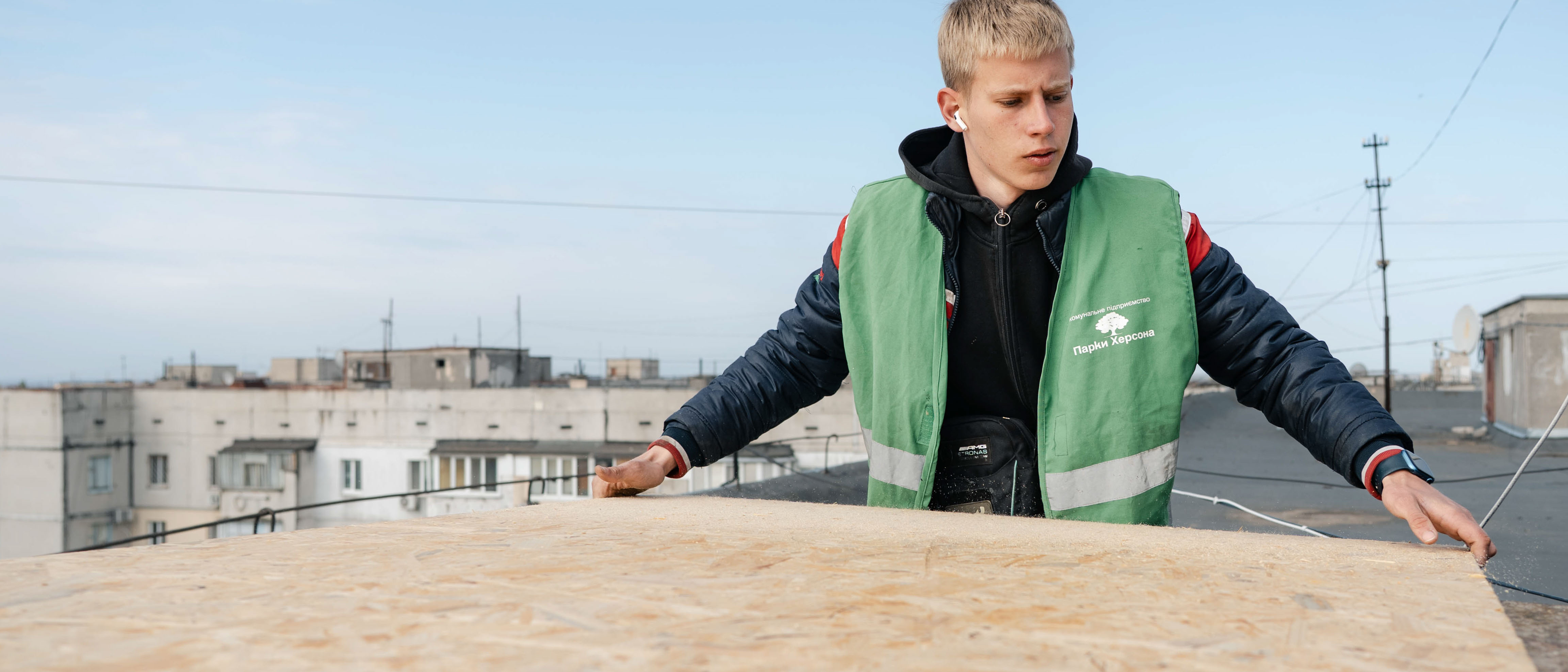
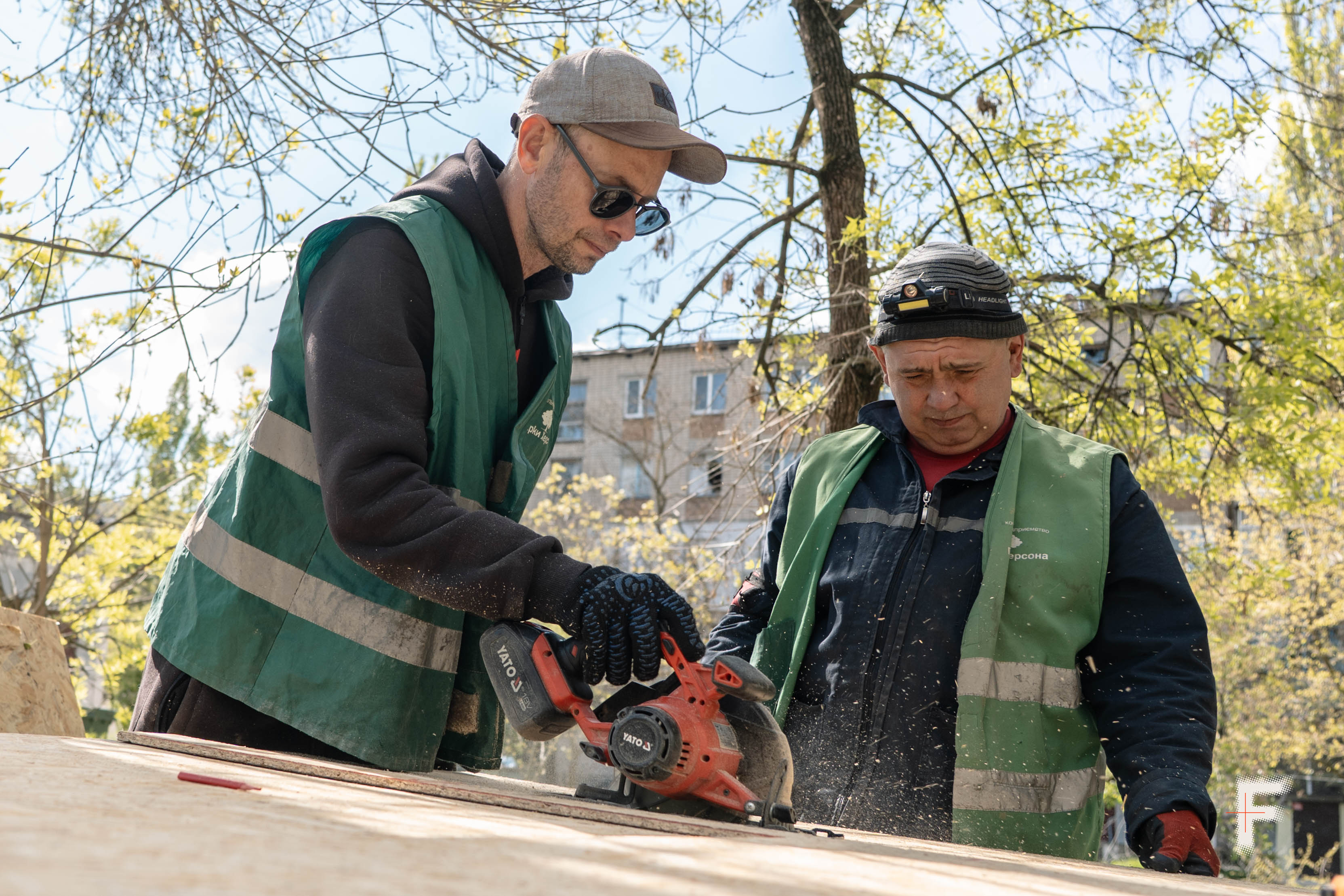
After each shelling, utility crews head out onto the city streets. They clear rubble, board up blown-out windows with OSB (oriented strand board) panels, repair roofs, and remove concrete and slate debris from the roads.
Olha Chernyshova, an employee of the Parks of Kherson Municipal Enterprise, says that clearing up destruction in the city has become a routine, repetitive process. She notes that crews are dispatched to strike sites nearly every day, and utility workers frequently have to return to the same locations multiple times because new shelling destroys recently restored infrastructure.
Currently, an emergency crew is repairing the roof of a high-rise building after part of it was blown off by a shockwave. The resulting hole allowed rainwater to flood the upper floors during recent rains.
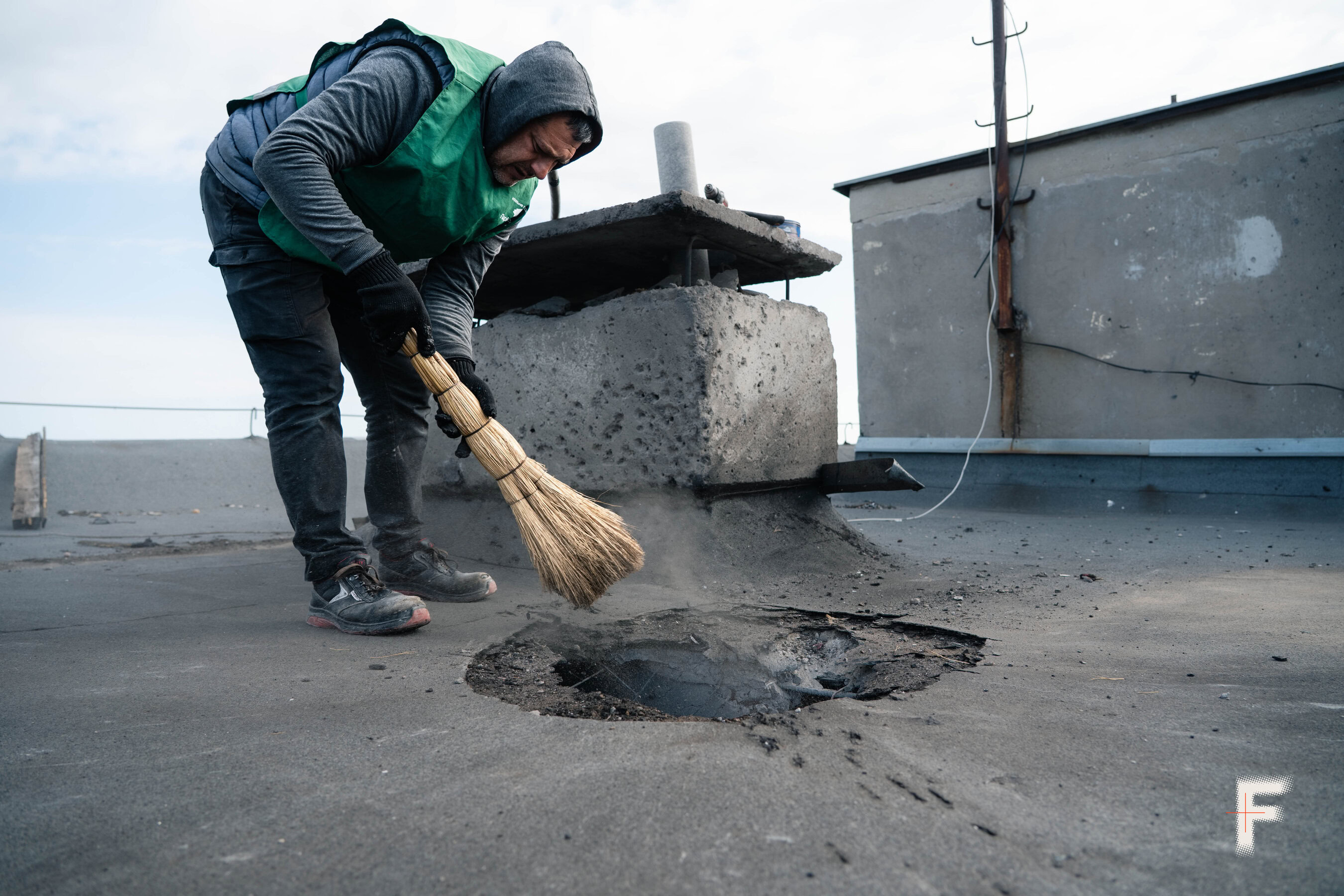
“This is not a complete repair. We only ensure that it does not leak so residents can continue living here. At present, the primary objective is to temporarily cover the damage. People remain in these apartments. They need to survive somehow to the next night, the next rain, the next shelling,” Olha explains.
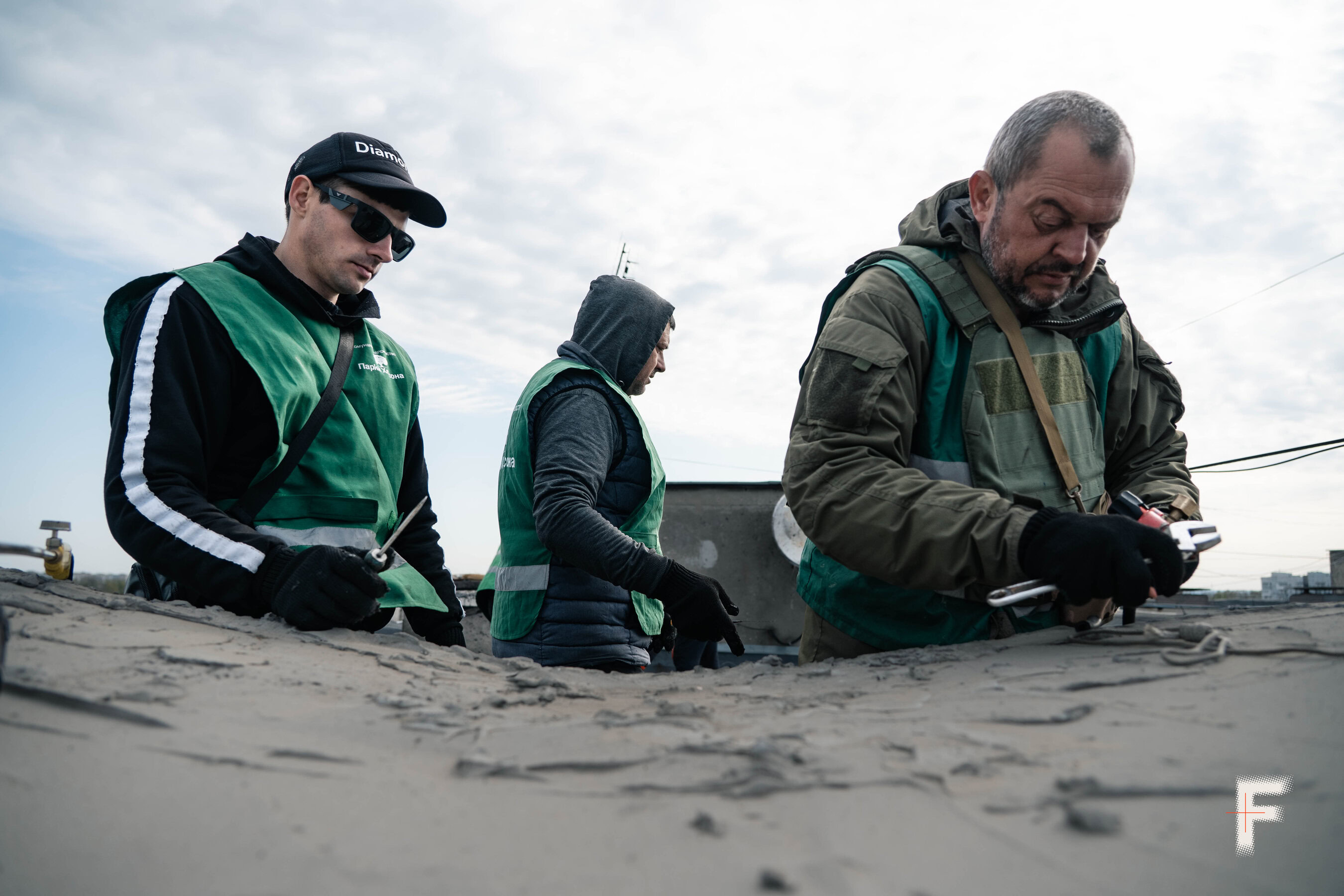
The young man who was repairing windows
got caught in an artillery strike,
Utility workers have to work as quickly as possible due to the constant risk of a double-tap strike.
[Editor’s Note: a double-tap strike is a follow-up attack targeting emergency first responders or repair crews arriving at the scene. Russia employs such attacks regularly; they are widely recognized as war crimes under international humanitarian law.]
While part of the crew ascends the damaged roof, other workers track drone movements using a drone detector. Olha says there have been instances where utility workers were injured by shelling while working:
“The young man who was repairing windows got caught in an artillery strike. The injuries required a skin graft, involved a fracture, and led to three months of medical treatment. When I visited him in the hospital, the first thing he said was: ‘I want to go back to work, I can’t just stay here anymore.’ And after rehabilitation, he came back to work. Now he repairs roofs.“
Olha explains that not everyone among the utility workers has experience in construction or repair work. The Parks of Kherson Municipal Enterprise includes former drivers and general laborers, but today’s realities have forced everyone to learn how to repair roofs and install protective panels.

“They have already become specialists because they do this every day. Our people have learned to repair roofs, install OSB panels, and work with damaged structures simply because there is no other choice. Here, no one asks whether someone knows how to do it. It just has to be done,” the woman says.
From the roof of the high-rise where the crew is working, the occupied left bank of the Kherson region is visible. Only the river separates it from Ukrainian-controlled territory. Nevertheless, it remains a completely different and currently inaccessible world, Olha says, silently gazing in that direction for several seconds.

“Oleshky, Khutoryshche. Sometimes you can even see residential houses. And it hurts. I always compare Oleshky to a concentration camp. You can see it, but there is nothing you can do,” Olha says.
“First we hide the tractor, then we hide ourselves”
While construction crews work up high, utility workers Viktor Olar and Oleksandr Syrovatko clear rubble and debris from the city’s streets. Their shift starts at 7:30 a.m. regardless of the weather — rain, frost or heat.

I’ve been caught in shelling about ten times.
There can be more than 30 drones a day,
Their tractor is completely riddled with shrapnel — there are dozens of holes in the bodywork, and the turn signals are gone. But the men managed to repair the damage using improvised means. As a result, the vehicle is still running. During their shift, they can spot dozens of Russian drones in the sky, a sound that long ago became a part of their daily routine.
“It has never been this terrifying before. I mean the drones. I’ve been caught in shelling about ten times. But there can be more than 30 drones a day. If someone hears one, everyone takes cover immediately. We hide the equipment, too. We do it automatically now, without even talking about it. Everyone just knows it’s time to run and hide,” Viktor says.
Despite the constant danger, the men continue to work their shifts every day. According to them, fear has gradually taken a backseat, giving way to a challenging daily routine.

“The fear is gone now. Maybe not entirely, but we’re used to it. Someone needs to clean up the city. If not us, then who?” Oleksandr says.
How children study in Kherson
The practice of carrying on despite the constant danger unites those who remained in the city. While adults continue to go to work and keep the streets clean, children in Kherson continue to study.
However, education in Kherson has moved underground. Instead of school hallways, there are shelters, and gyms have been replaced by basement rooms. Due to constant artillery shelling and daily drone attacks, comprehensive in-person classes are impossible in the city. Parents are afraid to let their children travel far from home, public transport is disrupted due to the activity of Russian FPV drones, and certain riverside neighborhoods remain under constant fire.
In a shelter in one of the city’s districts, a children’s space run by the Center for Change Postup, a non-governmental organization, is open. Children sit at tables and draw; their pages are filled with sunlight, shades of yellow, and houses. For many of these children, this is the only opportunity to interact with their peers in person, rather than through a computer screen.
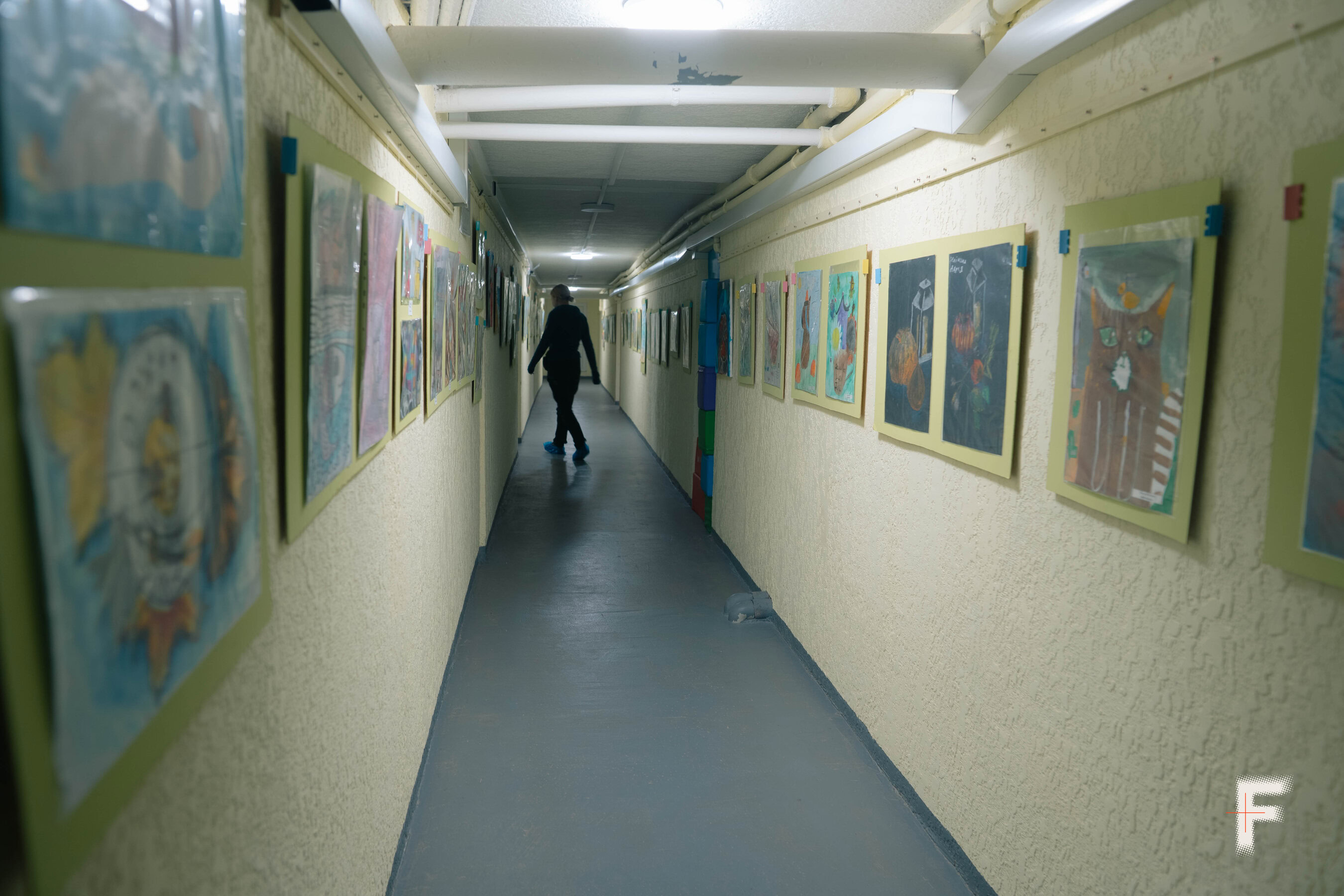
Ihor Tsurkan, the head of the organization, notes that over the years of full-scale war, children have lost not only a quality education but also basic social skills.
“They have lost normal social interaction. When children first come here, they are surprised that they can just sit next to others, run, laugh, or draw with chalk on the blackboard. For them, these activities are uncommon now,” Tsurkan says.
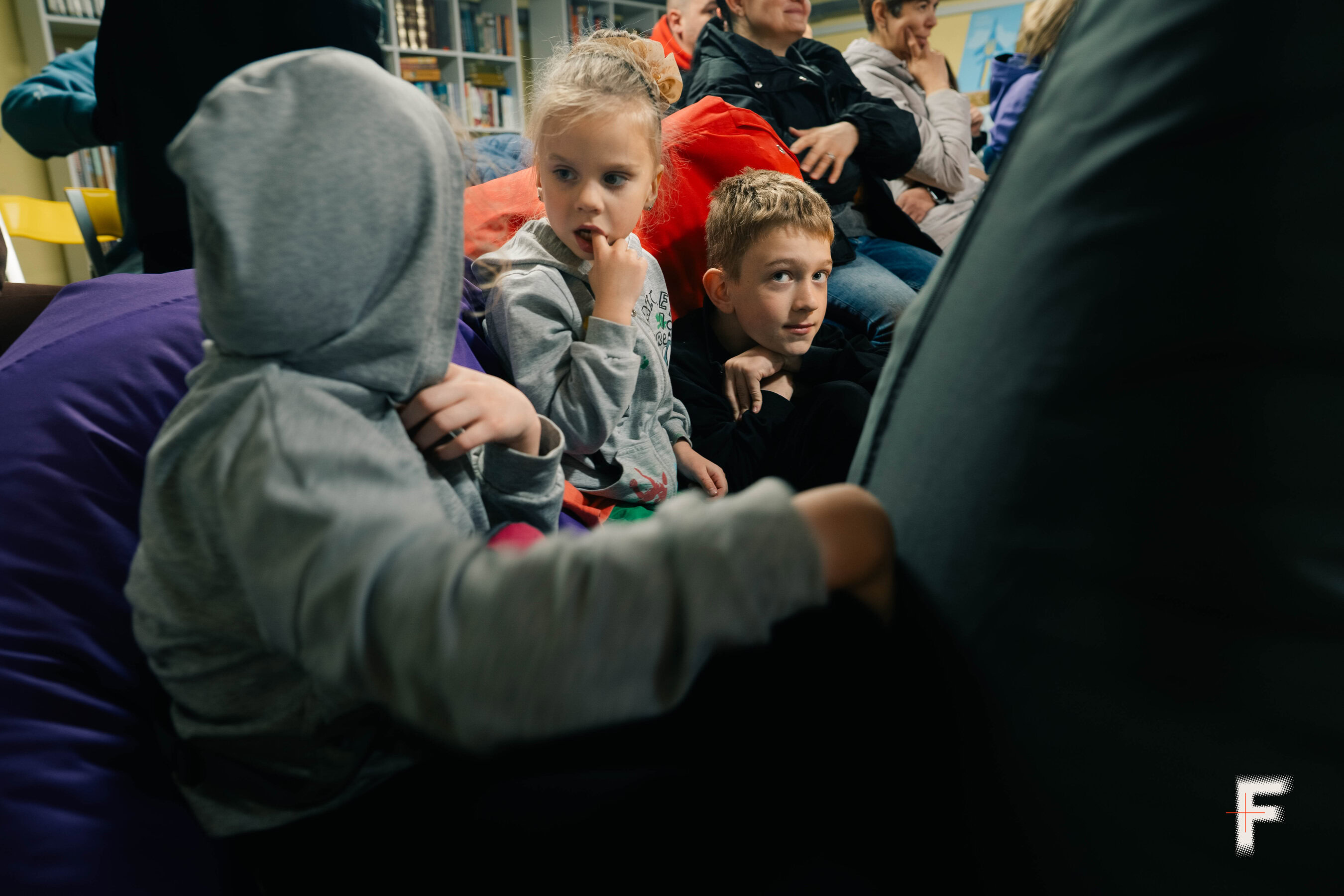
Currently, around 350 children attend the center. They have set up clubs for karate, drawing, English, and robotics, as well as courses in self-defense and first aid. Classes are held in various shelters across the city to make them safer and closer to home. Due to transport disruptions, parents often have to walk their children to classes, choosing routes through courtyards where they can quickly take cover.
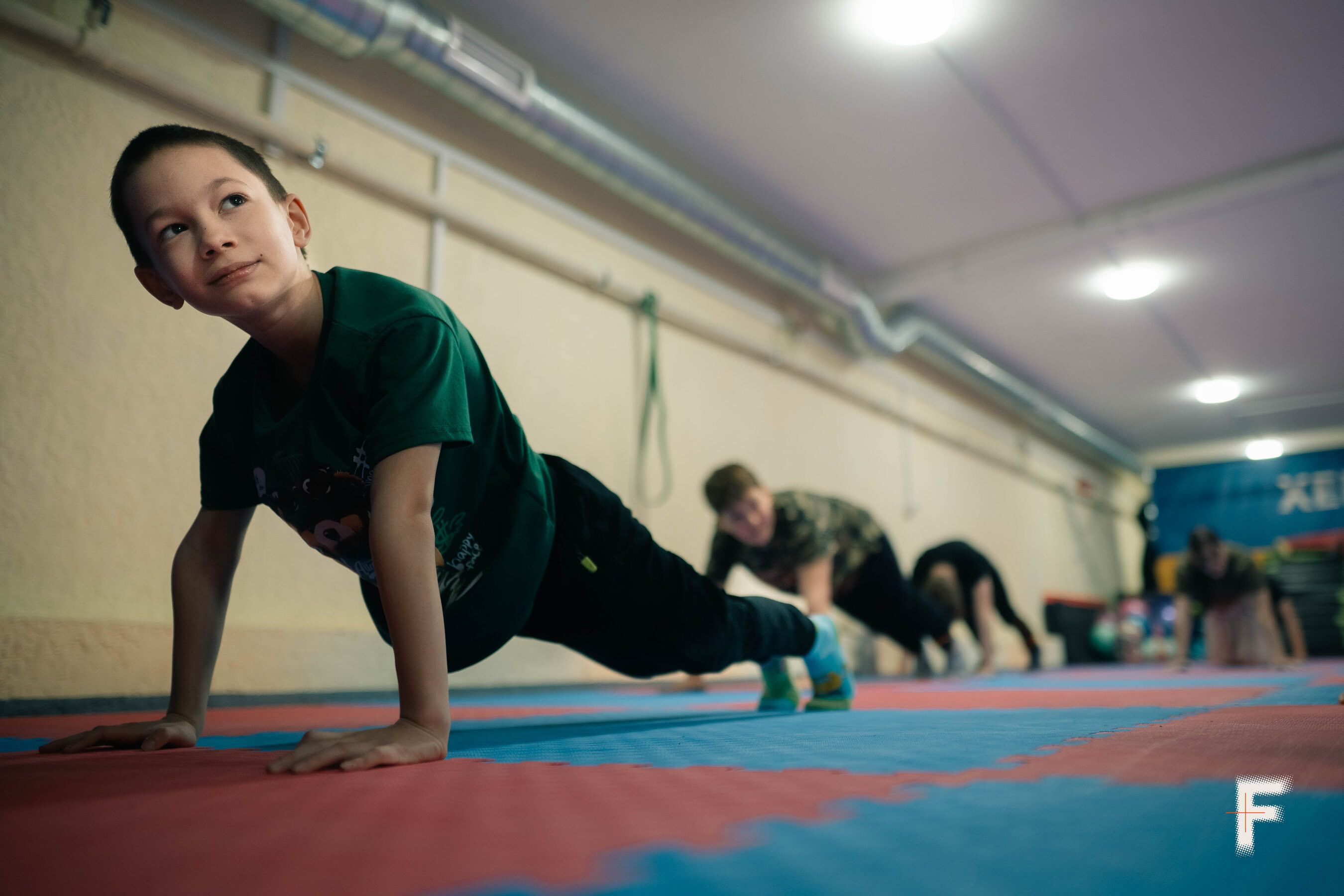
Lidiia Usichenko walks her daughter to karate and self-defense classes. She says she can no longer keep her child cooped up inside:
Staying at home is mentally tough.
But here, she gets to socialize and make friends.
It’s like they have their own little life down in the basement.
Teachers have also observed changes in the children’s psychological state. Alona Petrovska, an art teacher, notes that the colors and themes of the drawing immediately indicate when a child is experiencing difficulties:
“Children unconsciously transfer their emotions onto paper. Over time, as they adapt to the center and start socializing, their work features more and more bright colors.”
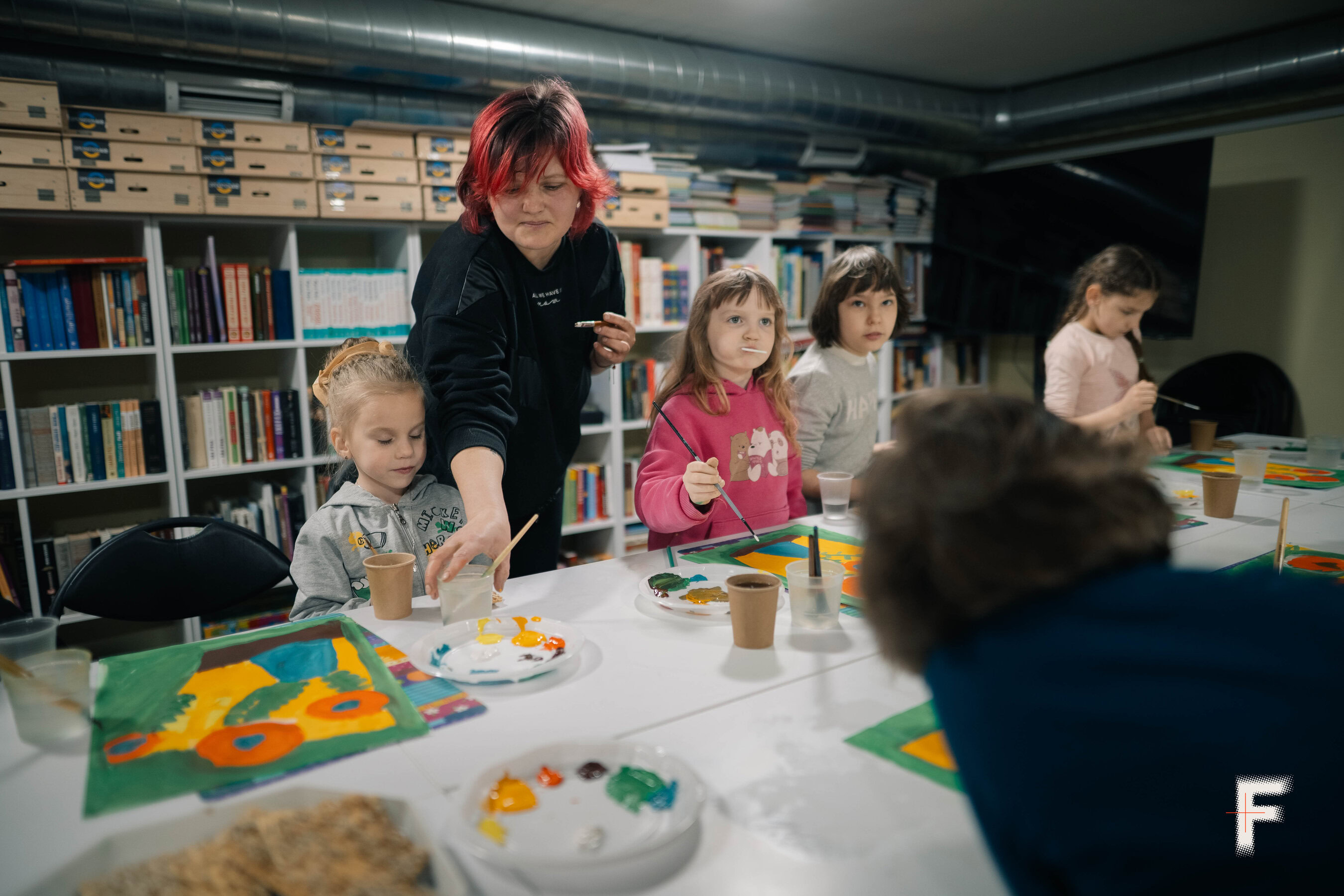
Nine-year-old Sofiia’s parents drive her to the children’s center. When asked if she is scared to move around the city because of shelling, she replies: “No, I’m not scared. Mom will calm me down.”

Seven-year-old Polina is drawing next to Sofiia.
“Most of the time I draw Ukraine in yellow and blue. Sometimes I draw a teacher or a little guy holding the Ukrainian flag,” the girl says.

Despite the constant danger, children in shelters focus on the ordinary things: socializing, making friends, drawing, and playing. They continue to live out their childhoods — the very childhood Russian drones try to steal every day by attacking their city.
***
Hi, we are Ruslana and Marharyta, the authors of this article. Thank you for reading to the end.
This report is about the new reality facing the Kherson region due to massive Russian shelling. It is a story of how life goes on even where no safe place remains. We wanted to show not just the scale of the destruction, but the specific actions of people: how utility workers patch up the same buildings every single day, and how, against all odds, children continue studying in basements. We also wanted to document how the city continues to function thanks to its residents’ efforts.
Every story starts with your support. Join the Frontliner community so we can keep up documenting Russia’s war against Ukraine from the front line and the rear.
***