Work for the occupiers or leave: What’s left for youth in Russian-occupied territories
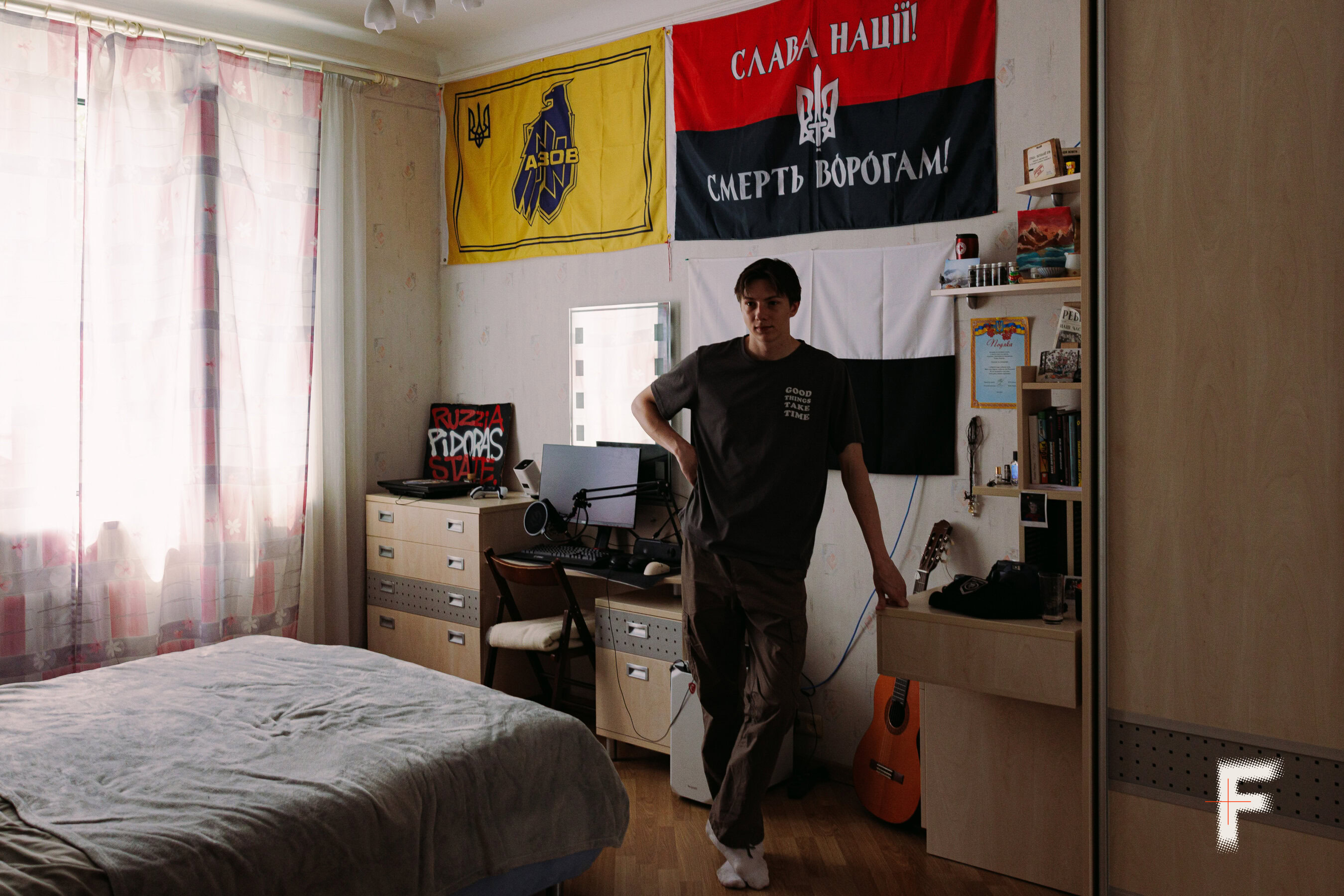
In Kyiv, Dmytro Kruk from the Donetsk region participates in a rally supporting captured Azov fighters. Yet only recently, he was being frightened with stories about them at the Russian border as he escaped from temporarily occupied Khrestivka. With almost no jobs left there, young people had only two options: go to Russia for work or work for the occupation authorities. Frontliner shares his story of returning to Ukraine.
On one of the capital’s boulevards, dozens of people gather with signs and flags. Passing cars honk, and passersby stop for a few minutes as participants of the Free Azov rally once again remind the world of the Ukrainian prisoners of war who still remain in Russian torture chambers. Among those attending the rally is 21-year-old Dmytro Kruk.
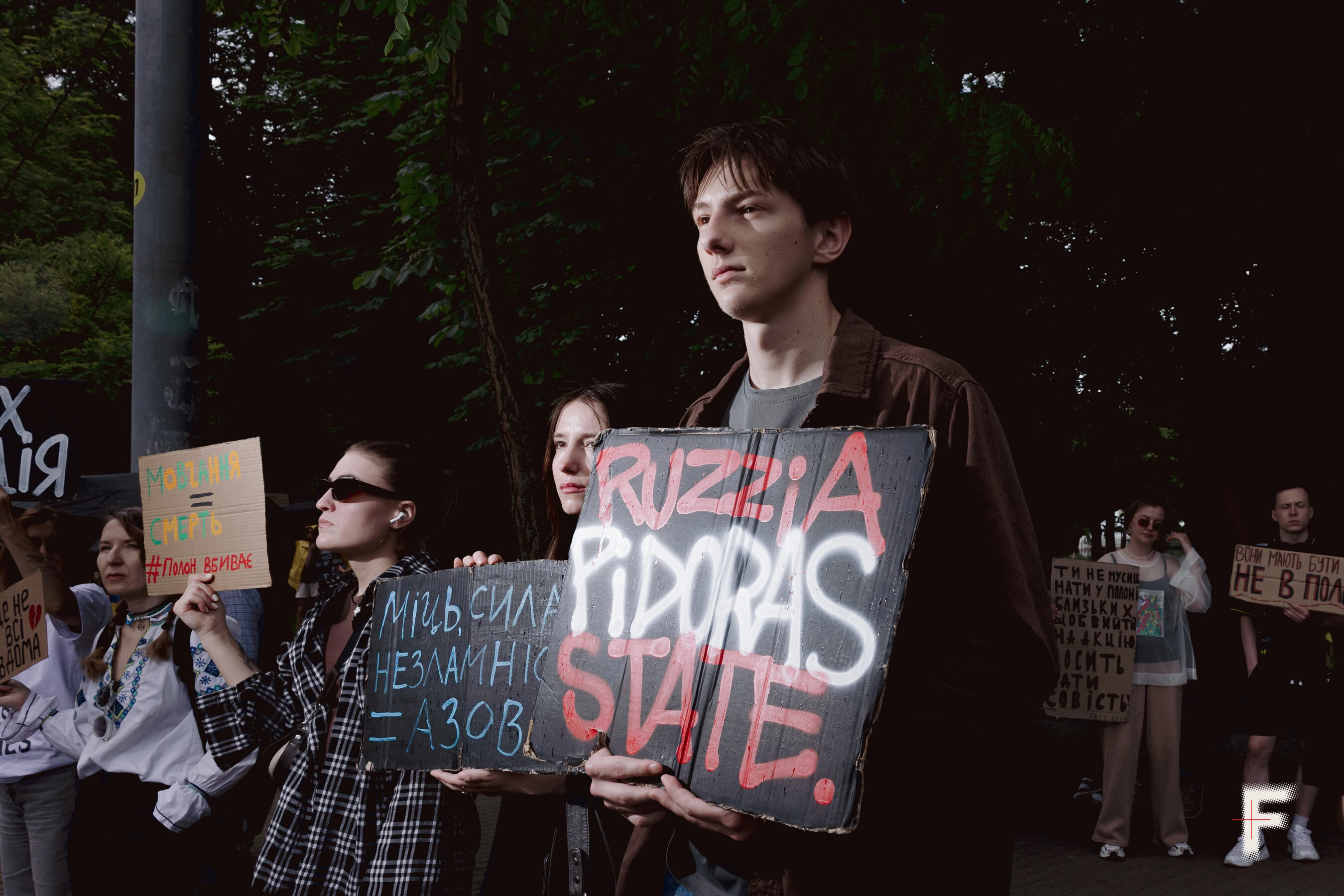
“I try to come here every Sunday because it’s important. People are still in captivity, and we must keep reminding the world about them,” Kruk says.
Just a few years ago, he lived in Khrestivka in the temporarily occupied part of the Donetsk region, and had no idea if he would ever be able to return to Ukrainian-controlled territory.
The young man’s hometown once relied entirely on its coal mines. There was no large-scale business or developed industry outside of the coal mining sector. That is why the mine was more than an enterprise — it provided jobs for thousands of people and served as a symbol of stability.
“Before the occupation, it was just a typical mining town. There were a lot of miners. For us, as kids, that was completely normal as almost everyone had someone working underground,” the young man says.
He was 9 years old when the city fell under Russian occupation. While adults struggled to find a way to make a living, young people were gradually immersed in a propaganda-driven information space. At that age, Dmytro did not fully understand political processes, but he clearly saw how life around him was changing: first with new textbooks, then flags, and eventually patriotic events and appearances by the Russian soldiers.
“We had the Molodaya respublika organization. They showed us patriotic Russian and Soviet films and organized various events for young people,” the young man recalls.

As Dmytro grew older and started looking for a job, he faced the reality that options in the occupied territory were virtually non-existent. The mine, which had once provided employment for most local residents, had almost stopped operating, and no new enterprises had emerged.
After 2022, Russia started actively demonstrating the “restoration” of occupied cities. Schools, hospitals, and administrative buildings were repaired, with local young people also involved in the work.
“We were paid a thousand rubles a shift. The school and the hospital were being repaired, with young people also involved in the process,” Kruk says.
However, such work was temporary. After the repairs were completed, people were again left without a way to make a living. That was when many faced a choice that, in reality, should never have existed.
For many residents of the occupied territory of the Donetsk region, the Russian security forces gradually became one of the few stable employers. This included the police, the National Guard, and occupation administrations, as well as the Penal colony #33, where, according to human rights activists and accounts from released captives, Ukrainian prisoners of war are being held.
“I have an acquaintance who currently works there. He took the job because of the good salary, and there are a lot of people like him. When there are no jobs, people either join the police or go work at the colony. There is virtually no other choice. A friend of mine went to work there, too. After that, we stopped talking,” Kruk says.
Searching for work in Russia
Even though almost all of Dmytro’s friends supported the occupation authorities, he did not hide his pro-Ukrainian stance.
All of my friends knew that I supported Ukraine,
and I knew that they supported Russia,

However, in 2023, Dmytro decided to go to Russia. He says this decision was not ideologically motivated and did not mean he supported the occupation. The young man made this choice because he saw no other way to make a living.
The turning point was a conversation with a friend from Luhansk, who had been going to Russia for seasonal work for a few years, working as a bartender in a local cafe. He suggested that Dmytro join him.
“I realized that I had to earn money. But I also knew that I had no future in Russia. That’s why I went back to Khrestivka. I needed more money, so I started selling my stuff — the motorcycles I owned,” the young man says.
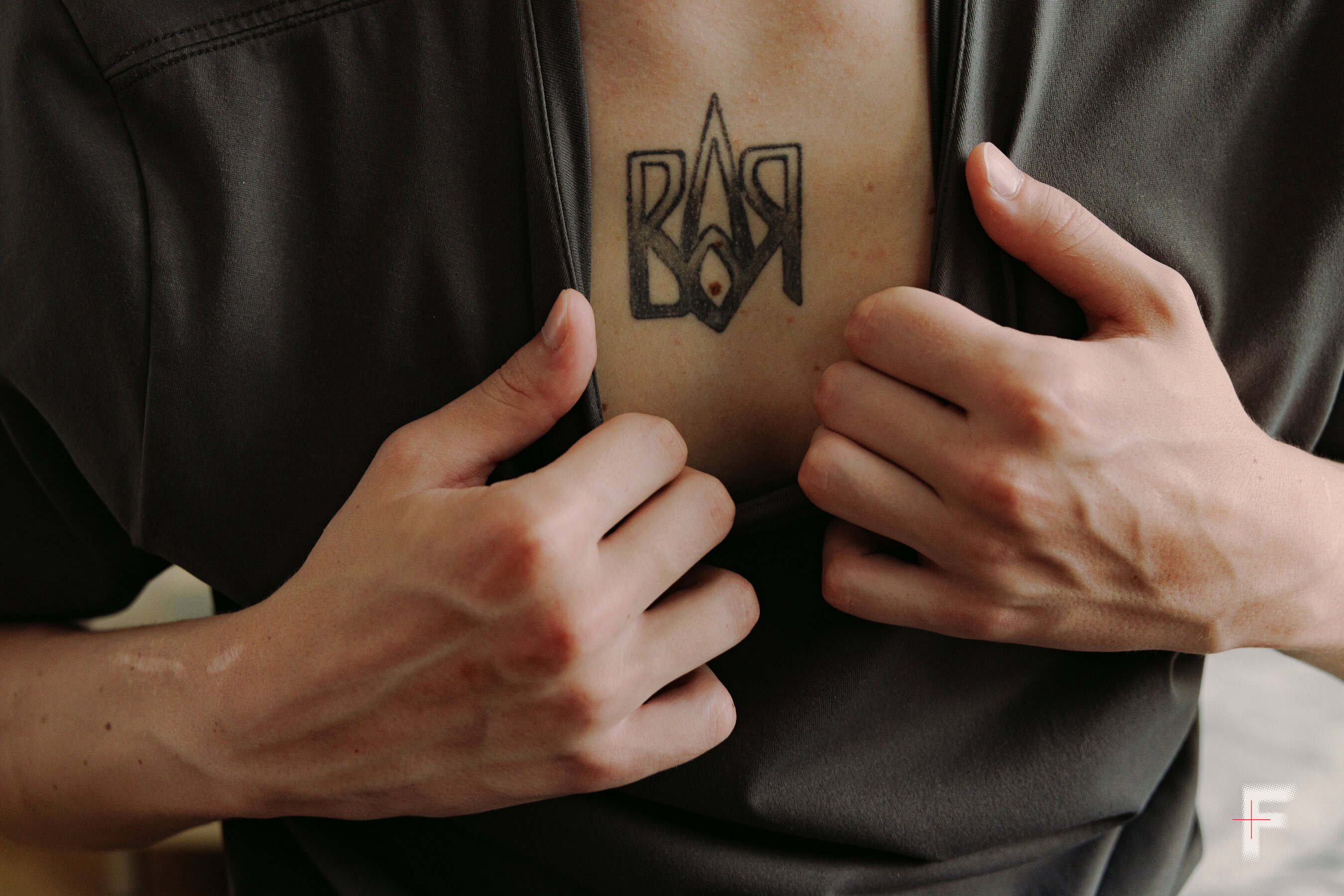
He became increasingly convinced that neither occupied Khrestivka nor Russia was a place where he wanted to build his life. That’s when Dmytro started thinking about leaving for good — not just his hometown, but Russian-controlled territory. To finally burn his bridges with occupied Khrestivka, he decided to take a symbolic step.
In Russia,
I got a tattoo of the Ukrainian coat of arms,
From time to time I passed along coordinates
and information about the Russian equipment I saw,
He knew that if he stayed in the occupied territory, he would eventually be forced to get a Russian passport. That would mean military registration and dealing with the Russian recruitment office, where his tattoo could be spotted during a medical examination.
Leaving for Europe through Russia
After getting the tattoo, the hardest step for Dmytro was leaving. Getting out meant going through Russia first. It’s the route thousands of others have taken out of the occupied territories: into Russia, on to Europe, then back to Ukraine.
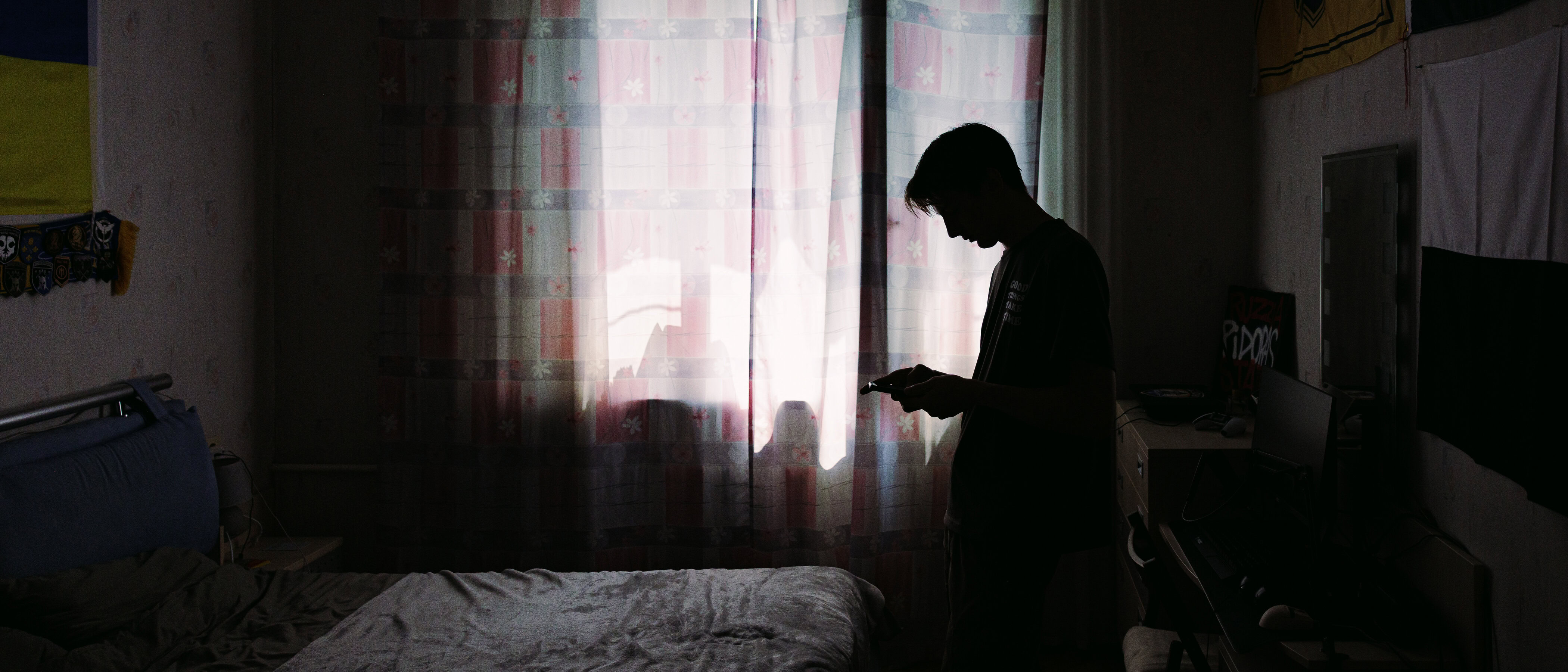
But before that, he had to go through one more inspection — Russian filtration. Dmytro was most worried about what occupiers might find on his phone. Over the years of occupation, it had accumulated chat history about the war, pro-Ukrainian conversations, and messages that could easily arouse suspicion among Russian security forces.
“When the full-scale war started, I messaged a Ukrainian bot about the movement of military equipment in the occupied territories. Then, I was given a contact person, and from time to time I passed along coordinates and information about the Russian equipment I saw,” the young man says.
During the filtration process, he was taken into a separate room. His phone, photos, chat history, and social media accounts were checked. When one of the accounts would not open, the atmosphere changed abruptly, the young man recalls:
“One of the Russians started threatening me with a stun gun. He turned it on right in front of me and demanded to know why I couldn’t log into my account.”
The occupier gave Dmytro a piece of paper with a text he was supposed to read on camera. It expressed support for Russia, Vladimir Putin, and the so-called demilitarization of Ukraine.
I read that text on camera. After that, he told me:
‘if we ever catch you speaking badly about Russia,
we will send this video to Azov, and they will cut your head off’
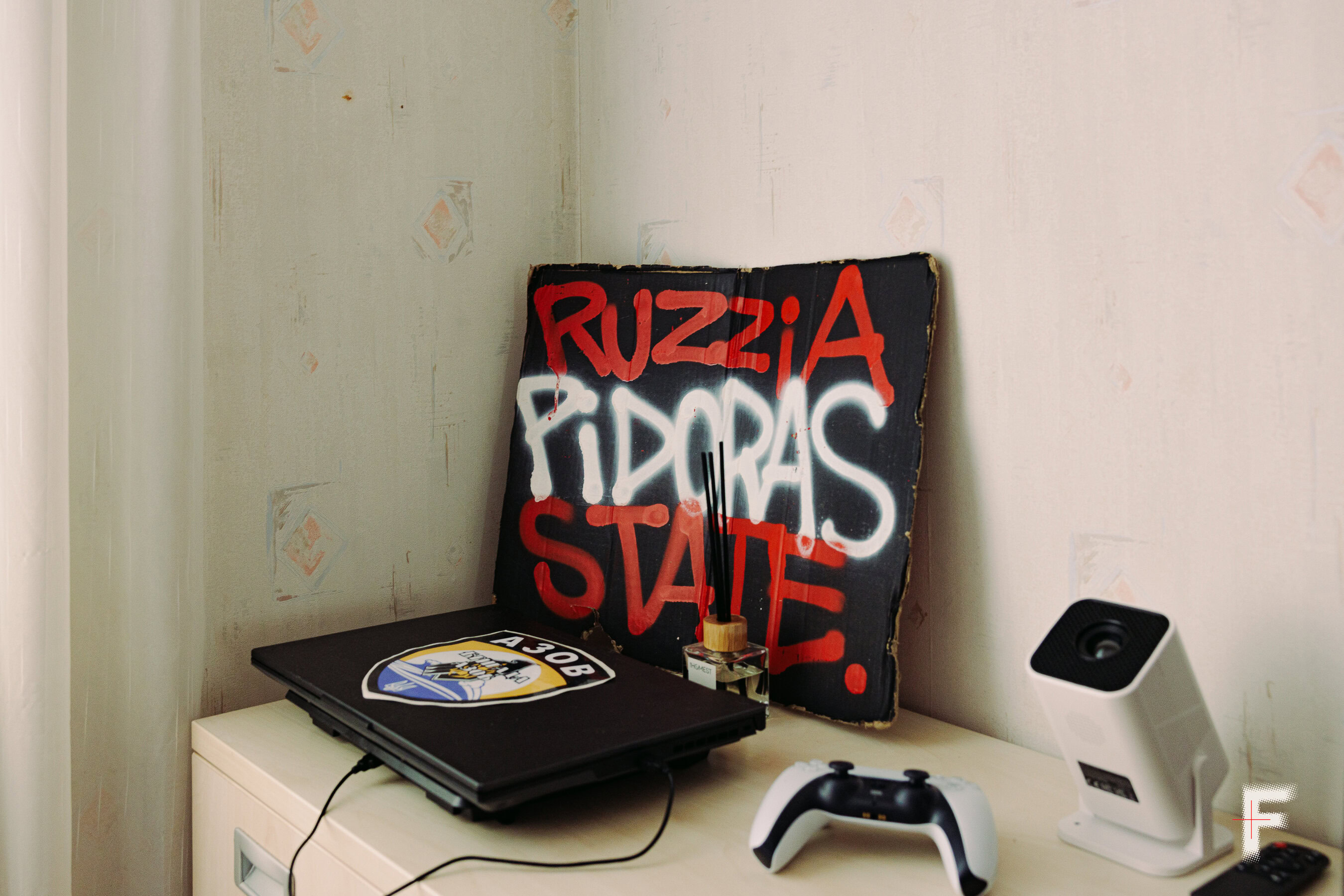
In Khrestivka, as in many other temporarily occupied territories, stories about the “notorious Azov’ were familiar to everyone. Since 2014, residents had been told that Azov fighters hated the people of Donbas and would “kill everyone and destroy everything.” These myths were used to scare both children and adults, serving to explain the war and justify the occupation.
“Even though I was still a minor back then, I didn’t believe it. I mean, it’s just absurd,” the young man says.
Dmytro was also worried that the Russians could see his tattoo of the coat of arms. But he was lucky — they only asked him to lift his T-shirt up to his chest. The tattoo was higher up, and he was able to get through.
Dmytro stayed in Germany for some time. It was there that he finally realized he wanted to return to Ukraine. He says he knew almost nothing at the time about organizations that help people leave occupied territories. Instead, he found all the information in Telegram channels where private carriers offered trips to Europe and back.
“I reached out to the I’Mariupol organization, but they replied that they only help residents of Mariupol. I didn’t know any other organization back then, so I just bought a ticket on my own and went to Ukraine,” the young man says.
Returning to Ukrainian-controlled territory
When Dmytro finally arrived in Kyiv in December 2025, one of the first places he went to was Independence Square.
“Whenever I dreamed about Ukraine, most often it was Independence Square,” Kruk recalls.
The story of a young man who had a choice between working in a penal colony or going to Russia ultimately led him to the place he had always wanted to be. From Khrestivka, he managed to take only a few personal belongings: a Ukrainian flag, a passport from the so-called DPR [Donetsk People’s Republic], and his diplomas.
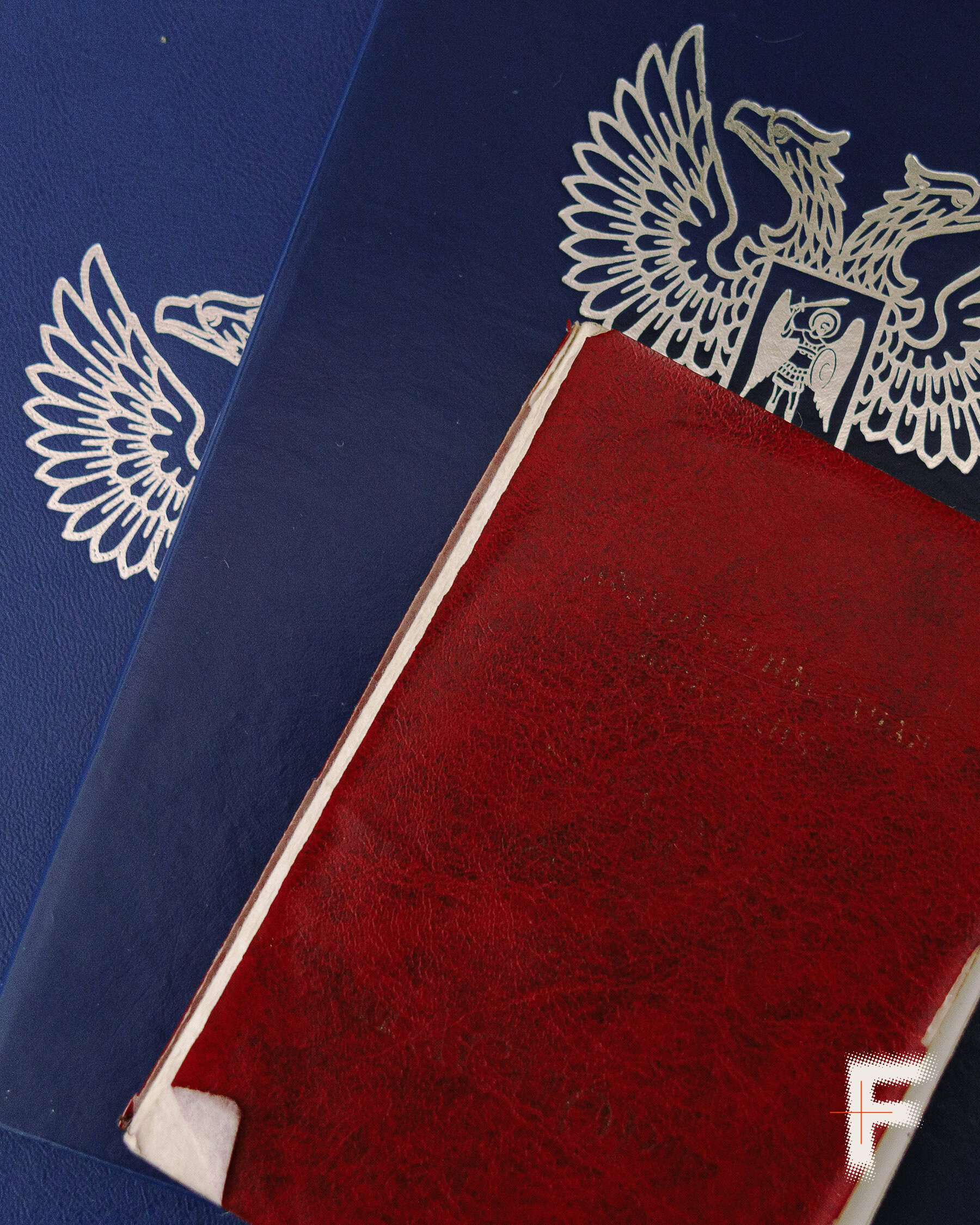
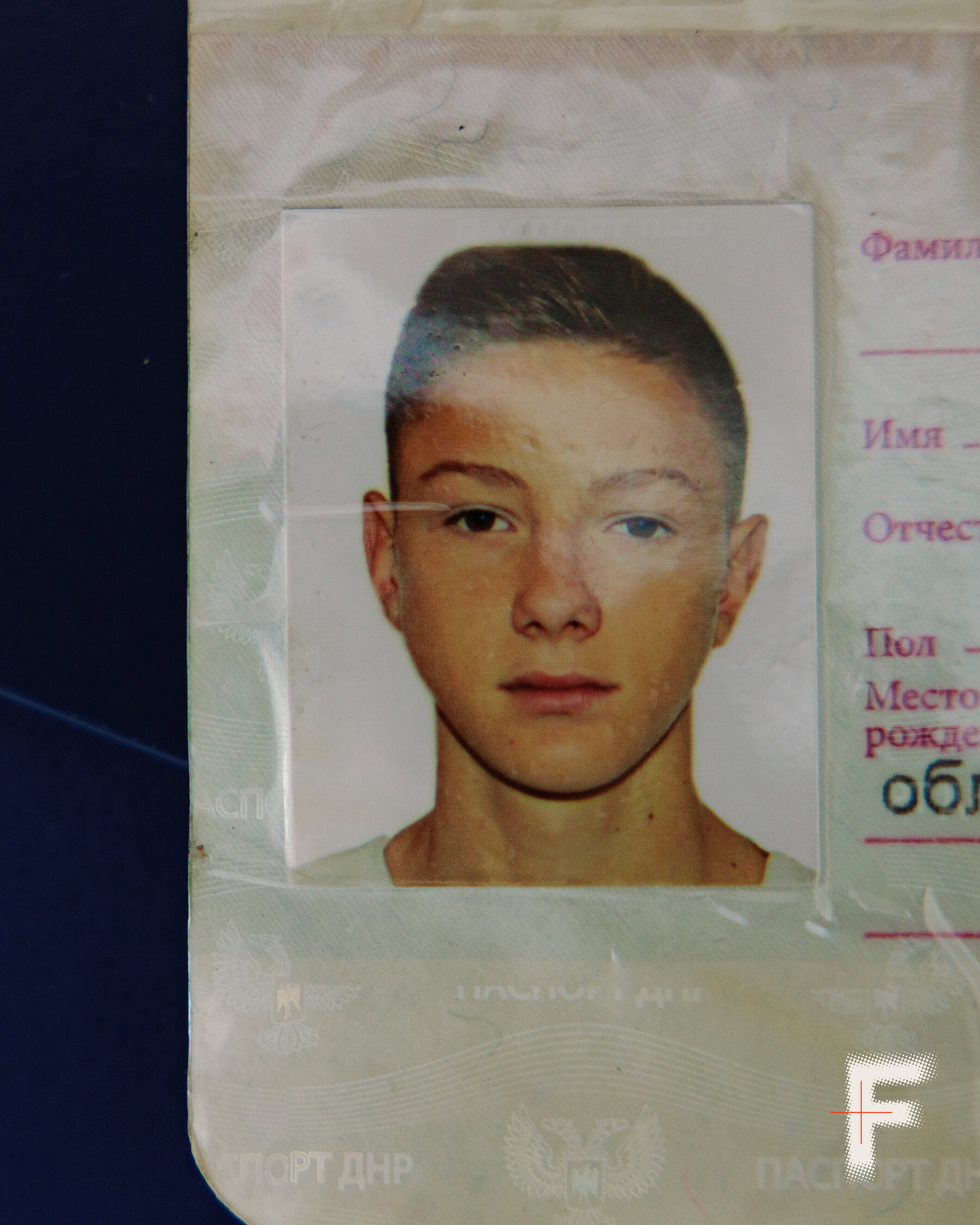
Today his life looks completely different from the one the occupation had mapped out for him. Instead of working in a penal colony or for Russian state structures, he is active in civil society, helping people who have fled the temporarily occupied territories. He has also founded his own organization, Freedefenders, to support Ukrainian prisoners of war. And those whom Russian propaganda spent years using to terrify him have now become the very people whose release he is fighting for.

I don’t need to adapt to life in Ukraine.
There is nothing to adapt to. Ukraine is my home,
***
This story is important not just as the personal experience of a young man from the temporarily occupied territories. It shows how years of occupation change the lives of entire cities, where jobs disappear and young people are faced with a choice between leaving, working in Russia, or cooperating with the occupation regime. At the same time, it is a story of how, even after years under Russian propaganda, people maintain their connection to Ukraine and return home.
Every story starts with your support. Join the Frontliner community so we can keep up documenting Russia’s war against Ukraine from the front line and the rear.
***