Queuing for survival: What awaits people with limited mobility after evacuation
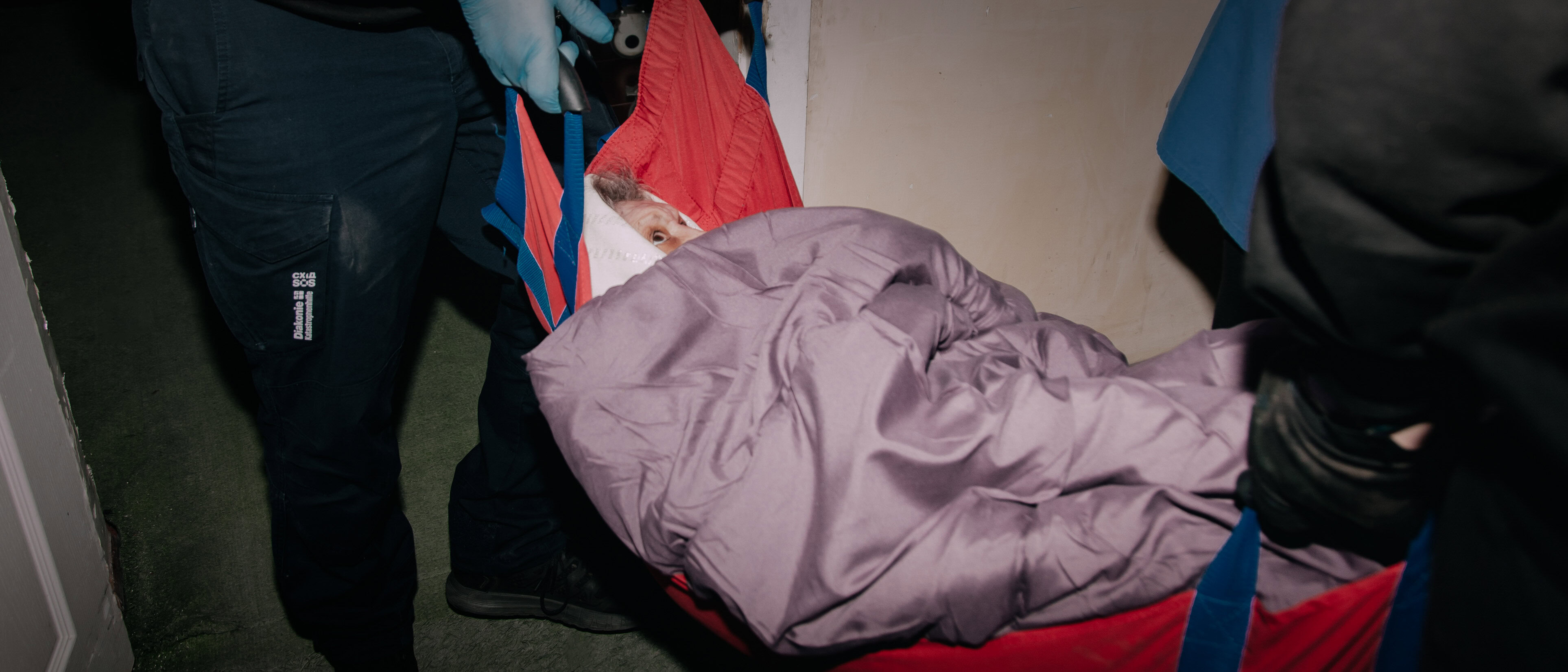
Fleeing the frontline city of Toretsk on foot, living under bombardment at the age of 90 without electricity, water, or gas, being left without care after a stroke in a city shelled daily. These are the harrowing realities faced by people with limited mobility whom the war forced from their homes. Once they make it out of the danger zones, they are left to not only process their trauma but also search for a new home, care, and support. Often, these individuals arrive at their new locations without documents and in severe physical condition. Frontliner explores where and how people with limited mobility live after being evacuated.
Evacuation begins long before the actual departure. Residents of frontline communities are informed about how to leave dangerous areas free of charge and are told about housing options. Furthermore, they are urged not to delay their decision, as the work of evacuation teams may become impossible once shelling intensifies, says Olena Bosa, a social worker at the East SOS Charity Foundation.
They often ask if they can bring their pets.
We never say no.

“We literally go door-to-door to the homes of people with limited mobility and persons with disabilities alongside community heads or social workers,” Bosa notes. “We explain the procedure: what documents and belongings to take, and where to apply. They often ask if they can bring their pets. We never say no, and we accommodate them with their pets.”
At first, evacuees are taken to transit hubs in Pavlohrad, Lozova, Voloske, and Zaporizhzhia. People are brought here by evacuation units like the State Emergency Service’s Phoenix and the National Police’s White Angel, as well as by charities such as the East SOS Charity Foundation. There, people are provided with rest, food, hygiene products, and pet food; they are also accompanied to hospitals and informed about options for further housing.
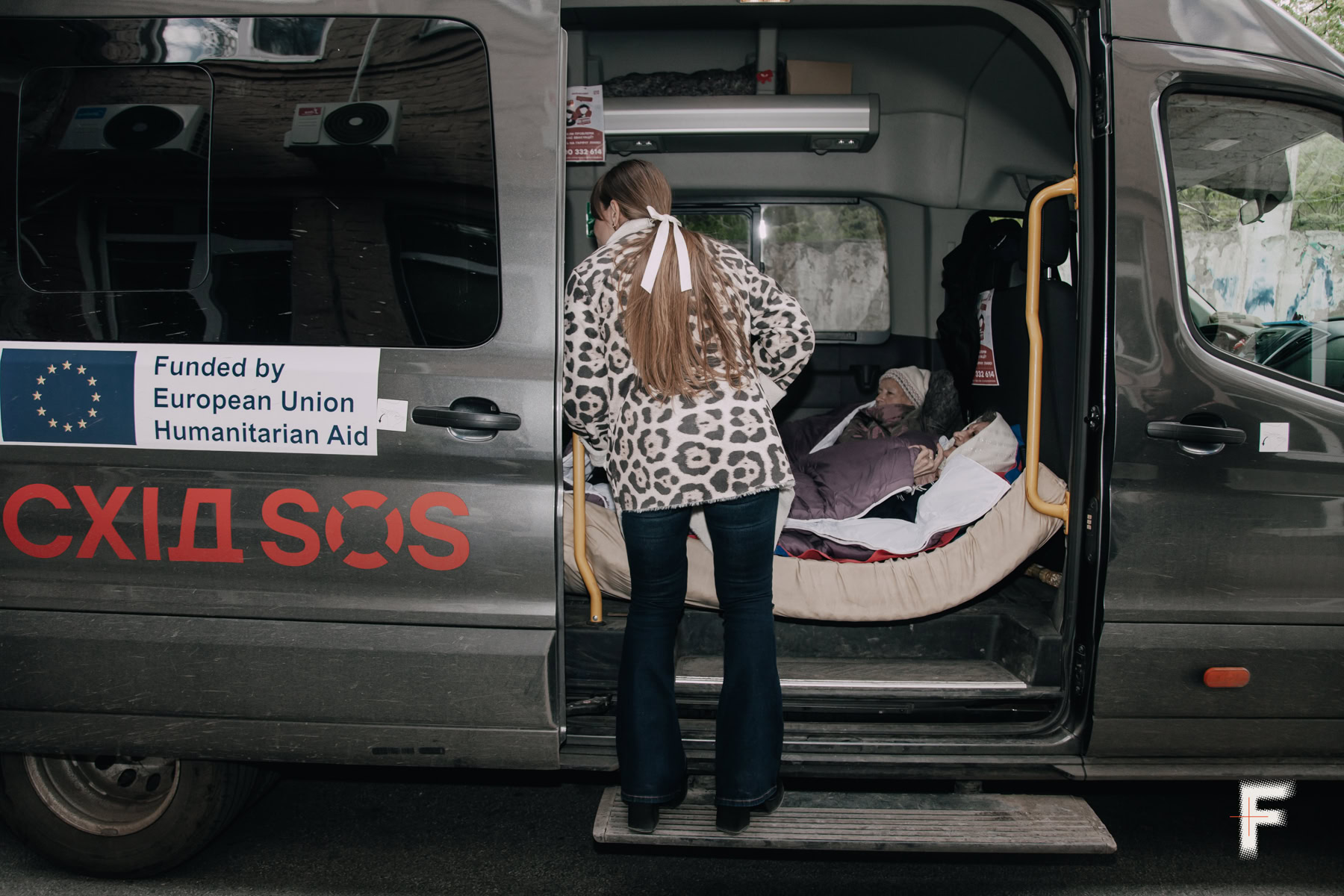
Typically, the East SOS Charity Foundation team transports evacuated people with limited mobility who require constant care to the Okean Dobra social adaptation center for people with disabilities in Dnipro. There, they undergo a mandatory medical examination by a general practitioner and specialized doctors. If a person has a medical condition but has not obtained official disability status yet, the center’s specialists help gather all the necessary medical certificates and documents.
Restoring documents delays evacuations
The foundation’s lawyers constantly face complications when restoring evacuees’ documents. The most difficult cases involve Soviet passports issued in territories occupied since 2014, says lawyer Alina Steblianko. The Migration Service lacks access to archives to verify their authenticity. If a document is lost, the process of establishing a person’s identity through employment records or courts can take years. Online identity verification with relatives in the temporarily occupied territories (TOT) is possible via video call.

However, people living under occupation are often afraid to make contact, or they lack the Ukrainian passport required for the official procedure. There are also systemic issues: for example, a person might only have a paper birth certificate from the TOT, but the civil record is missing from the electronic registry. This creates a catch-22: you need a passport to restore the record, and you need the record to get a passport. In some tragic cases, an individual passes away before their official status can finally be documented.
At the same time, people with limited mobility are assisted in overcoming logistical barriers. Representatives of the State Migration Service, banks, and social protection services either visit the center in person, or evacuation teams are brought in to transport the evacuees with limited mobility.

Because of the lengthy paperwork process, people often get stuck “in limbo” at the center for extended periods. This leads to a shortage of beds to accommodate newly evacuated people with limited mobility from hot spots, creating a “queue for survival.” Opening new similar facilities could solve the problem, but this requires colossal funding for equipment and staff salaries.
Post-evacuation living conditions
Before being evacuated from frontline areas, the majority of people with limited mobility spend months surviving without gas, water, power, or heating. After leaving, their most immediate needs are the simplest ones: a hot meal, a shower, and rest. Due to advanced age or illness, some individuals cannot take care of themselves. To support them, the Okean Dobra social adaptation center provides 24/7 care, with facilities fully adapted to accommodate people with disabilities. Ninety-year-old Vira Strielnikova evacuated from Sloviansk because staying there was becoming increasingly difficult:
“My husband underwent surgery and is severely disabled; he needs care,” recalls Vira Strielnikova. “Besides, I’m at an age where everything is a struggle. I survived the previous war, the famine, I have chronic illnesses, and I recently suffered my third hypertensive crisis. Back home, there’s no power, we only have a heating stove, you have to buy and bring your water, there’s no public transport, and the strikes were getting more frequent, hitting closer every time. I remember heading down to the market in the center when something just exploded. It absolutely terrified me! So my hubby and I finally decided it was time to go.”

I’m at an age where everything is a struggle.
I survived the previous war, the famine.
The couple has been living at the adaptation center since April 2026. Vira often goes for walks, does exercises, and reads a lot. She dreams of them finding permanent housing in a region closer to their native Sloviansk.
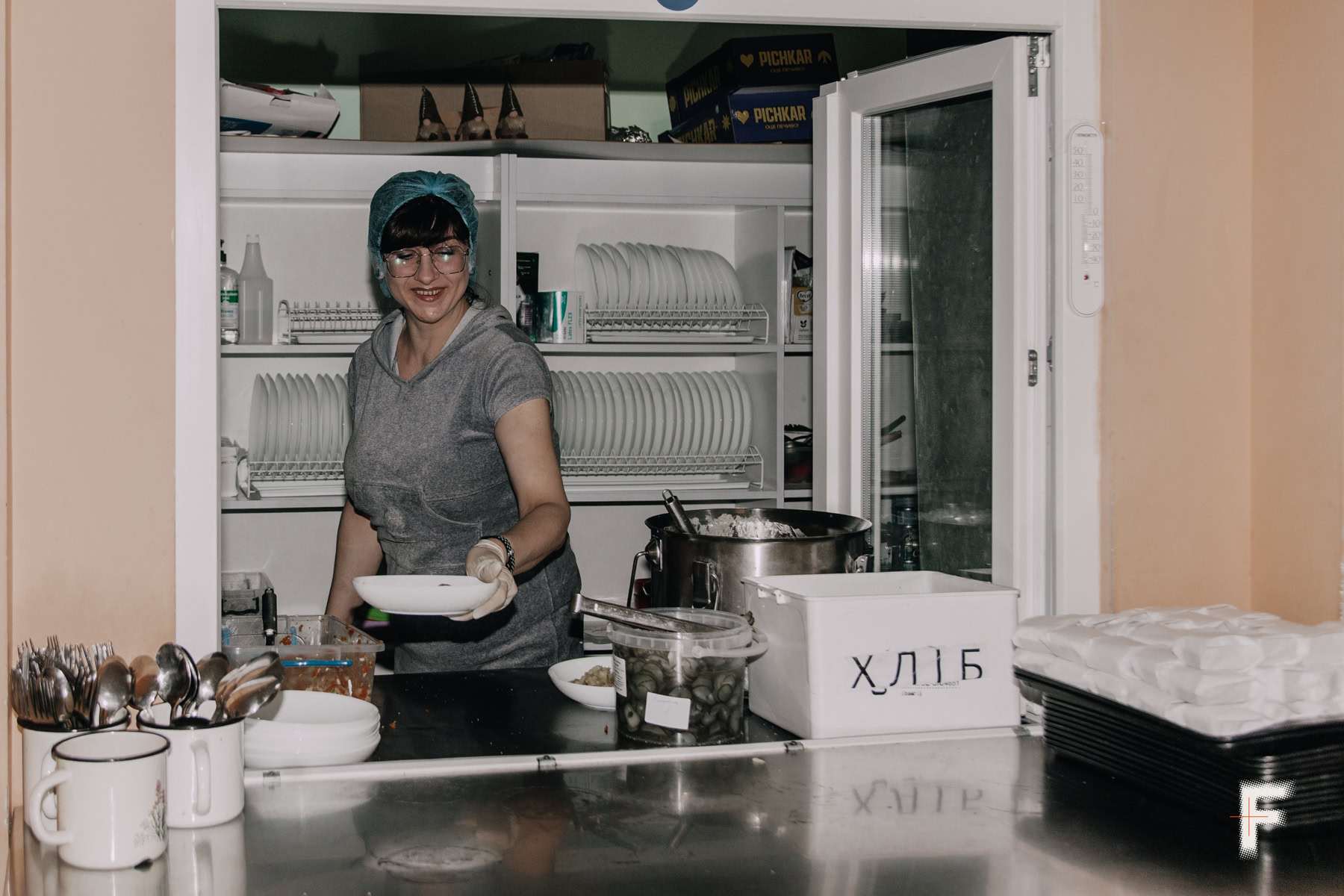
Currently, 74 people live at the center. People are accommodated on a per-bed basis, although every effort is made to place families and married couples in separate rooms. The facility’s residents receive four meals a day. However, Olha Volkova, head of the board of the Okean Dobra NGO, believes that the nutritional standards approved back in 2002 need to be revised: the standardized menu includes foods that are hard to digest and can worsen the condition of people with chronic illnesses, particularly diabetes.

Rehabilitation for people with limited mobility
Care at the center goes beyond basic needs. Rehabilitation specialists help residents become more independent and regain skills lost due to age or illness. They are taught how to use walkers, transfer from a bed to a wheelchair, and use the restroom independently.

Sometimes, it is possible not only to help people regain lost skills but literally get them back on their feet. Rehabilitation specialist Tetiana Podziuban shares that a few months ago, 55-year-old Yurii Bondarenko was brought to the Okean Dobra after being bedridden for 13 years following a stroke.
“When they brought me here, I was stiff as a board, only my tongue worked,” says Yurii Bondarenko. “I never imagined I would stand on my own two feet again after 13 years. But now I’m already going outside!”

After two months of working with the center’s specialists, Yurii mastered the wheelchair, learned to handle his daily personal care independently, and is currently learning to walk all over again.
The center is equipped with a standing frame, an elliptical trainer, ski and rowing machines, a treadmill, and special tables for restoring finger and wrist motor skills—all of which are available for use by all residents. In addition, morning exercises, as well as individual and group physical therapy sessions, are held daily for anyone interested.

Where evacuees are housed
Evacuated people with limited mobility who require care are accepted for permanent residence by geriatric care homes, psychoneurological facilities, and boarding homes for war and labor veterans. These facilities withhold 75% of a resident’s pension to cover everyday expenses and medical care. The individuals get to keep the remaining 25%, along with their internally displaced person (IDP) benefits. Liudmyla Apostol, a resettlement specialist for the East SOS Charity Foundation, notes that most evacuated people with limited mobility receive minimum pensions, making this system advantageous for them, as they could never afford such living conditions on their own.
Medical facilities accept individuals for a period of 30 to 60 days, even without a complete set of documents. There, evacuees receive care and meals, and are assisted with the paperwork needed for their subsequent relocation to permanent housing. People with severe late-stage illnesses, such as stage four cancer, are referred to hospices or palliative care units.

There are also private care homes that operate on donor funds and accept individuals under the experimental state program “Money Follows the Person.” Through this initiative, the state pays for residential care or supported living services at a facility of the person’s choice.
The housing process is far from automated: specialists have to manually call various institutions to find available beds and verify conditions. Spaces are in short supply, and so are social workers. Furthermore, no specialized psychoneurological institution will admit individuals with mental health disorders without a complete set of paperwork and an assessment from a medical advisory commission.
The maintenance of these facilities is funded by local budgets,
and host regions have exhausted their resources since 2022.
It is financially very difficult for them to take in new people.

When temporary housing becomes a long-term refuge
Another place where evacuees can be housed is in temporary accommodation centers (TACs). Typically, such shelters are located in rural communities or small towns, and they are created by repurposing existing buildings, such as former dormitories or schools. A person can live in such a place for six months, with the possibility of an automatic extension of their stay.

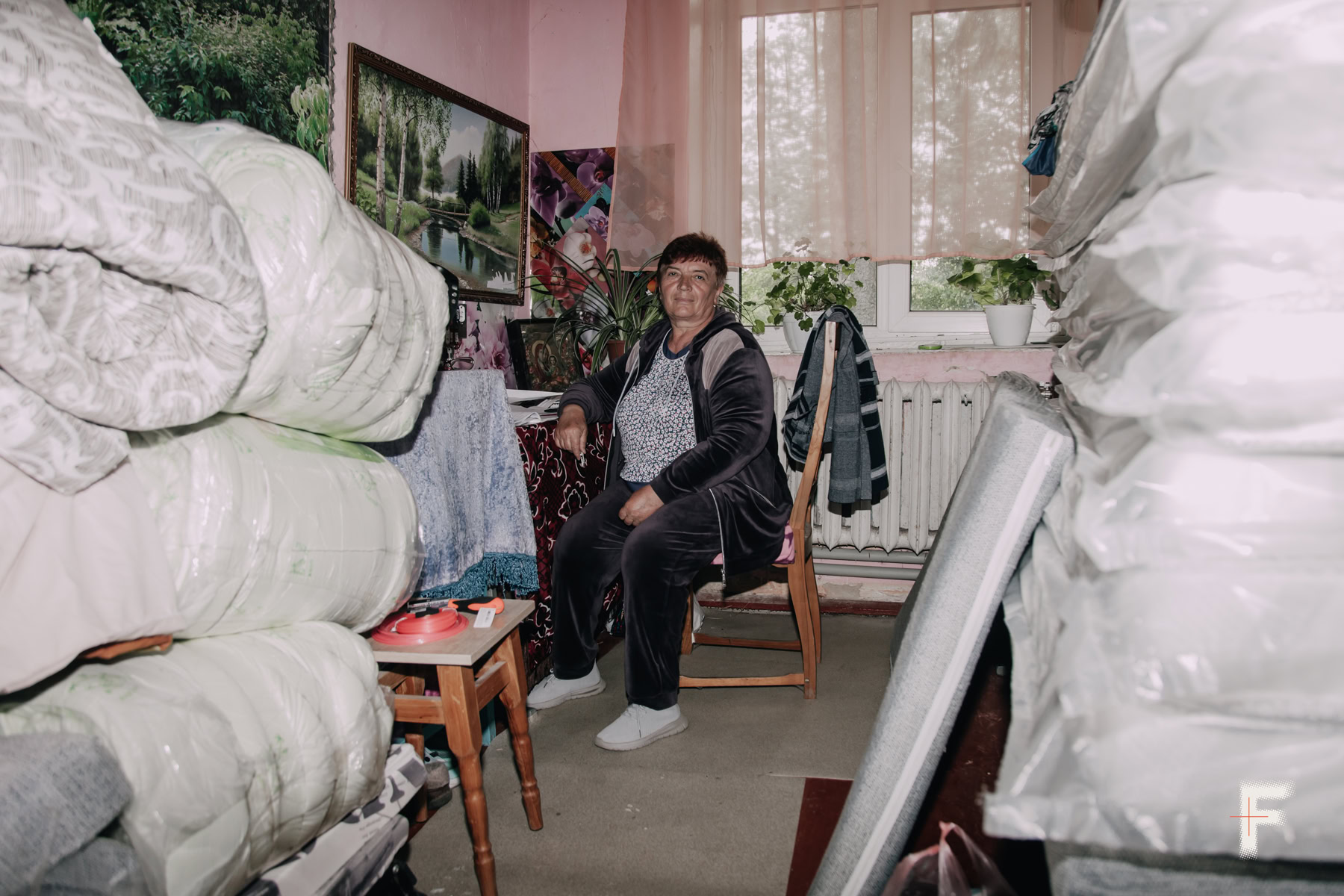
For instance, the building of a former school in the village of Semky, Vinnytsia region, is home to 23 retirement-age individuals and people with disabilities who are cared for by their relatives. Today, the building looks more like a dormitory, and the only reminders that it was once a school are the student wall newspapers and portraits of writers left hanging on the hallway walls. Former classrooms have been transformed into bedrooms and a kitchen. The facility has been upgraded with accessible restrooms and showers for people with disabilities, washing machines, dryers, refrigerators, and other necessary household appliances. During the cold season, the TAC is very warm: residents say they walked around in T-shirts this winter. If someone needs medical assistance, they can visit the paramedic in the village, and if necessary, specialized transport takes residents to the district hospital.
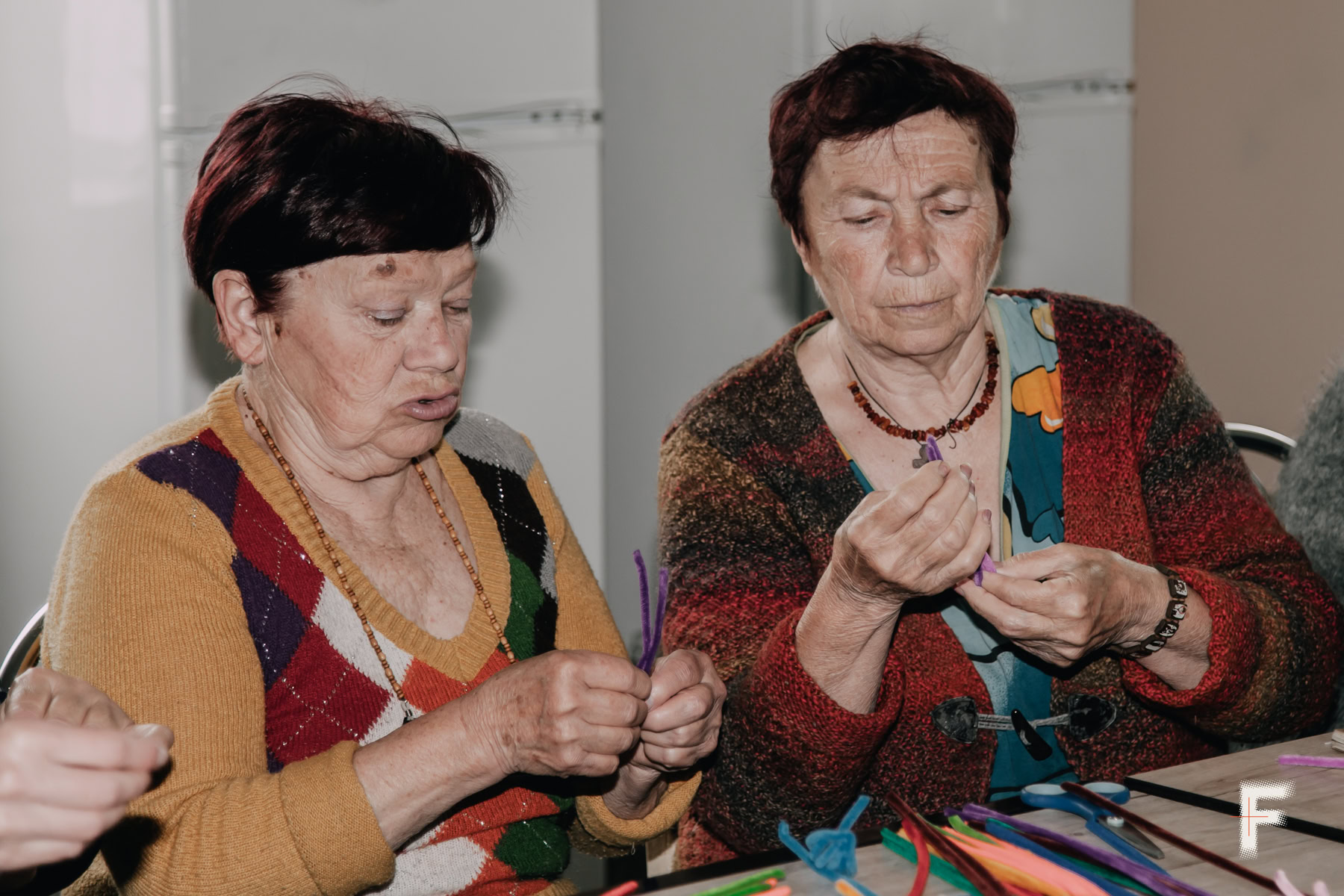
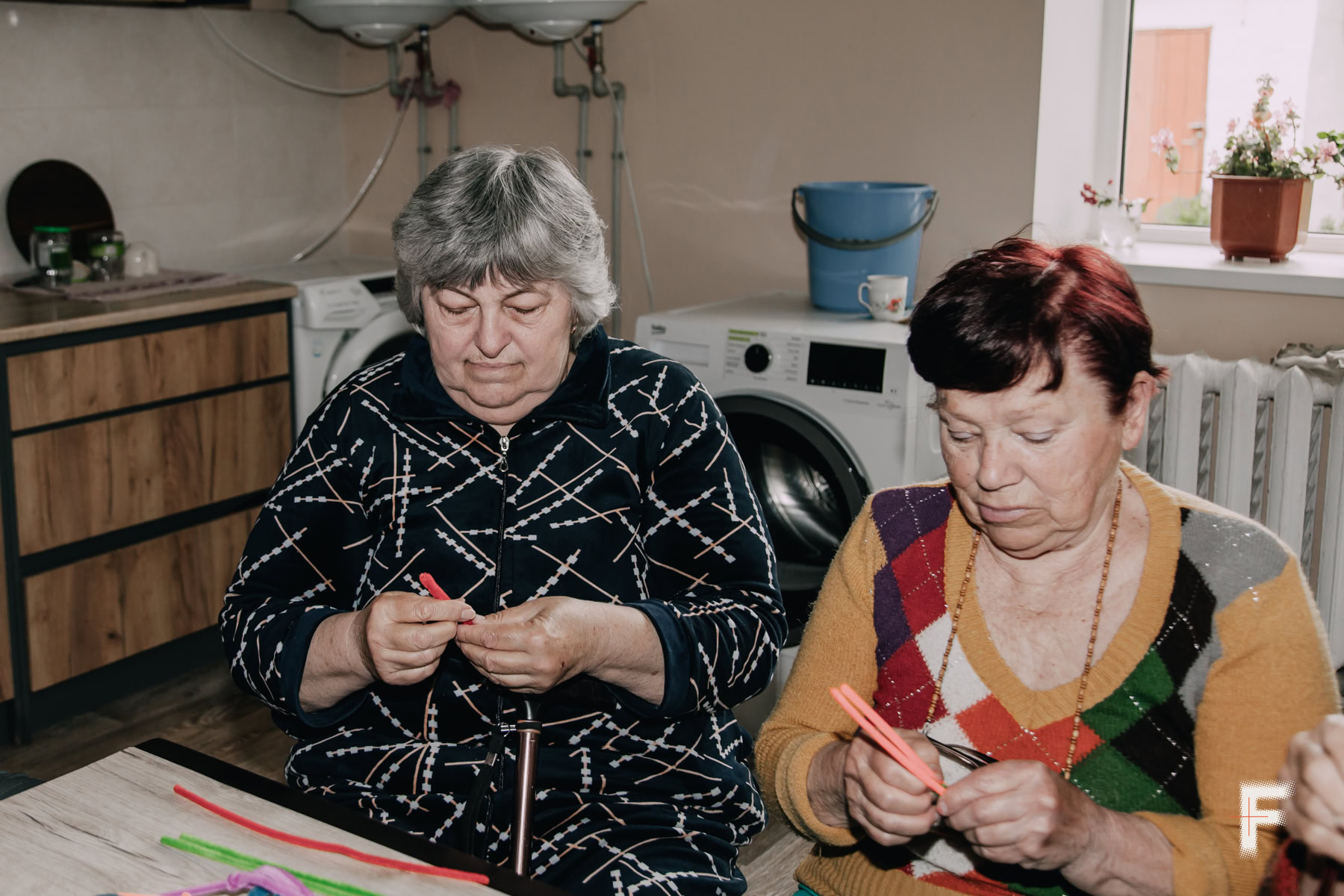
Vira Chernysh and her son, Yevhen, have called Semky home for the past five months. Vira is severely visually impaired, so her son acts as her full-time caregiver. In the fall of 2024, the family fled Toretsk after their home burned down during a shelling attack.
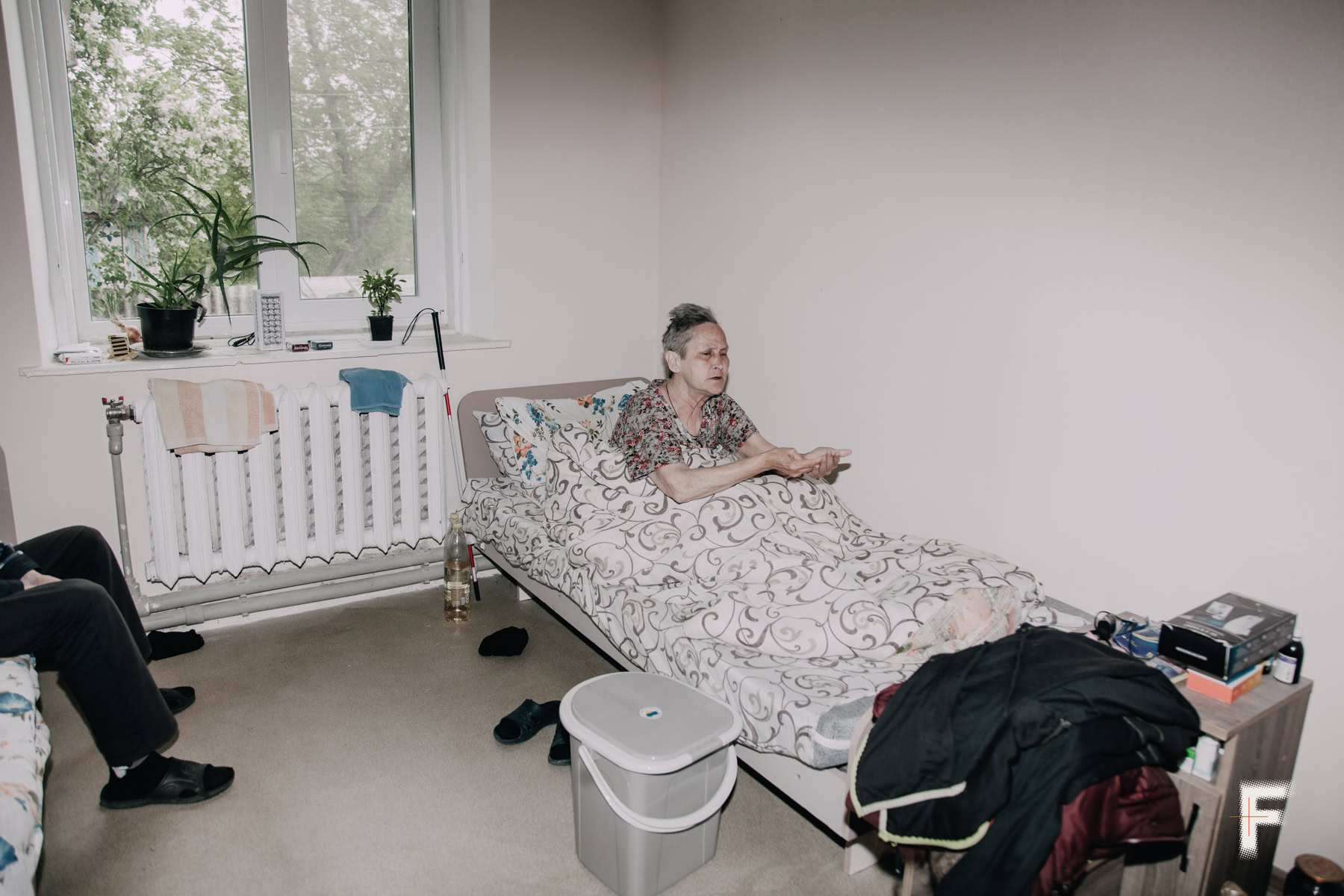
We made it out of Toretsk on foot, walking all the way to
the checkpoint in Kostiantynivka. I kept asking my son to leave me behind
because he had to both carry me and guide me, as I can’t see anything.
The family appreciates the nature and peace in Semky, though Chernysh admits that her loss of vision leaves her longing for more social interaction and walks beyond the courtyard gates.
Residents remain at the temporary shelter for different lengths of time—some leave to join relatives after six months, while others stay for years. Among the latter is 72-year-old Petro Zabolotskyi, who evacuated from Chasiv Yar with his family in July 2022. He has settled into his new surroundings and found a way to take his mind off the grim thoughts about his destroyed home: he planted a vegetable garden right in the TAC’s courtyard.

“I just love getting my hands in the dirt. Besides, it’s better for my health than lying in bed,” Zabolotskyi notes.
Eventually, other residents joined him. Today, the garden beds are full of vegetables, fresh herbs, and grapes, and the residents use their crops to make winter preserves.
“People stay because they have nowhere else to go,” says facility manager Valentyna Kozlovska. “Meanwhile, it is quiet and peaceful here. Nothing is falling from the sky, thank God.”
Evacuation is a measure of last resort, a balancing act where life sits on one side of the scales, and the agony of losing a home on the other. It is the loss of something far greater than mere walls. People leave behind everything they have built over the years: their friends, familiar comforts, and peace. Many of the elderly people will never see their homes again, passing away in shelters. But to stay means hiding from glide bombs daily and dodging FPV drone strikes just to get humanitarian aid. Leaving means relative safety and peace. The walls may be unfamiliar, but they come with a warm bed, a hot meal, and people who understand and are trying to help.
***
Hi, I am Oleksandra, the author of this article. Thank you for reading to the end.
At the beginning of the full-scale invasion, I stayed in a frontline city with my mother and grandmother, who had a severe case of Parkinson’s disease. During the first months, when the Russians were constantly trying to capture the city, my greatest fear was the very thought of having to transport my grandmother somewhere. I knew I couldn’t do it in a regular car, and I had no idea: even if I managed to evacuate her, where would I settle her? Because of this personal history, the topic of evacuating people with limited mobility has always weighed heavily on my mind. I wanted to understand if there were any real options to get out and not end up all alone in a strange city.
Every story starts with your support. Join the Frontliner community so we can keep up documenting Russia’s war against Ukraine from the front line and the rear.
***