Cinema history in ruins: What was lost in the Russian strike on Dovzhenko Film Studios
Yet another Russian strike has destroyed the largest and oldest costume workshop at Dovzhenko Film Studios. The attack was a devastating blow not just to the nation's film industry, but to the people whose entire lives were dedicated to this workshop. The Frontliner team visited the studios to learn about the value and uniqueness of the destroyed cultural heritage, as well as to see what was left intact.
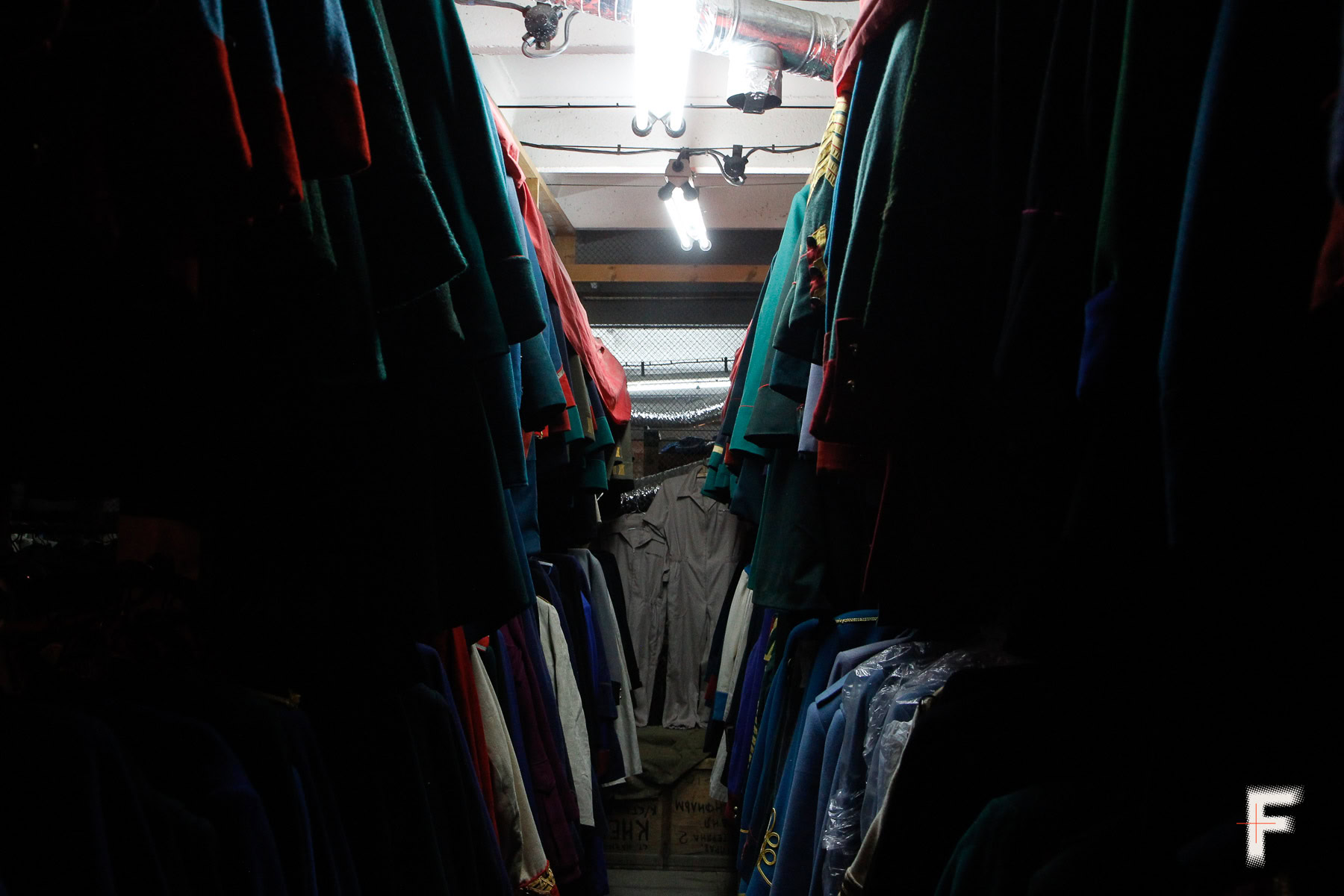
They called it the “Ukrainian Hollywood.” The Oleksandr Dovzhenko National Feature Film Studio began in 1927 as the Kyiv Film Factory and became the largest not only in Ukraine but in the former Soviet Union. Over nearly a century of existence, the costume workshop’s collection reached almost one hundred thousand costumes and over three million items of clothing, footwear, and props.
-
The costume workshop of the Oleksandr Dovzhenko National Feature Film Studio, Kyiv, Ukraine, October 8, 2025. (Yurii Bochan/Frontliner)
-
-
“Everything burned down”
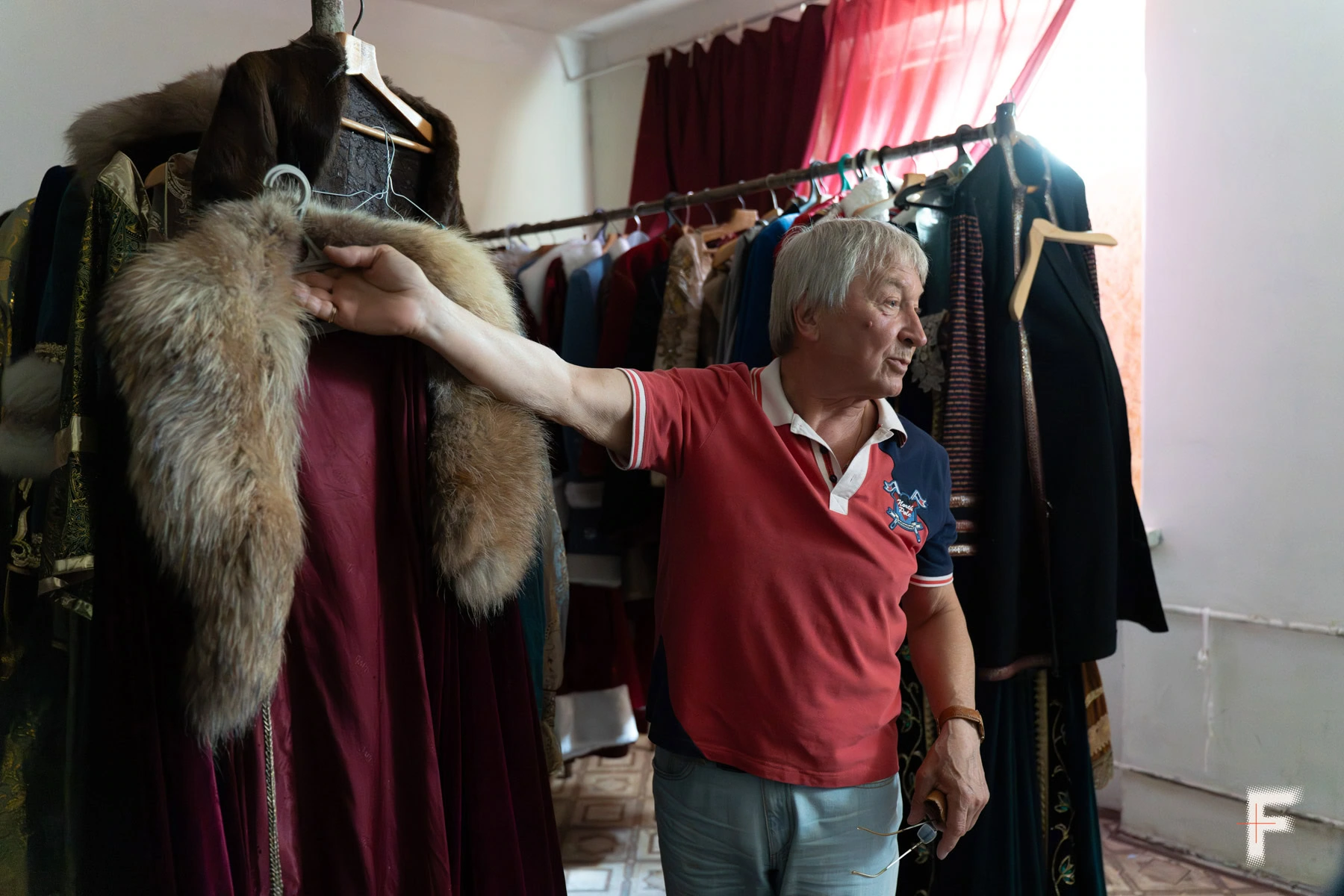
Anatolii Didkivskyi, the head of the costume and tailoring department, worked in the workshop from the age of 18 until he was 69. When we tried to arrange an interview over the phone, the man burst into tears and admitted that he was still too shaken to give any comments. However, the next day, speaking directly at the studio, he revealed that the workshop stored costumes for such iconic films as Shadows of Forgotten Ancestors, Zakhar Berkut, The Legend Of Princess Olga, Only Old Men Are Going Into Battle, Chasing Two Hares, Bohdan Khmelnytskyi, Mazeppa, and others:
“All those films that were shot at the studio… All the costumes were handed over to our warehouse. Over 100 years, we had gathered so many of them. There were such details there, like epaulets and custom hardware. Everything burned down, absolutely everything! A few costumes survived, the ones kept in the dressing rooms, but it’s not much.”
According to him, many costume designers the workshop had previously collaborated with are calling and offering to donate their own costumes to slowly rebuild the lost collection. Meanwhile, Naftogaz has promised to help fund a new facility. However, even with such support, recovering the scale of what was lost will not be easy.
“What can I say?” the man laments. “I have no words left. Apparently, they’re looking for a space; they told us they’d rebuild [the workshop], and so many people have already reached out, wanting to give us their costumes. We’ve had calls from abroad, people promising to donate things… This, I just want to say… this is a disaster…” At this point, his voice breaks, and Didkivskyi walks away.
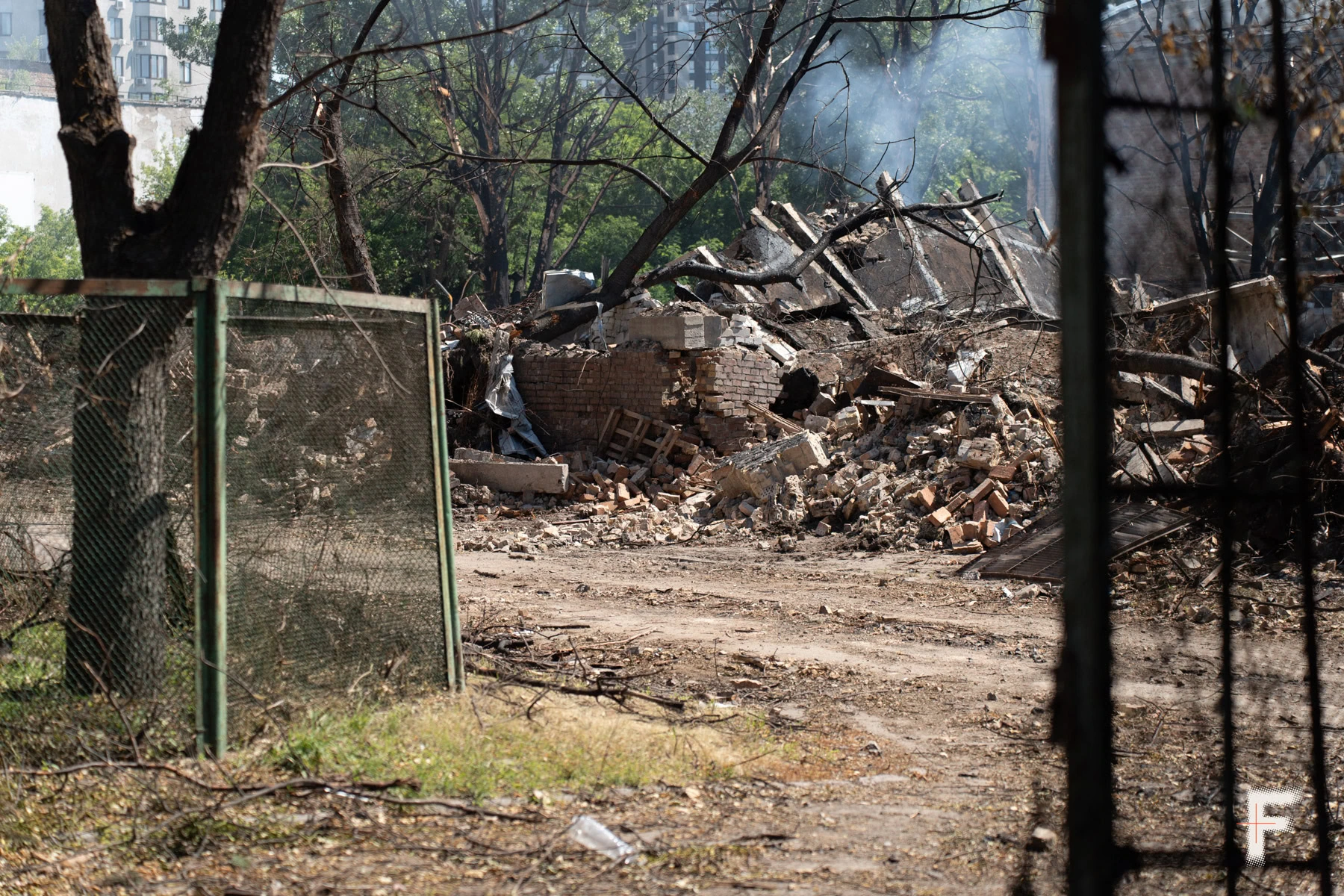
This is not the first attack on the film studios in 2026. In early June, the warhead of an Iskander ballistic missile crashed onto the Dovzhenko premises. The impact left a crater and damaged the heating and sewage systems. Windows in the buildings were shattered. Not far from this crater, a group of young people is trying to get inside one of the facilities. A man sitting in a nearby car scolds them for their recklessness, pointing out that no one knows exactly where the missile landed or if it’s even been defused, yet here they are, walking around in a crowd. They jokingly reply that they are practicing the “dispersion of personnel.”
Spectacular costumes became the key to success
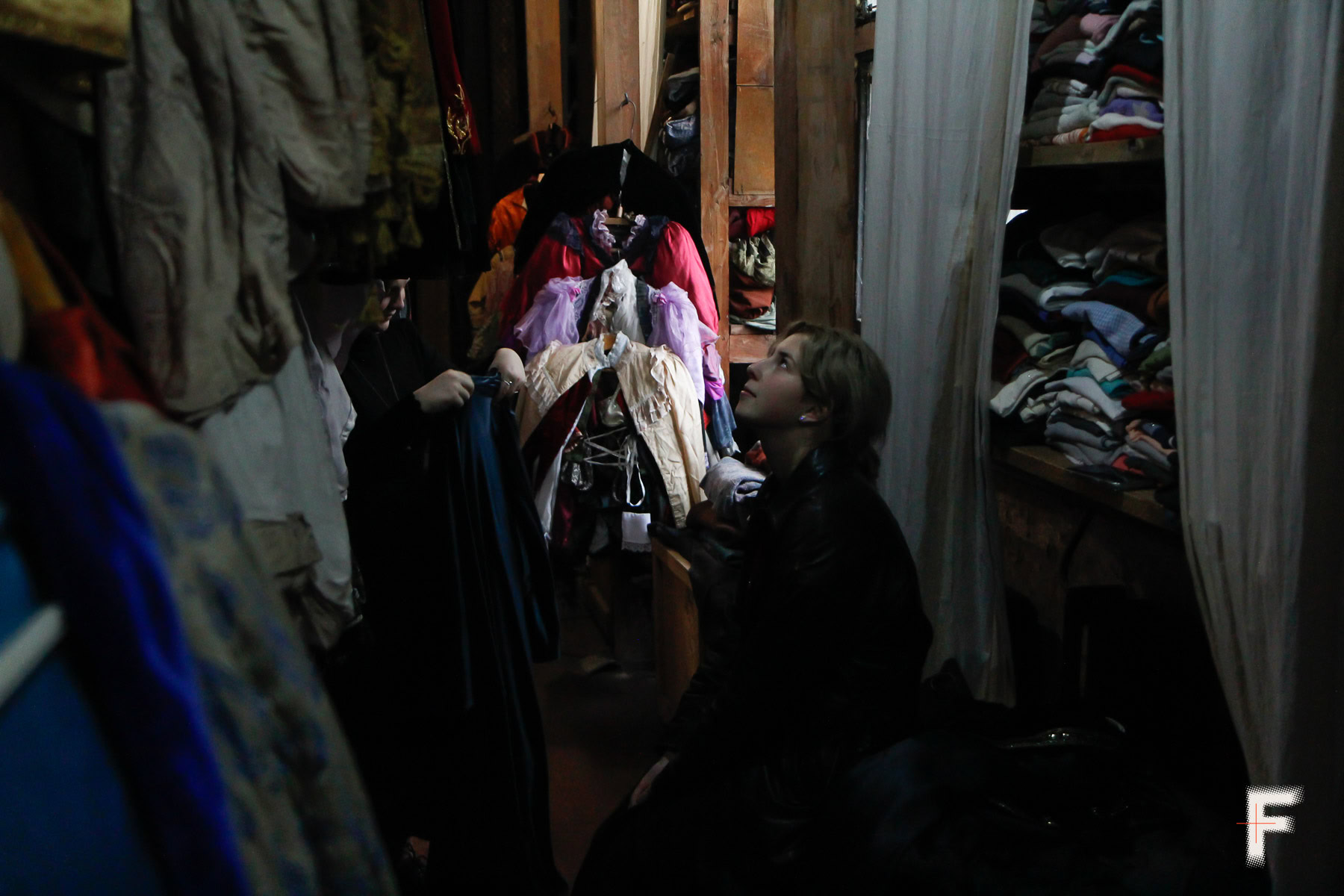
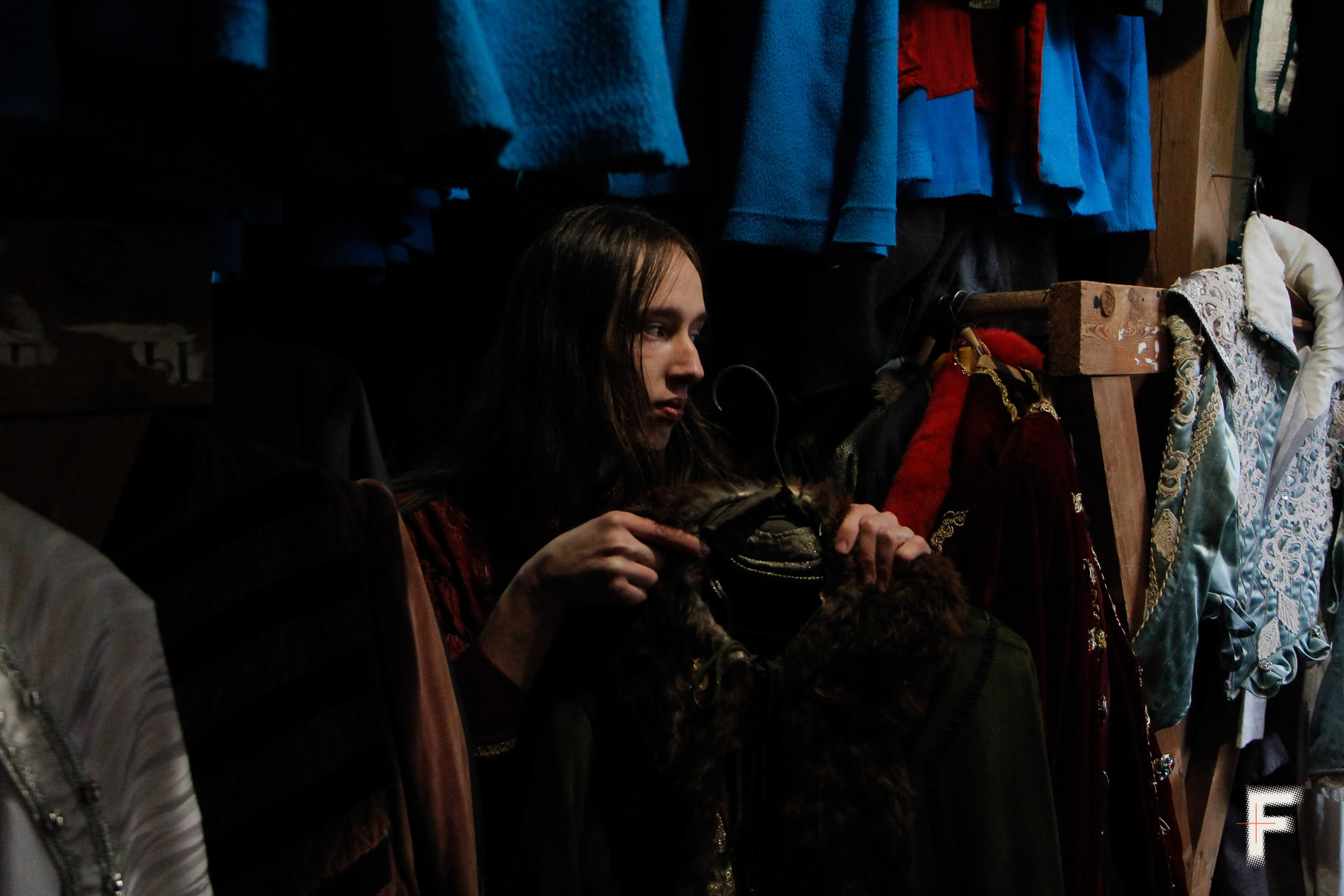
This group of people are volunteers from the “Night Stories” project. Their dressing room is located at the film studios; they sourced most of the costumes for their theatrical tours from the workshop that Russia destroyed. The dressing room itself suffered minimal damage, sustaining most of it when the Iskander missile fell in June.
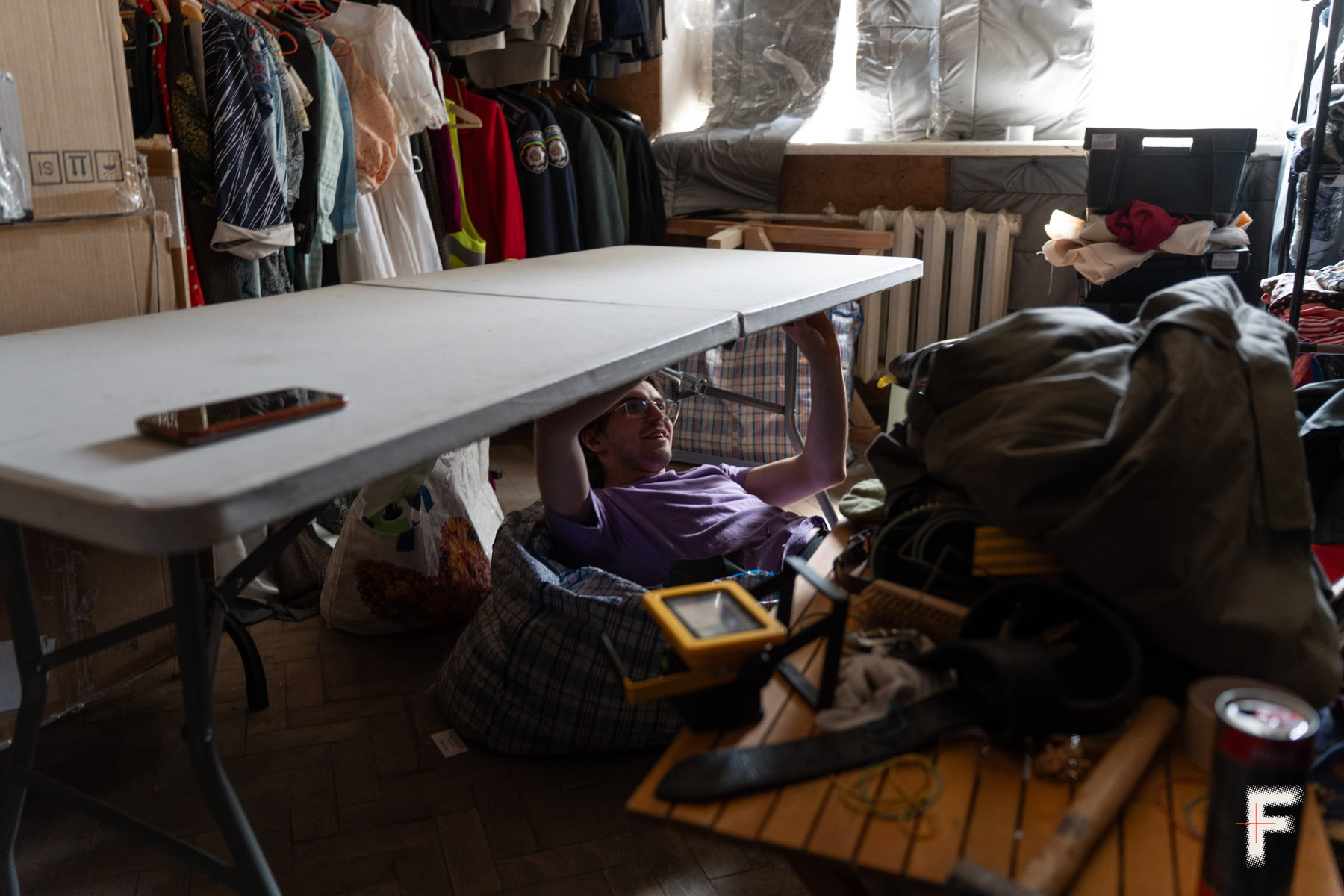
Oleksandra Ivanova, co-director of the “Night Stories” creative association, says that the only damage they suffered is blown-out windows:
“There might be glass in the boots, that’s no big deal. But the costume workshop — it’s just gone. Twentieth-century costumes can still be found. Cossack-era costumes too, although the largest collection of them was kept here. But for us, the biggest loss is the 19th-century costumes, because that is the imperial legacy. We often talk about the imperial legacy. Not to glorify it, but because we need to show this part of our history.“
The project has been running for 10 years, having started with history students from Shevchenko University. In the beginning, the activists scavenged for costumes in “grandmothers’ chests.” However, as the project evolved in 2018, they teamed up with the Dovzhenko costume department. Project leader Oleksii Rudenko remembers when they were staging the era of Hetman Pavlo Skoropadskyi:
“Skoropadskyi had a great reverence for antiquity and the Cossack era, and we had to find those costumes. And cassocks [church garments], too, because we were talking about autocephaly. We had practically nothing of our own.”
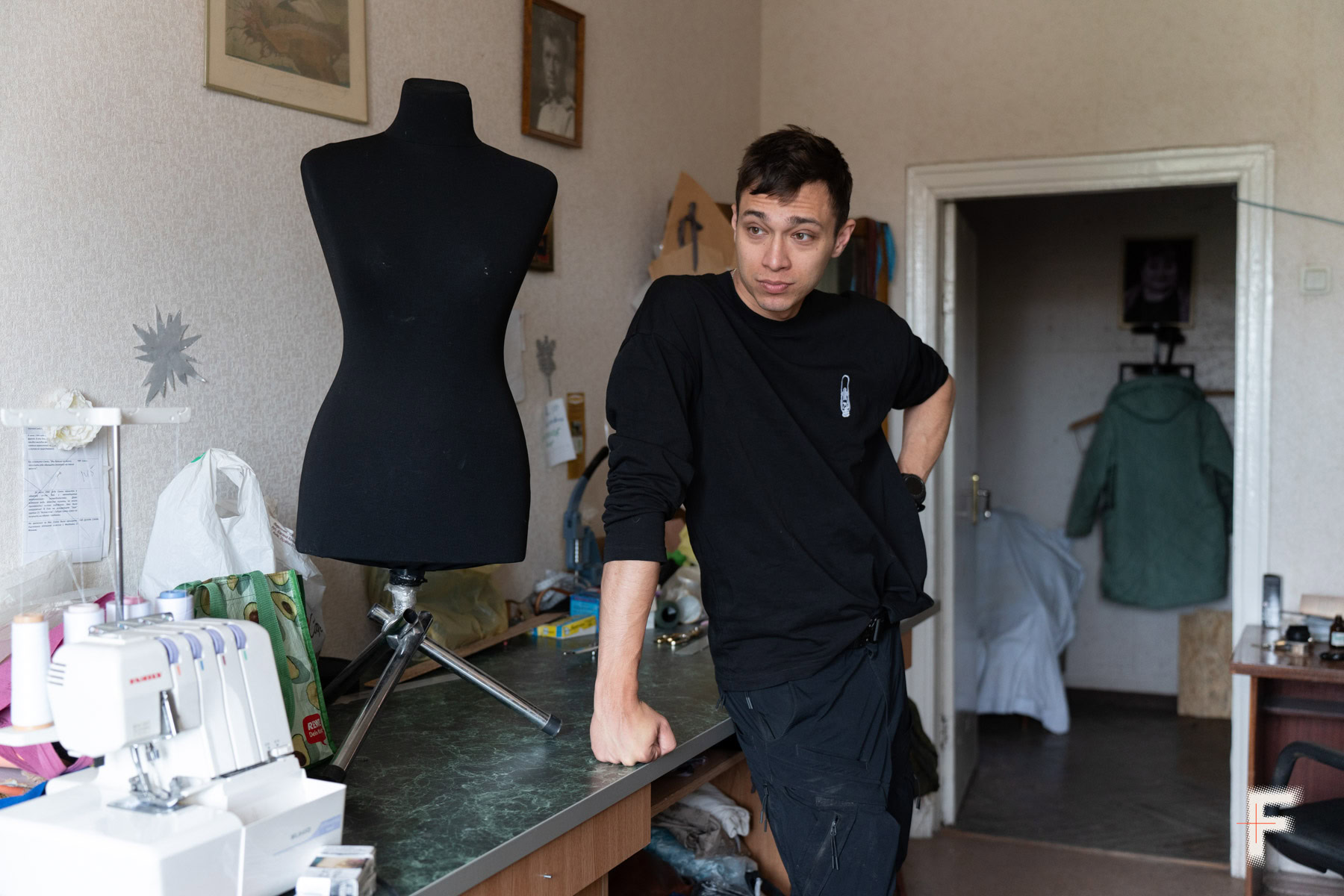
And it was during the preparation for this very tour that their friendship with the costume workshop began. In the early years, they were allowed to borrow costumes free of charge, since the entire team was still made up of students. Later on, however, the project secured sponsors, and they started paying for rentals. Oleksandra recalls that it was largely thanks to the period-accurate costumes that the project received so much positive feedback:
“It’s just spectacular when Pylyp Orlyk walks out wearing a gorgeous svyta [traditional overcoat], or when Ivan Mazepa makes an appearance!”
The destruction of the workshop is already taking its toll as they prepare for their upcoming tour. Oleksandra explains that the performance will focus on French soldiers from World War I, and the necessary costumes are nowhere to be found:
“We called all the historical reenactors we know, various costume departments, and no one has this uniform. Meanwhile, the studio’s costume workshop was full of clothes like that,” she notes.
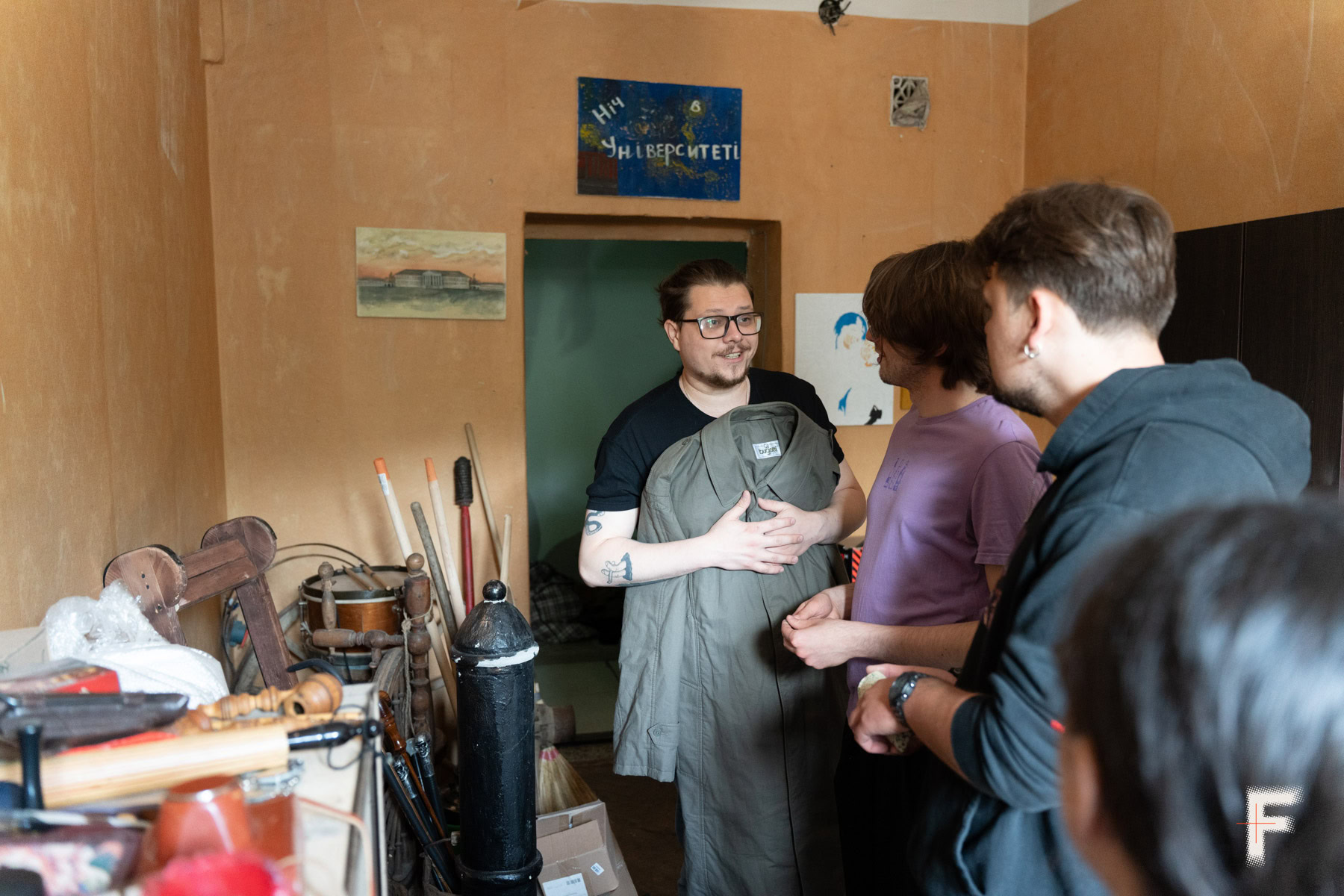
Oleksandra admits that until this moment, she hadn’t realized the true value of the place:
“You’d go in there, and it was dusty, you could never find anything, the shirts were stained, and every single time you end up swearing, getting mad at the costume workshop. But then it’s destroyed, and it hits you that there is nowhere else in the world to get these items.”
What survived in the costume workshop
In the tailoring workshop, they are assessing the losses and taking stock of what survived. Some of the priceless costumes were saved because they happened to be in other dressing rooms. However, access to them is currently blocked, as the keys to those rooms were kept in the very workshop that was destroyed, so they have to wait until the locks can be forced open.
Anatolii Didkivskyi is stitching away at a sewing machine. He recounts how he started his career as a tailor, making costumes. Then he joined the army, later returned to work as a costumer, and eventually worked his way up to head of the costume department. According to him, the film studio used to be a state within a state. The premises had everything, even a clinic and a hospital. Two and a half thousand people worked there.

The workshop staff lists the losses: Princess Olha’s dresses, crowns, sabers, and more. They face criticism over why the priceless collection wasn’t evacuated to a safe place. But the fact is, these costumes were in active use; they were constantly rented out, even for music videos. Polish and Italian filmmakers used them for film shoots.
Seamstress Valentyna Ladonia has been working in the workshop five years longer than Anatolii. She leads an impromptu tour through the rooms where the majority of the destroyed costumes were sewn. First she points to a machine that exclusively hemmed knitwear, and then a buttonhole machine, which is handy for finishing blouses:
“And that machine standing by the window is for knitwear; it sews and overlocks at the same time,” Valentyna says.

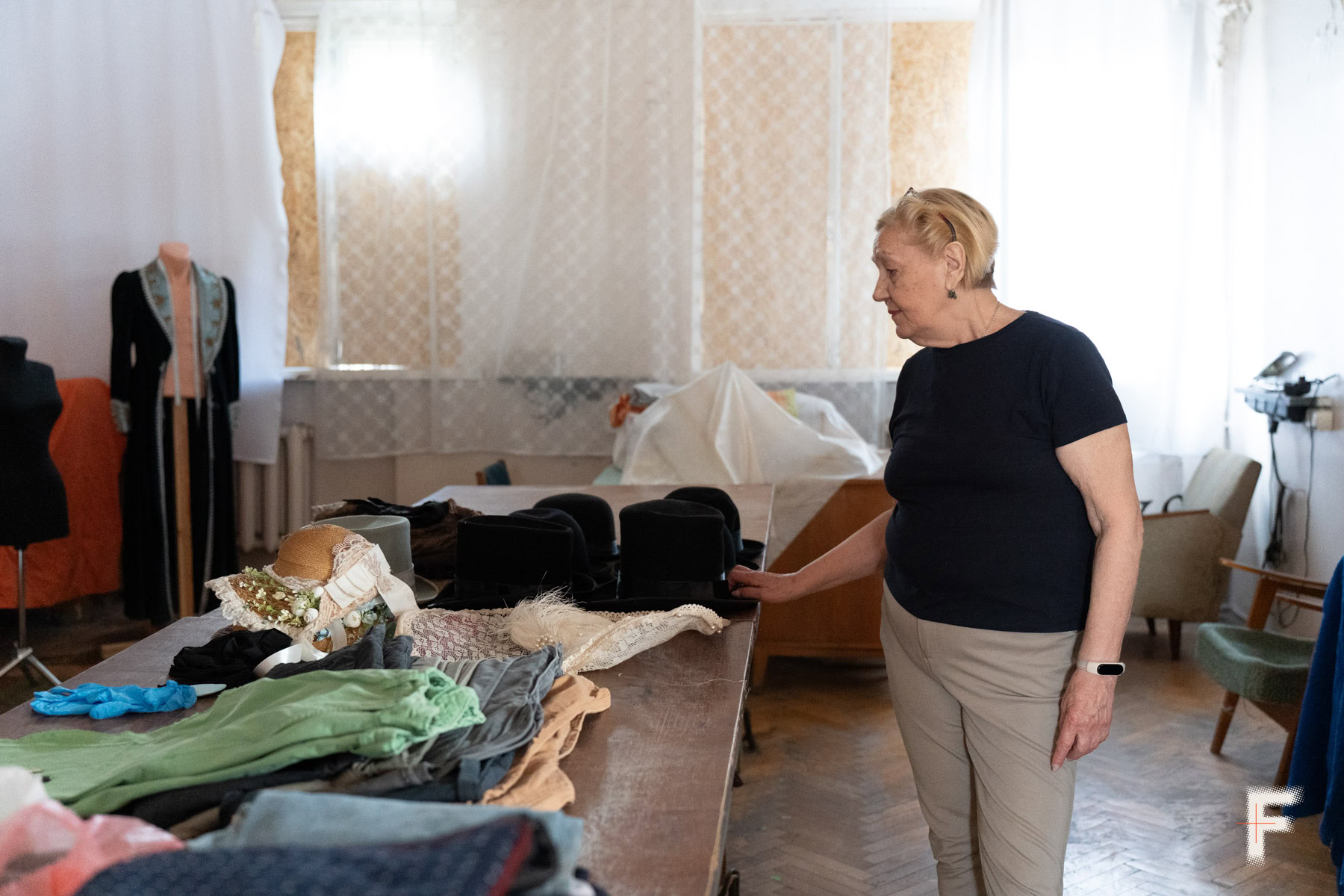
The workshop has definitely seen better days. There used to be 25 sewing machines here, operated by a large team. Today, Valentyna and Anatolii are the only tailors left. The larger room of the sewing workshop has turned into a storage area, and the space is unheated, so the tailors moved into a smaller room. Costume sketches hang on the walls. They worked with costume designers who had a perfect understanding of historical attire. Valentyna gestures to some vintage hats that survived:
“We lost so many hats like these. So many top hats were lost. For Bohdan Khmelnytskyi, both the hats and the costumes were incredibly beautiful. Not only did we sew these costumes, but we also embroidered them. For instance, I embroidered a zhupanchyk [short traditional coat] with cording for Olha Sumska in Bohdan Khmelnytskyi. Words can’t describe the beauty of that costume! It’s such a pity, of course, a huge pity,” the seamstress says, unable to hold back her tears.
Dovzhenko Studios are still calculating the losses
Following the strike, the film studios lost power. Employees of the ruined workshop, alongside volunteers from “Night Stories,” walk down the corridors, lighting the way with their phones. They peer into small dressing rooms and storage spaces, rejoicing at the discovery of costumes that survived because they weren’t in the main workshop. They find the costume of Bohdan Khmelnytskyi.
“Thank God!” Didkivskyi rejoices. “This is a headpiece from Mazepa. This is what is left. We had thousands of costumes like this. For the Swedes, for the Russian Empire. If only you had seen how much jewelry we had! We had authentic coral necklaces!”
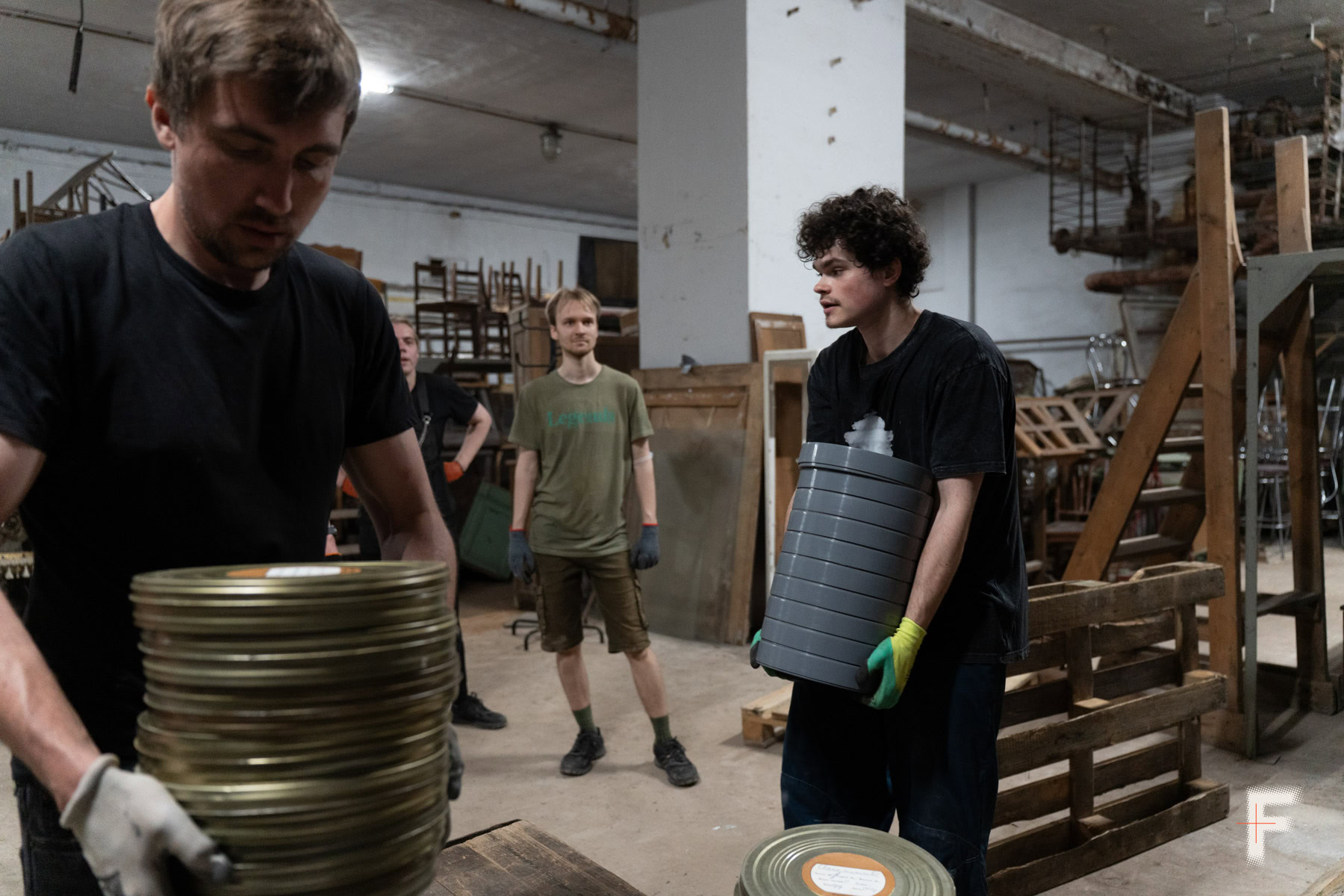
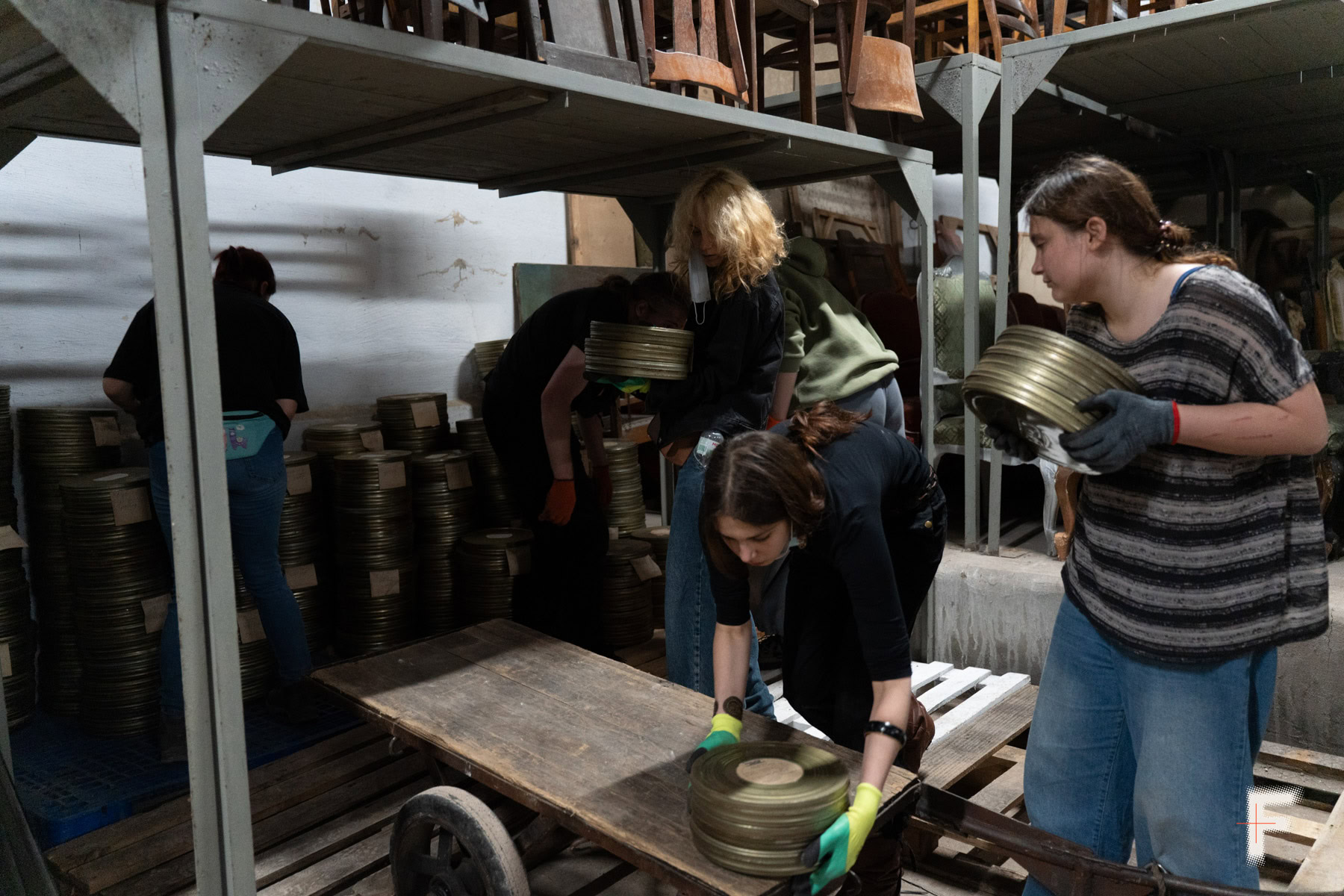
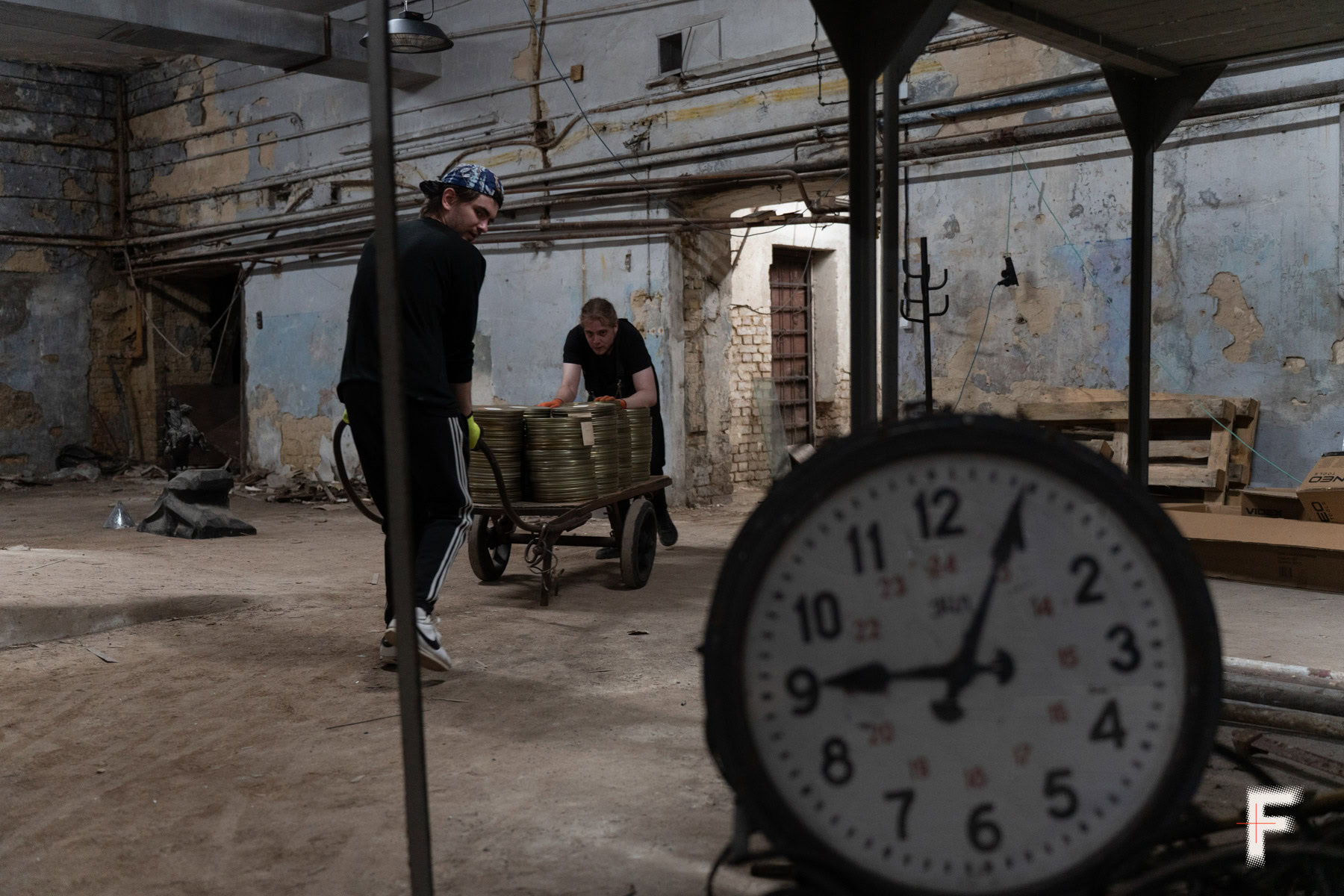
A few days after the strike, volunteers, mostly students, arrive at the film studio for a toloka [a traditional communal cleanup].

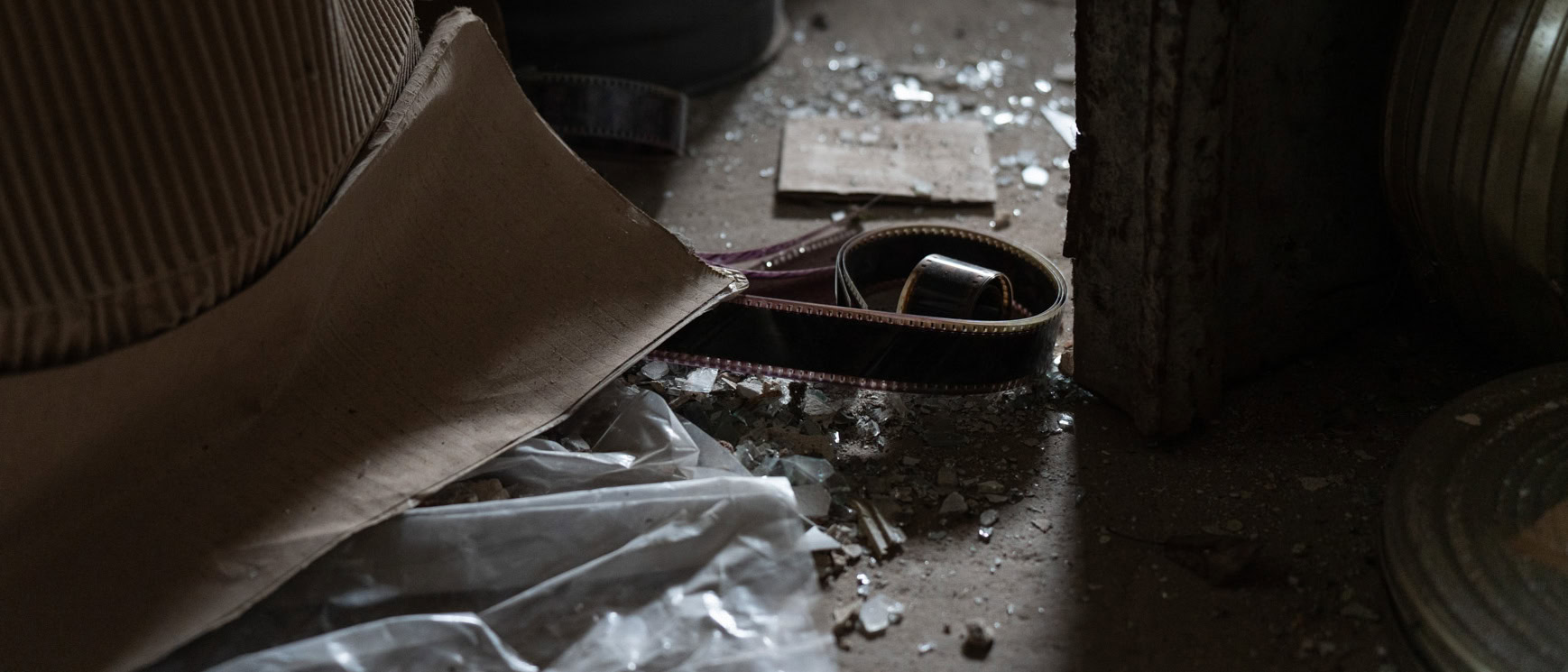
In addition to clearing away the shattered glass and rubble, there was a need to evacuate the film archive to a vault, as parts of it are still stored exclusively on film. The digitization process is ongoing, but it is complex and slow.
What had been collected, sewn, and decorated over a hundred years was destroyed in an instant. Film studio employees and those who rented space here are recovering, processing the losses, and taking stock of what they managed to save. Kyiv residents are uniting at various levels: from businesses offering financial support, and costume shops and museums offering costumes, to student volunteers helping to clear the rubble. The lost costume workshop cannot be brought back, but through joint efforts, a new collection will emerge in its place.