
What Russian jet-powered drones are made of: Seven countries and one supply chain
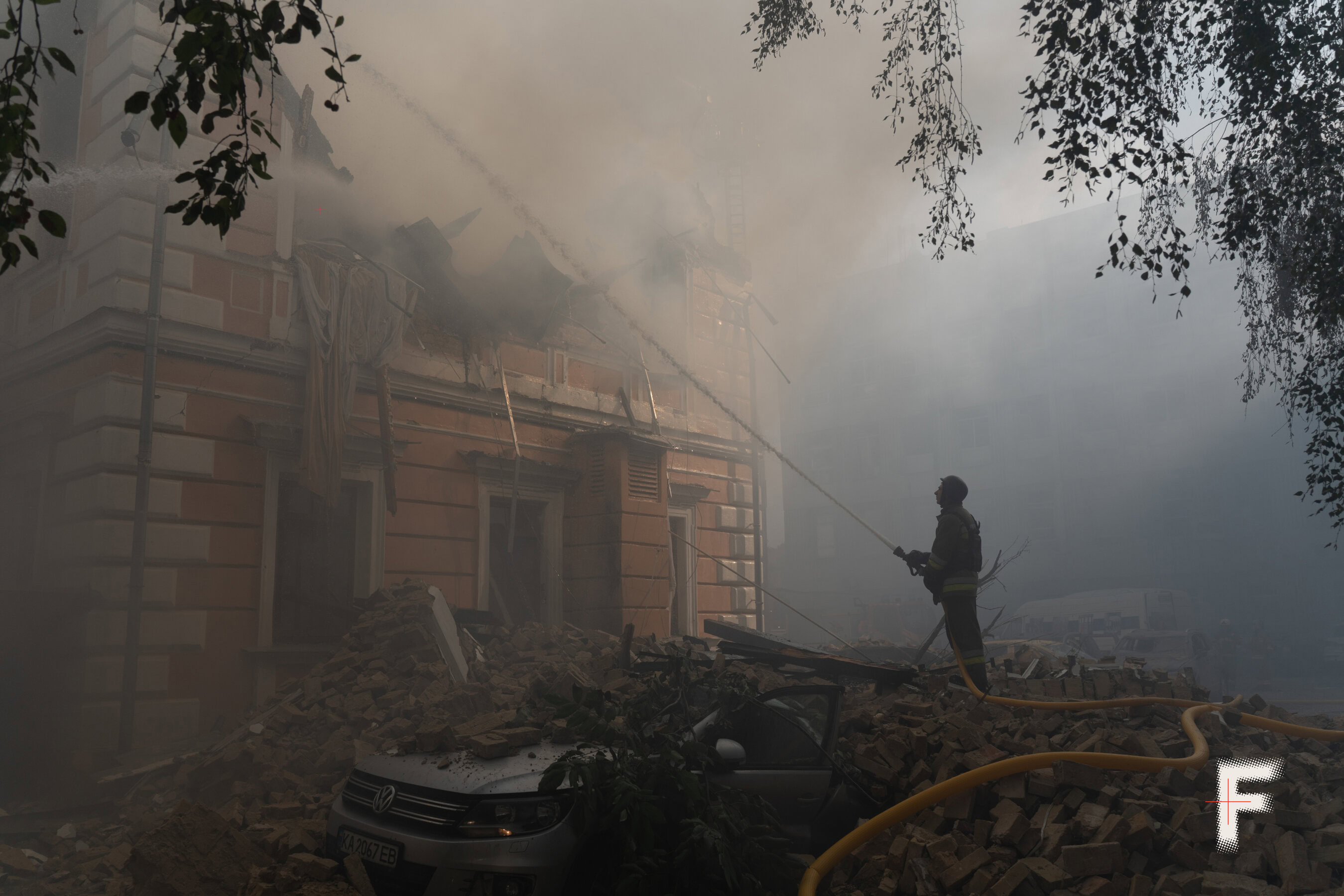
Europe and the United States retain the ability to keep the technological development of Russian weaponry contained at a level sufficient to bomb Ukraine, yet insufficient to pose a serious threat to Western Europe. Meanwhile, Russian drone attacks have become a daily reality for Ukrainians. People get used even to constant danger and must now adapt to the arrival of the jet-powered Geran-4. These UAVs fly lower, faster, and they are louder than previous modifications. Drawing on the latest data from the Defense Intelligence of Ukraine (HUR), Frontliner investigates what goes into this Russian jet-propelled drone and the technologies that enable its production.
According to the War&Sanctions portal, the UAV is 3.6 meters long with a wingspan of 3.05 meters, a takeoff weight of up to 450 kilograms, and a 90-kilogram warhead. HUR says this version of the drone was equipped with a new linear shaped charge designed to destroy bridges and power transmission towers.
In October 2026, Ukrainian intelligence identified 74 components from seven countries among the parts of downed jet-powered UAVs. The largest share came from the United States — 36 parts — followed by China with 12, Switzerland with 10, Japan with six, the United Kingdom with two, and Germany and Taiwan with one each. HUR was unable to identify the country of origin for six parts. This demonstrates that Russia continues to gain access to foreign components and technologies, which it uses to terrorize Ukraine’s civilian population.

Who produces the parts for the Geran-4, and how do foreign components end up in Russia?
Inside the Geran-4, 74 foreign components were identified. For the most part, these are microchips, microcontrollers, and amplifiers. HUR managed to identify 39 foreign companies whose parts were used in the production of the UAV. The largest source of parts, accounting for 13 components, is Texas Instruments.
This American company once worked with the U.S. government, developing devices for the Apollo space program and the moon landing. Now, Russia uses its components to produce UAVs.
Inside the Geran-4, experts found standard, classic components from the company: two digital signal processors, three MB3238I line drivers, VP230 and VP232 CAN transceivers, LM258 and OPA2340 operational amplifiers, an HC4051 analog multiplexer, an LM5117 step-down converter, an LM234 current source, and an LVC16T245 level translator. These are common, widely available parts that do not contain cutting-edge technology.
Texas Instruments components are also found in other Russian weapons: the Filin cruise missile, the Iskander operational-tactical missile system, the Kinzhal aeroballistic missile, Lancet and Shahed drones, and reconnaissance UAVs. Overall, HUR has identified 843 Texas Instruments parts used across 79 types of Russian weaponry.
Ranking second among foreign suppliers is STMicroelectronics. HUR identified eight components from this company, including microcontrollers and voltage regulators. Five more components come from Analog Devices, and three from Vishay.
A CTS39CB3 clock oscillator made by the U.S. company CTS Corporation bears the marking 2610, indicating the 10th week of 2026, or March. Thus, the entire cycle, from the U.S. factory to the warehouse in Alabuga and the appearance of a Russian Geran in Ukrainian skies, takes roughly six months.
Why do foreign companies still supply weapons components to Russia?
Texas Instruments states that it complies with sanctions and does not sell its products to Russia.
However, the Russian company Premier Komplekt Servis LLC claims to be an official distributor of Texas Instruments in Moscow. Most Russian retailers also sell new components from the company and continue to import them to order under Russia’s “parallel import” program.
Under a 2022 Russian government decree, parallel import allows branded goods to be brought into the country without the manufacturer’s consent. The initial version of the list of goods approved for import included Texas Instruments products. It turns out that for a Russian buyer, importing foreign components is entirely legal; for a foreign seller, it is a breach of contract with the manufacturer. But who is going to check it? For U.S. export controls, by contrast, the issue only arises when a specific part falls under regulation.
Export control regulations, in turn, are built around specific high-tech items. Meanwhile, the Geran-4 components do not require a license; they are low-tech, cheap, and have a wide range of applications. The Russians assemble this weapon from components sitting in the warehouse of any distributor. As a result, sanctions do not reach the level at which this drone flies.
Will there be a 600-kilogram Geran-6?
Russian military bloggers are announcing a new jet-powered drone, the Geran-6, with a warhead of up to 600 kilograms. By comparison, the Geran-5 carries a 90-kilogram warhead. Its strike range is also expected to increase, covering all of Ukraine. Military analyst Oleksandr Kovalenko called such a UAV an “aerodynamic oxymoron.” By his logic, the Geran-5 carries a 90-kilogram payload with a total weight of 850 kilograms. For a drone, a 600-kilogram payload would mean either failing to get off the ground at all, or stalling and crashing immediately after takeoff; the weight is too great. A warhead of that size could instead be part of an ersatz missile weighing around two metric tons.
In other words, Russia is trying to replace a cruise missile with a cheaper delivery vehicle, building it on the same widely available electronics. Whatever Russia’s next military development turns out to be, it is crucial to understand its production rate and potential for scaling.
Mass production vs. high-tech solutions
According to HUR estimates, in August 2026, the Russians produced approximately 3,000 Geran-4/5 jet drones a month. Such a mass scale of production can only be guaranteed by a smooth supply of foreign components. Each of the 3,000 drones a month carries dozens of components that someone sold, brought in, cleared through customs, delivered, and used to assemble the weapon. However, it is still cheaper for Russia than developing their own parts.
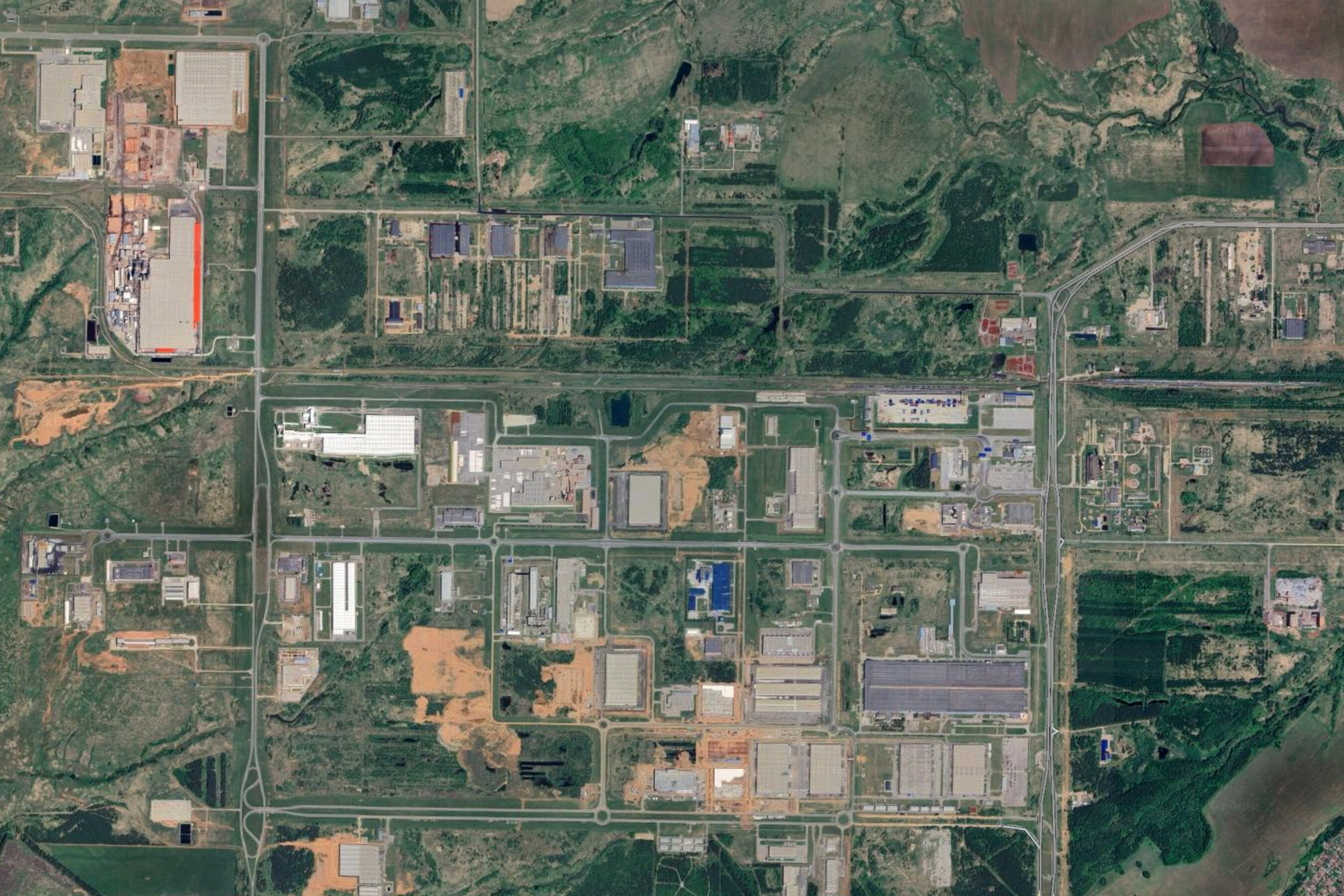
Russian manufacturers were unable to localize such production. One reason is that they cannot buy high-tech equipment and machine tools to make the parts. Texas Instruments is not under sanctions and, most likely, will not be. Officially, the company left the Russian market. However, its components continue to enter Russia through intermediaries. How effectively the company controls the further movement of its products remains an open question. Supplier countries are supposed to track the intermediaries and supply chains, and evidently they cannot or will not. Thus, Europe and the United States retain the ability to keep Russian arms production at a low technological level: enough to bomb Ukraine, but no threat to Western Europe.