‘We work as one heart’: Changing the approach to prosthetics in Ukraine
The state-of-the-art Medical Center Orthotics & Prosthetics (MCOP) is now operating in Kyiv, where patients can receive a prosthesis in as little as a week. American specialists are training the team in the latest techniques used in the U.S. Previously, Ukrainian service members who lost limbs more often had to seek out opportunities for quality prosthetics abroad. Frontliner reporters explore in this report how this process looks today.
The All-Ukrainian Medical Center Orthotics & Prosthetics is bustling with activity because American specialists are visiting. Since they will only be working here for one week, veterans from across the country are trying to secure a consultation right now.
Everyone in Ukraine turned me down. They said that with my injury,
they wouldn’t be able to fit me with a prosthesis.
Oleksandr Chaika was the very first patient at Medical Center Orthotics & Prosthetics. Prior to the full-scale invasion, he practiced acrobatics and parkour for 13 years. In 2022, he joined the military as a volunteer. Later that same year, he sustained an injury in Popasna when a tank fired directly into his trench. Miraculously, the shell that struck his leg failed to detonate.
The hardest part, Oleksandr says, wasn’t the amputation itself, but trying to get help in Ukraine.
“Everyone in Ukraine turned me down. They said that with my injury, they wouldn’t be able to fit me with a prosthesis and offered me a wheelchair for the rest of my life. The problem was that the state budget allocated less funding for my level of amputation than for lower-level ones. Prosthetics centers simply didn’t want to take responsibility for such a complex case,” Oleksandr recalls.
He managed to get help through the Future for Ukraine foundation. There, Oleksandr was introduced to Michael Corcoran, head of the American MCOP. When Michael saw the images of the veteran’s leg, his verdict was brief: “He will walk just like he used to.”

Oleksandr traveled to Washington, D.C., where he didn’t just stand up on his prosthesis, but also amazed the American specialists with the speed of his rehabilitation. While others need months to adapt, Oleksandr took confident steps on his very first day.
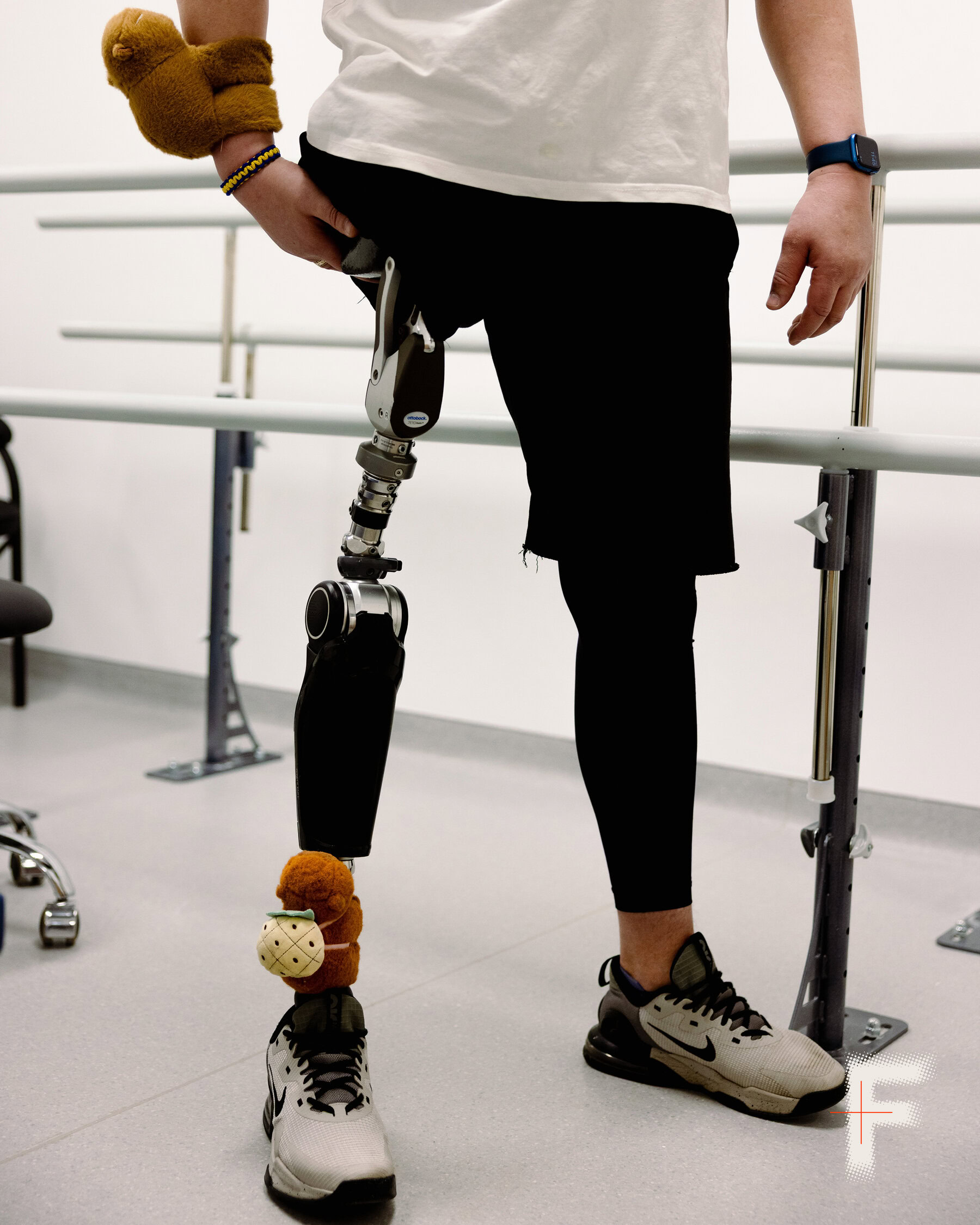
During his second trip to the U.S., an incident occurred that Oleksandr initially took for a joke. He got to test out the cutting-edge Power Knee, a complex mechanism worth around $80,000.
“I had my best results with it. Michael asked the physical therapist, ‘Which one did Sasha walk best on?’ He pointed to this knee. And Michael says, ‘I’m gifting it to you.’ I figured it was an American joke as who gives away something worth that much? But on the day I was leaving, they brought out both my old prosthesis and the new one,” Chaika says.
Children don’t see me as someone who is ‘less than.’
Adults, on the other hand, sometimes freeze up,
This prosthesis is an AI-powered mechanism. It propels the leg forward on its own, which is crucial for a high-level amputation where the natural leverage of the thigh is missing. Settings, from walking speed to shock absorption, can be adjusted right from a smartphone.
Today, Oleksandr teaches acrobatics to kids. The veteran says the little ones are unfazed by the prosthesis, calling him the teacher with the “robot leg.” However, he still notices that adults are awkward when they first meet him:
“Children don’t see me as someone who is ‘less than.’ Adults, on the other hand, sometimes freeze up. A taxi driver might chat with me the entire trip, then see the prosthetic and turn pale. He starts picking his words carefully, changing his tone. I just smile at it. I’m still the exact same person who got into the car.“

Oleksandr visits the MCOP Ukraine center not only for prosthesis maintenance but also to motivate his fellow veterans. He plans to help other service members navigate their rehabilitation journey and show society that life after an injury does not require pity.
“If I can help even one or two guys find answers, then I haven’t lived my life in vain,” Oleksandr concludes.
“People here know what to do with me”
In the room next door, veteran Ivan Musiienko is carefully transferring items from a table to a bowl. It’s an exercise typically done by kindergarteners, but for someone with new bionic arms, it is no easy task. He is currently undergoing occupational therapy, relearning how to perform daily household tasks with his new prosthesis. He says there are things he will never be able to do again, like tying shoelaces, buttoning up, or using zippers on his clothes. Still, he needs to adapt to the new prosthesis, and it is best to do so under the watchful eye of professionals.
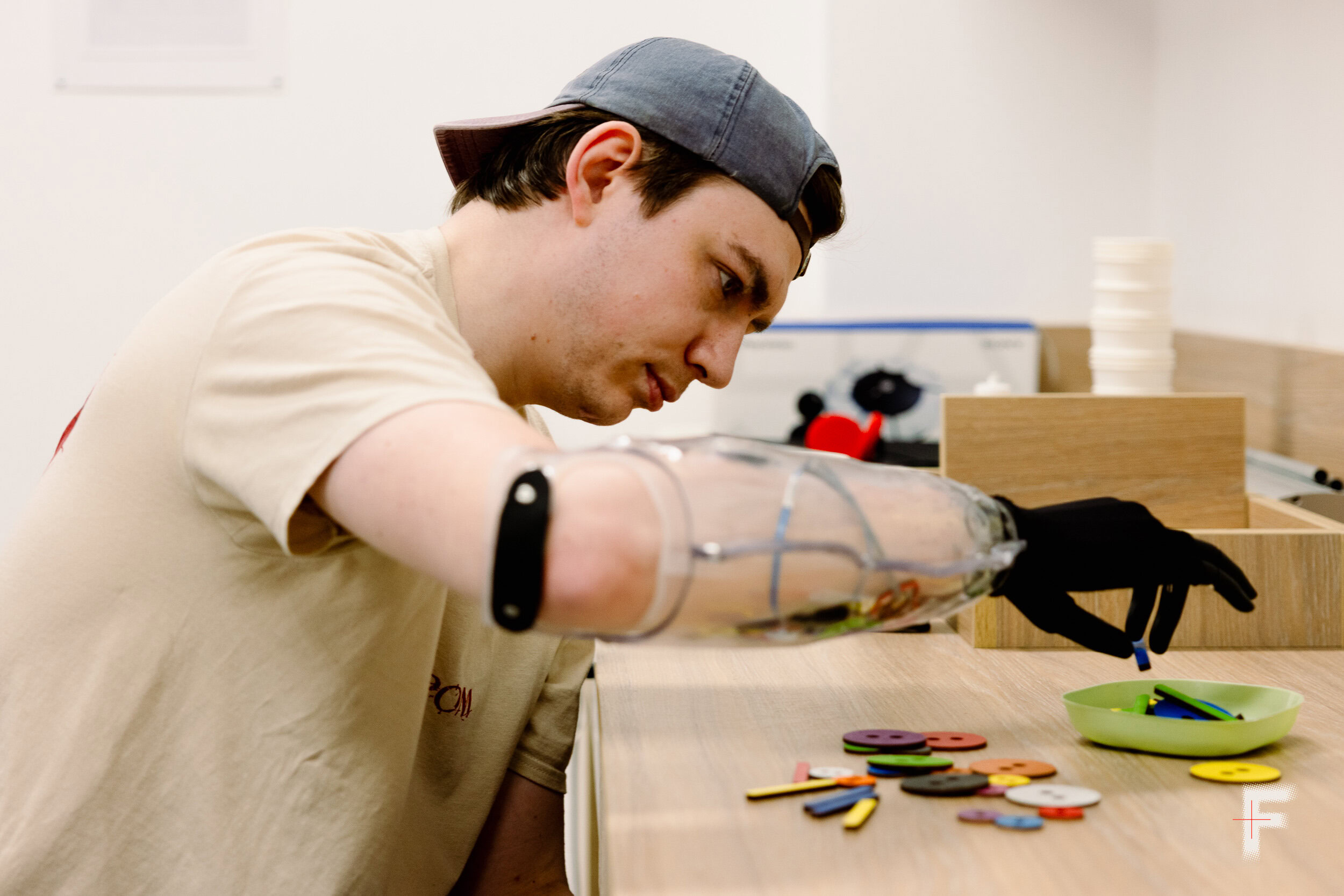
Until June 2024, Ivan served as a senior combat engineer. On June 24, he sustained a severe injury during an airstrike and lost both of his hands. While Ivan fought for his life in the ICUs of Kharkiv and Kyiv, his girlfriend had already started searching for prosthetics options in Europe.
He spent three months undergoing rehabilitation in the Netherlands. During that time, he encountered an unexpected problem: the European system proved to be too slow.
“That center isn’t set up for young service members. It’s mostly elderly people, and everything moves at a slow pace. It was too quiet and boring. I could show up at the center and just wait months for a prosthetic,” Ivan recalls.
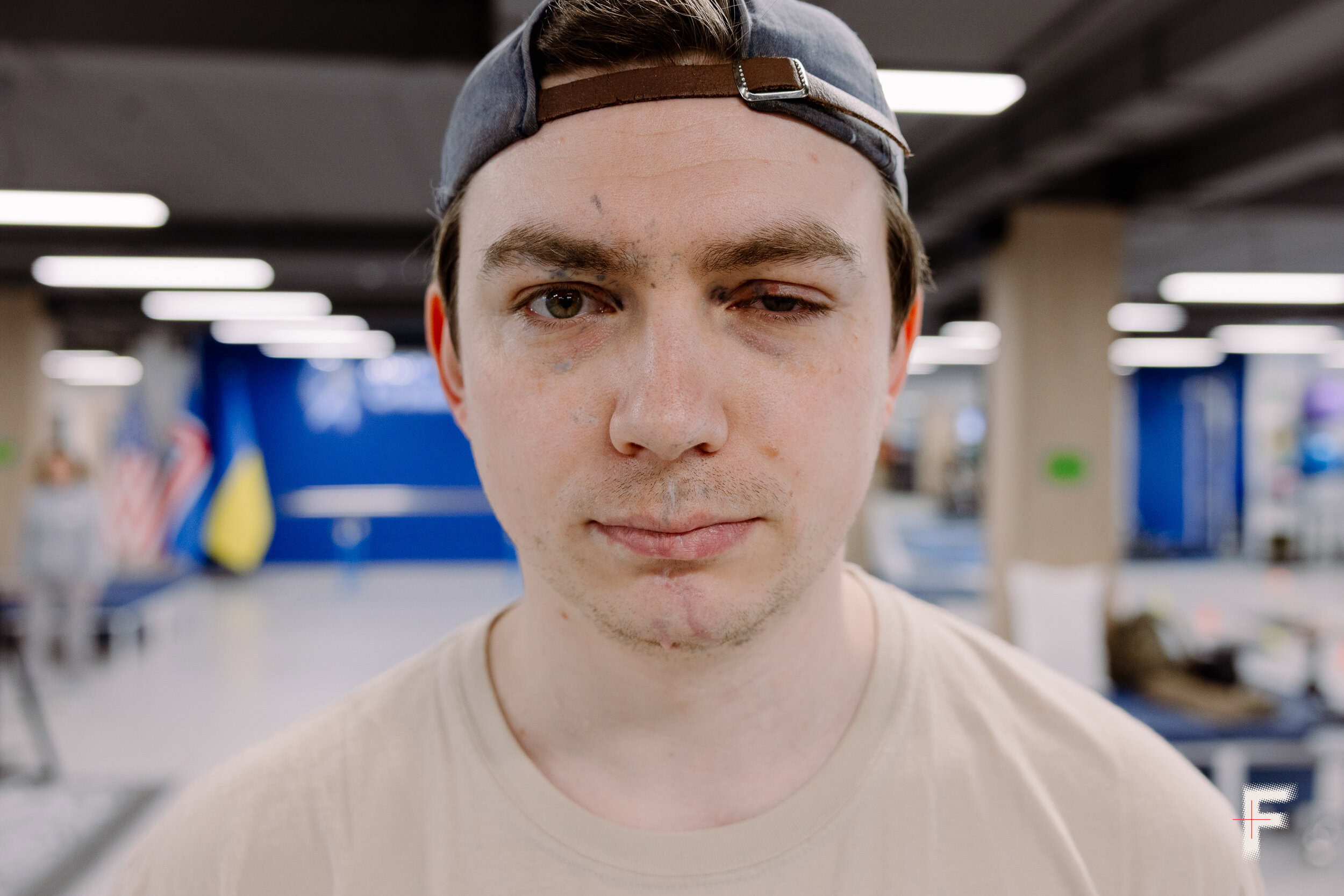
The interface is awesome, plus it’s in Ukrainian. I turn on Bluetooth,
connect the hand, and see everything clearly.
The biggest disappointment was the technology itself. The prosthesis Ivan was fitted with abroad turned out to be outdated.
“When I showed them my prosthetic here at MCOP, they told me this hand was cool 15 years ago,” the young man remembers.
The new prosthesis was fitted back in Ukraine, at the MCOP center. The veteran says it turned out to be better than its foreign alternatives. The main advantage is that it can be controlled via a mobile app:
“The interface is awesome, plus it’s in Ukrainian. With the previous prosthetic, the app kept crashing and wasn’t optimized for Android. But here, I turn on Bluetooth, connect the hand, and see everything clearly: what the current grip is, how to change it. You can set up custom grips and adjust the sensitivity of the sensors. It’s a huge plus.“

Comparing his prosthetics experiences, Ivan highlights the speed of the process specifically at MCOP Ukraine. While having a prosthesis made in the Netherlands took months, here he was fitted with one in just a week.
“Everything is fast here. You show up, do what you have to do, and leave. People know what to do with me. Abroad, I would just go to my appointments to chat; I brushed up on my English. But here they tell me: do this, this, and this. I do it, and it helps,” Ivan says.
“I found my place here”
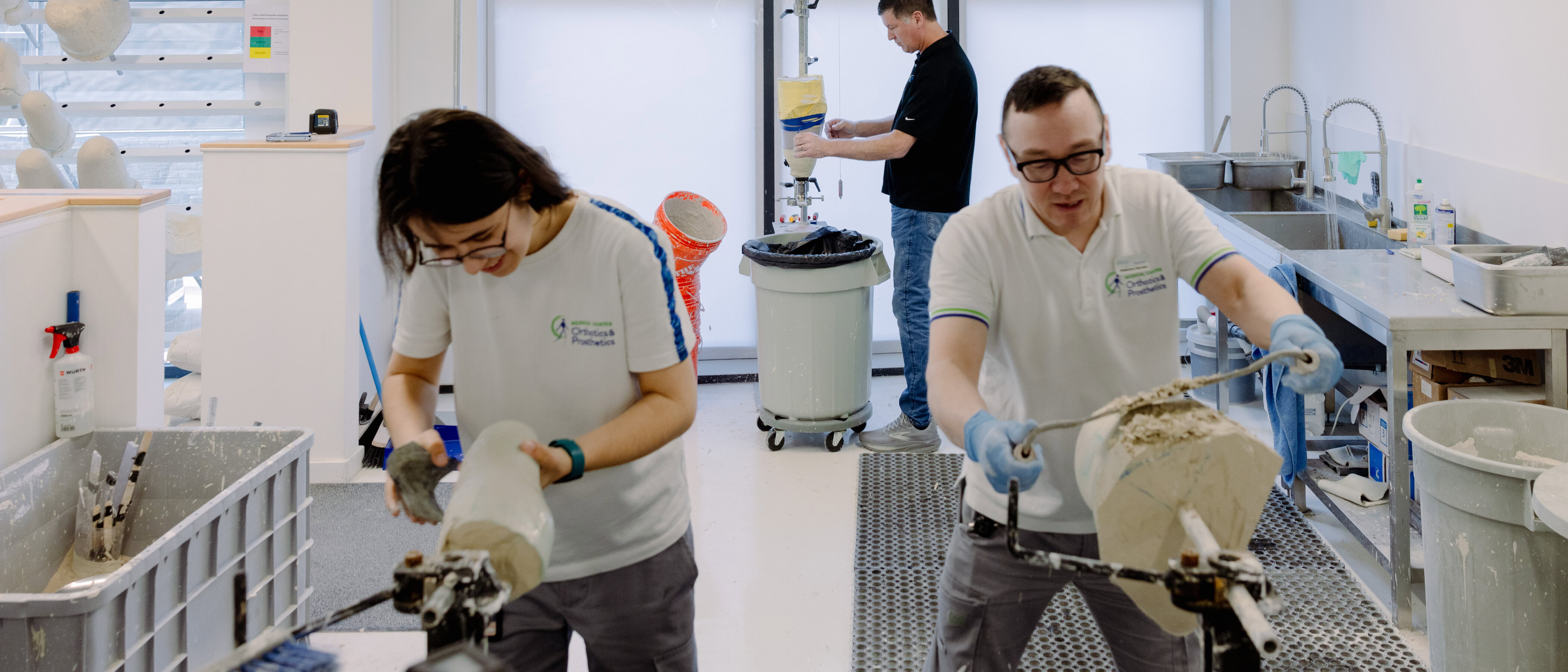
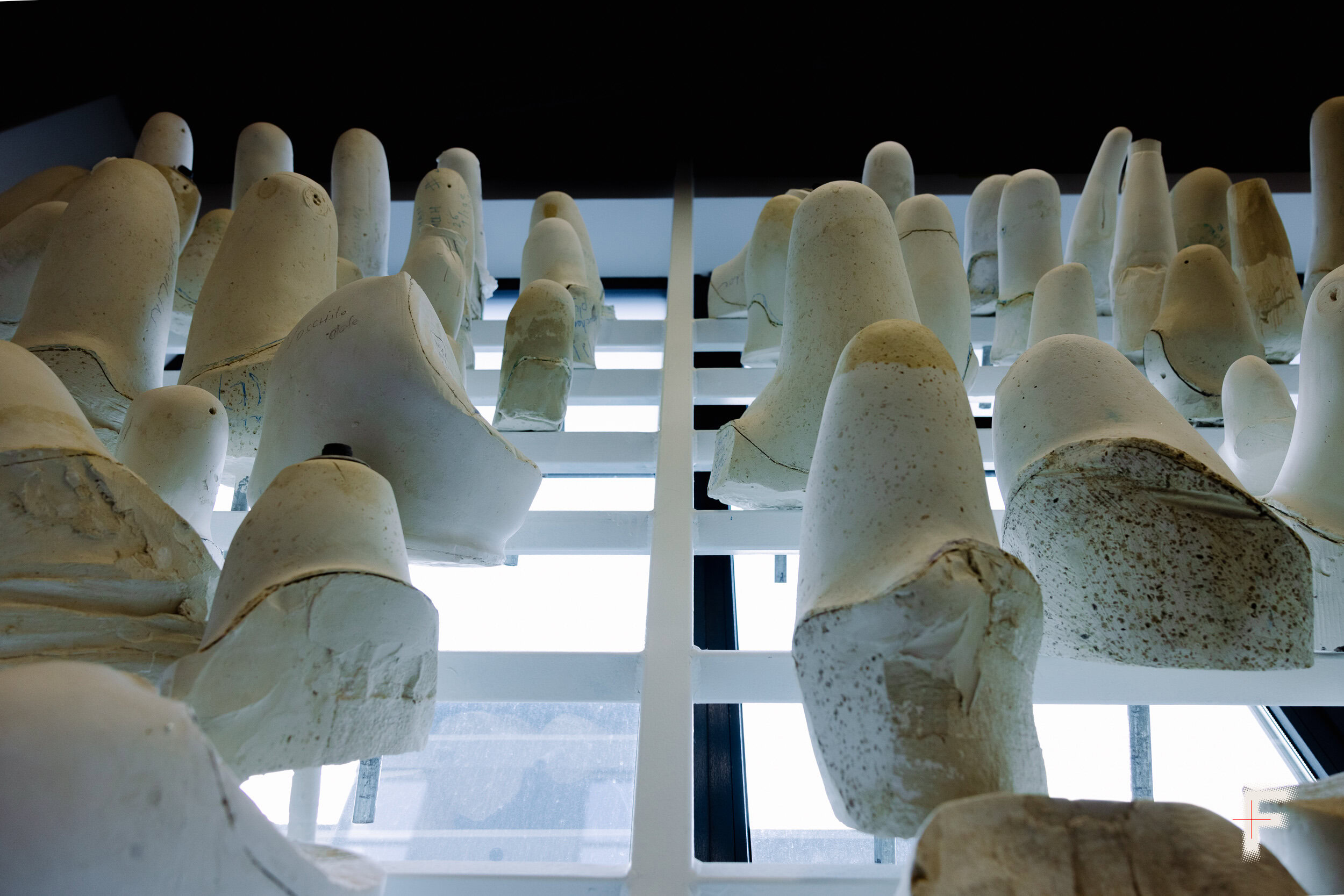
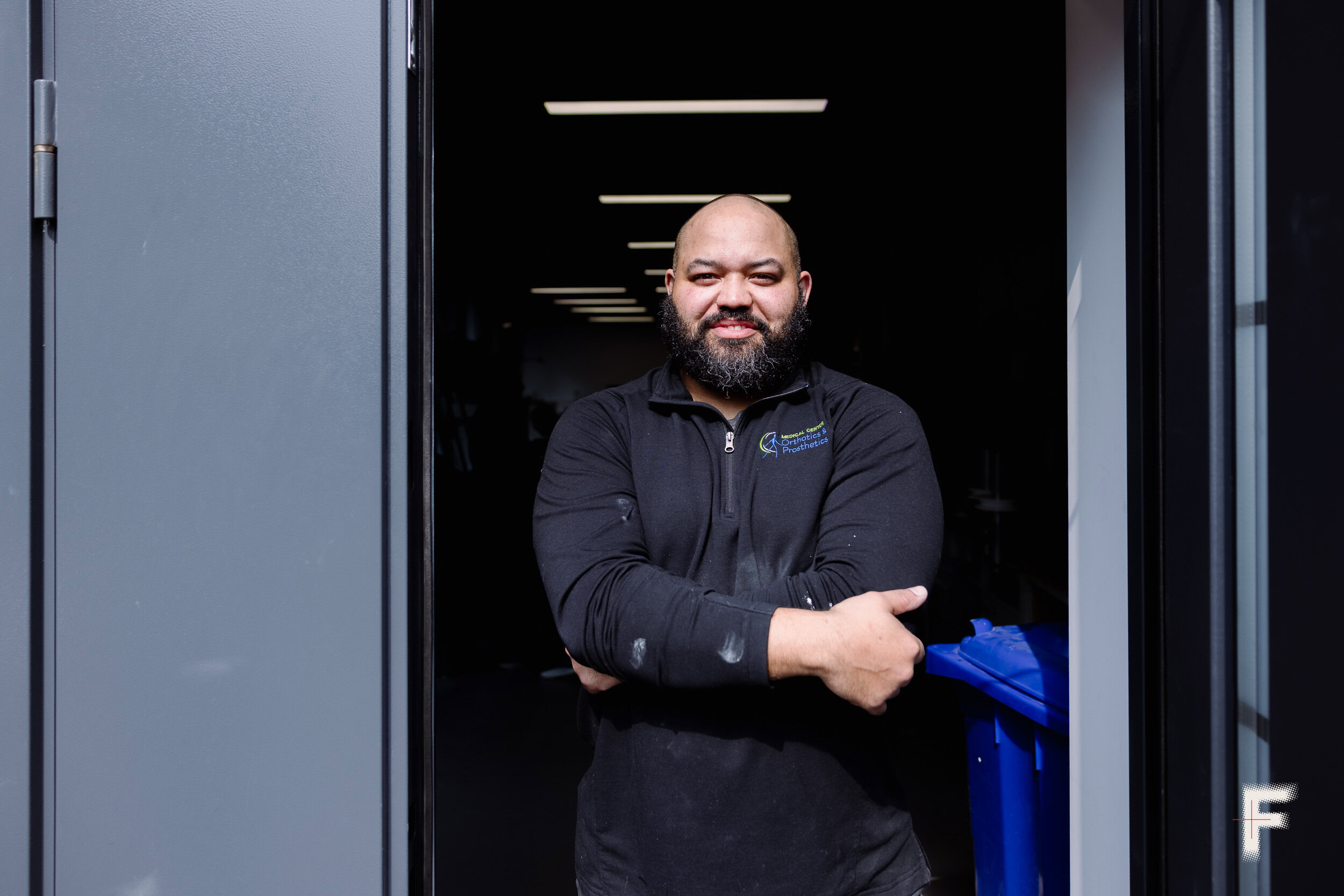
Veterans receiving prosthetic care at MCOP often stay on to work and help others. One of them is Anatolii Kуrda, lead technician at the Medical Center Orthotics & Prosthetics. The entire process of building a prosthesis goes through his hands: from taking the initial measurements to creating a check socket.
We can make the first prosthesis in just a few hours.
A person can already stand up and try to walk,
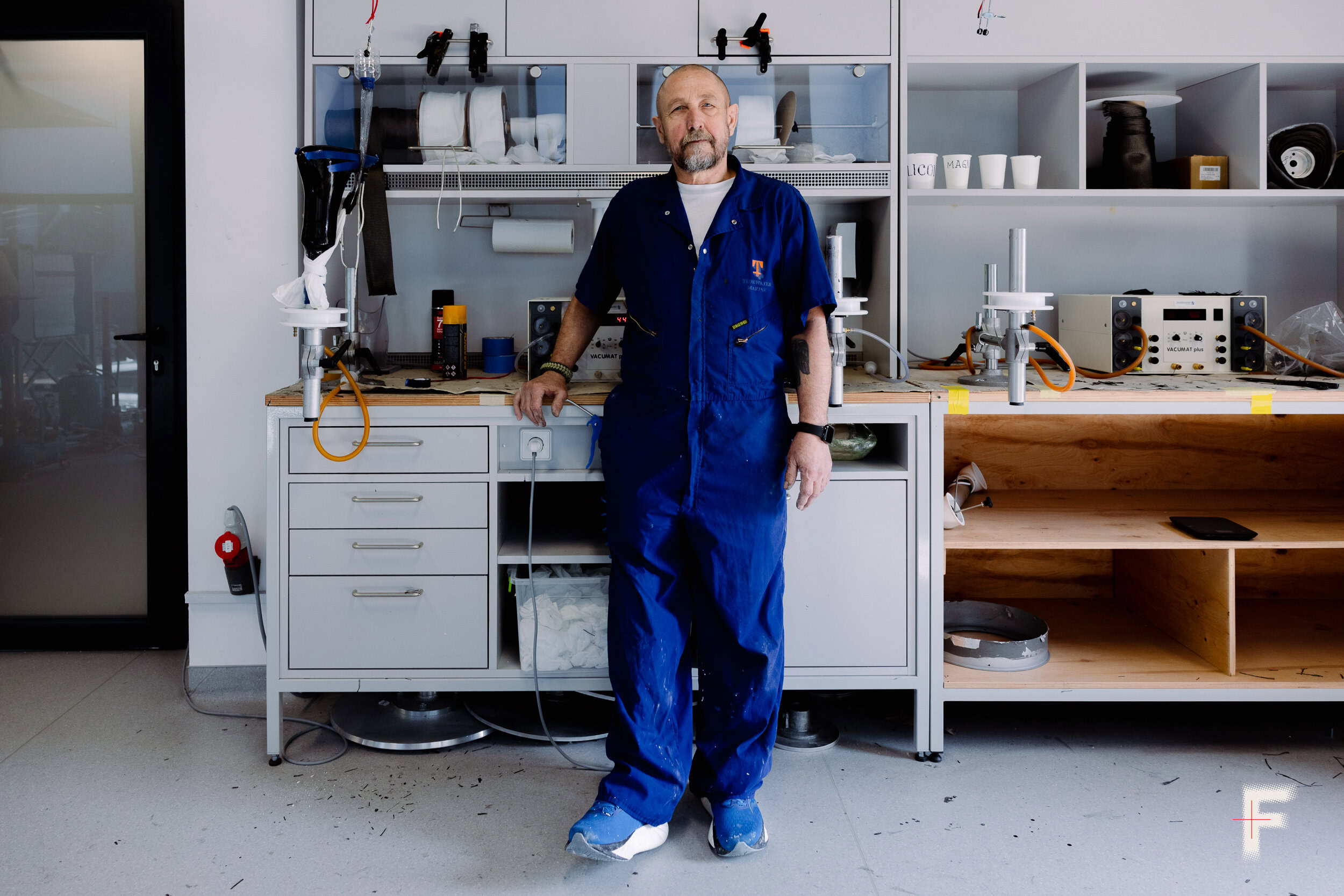
Before the full-scale war, he was a sailor working for international companies, spending most of his time abroad. When the invasion began, he returned to Ukraine and enlisted in the military. He first saw combat near Kyiv, then in the east, where he suffered his injury.
Following his amputation, he began his prosthetic care, which is exactly when he received an offer to change careers. He says it was a quick decision as returning to his old life was no longer an option, and the new field gave him a sense of being useful again. So he went to the United States for training, where he worked with seasoned experts and learned hands-on.
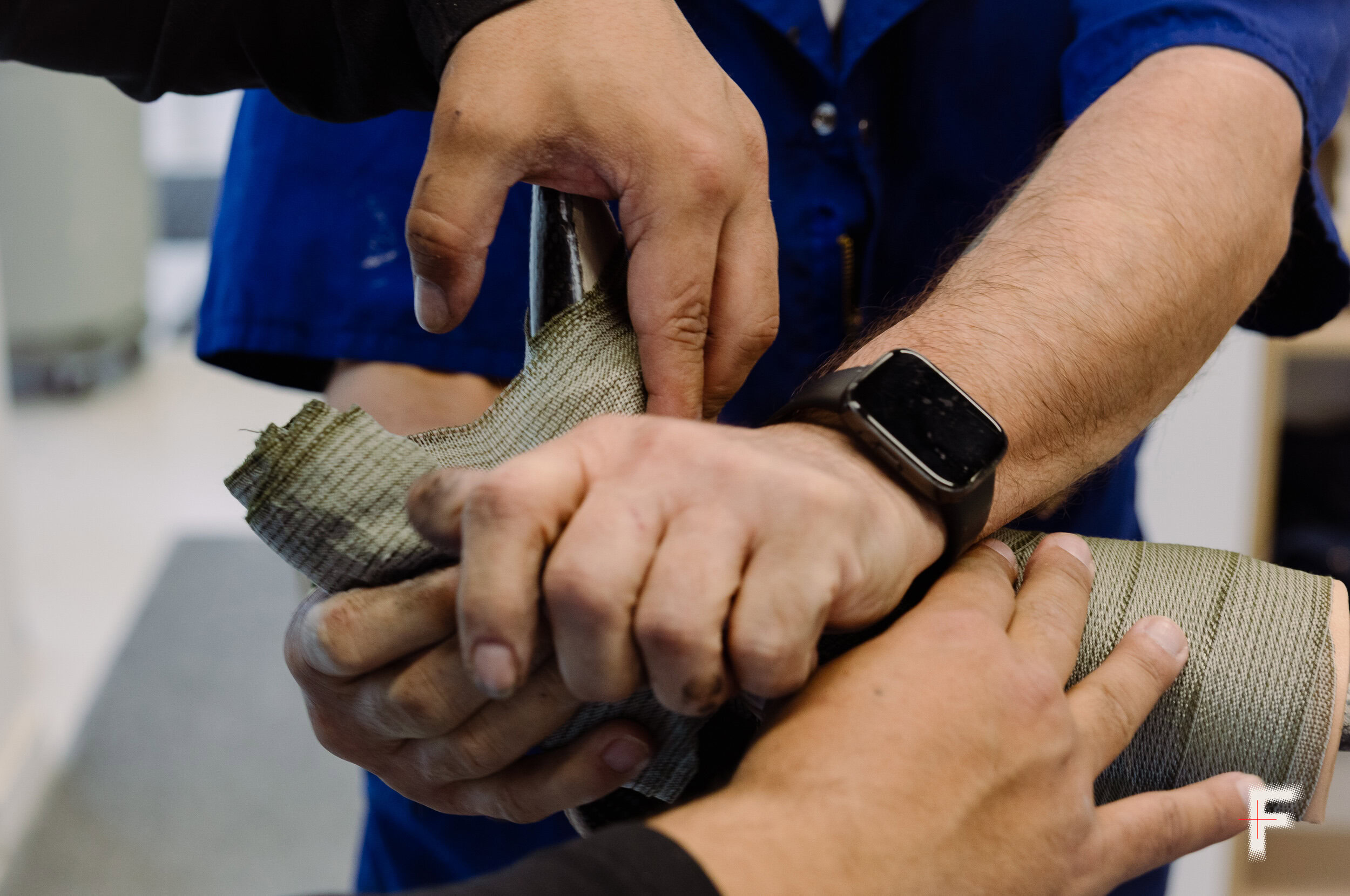
“There was no time to just sit around and listen. If you want to learn, you ask for the work yourself and get it done,” the man recalls.
Anatolii says he is in the right place now and feels no limitations because of his own amputation. For him, working at the center is a way to share his experience with other veterans, having navigated this journey himself and knowing every step of the way.
“Unfortunately, there will be enough work there for the rest of our lives, which is why I didn’t hesitate to choose this path of helping the guys get back to normal life,” the veteran says.
The Expertise of American Prosthetists
Alongside the Ukrainian team, American experts also visit the Prosthetics Center. For over 20 years, they have been helping service members recover in the U.S. Their mission is not only to provide Ukrainian patients with high-quality prosthetics but also to train Ukrainian physical therapists and prosthetists in modern techniques.
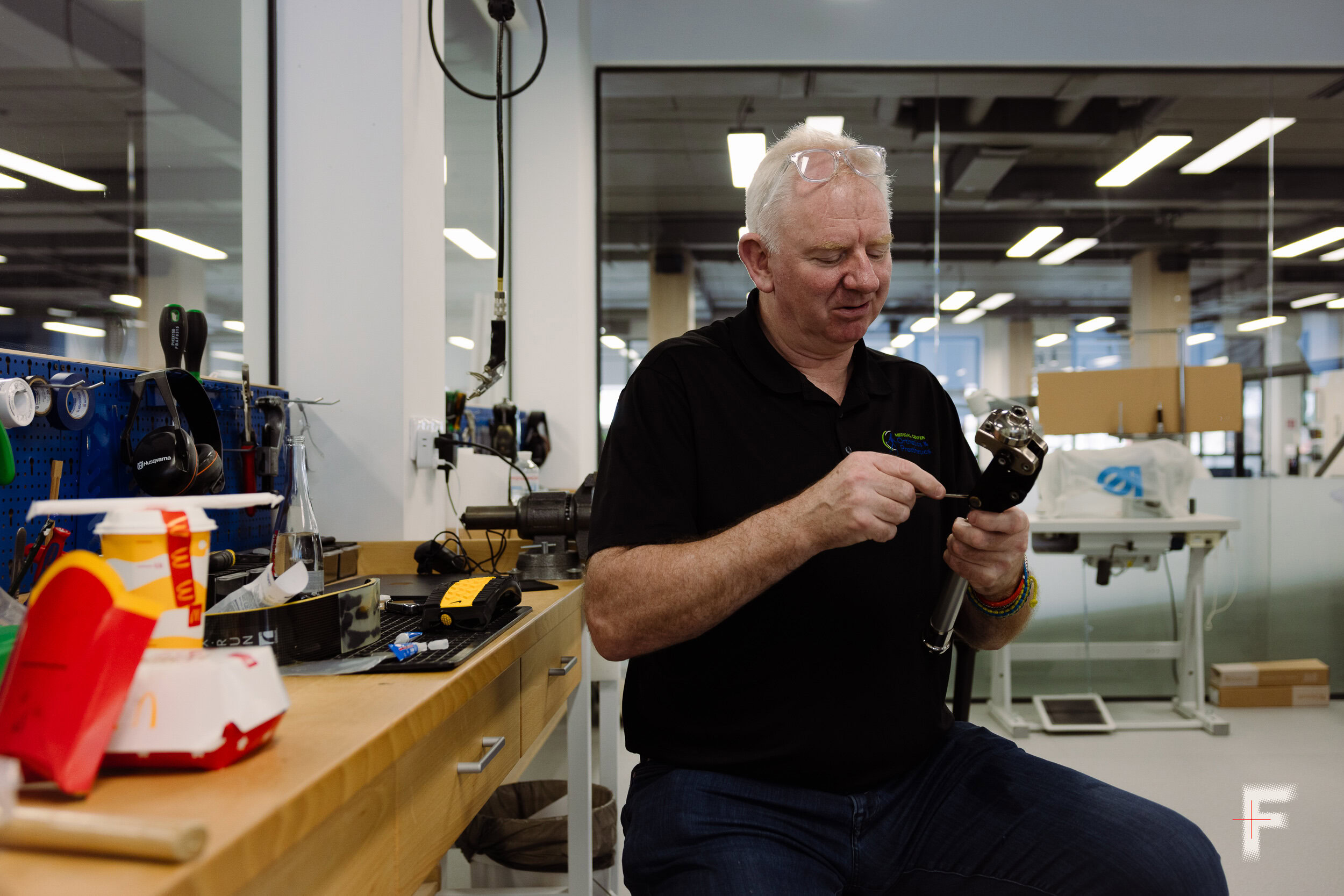
Aaron MacDonald, the lead technician at the MCOP center, is responsible for training the technicians:
“I teach them from A to Z, showing them hands-on how to do the job. This isn’t something you can read in a book—you have to see how it’s done,” he explains.
He has experience working in military hospitals in Iraq, which is where he learned to fit prosthetics quickly and efficiently. He says that when it comes to motivation, Ukrainian veterans remind him of American ones:
“They are highly active and determined to return to a fulfilling life. That inspires us to give 100% when working with them.“
The U.S. experts pay special attention to involving the entire team. A physical therapist, a prosthetist, and a technician work together at every step, which helps speed up the process.

We work as one heart, one mind. The patient receives everything at once,
with no waiting or delays,
Michael Corcoran, CEO of the U.S. center and a prosthetist with 30 years of experience, notes that modern prosthetics has changed significantly over the last 20 years. The wars in Iraq and Afghanistan spurred the development of cutting-edge technologies, such as microprocessor knees and carbon fiber feet.
According to him, innovative equipment and the technicians’ skills will expand the clinic’s capabilities. Ukrainian service members with hand amputations emphasize the importance of creating mechanical finger prostheses. Yet, for now, getting them through Ukraine’s state programs is nearly impossible. The procedure demands specialized equipment and silicone, though the MCOP team is already working on producing them.
Michael says that working with Ukrainian veterans is deeply meaningful to him because of their bravery and commitment:
“We hate the Russians. They invaded your country, they are killing your people, and you are fighting them incredibly hard. If we can help, we are here.“
The History of MCOP
Medical Center Orthotics & Prosthetics Ukraine launched its operations in two stages. The first took place in the spring of 2025, when the team was assembled and internal processes were coordinated. During this period, the center’s staff trained according to U.S. protocols while simultaneously fitting prostheses for their first patients with leg amputations.

Since November 2025, the center has been fully operational, offering state and grant-funded programs that allow veterans to receive prostheses free of charge. A large team works with each patient: prosthetists, as well as physical and occupational therapists. The goal is not just to fit someone with a prosthesis but to teach them how to use it in real life: walking, performing daily tasks, and returning to physical activity.
There are several ways to access the center. The simplest is to call, submit an application on the website, or reach out through social media. After the initial contact, specialists follow up with the person to clarify their situation and provide a list of necessary paperwork.

Currently, the center is working with more than 150 patients simultaneously, conducting up to 10 consultations a day. In straightforward cases, the prosthetics process can begin as early as the next day, while more complex situations may require a wait of up to a month.
American specialists plan to continue visiting Kyiv on a regular basis to train the team, refine processes, and introduce cutting-edge prosthetic methods. They emphasize that their work goes beyond a simple technical process; it is a mission that enables Ukrainian service members to reclaim an active lifestyle after their injuries.
***
Hi, we are Ruslana and Anna, the authors of this article. Thank you for reading to the end.
It is crucial to discuss how Ukraine’s prosthetics system is evolving and what opportunities are becoming available to service members after suffering injuries. These stories highlight more than just the trauma itself; they showcase the journey of recovery, both physical and psychological. They also serve as evidence that high-quality medical care is accessible right here in Ukraine.
Every story starts with your support. Join the Frontliner community so we can keep up documenting Russia’s war against Ukraine from the front line and the rear.
***