Why Ukraine’s Oleksandrivka counteroffensive worked: Ukrainian soldiers explain what drove August’s gains
In August, the Defense Forces of Ukraine continued the offensive operation on the Oleksandrivka front, regaining control over 745 square kilometers of Ukrainian territory and 26 settlements over several months. At the same time, Russian forces intensified their efforts on the Kupiansk front and continue pressing near Kostiantynivka, Pokrovsk, and Lyman. Frontliner breaks down what is happening on these fronts and how Ukraine’s offensive in the south impacts the broader picture.
The Oleksandrivka front became one of those front-line sectors where Ukrainian troops not only defended throughout the summer, but also reclaimed territory. According to President Volodymyr Zelenskyy, the Defense Forces of Ukraine conducted a counteroffensive operation there between January and August 2026. As a result, Ukraine regained control over 745 square kilometers of territory and 26 settlements across the Dnipropetrovsk, Donetsk, and Zaporizhzhia regions.

Combat operations did not stop after the territories were liberated, says Illia Kotsukon, acting head of the communications department of the 110th Mechanized Brigade:
The elimination of the enemy, clearing settlements of
the remaining occupying units, as well as search-and-strike
operations are ongoing.
According to him, Russian troops continue trying to advance toward Ukrainian positions in small groups. Once such movements are detected, the enemy is targeted with drones, artillery, and other weapons.
The 110th Brigade joined the operation following the first phase of the breakthrough. The brigade’s aerial reconnaissance and artillery units played a key role, detecting targets, tracking enemy movements, and helping destroy them.
“During the breakthrough phase, Air Assault units were the first to act. Our soldiers advanced right behind them, consolidated positions in the liberated territories, and went on to hold and clear them,” the major says.
Kotsukon cites operational silence during the preparation and execution of the operation as one of the key factors behind its success. Russian forces had to remain unaware of Ukraine’s intentions for as long as possible. Russian communication problems compounded the issue for Moscow’s forces. According to the officer, at a certain point, the Russians lost the ability to fully use Starlink, which affected communication, coordination, and the speed at which information was shared between their units.
‘The Russians had nowhere to hide because they destroyed everything themselves,’ — 110th Mechanized Brigade spokesperson.
Another factor was the disruption of Russian logistics. Ukrainian units systematically targeted enemy supply lines, making it harder for Russian forces to sustain forward positions and respond rapidly to shifts on the battlefield. At the same time, Russian defense had yet another weakness.
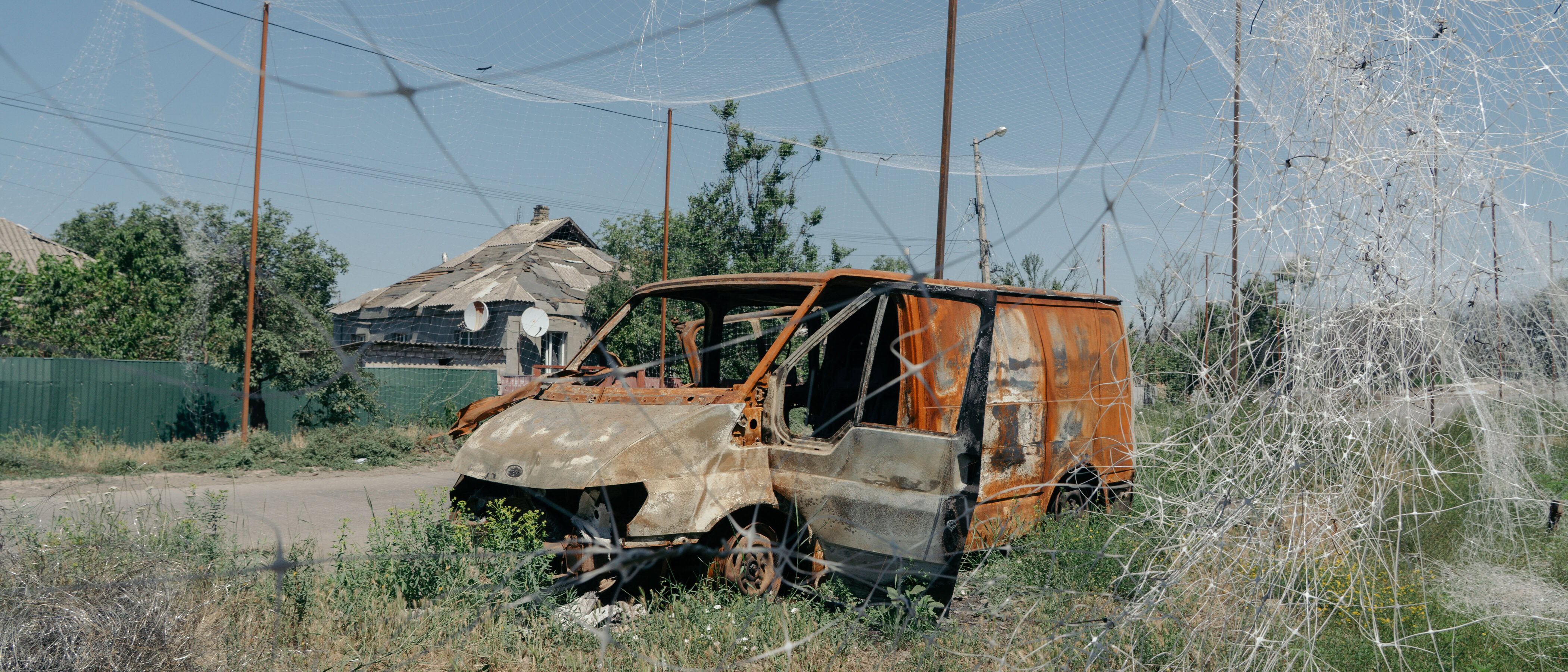
“The enemy originally captured a significant portion of these settlements, having destroyed them first. As a result, when the situation changed, that very destruction worked against them: there was little proper cover left and few opportunities to operate discreetly,” the officer says.
The clearing operation is still ongoing, with Russian forces attempting to regain lost positions, deploying fresh personnel to the front. According to the major, Ukrainian troops are also detecting the deployment of additional specialized enemy units.
“Therefore, it would be wrong to call the situation completely stable. Following the liberation of the territories, it remains dynamic, and in some sectors there is no classic, static line of contact,” the major says.
For the Russian command, this sector remains important, forcing it to commit additional forces and reserves there. This also impacts the Russian army’s capabilities on other fronts, says Illia Kotsukon. In addition, Ukraine’s advance has partially reduced the threat to Pokrovske in the Dnipropetrovsk region. Russian forces had been trying to advance in this direction and move closer to denser built-up areas where they could gain a foothold.
“The advance of Ukrainian units significantly disrupted those plans,” he says.
Kupiansk front: The Russians try to infiltrate the city
In August, Russian forces continued to press on the Kupiansk front, primarily on the left bank of the Oskil River. According to DeepState, on August 16, Russian troops advanced near Kurylivka toward Kupiansk-Vuzlovyi.
At the same time, the situation there was not defined solely by Russian gains, as Ukrainian units also launched local counterattacks. On August 25, DeepState reported the Ukrainian troops’ success, with the Defense Forces pushing back Russian units between Zapadne and Dvorichna, reclaiming over six square kilometers of territory.
Vladyslav Kolisnyk, call sign “Tytan,” commander of the 1st Battalion of the 428th Unmanned Systems Regiment, assesses the situation on the Kupiansk front as stable. According to him, the Russians are avoiding entering the city in large groups, trying to infiltrate one soldier at a time instead.

They try to infiltrate the city one soldier at a time. Because of that,
we have to expend significant resources to eliminate them,
He adds that this tactic is not new for Russian forces, and has remained largely unchanged over the past month. Meanwhile, weather conditions and dense vegetation work in their favor, allowing them to stay concealed. As a result, according to the commander, it is more difficult for Ukrainian reconnaissance to operate, while Russian forces take advantage of the opportunity to advance undetected.
“You also have to take into account weather conditions, such as clear skies, and besides the weather, the dense vegetation that is literally everywhere right now,” “Tytan” says.
He adds that the most difficult situation at the moment is on the left bank of the Oskil River. However, Ukrainian units strive to maintain constant control over the area using drones. Drones not only help spot Russian soldiers, but also strike their logistics.
We constantly cause trouble for the enemy by keeping our ‘birds’
in the sky at all times. Because of this, they can’t actively
infiltrate the city, sustain their positions, or deliver ammunition,
However, logistics remains one of the major challenges for Ukrainian units. The Russians try to сut off Ukrainian supply lines, while Ukrainian troops do the same in response.
Everyone faces the same problem across all fronts — logistics.
We are holding on thanks to the nerves of steel of our soldiers.
On sheer willpower, they move in, deliver supplies,
withdraw on sheer willpower, swap places, and rotate,
Regarding the situation north of Kupiansk, the commander confirmed that Ukrainian forces had made successful advances, though he declined to disclose further details for now.
The Donetsk region remains one of the main offensive fronts
Russian forces continue to push across other sectors of the front. In particular, in the Donetsk region, the highest number of assaults throughout August was recorded on the Pokrovsk and Kostiantynivka fronts.

On the Kostiantynivka front, Russian troops are trying to close in on the city and advance through surrounding settlements. According to the General Staff of Ukraine, 28 attacks were recorded on August 27 alone, rising to 35 on August 28.
At the same time, Russian forces do not advance in a single massive assault. Instead, they attempt to move in small infantry groups, using tree lines, ravines, and ruined buildings for cover. Ukrainian troops detect these groups with drones, after which FPV drones, strike UAVs, and artillery target them.
In addition, Ukrainian troops are actively engaging Russian artillery. According to the 28th Mechanized Brigade, operators from its Spalakh Drone Battalion have hit 33 Russian artillery guns in the Kostiantynivka front. The brigade noted that a single three-man crew accounted for a considerable portion of these strikes. By their estimates, this number of destroyed systems is roughly equivalent to two Russian artillery battalions.
On the Pokrovsk front, Ukrainian soldiers are also trying to deprive Russian assault groups of the ability to receive reinforcements. On August 22, the 25th Airborne Sicheslav Brigade released footage showing its drone operators targeting Russian UGVs used to resupply assault troops. The published video also shows strikes on Russian infantry, attempting to infiltrate Ukrainian positions.
On the Lyman front, Russian forces also continued to press against Ukrainian defense throughout August, but made no significant gains. ISW recorded Russian attacks north, northwest, east, and southeast of Lyman. Meanwhile, on August 23, ISW analysts observed Ukrainian advances east of Dibrova, southwest of Lyman.
Analysts also note that following unsuccessful attempts to advance toward Sloviansk via Lyman, Russian forces intensified offensive operations from the east and southeast. Therefore, this front remains an essential part of the broader battle for the approaches to Sloviansk.
In August, the defining feature of these fronts was not a single large-scale breakthrough by the occupying forces, but continuous attacks across multiple sectors at once. Meanwhile, drones, logistics, and the ability of units to detect and eliminate small assault groups continue to play a critical role. Russian forces keep searching for weak spots in Ukrainian defense, forcing Ukrainian units to disperse their troops across different sectors of the front.