Ukrainian pilots repel Russian mechanized assault: July frontline shifts
Precision strikes by Ukrainian aircraft on crossings and subsequent FPV drone operations stopped a large-scale Russian mechanized assault in the Donetsk region this summer. Meanwhile, on the Zaporizhzhia front, Ukrainian units managed to seize the initiative and gain a foothold. Frontliner breaks down what took place along the line of contact over the past month.
July 2026 showed that the summer campaign continues to transform into a high-tech war of attrition. In the Donetsk region, the deployment of large-scale armored reserves failed to yield the strategic breakthrough sought by Russian occupying forces. The enemy’s attempts to exploit weak spots in the Kharkiv region, improve their lines in Zaporizhzhia, or launch amphibious landings in the Dnipro delta have resulted only in heavy casualties.
The Donetsk region remained the epicenter of enemy pressure, with roughly 200 combat engagements taking place daily. By the end of the month, the occupiers decided to rely on heavy equipment, increasingly using tanks and infantry fighting vehicles to support their assault groups.
Tank assault in the Donetsk region
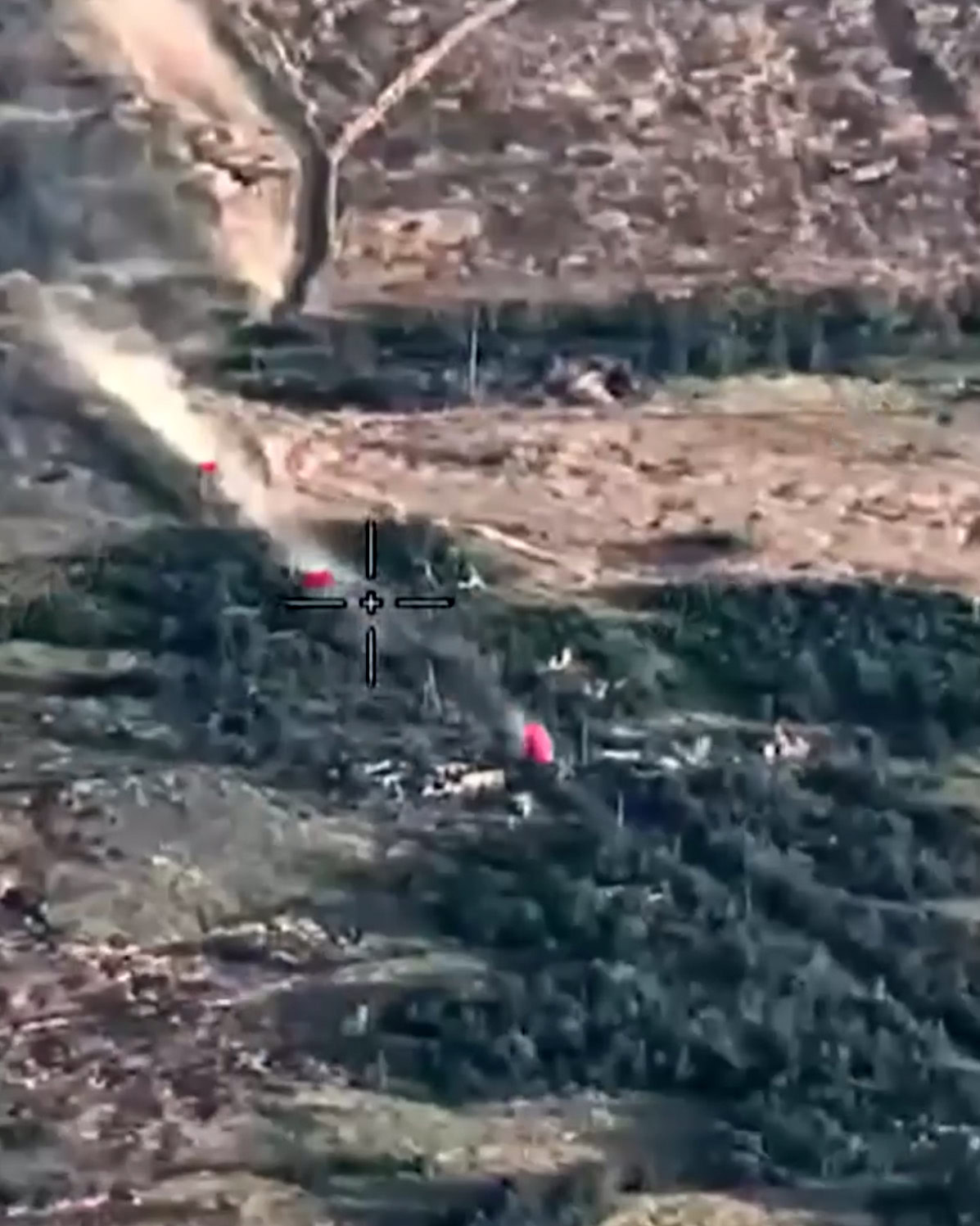
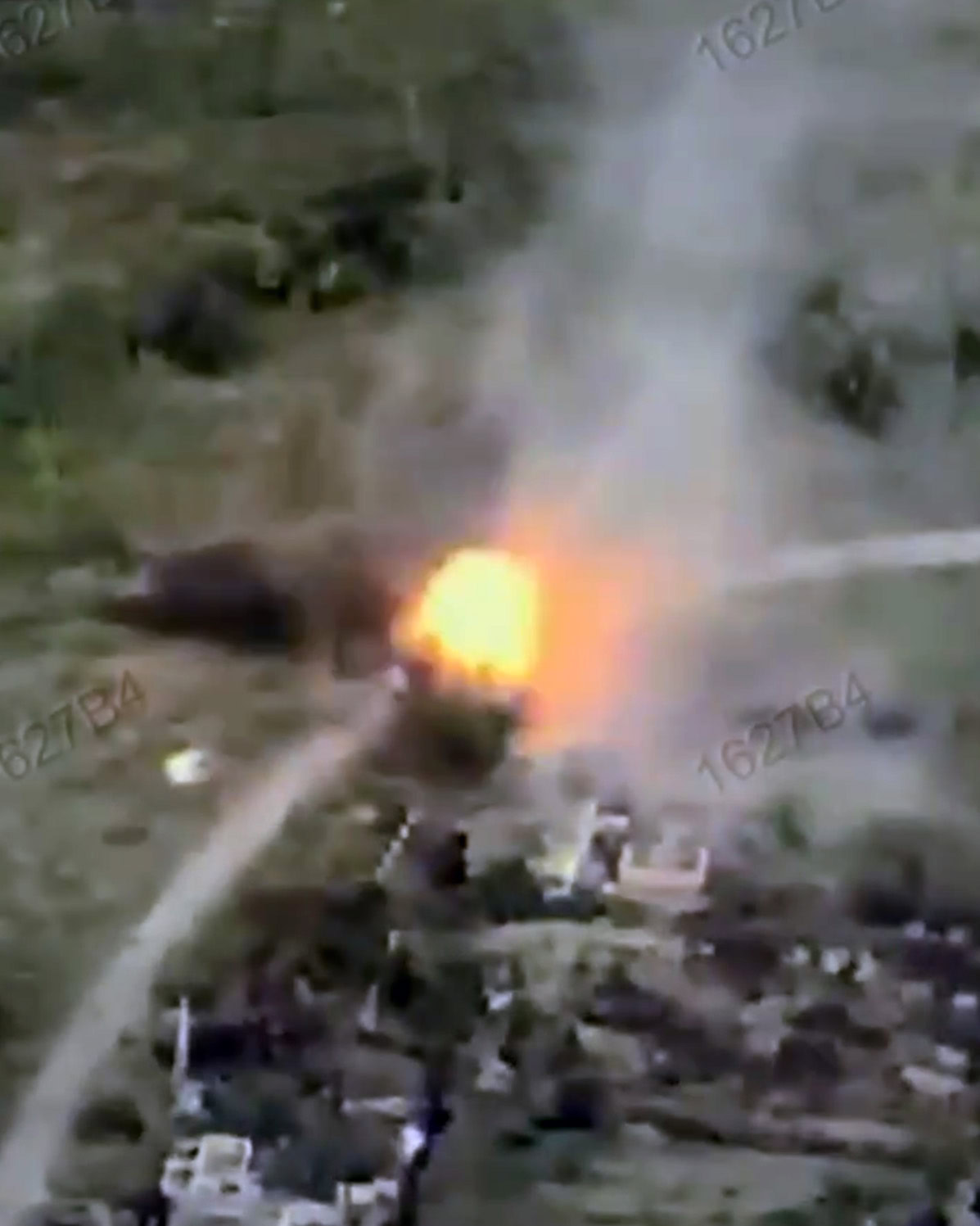
One such massive mechanized assault took place on July 22, 2026, near the village of Shakhove. The occupiers’ plan envisioned a rapid forced march. To execute it, the Russian command committed units from two combined arms armies and a tank division, supported by columns of dozens of armored and wheeled vehicles. However, the enemy’s plans were disrupted by Ukrainian Air Force aircraft.
In advance, Ukrainian aircraft had damaged the bridge crossings along the route of the advancing military equipment. During the assault, the occupiers tried to restore them using pontoon bridges, but those were also destroyed by Ukrainian air strikes.
While the occupiers were struggling to figure out what to do next, Ukrainian FPV drone operators began hunting them down. As a result, in just four hours, Ukrainian units destroyed seven tanks, six armored combat vehicles, 47 light vehicles, and two multiple launch rocket systems. Enemy personnel losses were also significant: over 120 troops were eliminated and nearly 30 were wounded.
Russia prepares a foothold for the Sloviansk-Kramatorsk campaign
The Russians are pressing the hardest near Pokrovsk. According to Hryhorii Shapoval, spokesperson for the Operation Task Force East, dozens of assaults take place there daily, with the enemy attempting to break through near Shakhove, Sofiivka, Rodynske, Hryshyne, Kotlyne, and Udachne. Simultaneously, the invaders are trying to cut off Ukrainian positions in other sectors, specifically aiming to push the Armed Forces of Ukraine out of Kostiantynivka and advance toward Sloviansk.
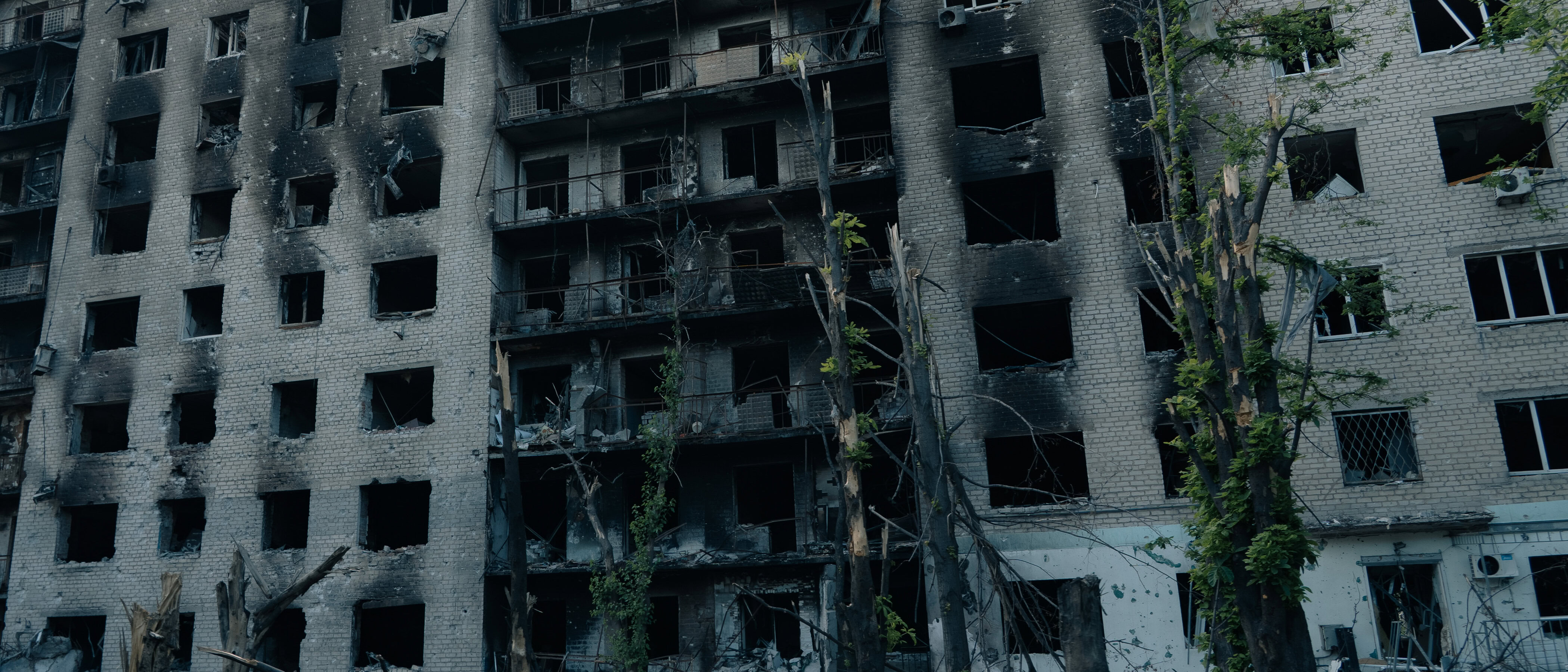
DeepState analysts note that the enemy is graduallyunfolding the Sloviansk-Kramatorsk campaign. Meanwhile, Russia’s strategy remains unchanged — to destroy everything in its path. Sloviansk and Kramatorsk are gradually being reduced to ruins by guided bombs, MLRS, and Shahed drones, while enemy FPV drones fly right between buildings, hunting for targets.
They have claimed numerous times that
they allegedly captured Kostiantynivka, Bilytske, or Rodynske.

They are evolving as well,
so we cannot underestimate the enemy.
Russia extends the range of its guided bomb strikes
Given that the Russians are shelling territory nearly 40 kilometers deep behind the front line, the agglomeration has ended up in effective isolation, making any trip there an immense risk. At the same time, DeepState emphasizes that the war is entering a fundamentally new, high-tech phase. While Ukrainian units are destroying Russian infantry in vast numbers, forcing the enemy to scale back their”meat assaults,”” the enemy’s drone arsenal has emerged as the main critical challenge. Today, in the statistics of neutralized targets, downed Russian drones are increasingly outnumbering personnel losses.
Despite the broad geographic scope of these attacks and the large number of forces committed, the strategic situation along the front line has changed very little. A look at the battlefield map shows that the real outcome of these gruelling assaults amounts to little more than minor shifts in the front line in either direction.
Instead, Russian propaganda attempts to frame these minor shifts in the “gray zone” as victories, in part to justify committing a large number of armored vehicles. As Hryhorii Shapoval explains, most of the enemy’s claims regarding the alleged capture of cities or villages are entirely groundless.
“They need to show at least some results for domestic consumption. They have claimed numerous times that they allegedly captured Kostiantynivka, Bilytske, or Rodynske using heavy equipment, but that’s not true. This information is purely psychological. They send people to the zero line, who just stick a flag somewhere on the outskirts, quickly film a video claiming the settlement is under their control, and flee,” the spokesperson says.
Alongside fierce fighting in eastern Ukraine, both sides are increasingly targeting logistics. In late July, the Russians began actively striking Ukrainian supply routes with guided bombs and jet-powered Shahed drones. As the spokesperson for the Operation Task Force East noted, enemy aerial bombs have begun reaching deeper into Ukrainian rear areas than usual, striking targets far from the front line.
“This isn’t an official statement, but rather my personal assessment and opinion. If they are launching them from the Zaporizhzhia region, they shouldn’t be reaching this deep or in such numbers as they are now. But that’s no surprise — they are evolving as well, so we cannot underestimate the enemy. We factor all of this in, and our command is actively taking countermeasures,” the spokesperson for the Operation Task Force East noted.
In response, the Armed Forces of Ukraine regularly struck the enemy’s rear supply hubs throughout July. On the outskirts of occupied Donetsk, indigenously developed systems destroyed a key logistic center used by Russians to supply their units near Pokrovsk. The strike hit FPV drone assembly workshops and warehouses storing unmanned ground vehicles.

Southern front: The Armed Forces of Ukraine push back the enemy in the Zaporizhzhia region.
The first half of July 2026 was marked by successful localized actions by Ukrainian units on the Vasylivka front. According to DeepState analysts, Ukrainian forces pushed the occupiers out of forward positions near Maliivka, Sichneve, Novoheorhiivka, and Zaporizke, forcing the Russian command to urgently regroup its units. Specifically, for now, enemy forces are still being recorded in the rear areas.
Driven by attempts to regain lost positions and halt the expansion of Ukrainian control, the Russians significantly intensified their assault operations in the second half of the month. According to daily reports from the General Staff of the Armed Forces of Ukraine, the intensity of enemy attacks along the Orikhiv, Huliaipole, and Vasylivka fronts ranges from 14 to 27 combat engagements per day. The enemy has focused its primary efforts near Plavni, Mali Shcherbaky, Vozdvyzhivka, and Huliapilske.
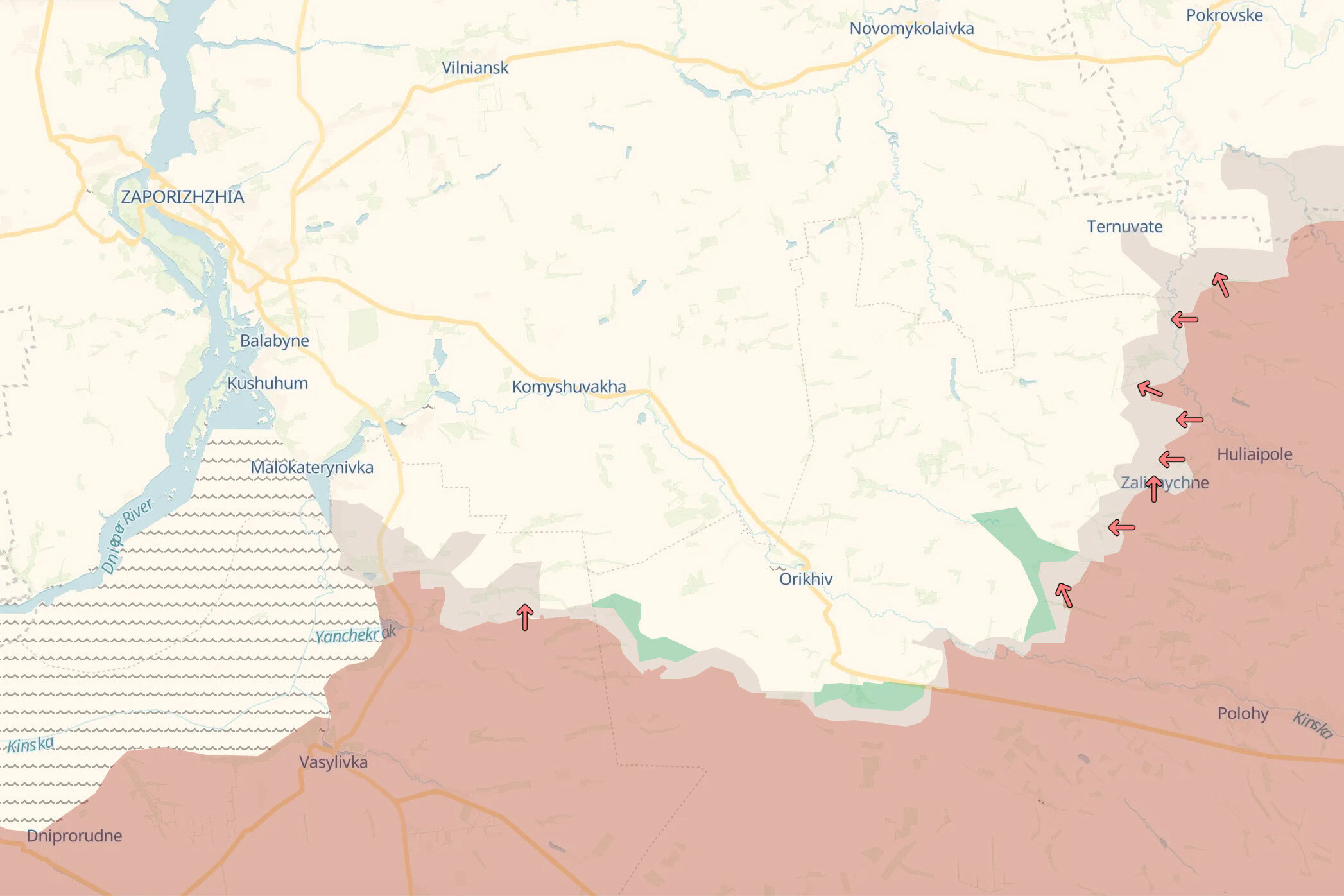
Russian tactics came down to deploying small infantry groups supported by armored vehicles and the massive use of FPV drones. However, as confirmed by the General Staff of the Armed Forces of Ukraine, thanks to the timely detection of enemy movements, a heavy artillery barrage and strikes by UAV crews, all Russian attempts to advance yielded no results.
The Kharkiv front: A ‘transparent’ front line
Compared to the Donetsk region, the enemy was less active along the Kharkiv front, with an average of around ten combat engagements reported daily throughout July. On this front, Russian troops continue deploying small infantry groups of three to five soldiers. Operating under the cover of heavy artillery fire and guided bombs, they attempt to discreetly infiltrate through tree lines and establish positions in houses on the outskirts of border settlements. As a result, the situation around Vovchansk and Lyptsi regularly devolves into chaotic urban warfare and close-quarters combat, where the front line can shift several times a day. Analysts also note minor enemy advances near Mali Prokhody.
The occupiers also attempted to covertly infiltrate other settlements. However, they were spotted in time by aerial reconnaissance, after which drones and drone-dropped munitions took over, eliminating Russian troops before they could even deploy. Such combat engagements are the defining feature of the Kharkiv region: complete transparency of the front line area due to drones. Both sides have deployed so many FPV drones and reconnaissance UAVs into the sky that any daytime movement of armored vehicles or even a foot patrol within 10 to 15 kilometers of the border becomes a suicide mission. Logistics have completely shifted to nighttime, while the enemy, seeking to compensate for their inability to break through the front line, is increasingly launching new ‘Molniya’ loitering munitions at the forward edge and Kharkiv itself.
This enemy tactic was particularly noticeable along the Kupiansk front. According to Viktor Trehubov, spokesperson for the “Kharkiv” Operational Tactical Group, one of the routes for these groups was Holubivka, north of Kupiansk. Russian forces attempted to move along the river and through tree lines, using them as cover to infiltrate the northern districts of the city. This complicates conditions for Ukrainian forces, as the enemy can appear in small groups across various locations, turning fighting for individual city blocks into a continuous hunt.
A similar situation was observed in the north of the region. In the Vovchansk area, the Russians sought not so much to execute a single massive breakthrough as to gradually expand their zone of influence and create new infiltration points. Specifically, according to the Ukrainian military command’s assessment, the enemy aimed to gain a foothold near Vovchanski Khutory and stretch Ukrainian defense across a wider sector.
Water barrier in the Kherson region: The battle for islands and logistics along the Dnipro river
In the Kherson region, the primary arena of confrontation throughout July 2026 remains the island zone at the mouth of the Dnipro river. Occupying forces lack the capability to execute a large-scale river-crossing operation, limiting their actions to tactical reconnaissance and landings by sabotage groups. Over the course of July, more than 25 attempts by Russian sabotage and reconnaissance groups to cross the channels and land on the islands were recorded.
To this end, the Russians deployed high-speed motorboats with teams of 2 to 4 personnel. Most of these watercraft were detected as they exited left-bank channels and were destroyed by drone-dropped munitions and FPV drones of the Ukrainian Defense Forces. Marine and Special Operations Forces units of the Armed Forces of Ukraine maintain full control over key islands and nearby enemy logistics routes on the occupied left bank, particularly near Oleshky and Hola Prystan. Unable to achieve success on the water, Russian forces shifted their focus to remote mining of the channels and intensified artillery and aerial bombardment of riverside settlements on the right bank.

Overall, July 2026 demonstrated that the summer campaign continues to fail to deliver the strategic breakthrough the Russians had hoped for. Instead, the enemy suffered heavy casualties searching for weak spots in the Kharkiv region, launching attacks in Zaporizhzhia, attempting amphibious landings in the Dnipro River delta, and applying pressure in the Donetsk region.