Evidence of a nation: Why Russia destroys Ukraine’s cultural heritage
Russia has damaged hundreds of Ukrainian museums, churches, libraries, and historical sites. Among the sites damaged by Russian attacks are the Kyiv-Pechersk Lavra, the Hryhorii Skovoroda Museum, the Oleksii Shovkunenko Kherson Regional Art Museum, and the Chornobyl Museum. Each preserves a distinct part of Ukraine's past: its spiritual and cultural traditions, its intellectual and artistic heritage, and the memory of one of history's greatest technological disasters. These are more than cultural landmarks: they are tangible records of the centuries-long development of Ukrainian history and culture. Frontliner examines this through the stories of several heritage sites that have been deliberately targeted by Russian attacks.
Russia’s objective extends beyond occupying Ukrainian territory. It also seeks to impose its own interpretation of history. To do so, capturing cities is not enough: it must undermine the evidence that Ukrainian culture and traditions of statehood developed independently of Russia. A textbook can be rewritten. Monasteries, museums, archives, and collections are far more difficult to erase. They stand as tangible evidence of the historical record. That is exactly why they become targets. By destroying them, Russia tries to deprive Ukraine of material evidence of the past.
Memory has many faces
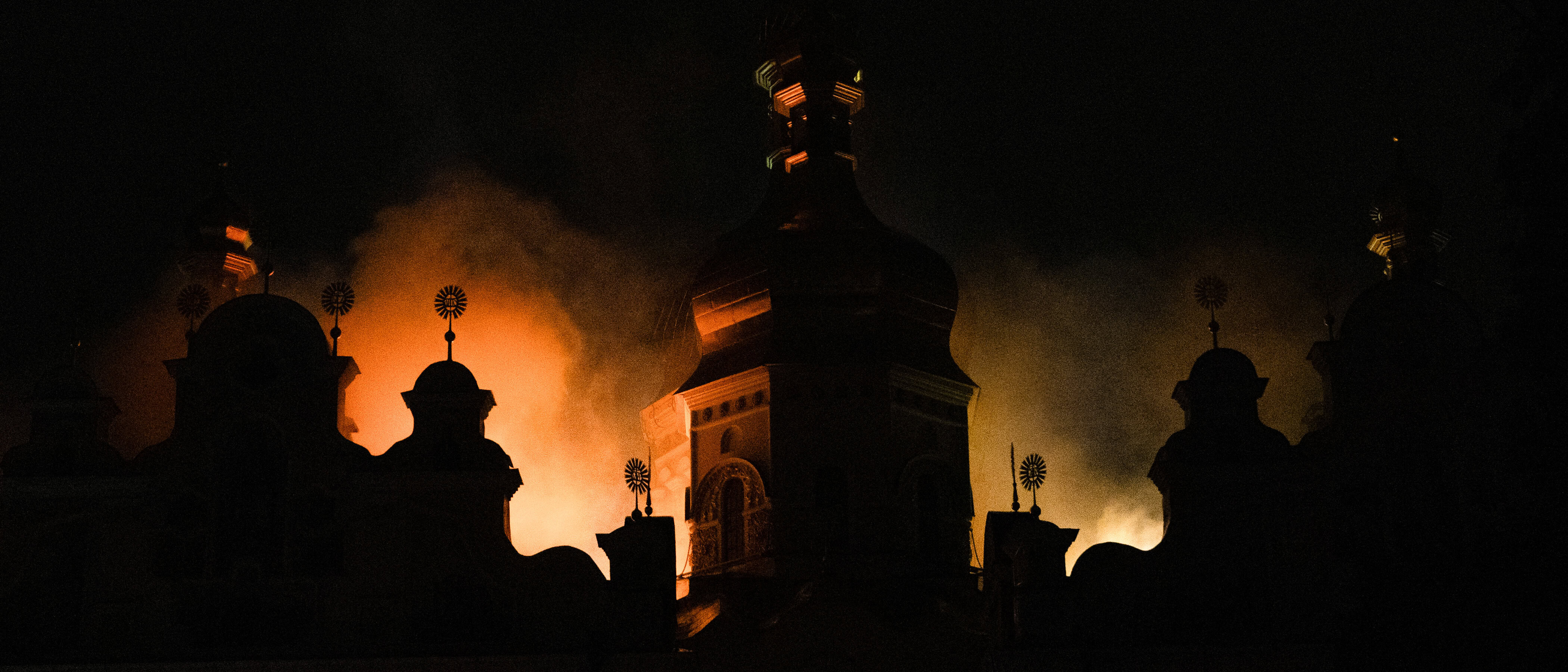
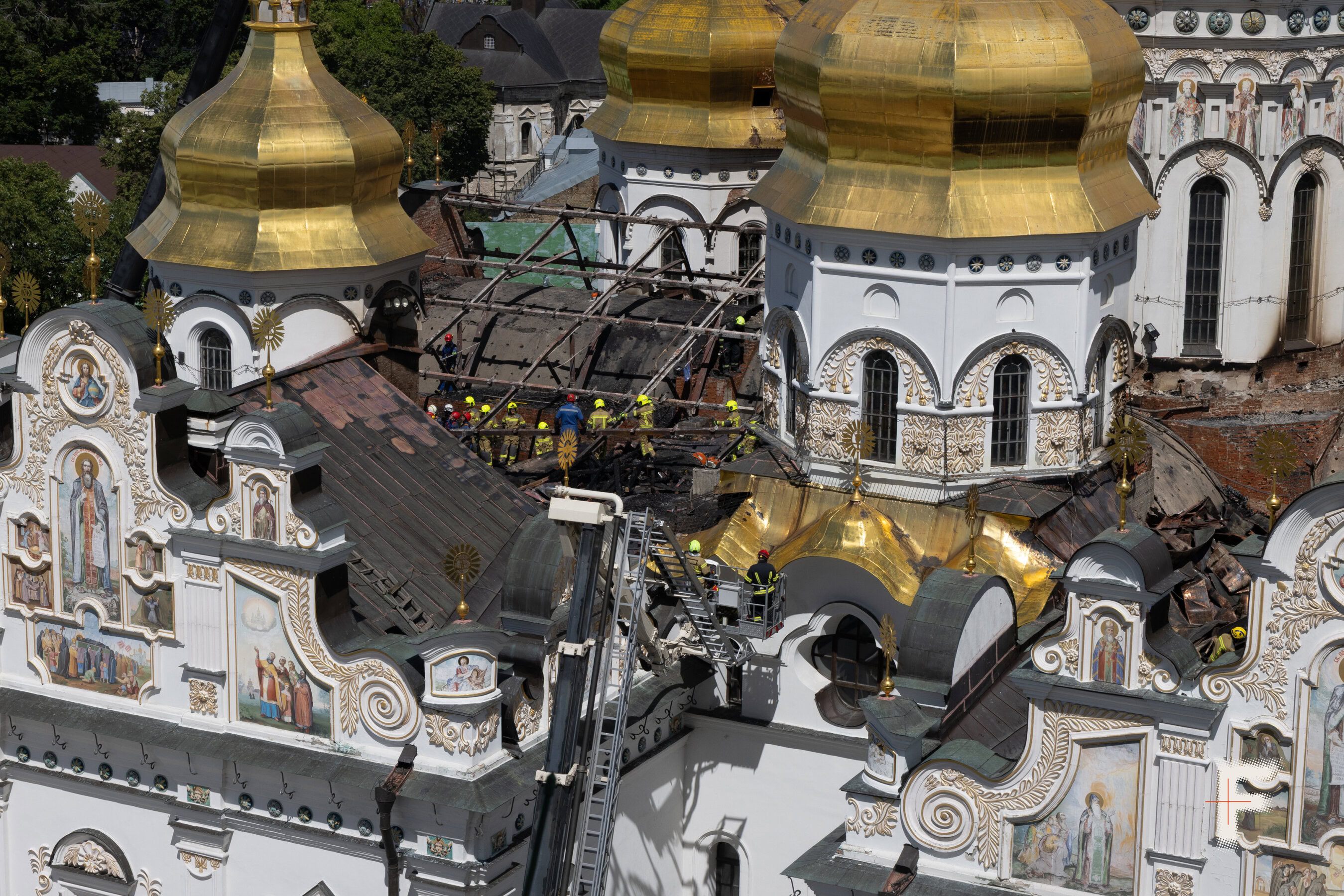
In June 2026, a Russian strike damaged the Kyiv-Pechersk Lavra. The most severely damaged was the Assumption Cathedral, the main church of the monastery complex.
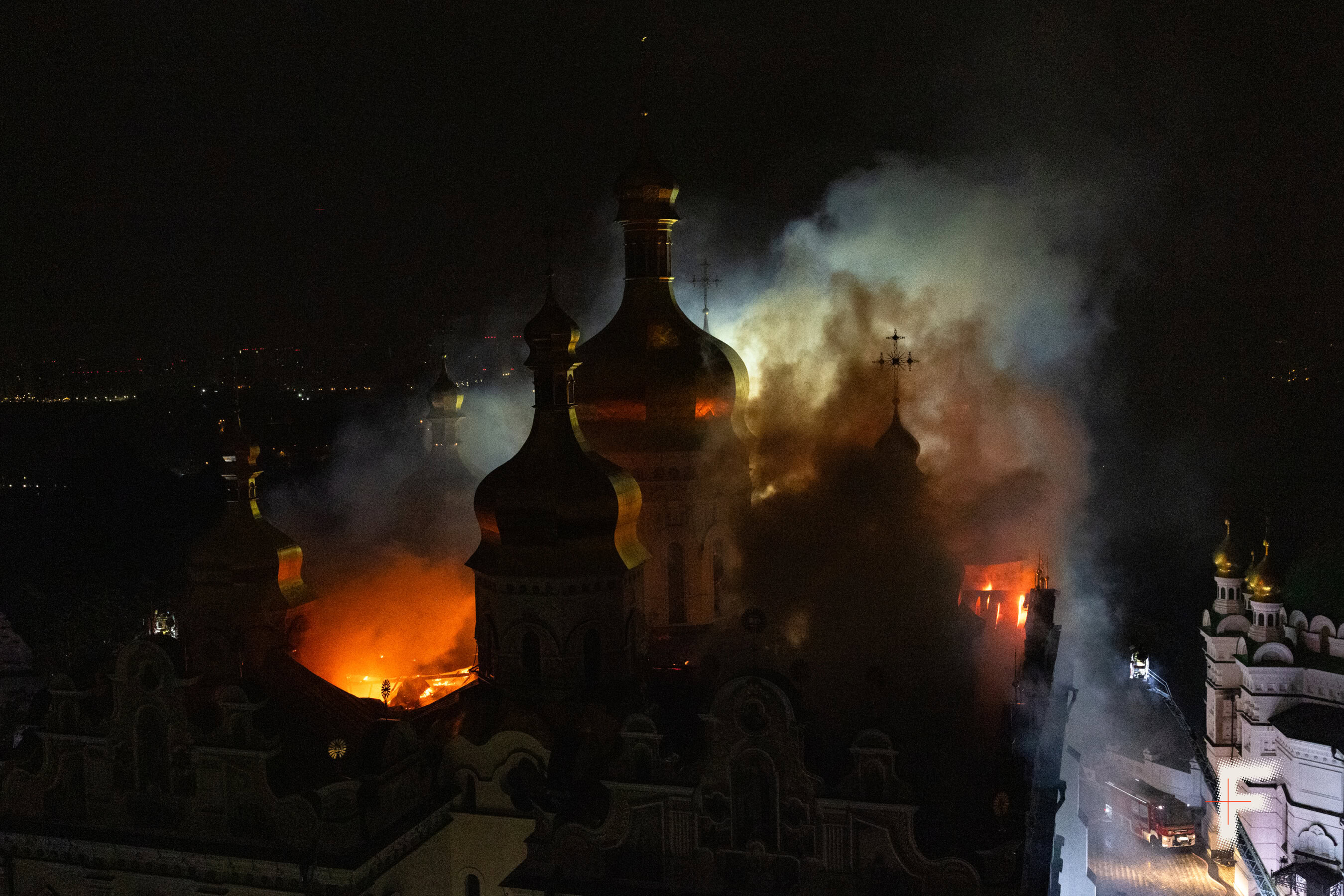
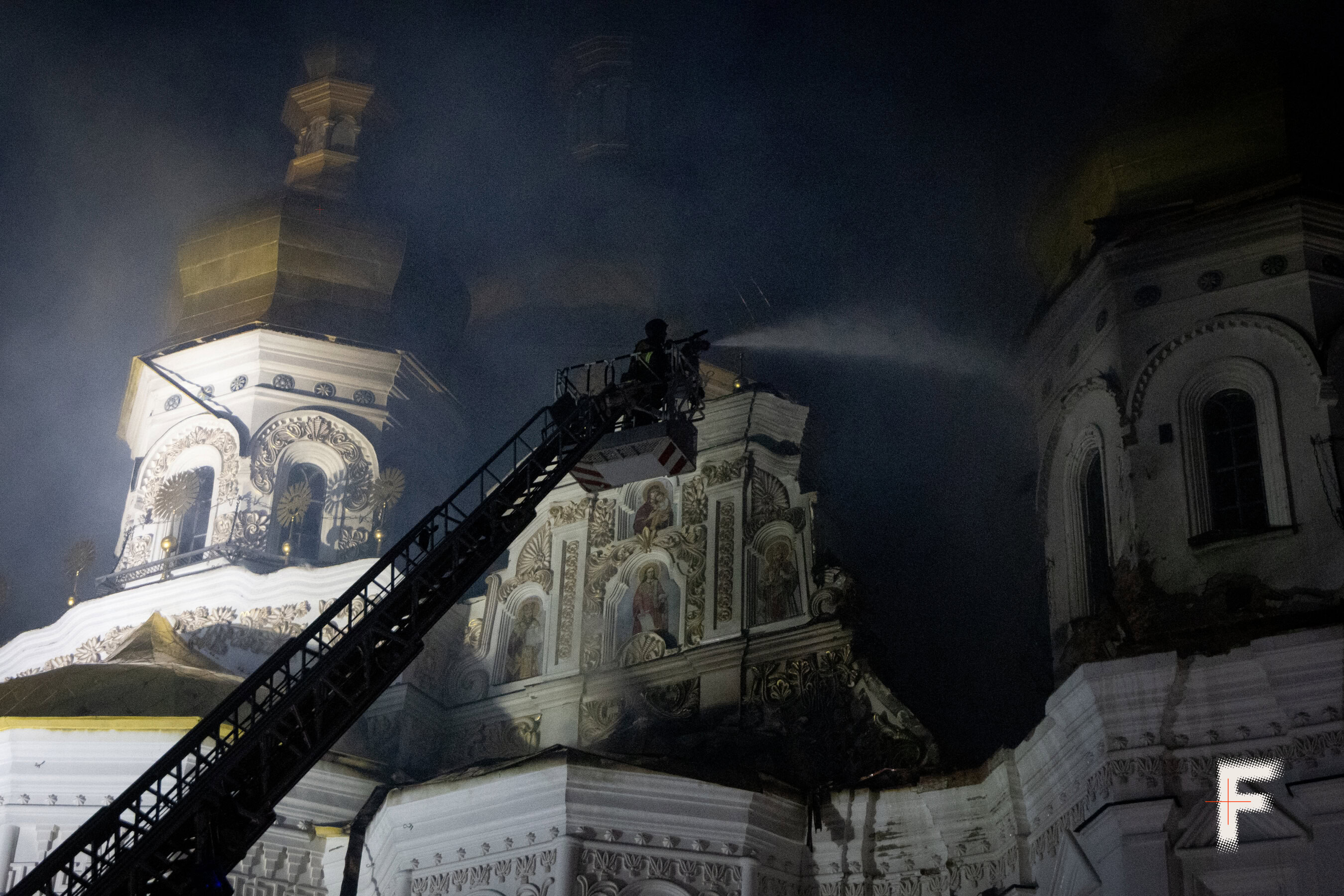
Russia attacked a place that has endured almost 1000 years of changes of rulers, political powers, and historical epochs. Over the centuries, the Lavra has come to embody Ukraine’s history.
However, it has never been only a monastery. For centuries, within its walls books were printed, chronicles compiled, icons painted, and future priests educated. The Lavra did more than preserve tradition: it helped to shape it. Each generation left its own mark on this place, which is why the history of the Lavra cannot be separated from the history of Ukraine itself.
The story carries a painful historical irony. In November 1941, the Assumption Cathedral had already been destroyed during World War II. It took nearly 60 years to rebuild it. Less than a quarter of a century after its restoration, Russia once again attacked it.
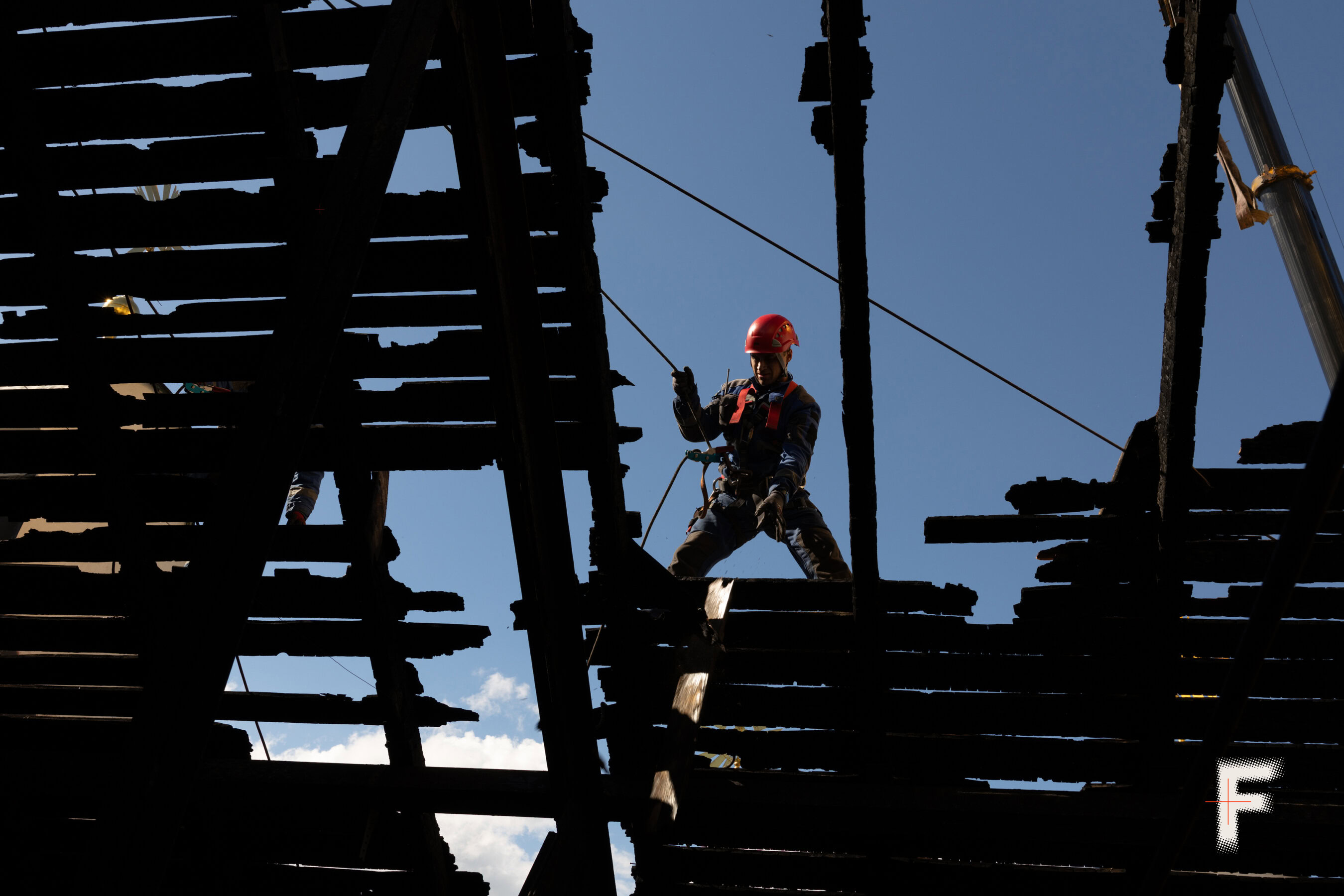
The Lavra is just one of many examples. Russia is deliberately destroying the various ways in which Ukrainians preserve and pass on their past.
Two ways to erase history
In the spring of 2022, a Russian missile struck the Hryhorii Skovoroda National Literary and Memorial Museum in the Kharkiv region. The 18th-century building, where the philosopher spent the last years of his life, burned down almost completely. Only the monument to Skovoroda himself survived.
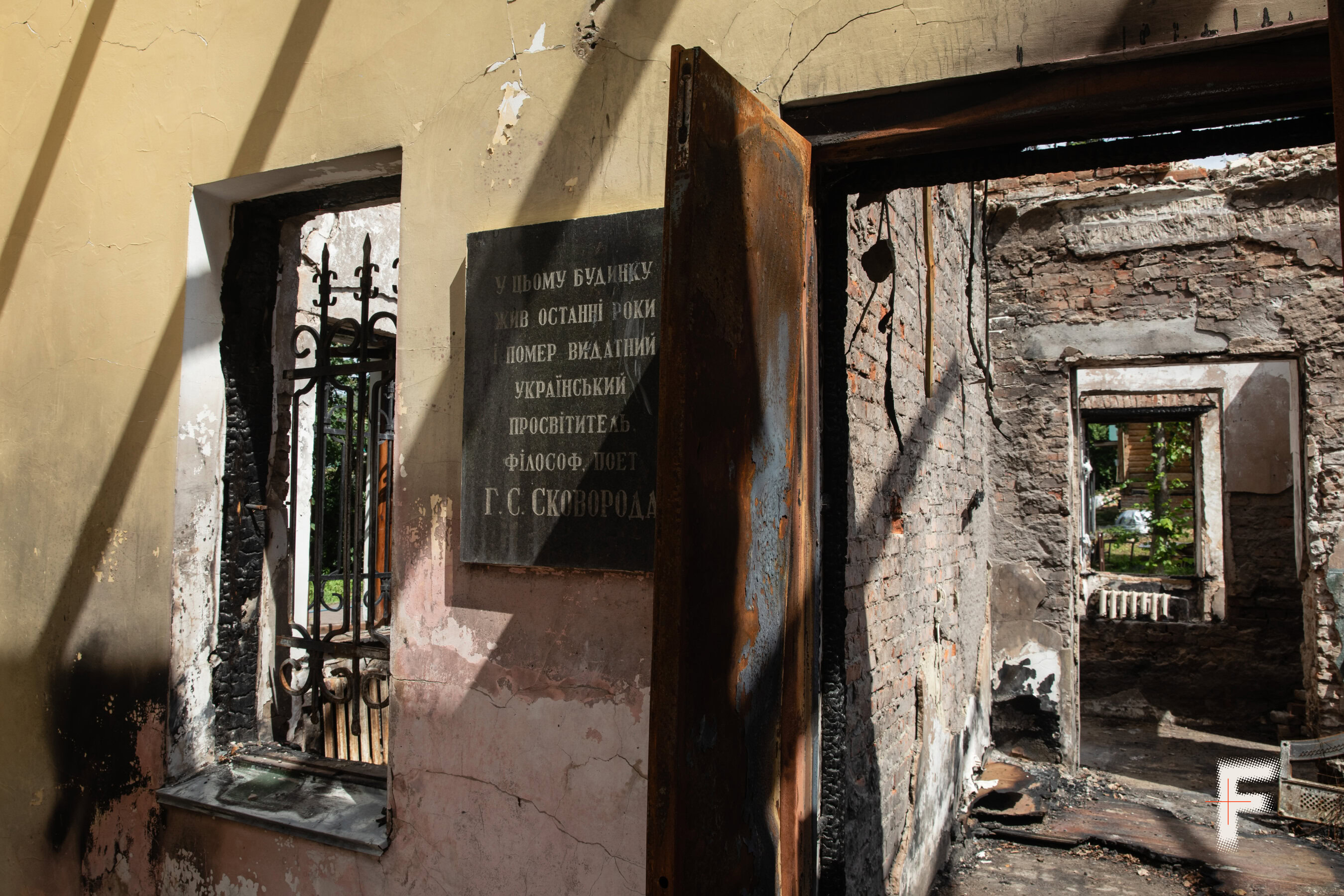
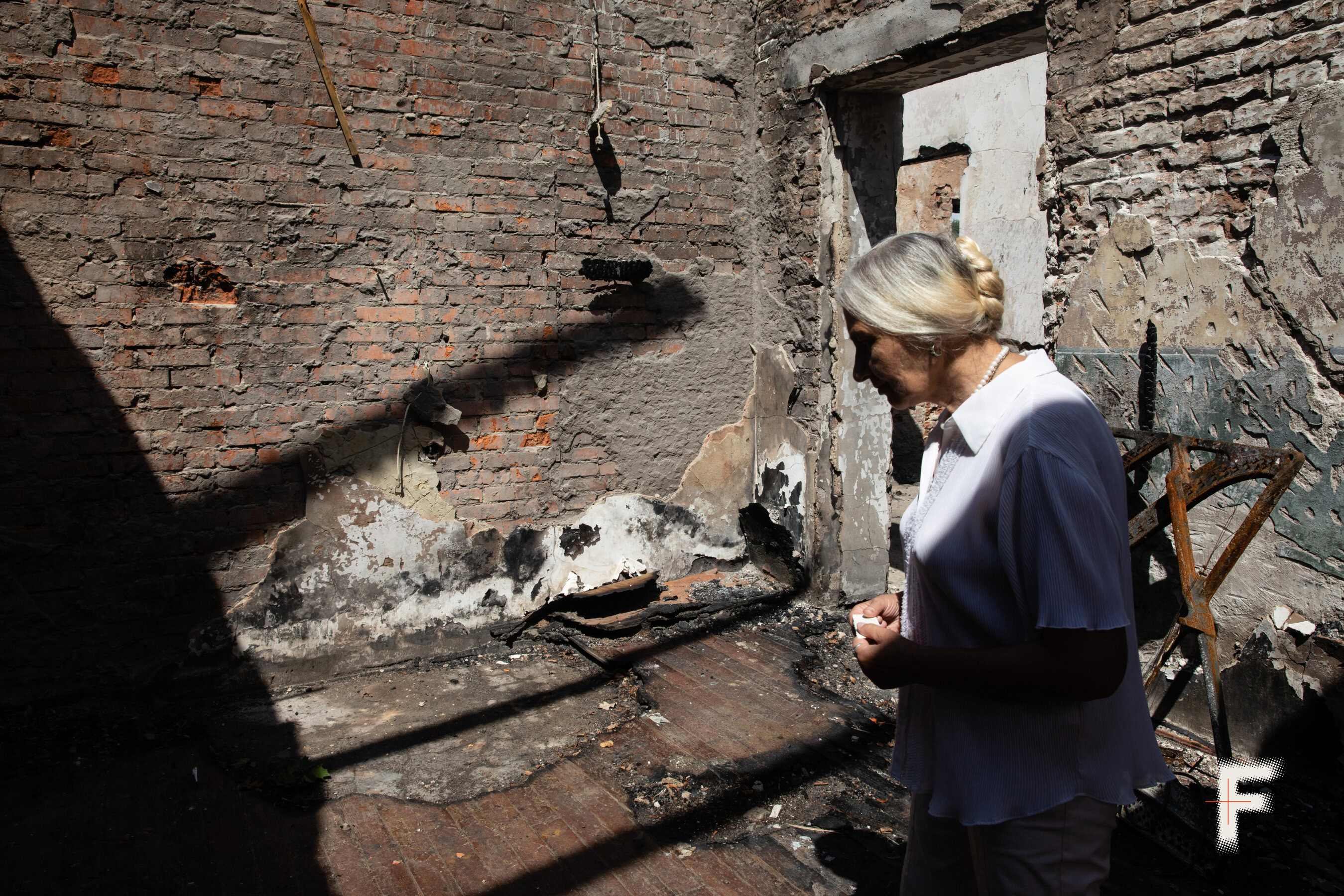
Skovoroda deliberately kept his distance from political authority throughout his life. He turned down the prospect of a career at the imperial court, choosing instead the path of a wandering philosopher, for whom freedom was a way of being. His legacy extends beyond his writings: it is the enduring example of a man who refused to live according to rules set by others.
Russia destroyed a site that symbolized a simple truth: Ukrainian culture has long been capable of nurturing its own philosophers. Skovoroda’s story undermines the widespread belief that intellectual life originated in St. Petersburg or Moscow and invariably revolved around the imperial center.
If the Skovoroda Museum became a victim of destruction, the Oleksii Shovkunenko Kherson Regional Art Museum endured another kind of violence: looting. During their retreat from Kherson in the fall of 2022, Russian troops carried off more than 10,000 artworks. The theft ranks among the largest museum robberies in Europe since World War II.
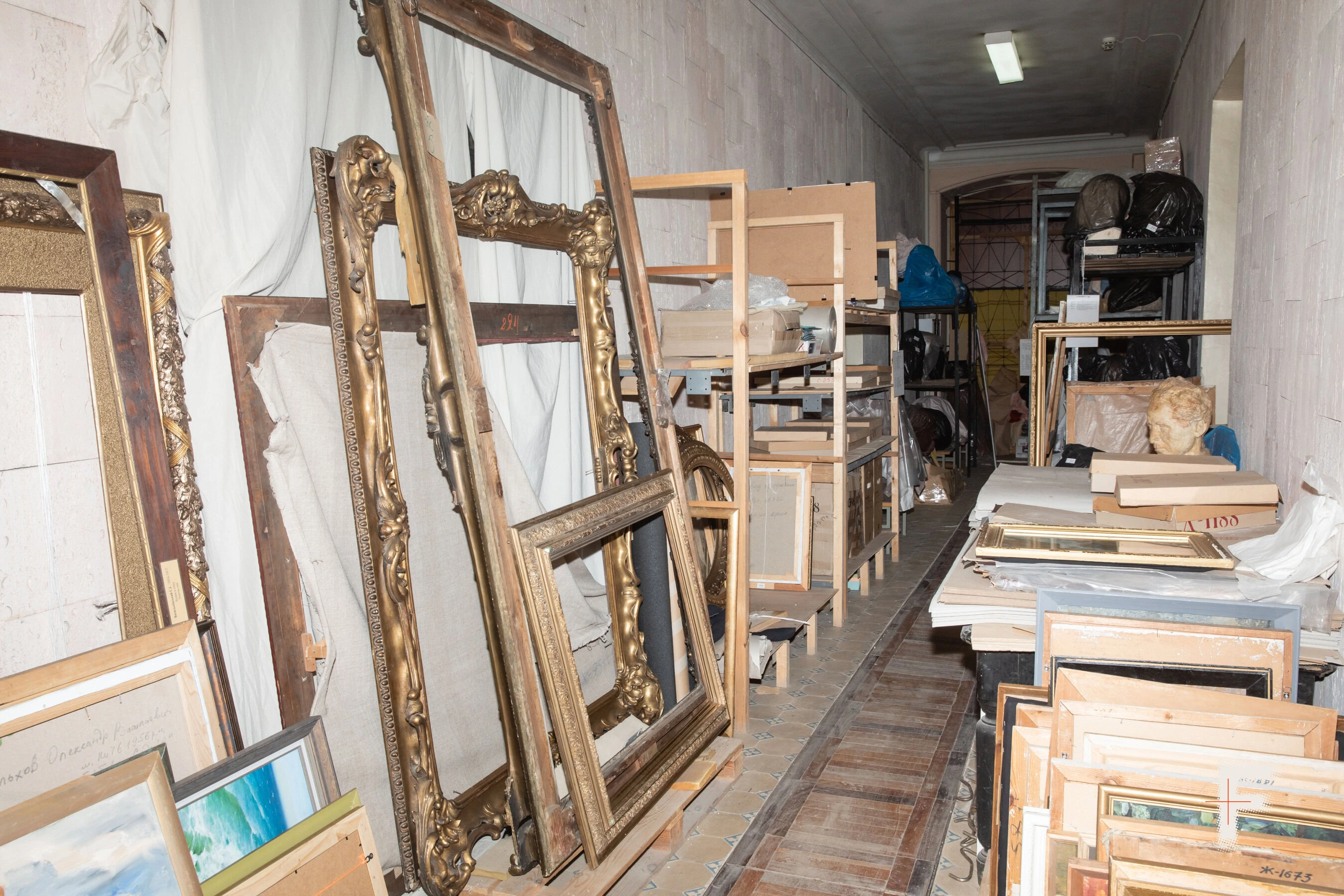
What vanished was far more than a museum collection. These galleries safeguarded the history of the city and its region: paintings by Oleksii Shovkunenko, the artist whose name the museum bears, together with works that came to Kherson through donations, private collections, and decades of patient museum work. It was the city’s cultural archive: proof of how generations of people created, collected, and passed on art.
Unable to destroy another nation’s history, Russia seeks to claim it as its own. This is a long-standing imperial pattern: for centuries, conquering powers have carried off cultural heritage from occupied lands. Napoleon enriched the Louvre with spoils of war from his campaigns. The Nazis likewise carried out the systematic looting of museums and private collections throughout Europe.
The story of a lie
On the night of May 24, 2026, a Russian attack damaged the Chornobyl National Museum. The building, which had reopened to visitors just a month earlier after extensive restoration, suffered critical damage. The explosion and fire destroyed about 40% of the exhibits.

The Chornobyl National Museum told more than the story of the accident at the Chornobyl Nuclear Power Plant. It chronicled its aftermath: authorities’ silence, the suppression of facts, the delayed evacuation, and the devastating cost of state lies. It reminded visitors that the true catastrophe was not only the reactor explosion, but also the deliberate decision to hide the truth.
At first, the Soviet authorities tried to hide the tragedy. Forty years later, Russia struck the very place that kept it from being forgotten.
Unprotected world heritage
If cultural heritage is so important, who is capable of protecting it?
That is precisely why UNESCO exists. The organization maintains
the World Heritage List, documents destruction, coordinates international aid, and supports the restoration of damaged heritage sites. As of July 2026, damage to 541 cultural heritage sites in Ukraine has been verified.
The war has revealed the limits of UNESCO’s capabilities: the organization lacks the mechanisms to physically protect these sites. Moreover, the organization’s diplomatic language is sometimes so cautious that it fails to address the most important issue: who is to blame.
The organization reacted quickly after the strike on the Kyiv-Pechersk Lavra. But one word was missing from its official statement: Russia. The damage to the heritage site was acknowledged. The perpetrator was not.
Ukraine strongly condemned the organization’s position.
“An organization responsible for protecting cultural heritage does not even know who it is protecting it from,” Heorhii Tykhyi, spokesperson of the Ministry of Foreign Affairs of Ukraine, said, describing UNESCO’s response as “absurd” and “weakness.”
World Heritage status provides access to international support, expertise, and future restoration. But on its own, it can neither prevent destruction nor ensure accountability for it. This issue goes far beyond the scope of UNESCO. It concerns the entire international system, which has become adept at documenting crimes against cultural heritage but has not yet found a way to make them truly disadvantageous to the aggressor.

The foundation of the future
Walls can be rebuilt. Frescoes can be restored. Even stolen works of art sometimes make their way home. What is much harder to recover is a place’s continuity: the sense that generations past and future alike can experience the same walls, inhabit the same spaces, and recognize them as part of a shared history.
Heritage sites are not preserved so that society can dwell on the past. They are preserved because they give the future a foundation. That is why a war against cultural heritage is never just a war on stone, wood, or canvas. It begins with an attempt to call into question the very existence of a people: their history, culture, and language. Because if the world can be convinced that these people never existed, then any violence against them becomes much easier to justify.
***
Hi, I am Yuliia, the author of this article. Thank you for reading to the end.
As a child, watching conflicts unfold on television, I never understood the reason of destroying museums, churches, and cultural landmarks. The strikes on military targets made sense to me as part of the logic of war. But what was the purpose of destroying places that had nothing to do with combat?
When Russia brought war to Ukraine, I returned to that question. Only then did I begin to understand. For a state that continues to view Ukraine through an imperial lens, war is not only about seizing land. It is also about shaping memory: deciding which history survives, who has the right to claim it, and what will be remembered.
When the places that carry this memory are erased, we lose far more than buildings or artefacts. We lose part of ourselves.
Every story starts with your support. Join the Frontliner community so we can keep up documenting Russia’s war against Ukraine from the front line and the rear.
***