‘Tricking the pain’: How horseback riding helps veterans recover
Tuesday morning at the Kyiv Hippodrome begins with the steady clatter of hooves on the sand. Veterans from the Tytanovi rehabilitation center arrive dressed in casual athletic wear — T-shirts, shorts, and sneakers. There are no military uniforms or insignia in sight. Before the horseback riding session begins, the veterans gather near the arena fence. Here is what happened next, as reported by Frontliner.
While one of the veterans mounts the horse and starts his lap, the others joke that the animal will test their mettle once again. For some, this is their first interaction with a horse, while others are already used to this form of rehabilitation.
The sessions are conducted as part of a program created by the Kyiv Military Hub along with the Kyiv Hippodrome. Veterans from various rehabilitation centers, including Tytanovi, as well as other partner organizations that support wounded soldiers can take part in the program.
The first to enter the arena is Danyil Cheberiak. Horseback riding was a childhood dream of his, one that he constantly put off for the future. It was only after being wounded that he was finally able to mount a horse.
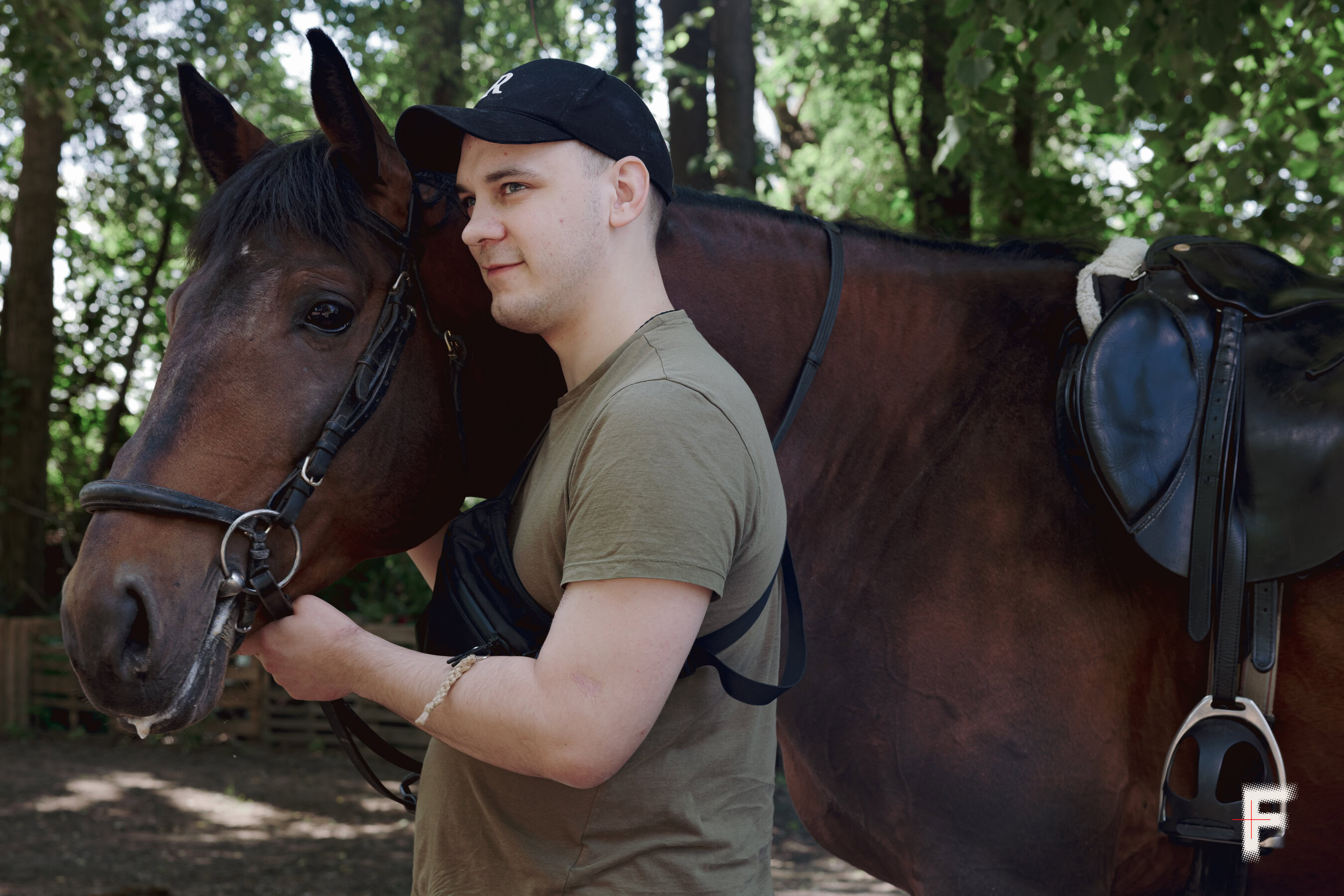
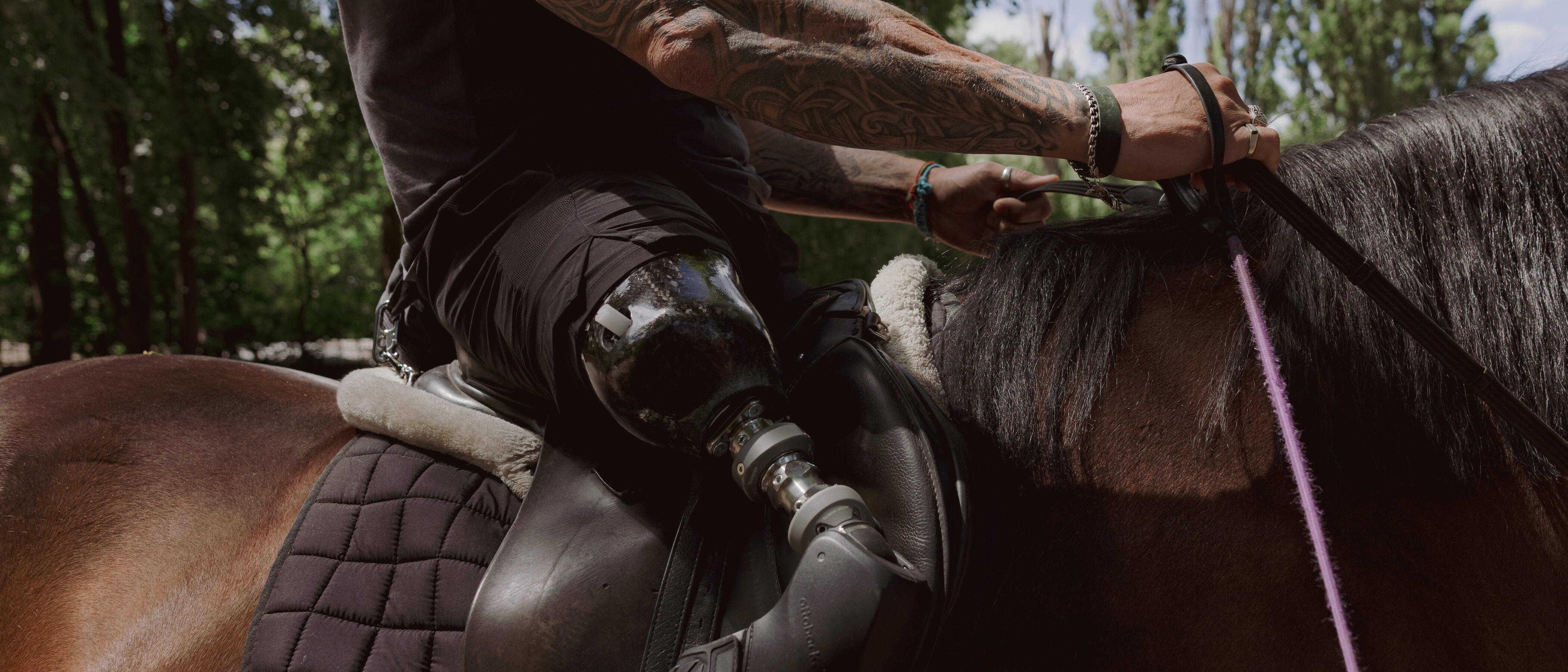
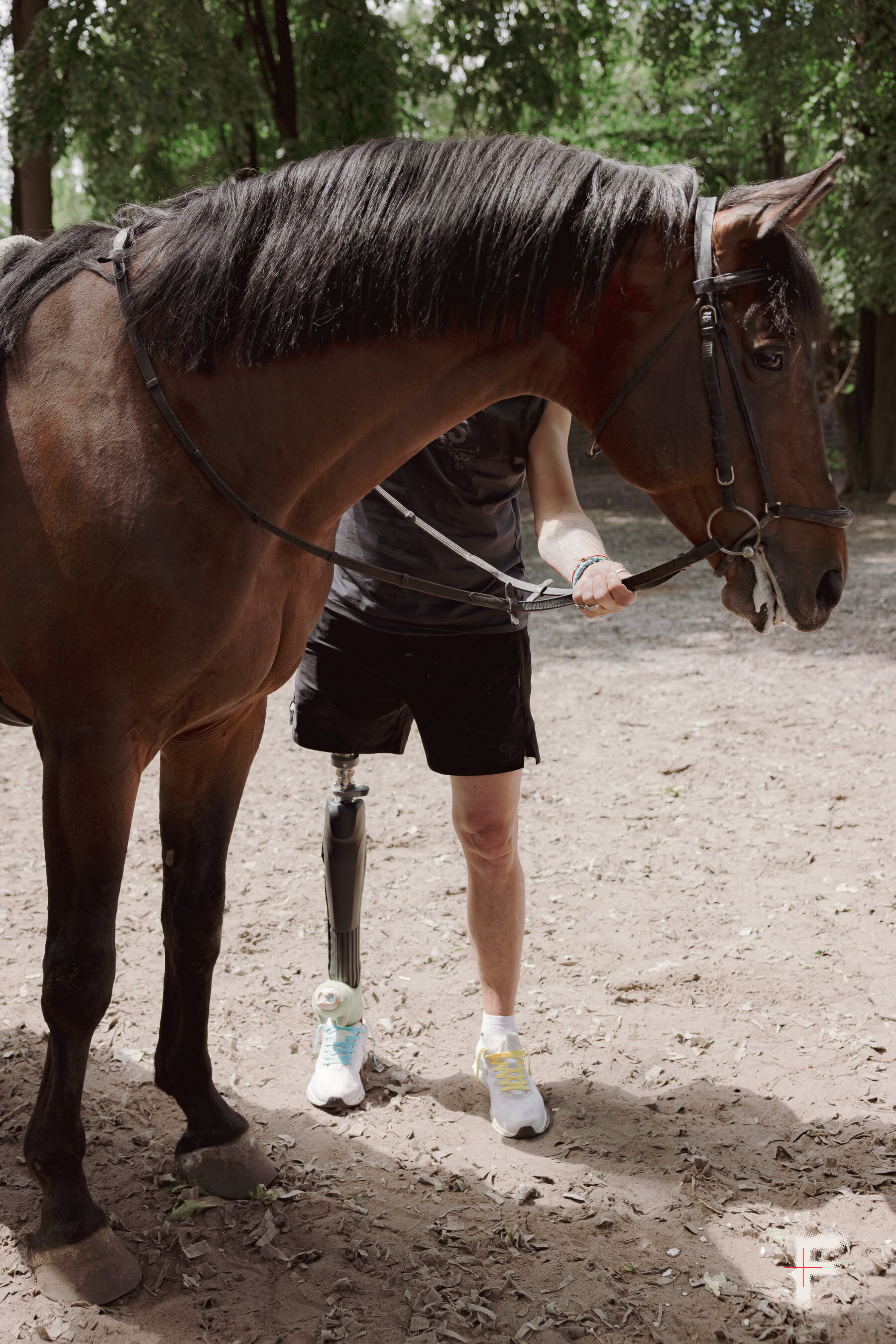
Danyil served in the 214th Assault Battalion. During one of the assaults, he was wounded and spent 26 hours lying on the battlefield with open wounds, as intense enemy drone activity made evacuation impossible. Danyil lost his leg, and shrapnel wounds left him with almost no sensation in his hand. However, after a long rehabilitation, he returned to an active life. He recalls his first experience riding a horse:
“It was cool, but a little scary. Because I’m missing a leg, I feel off balance on the horse, so I’m learning to find my balance at the same time. I’m shaking all over — I don’t know whether it’s from the cold or from the fear of falling. But the first time is always a challenge.”
The veteran says that it became not only a new experience but also another way to regain control of his body. After an amputation, you have to learn how to take every step all over again, so horseback riding has become another form of training for him.
Danyil says that initially he approached the horse with some caution, afraid of doing something wrong or accidentally hurting the animal. But according to the veteran, the horse seemed to understand the rider’s nervousness.
“It’s like it’s taking care of its rider. As if it doesn’t care, but at the same time, it does. It feels really nice. Horses are God’s creatures. They are so beautiful and always bring positive emotions. For me, this is probably even more important than the physical aspect,” Cheberiak says.

The young man completes his lap, returns the horse to the instructor, and hurries to another rehabilitation session. The veteran has a packed schedule: gym in the morning, followed by rehabilitation exercises that he tries not to skip. Currently, he is waiting for a prosthesis so he can learn how to walk again, and he already has a clear plan to work as a camp counselor for displaced people. Despite his busy schedule, Danyil plans to continue training.
Returning to yourself after service
Meanwhile, the arena does not stay empty for a single minute. Another clatter of hooves echoes as veteran Anastasiia Nekhaienko leads her horse out. From the outside, the session looks almost meditative. The horse moves in circles at a steady pace. However, the instructor explains that behind this apparent calm lies hard work. During the ride, the rider has to constantly maintain their balance, coordinate their movements, and control their body. Moreover, a horse instantly reacts to a person’s emotional state. If they are tense or anxious, the animal senses it.
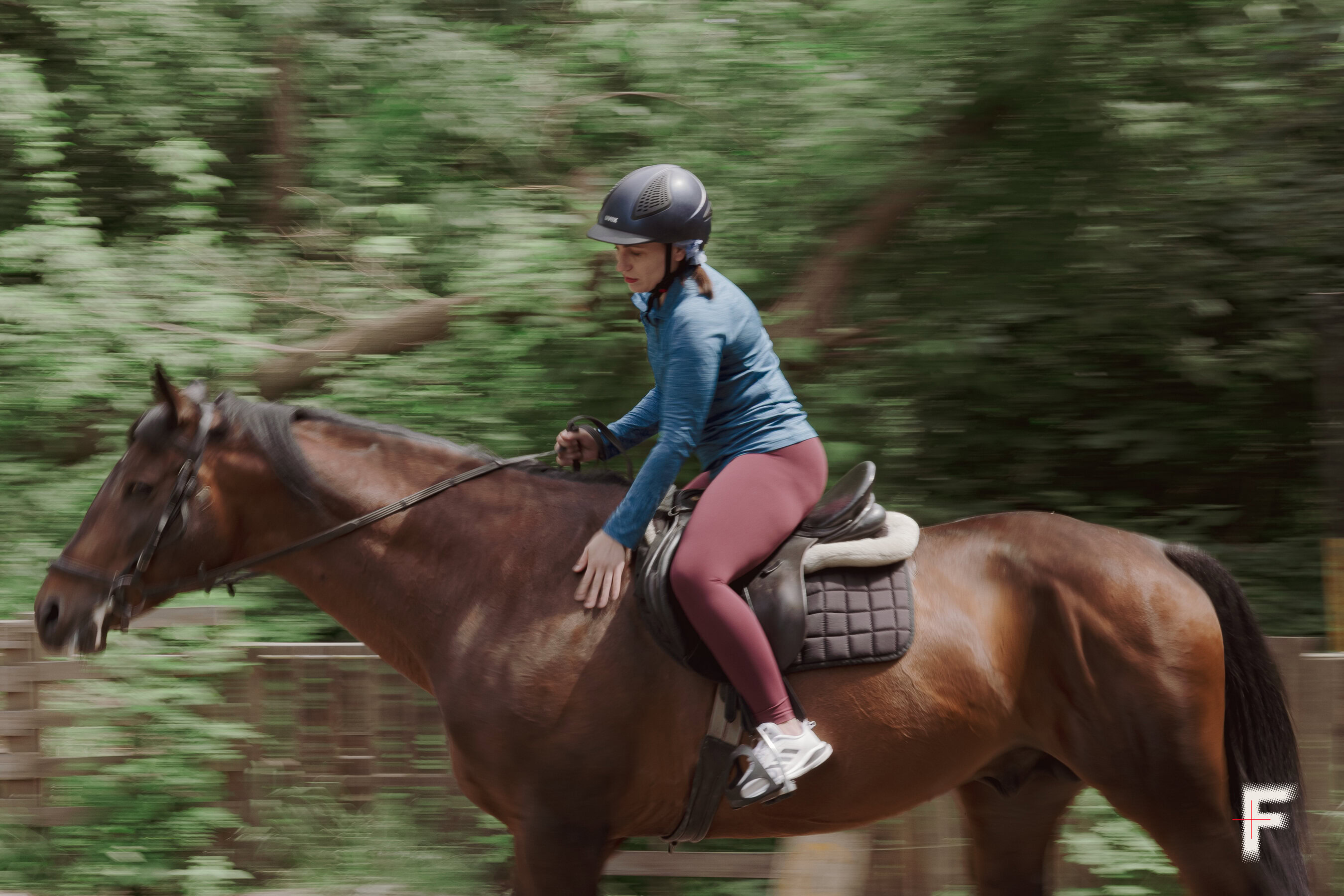
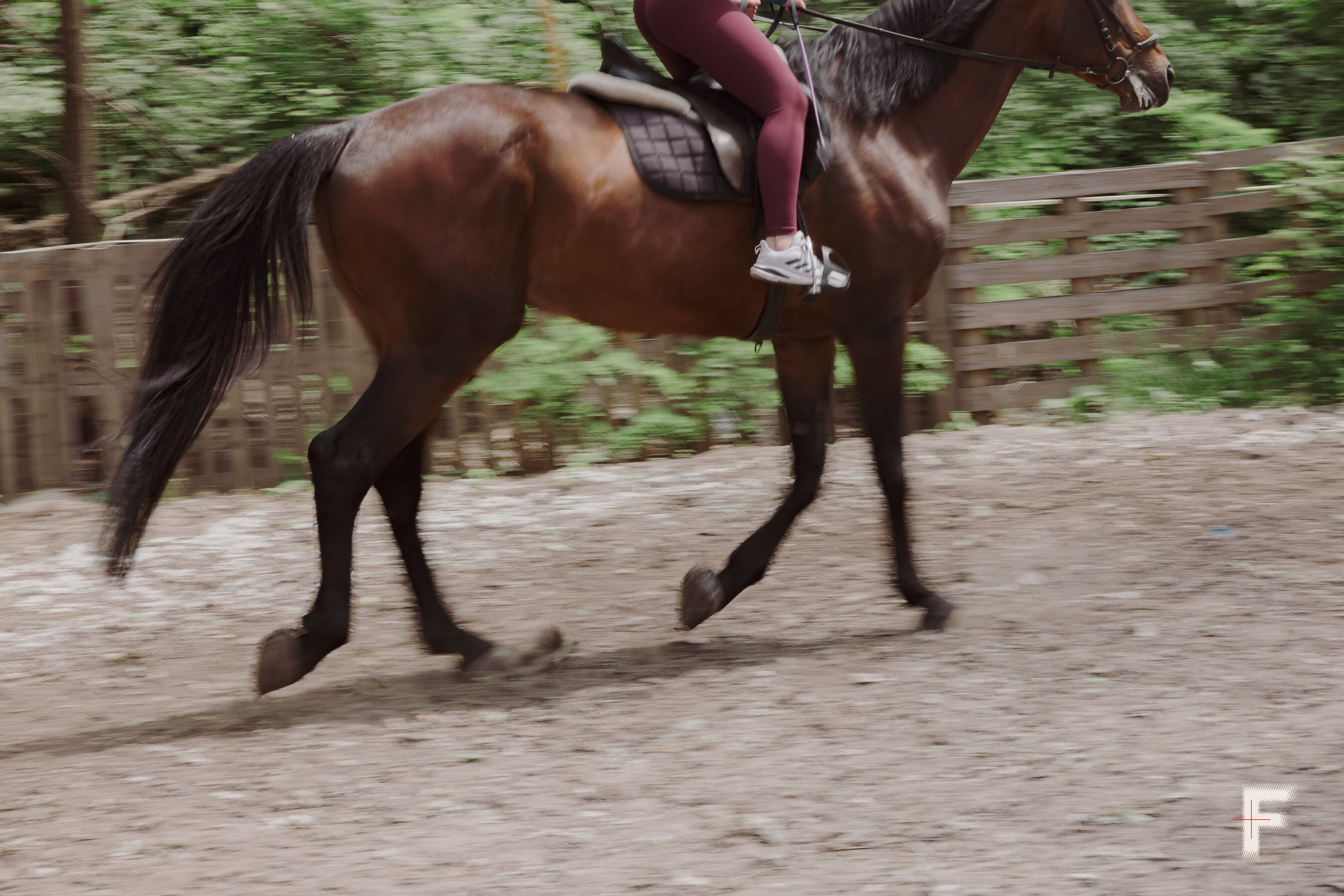
At the end of the ride, the horse veers off course and ignores the rider’s commands, despite her attempts to get it back on track. After stopping the animal, the veteran jumps down on the sand, saying:
“Alright, I’m mad at you. You didn’t listen to me again. I guess I go too easy on you, and you’re taking advantage of it.”
After catching her breath, Anastasiia starts sharing how she found herself at the arena. Her love for horseback riding began long before her rehabilitation. Back when she was serving as a combat medic with the 43rd Mechanized Brigade, she was looking for an outlet amid the routine of frontline life.
“When I was on the front line, no matter what village we went into, the first thing I’d do was find a horse to ride. Some of them were wild, just roaming around on their own, but I was never afraid of them. The guys were always teasing me. They’d say, ‘Nastia, there’s another horse running around, go on,’” she recalls.

After leaving the military in 2023, she focused on opening her own massage studio in Kyiv. However, her inner state required a recovery that turned out to be more difficult than the physical one, Anastasiia says:
“After my first few rides, I cried so hard because I had so much built up inside. This energy has to go somewhere, so I let it out here. And this is where I relax.”
That’s why she considers horseback riding to be not just physical, but also emotional rehabilitation. For her, horses are creatures that offer unconditional acceptance — something she couldn’t find in a psychologist’s office. Around the animal, you don’t have to explain or hide anything: it doesn’t ask questions or judge, it just accepts a person exactly as they are. It is this very acceptance that helps her reconnect with the person she was before her service and find the strength to keep going.
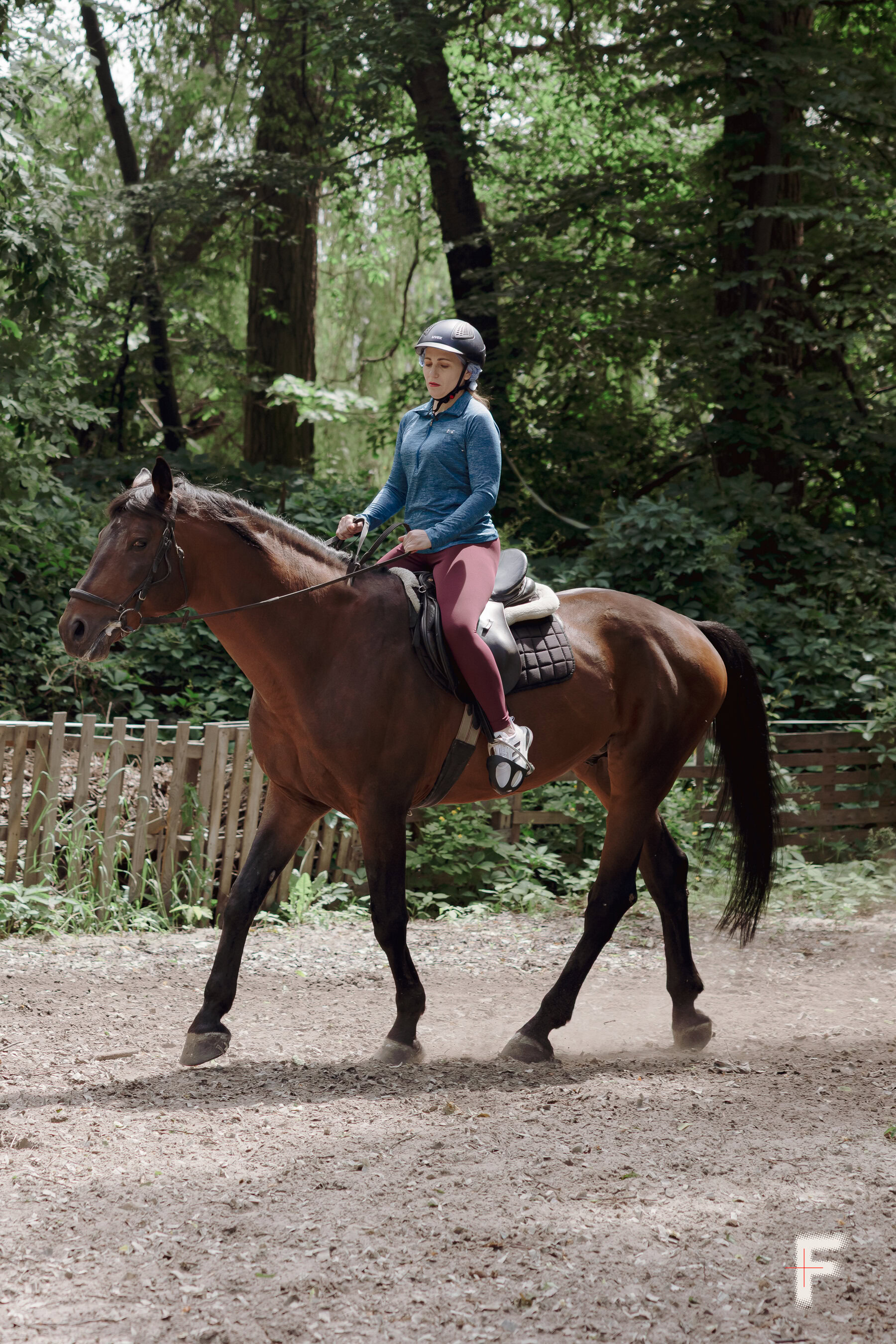
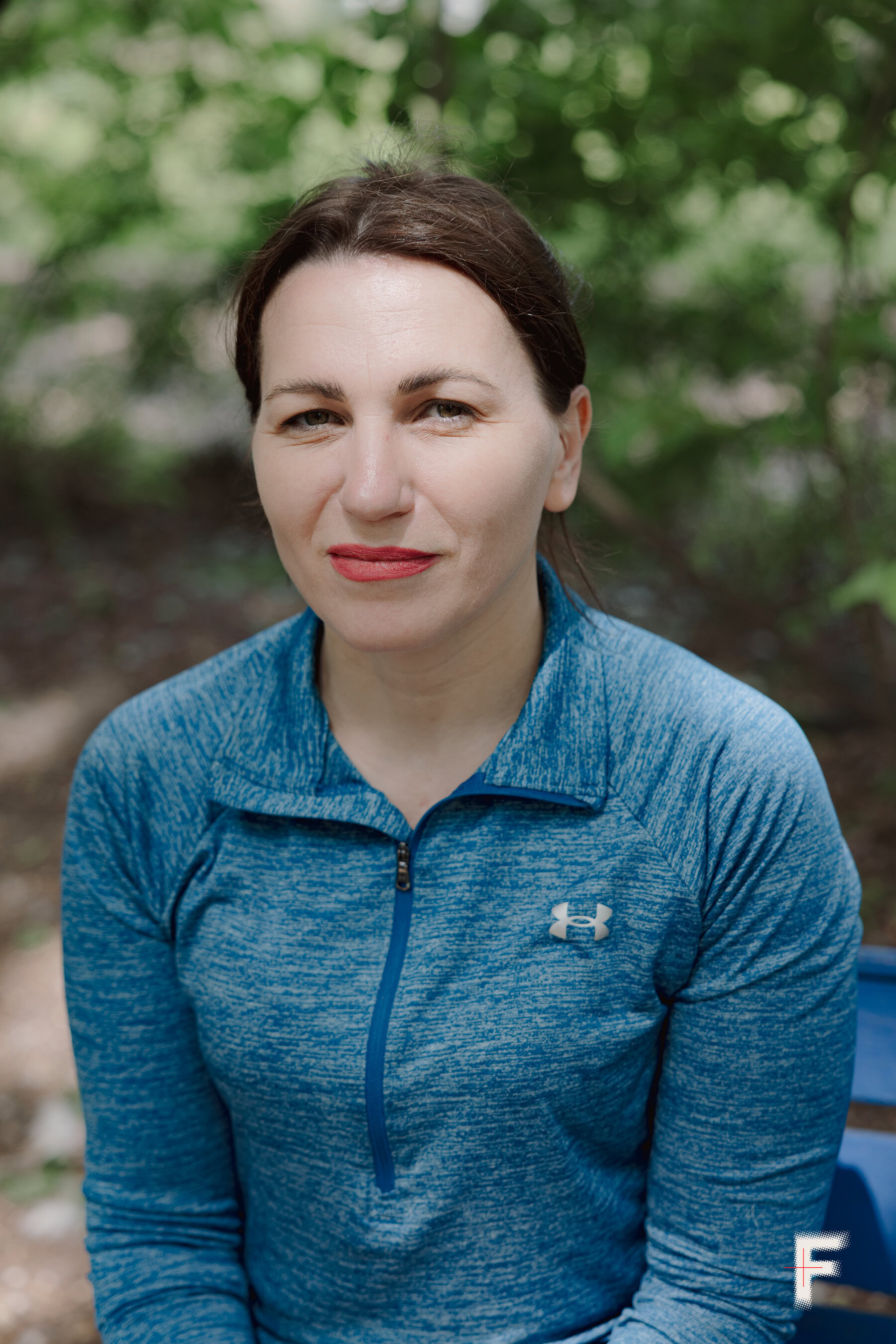
“I’d like to pursue horseback riding professionally. It’s time to finally start doing something, because life is short,” the veteran says.
Horseback riding helps a veteran ‘trick’ phantom pain
During the sessions, there is almost no talk of injuries. Instead, conversations focus on everyday things: children, sports, work, or plans for the future. Among those preparing for the ride is Viacheslav Aleksandrov. His movements are deliberate and calm. Like the other veterans from the Tytanovi, this is not his first time undergoing rehabilitation on horseback

Viacheslav is a former combat vehicle commander with the 17th Heavy Mechanized Brigade. He was wounded near Bakhmut on June 9, 2023. A mortar shell struck nearby, shredding his arm and leg. He spent a year in hospitals and underwent several surgeries, including operations involving foreign surgeons who removed shrapnel from his limbs. The veteran says that after completing his treatment, he chose active rehabilitation over passive rest to stay in shape.
“Just sitting around is a path to degradation. When people are left alone with their problems, they either hit the bottle and take other harmful substances, or they work out. I chose the second option.”
Viacheslav shares that horseback riding helps him “trick” the phantom pain that remains after his amputation. This happens because as the horse moves, the brain receives signals similar to those generated while walking. The body is constantly working — you have to maintain your balance, find the horse’s rhythm, and react to every single step. As a result, a person focuses not on the sensations in their body, but on how to stay in the saddle.
“When you ride, your body completely follows the horse’s movement. Your brain registers it, especially if you close your eyes. It feels as if you have two legs and they’re walking right along with the horse. It really works,” Aleksandrov explains.

Today, Viacheslav is active in swimming and wheelchair basketball, and he even gave amputee football a try. But due to nerve damage in his arm, he had to take a break.
“We work out because we can’t just sit around. Your belly grows, you get love handles, and it gets hard to walk. You come to the guys, they help you out, and we support each other to stay in shape and keep the love handles from showing,” the veteran says.
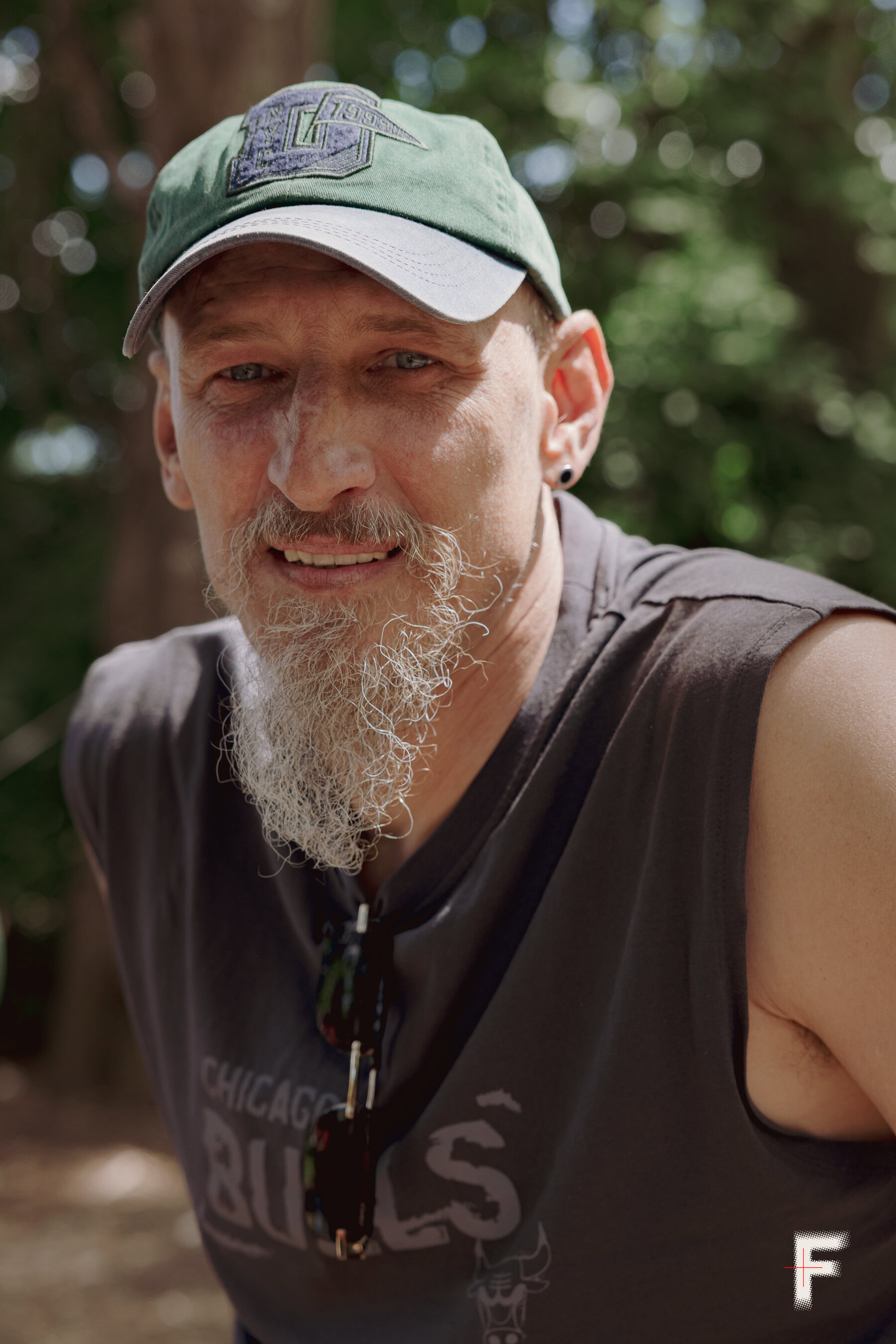
Horseback riding sessions for veterans are held regularly, twice a week. The program is open to soldiers who are currently undergoing rehabilitation or have already returned to civilian life. To sign up, you need to fill out a form on the Kyiv Military Hub website or reach out to them via social media. The organizers say the project’s main goal is not to teach veteran professional riding, but to create a safe space for physical and emotional recovery where people can gradually return to an active lifestyle. No prior experience is required — the most important thing is a willingness to try.

***
Veteran rehabilitation isn’t just about hospitals, exercises, or prosthetics. Sometimes, recovery comes from the most unexpected places, like sessions with horses. Through the stories of three veterans, we show how equine-assisted therapy helps each of them in a unique way: whether by helping them relearn how to maintain balance, cope with phantom pain, or find inner peace.
Every story starts with your support. Join the Frontliner community so we can keep up documenting Russia’s war against Ukraine from the front line and the rear.
***