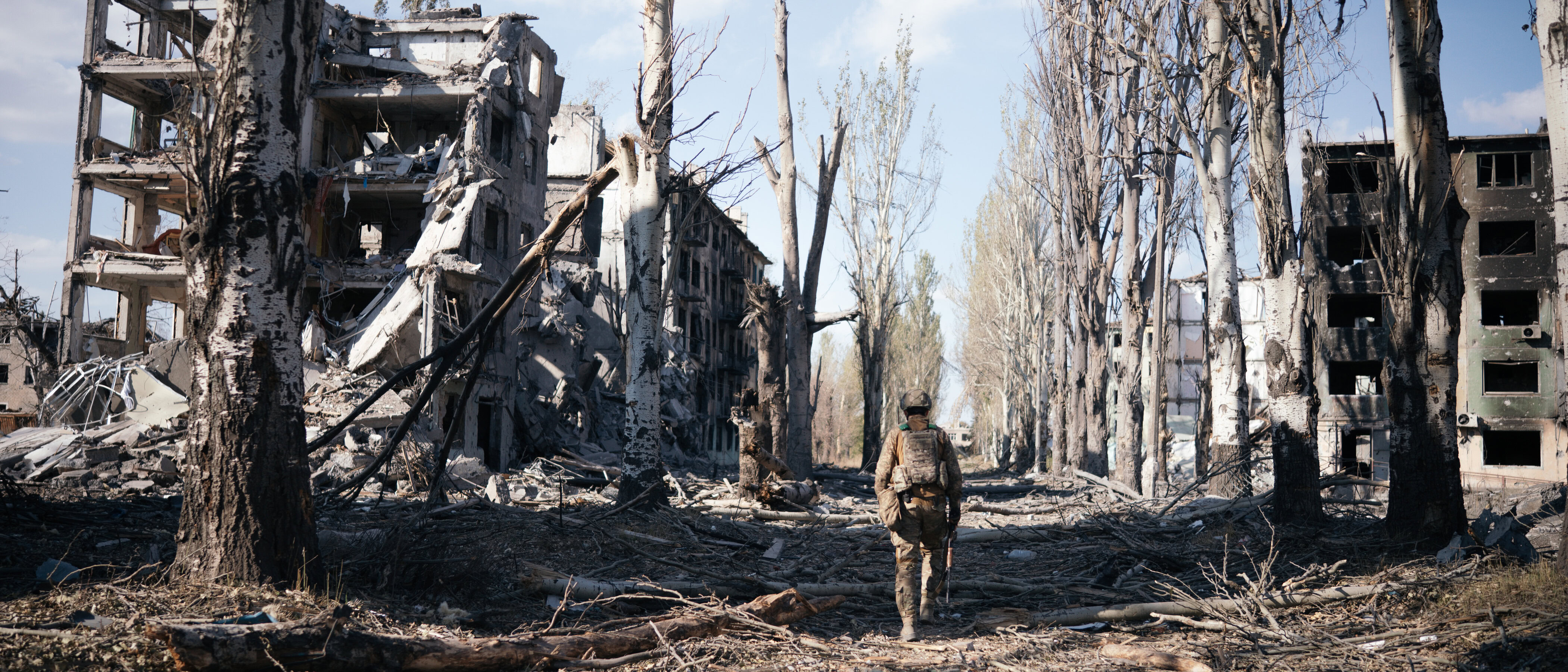
The apocalyptic reality of Bilozerske: No one left to dig out the dead
The streets of Bilozerske glimmer under a web of optical fiber. Smoke rises from damaged buildings with “People live here” scrawled on entrance doors. There are still civilians in this city under fire from Russian artillery and drones. Some of them refuse to leave even after close calls; the soldiers warn them that their chances of getting out are dwindling. Frontliner reports on why people are staying in the ruins of Bilozerske and what’s happening on the Dobropillia front.
In multiple reports from early November, analysts from the Institute for the Study of War (ISW) refuted Russian war correspondents’ claims that Russia had surrounded Bilozerske and even captured positions in the city. Bilozerske is on the Dobropillia front, the zone of responsibility of the Rubizh Brigade of the National Guard of Ukraine. The brigade says that they are holding the front, despite Russia’s claims.
In the fall/winter,
the front stabilizes.

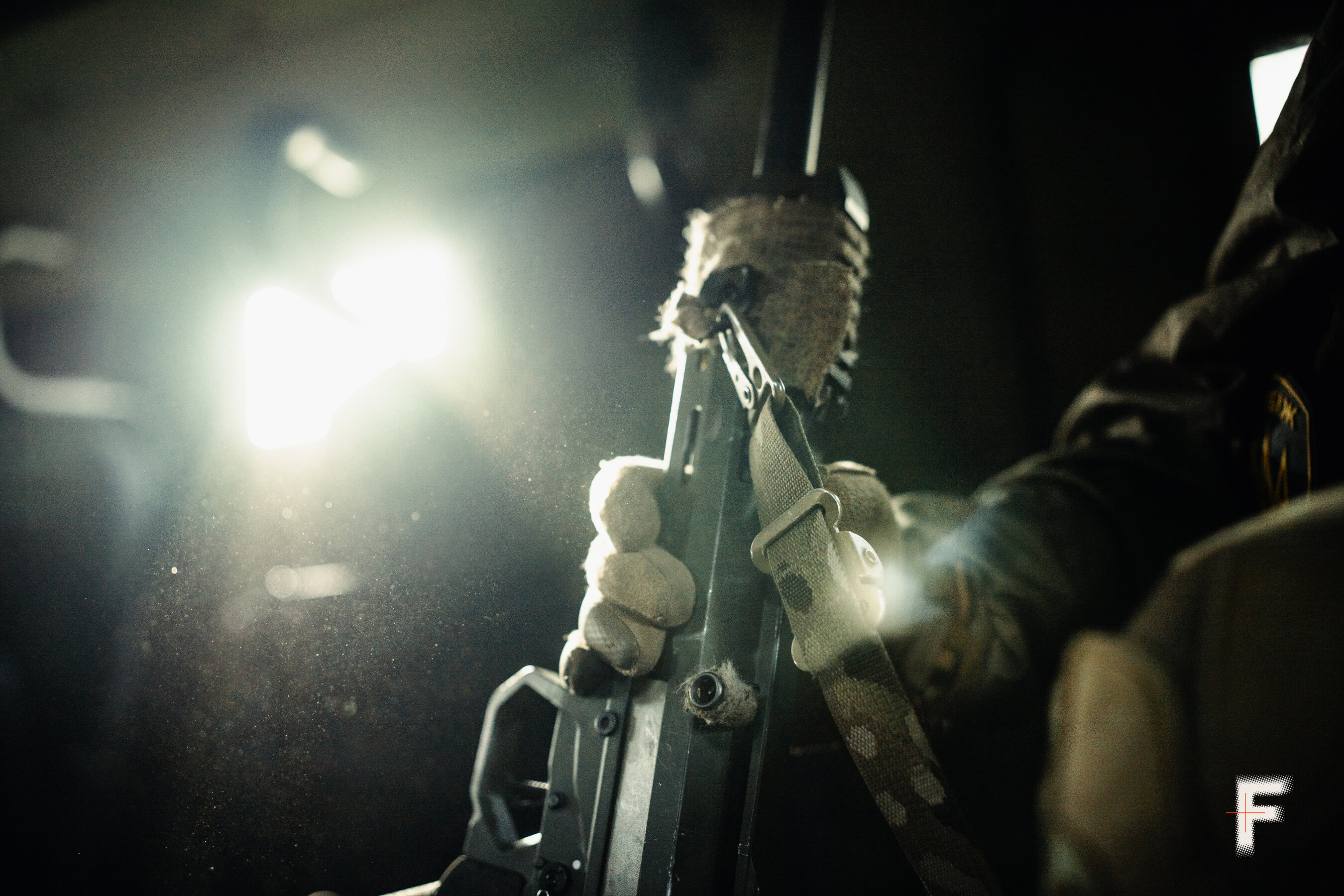
At the same time, Russian troops continue their attempts to break through Ukrainian defenses around Dobropillia, eight kilometers from Bilozerske.
According to a Rubizh soldier with the call sign “Kamin” [Ukrainian: камінь, “rock”], the situation at the front is difficult. Russia attacks with glide bombs, artillery, and drones. Russian infiltration units make attempts to get past Ukrainian positions, so far unsuccessfully. The Ukrainian soldiers manage to contain and destroy them.
“The front was more or less stable around Dobropillia in the spring, up until everything turned green. Green means more combat activity and infiltration. In the fall/winter, the front stabilizes. Russians send a lot of small groups of only one or two people; they bet on at least some of them getting through,” says “Kamin.”
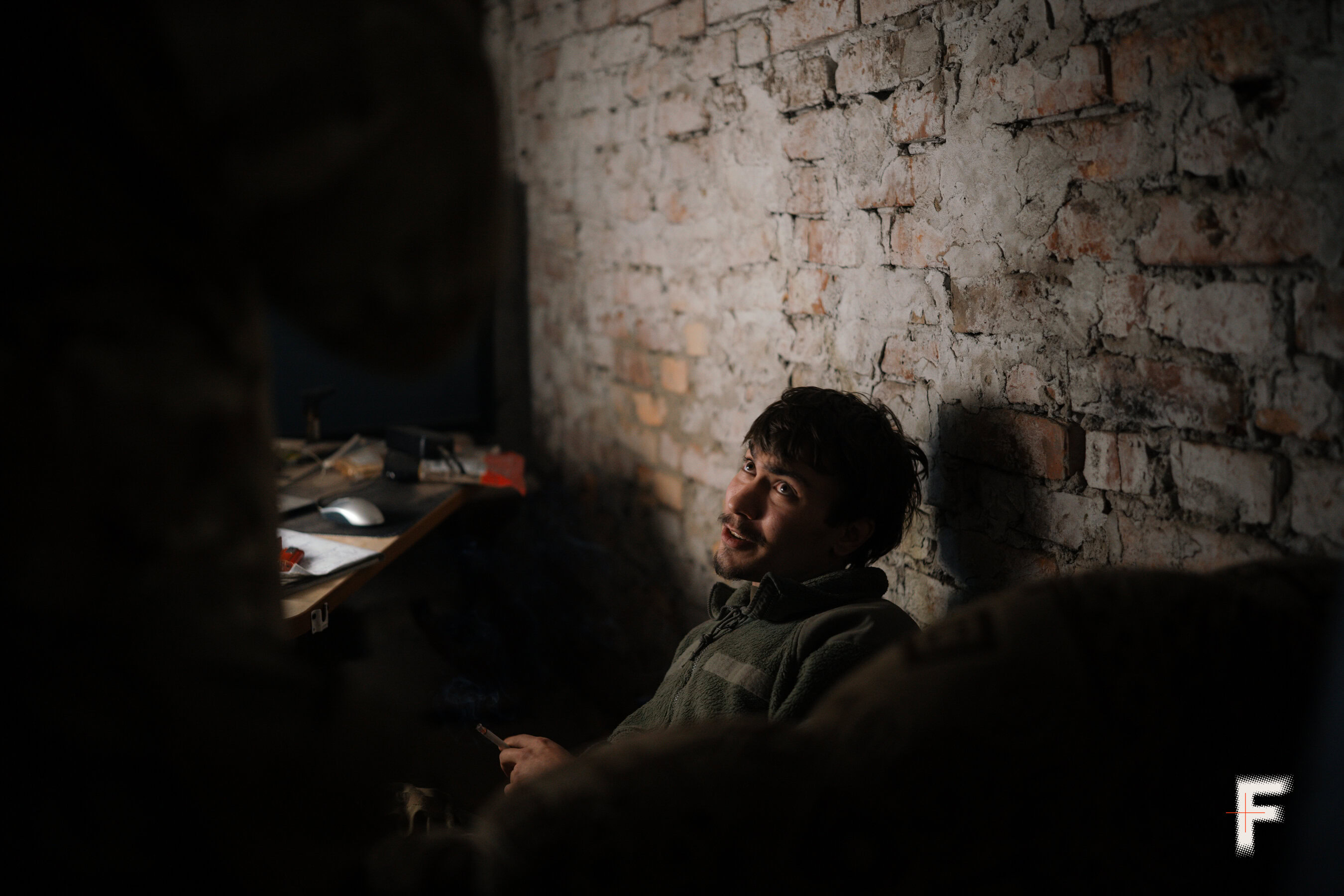
According to the soldiers, the constant shelling is making it more and more difficult to move around Bilozerske. They have to cover part of the way to their positions on foot, and rotations are sometimes delayed for weeks.

Civic and volunteer organizations stopped evacuating people from Bilozerske in the summer of 2026; only soldiers can help residents get out. It is not known how many civilians are still in the city. According to Ukraine’s State Statistics Service (Ukrstat), there were almost 15,000 residents before the full-scale invasion.

From green facades to charred husks
Once safely in the rear, Bilozerske now looks like so many other frontline cities with the approach of the Russian army. The streets are strewn with webs of optical fiber that glimmer in the sun. All around are destroyed buildings, deserted courtyards, and bomb-shattered trees. In places, one can still see the turquoise-green paint under the soot covering the buildings’ exterior walls; most of the city’s multistory residential buildings were once painted this color.

Bilozerske is a mining town in Donetsk region. When the mines were still working, the air was heavy with coal dust. The buildings had been painted green since Soviet times for practical reasons: soot and dust were less noticeable than on lighter colors.
In one of the desolate courtyards between the city’s low-slung apartment buildings stands a burned-out bus with the remains of someone’s personal belongings. The soldiers say that representatives of religious communities used to distribute drinking water here.

Bilozerske lost central water distribution in early August of 2025. The well that supplied water to the city stopped working due to the intense battles for the neighboring town of Zolotyi Kolodiaz.
The electricity went out on April 26, 2026. Repair crews couldn’t work safely due to the constant shelling, and so the lights never came back on.
Drones whir above the city. One has to move quickly and keep close to any buildings that can provide cover. The soldiers warn that you must also keep your eyes on the ground, as some areas are mined.
The drone’s target could be
a moving car or even a civilian,

“That’s a Shahed flying over from the sound of it. They [Ed. – Russians] don’t hit Bilozerske with Shaheds. They keep flying to territories further in the rear. But you can hear Molniyas or Lancets pretty often. The drone’s target could be a moving car or even a civilian,” says a soldier with the call sign “Muzykant” (Ukrainian: музикант, “musician”).
Some building entrances have “People live here” written on them. Behind other doors are empty dwellings. Traces of peacetime life remain in the destroyed apartments: furniture, appliances, personal belongings. Sometimes there are musical instruments and food left over from humanitarian aid deliveries.

“When it gets really bad, I’ll go see the soldiers”
The city’s central street is strewn with broken tree branches and scrap metal. Smoke rises from the ruins of a building nearby; a hammer rings in the distance. A slender woman walks unhurriedly out from behind one of the buildings carrying an extension ladder. She and her neighbors are boarding up the windows on the third and fourth floors of a five-story building.
An elderly woman is resting on a bench near the entrance. Her name is Mariia; she is 83 years old. She says she doesn’t hear well and asks us to speak louder. Next to her is a soldier from Rubizh with the call sign “Magic.”

He asks Mariia about her life in Bilozerske and suggests evacuating from the city.
“You see, we sometimes get asked to evacuate people from Dobropillia. And we can’t do that anymore because the situation doesn’t allow it. You see what’s happening here. Let’s get you to a safe place. We’ll help you with all the paperwork,” the soldier says.
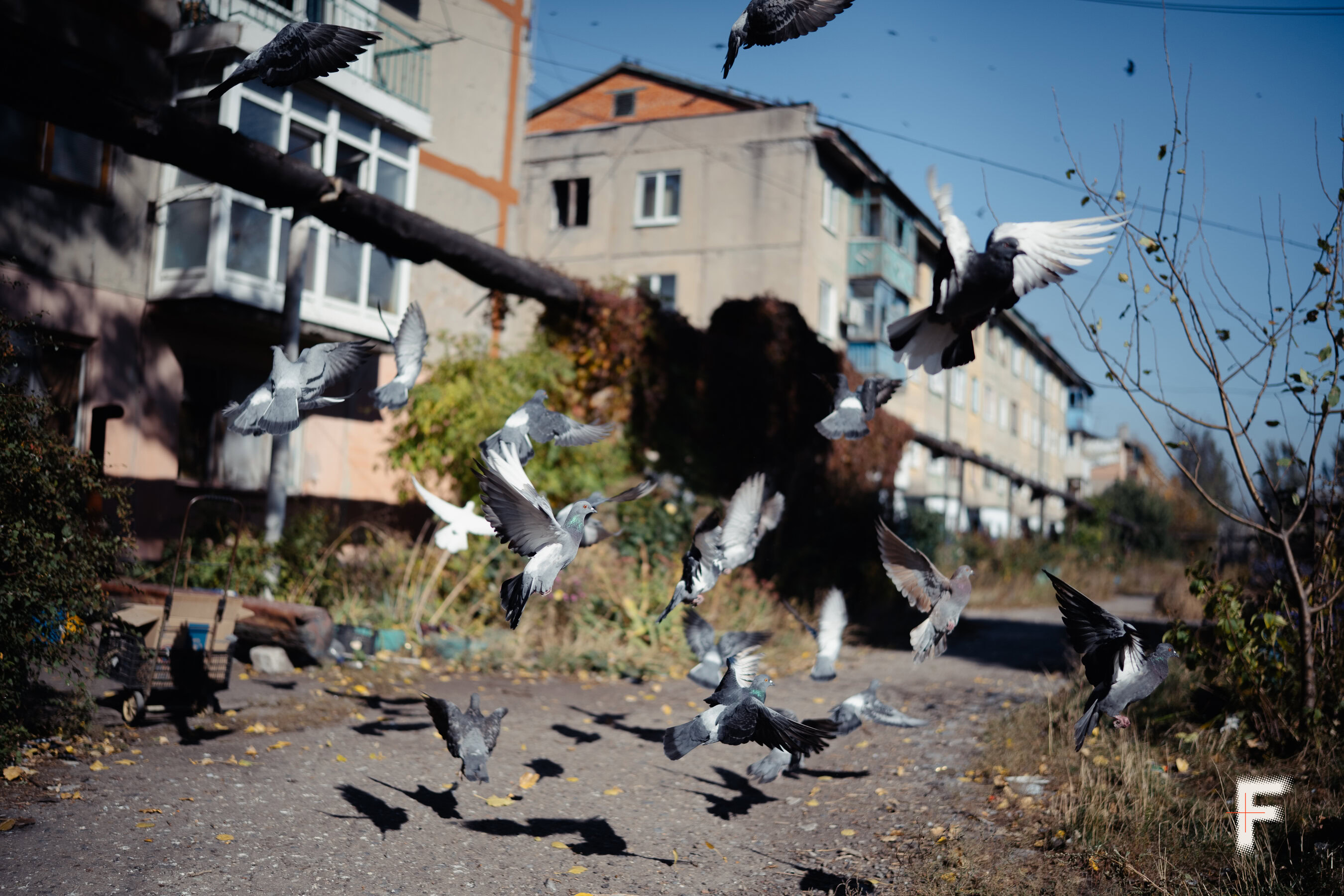
Suddenly, a drone buzzes overhead, and then an explosion. A flock of pigeons takes to the air, and smoke rises from the damaged structure across the street. Mariia smiles and answers “Magic.”
“Thank you, sonny. But I’m not going anywhere yet. When it gets really bad, I’ll come see the soldiers and leave with them.”
The conversation gradually turns into an argument. “Magic” warns Mariia that staying in Bilozerske is getting much more dangerous. He says that the only good way out is with the soldiers in an armored vehicle. The other option is to go alone on foot.
“You say there’s an armored vehicle. A drone can hit that too. I know drones can get through the armor, no matter what you say. And if I do go, who needs me out there? They’ll put me in an old folks’ home, and I don’t want that. We’ve adapted to everything here. We live together. There are seven of us in this building. It’s easier together. Thank you, sonny, for the offer. But I’m staying here for now,” says Mariia.
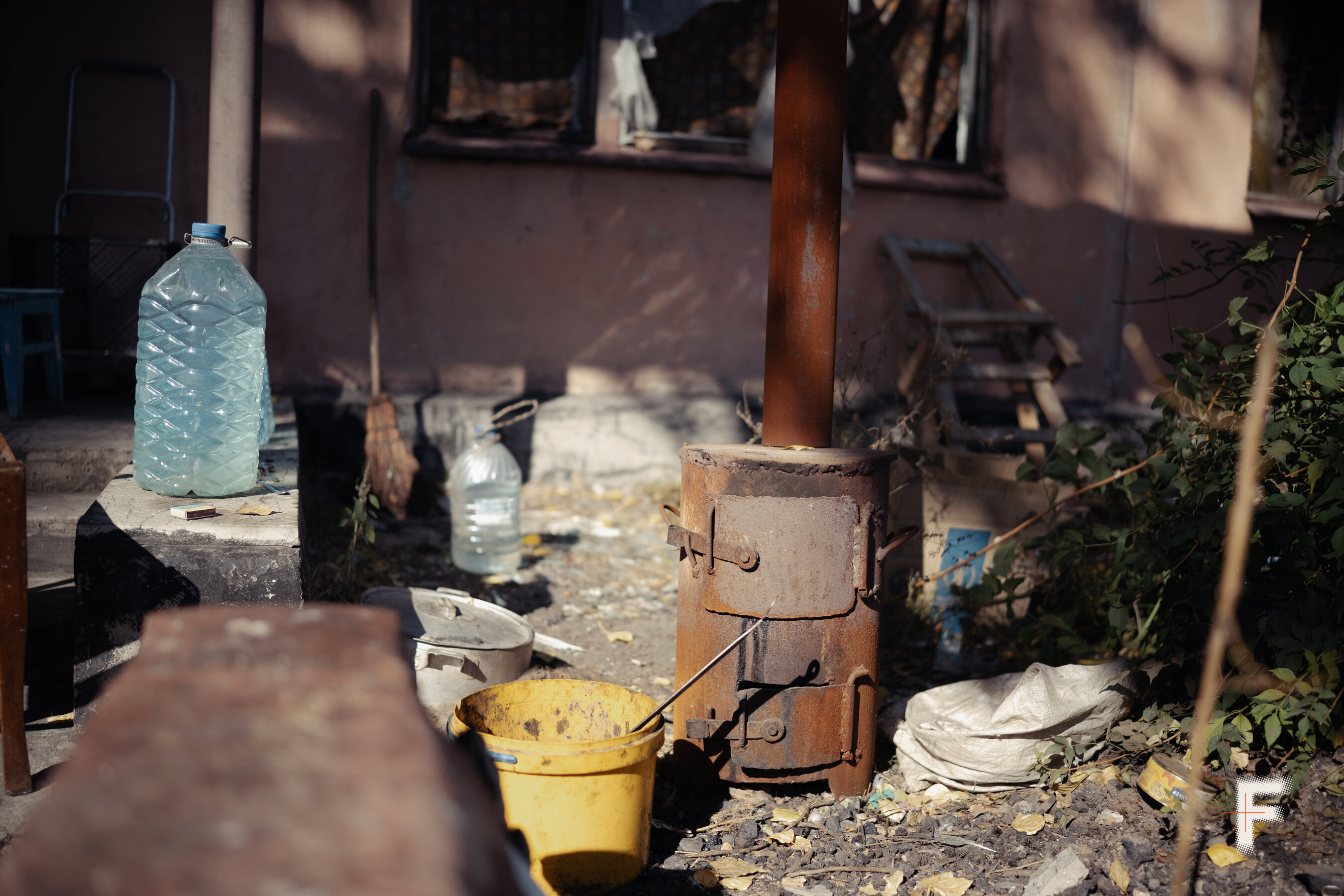
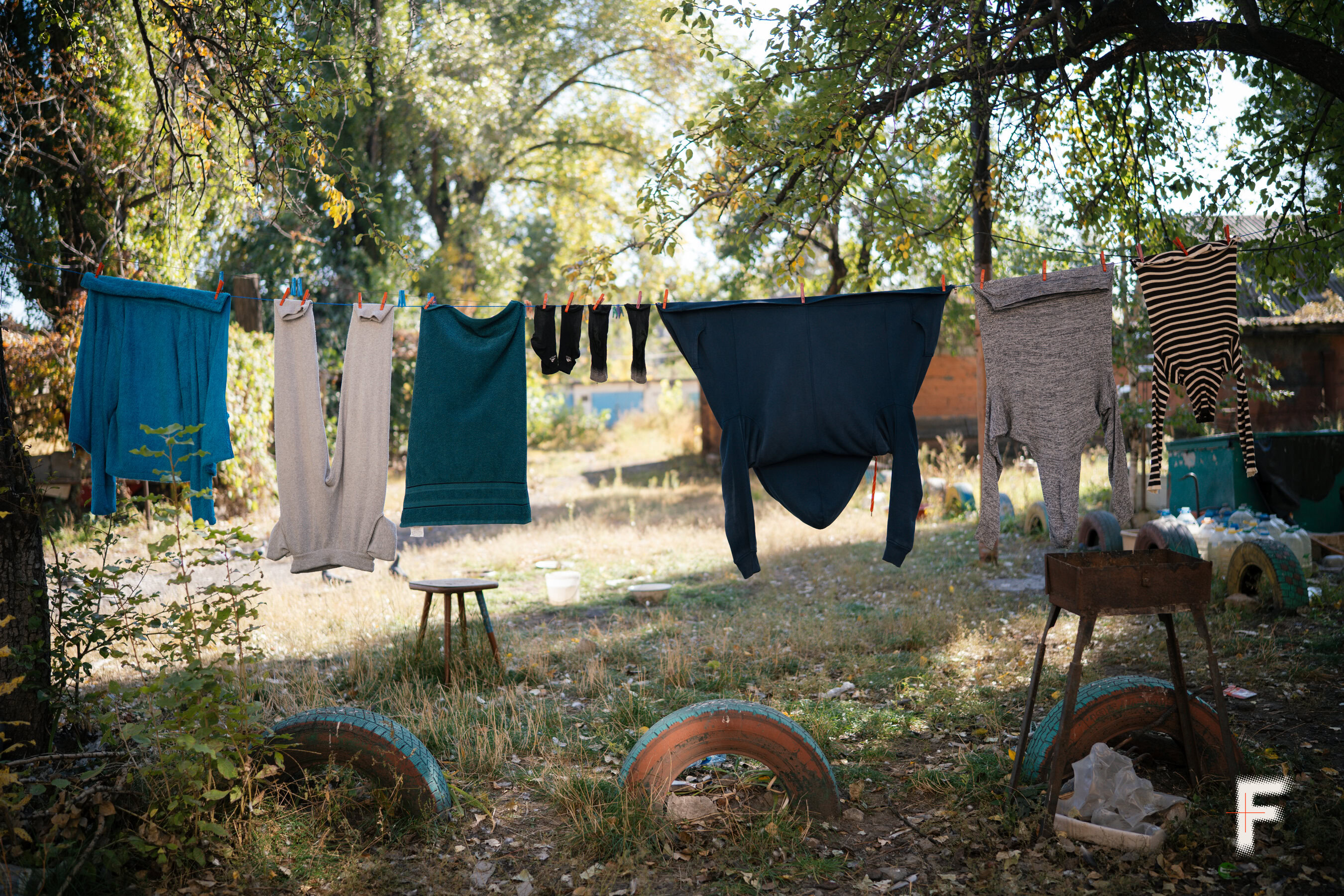
Laundry is drying in the courtyard. Nearby stands a rust-covered grill. Just beside the entrance are bottles with water for drinking and washing, a woodburning stove, and a box with food supplies.
-
A heating stove near a building, Bilozerske, Donetsk region, Ukraine, Oct. 9, 2026. (Marharyta Fal/Frontliner)
-
Bottles of water, Bilozerske, Donetsk region, Ukraine, Oct. 9, 2026. (Marharyta Fal/Frontliner)

-
Civilians’ laundry, Bilozerske, Donetsk region, Ukraine, Oct. 9, 2026. (Marharyta Fal/Frontliner)
This is one of the few buildings with visible signs of life. A woman in a headscarf walks up to the entrance. Her name is Nina. She is holding a chicken in her hands; she has three more in the neighboring garage.
The building Nina used to live in was destroyed by a glide bomb; her apartment burned down. She’s been living in the five-story building for a year now. Nina has outlived her two children; she says she has no remaining relatives.

They died four years apart. My daughter had problems with her liver.
My son had a stroke. I had a daughter-in-law in Sviatohorivka.
She left from there. So I don’t have anyone to go to. I’m staying here.

There aren’t any proper graves.
We’ve buried them in the squares and playgrounds.
An incoming whistle breaks the pause after Nina’s words. An instant later, there is a deafening explosion.
The soldiers ask everyone to go inside. There, Nina continues her story:
“When will that asshole Putin be satisfied? No matter how much we curse him, he’s still kicking. We’ve had so many people killed here in the city. There’s nobody left to dig them out and bury them. There aren’t any proper graves. We’ve buried them in the squares and playgrounds. But no proper burials. They won’t let us in the cemetery, it gets bombed every day. There were five glide bombs just this morning. There are drones flying all the time. Was a bit quieter this week, though.”

Civilians in the combat zone
According to the soldiers, the civilians who have stayed in Bilozerske complicate their missions. The soldiers have to help people who refuse to evacuate.
“I don’t know how many people are left here. Last time I was here, I saw maybe up to 20. Now, there are fewer. We offer evacuation, offer help getting out while the situation still allows. But people refuse. Today’s case is a perfect example,” says a soldier with the call sign “Zhuk.”

“Zhuk” explains that providing aid to civilians complicates military logistics and creates additional risks for the soldiers. They have to evacuate the wounded, deliver food, and evacuate civilians from danger zones.
According to “Zhuk,” the presence of civilians also limits soldiers in their choice of positions. They can’t set up firing positions or bunkers in buildings where people are living, even if those structures are important for defense.

“There are some difficult cases. For example, one woman got her legs blown off by an FPV drone. The guys helped her and applied a tourniquet. Then we were ordered to evacuate her,” says “Zhuk.”
The exact distance from Bilozerske to the front isn’t clear as there are areas without distinct lines of control. According to DeepState, as of November 2026, it is 12 kilometers from the city to the line of contact. At the same time, the gray zone on the map stretches for five kilometers.
According to the soldiers, the Russian infiltration tactics make it much harder to define the exact line of contact.

***
Frontliner is independent. Our readers help fund our reporting on the war and the people living through it. Subscribe on Patreon to keep us on the road.
***