
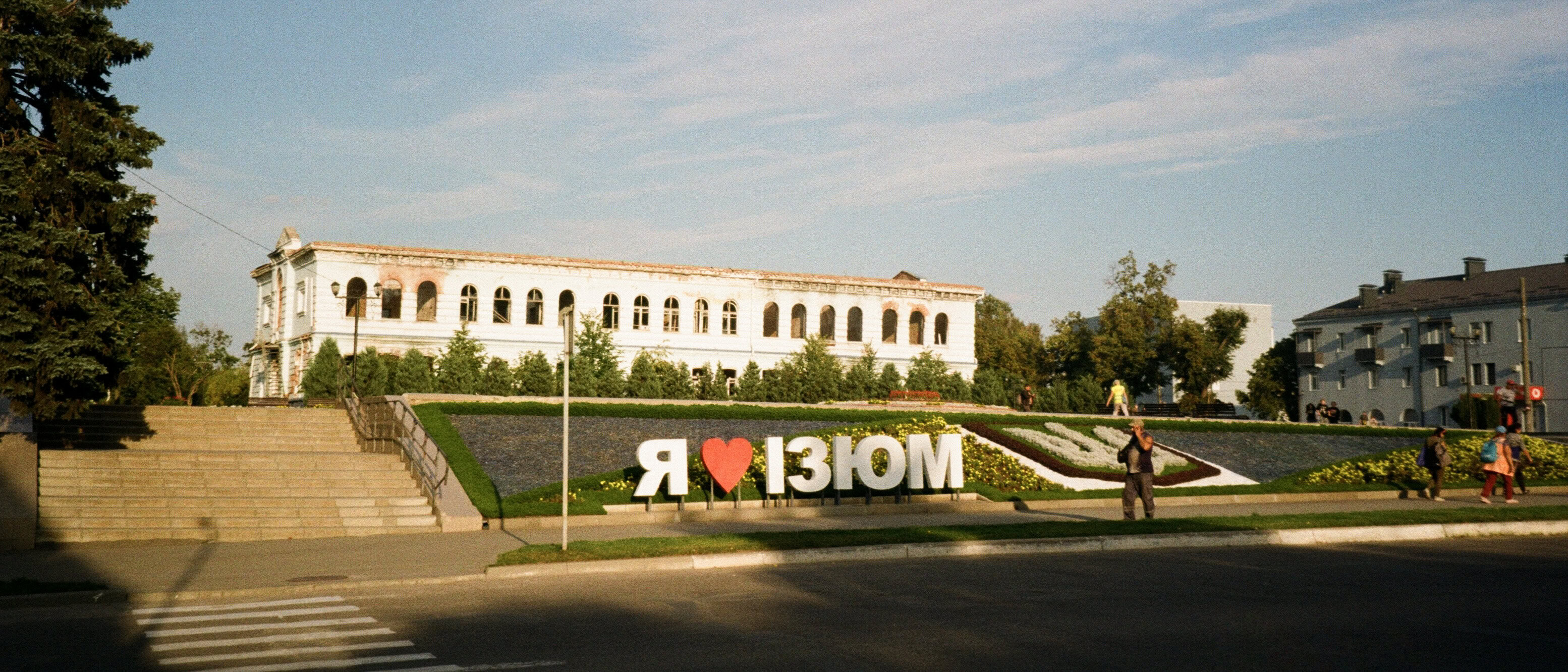
Still healing: Frontline Izium, a city that wants to live
Soldiers head up Mount Kremenets to watch the sun go down. In cafes, they leave their unit patches. Along the banks of the Siverskyi Donets River, people soak up the sun, with the rumble of traffic on the bridge in the background. A few streets over, buildings gutted by Russian bombs still stand. The ground still bears the memory of those killed during the occupation. Izium lives among the traces of war, which have become part of its daily life. For a journalist who first visited the city in the summer of 2025, it has gradually become home. In her essay for Frontliner, she writes about the people, places and feelings that are drawing her closer to frontline Izium.
To me, Izium is like a scraped knee that has scabbed over. It itches and flakes, but in the middle it is still red and swollen.
My first encounter with Izium in early summer 2025 was marked by an almost childlike curiosity about life in a city near the front: cafeterias with Soviet-era signs in bright, looping cursive, destroyed buildings beside contemporary cafes, people sunbathing face down on the sandy beach near the “Hrymuchyi” (Rumbling) Bridge across the Siverskyi Donets. The bridge got its name from the loud rumble of vehicles crossing it. That “first date” with Izium comes back to me in pieces. And with them, the same question comes back: “Why do people keep living here as if nothing is happening?”
The contrast feels especially stark when you recall the media reports about Izium’s occupation and the mass graves, then see its gray outskirts and the life unfolding in houses that are alive, half-alive and even dead. Soldiers now live in the dead ones.

Where the bridge rumbles and the whole city is in view
For many of the soldiers I have met, Izium has become their favorite city. After the loud industrial towns near the front, with their gray prefab apartment blocks, Izium feels like an oasis, where shell casings and ammunition sometimes appear among the greenery. There is a surprising amount of green and water here. It is easy to imagine being far away from everything: sitting on the bank, watching the river, with nowhere to be. There is a beach, too, although it suffered quite a bit after a harsh winter.
In the summer of 2025, with everything going on, the beach still drew crowds. In places, there was hardly room to sit. People also gathered beneath the “Hrymuchyi” Bridge. When you drive across it, the whole structure shakes and roars so loudly that you feel as if the ground is about to give way beneath you.
Another place it is hard to imagine Izium without is Mount Kremenets. From here, the whole city lies in plain view: green slopes, rolling hills and the river. There is so much open space around you that it makes you want to head down to the water, get into a kayak, go fishing or simply spend a few hours with no plans and no thoughts racing through your mind.

Water is always making itself known here: it shows between the trees, spills into broad floodplains, then disappears behind the reeds. The Izium Fortress once stood here. The Polovtsian stone babas, long part of the city’s historical heritage, were evacuated from here to protect them from the Russian occupiers.
Mount Kremenets holds another Izium, an Izium of monuments. A memorial complex stands here, featuring concrete compositions titled “Attack.” They bear the engraved call signs of fallen soldiers, the names of military units and poems by Vasyl Stus.

Today, the memorial seems no longer quite in tune with the times. The inscriptions on the concrete structures can also be interpreted in different ways: as vandalism and bad taste, or as a natural extension of military culture, which leaves its mark wherever it goes. In this way, an old Soviet monument is gradually becoming a place that bears witness to another war.
Military patches on the walls, combat stories and standing on nails
Mount Kremenets is about more than its history and monuments. It is also a popular meeting place for bikers, many of whom serve in the military. They spend hours talking motorcycles, admiring one another’s bikes or waiting for the sunset and chatting about everyday life.
In moments like these, a question inevitably arises: Where does so much life in this city come from? Perhaps this is one of the quirks of human nature: finding moments of happiness even in places where they are hard to come by. In a cafe, a soldier hangs his patch on the wall. On the next shelf, plaid shirts are sold for donations to support medics. The cafe also serves filter coffee, which is not easy to find elsewhere in the city. There are young people everywhere, wearing the latest sneakers and merch from well-known units, their dogs on colorful leashes. At one table, people talk about their latest combat missions; at another, how many minutes they have managed to stand on a nail board. So many different people, and yet they all seem equally determined to hold on to their lives and their future.

Izium is a city of different people and stories, all connected in one way or another by the war. There are grown men with tired, half-closed eyes and calloused hands; young women in love who come to visit their boyfriends; and handsome young men with eyes hungry for life and bright smiles.
Despite these contrasts, over time you stop noticing what people wear, how much they earn or who they know. The war seems to bind everyone here together. It clings to the body, becomes part of it, and eventually you barely feel it anymore. Like a backache you complain about to a friend in the evening and have forgotten about by morning.
A city that is slowly becoming dear to me
Izium has long been a crossroads of different worlds. Different eras and cultures have intertwined here, each leaving its mark on the city’s history. For all its contrasts, it is here that you feel most keenly what home really means. Home is not an abstract spot on a map. It is the hills, the familiar roads, the cafes where the baristas know you and your dog, and the sunlight over Mount Kremenets. It is everything that carries on living, even as the enemy tries to take it all, down to the last thread.
Izium strangely combines feelings I still find hard to reconcile: a growing desire to stay and become more attached to the city, alongside constant reminders of the occupation and the destruction caused by Russian shelling.
When asked, “Isn’t it frightening to live here after so many people were killed here?” I struggle to find the words. The fear and pain caused by what the city has endured remain. But over time, something else begins to emerge alongside them: a closeness to the city, its people, their stories and everyday life.
I wish Izium could simply live. I want people to continue having conversations over coffee, sometimes disagreeing, meeting after duty, opening new businesses, falling in love and planning for the future.
As I edit this piece, I want to share an experience I wouldn’t wish on anyone. On November 5, 2026, my home was hit by a glide bomb. I had thought about the possibility of this happening a lot. I knew that Izium could share the fate of Sloviansk and Kramatorsk. Now that fear has become reality: Russia has begun systematically destroying the city with glide bombs and multiple launch rocket system (MLRS) fire.
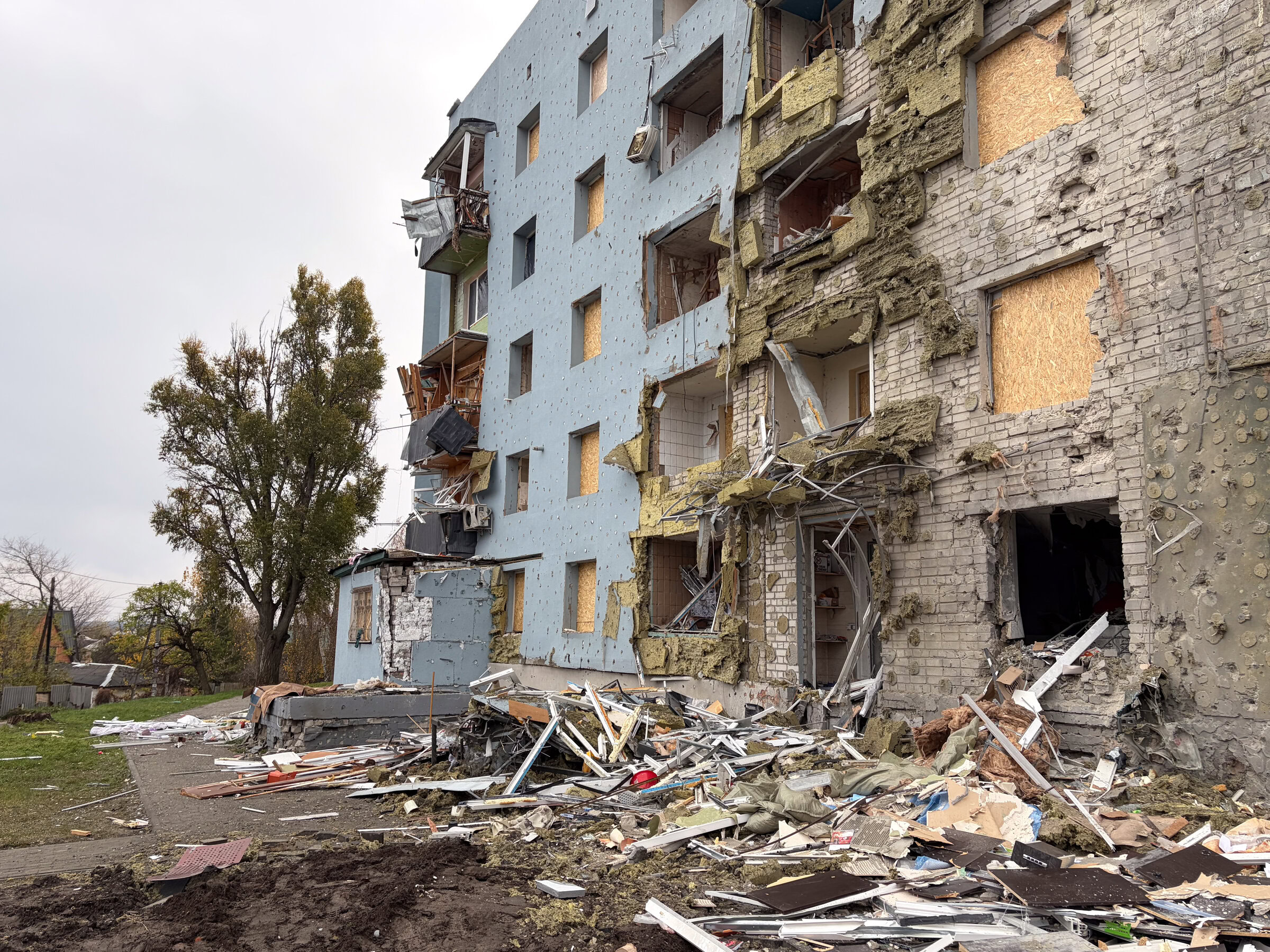
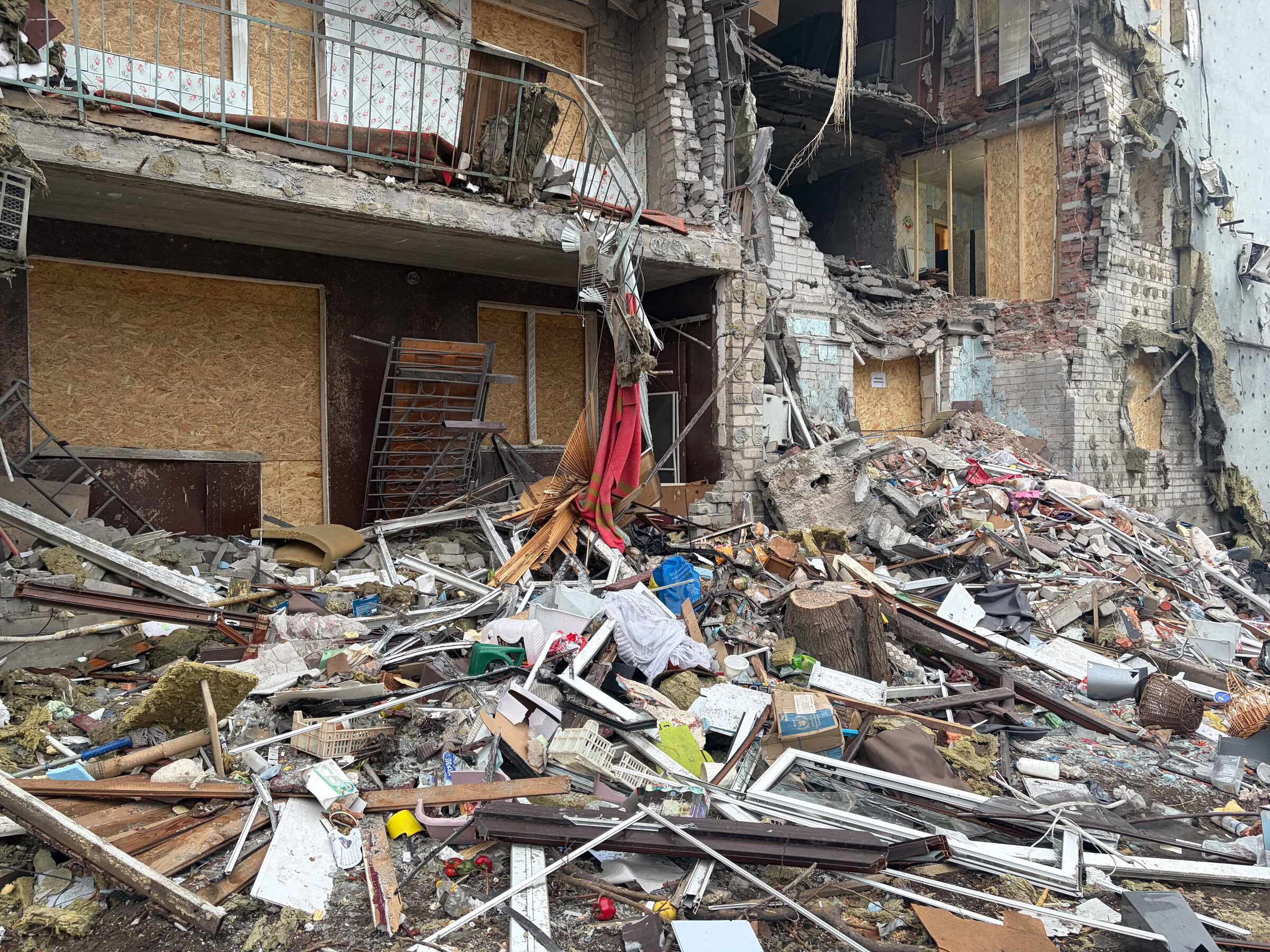
Human nature can still surprise you. Until the very last moment, you hope this grief will pass you by. But it didn’t pass me by. When the bomb hits, you don’t hear a thing. In a split second, you find yourself beneath a pile of shattered glass, dust, and debris. The windows, the balcony and the doors are all gone.
Your first thought is of the people you love. Are they alive? Are they hurt? At that moment, you don’t care at all about a lost phone or documents. It’s as if you return to a purified state of being, where everything falls away, and only human life matters.
My home is gone. But that is not the worst of it. As we rushed to the shelter, I saw a man with blood streaming down his face and a large fragment lodged in his shoulder. I saw a bloodied elderly woman having a tourniquet applied to her arm. The smell of blood, the damp room, the different reactions: fear, shock, hysteria. And the realization that, I believe, no one can go through something like this without psychological consequences.
I am alive and well. I am trying to keep living and working, because this is just one of life’s cycles. However, the pain and fear are still there. They follow you even into your dreams.

