Returning to life: veteran rises from wheelchair after combat spinal injury
A veteran who lost the ability to walk after being wounded returned to a full life when he refused to let a spinal injury define him. After nearly two years of immobility, apathy, and isolation in his own apartment, the former assault trooper pushed himself to the limit in rehabilitation. Today he drives, dresses independently, and has even won a medal at the world rowing championships. Frontliner spent a day with Ivan Nedobryk – from morning coffee to evening training – to witness the life of a veteran who learned to live again.
Ivan wakes up and first pulls his wheelchair to the bed, then swings his legs over, supports himself with his hands, and shifts into a sitting position. It’s a familiar motion he performs several dozen times each day. The veteran lives with his parents, yet despite his injury, he strives to do everything on his own. Even though he can barely feel his legs, he confidently reaches for his clothes. Slowly but steadily, he pulls on his socks and pants. From the outside, it looks simple, like any ordinary morning routine of someone hurrying through their day. But behind it lies intensive rehabilitation work and grueling hours of training – the very efforts that allow him to perform these seemingly ordinary tasks without assistance.
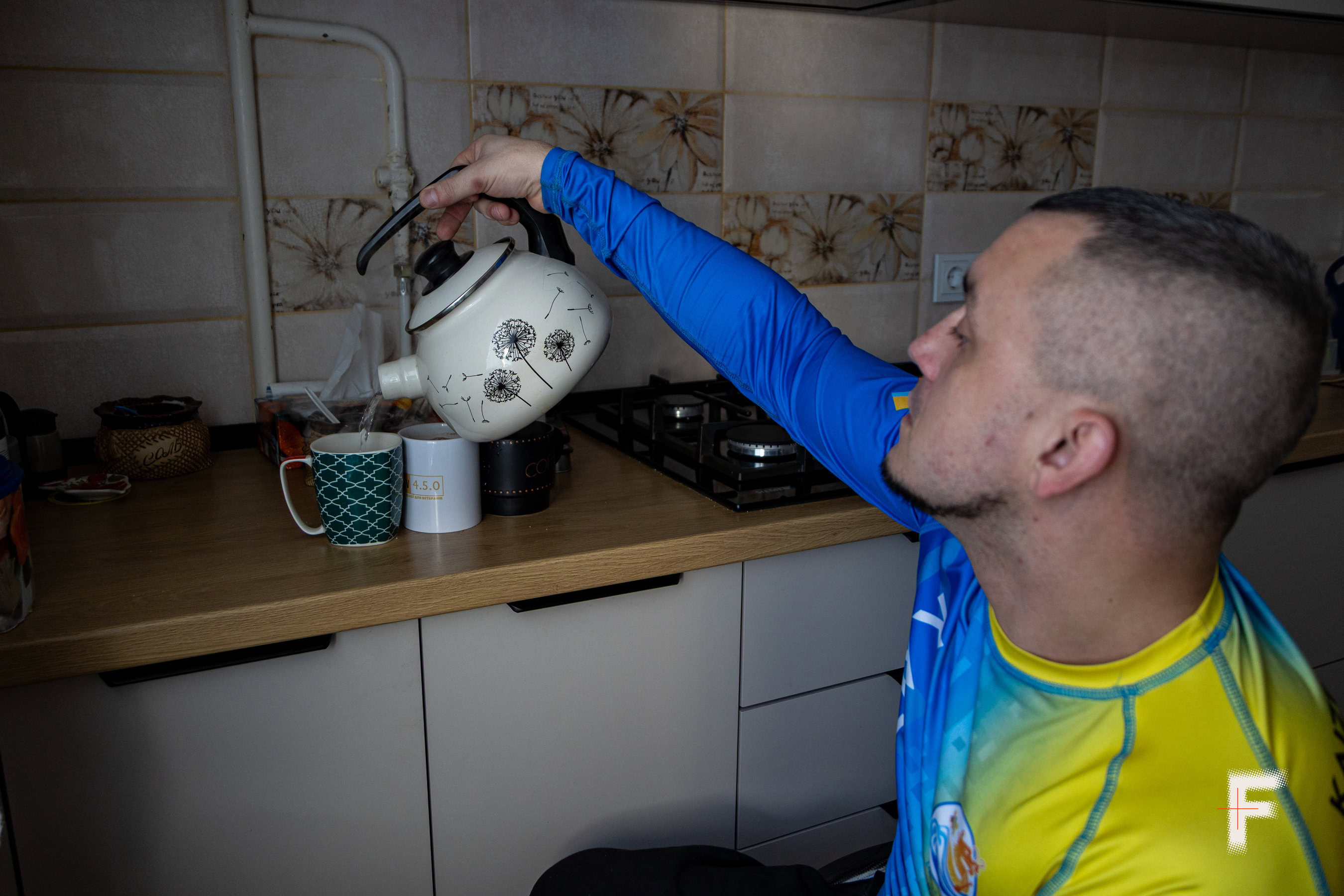
In the kitchen, Ivan lights a stove burner and sets a kettle on it. While the water heats, he wheels into the bathroom. The mirror and sink are installed slightly lower than standard so he can see his reflection and reach his toiletries.
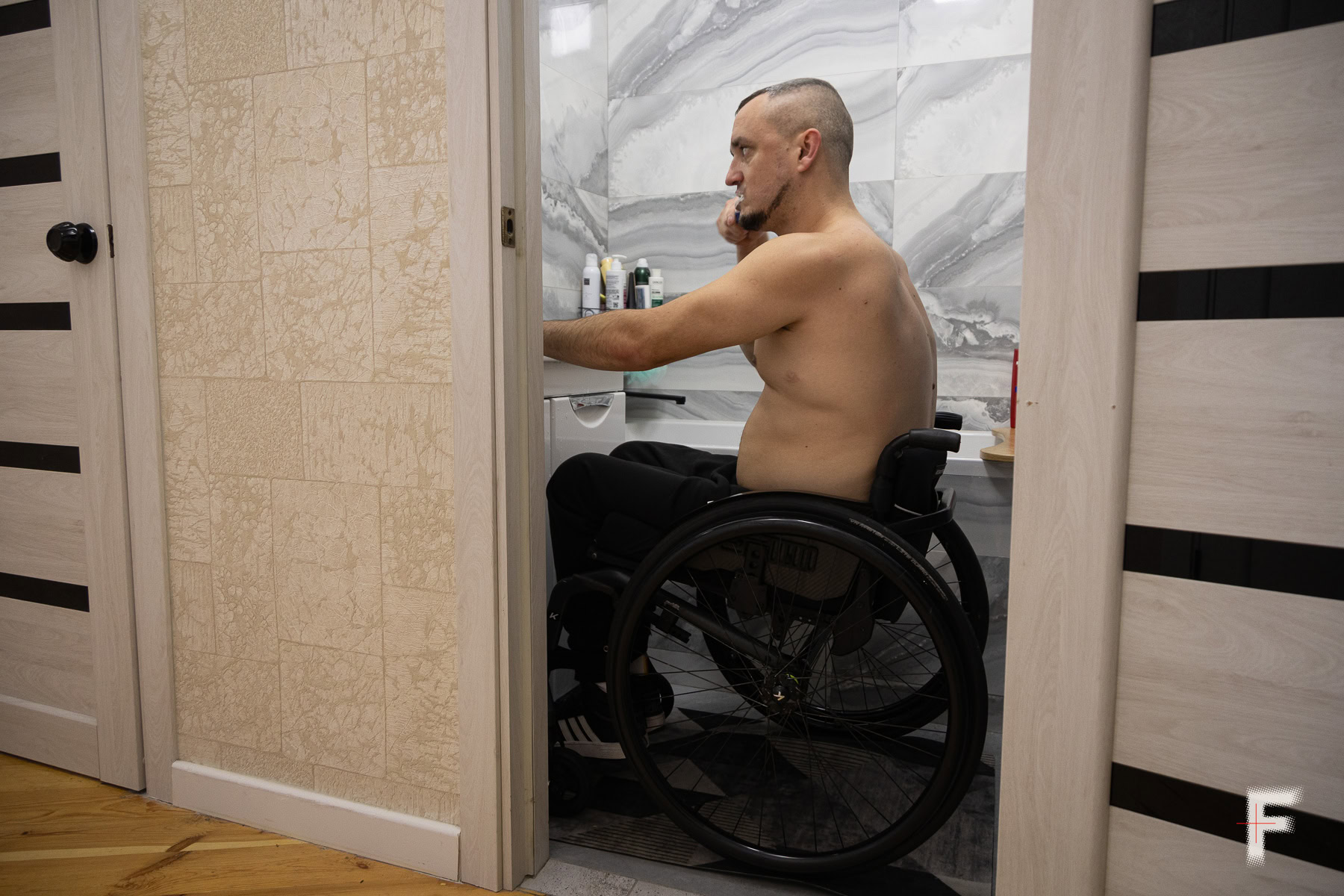
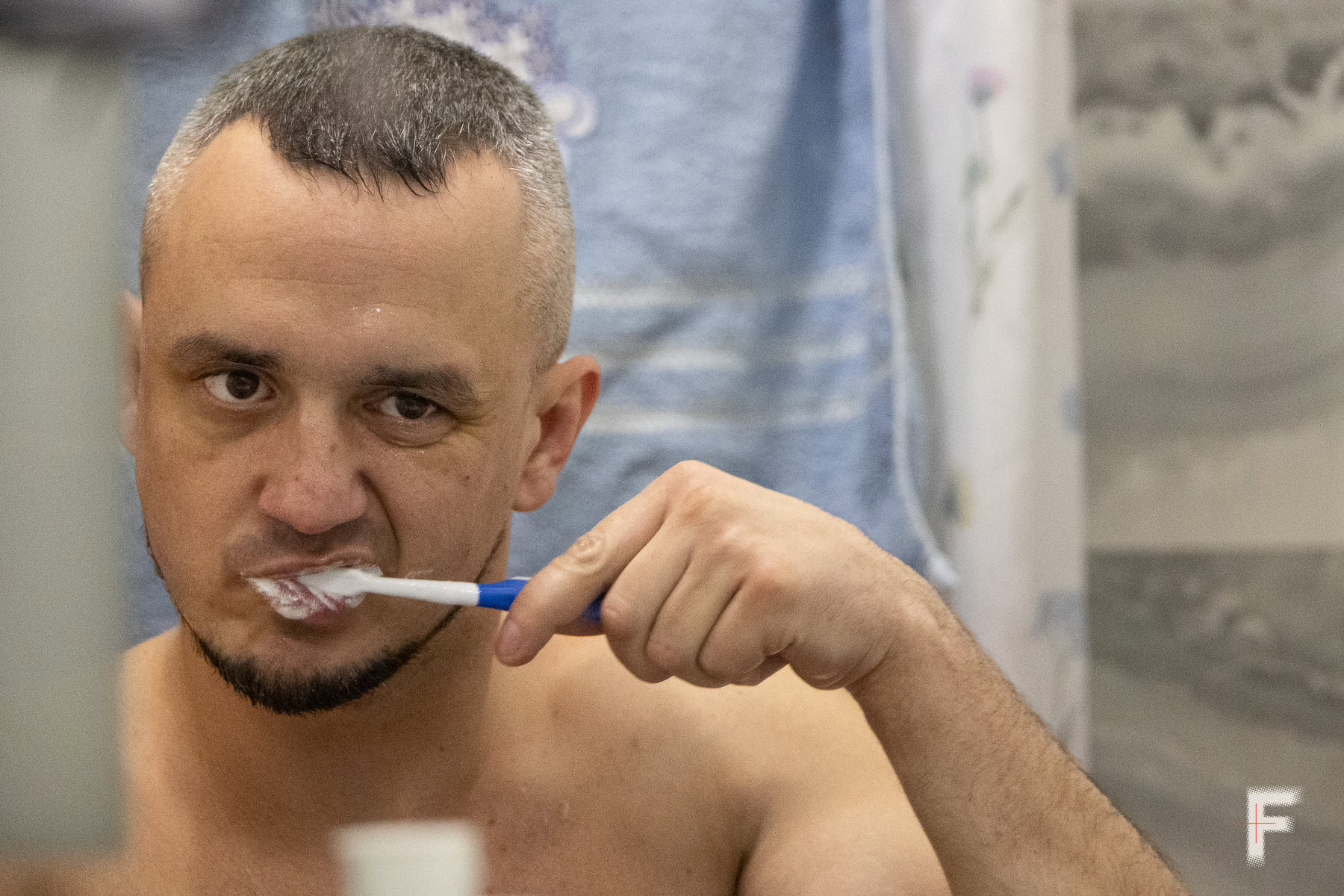
He brushes his teeth and washes his face, then heads to the living room to check on his pet chinchilla, who he calls Zhuchok. [Translator’s note: Zhuchok means “little bug” in Ukrainian.] The chinchilla has been part of his life for eight months, and his choice of pet was deliberate.
“When I am feeling blue, I always go to him, and he lifts my spirits. Zhuchok was brought to me by my mates from Kryvyi Rih. Since I live with my parents, getting a cat or dog wouldn’t have been okay – I physically couldn’t care for one on my own – but I really wanted a pet,” says Russian-Ukrainian war veteran Ivan Nedobryk.
A drive for independence
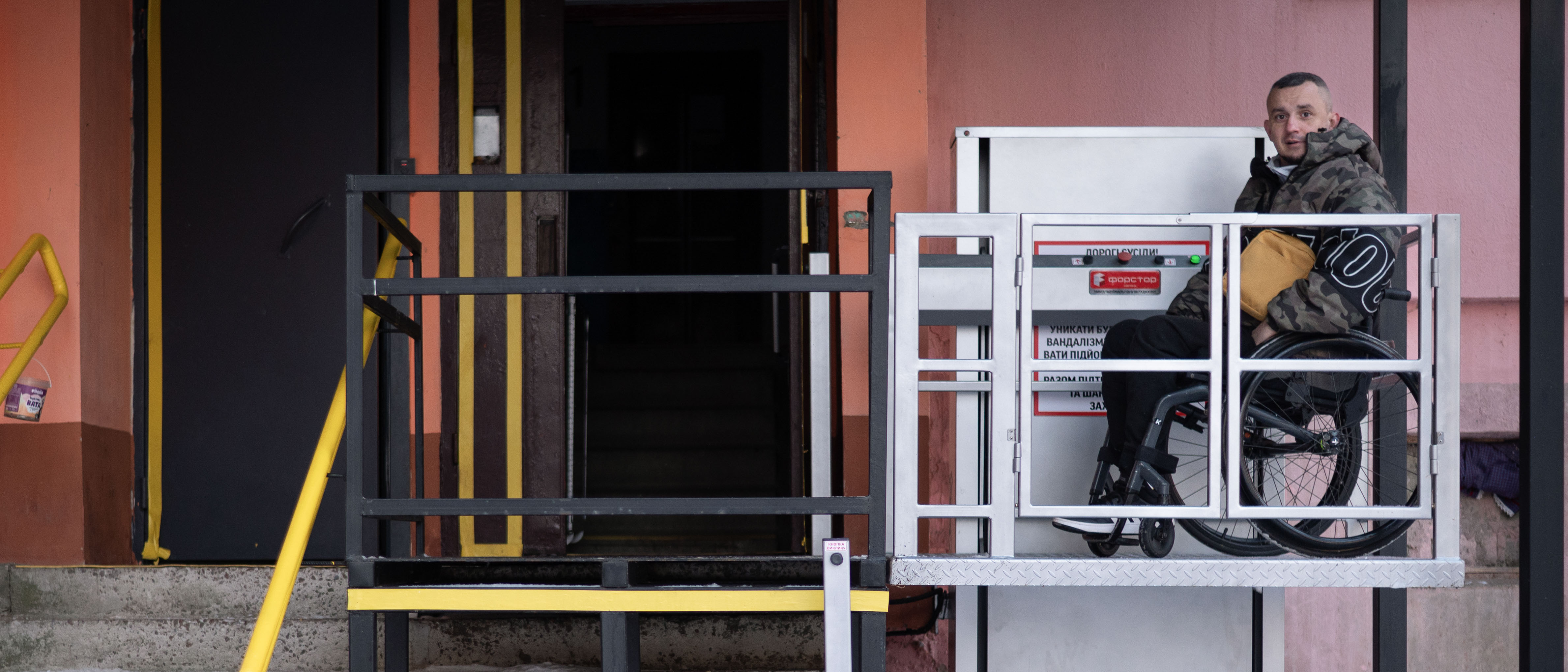
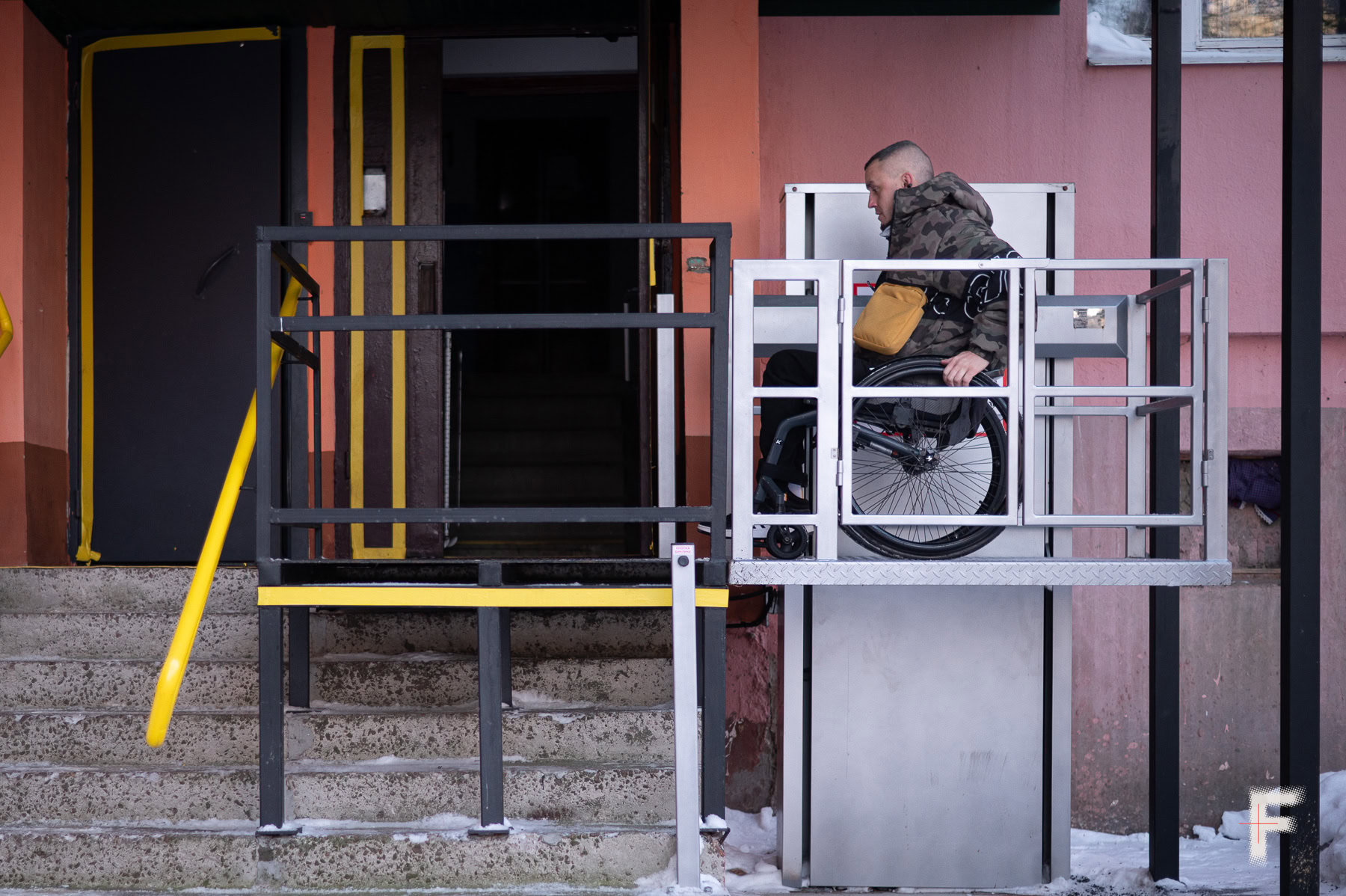
After his morning coffee, Ivan begins gathering his things. Today, he has morning sessions at the rehabilitation center, and he plans to get there without help. But that hasn’t always been possible. Ivan didn’t begin leaving the house independently until March 2025. Before then, he had spent more than a year practically trapped in his own apartment building. Simply going outside used to mean working around his father’s schedule or waiting for neighbors to help him down the stairs. Now, the same trip takes just a few minutes.The veteran persuaded local authorities to install two lifts in his building: one in the stairwell and a second lift on the high front porch by the main entrance.
You don’t want to leave the house when you realize
you can’t do it on your own.

Ivan wheels onto the metal platform, presses a button, and waits while the lift slowly brings him down to ground level.
“This used to feel like such a barrier – I would just give up. You don’t want to leave the house when you realize you can’t do it on your own. After more than a year of talks and arrangements, as you can see, I can now do it myself – though, of course, only when there’s electricity,” says Russian-Ukrainian war veteran Ivan Nedobryk.
[Translator’s note: During the winter of 2025–2026, sustained enemy bombing in Ukraine caused an energy crisis, leading to rolling blackouts that left many without heat or electricity and created a humanitarian emergency.]
A vehicle earned through service
Ivan lives in Zhytomyr. In his words, moving around the city in a wheelchair on his own is possible, but it’s no easy task – especially in winter, when snow and ice turn the sidewalks into obstacle courses. To avoid depending on public transport or the weather, Ivan completed a specialized driving course for people with disabilities in January 2025 and bought a car. He saved the money from his combat pay – the same funds he received for his service and his life-altering injuries.
Even owning a car, nevertheless, didn’t fully solve his independence problem. Ivan can transfer from his wheelchair into the driver’s seat on his own – he’s practiced the movement countless times. After that, however, he still relies on a neighbor or passerby willing to lend a hand folding the wheelchair and loading it into the trunk.

“This car isn’t just a friend – it’s my life. It’s what allows me to take care of my own affairs and be independent. Before this, my father was constantly driving me around, but I felt awkward having to ask him all the time, for example, to take me to meet friends,” says Ivan.
A life changed by injury
Before the full-scale invasion, Ivan had worked in: construction, security, and a carpentry workshop. He never pursued work in his field, even though he holds a university degree – a diploma from European University in Entrepreneurship, Trade, and Financial Markets.
But his search for a calling was abruptly cut short in February 2022, when Russian artillery destroyed a building in the military town where he lived with his parents. His decision to volunteer to serve didn’t surprise his family: his father had served in the Anti-Terrorist Operation (ATO) and at the start of the full-scale war, and his mother remains in the military today.
Ivan served in the 95th Air Assault Brigade. In June 2022, during fighting in the Donetsk region, he and his comrades came under enemy fire. A bullet struck his spine, instantly taking the use of his legs.
I simply couldn’t end myself – I was paralyzed.

He was evacuated, given first aid, and then taken to a hospital where doctors delivered the verdict: he would never walk again. Ivan remembers that reality didn’t hit him all at once. At first, he went through a long period of stabilization, surgeries, and endless IV drips. Over time, he came to understand that life was now divided into “before” and “after,” and that his main task was no longer simply to endure, but to learn to live in a wheelchair.
“I understood even then that the injury was serious, but I simply couldn’t end myself – I was paralyzed. For anyone who’s wounded, thoughts eventually come that life might be over. I spent almost two years confined to bed. Recovery was incredibly hard,” Nedobryk says.
Winning the battle within
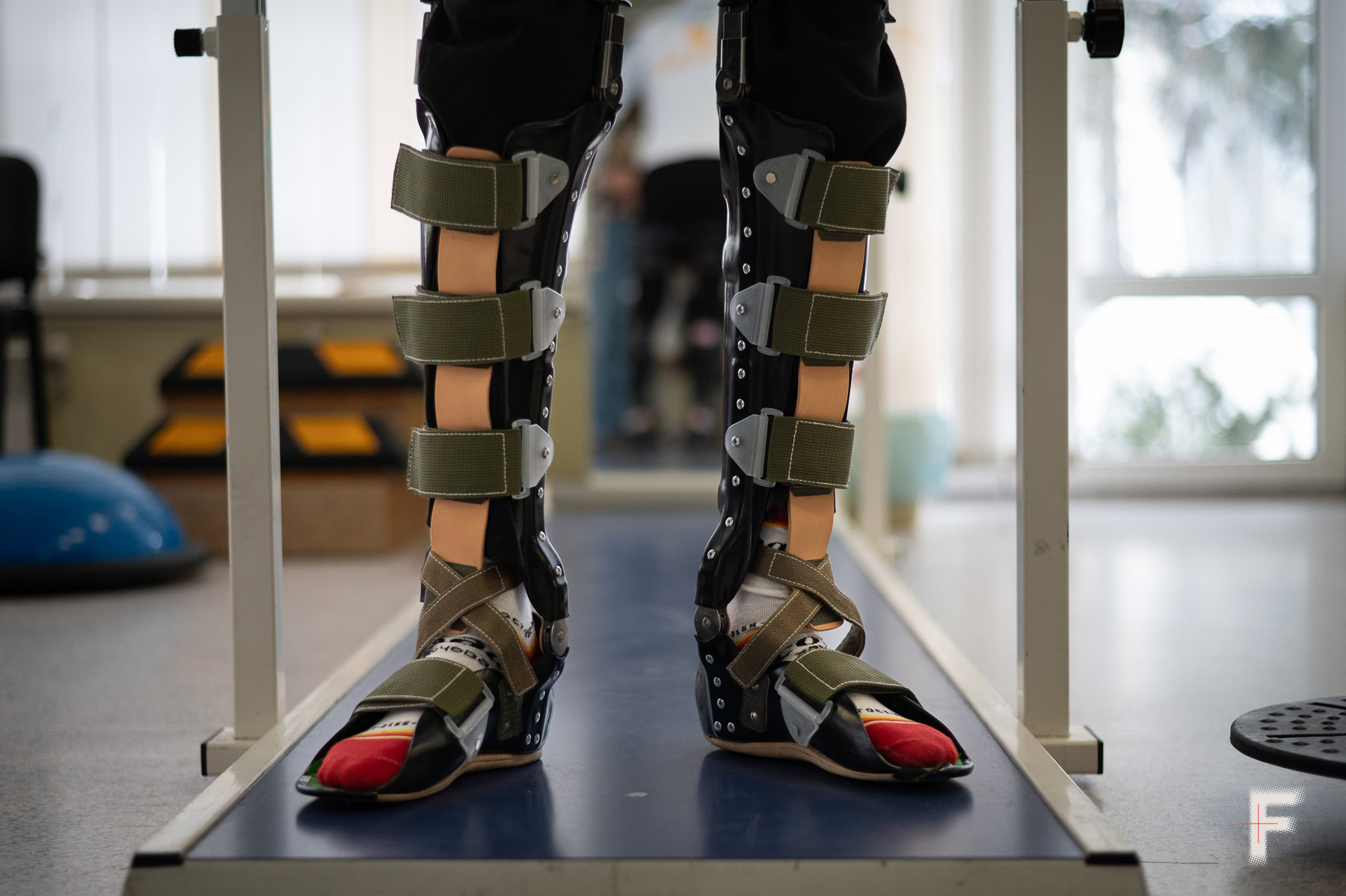
After three years of daily training, Ivan has pushed his rehabilitation to its fullest. Today, he can take a few steps independently using leg braces – the highest level of physical recovery achievable for his injury through exercise alone. To advance further and enhance his quality of life, physical therapy is no longer sufficient. The next step is a neurostimulator, a device implanted in the spine that stimulates muscles with electrical impulses.

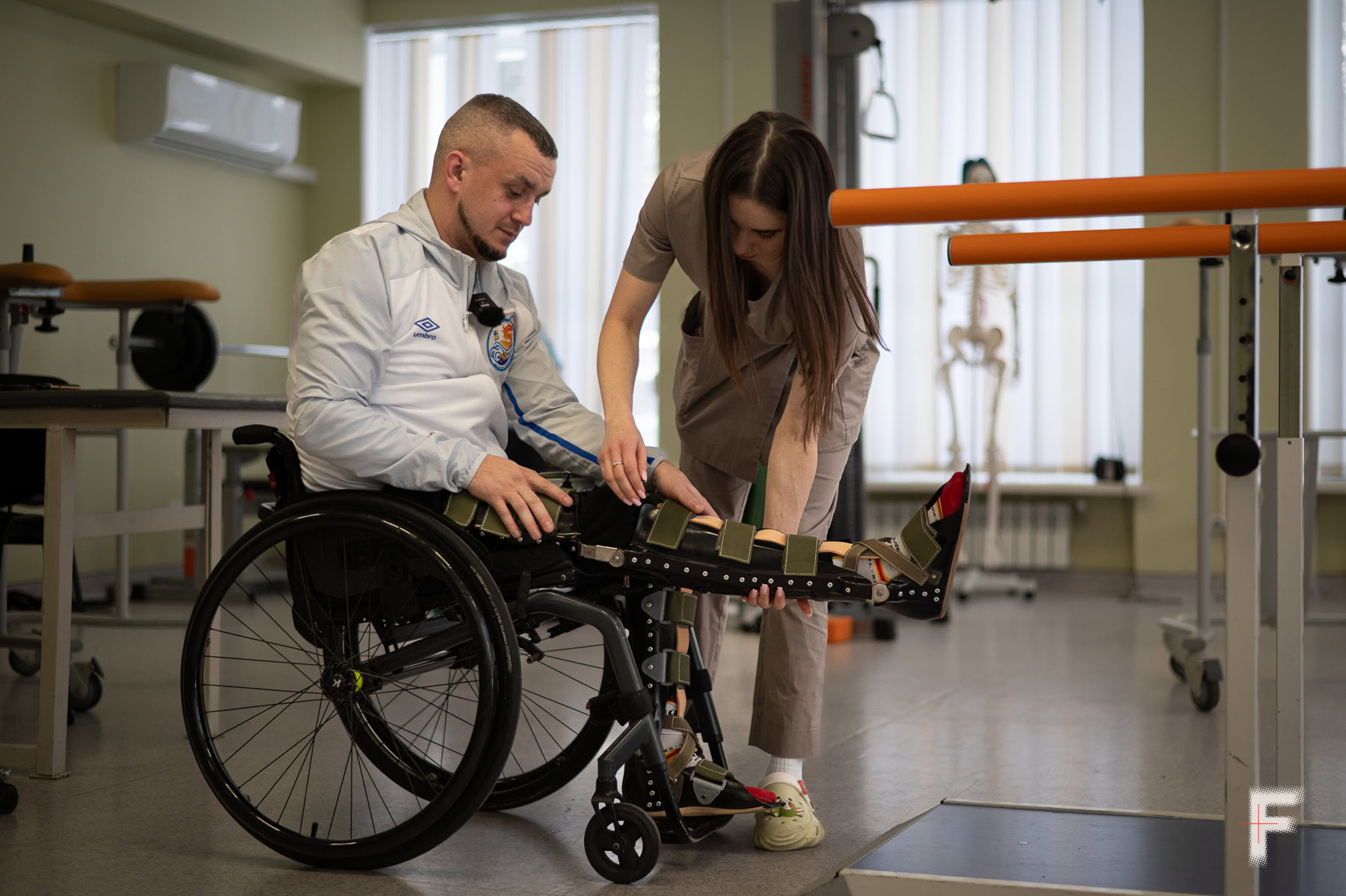
Ivan is now raising money for the device and the surgery. This body upgrade will not only help him feel more confident and capable in daily life, but also improve the effectiveness of his rehabilitation. “His sessions at the rehab center are now aimed at keeping his muscles in shape and ready for the surgery,” says his physical therapist, Oleksandra Dykun.
“At this point, it’s already an impressive result. Every day, we put on his braces and walk with his walker. This is the level Ivan was striving to reach. He needs a neurostimulator to take the next step, – it will improve his walking and make it easier to move around, whether transferring from his wheelchair to his car or from a chair,” his doctor explains.
-
Physical therapist Oleksandra Dykun adjusts Ivan’s leg braces before rehabilitation exercises, Jan. 16, 2026, Zhytomyr, Ukraine. (Artem Derkachov/Frontliner)

-
Ivan’s leg braces during rehabilitation exercises, Jan. 16, 2026, Zhytomyr, Ukraine. (Artem Derkachov/Frontliner)
Ivan’s father, Vasyl Nedobryk, says that not long ago his son had lost the desire to recover – and even the desire to live. Just a year earlier, Ivan’s days looked very different. He was withdrawn and depressed, rarely leaving his room. His motivation to train disappeared; he saw no point in it when the world around him was still confined to the walls of their apartment. It was a time of deep apathy, when the lack of an accessible environment weighed more heavily than the spinal injury itself. Dependence on the help of others – even those closest to him – felt like a defeat.
“When he was wounded, I was out on a mission. I received a call from an unknown number and immediately recognized Ivan’s voice. He said, ‘I’m alive, but my legs won’t work.’ From that moment, everything stopped, life seemed to freeze. He kept refusing our help when he was bedridden, yet he couldn’t do anything on his own either. I told him that when he was a child, he always had something to strive for, and that if he wanted to recover now, he had to find that drive again,” says the veteran’s father.
Among his own
After an exhausting workout, Ivan makes his way to the Veterans’ House – a place that helped him out of depression and set him on the path to recovery. Here, surrounded by people who share similar experiences, a smile quickly spreads across his face. This time, the House is holding an art therapy session for veterans and their spouses. The focus isn’t on technique, but on letting emotions flow onto the canvas. Ivan wheels up to his workstation. Instead of standard canvases, the table holds blank surfaces that resemble discs or small plates. He pulls on gloves, picks up the paint tubes, and begins pouring color directly onto the surface. The colors mix and swirl into abstract patterns. Using his hands, Ivan spreads the paint, shaping the image as it slowly takes form.
-
eteran Ivan Nedobryk during an art therapy session at the Veterans’ House, Jan. 16, 2026, Zhytomyr, Ukraine. (Artem Derkachov/Frontliner)
-
Ivan’s workstation after an art therapy session, Jan. 16, 2026, in Zhytomyr, Ukraine. (Artem Derkachov/Frontliner)

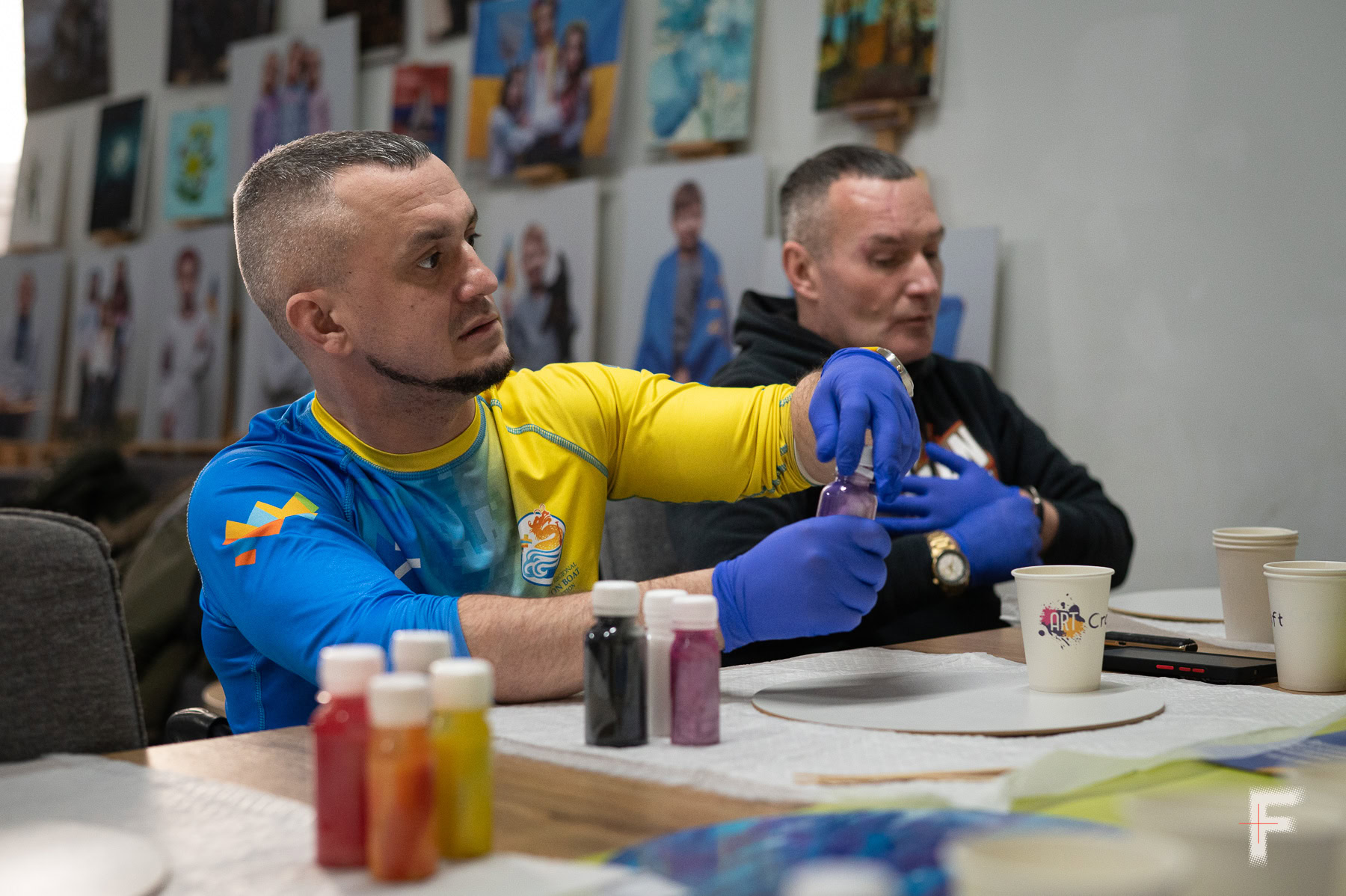
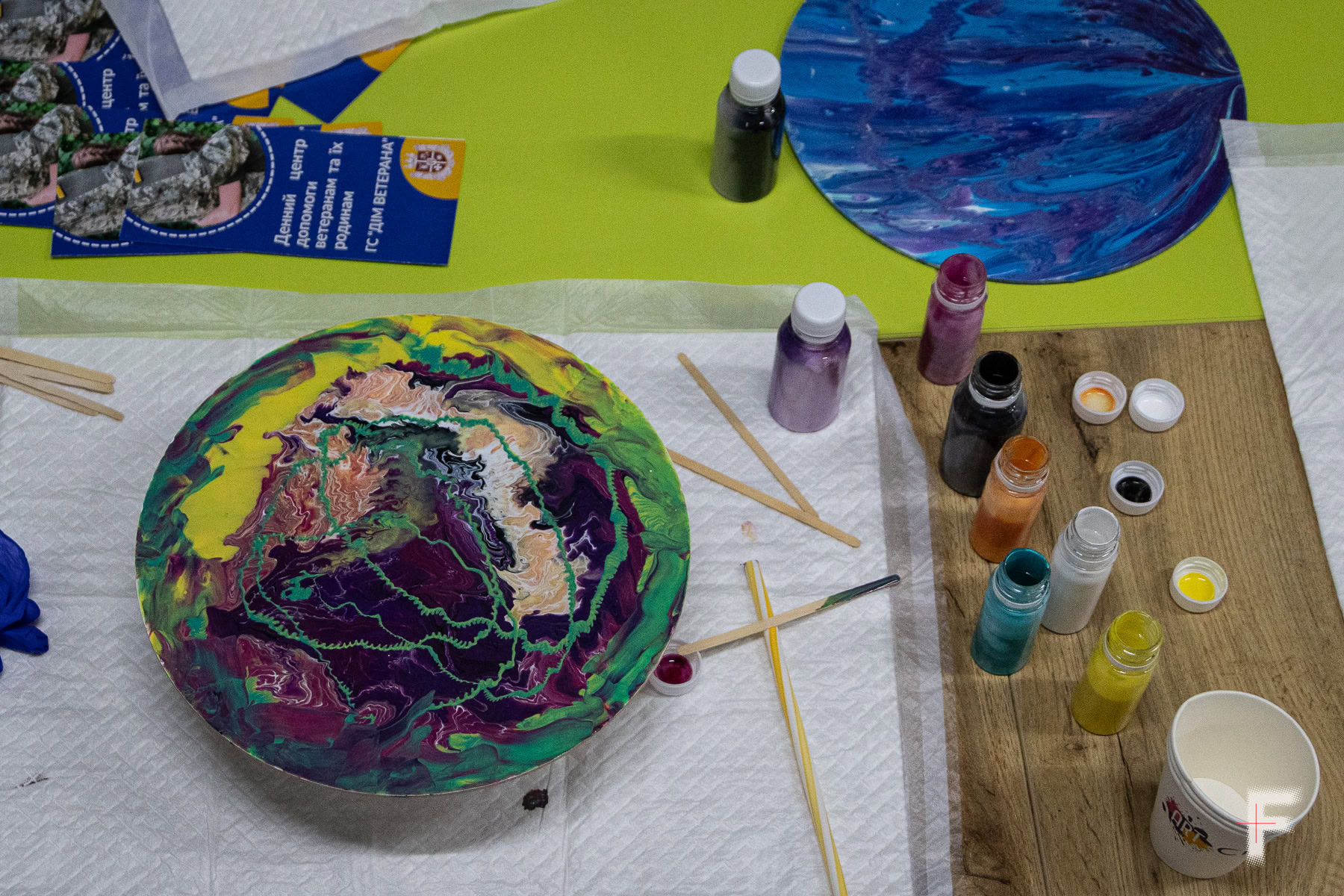
“Maybe it seems uninteresting or unnecessary. Of course, it’s easier to stay in bed at home, spending money on alcohol or entertainment. But believe me, the desire to live will run out before the money does. Veterans need to come together.”
The easiest way to start rehabilitation – despite all the challenges – is simply to get out of bed and do something,
Meeting with mates
After art therapy, Ivan heads to one of Zhytomyr’s shopping centers, where his comrades are already waiting. These gatherings happen almost every day. The veterans support one another and, as they say, understand a comrade with just half a word – where a civilian might need an explanation, a fellow soldier only needs a glance.

On his way to the shopping center, Ivan’s phone buzzes. It’s the young woman he met in 2025. They’re seeing each other now, but today he can’t make their date – he promises he’ll be there tomorrow.
When I started this relationship, I truly became happy.
“It’s such a gift to have someone by your side who understands you almost as well as a fellow soldier. This year has been a breakthrough — so much has happened, and I’ve begun to feel alive. My faith in God, my friends, my family, and the mindset that each day will be okay have all helped me. If you wake up with negative thoughts, your whole day will follow that mood,” Ivan says.
Obstacles of daily life
Ivan wheels up to the shopping center, where his comrades are already waiting. After a short stroll, the group decides to have dinner at one of the center’s restaurants.The evening is filled with stories of the war, jokes, and discussions about future plans. But when it’s time to leave, reality hits – a reminder of the practical challenges that people face across the country. Ivan asks the waitress if the restaurant has a wheelchair-accessible restroom, only to learn that it does not. Ivan, however, takes it in stride, joking to his friends that he’s “off in search of adventure – and a restroom,” and wheels off to the other end of the shopping center.
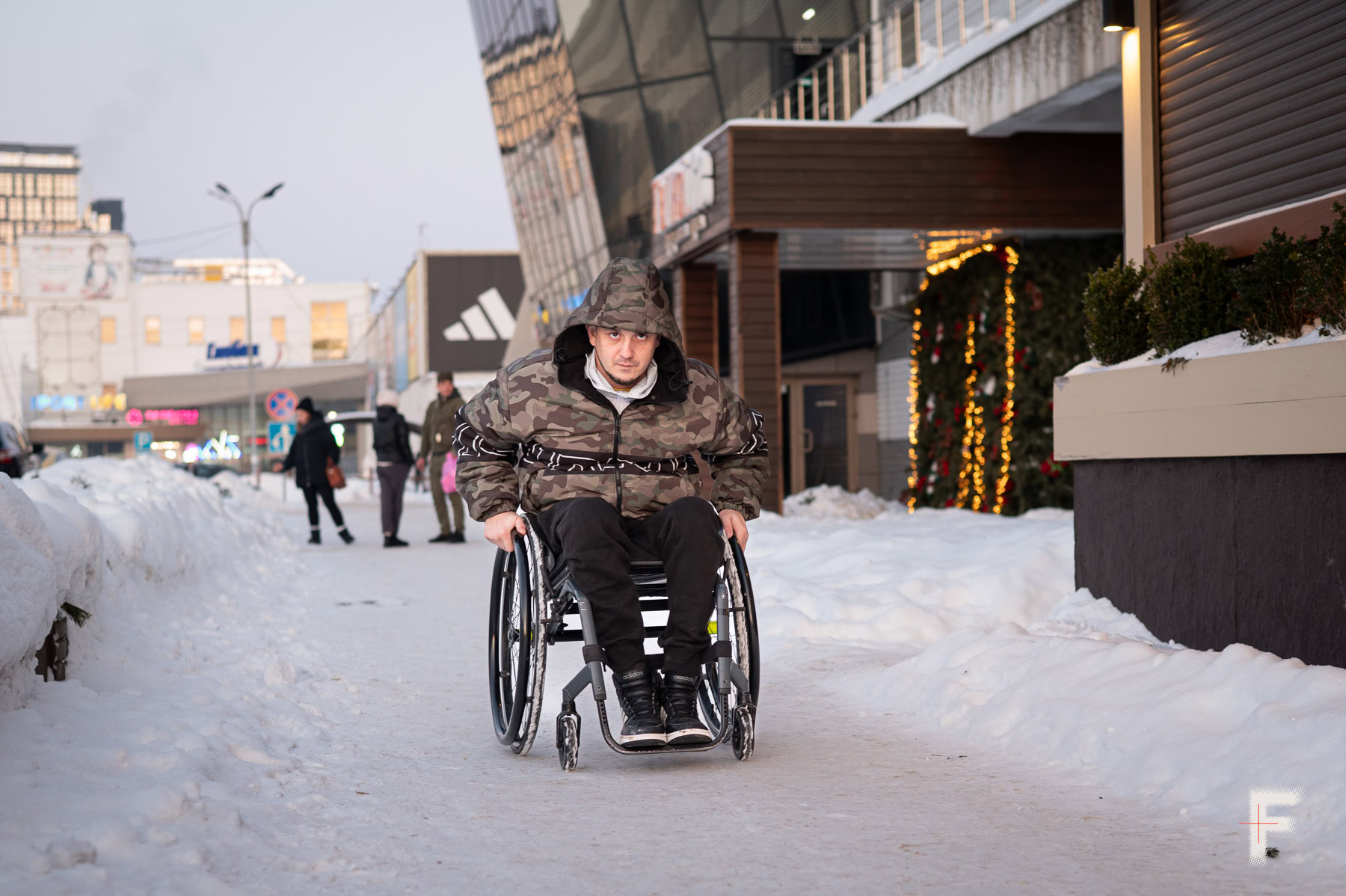
“There’s this unpleasantness, but what can you do? Of course, it weighs on me a little and reminds me that I am not like everyone else anymore. But I try not to think about it. I just keep moving forward,” the veteran says.
Dragon boat silver
Later in the evening, Ivan heads to the gym with a comrade. After three years of rehabilitation, sport has become more than just exercise for him. For over a year now, he has been seriously involved in rowing. It all began when a fellow soldier suggested he try rowing on the Dragon. That moment proved to be a turning point. Because Ivan’s back muscles don’t function properly due to his injury, his workstation was specially adapted: the coach built a chair with support and restraints so he could maintain his balance while rowing.
I might be the only person in Ukraine with a spinal injury who rows.
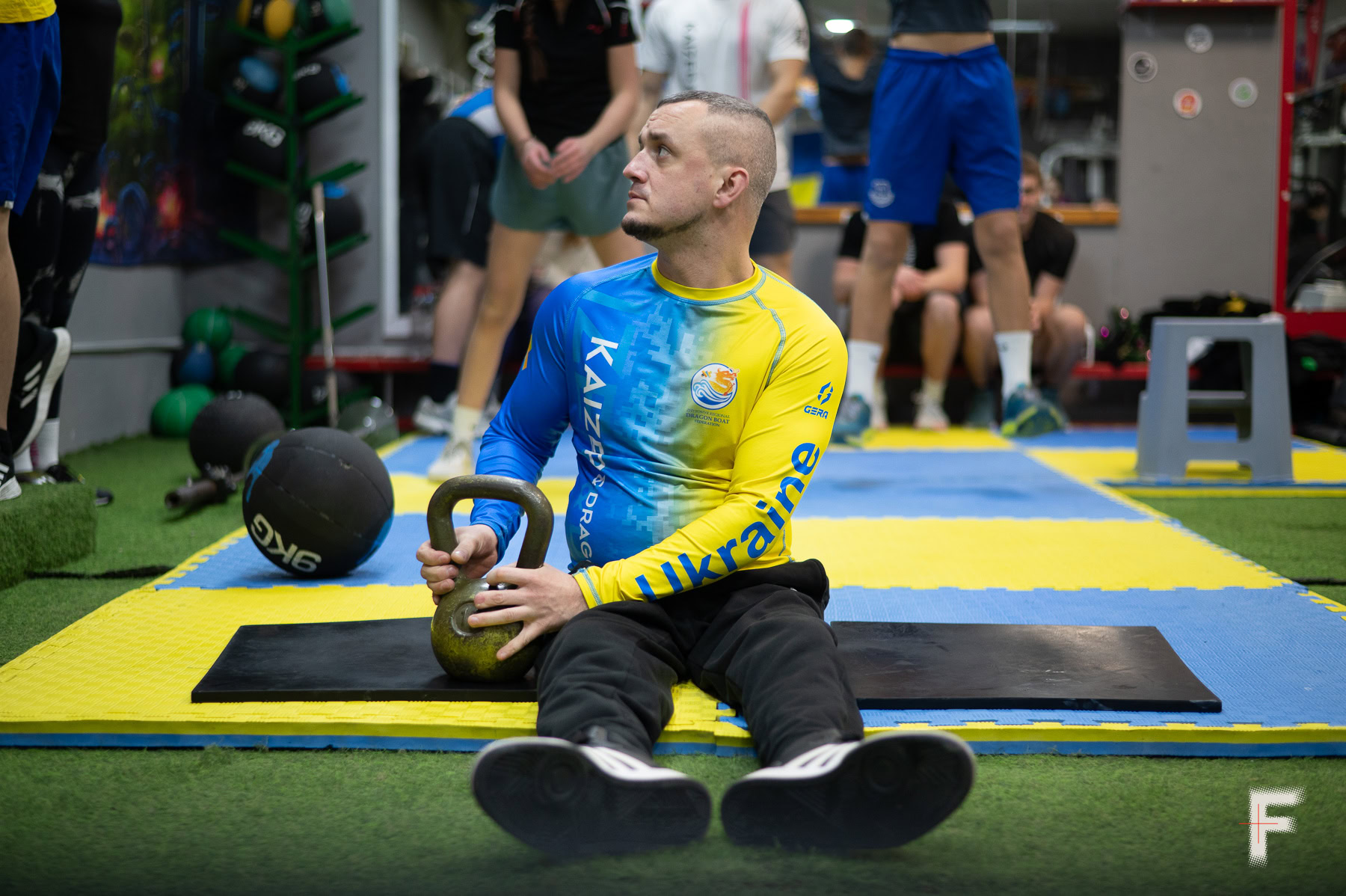
“I might be the only person in Ukraine with a spinal injury who rows. In just under a year of rowing, I’ve gained more for my health and my life than I did in years of rehabilitation. I’ve found strength, confidence, and the sense that I’m truly needed by the team,” Ivan notes.
In the gym, the veteran impresses with his independence: he transfers onto the training equipment on his own, secures his body, and performs the exercises. But there are moments when his mates or coach must step in. For instance, to perform exercises on the high pull-up bar, he needs to be lifted and helped secure his grip. These are brief moments of assistance, which Ivan accepts willingly – for the good of the team and their shared goal.

As part of a veterans’ team from Zhytomyr, Ivan represented Ukraine’s national team in Brandenburg, Germany. In July 2025, he won silver at the World Dragon Boat Championship in the Paradragon category. In addition to this achievement, Ivan has earned several other sports awards.

You know, I like to say: ‘Don’t be a coward!’ We, people who went to war, didn’t fear death or terrible injuries – so what should we fear about living? To the guys who are drinking themselves into oblivion, who see no point in life: look around! If a simple guy from Zhytomyr could do it, so can you,
The day draws to a close. The veteran returns home and asks a neighbor for help getting out of the car. He rides the elevator up to his apartment, has dinner, and plays with his chinchilla.

Ivan says there’s no room for chance in this routine, and nothing heroic about it either. What may look like a success story from the outside is, for the veteran, simply part of his everyday life. This is the real face of rehabilitation: thousands of repeated movements, a fight for every meter of accessible space, and a constant search for the resources needed to take the next step and become a better version of yourself. Ivan Nedobryk’s journey continues, and this day was just one of hundreds like it – where his greatest victory is the simple, hard-earned feeling that he has relearned how to live in the country for whose defense he gave his legs.
Adapted: Irena Zaburanna