‘They called him the sun of Donbas’: Oleksii Yukov searched for the dead for more than 25 years
Oleksii Yukov was killed on Aug. 5, 2026, when his car struck a mine in Lyman hromada, Donetsk region. He was 40. For more than 25 years, Yukov searched for the dead, first traveling to the battlefields of past wars, then, after 2014, working in eastern Ukraine with the Platsdarm team to return fallen soldiers to their families. This Frontliner story is about a man who spent his life searching for others, and about those who now remember him.
Oleksii began search-and-recovery work as a teenager. In Sloviansk, where he grew up, a hospital was under construction on the site of an old cemetery, and human bones were being unearthed in the process. What he saw affected him so deeply that by age 13, he had started searching for the dead himself, recovering their remains from the ground.
He led the Platsdarm search-and-rescue group, which had worked on the front line and in de-occupied territories since 2014. Before 2014, Yukov and fellow searchers recovered the remains of soldiers killed in World War II for burial. After the start of the full-scale invasion, the team began searching for the dead of the current war: Ukrainian soldiers, civilians, and Russian soldiers.

We pulled them out from under shelling,
around was total hell.
The team went where others couldn’t reach the dead, or didn’t have the ability to recover them. Their work often began only after the front had moved on, when they would return to former battle sites, searching forests, fields, destroyed buildings, and vehicles for remains and trying to identify the dead.
In March 2024, Frontliner published a story about Platsdarm’s work, in which Yukov spoke about a trip to the Klishchiivka area. Eight bodies lay in black bags. At that point, some were known only by the location where they’d been found and a number, and it still had to be determined who they were: Ukrainian or Russian soldiers. The searchers worked in haste, since staying in the open area was dangerous.
“We pulled them out from under shelling, around was total hell. I tried to gather everything possible, even pieces of bodies hanging from tree branches. Whoever this person was, it’s important to bring their body to their relatives and let their soul find peace,” Yukov said about his work.

Oleksii Yukov and his team recovered more than 3,500 bodies of fallen Ukrainian soldiers and others killed in the combat zone, handing them over for repatriation and burial. For Yukov, the search was always about specific people: parents, wives, and children waiting for their loved ones. He communicated with the families of the missing, walking them through the search and identification process, and tried to stay in touch even when there was no news.
If a body was too badly damaged to identify by documents or personal belongings, the searchers looked for other ways. Yukov said that sometimes they even had to examine teeth: fillings, crowns, or implants could help establish identity if relatives could provide this information.
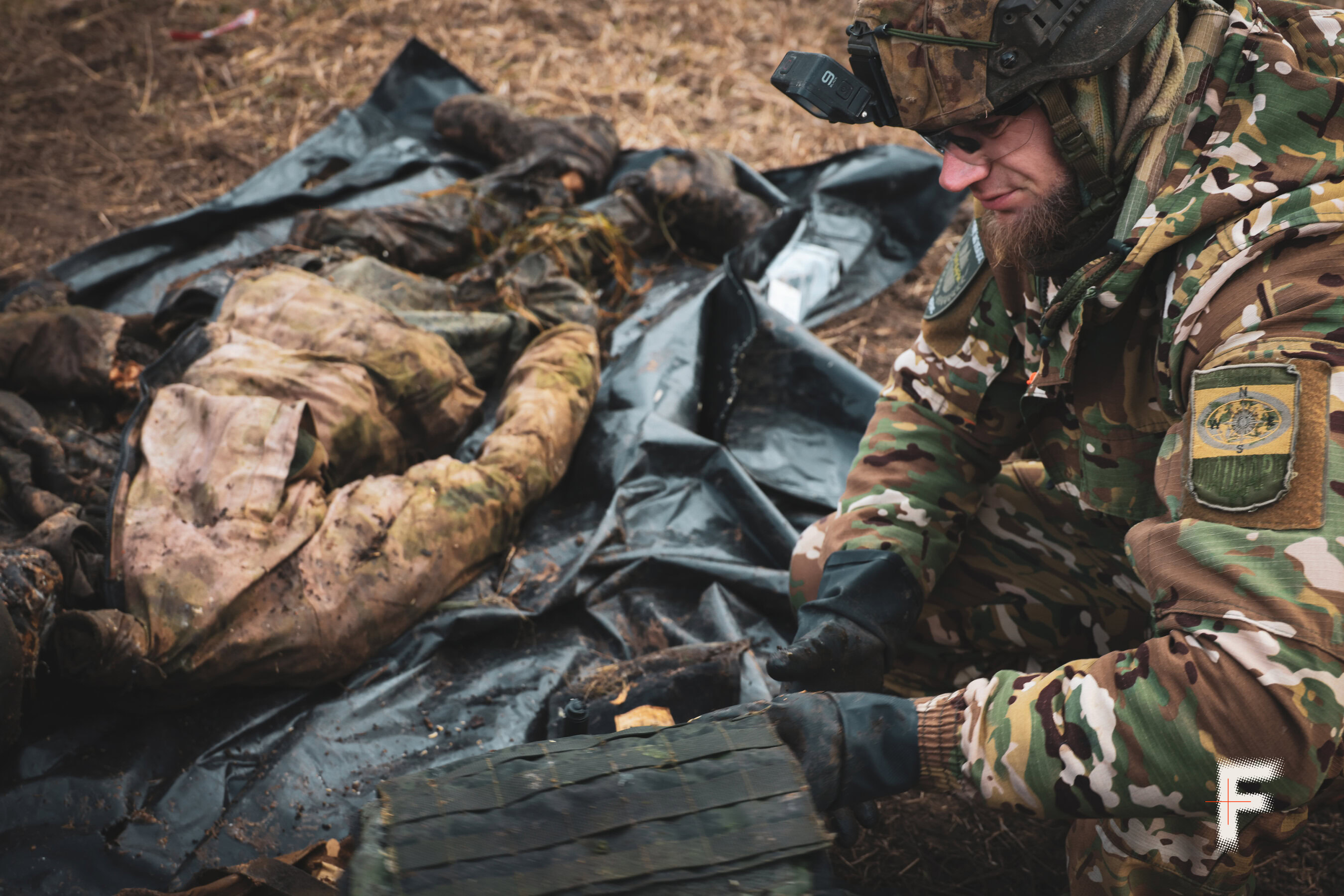
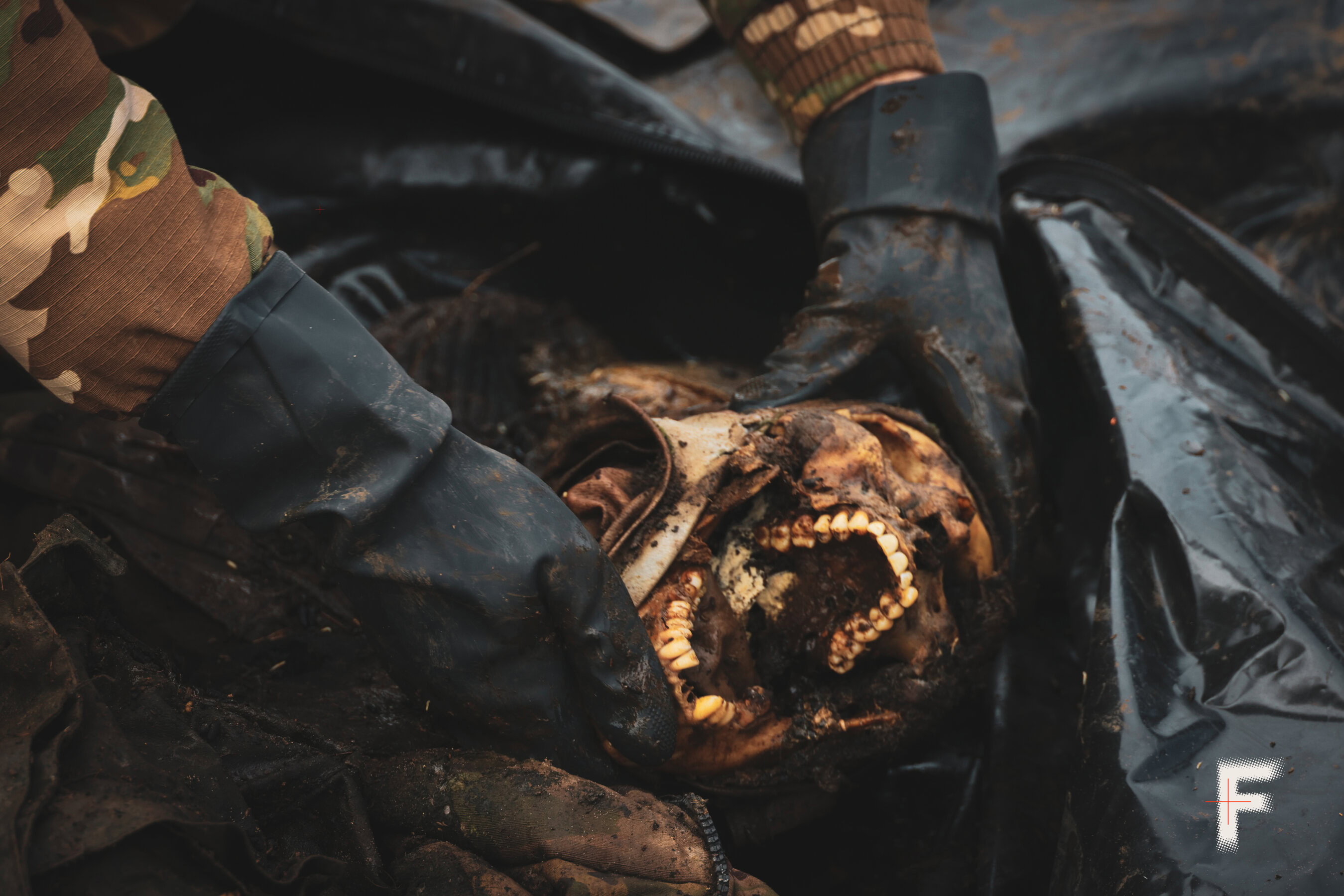
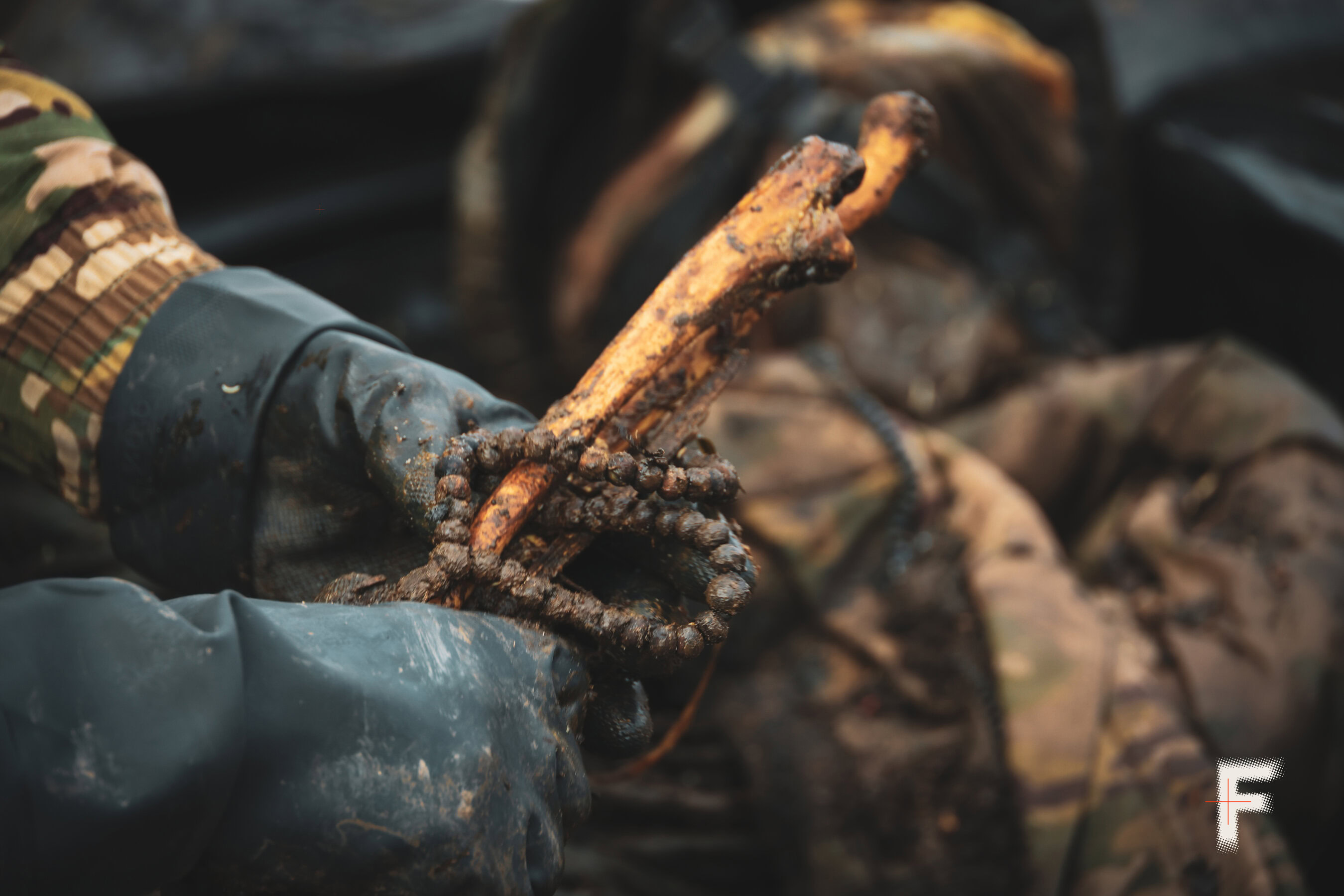
Sometimes they worked for days at a single site, sifting through the soil and collecting small fragments. Yukov said that to a stranger this might look like just a bone or a body part. To a family, it’s the person they’ve been waiting to bring home.
Searchers remember working with Oleksii Yukov
On Aug. 5, 2026, Oleksii Yukov was killed in Lyman hromada, Donetsk region. He was driving when his car struck a mine. He was 40, and for more than 25 years had searched for the dead. Now he is the one being mourned by those he worked with, those who knew him for years, and those for whom his work had become part of their own story.

The fields where he worked were
often full of sunflowers too,
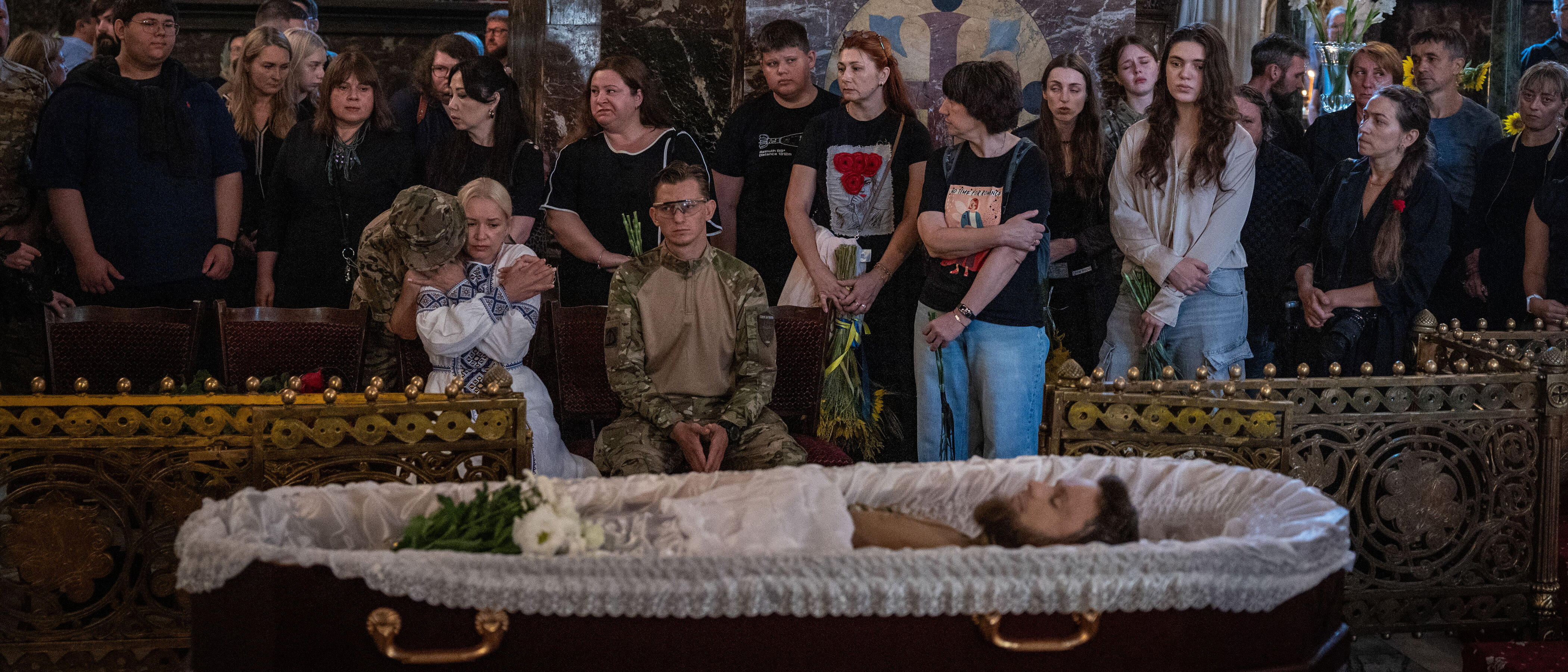
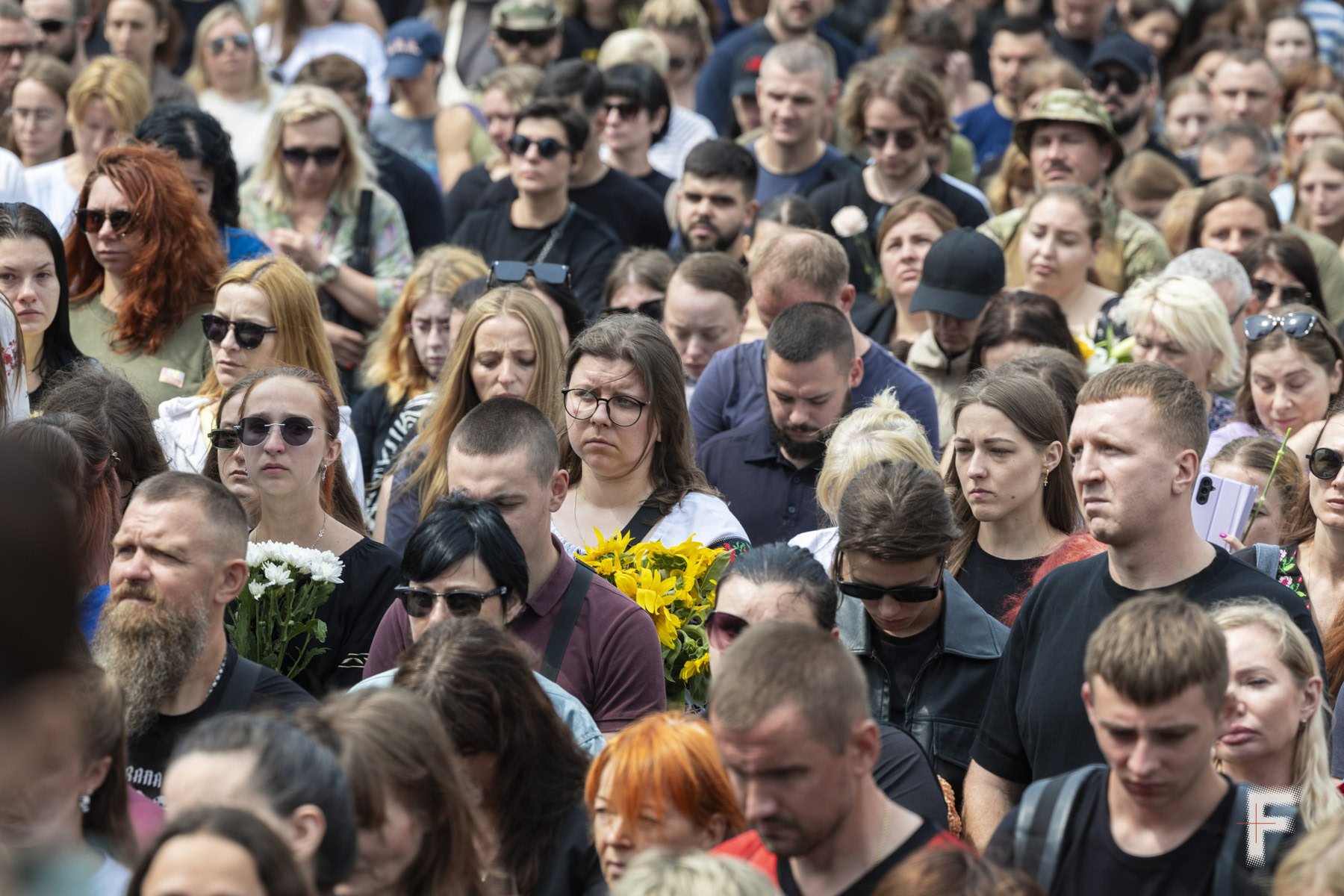
A farewell ceremony for Oleksii Yukov was scheduled to take place on Aug. 7 in the village of Mykilske, Donetsk region. Russian forces prevented him from being laid to rest on his native soil: the ceremony was canceled due to the threat of a targeted aerial bomb strike. So hundreds of people, teammates, friends, soldiers, and people who simply wanted to honor him, came to Maidan Nezalezhnosti in Kyiv to pay their final respects to the hero.
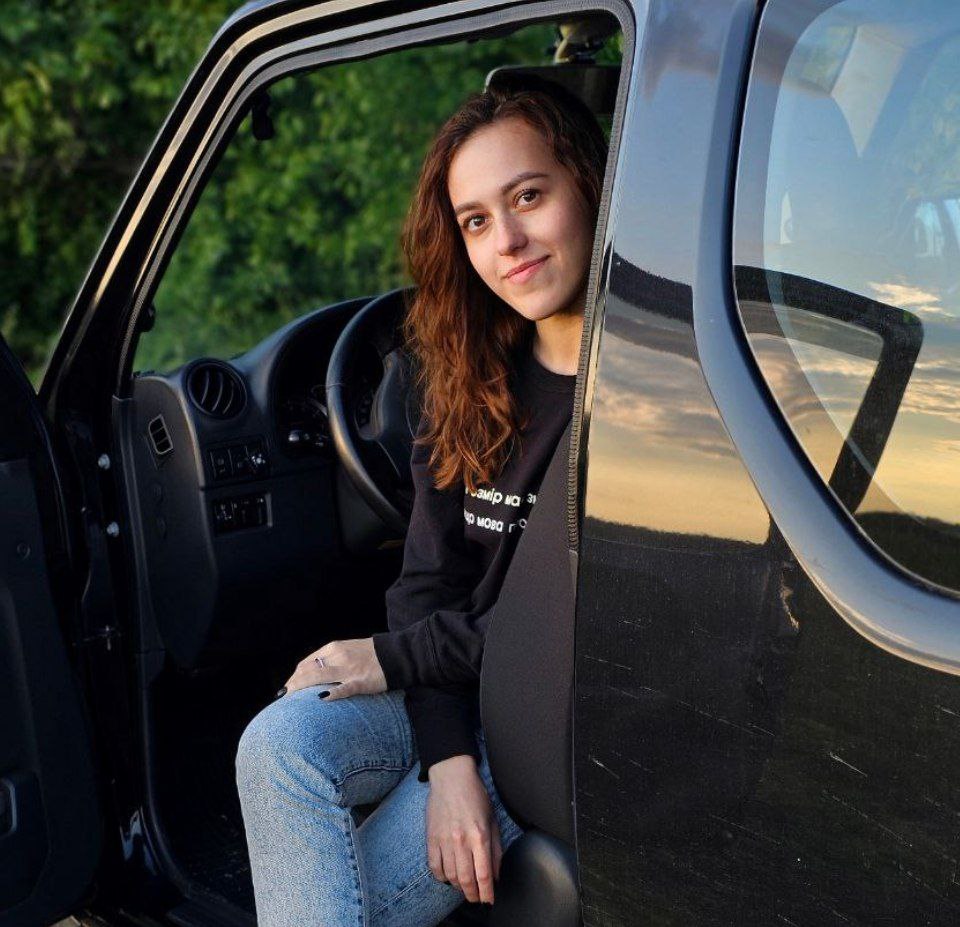
Maryna Zyma joined Oleksii on many search expeditions, working alongside him at sites where the dead were found. At the farewell ceremony, she stood holding a few sunflowers.
“I was going to the funeral and carrying sunflowers. And I kept thinking: what a strange choice, why did I pick sunflowers of all things? Then, at the farewell, I heard that they called him the ‘sun of Donbas.’ When I saw how many people were carrying sunflowers, I thought it was symbolic because the fields where he worked were often full of sunflowers too,” she said.

It’s already a soul,
no longer a living person,
She first met Oleksii Yukov in 2020, during a search expedition with the Platsdarm team. At first, the “Yukivtsi,” as Platsdarm’s searchers were known, unnerved her a little: athletic, bearded men who looked very serious. But that impression soon changed, Maryna recalls:
“We were all sitting at the table, talking, and it turned out people were more down-to-earth than I’d imagined. A connection formed with everyone almost right away, and in that friendly atmosphere, everyone quickly felt like family. I grew very close to Oleksii.”
During one expedition, Platsdarm worked at the site of a mass grave, where 54 bodies were found. Maryna joined the team for one day. Oleksii showed her how they worked, explaining the methodology and pointing out details.
“He was sitting across from me, showing and telling me what to do and how: ‘Don’t go there, better not touch that, it’ll collapse.’ Very patiently, he’d show me a thousand and one times if needed. They collected every fragment on-site: every phalanx, every little bone,” she says.
But what Maryna remembers most isn’t just his professional approach. She says Yukov had a way of explaining things she’d initially found misguided or unnecessary to her, like why Platsdarm recovered not only Ukrainian soldiers from the battlefield.
“When I asked, ‘Why are you collecting the bodies of Russians? Collect our own,’ he explained that everyone is equal in death. That you can’t mock a Russian just because he’s lying there dead. It’s already a soul, no longer a living person,” says Maryna.
She later began calling Yukov her mentor. He taught her not only the search-and-recovery craft, but also attentiveness to people, she says:
“What set him apart was his humanity. He treated everything and everyone with a humanity we’re missing in this world. He could see a person clearly: what troubled them and how he could help.”
Oleksii didn’t talk about his work as a duty, but as something he could no longer live without. Maryna recalls their last meeting, in February 2026. She asked him if he ever managed to rest, even a little.
“Maryna, what rest is there in war? If you rest all the time, the work won’t get done. I have a calling, a mission. They call to me, they come to me in dreams, I see them, I feel them,” he replied.
In one of their last exchanges, Oleksii wrote to her: “Hold on, Marynochka. We hold the sky together.”
Since his death, she often returns to those words, which remind her of something he used to repeat: that we must remember those already in heaven, and honor them.
“He always said: ‘Our motto is never give up.’ So we have to hold that sky together, never give up, and love our land the way Oleksii loved it,” Maryna adds.
‘I’m so tired of this warʼ
At the farewell for Oleksii, his wife, Yevheniia Kaluhina, spoke to him and to the people who had come to see him on his final journey. She thanked everyone standing beside her that day, as well as those who had supported Platsdarm for many years.
She shared details from the last months of Oleksii’s life, saying the war and the work had grown increasingly heavy for him. Shortly before his death, he told her:
I’m so tired
of this war.

Yevheniia shared memories of how she and Oleksii once dreamed of a future without war, one in which they would raise their daughter together. She spoke of him now not as the head of Platsdarm, known for his work, but simply as her husband:
“I’m proud to be your wife. Proud that I gave you a daughter.”
Several times in her speech, she returned to the people Platsdarm has yet to find, saying there were still many dead, and that the work Oleksii had done for years could not end with him.
“I promise you, we will continue this work. Because they deserve it, and so do you,” Yevheniia said.

On Aug. 8, 2026, a petition to posthumously award Oleksii Yukov the title Hero of Ukraine gathered enough votes to be sent to the president for review. Oleksii’s memory will live on not only in Platsdarm’s work, but in the thousands of people whose relatives he helped bring home.