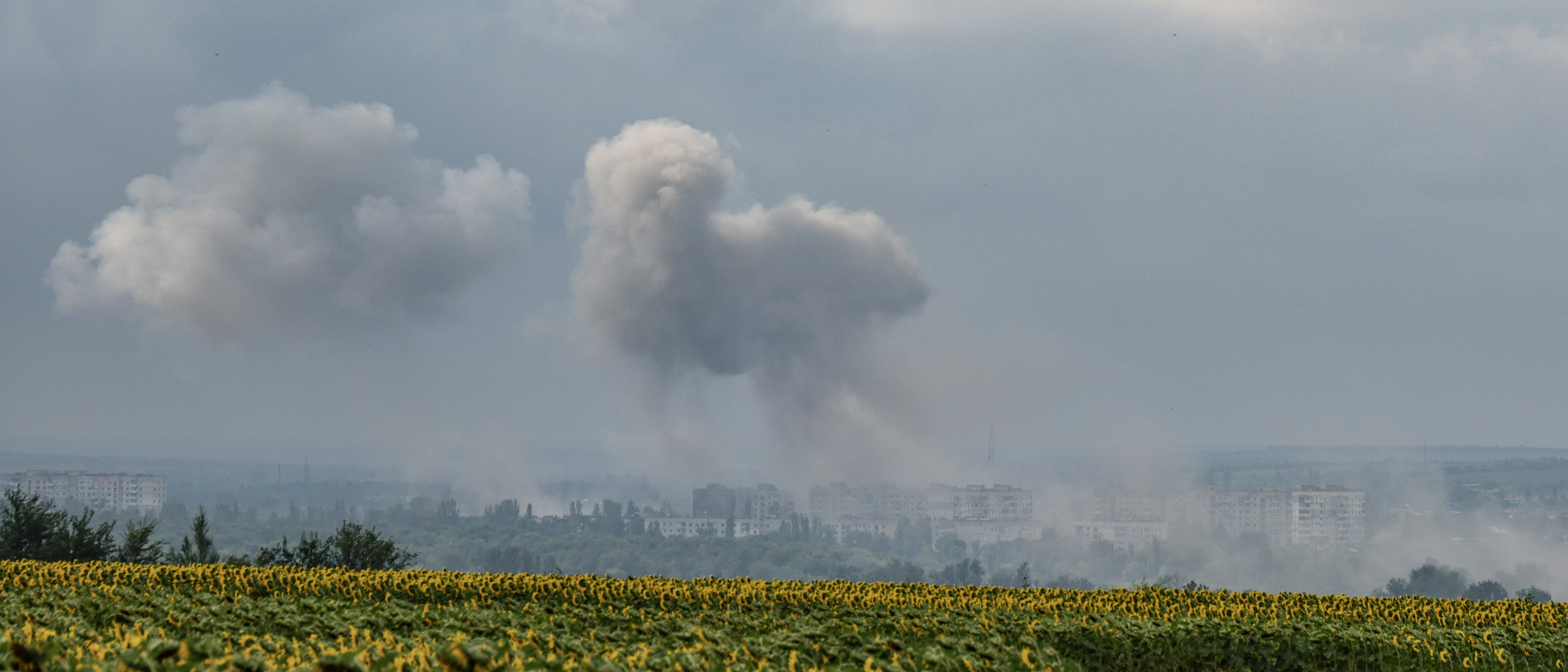
No gains in June: Russian forces face an impasse on the front
June brought an increase in the intensity of fighting, but no increase in territorial gain for the Russian army. The enemy continued to press along nearly all key fronts, yet failed to achieve an operational breakthrough or fulfill the primary objectives of its spring campaign.
Looking solely at the numbers provided by the General Staff of the Armed Forces of Ukraine, one might get the impression that the Russian summer offensive is gaining momentum. Throughout most of June, the General Staff reported over 200 combat engagements per day, with that number exceeding 250 on certain days.
However, the DeepState map paints a different picture, despite the high intensity of the fighting. June did not bring the results that Russia likely expected at the beginning of the summer campaign. The Russian army continued to press along nearly all key fronts, but failed to achieve an operational breakthrough.
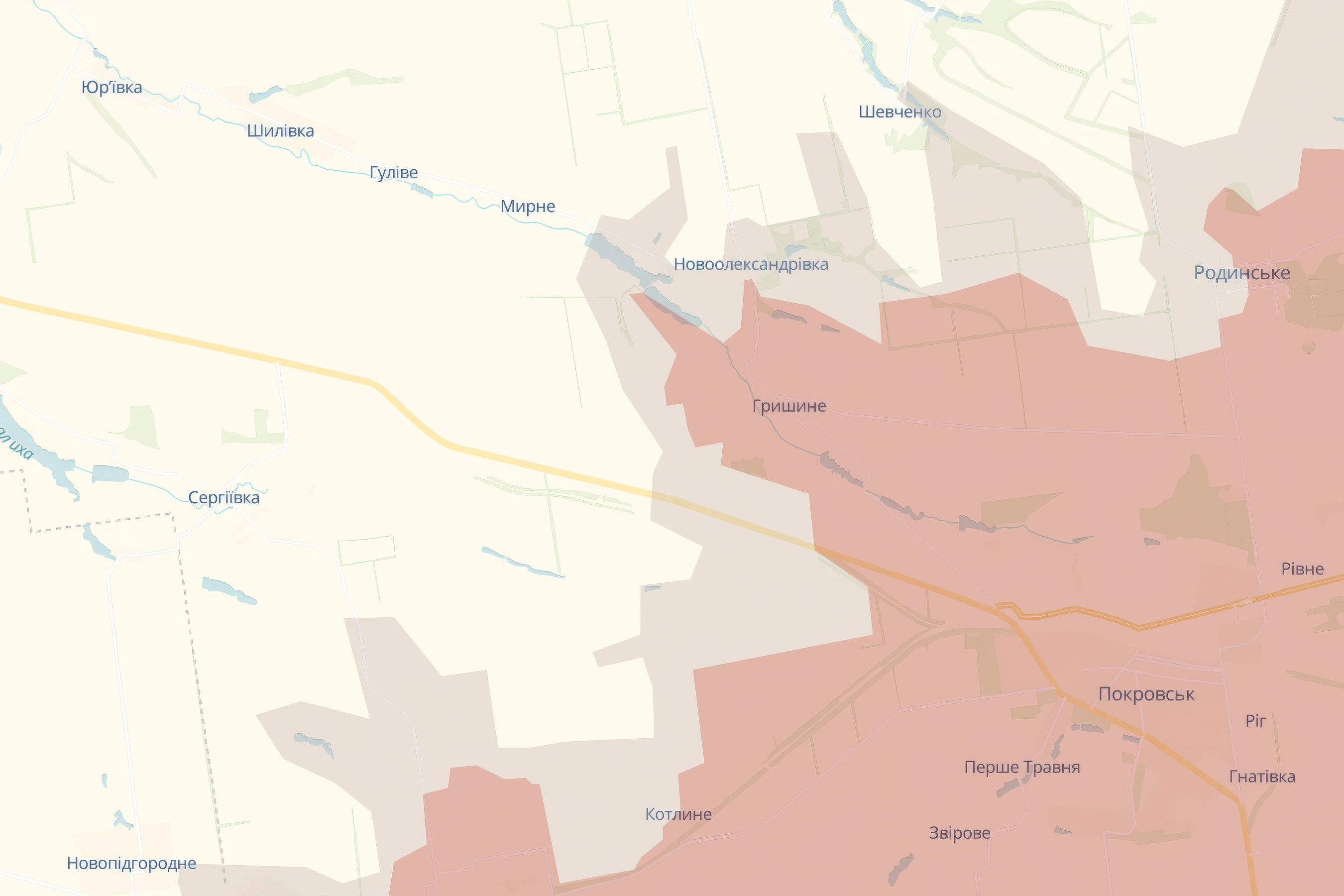
This is most evident on the Pokrovsk front. It is there that the General Staff recorded the highest number of Russian assaults on an almost daily basis. At the same time, DeepState noted that despite the rising number of attacks, Russian territorial gains remained limited. According to analysts, Russia occupied 84 square kilometers of Ukrainian territory throughout June, achieving its greatest successes only in specific sectors of the front.
The biggest difference from May is the intense heat, notes Colonel Volodymyr Polevyi, head of communications for the 7th Rapid Response Corps of the Air Assault Forces.
“The conditions on the front line are simply hellish. But they also bring Russia’s operational plans for an offensive to a halt, because it’s hell for them, too,” he says.
According to Polevyi, the enemy is attempting to advance near Pokrovsk toward Dobropillia, but without success. There is no question of creating operational space for maneuver or deploying mechanized units, the colonel says:
The Russians have run up against our defense and are now focused
on tactical objectives like ‘capturing the outermost house in a hamlet’.
Alongside operations on the Pokrovsk front, the invaders are attempting to push the Armed Forces of Ukraine back from Kostiantynivka and continue their advance on the Sloviansk front, exploiting the unfavorable tactical position of our defenders near Zakitne. The Russians are trying to threaten Ukrainian logistics and the entire defensive area that forms part of what is known as the Donetsk region’s “fortress belt.”
Another defining feature of the month was a shift in tactics. While Russian forces previously deployed mechanized columns on a regular basis, they are now rarely seen. The reason is simple: Ukrainian defense leaves no room for military equipment to advance covertly, Polevyi explains:
“After capturing another house or the edge of a tree line, they run up against yet another line of defense, which will become littered with the bodies of their infantry once again. Covert movement of military equipment is impossible. All paths and roads are mined. Vehicles stand no chance. That’s why they continue with their “meat wave” tactics, sending forward small infantry groups accompanied by low-flying UAVs. Right above the line of contact an aerial battle rages 24/7.”
This is why, despite hundreds of combat engagements occurring every day, the Russian army is increasingly forced to pursue local tactical objectives rather than implementing large-scale offensive plans. Polevyi believes this is clearly evident in the outcomes of the spring-summer campaign.
The Russians failed to achieve any of the key objectives of their spring campaign.
For them, this is an operational dead end. They are forced to set significantly
more modest objectives — not the capture of the entire Donetsk region,
but control over specific cities, namely Pokrovsk and Kostiantynivka,
Why іs Russia advancing more slowly despite an increase in attacks?
While in the spring Russia attempted to ramp up the pace of its offensive, by early summer it has become increasingly apparent that the war is entering a phase of attrition, where the outcome is determined not only by the number of assaults, but also by the ability to sustain them with manpower, equipment, and ammunition.
This is why Ukrainian strikes are increasingly directed at targets deep behind enemy lines. Throughout June, the Armed Forces of Ukraine regularly targeted military airfields, ammunition dumps, oil terminals, railway infrastructure, and command posts. One of the key areas of this campaign remained temporarily occupied Crimea, which Russia uses as its primary logistics hub to sustain its troops in southern Ukraine.
According to Polevyi, strikes on logistics to isolate the operational zone, along with the expansion of the tactical “kill zone,” are the key to success today:
“The 7th Rapid Response Corps of the Air Assault Forces is boosting its own middle-strike capabilities to gain a tactical advantage on its front. We already have seen the first results of strikes on command posts, logistics, and enemy concentration areas,” Polevyi says.

Certain Russian regiments have switched to a strict fuel conservation mode.
This noticeably limits their operations.
In June alone, along the Hryshyne-Pokrovsk axis, 71 artillery pieces and armored vehicles,139 vehicles, and another 54 ATVs and motorcycles, which the Russians are increasingly using instead of armor, were destroyed or damaged.
However, the impact of this campaign is also felt directly on the front line. For example, on the Kupiansk front, sustaining Russian units is becoming more and more difficult.
“Yes, strikes on logistics are having a noticeable impact. Of course, this isn’t the Kherson region, where it was a decisive factor, but even in the Lyman and Pivdennoslobozhanskyi fronts, intelligence reports that certain Russian regiments have switched to a strict fuel conservation mode. This noticeably limits their operations,” says Lieutenant Colonel Viktor Trehubov, spokesperson for the Joint Forces Task Force of the Armed Forces of Ukraine.
The Kharkiv region: The enemy keeps up the pressure on Kupiansk and border areas
In June, the Kharkiv front also became one of the sectors where the Russian army significantly ramped up its activity. While in the spring the main fighting was concentrated around Kupiansk and Lyman, by early summer the enemy began simultaneously pressing along the Kharkiv region’s border areas.
In June alone, the number of combat engagements within the task force’s area of responsibility nearly doubled, reports Viktor Trehubov, spokesperson for the Joint Forces Task Force.
“June was a month of considerable intensification. Across our combined sectors, the number of combat engagements rose from 15-20 a day to approximately 35. Enemy casualties also increased, from 150-200 to 250-300 daily,” Trehubov notes.
According to him, the Russian command is simultaneously attempting to capture Kupiansk, reach Lyman, and establish a controlled strip along the state border.

Clear weather favors UAV operations, enabling effective detection
and destruction of enemy forces within that very greenery.
“They have achieved none of their objectives. Some progress was observed only in the last task, but it literally amounted to just a few percent of what was previously planned,” the spokesperson says.
Just like on the Pokrovsk front, large-scale mechanized attacks are becoming increasingly rare in the Kharkiv region. Instead, the enemy continues to deploy small infantry groups attempting to covertly advance through tree lines and areas of dense vegetation. According to Trehubov, the seasonal factor is currently working for both sides at the same time:
“The seasonal factor has a twofold effect. On the one hand, yes, there is plenty of dense vegetation, which facilitates infiltration operations. On the other hand, clear weather favors UAV operations, enabling effective detection and destruction of enemy forces within that very greenery.”
This is why the tactic of small assault groups is no longer yielding the effect the Russian command anticipated. Ukrainian engineering obstacles, minefields, and constant UAV control over the front line significantly complicate even local enemy advances.
Southern Ukraine: Russia ramps up aerial pressure
Active combat, where the Armed Forces of Ukraine have seen success, is also taking place in the south under conditions of strict operational silence. Meanwhile, the Russian army is not easing its pressure. According to the General Staff, throughout June, the enemy increased the number of assaults on the Huliaipole and Orikhiv fronts. By the end of the month, up to several dozen combat engagements were recorded there daily. Despite this, the Russians failed to change the front line significantly.

Instead, the defining feature of the southern sector of the front in recent months has been the sharply increased role of aerial strike systems. According to Vladyslav Voloshyn, spokesperson for the Southern Defense Forces, the Russian army steadily maintains a high intensity of drone strikes:
“We consistently record a very high intensity of Russian kamikaze drone use — roughly 2,200 to 2,300 strikes per day. Approximately every fourth strike is carried out using ‘Molniya’ or ‘Lancet’ type UAVs.”
In addition to FPV drones, Russian troops are more often using new jet-powered loitering munitions, such as “Banderol” and “Scalpel.” They are capable of reaching their targets much faster, posing additional challenges for Ukrainian air defense.
At the same time, Russian aviation activity has also increased. Vladyslav Voloshyn notes that Russian tactical aviation can currently launch up to 20 strikes per day, utilizing guided bombs against Ukrainian positions and frontline settlements.
Despite this, Russia faces the same problem in the south as it does along other fronts. A large arsenal of strike systems does not guarantee a rapid advance. Open terrain makes any movement highly visible, and drones from both sides effectively control a significant portion of the battlefield.
June was not a month of major breakthroughs for either side. It did, however, underscore how the nature of the war is gradually changing. Russia maintains a high offensive intensity, but it is increasingly forced to fight for the ability to sustain this offensive.