Russia is killing the Black Sea: Dolphins are dying and the ecosystem is collapsing
Researchers at Ukraine's Tuzly Lagoons National Nature Park found 22 dead dolphins along a 25-kilometer (15.5-mile) stretch of coastline in the Odesa region in a single day. Around the same time, similar discoveries were reported on the Romanian and Bulgarian coasts. Russia's war is destroying more than Ukrainian cities — it is also devastating life beneath the surface of the Black Sea. Frontliner explains how the invasion is turning one of Europe's most unique marine ecosystems into a silent casualty of war.
At the beginning of the 20th century, the Black Sea was home to an estimated 2 million dolphins. By the time Russia launched its full-scale war, that number had already fallen to about 500,000. Since then, more than 50,000 dolphins are believed to have died from acoustic trauma, pollution and food shortages. That represents roughly one-fifth of the Black Sea’s three native cetacean species: the bottlenose dolphin, the common dolphin and the harbor porpoise, which was already endangered in the region.
The true scale of the disaster is almost impossible to measure. Scientists estimate that only about 5% of dead dolphins wash ashore. The rest sink to the seabed, unseen and undocumented. Every carcass found on the coast is likely just one small piece of a much larger tragedy.
The invisible weapons of war
Deadly noise
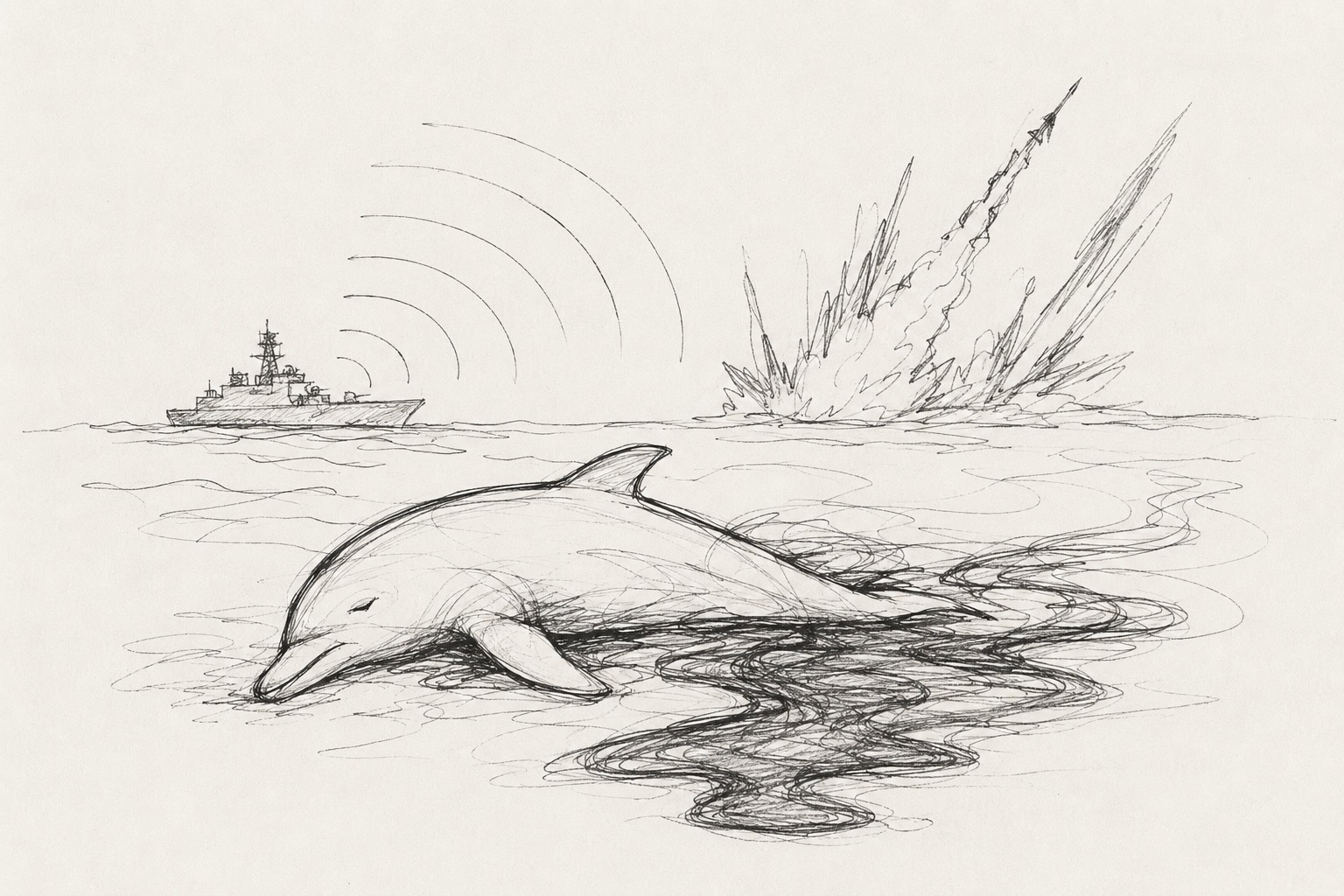
Dolphins depend on echolocation to navigate, communicate and hunt. Powerful sonar used by Russian naval vessels disrupts that natural system, leaving the animals disoriented and unable to find food or avoid danger.
The constant acoustic stress also weakens their immune systems, making them more vulnerable to viruses and infections that normally remain under control. As dolphins struggle to hunt, they begin using up their fat reserves. The toxins stored in that fat are released into the bloodstream, causing further damage to their organs and further weakening them.
Russia has tried to attribute the deaths to disease outbreaks rather than military activity. Marine scientists, however, have consistently rejected those claims, saying the evidence points overwhelmingly to the effects of the war.
Toxic waters
Noise pollution is only part of the problem. Dolphins are also being exposed to chemical contamination from oil spills and other pollutants released during the fighting. Toxic substances can cause severe liver, kidney and pancreatic damage, while explosions, missile launches and sonar drive the animals into heavily polluted coastal waters.
One of the worst environmental disasters followed the sinking of two tankers in the Kerch Strait in December 2024. An estimated 3,000 to 4,000 cetaceans died after fuel oil leaked into the sea. Ukrainian environmental experts say the pollution continued until September 2025 because Russia failed to contain the wrecks, which remain on the seabed.
The Black Sea’s food web is breaking down
From dolphins to plankton
The loss of dolphins affects far more than a single species. As apex predators, they are a key indicator of the Black Sea’s health. When the top of the food chain begins to collapse, the rest of the ecosystem follows.
Damage to coastal infrastructure has increased the amount of nitrogen, phosphorus and nitrates flowing into the northwestern Black Sea. Heavy metals, petroleum products, explosive compounds and debris from missiles and drones have further polluted the water. Scientists warn that these changes are gradually killing plankton and marine algae — the foundation of the sea’s food web.
The aftermath of the Kakhovka dam disaster
The destruction of the Kakhovka Hydroelectric Power Plant in 2023 released more than 14 billion cubic meters of water, carrying huge volumes of pollutants into the northwestern Black Sea. Scientists say the environmental damage is no longer confined to Ukraine. Its effects are already spreading to the Sea of Marmara, the Aegean Sea and the Mediterranean, making Russia’s war an environmental threat far beyond the Black Sea.
What it will take to restore the Black Sea
Restoring the Black Sea will require coordinated action on several fronts:
- Clear the Black Sea of naval mines and other explosive remnants of war.
- Conduct a comprehensive international environmental assessment of marine ecosystems.
- Establish a long-term monitoring program for dolphin populations, fish stocks and other marine species.
- Expand marine protected areas and restrict economic activity in the hardest-hit regions.
- Remove oil, toxic chemicals and other pollutants from affected waters.
- Document the environmental damage to support future international legal proceedings and claims for reparations.
Russia must be held accountable for ecocide
Dead dolphins have become one of the most visible symbols of the environmental cost of Russia’s war. Much of the damage, however, remains hidden beneath the surface and may not be fully understood until scientists can once again study the entire Black Sea without the restrictions imposed by the war.
Only then will it become clear how profoundly the conflict has altered one of Europe’s most important marine ecosystems. What is already clear, however, is that Russia’s invasion is destroying natural systems that millions of people depend on. That is why ecocide should stand alongside the destruction of cities and civilian infrastructure as part of Russia’s international responsibility for the war.