Mines below, drones above: Sumy’s farmers stay put
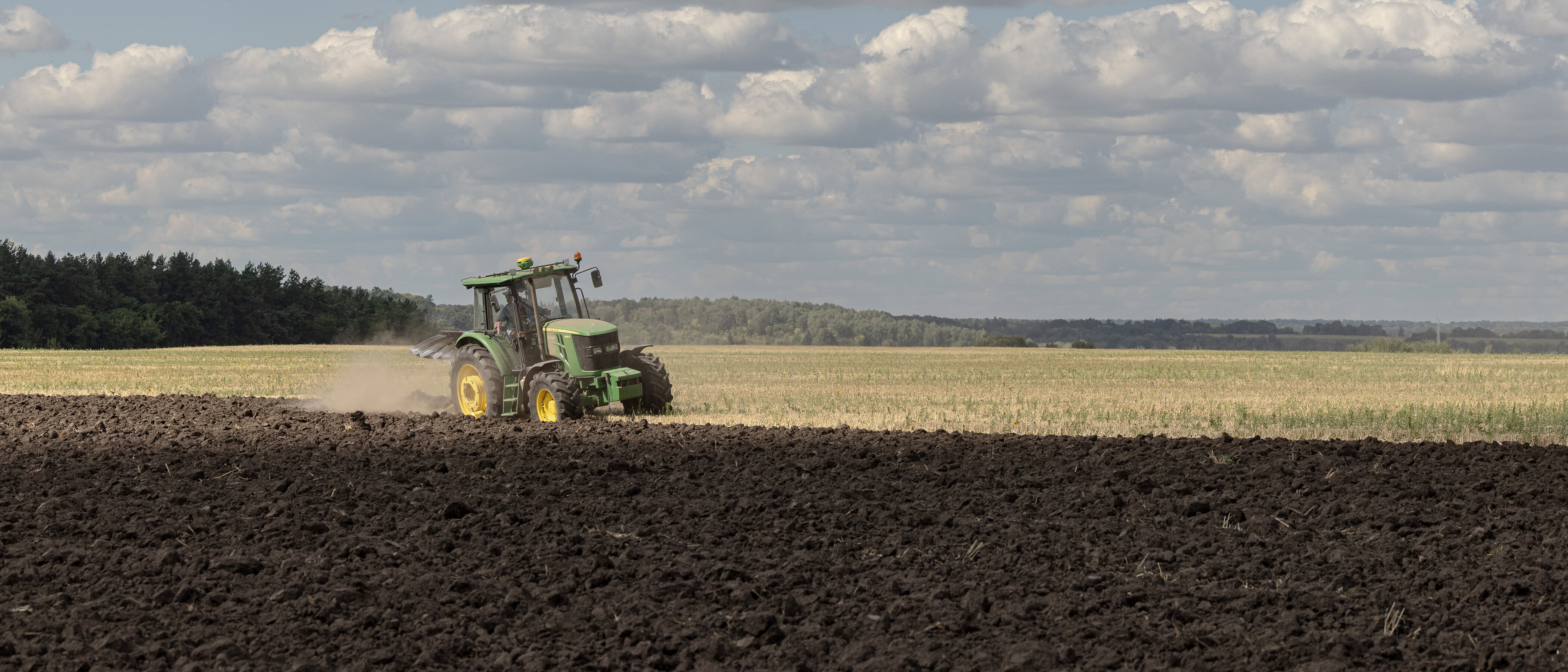
A tractor blown up by a mine, a combine hit by an FPV drone, and grain storage in ruins after a bombing: this is the current reality for the farmers of Sumy region, where each trip to the field could be the last. They are fitting their tractors with drone detectors, keeping their generators on standby and lending each other equipment. Frontliner talked to the farmers about why they are staying on their farms despite the enormous risks.
Chickens run around the yard and peck at grain shining with metal debris. Mangled walls and twisted roofing sheets are all that remain of a warehouse that stood here a few hours ago. A jet-propelled Shahed drone struck it on an August night in 2026. Farm machinery battered by the blast wave now stands beside the ruined warehouse. Close by is a damaged car the owners had planned to give to the military for evacuating the wounded. Farmer Tamara Kabliuk points to it. Russian troops already shot at this car once, in 2022. Farmer Tamara Kabliuk points to it. She and her husband Anatolii were driving it to get flour when Russian soldiers opened fire on them. Her husband was wounded four times in his stomach and took a bullet below his knee. Tamara was hit in the arm and hip. They recovered and fixed the car, and now it was damaged again.

This is the fourth strike on the Kabliuks’ farm. Earlier, drones had mostly hit the pea field, with one landing near the orchard. This time, they hit the buildings. The farm is not big at around 170 hectares. They grow wheat, peas, sunflowers and corn. A few years ago, there were three employees; with the men gone to war, only one woman working security remains.
Of course, the farmers didn’t stop working after the full-scale invasion. Tamara’s husband Anatolii used to run the farm, but he is now retired and rarely gets out of bed. At the start of the full-scale war, he was head of the regional association of farmers. Members called him to ask whether they should keep sowing. He told them that they needed to work in spite of the bombings, because if they didn’t, people would not have bread.

For Tamara, the farm represents more than 25 years of the family’s work. They bought machinery on credit, with the whole family working together to expand the farm step by step. Even though she is now retired, she comes to clean and look after the farm:
This is our farm, our family.
We have to work here,

Now, Tamara is wondering how to salvage the surviving grain that her family put so much work into. They will have to pick out the debris by hand and hull the grain, but even cleaned grain may be rejected because of metal particles. Tamara worries that even if she can sell it, the price might be too low to cover expenses.

A village near the front
Two villages away, across the Seim River and only 12 kilometers from the front line lies the village Volyntseve, where 74 people live currently. Bread and grocery trucks rarely go there, and there are no fuel deliveries. Their almost only support is Volodymyr Karpenko’s farm. He bought generators to help his neighbors; when there is no electricity for several days in a row, he starts up the generators in three locations so that they can charge their telephones and lanterns. Karpenko also delivers bread to the village store.

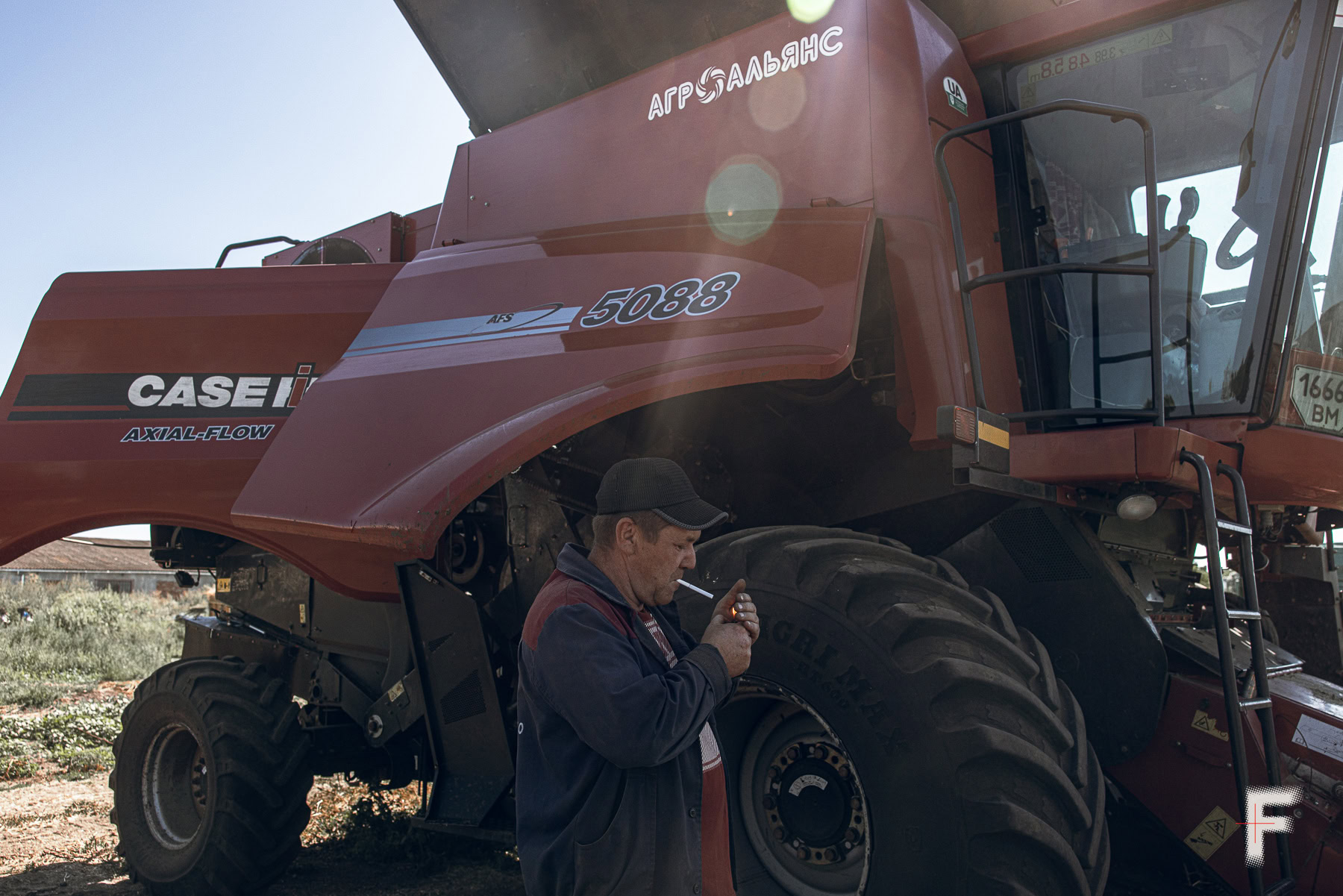
Karpenko’s farm employs 12 people on around a thousand hectares of cultivated land. In the space of just two days, he lost six vehicles to direct hits and had the roofs of five sheds damaged by drone debris. One FPV drone struck directly the cabin of a parked tractor. A few weeks ago, one of his drivers was injured while delivering lunch to the farm’s employees. He noticed the drone and took evasive action; the drone landed in the road, but the blast wave broke the side window and cut his ear. He got medical assistance and was back to work the next day.
“He’s one lucky duck,” he says of his colleague.
Despite the attacks, Karpenko isn’t leaving Volyntseve. He says he can’t abandon the people who gave him their land shares and didn’t leave him.
They didn’t leave me
when things were tough for me.
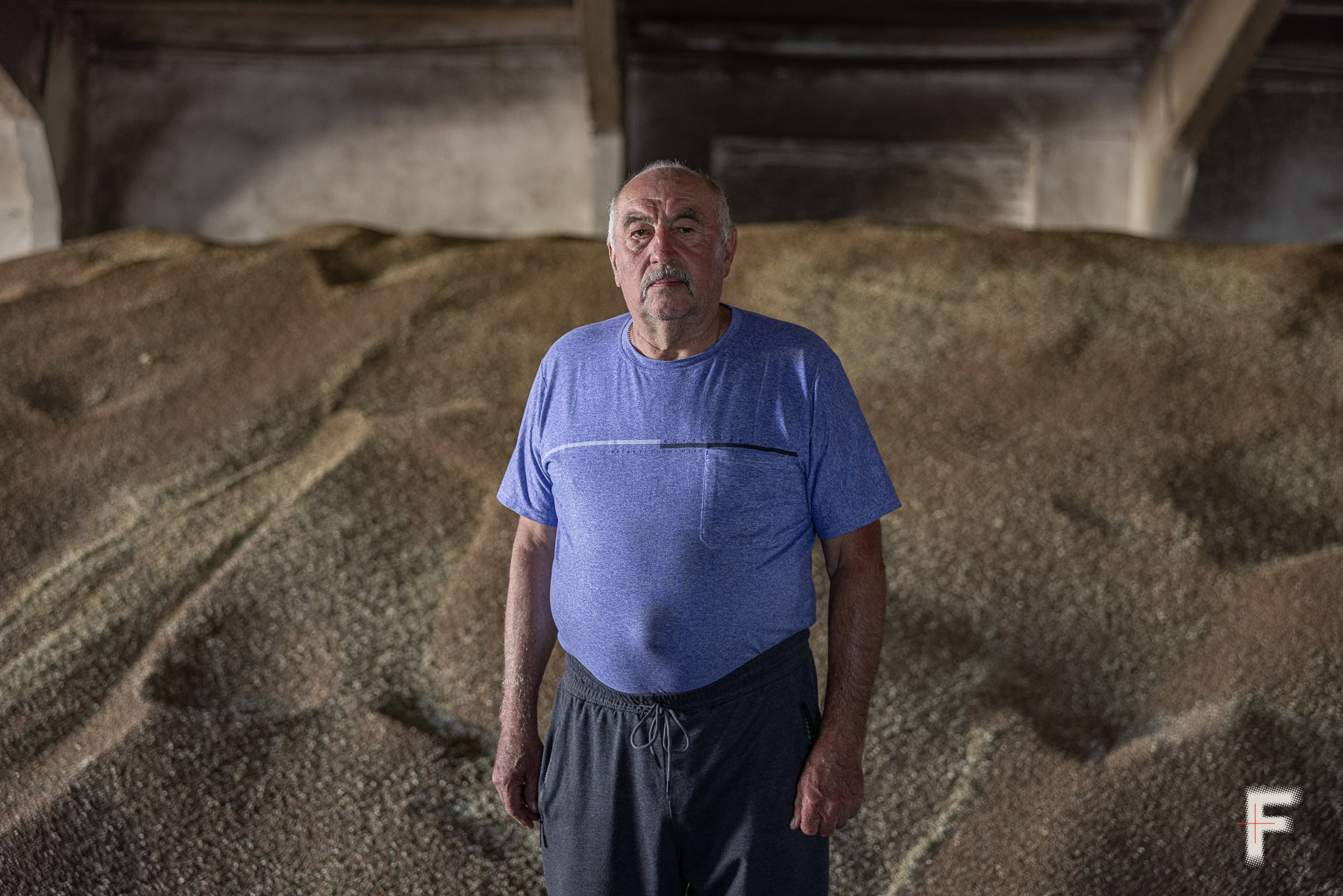
“I can’t leave them. They didn’t leave me when things were tough for me. Now I can’t leave them, because they haven’t left either,” Karpenko says, adding that one day, the war will end, and he doesn’t want to come back and have to explain why he left when the others didn’t.
To protect himself and the people of Volyntseve’s safety, Karpenko bought several drone detectors. But when they didn’t always work, he bought 14 two-way radios and distributed them to his neighbors. Now, when someone spots a drone, they can immediately notify the others and give them time to react.
Constant danger overhead
Not every threat can be avoided, as was the case recently on Yevhenii Fintsev’s farm. There, driver Volodymyr Romanenko was wounded while tilling a field when his tractor hit a mine. He was left shell shocked:
There was an explosion, I can’t hear anything, I lost consciousness,
people are talking to me, but I can’t hear them,
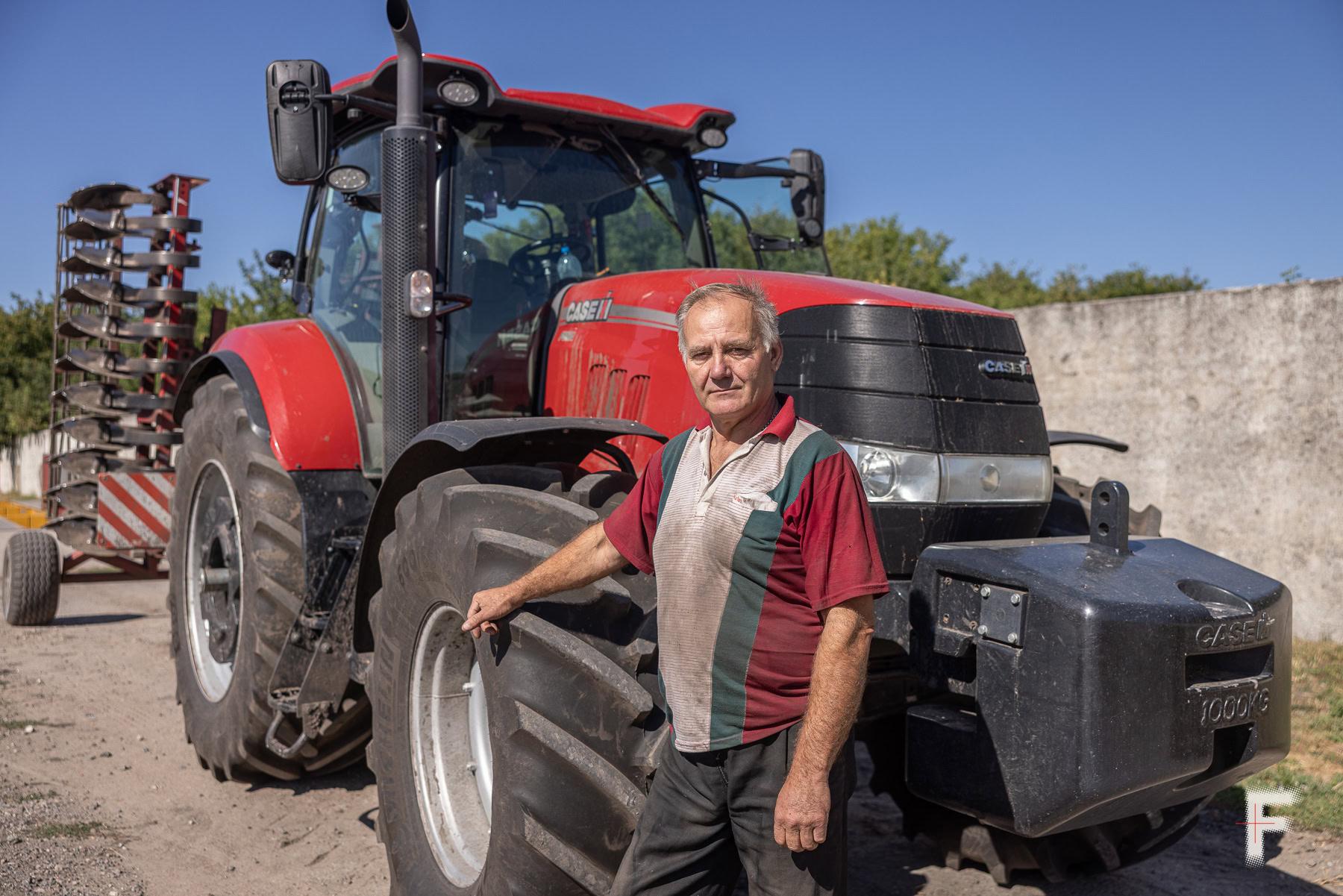
But Romanenko doesn’t plan to leave the job he’s had for 11 years.
“Where would I go?” he says.
Farm owner Yevhenii Fintsev advises his employees to leave their vehicles and run if they see a drone.
“It’s just metal. Human lives are more important,” he says.
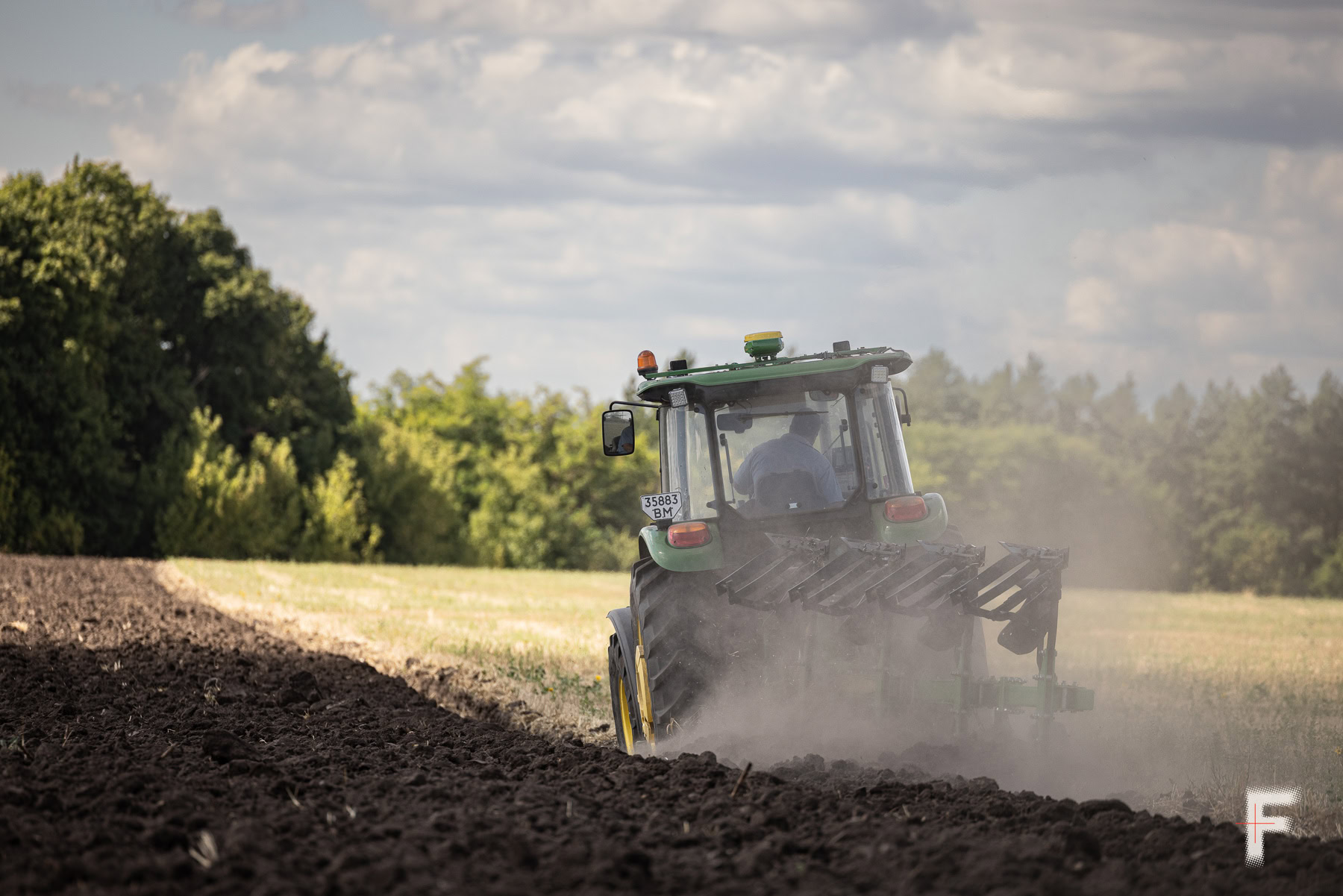
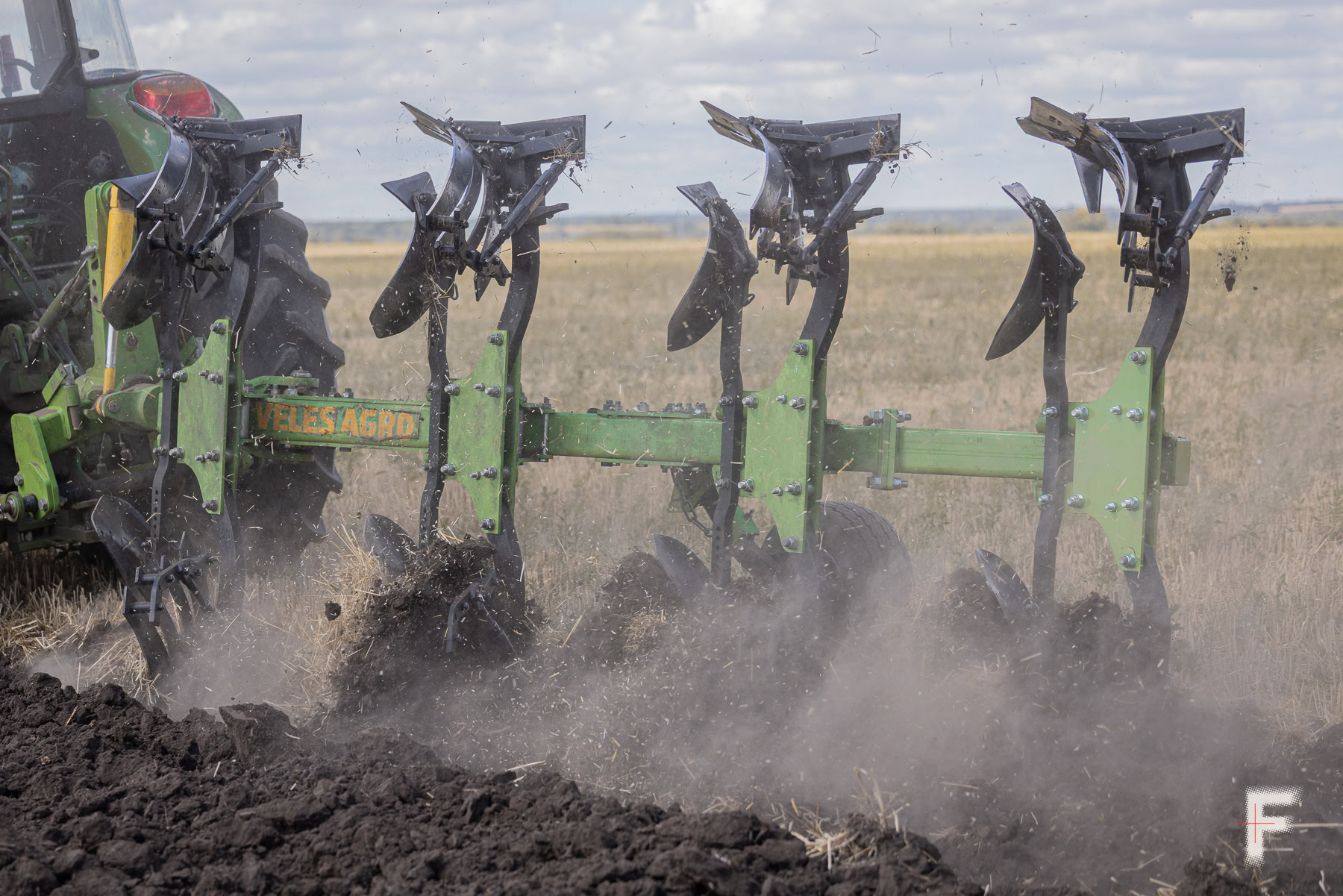
Fintsev has worked on the family farm since 1991, when he was in ninth grade. He’s grown various crops: rapeseed, barley, wheat, soybeans and corn. In 2020, he took over the farm and expanded it from 25 hectares to 600. In 2026, he didn’t cultivate a quarter of that land; those fields are across the Seim River near the border with Russia. When the workers went there for spring plowing, FPV drones started circling overhead. Two followed the tractors the entire day but didn’t strike. The next day, the workers decided not to go out past the Seim, leaving 150 hectares inaccessible. They continue to work on the remaining land, as Fintsev says, “on a wing and a prayer.”

How the farmers adapt
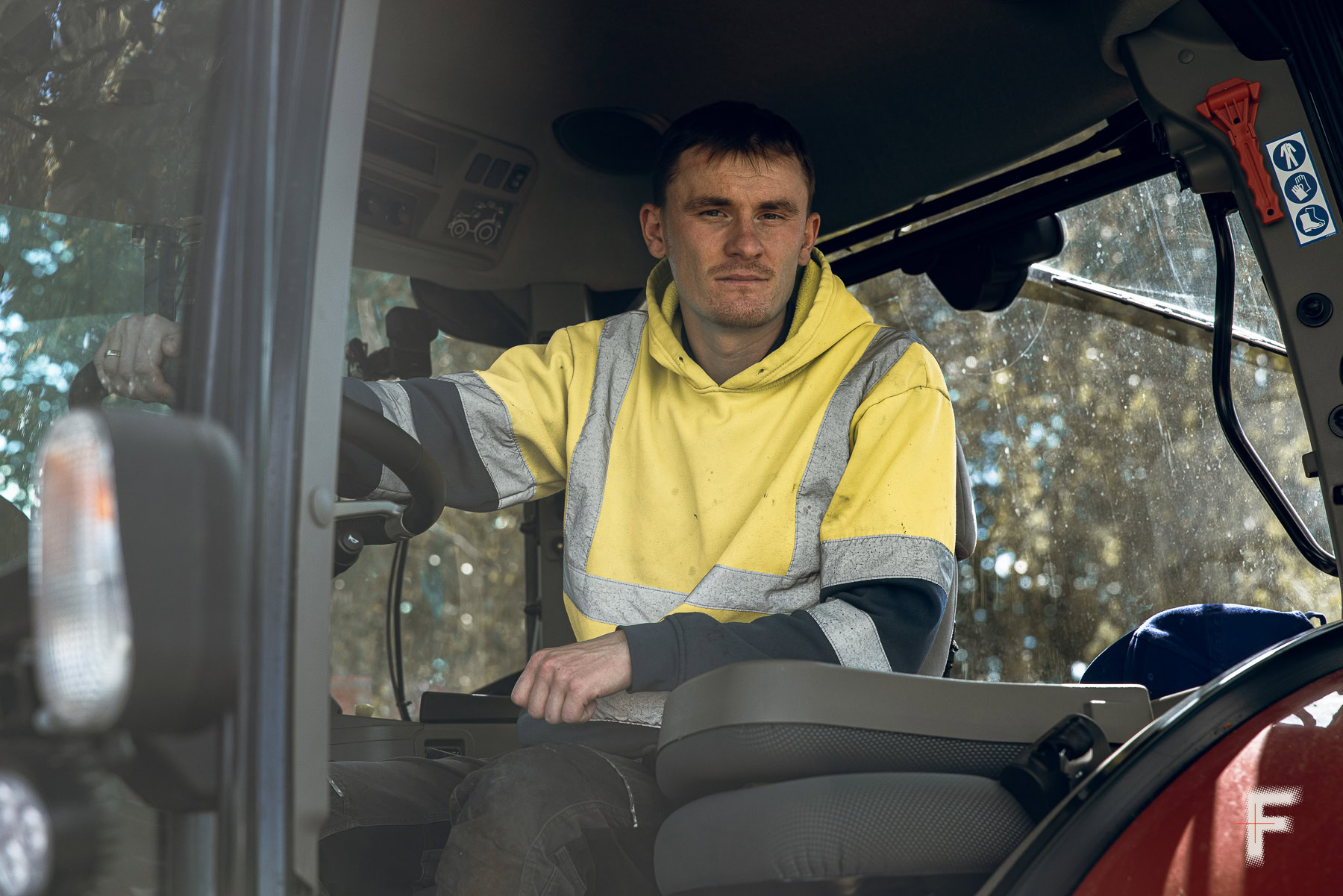
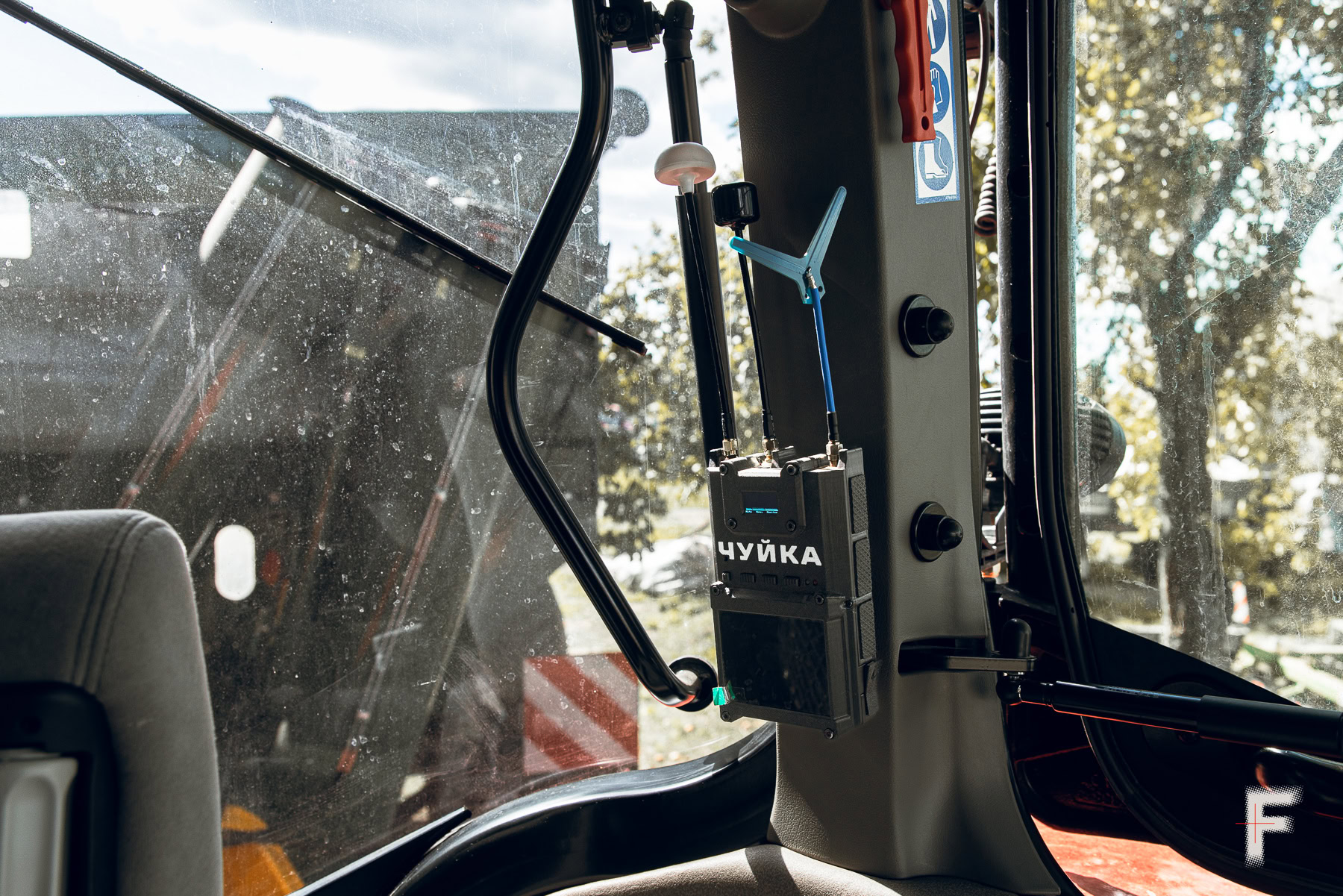
FPV drones are one of the main threats for farmers near the front. Even a bird flying can give workers pause, says farmer Oleksandr Mishchenko. Still, the work doesn’t stop. They have to collect the harvest, pay rent to the owners of the land shares and pay for seed and fertilizer. Now, tractors on Mishchenko’s farm are fitted with drone detectors.
-
Oleksandr Mishchenko in his tractor, Sumy region, Ukraine, Aug. 24, 2026. (Danylo Dubchak/Frontliner)
-
Mishchenko’s tractor always has its “Chuyka” drone detector. Farmers working near the front are potential targets for attack drones, Sumy region, Ukraine, Aug. 24, 2026. (Danylo Dubchak/Frontliner)
The worst for Mishchenko’s farm happened a year ago. First, two Shahed drones hit storage buildings, damaging equipment and grain. Then, the Russians used a missile to destroy what the drones couldn’t.
After that, Mishchenko had to change his approach to storing grain. To ensure that one strike wouldn’t wipe out his entire harvest, he needed not to keep it in one place. He now uses polymer sleeves to create multiple small storages; he got them along with the packing equipment from a charitable foundation. Now, the grain is spread out and can be moved from one place to another without taking it out of the sleeves.

Another change is energy independence. Grain can’t wait for the power to come back on after a blackout. Corn has to be dried quickly or it can spoil in a matter of hours. For a small farm like Oleksandr’s, solar panels, inverters and generators suffice.
“We can function as long as we have fuel,” Mishchenko says.

Oleksandr adds that another important aspect has been the farmers coming to each other’s aid. His small vehicle would have to make ten trips to move his grain, while his neighbor’s semi truck can haul it in one go. They swap equipment and favors: one offers their vehicle for hauling, the other equipment for drying or storage. This allows the farmers to save fuel, time and money. Helping each other is one more way to hold on to farms where work keeps getting harder.

***
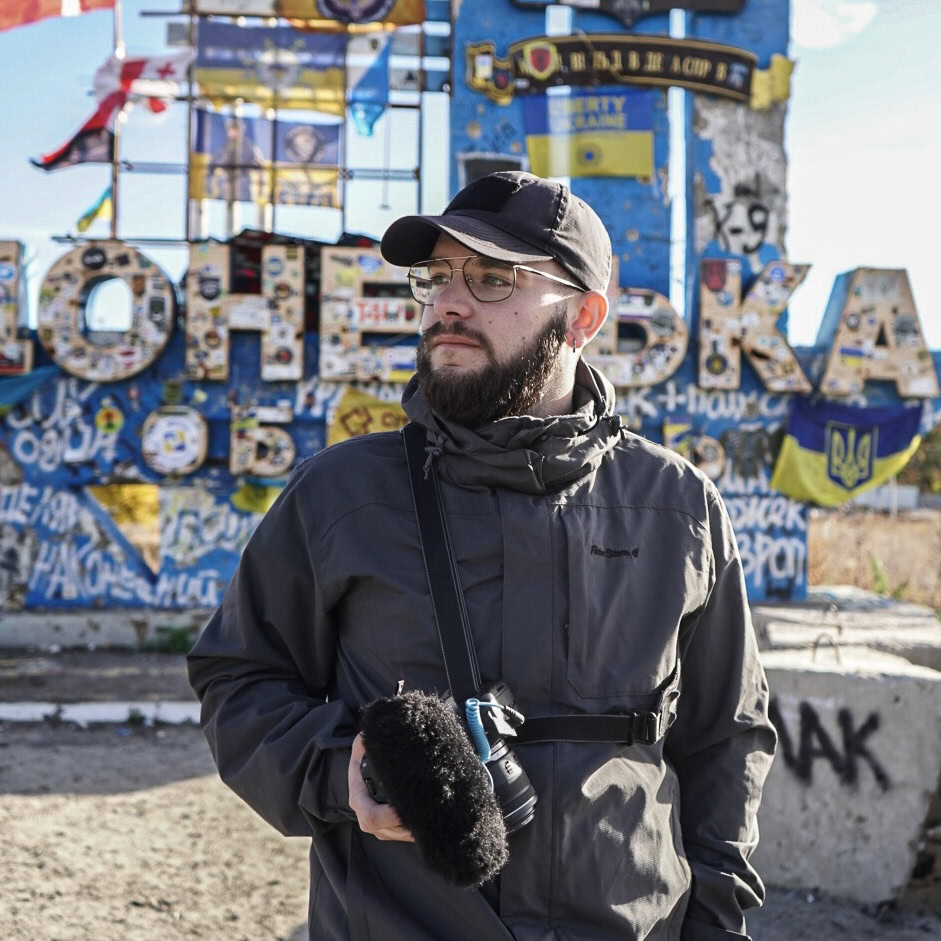
What impressed me most was how frank, kind and united the farmers were. I didn’t expect to learn that every farm we visited had already been hit or damaged. I’ll always remember the grain – beautiful, but speckled with shards of Russian metal. This trip made me realize that for these farmers, work isn’t just a way to earn a living – it’s a way of life they do not want to lose.
Every story starts with your support. Join the Frontliner community so we can keep up documenting Russia’s war against Ukraine from the front line and the rear.
***