A fresh grave behind the house: Line of contact nears Dobropillia, city isolated
It's no longer possible to reach Dobropillia by any means of transportation, only on foot. The roads into the city are under fire control of Russian drones. The streets are tangled with a web of fiber optic cable, winding around trees and bushes, hanging from rooftops, and lying in coiled clumps in the middle of the roads. The silence is broken by the buzz of drones, the whistle of guided bombs, and artillery fire, forcing people to quicken their pace, dash across open stretches, and take cover under tree canopies. Reaching Dobropillia meant walking about 30 kilometers. Frontliner journalists succeeded only on their second attempt, and found out why Russian forces are trying to break through here specifically, and how the city, once known as the pearl of Donbas, is living now.

The Russians are now far more focused on Dobropillia
than they were a month ago,
As recently as spring, it was still possible to drive into Dobropillia by armored vehicle. Logistics grew harder in early June, when Russian forces reinforced this stretch of the front with additional crews from the Rubicon and Sudny Den unmanned systems units.
Military officials say the deployment of these units signals that Dobropillia has become one of the main axes of the Russian advance.
Frontliner’s reporters reached the city only on their second attempt, traveling with soldiers from the National Guard’s 15th Operational Brigade Kara-Dah. The first trip was canceled at the last moment: the armored Novator vehicle meant to carry the group to the route’s starting point could not leave the “kill zone” because of enemy drones in the sky.
“The logistics changed within two months. Now everything is on foot. They drive the group to a certain point, and then the real ordeal begins. Even in what’s considered the rear, vehicles keep getting hit. Drones are reaching deeper and deeper. Most people are wounded on the road, from FPV drones, Molniya, or Gerbera drones. The risks are enormous. The Russians are now far more focused on Dobropillia than they were a month ago,” says Denys Tsyba, an accompanying press officer with the National Guard of Ukraine’s 15th Operational Brigade Kara-Dah.

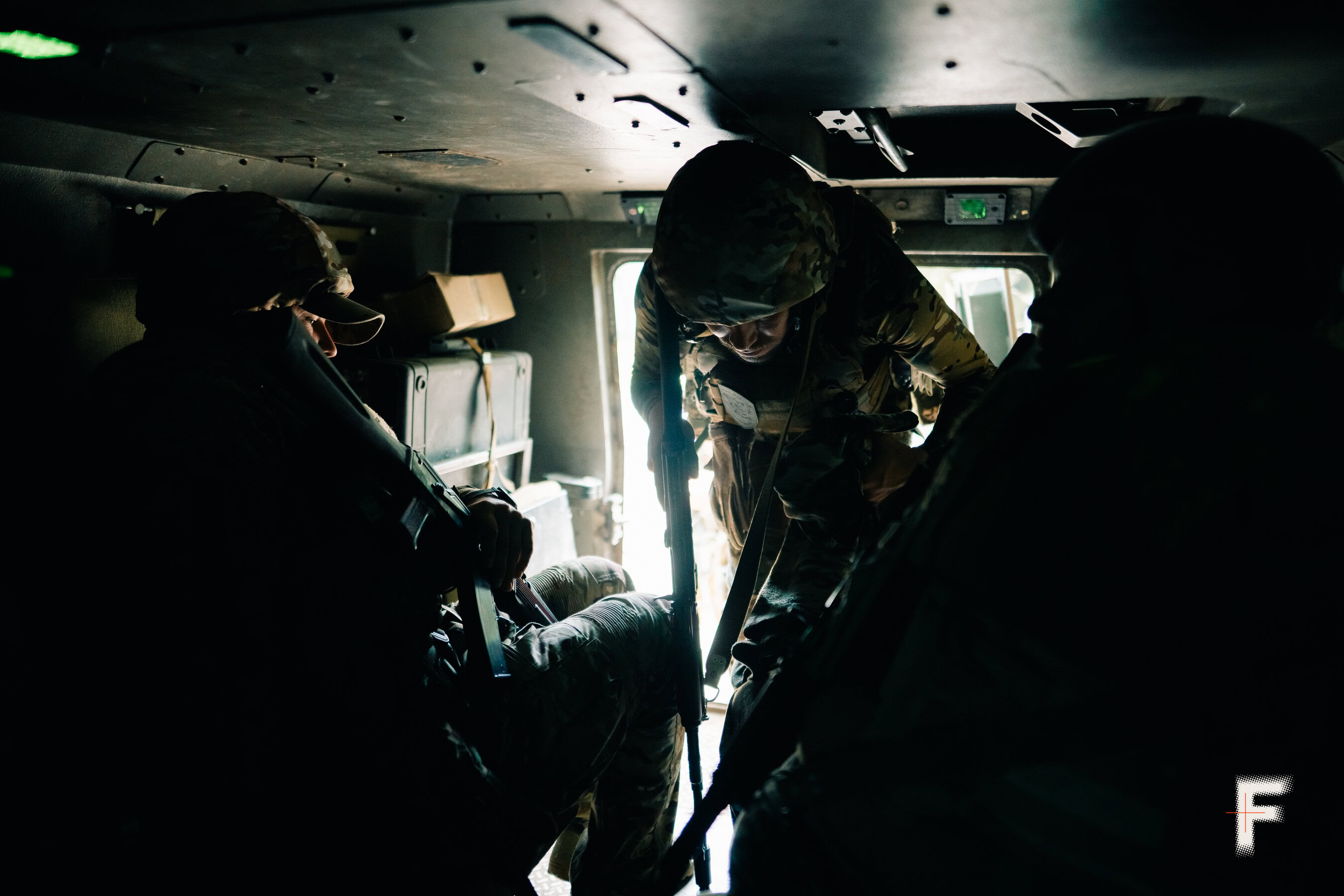
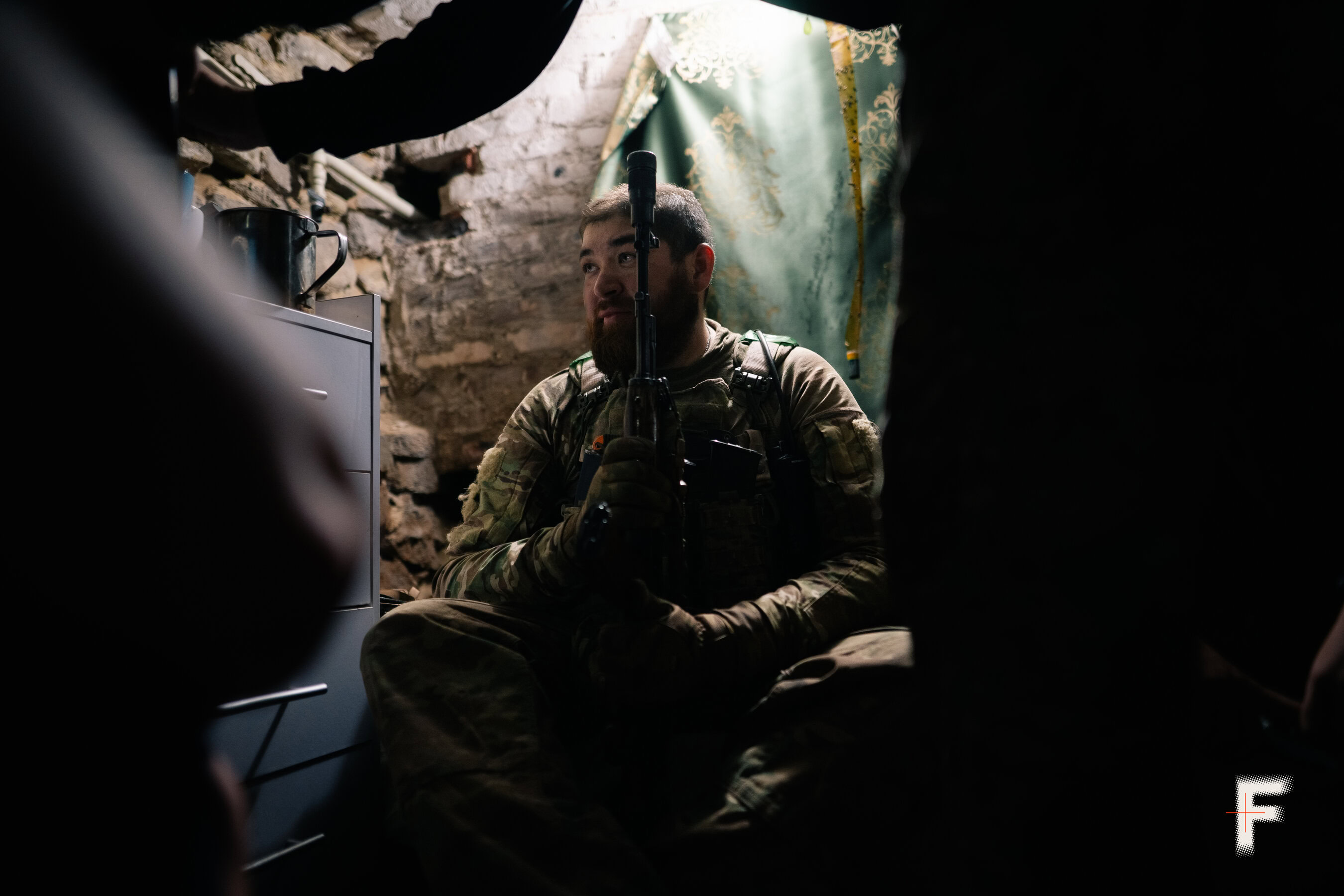
The route into the city was made alongside a group of infantrymen. For this unit, Dobropillia remains a transit point, used for rotations and for delivering supplies and ammunition. Preparation takes about an hour: soldiers load the armored vehicle and put on their gear. Their ammunition and personal belongings add about 30 kilograms, which the infantry must carry on foot to reach the positions where they will hold the defense.
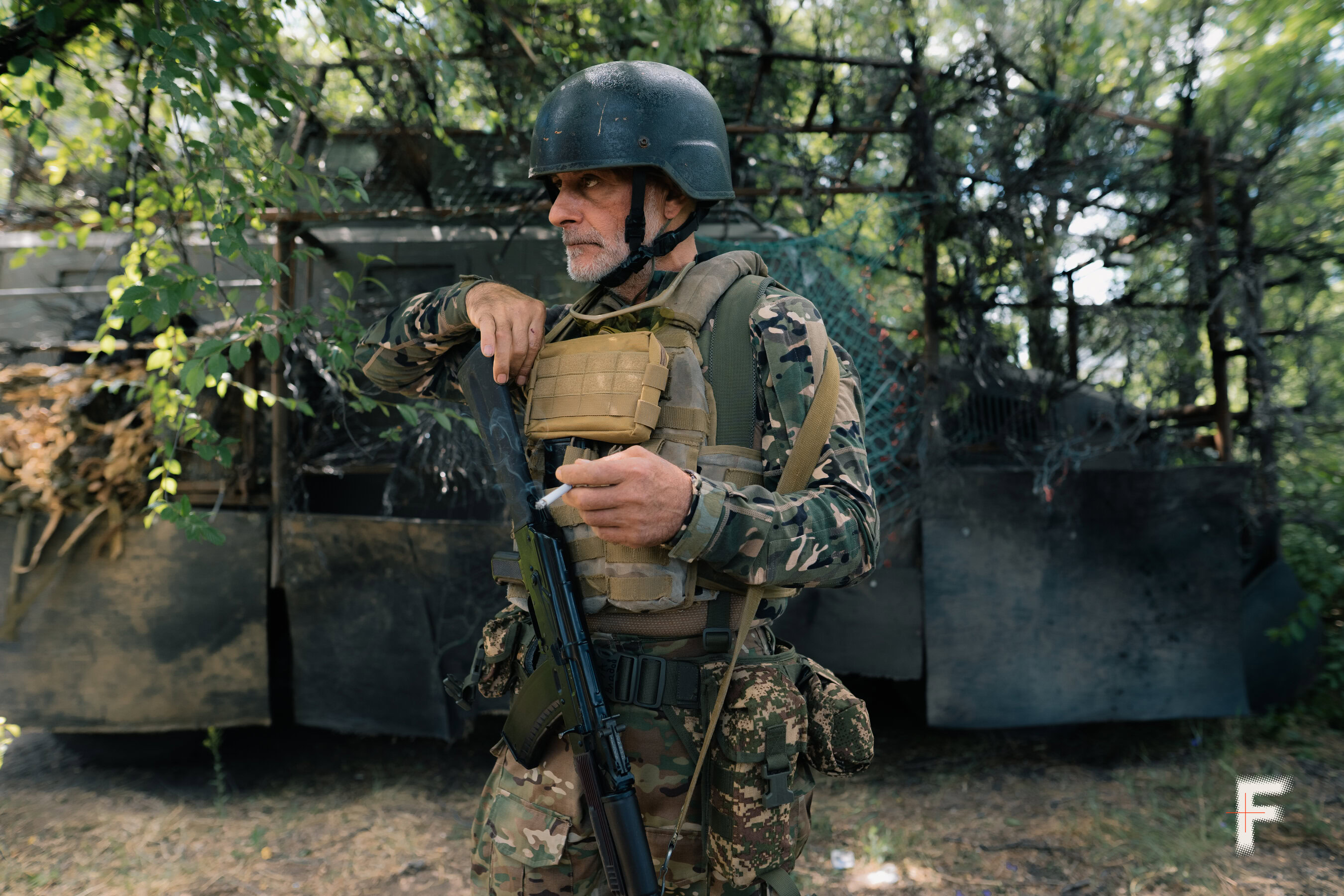
‘It’s very hard to move with that much weight. Your back, legs, joints, it all takes a serious toll on your health. Sometimes you have to make several trips because of how much ammunition there is. But once you get into it, your body gets used to it,” says a soldier with the call sign “Fartovyi” (Ukrainian for “lucky”).”
In brief conversations, the soldiers open up about their anxieties. For some, this is their first combat mission as infantrymen. Others are most anxious about the road itself, having already been hit by enemy drones and wounded. They don’t go into detail. With a smile, they say the main thing is to focus on the good.
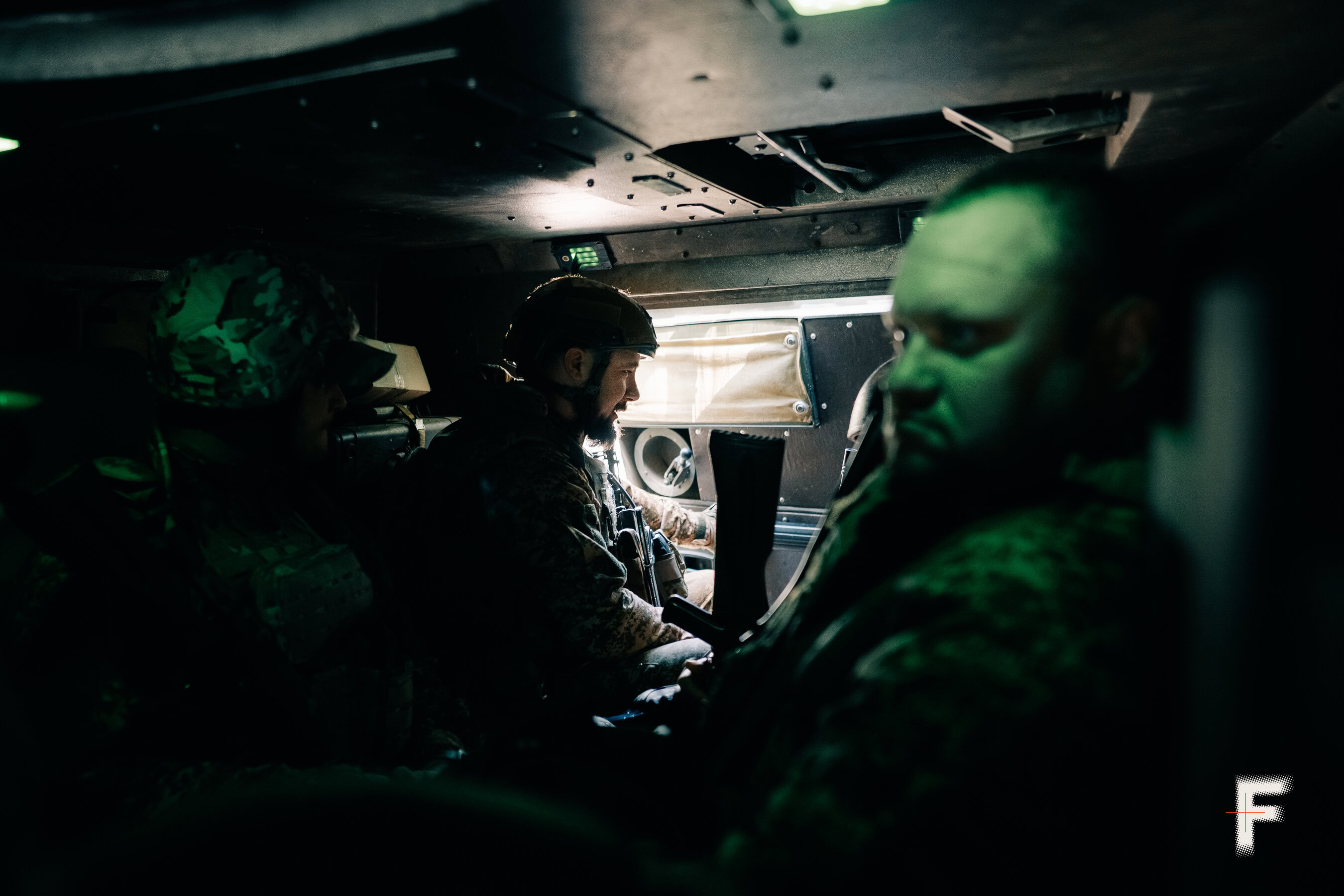
The Novator armored vehicle set off at high speed. Outside, it’s 33 degrees Celsius. Inside, it’s even hotter.
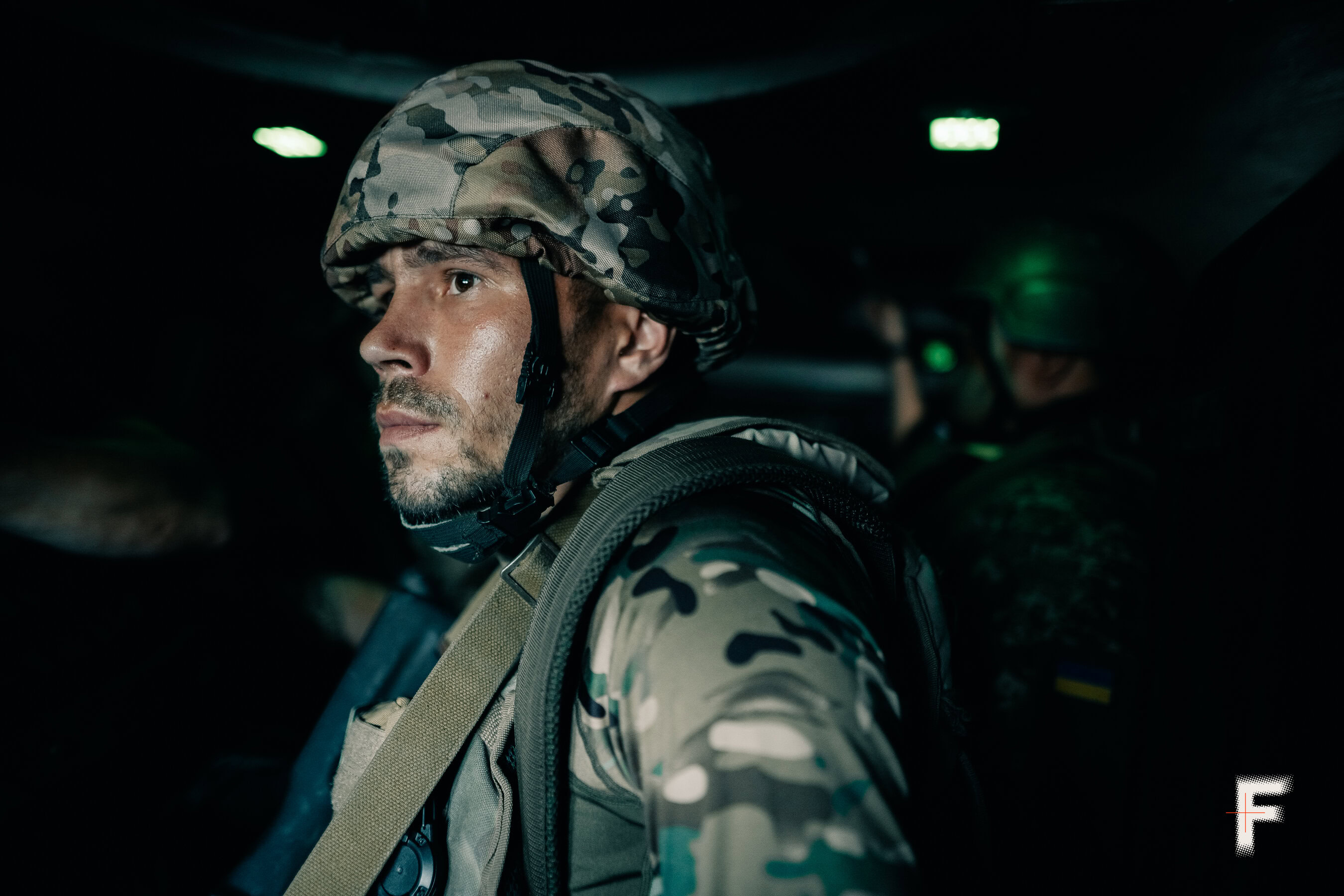
Line of contact is only six kilometers from Dobropillia
The situation around Dobropillia sharply escalated on Aug. 11, 2025, when the Dobropillia bulge formed on the Pokrovsk axis.
Russian forces actively used infiltration tactics: small sabotage and reconnaissance groups searched for weak points in the defense and slipped into the rear of Ukrainian units. This allowed the enemy to approach a number of settlements near Dobropillia, including the villages of Zolotyi Kolodiaz, Kucheriv Yar, and Vesele.
If they capture Dobropillia,
it opens the way to Pavlohrad and Kharkiv.

In response, Ukrainian forces carried out counteroffensive operations and mop-up actions. The enemy was pushed back, and control over the settlements was restored.
Having failed to achieve the desired result on the ground, the Russians intensified their control over the sky. After the fall of Pokrovsk and Myrnohrad, Dobropillia became the next major target of the Russian offensive.
“For them, it’s a very tempting prize. There’s a major transportation hub here. If they capture Dobropillia, it opens the way to Pavlohrad and Kharkiv. Right now the Russians are about six to seven kilometers from the city. The closest points are Bilytske and Novyi Donbas. They’re already seen there, and not in small numbers. They keep trying to get closer to Dobropillia, but so far without success,” explains the platoon commander of the Kara-Dah unit, call sign “Mongol.”
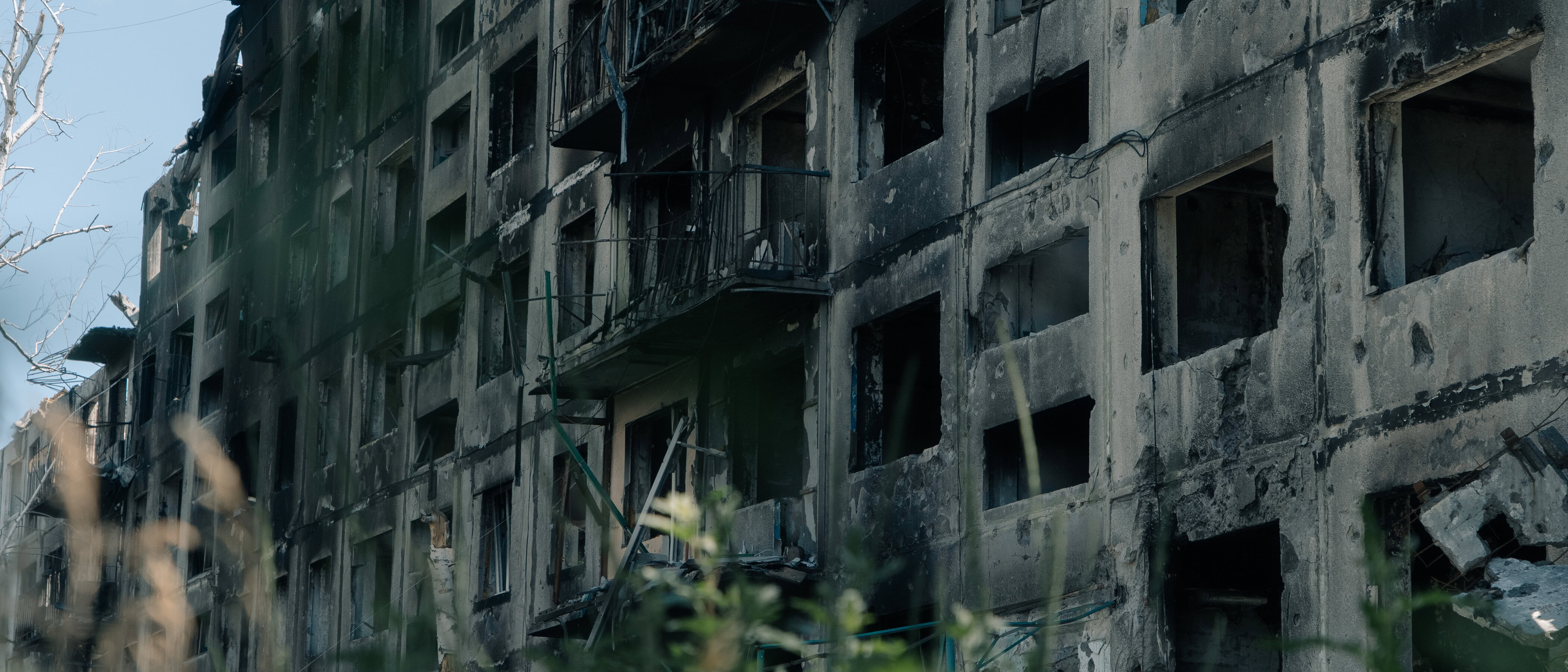
Movement through the city takes place under tree canopies and along the walls of burned-out high-rises. Soldiers remind everyone to watch their step: Russian forces remotely mine the streets, disguising explosives as power banks, packs of tissues, and other everyday items.

On Dobropillia’s central square, despite the massive shelling, a stele reading “I love Dobropillia” has survived, though with several letters knocked out. Behind it stands the Palace of Culture, destroyed by guided bombs. The road leading to it is riddled with mines, making it impossible to approach.
A point of invincibility
Fiber optic cable glints in the sun, wrapping around the city’s streets. In the courtyards, roses, one of the symbols of the Donetsk region, are still in bloom. Against the backdrop of blackened buildings, they’re a reminder of peaceful, prewar life.

Natalia Huzenko, a resident of Dobropillia, also remembers that peaceful, prewar life. She’s originally from Kropyvnytskyi. She first came to the city in 2023 as a volunteer, and later decided to stay.
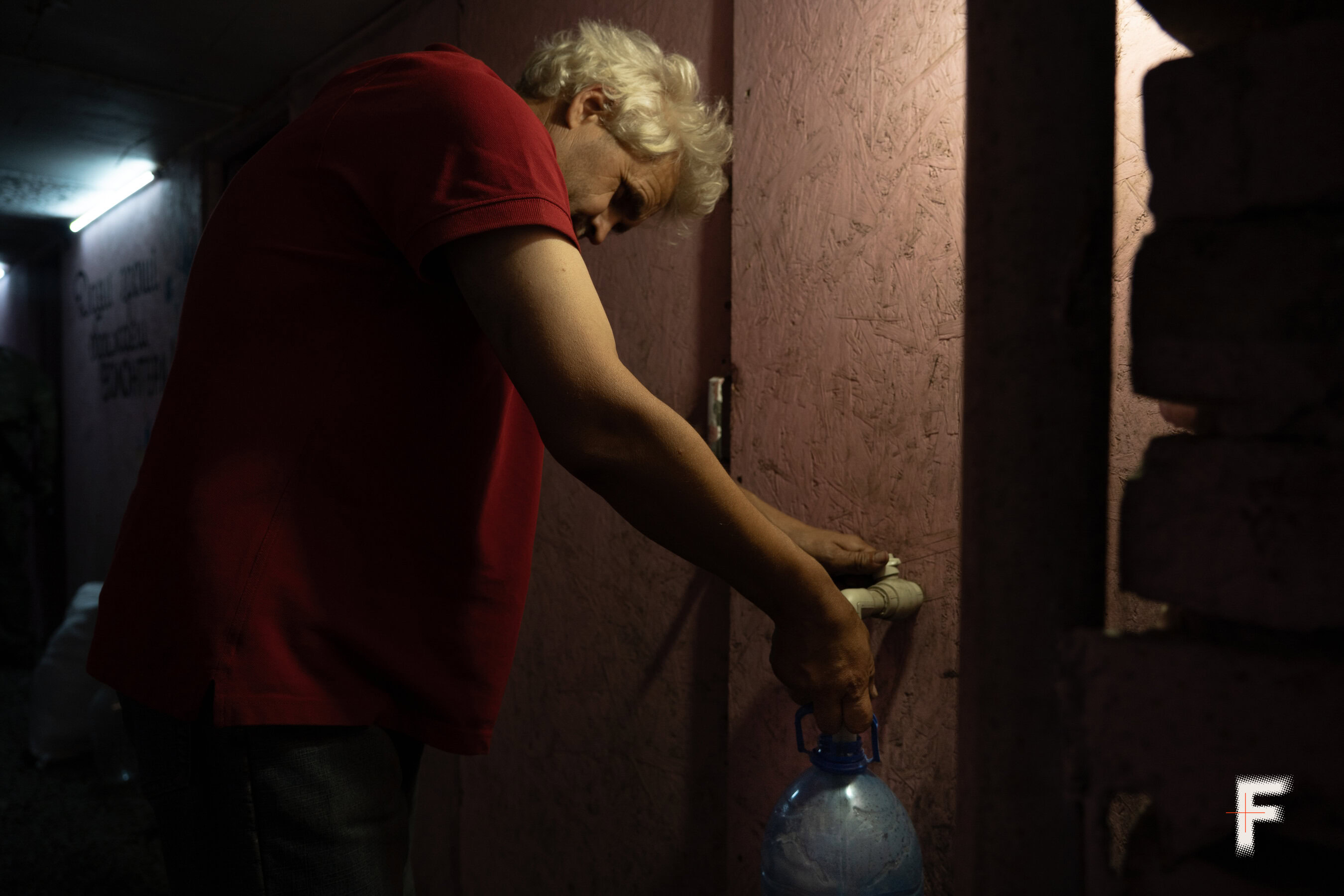
We met Ms. Natalia at the “Point of Invincibility,” set up in the basement of one of the residential high-rises. Here, people gather who, despite heavy, ongoing shelling, have decided not to leave the city cut off from the outside world.
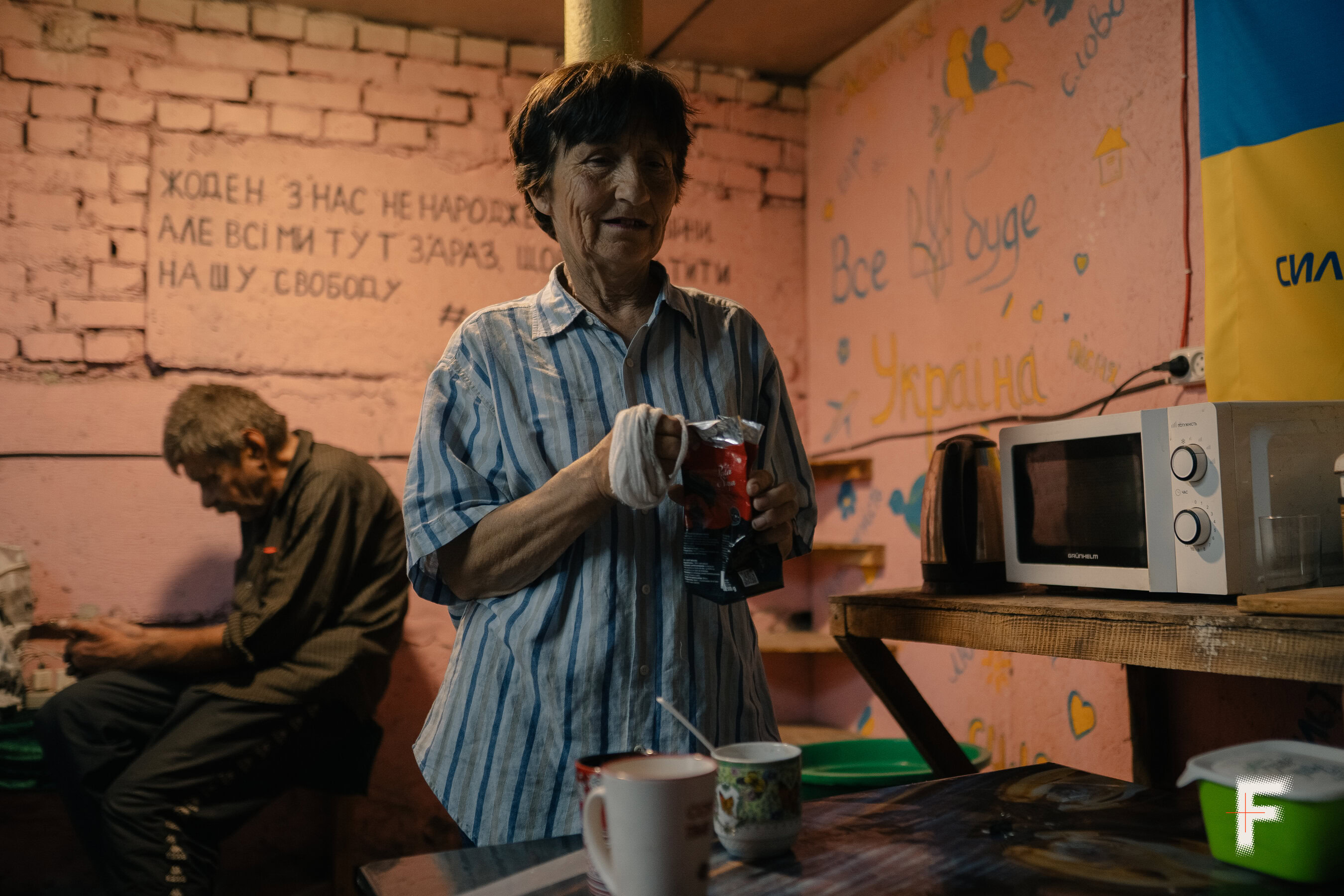
“We come here to shower, to do laundry. We gather together, brew coffee, play board games. We pray for peace, for our boys, and we believe in victory,” Natalia says.
She doesn’t want to evacuate, though she admits the security situation is worsening every day.
“My children left for Poland. I stayed to look after the house. There are no windows left, but I still come by and sweep the floor,” she says.
Her neighbor Yurii Shcherbakov continues the conversation. He calls Natalia his “sister in faith,” as they both consider themselves part of the Christian community.
“I haven’t been wounded this whole time. I’ve walked under Shaheds and under drones. They buzzed right above me. But God protected me. We live with hope that everything will be fine and peace will come,” he says.
I don’t plan to leave.
I pray the Russians won’t enter the city.
Yurii remains in Dobropillia with his mother, who has limited mobility and requires constant care.
“We’re originally from Illinivka, near Kostiantynivka. We moved to Dobropillia a year ago, when life here was still bustling. I had friends who offered us a house for free. We didn’t expect the situation to change so quickly. I rely only on God. I believe He will protect us. I don’t plan to leave. I pray the Russians won’t enter the city,” he says.
‘What will happen to people if I leave?’
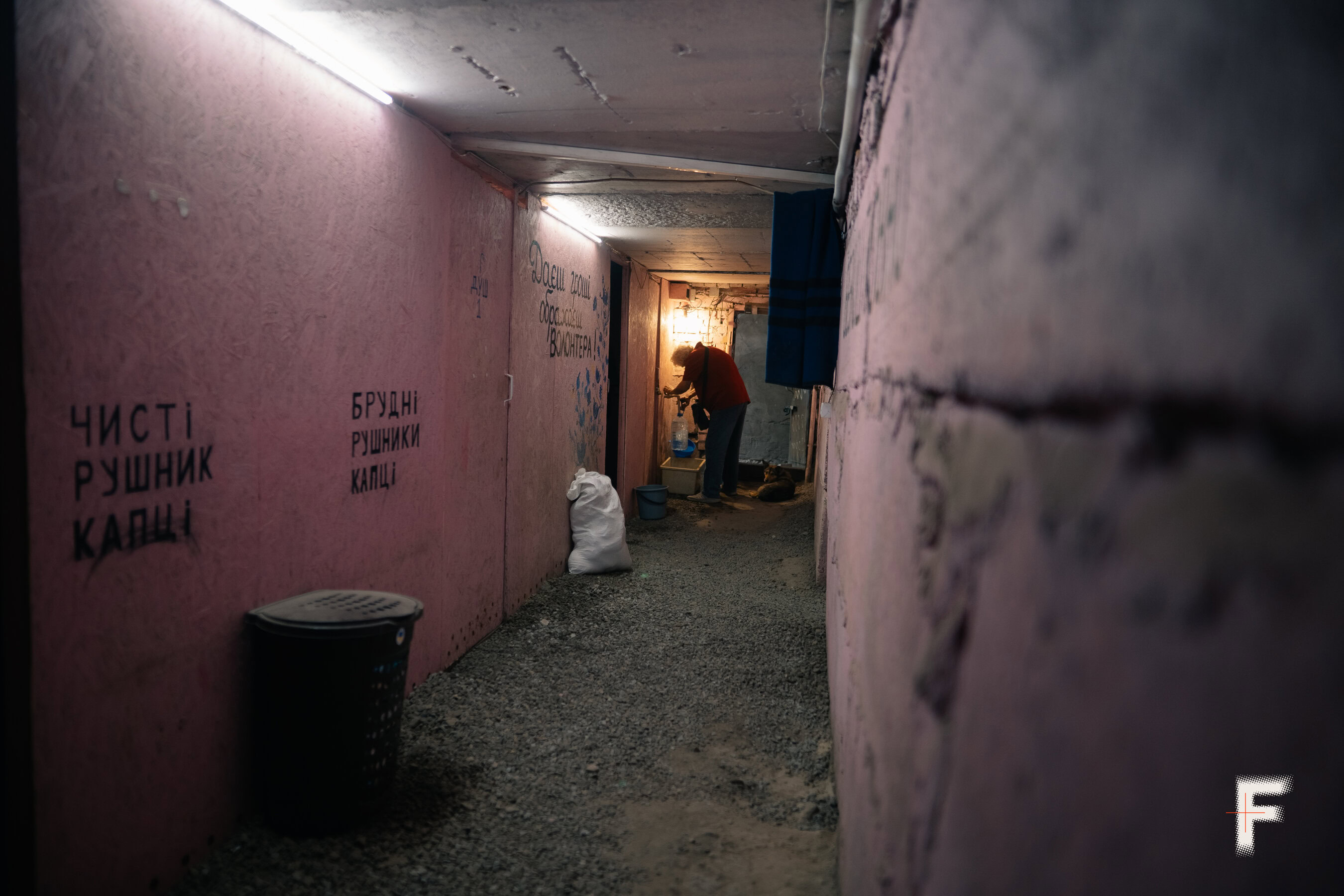
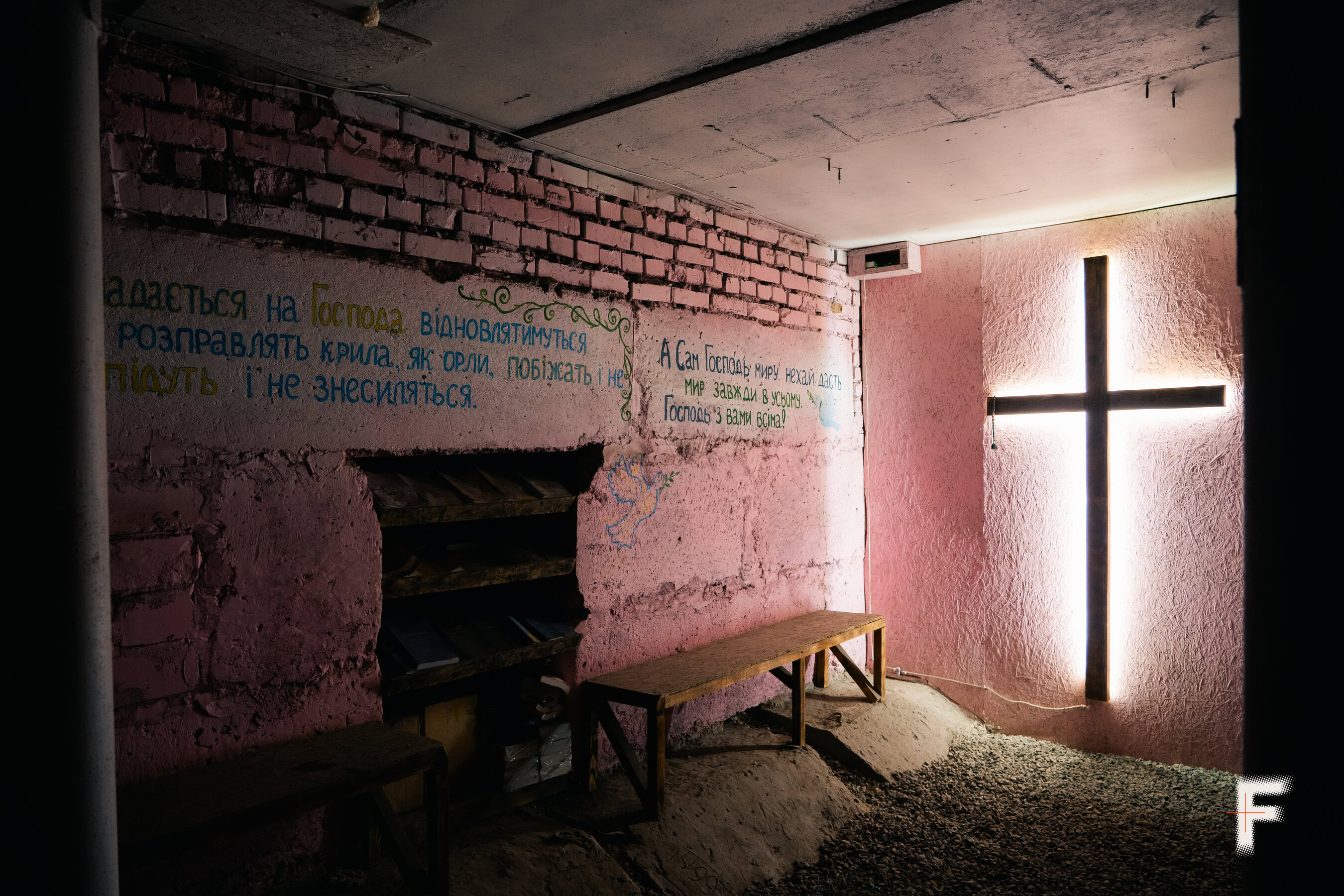
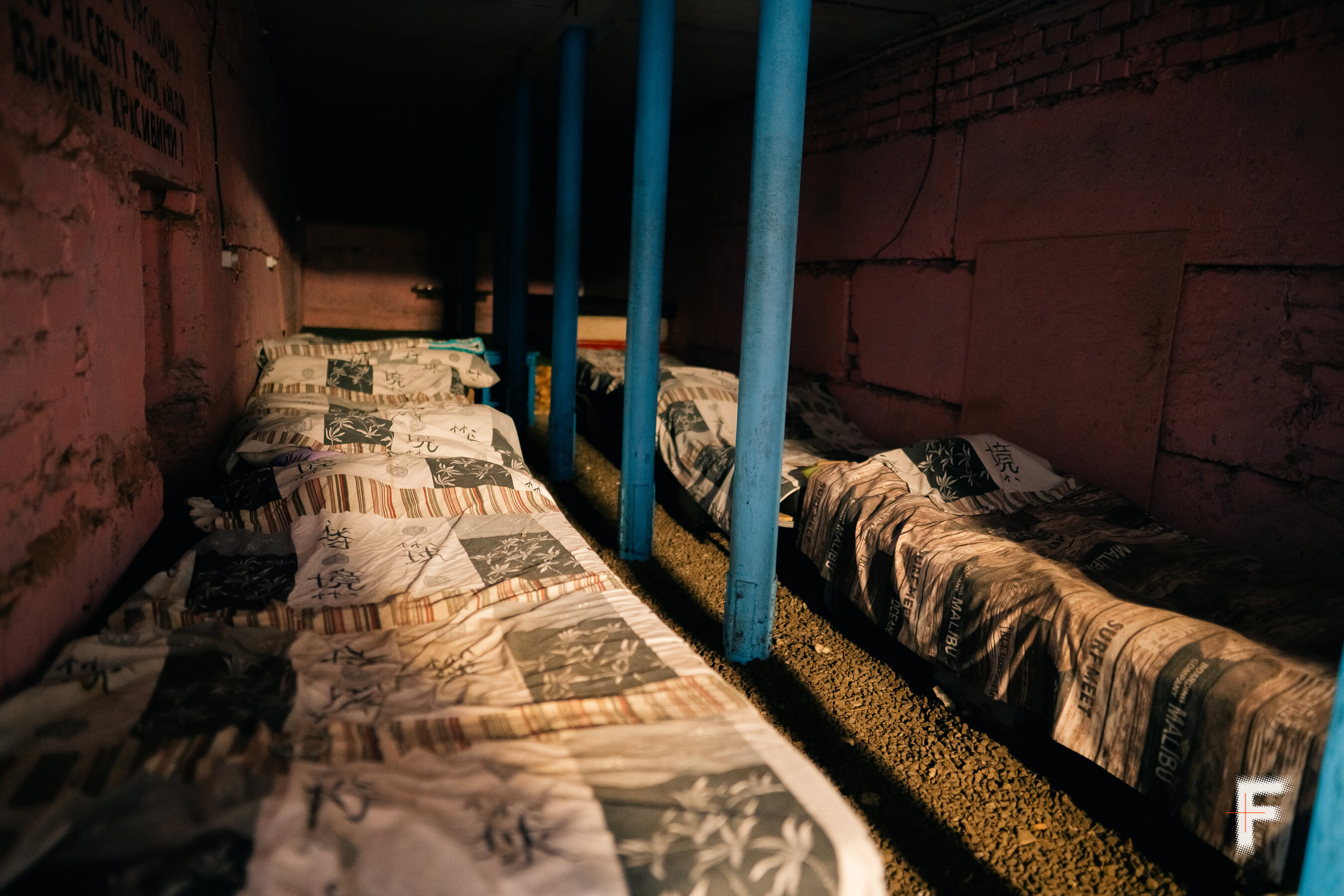
The underground “Point of Invincibility” is equipped with a sleeping area, showers, and toilets, and has a working well for water. Volunteers set up the underground shelter, known locally as “the hub,” in late 2024. It has two large rooms, a common area and a prayer room. On one of the prayer room’s walls stands a large cross, and nearby are shelves with Bibles and children’s books. A separate children’s room remains intact, though no children are left in Dobropillia. In the main hall, people can charge their phones when the generator is running.
-
The prayer room in the hub for civilians, Dobropillia, Donetsk region, Ukraine, June 28, 2026. (Marharyta Fal/Frontliner)
-
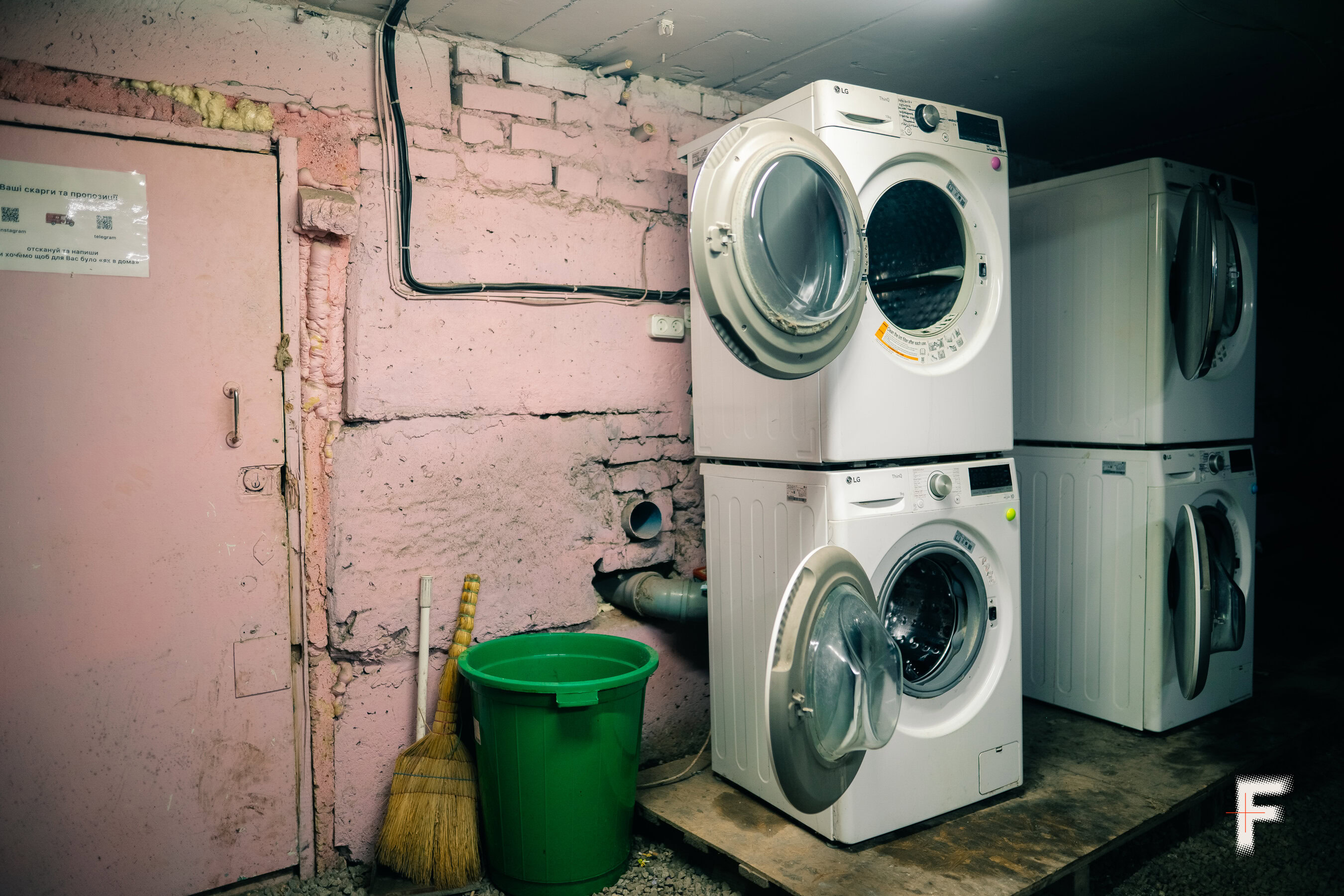
Washing machines in the hub for civilians, Dobropillia, Donetsk region, Ukraine, June 28, 2026. (Marharyta Fal/Frontliner)
-
Beds in the hub for civilians, Dobropillia, Donetsk region, Ukraine, June 28, 2026. (Marharyta Fal/Frontliner)
“There used to be 15 washing machines running, and just as many dryers. Now, of course, there are fewer. We only run the generator for two hours. During that time, people can shower, wash their clothes, heat up food. On May 13, a guided bomb hit across the road. The area was badly damaged. It knocked out our Starlink, and we haven’t had internet since,” says Yevhen Navrotskyi, a volunteer who coordinates the hub’s work.

His family evacuated to Poltava. He says no other “Points of Invincibility” are still functioning in the Dobropillia community, so he’s taken on helping civilians with everyday needs.
“What will happen to people if I leave? Who will keep all this running? Where will they get water? God willing, when the guys pull out of the city, I’ll leave too, in the last vehicle with them,” Yevhen says.
Drones are hunting civilians
Last year, water, gas, and electricity supplies to Dobropillia were cut off. In February 2026, the city’s last store closed. Since March, no humanitarian aid has been delivered here. Civilians rely on food from stockpiles once supplied by charitable organizations. According to official data, up to 800 civilians remain in the city.

Talking with locals paints a consistent picture: most of those still living in Dobropillia have chosen to stay, even as the front has drawn closer.
Evacuations stopped altogether in May. The only way left to leave the city is on foot, reaching one of the relatively safe towns and villages where volunteers meet people. But even that route offers no guarantee of safety, Navrotskyi says: Russian drones hunt civilians too.
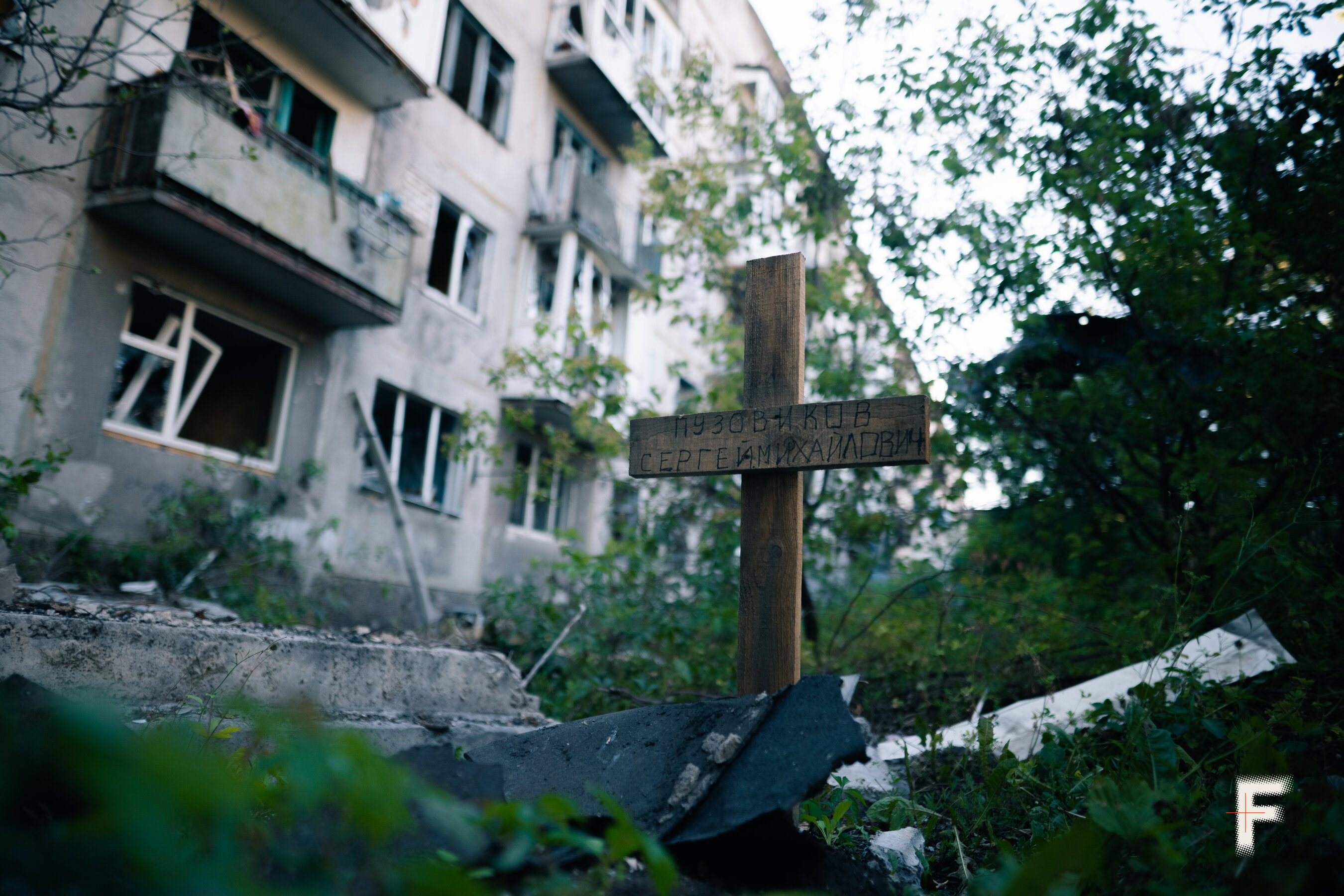
Behind the neighboring five-story building, there’s a fresh grave.
Soldiers buried a man there after a drone struck him.
His name was Serhii, and he worked as a barber. He was 40 years old.
His body lay in the open for two days,
‘Prove to me Russia did this’
Despite continual strikes on residential neighborhoods, civilian deaths, and the remnants of Russian drones lying right on the streets, some locals’ attitudes toward the war remain conflicted, especially when it comes to evacuation.

People at the hub eye the visitors warily. Some turn away, others watch them pass in silence. The soldiers explain: locals know they might be asked why they haven’t evacuated, an uncomfortable question for many.
“The presence of civilians makes our work much harder. We’re responsible not just for defense, but for these people too. We rescue them, share food when our own supplies run low. We recover the dead and bury them,” says “Mongol.”

56-year-old Anatolii Ivanenko (name changed, ed.) agrees to talk. He was born in Dobropillia. He has an apartment here and keeps a small flock of pigeons. His daughter and six-year-old granddaughter live in the occupied part of Donetsk region. He answers questions with irony, treating the journalists as outsiders and insisting he’s in his own home. In his mind, Donetsk region and the rest of Ukraine are not the same.
“What are we doing here? Sleeping and starving. Just kidding. Because that’s exactly how you’ll write it up afterward. I’m in my own home. Where should I go? Who’s waiting for me in that Ukraine? Out west, nobody’s waiting for me, that’s for sure,” he says.
Battle is inevitable
Almost every civilian Frontliner spoke with in Dobropillia has relatives either abroad or in Ukraine’s rear regions. Despite daily shelling, civilians hope Dobropillia will be spared the fate of other Donetsk region cities destroyed by Russian forces. Soldiers hold no such illusions.

“Fartovyi” explains: the city has numerous industrial zones, two mines, Almazna and Dobropilska, as well as slag heaps. In Dobropillia’s outskirts, mines are located in Novodonetske, Bilytske, and Bilozerske. This creates elevated positions in the area that are strategically important to the enemy. Gaining control over them would let Russian forces install relay stations and antennas, stabilizing their communications and, in turn, strengthening their drone capabilities.
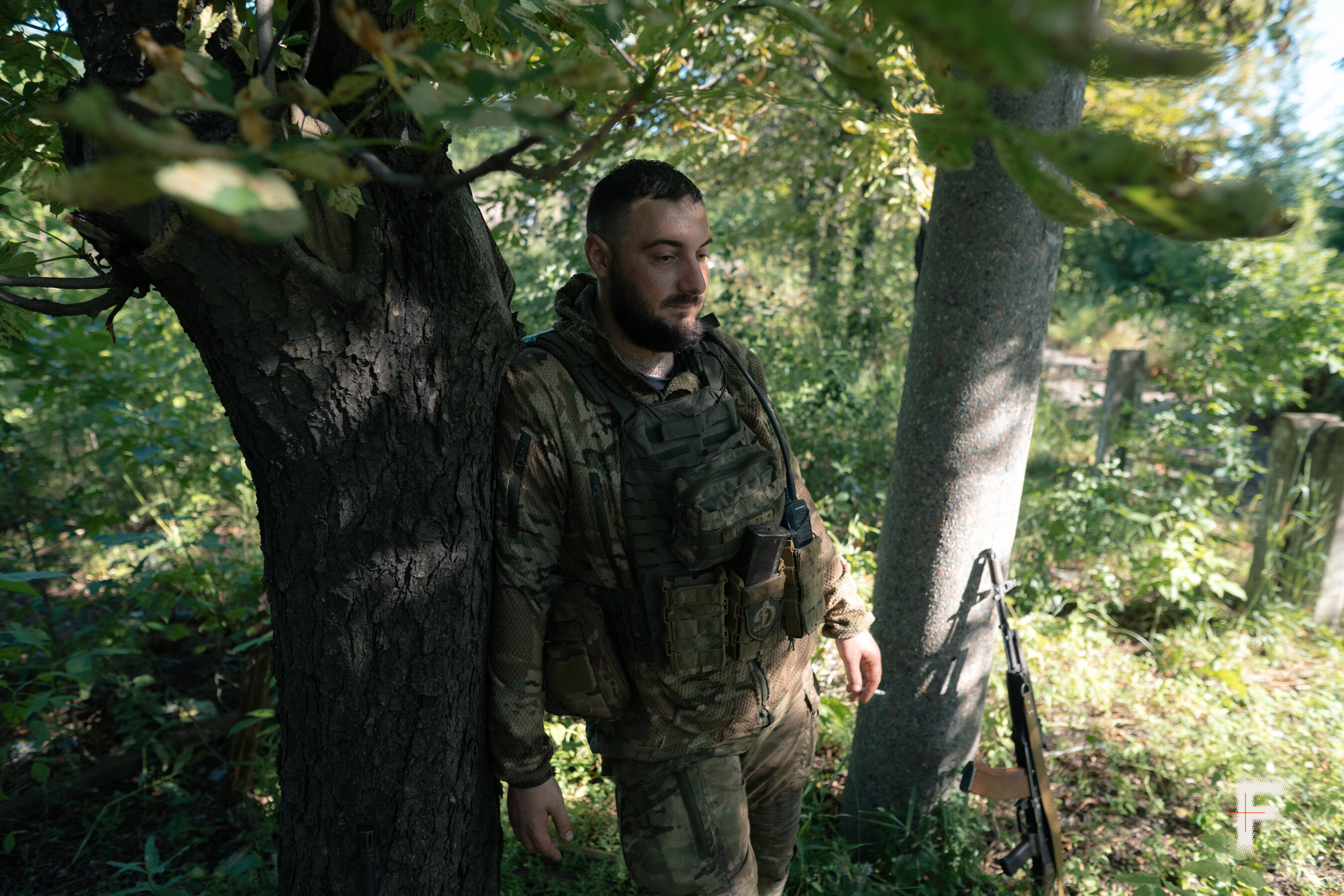
“I believe in about six months urban fighting will begin. Look at Bilytske. It’s almost completely destroyed. There’s practically nowhere to hold a defense, no place to hide, and FPV drones and guided bombs are in constant use. It’s already hard even to get in there. Logistics decides everything. And as you’ve seen for yourselves, it’s extremely difficult right now. There’s another problem too: the Russians simply outnumber us. For now, they’re moving in small groups of two or three,” says “Fartovyi.”
The pearl of Donbas
For decades, Dobropillia carried that title thanks to its coal industry. Most of the mines are now mothballed.
On the city’s central square, next to the damaged “I love Dobropillia” stele, a message is visible on the wall of a building, painted in black: “Dobropillia is Ukraine.”

It took a full day before it was even possible to leave the city. The departure kept getting postponed because of the constant threat of Russian drones. Like the road in, the way back turned into a special operation of its own.