‘Mostly 500s and 250s falling’: Life in Chaplyne, 20 kilometers from the front line
Chaplyne, a village in the Synelnykove District of the Dnipropetrovsk region, is gradually coming into range of Russian FPV drones. According to military estimates, the front line is much closer than officially reported. The settlement is already effectively situated within the so-called “kill zone,” where enemy drones strike deep into rear areas. Despite this, local shops remain open and water, electricity, and gas are still available, albeit with interruptions. Residents reassure themselves, hoping to avoid the fate of other cities destroyed by Russia. This Frontliner report explores life in a settlement on the brink of the front line.
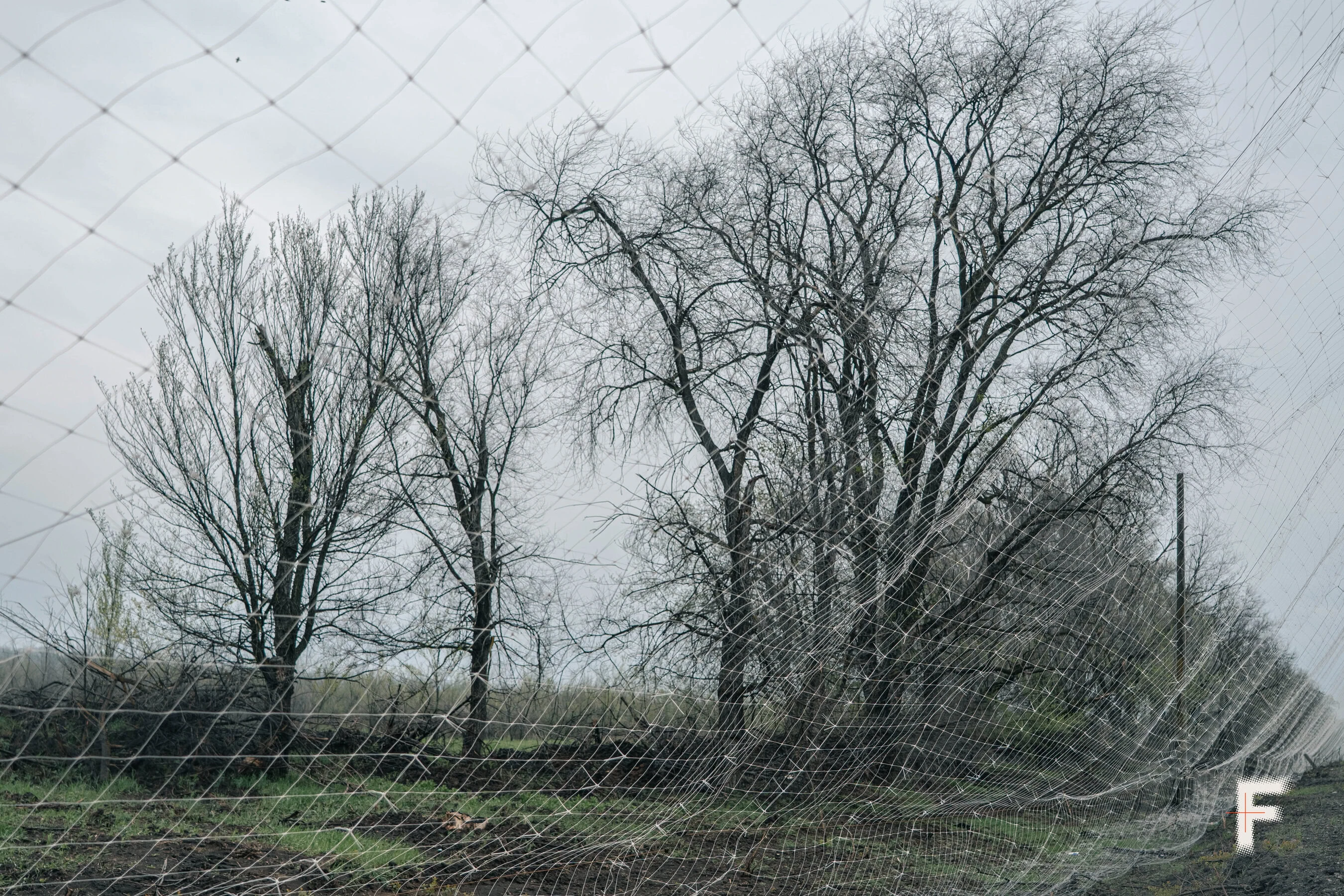
The road to Chaplyne is lined with anti-drone nets. Through the netting, you can see the trees slowly beginning to bloom and turn green. Soldiers from the 141st Mechanized Brigade, who are escorting us at the entrance to the settlement, allow a brief stop — the journalists need to capture the spring blossoms on camera. Just in case, there is a drone detector in the car; it feels safer that way. Besides, the weather is currently adverse: the sky is overcast, and it is drizzling. Still, explosions can be heard nearby, likely from artillery shelling.

“Back in September, we lived in a settlement 10 kilometers closer to the front line than this one. Life there was relatively peaceful; shops and Nova Post were open. Even the minibusses and commuter trains were running. Today, the front line has not shifted significantly, but it’s no longer possible to live there,” says Yurii, an officer with the 141st Mechanized Brigade, call sign “Psikh.”
In the central square, there is a memorial alley for fallen soldiers. Banners featuring their photos are lined with fresh flowers at their base. Across the street is a workshop where memorial monuments are made.
Deliberate attacks on civilian infrastructure
The security situation in Chaplyne has been deteriorating since autumn. Initially, the Russians frequently used Shahed drones for deliberate strikes on specific targets. One such target was the local Nova Post branch. The destroyed warehouses and charred vehicles testify to the intensity of the attack as the enemy struck more than once. Employees were fortunate to have left just a week before the strike, according to “Psikh”:
“Judging by the extent of the damage, they used several Shaheds. It is impossible to cause this much destruction with just one.”

In one part of the settlement, destroyed hangars stand alongside ruined tractors, combine harvesters, and other equipment. Grain lies scattered all around.
“A little over a week ago, one of the Shaheds hit the road right behind us. Three others were aimed at the hangars. Overall, you can clearly see that the destroyed machinery is predominantly agricultural equipment. There were absolutely no signs of any military equipment here,” notes “Psikh.”
In November 2025, the notorious Russian unmanned system unit “Rubikon” was deployed to the Novopavlivka front. Since then, the situation has deteriorated even further. Drones have begun regularly penetrating 20 to 30 kilometers behind the front line.
Business under fire: Leaving is unaffordable
Valentyn is a resident of Chaplyne and the owner of a basic military gear shop. His inventory is not limited to uniforms; he also carries power banks, flashlights, and boots. He says the highest demand is for sneakers and Crocs, which soldiers change into after returning from combat missions. Valentyn returned to the settlement three weeks ago after evacuating his family to the Odesa region. Since the local Nova Post closed, he has been ordering his stock to neighboring Vasylkivka. Logistics are a challenge: shipments cannot exceed 30 kilograms, and delivery can take weeks, and sometimes even months.
He bought a house in the Odesa region and relocated his wife, two children, and mother there. Opening a business in Odesa is expensive. According to him, rent can reach 100,000 hryvnias. That is why he continues to work here as long as the security situation permits, even though it deteriorates week by week.
You can step outside and see FPV drones
swarming overhead every single second,

“They fly day and night. During the day, you can step outside and see FPV drones swarming overhead every single second. It is raining now, so maybe their ‘flight program’ is on hold. But just a few days ago, it was pounding hard. Artillery is constant — you are always hearing ‘incoming’ and ‘outgoing’. Up to a hundred guided bombs can hit in a single day. They come in threes: ‘thump-thump-thump’ — and that’s it. If my door swings halfway open after an explosion, I know a 500-kilo bomb hit somewhere near Pokrovka. If it only opens a third, that was a 250. One-ton bombs are rare; it is mostly 500s and 250s falling,” the man explains.
Valentyn advises keeping an ear to the sky, warning that “anything can happen in this area.” Serhii, a press officer with the 141st Mechanized Brigade, call sign “Yaroma,” agrees.
They launch ‘mother drones’ capable
of flying deep into the rear,

“They [the Russians] started reaching this far around late November or early December. They launch ‘mother drones’ capable of flying deep into the rear to carry FPV drones armed with explosives. Once in position, they operate as bombers, dropping munitions to strike their targets,” Yaroma explains.
Daily life between shellings
Chaplyne’s streets are nearly empty, with a few people heading mostly to the stores. There are three of them here, and almost everyone pays in cash since card terminals are down. Locals complain about frequent power outages, shelling, and drones. Inside the supermarket, there is a short line at the checkout — civilians standing side by side with soldiers.
Near the meat counter, an older man sorts through chicken drumsticks. He is wearing a helmet. His name is Anatolii. He rides a motorcycle and works as a security guard nearby.
So long as I have a job here,
I will keep working,
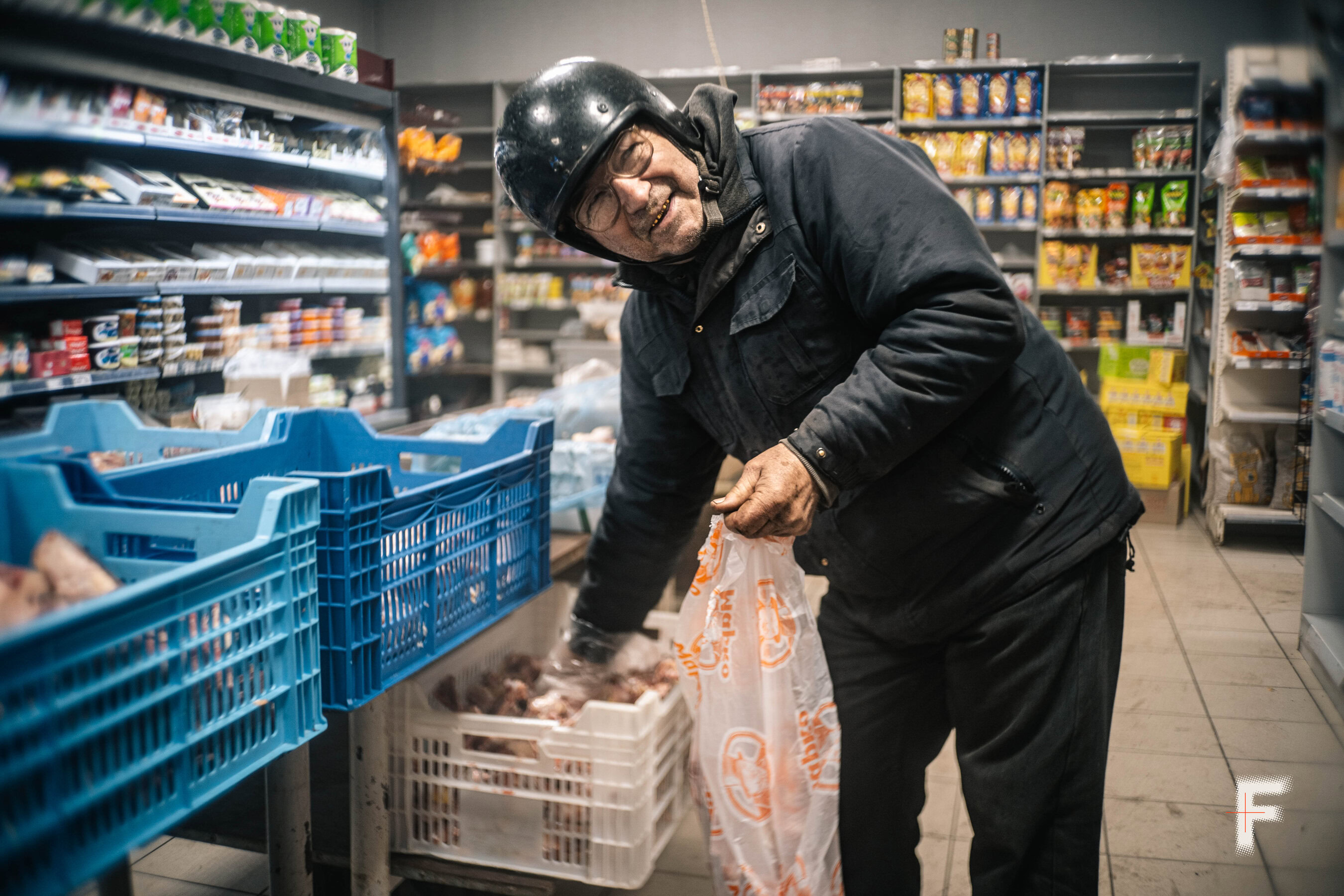
“Of course it is dangerous and scary. Drones fly at night, but sometimes during the day, too. Occasionally, they fly right past us. They often hit Pokrovske and Prosiana. Despite this, we’re used to it by now — what else can you do? So long as I have a job here, I will keep working,” he notes.
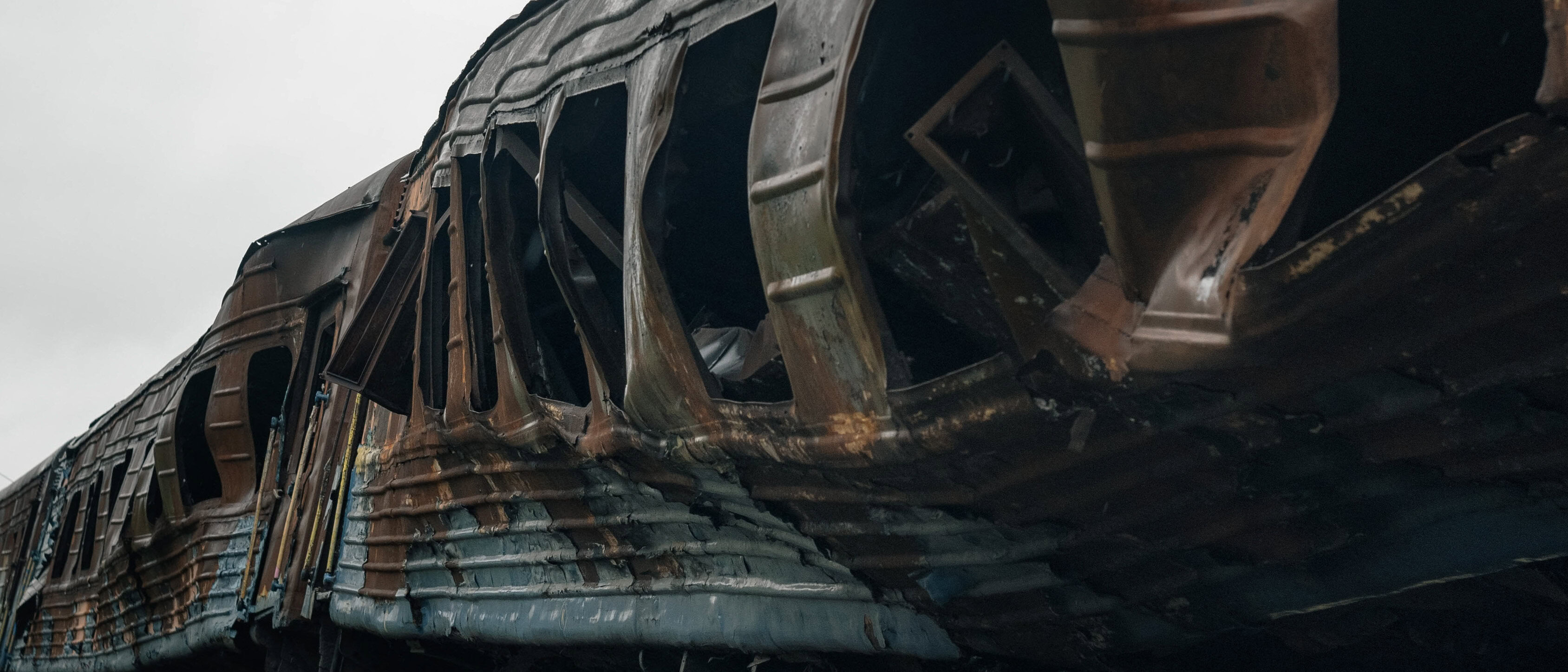
The soldiers lead us to another site in Chaplyne — the railway station, known locally as a place of tragedy. On August 24, 2022, Ukraine’s Independence Day, Russian forces targeted the station with a missile strike. At that exact moment, an evacuation train from Pokrovsk to Lviv was passing through.

25 people were killed, including two children and three railway workers. Another 31 were injured. Destroyed train cars are still sitting on one of the tracks.
“This train has been sitting here like a relic for several years now, and it is an eyesore,” says “Yaroma.”
Ruins and abandoned animals
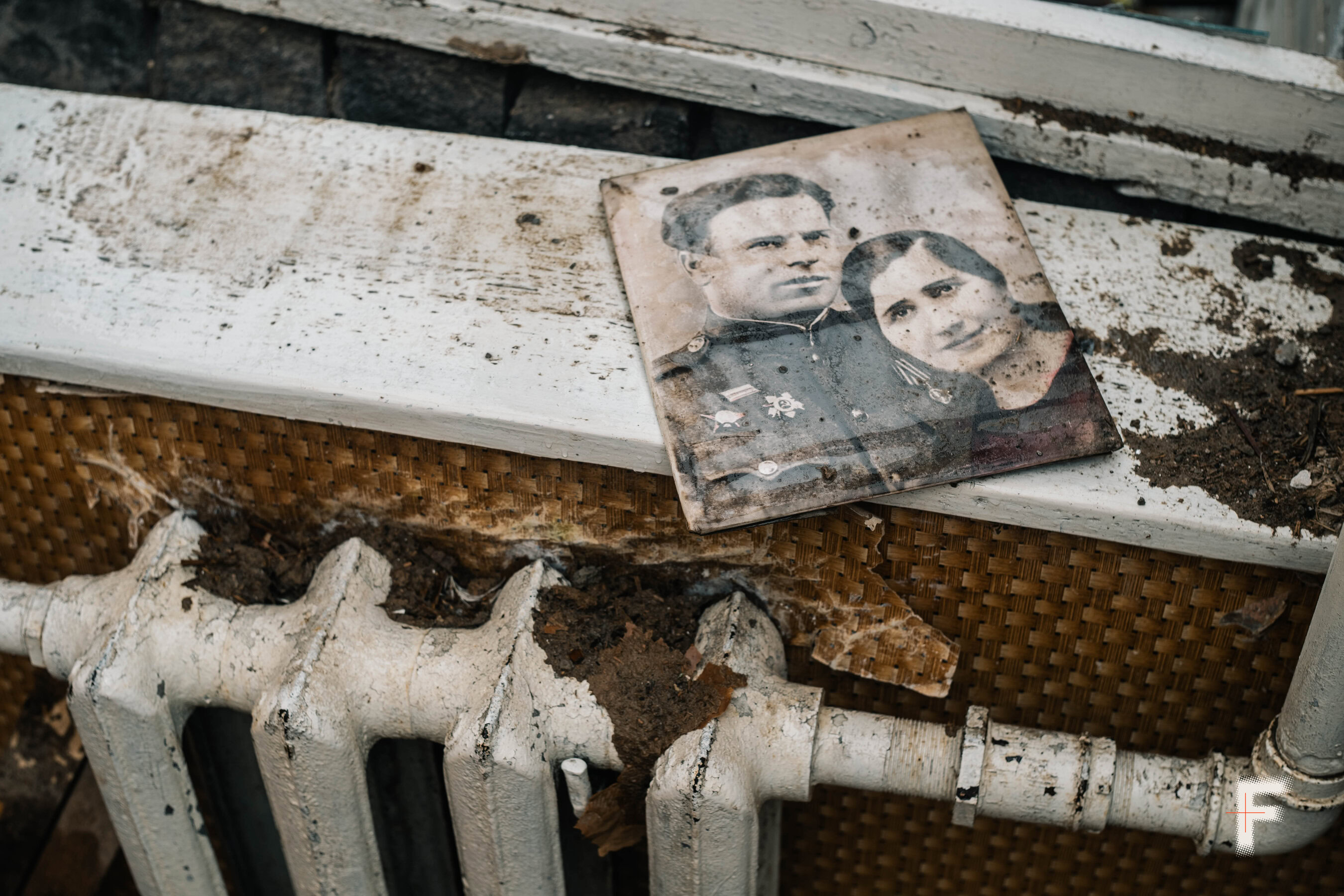
The residential area here is roughly divided into “black” and “white.” On one street, the houses are intact, and people go about their routines. However, across the street, every other home is destroyed. A photo of a young couple, seemingly dating to World War II, lies on a windowsill in an abandoned house. The roof is gone, and the central rooms are piled with trash, making it impossible to walk through.
As the eye takes in the scale of the destruction, “Yaroma,” holding a Chuika [a type of drone detector] in one hand and a cigarette in the other, drives away stray dogs that are attacking each other.
“They are on every corner here. I have counted ten on this street alone. They huddle together in packs. You can see they are good breeds. It is clear that they belonged to someone; they are not wild. It’s a real shame because their owners left them to fend for themselves. Some people even leave them tied up when they go,” Serhii says.

There are indeed many dogs, and they are too aggressive to approach safely.
“I don’t understand people who just leave their dogs and drive away. It wasn’t so frightening here to abandon them and flee,” says Maryna, indignantly. She owns and runs a small shop on the outskirts of Chaplyne. Under a sign reading “At Maryna’s,” she sells groceries and hot lunches that she prepared with her mother. She says soldiers often come specifically for these meals.
-
Maryna, a local shopkeeper, Chaplyne, Dnipropetrovsk region, Ukraine, April 19, 2026. (Marharyta Fal/Frontliner)

-
Maryna, a local shopkeeper, Chaplyne, Dnipropetrovsk region, Ukraine, April 19, 2026. (Marharyta Fal/Frontliner)
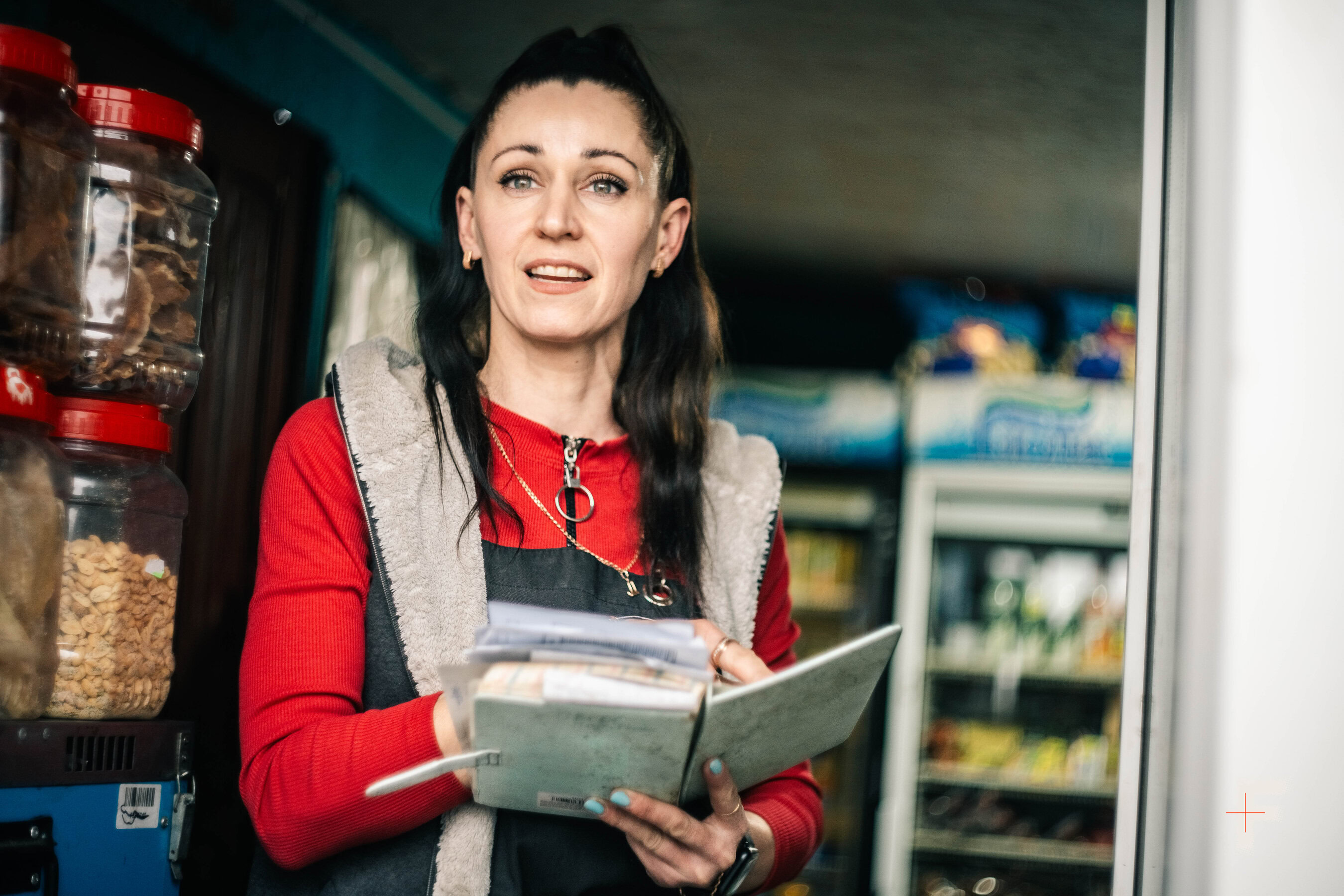
“I wish you had come earlier, because I have already sold out of everything. Otherwise, I would have treated you. We make pelmeni, potato varenyky, hot borshch, and fried pies. Guys really praise them,” the woman says.
Once a month, humanitarian aid is delivered to the settlement. That is when more people appear. It took a few hours to walk through Chaplyne. Covered in dust and small debris, the streets look as if they were abandoned long ago, but they are not. Those who have chosen to stay in this territory bordering the front line rely on the conviction that this settlement will not become another red dot on the map. They say they have inner peace. They trust the military.
How a shift in the front line will affect the settlement
Chaplyne falls under the area of responsibility of the 141st Mechanized Brigade, which is holding the line in the Novopavlivka front. This section of the front is unique and difficult due to its geography. Soldiers say it is the meeting point of three regions: Dnipropetrovsk, Kharkiv, and Zaporizhzhia. Russian forces are trying to establish control over this triangle both in the air and on the ground. This sector is directly adjacent to the administrative borders of the Dnipropetrovsk region. A shift in the front line here increases the threat to the Synelnykove district, which the Russians continue to shell.
On January 7, 2026, a mandatory evacuation was ordered in Chaplyne, where 2,905 lived at the start of 2025. Twelve other settlements in the Dnipropetrovsk region were also included in the order. As of April 2026, local residents say the population has dwindled to just 700.