‘Fifty Russians eliminated in a day’: one of the thousands of stories from the defense of Pokrovsk – how the 1st Assault Regiment held back the enemy with assault companies made up of former prisoners
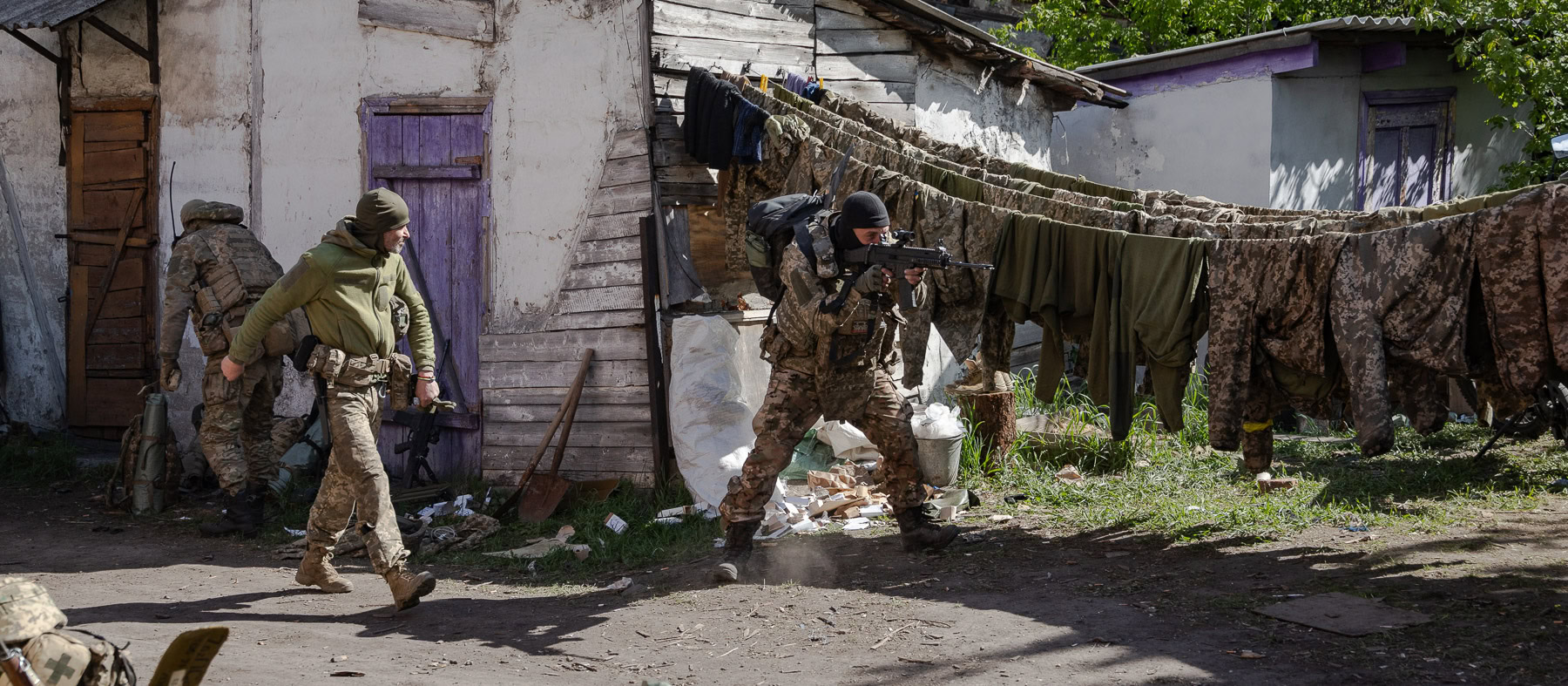
Pokrovsk is in a difficult situation. This is a fact officially confirmed by the General Staff and clearly reflected on DeepState maps. Russia is pressing with everything it has, trying again and again to break through the defenses. Yet Ukrainian units have held this stretch of the front for more than a year against the superior numbers of the Russian army. One of those units is the 1st Assault Regiment named after Dmytro Kotsiubailo. In the spring of 2025, Frontliner was present during one of their assault operations and witnessed firsthand the price of defending the city. What follows is the documented story of Operation Bezia, which involved former prisoners who had joined the regiment’s assault companies.
April 28, 2025. Dobropillia. At 9 a.m., six hours before the operation begins, a group of infantrymen receives tourniquets, cigarettes, and radios. Some of them have been in the Armed Forces of Ukraine for two months, others for half a year. But for most, this will be their first assault. Until now, they had only gone out to defensive positions. The first assault group consists of 12 men, all from a company made up of former prisoners. The youngest is 22; the oldest is 51.
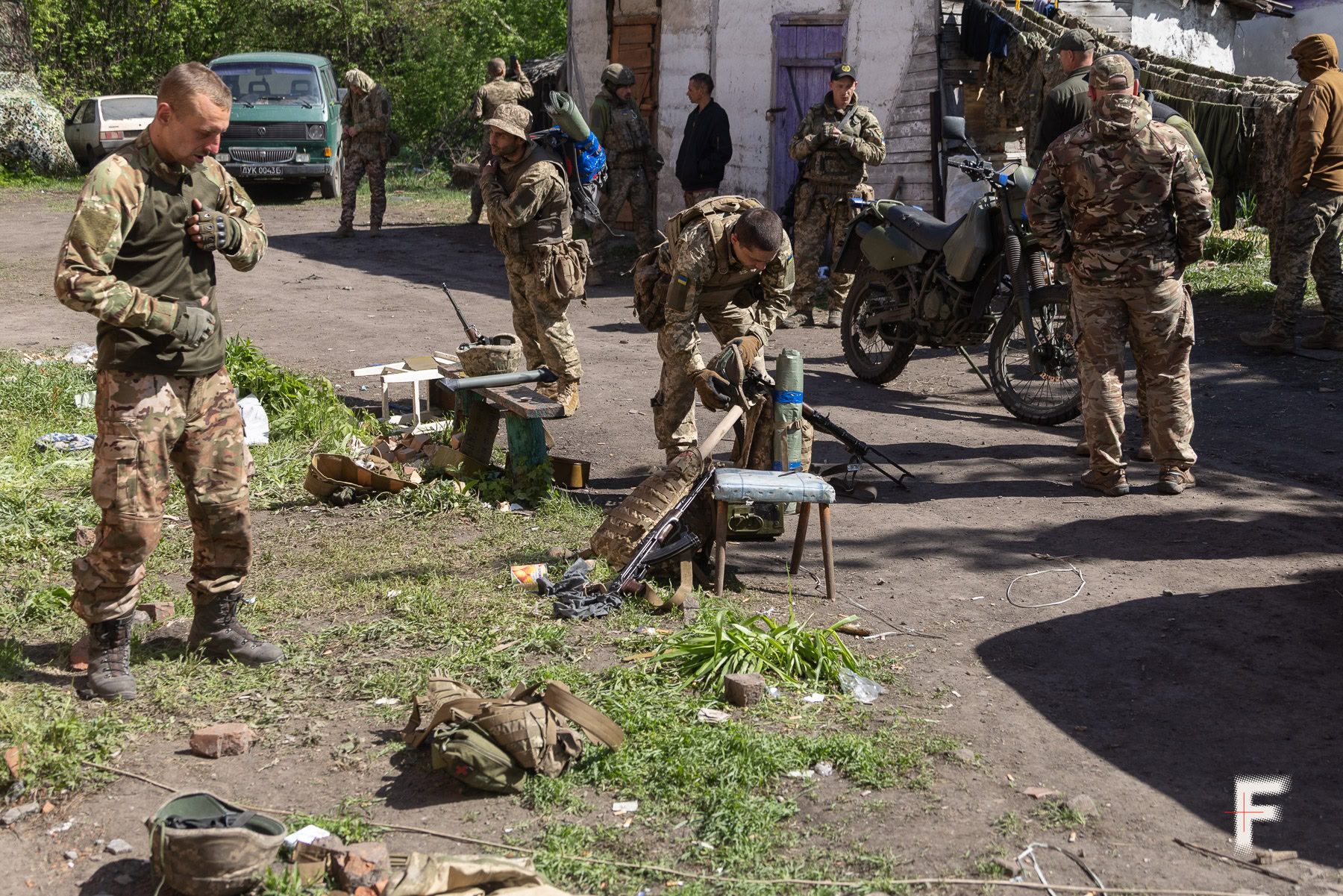
From the road, the house where the soldiers live, the tent beside it, and the yard resemble an anthill, with everyone busy with their own tasks and preoccupations. Only the tall, blossoming apple tree in the yard seems unconcerned.
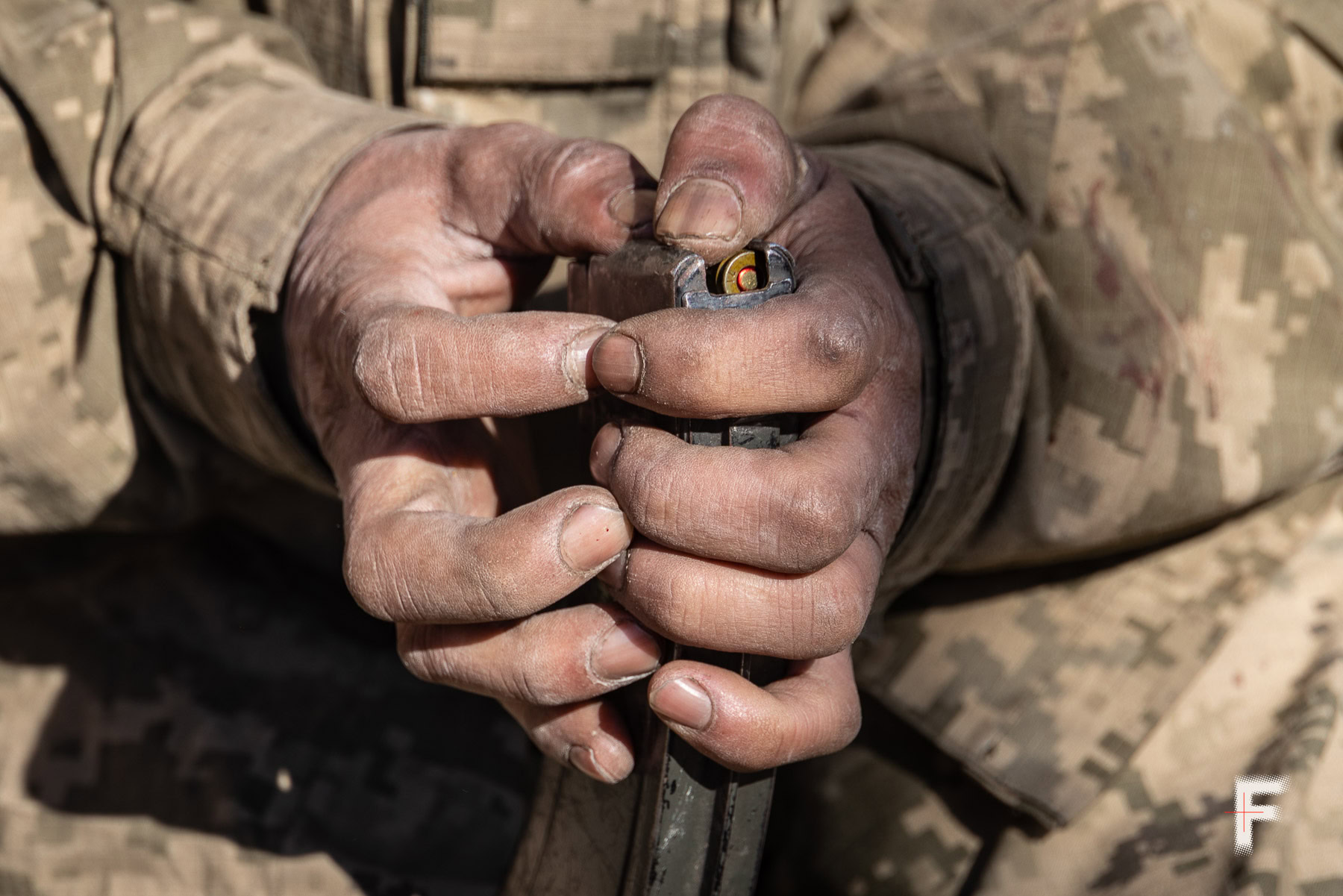
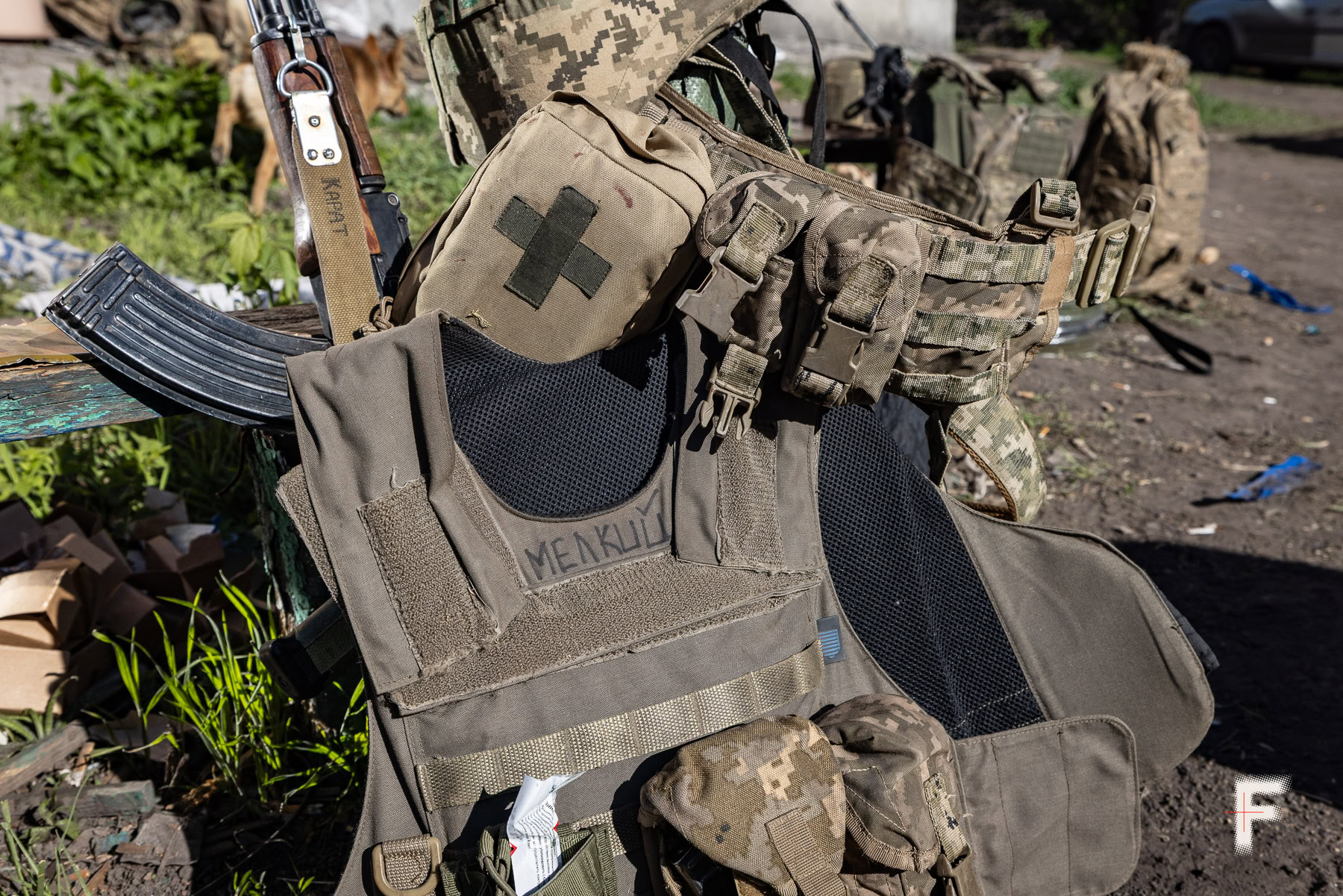
“Maniunia” and “Mielkyi” sit amid the smoke in the tent, assembling their tourniquets. Blood stains “Mielkyi”’s uniform, spilled by a comrade he had been with the day before while they left defensive positions under a hostile drone strike. The comrade is seriously wounded, and “Mielkyi” is preparing for his first assault, packing his gear with hands scraped raw on the ground and branches.
-
The hands of a soldier of the 1st Assault Regiment named after Dmytro Kotsiubailo, call sign “Mielkyi,” as he loads rounds into the magazine of his Kalashnikov before departing for an assault. (Andriy Dubchak/Frontliner)
-
The body armor of a soldier of the 1st Assault Regiment named after Dmytro Kotsiubailo, call sign “Mielkyi.” Dobropillia, April 28, 2025. (Albina Karman/Frontliner)
-
A soldier of the 1st Assault Regiment named after Dmytro Kotsiubailo, call sign “Mielkyi,” smokes in full combat gear beside his packed backpack. Dobropillia, April 28, 2025. (Andriy Dubchak/Frontliner)
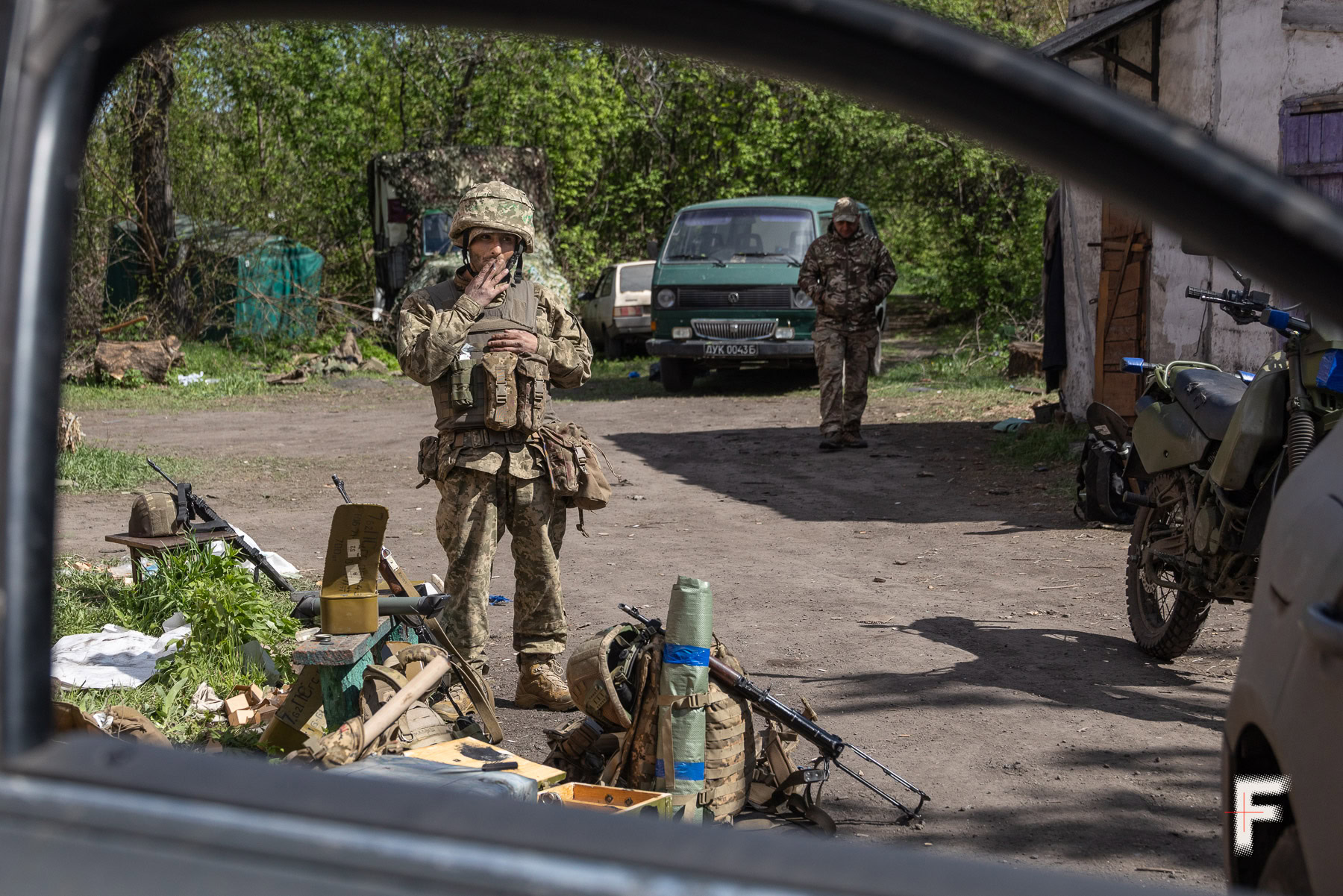
“I was born during the first war in Nagorno-Karabakh. Russia was involved in that too. My mother sent me to live with my brother in Kryvyi Rih so I wouldn’t see the war. Now I’m 35. Russia is still stirring up war everywhere. Enough,” says “Mielkyi.” He has never returned to his homeland, not once in his life.
The most combat-experienced among soldiers is “Tykhyi,” who has been serving since 2002. During this operation, he will be the group leader. “Tykhyi” packs his backpack while singing Ukrainian songs. Then he calls his comrades several times to take photos. Each time, “Fanta,” “Slipyi,” and “Malysh” strike a pose.
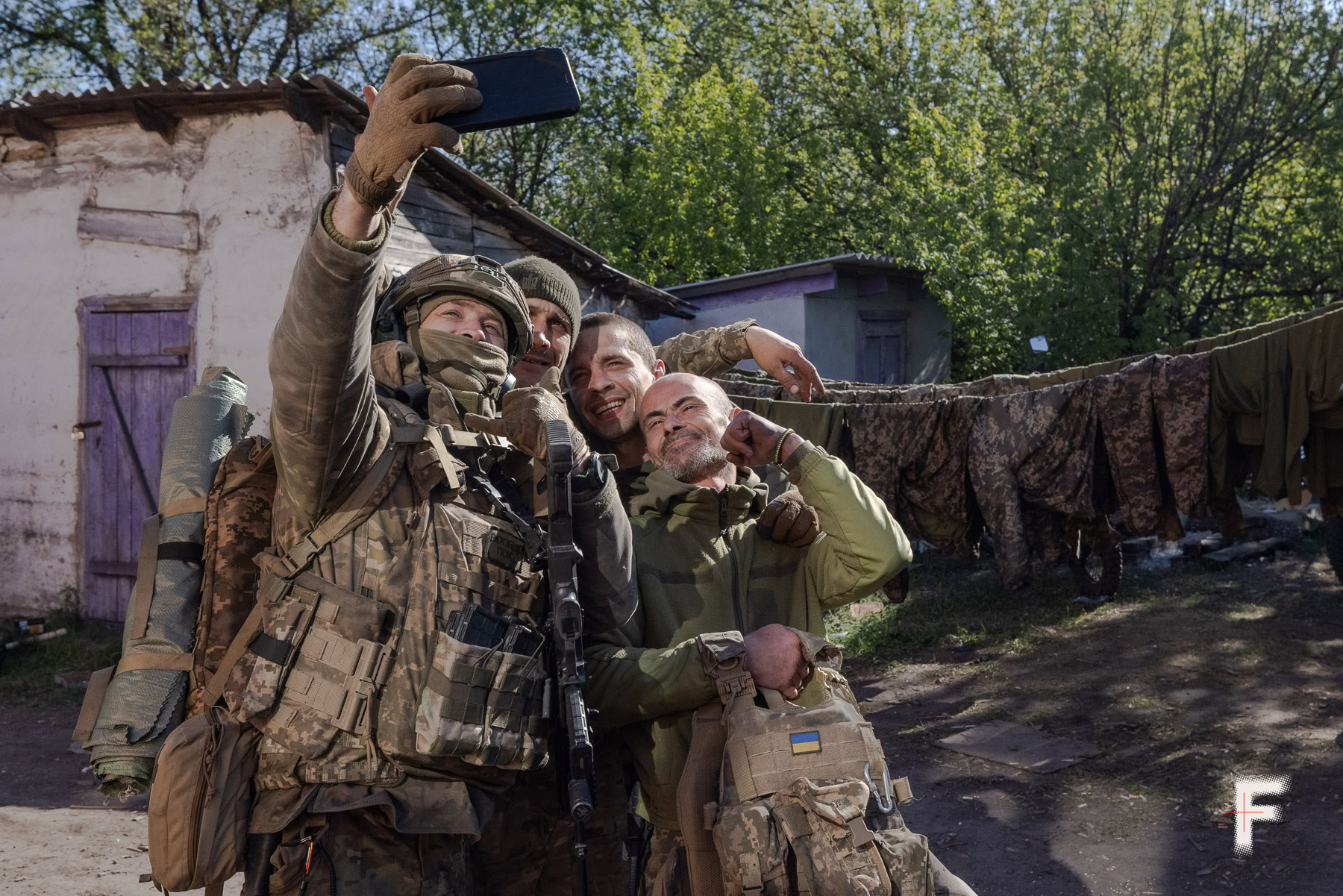
Come on, brother, why are you acting like it’s the last time?
Let’s take one more photo,
A few days ago, he came back from his first combat deployment to defensive positions. For much of the full-scale invasion, he had been in prison, though he stayed in contact with his family, who had long lived under occupation in the Kharkiv region. His reason to join the Armed Forces of Ukraine was simple: to ensure his home would never be occupied again.
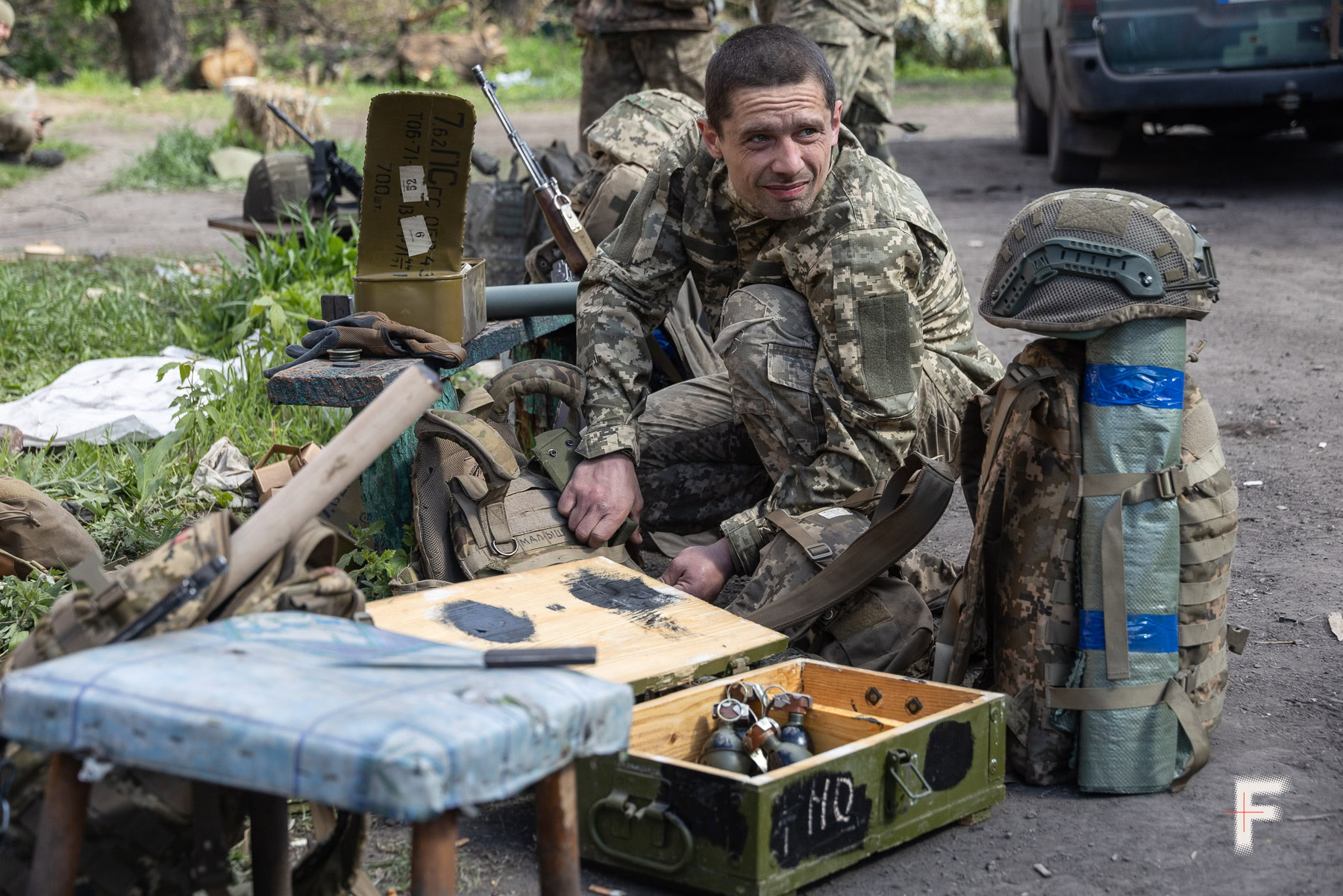
Near the building, the youngest, “Sukhar,” scans the surroundings warily, arms resting on his rifle. “Black” keeps to himself; he joined the company recently, and no one here knows his story yet. “Pokemon” sits quietly on his helmet, holding his head, his face marked by heavy thoughts. He also has several years of combat experience in air defense units. He was convicted of desertion after clashing with his former commander. On this assault, “Pokemon” chose the youngest, “Sukhar,” as his combat partner, hoping to guide him with his experience.

Among his somber comrades, “Batman” stands out with a smile and a sparkle in his eyes. He’s eager to share the story of his recent wedding.
When I was in prison, I dreamed that I would get out,
stop drinking, and get married.
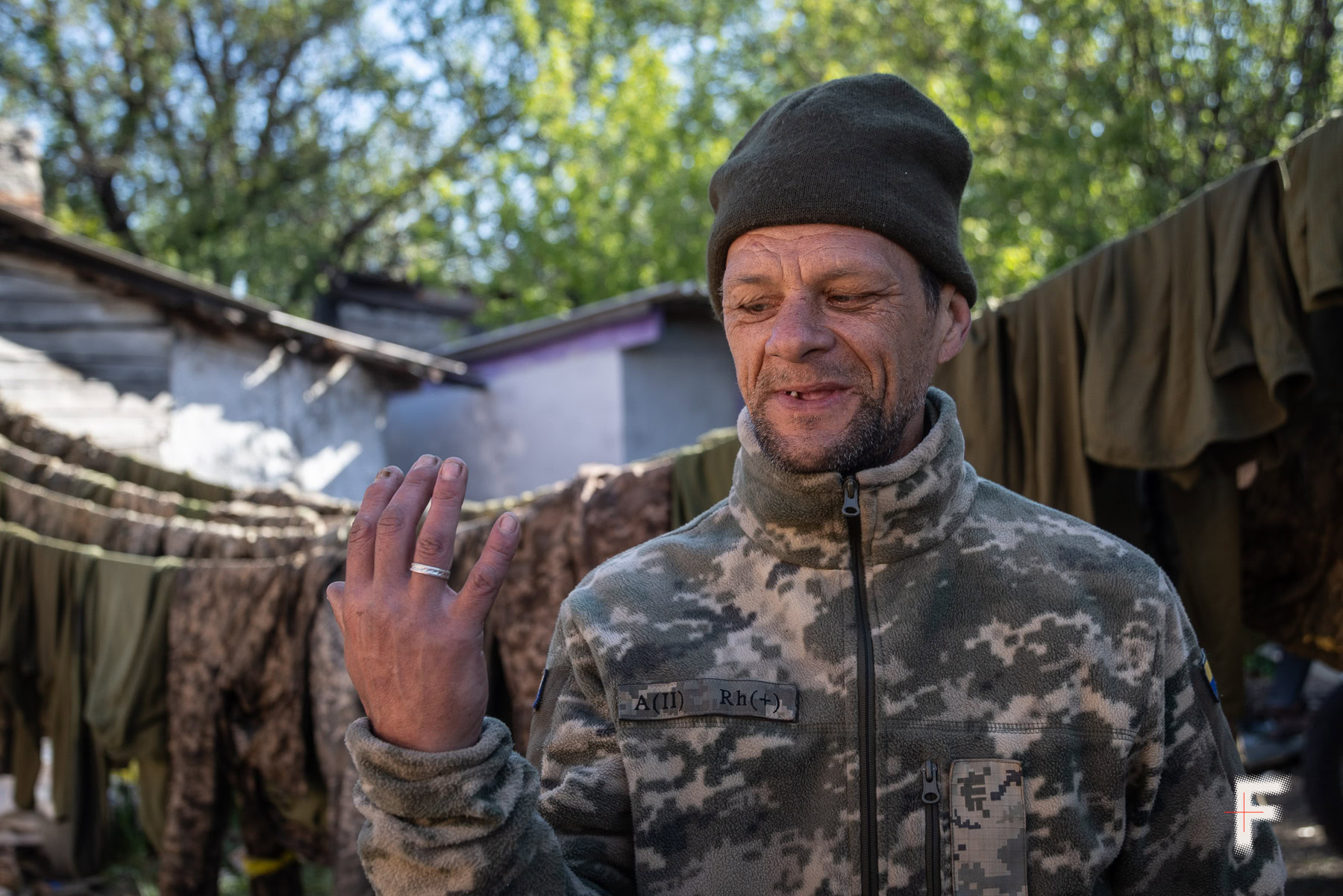
“When I was in prison, I dreamed that I would get out, stop drinking, and get married. Now everything I dreamed of has come true. So I won’t surrender,” says “Batman,” holding out his hand with the silver wedding ring shining in the sun. The oldest members of the group, “Dido” and “Kulish,” listen to him speak, while the others continue getting ready.

Americano with milk before the assault
Company commander, call sign “Yozh,” gathers everyone under a blooming apple tree. The entire group fits beneath its branches, sunlight streaming across their faces. The commander’s tablet glints with sun reflections as “Yozh” shows the map of the wooded areas where the assault will begin in a few hours.
You’re the only ones
assaulting this wooded area.

“You’re the only ones assaulting this wooded area. There will be a lot of smoke, [due to smoke grenades used to cover soldiers and equipment – ed.] which will shield you, so don’t get distracted. You must stay together at all times. To preserve ourselves as much as possible, we need to reach cover quickly. Once you’re in cover, don’t leave unnecessarily, so there’s no commotion,” says the commander.
“And will there already be Russians in this area?” asks the assault soldier, call sign “Maniunia,” pointing to the section they need to enter.
“Yes, there will be Russians, and they’ll be moving in the same direction as you,” replies “Yozh.”
The goal of Operation Bezia (named after one of the soldiers from “Yozh”’s company) is to prevent the Russians from reaching the Pokrovsk–Dnipro highway and to cut them off from reoccupying Kotlyne. Before the full-scale invasion, the small village of Kotlyne, about 10 kilometers from Pokrovsk, had around 450 residents. Now it becomes a major logistical target for the enemy, as it provides access to a tactically important highway. The area where the operation takes place is on Russian-occupied territory, near the village of Vovkove, south of Kotlyne.

At noon, before departing, the entire group gathers in the village store to drink an Americano with milk and eat some cookies. From there, they head to a wooded area where heavy equipment is already waiting. The last to get into the vehicle is an assault soldier, call sign “Maniunia,” who had been sitting in the grass praying, and the group’s senior, call sign “Tykhyi,” who was having a quiet moment behind some branches, missing his son, who is not even two years old yet.
“I’m nervous. But I don’t doubt that we’ll see each other again,” says “Tykhyi.”

The Command Observation Post
Call sign “Tantsor” finishes a call with his family and enters the command observation post (COP). “Okay, ladies, I’m going into combat now,” he says into the phone before moving to the radio. Today, “Tantsor” will direct the assault. He is the deputy commander for combat operations, checking the readiness of vehicles, infantry, motorcyclists, and drone operators. Everyone is on the line.

“Attention everyone, the command to start is granted,” says “Tantsor” at 3 p.m. The column of four heavy vehicles, carrying infantry, begins to move. About 20 service members at the COP fix their eyes on the monitors.
Three American MaxxPro vehicles are deployed, one equipped with a mine roller, along with a Ukrainian Spartan. These are some of the most advanced and expensive combat vehicles, and units rarely get to bring this much new equipment to an assault.

The mission is to attack five objectives in the direction of Kotlyne and secure them, pushing the enemy from narrow strips of forest into more open areas. The narrow woods and fields define this terrain. By driving the enemy into the open, there’s a better chance to strike them with various weapons, expand the so-called “kill zone,” and prevent them from advancing on Ukrainian defensive positions. Defending a narrow tree line is difficult, because in such conditions the side with more infantry usually prevails. Because the Russians have more infantry, the Ukrainian army relies on precise tactical maneuvers to stay ahead.
-
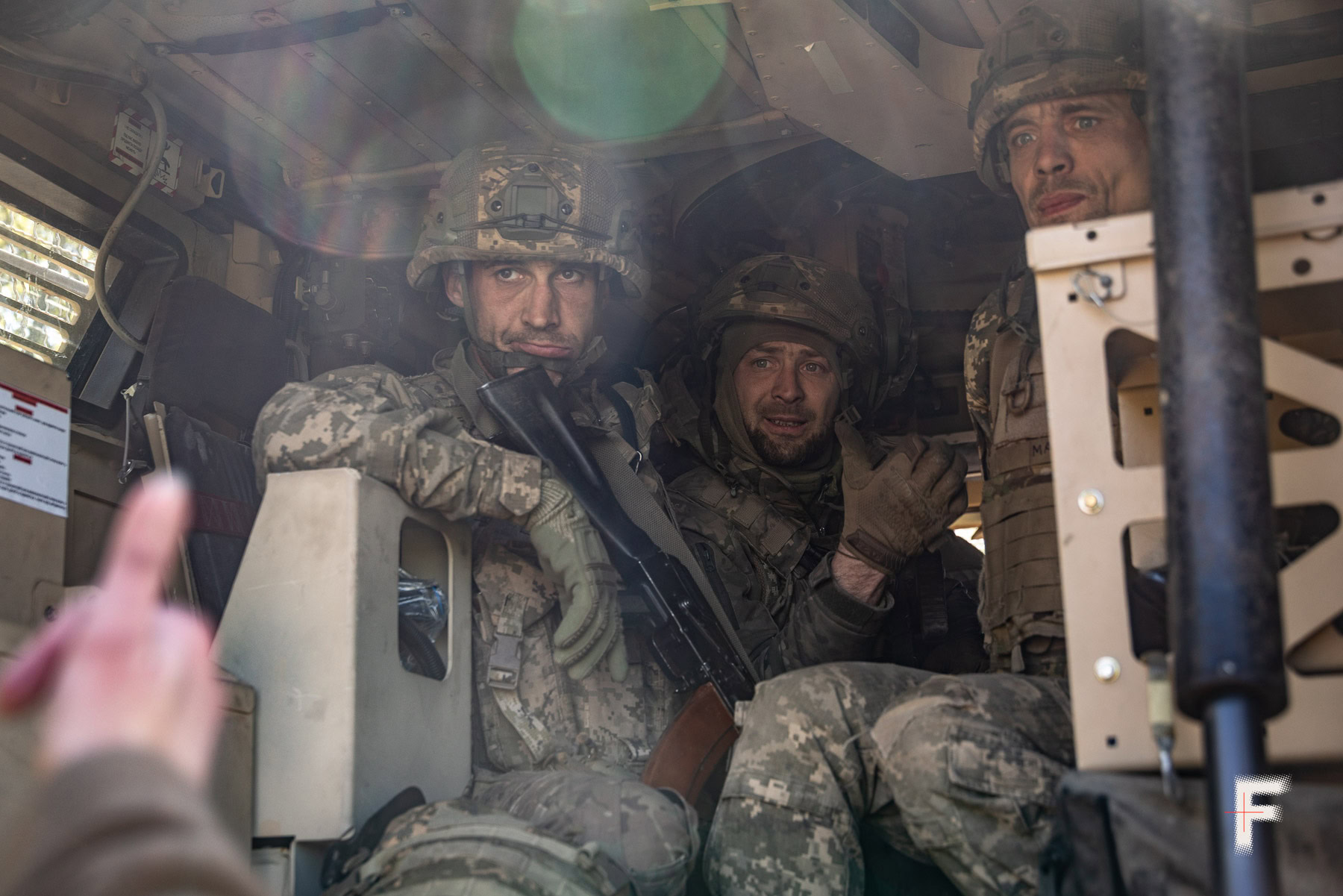
Soldiers “Fanta,” “Tykhyi,” and “Malysh” sit in a MaxxPro’s armored transport capsule a moment before departing for the assault. Dobropillia area, April 28, 2025. (Andriy Dubchak/Frontliner)
-
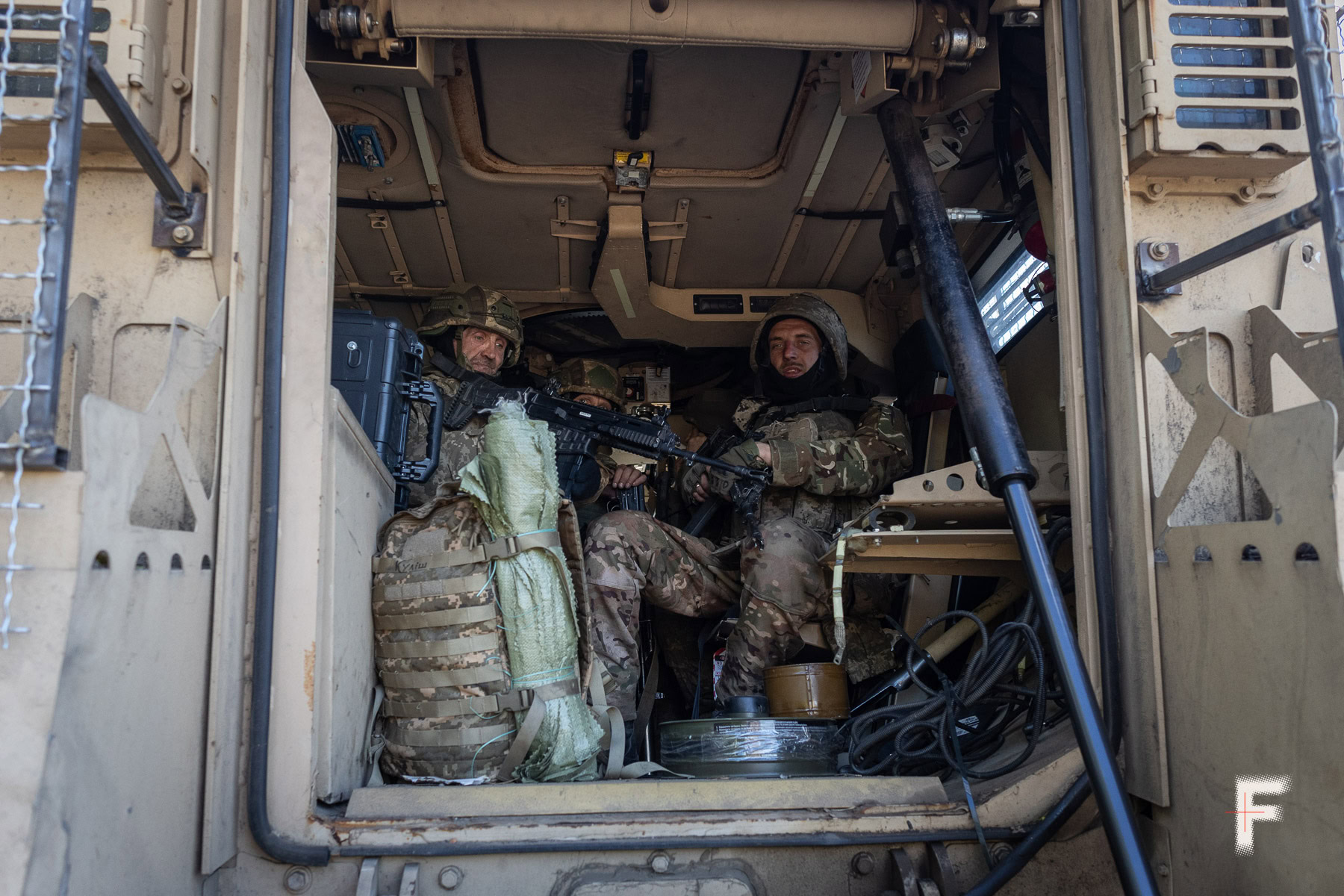
Infantry in the armored transport capsule of the second MaxxPro before departing for the assault. Dobropillia area, April 28, 2025. (Andriy Dubchak/Frontliner)
-
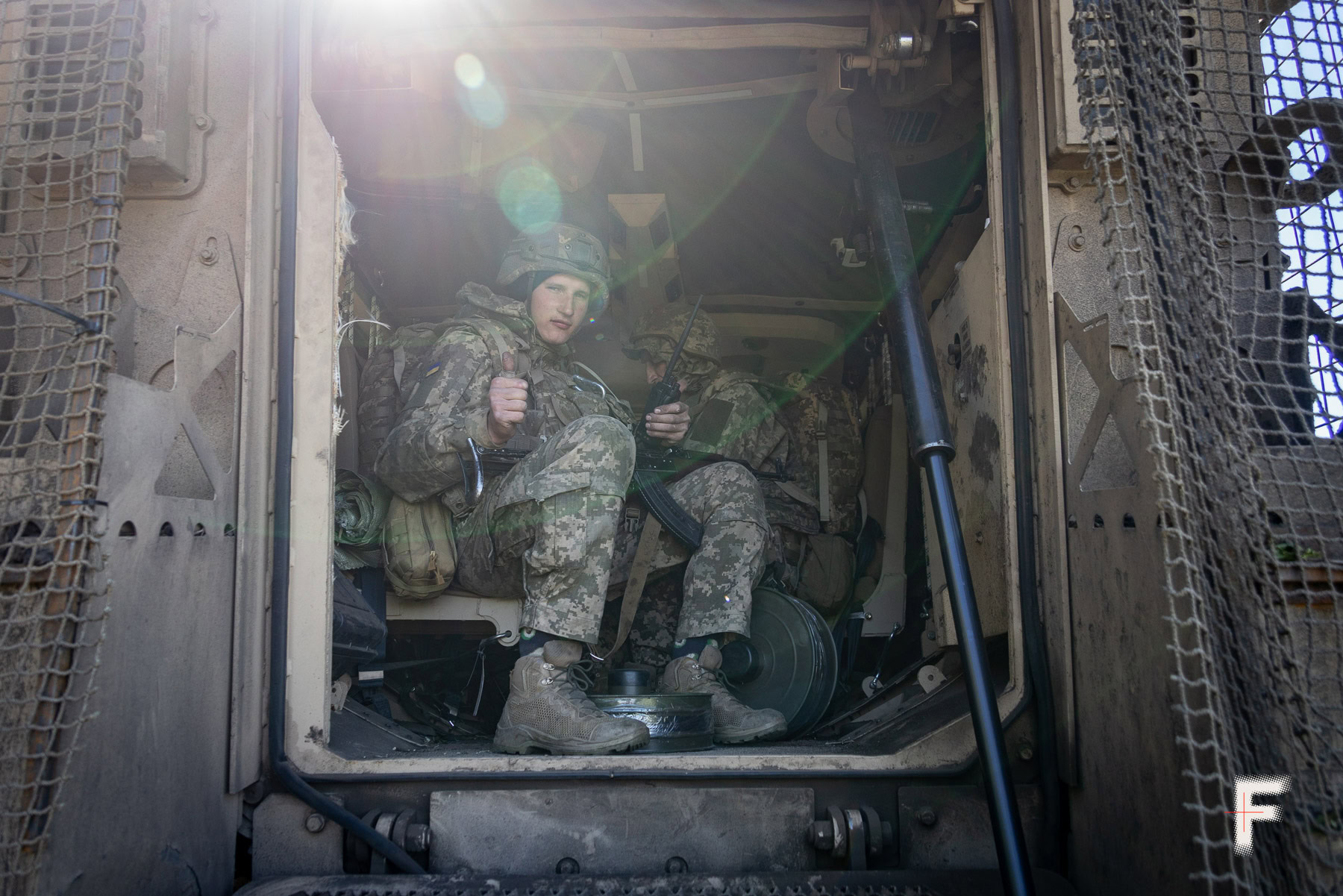
The youngest in the assault group, 22-year-old call sign “Sukhar,” sits in the armored transport capsule of the third MaxxPro before departing for the assault. Dobropillia area, April 28, 2025. (Andriy Dubchak/Frontliner)
The group is covered by artillery, FPV drones, Ukrainian Vampire bomber drones, and tank crews of the 1st Assault Regiment.
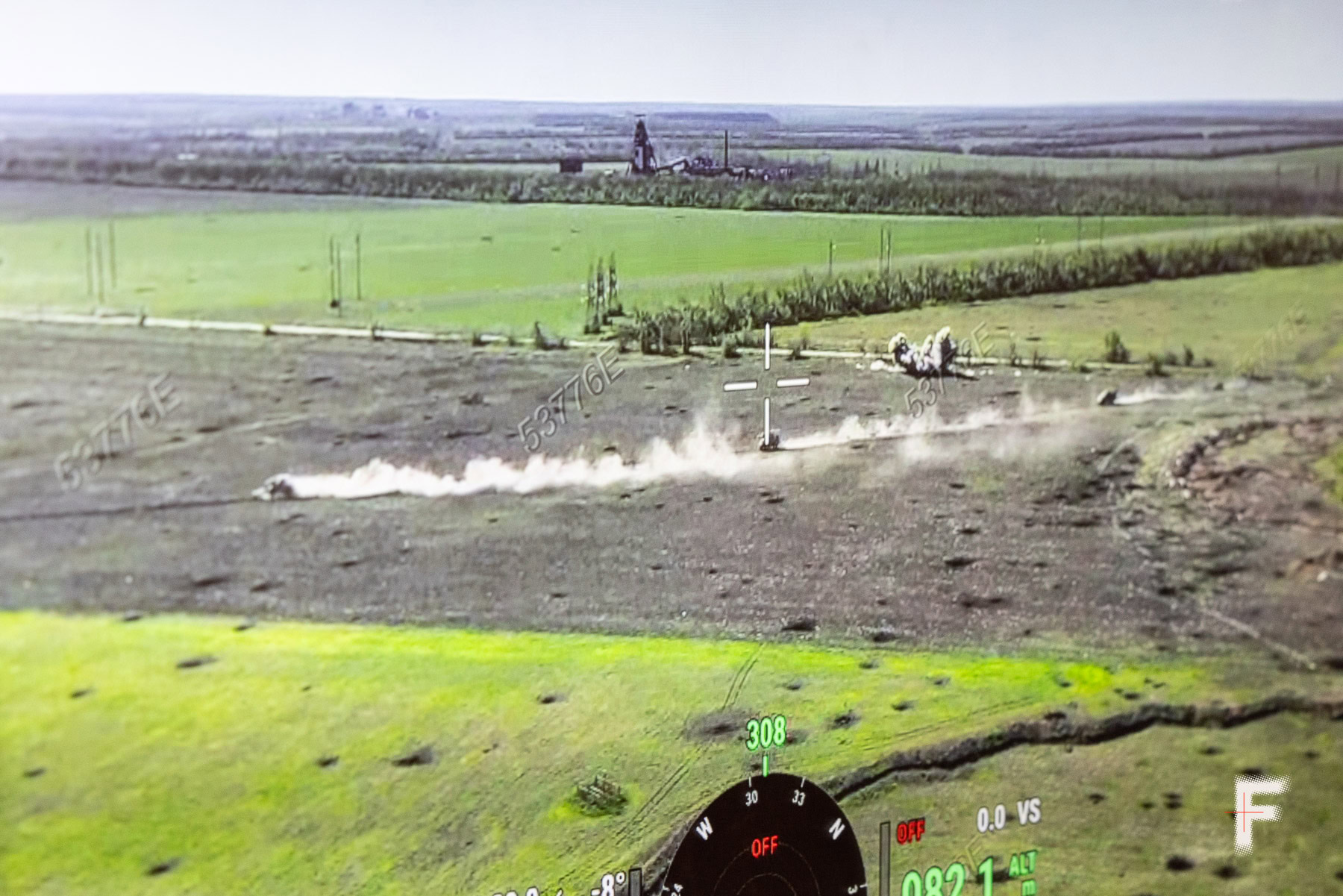
At 3:36 p.m., the column passes the last Ukrainian positions. A group of six motorcycles sets out. Within minutes, enemy artillery opens fire on the column, and one of the motorcycles hits a mine. It detonates and the rider is killed. The remaining motorcyclists have to dismount and take cover in the trees.
One of the MaxxPros successfully drops off its assault team at a planned target. Movement of another vehicle does not go according to plan, as often happens during active assaults – it is hit and disabled by a Russian FPV drone, forcing the assault team to abandon it. But the main objective remains unchanged, and the mission continues.

At 3:58 p.m., “Tantsor” reports to the regiment commander, “Perun”: “The motorcyclists hit a mine. So far, one motorcycle has returned. The others are still en route… One of the tanks is pulling back, it completed its work.”

FPV and Vampire drones go into active operation. In this mission, the number of Ukrainian drones roughly matches the enemy’s. They accompany the infantry, providing cover as the soldiers clear positions and secure their foothold.
Russian counterattack
After 6 p.m., the Russians launch a counterattack, and an engagement begins with Ukrainian infantry positions. It results in two Russian soldiers wounded (Code 300), one killed (Code 200), and another fleeing into the tree line.
At 6:47 p.m., soldiers gather around the monitors to watch a Russian attacker burning. He was hit by a drone drop, and possibly was the same individual who fled before.

Fighting intensifies regularly. At the command post, “Tantsor” shouts updates about the ongoing action, which blend with orders from “Turyst,” the regiment’s deputy commander for artillery, directing the deployment of smoke to cover the Ukrainian infantry.
“Cover the MaxxPro area. Launch smoke on the position!” bellows “Tantsor.”
“The howitzer is aimed,” responds “Turyst.”
“Go on, sunshine…Who’s going to pick it up?” asks “Tantsor.”
“They know,” reassures “Turyst.”
“They’ve seen them…Cover!”
The dialogue ends as their eyes intensely lock on the monitors, following the battle.
-
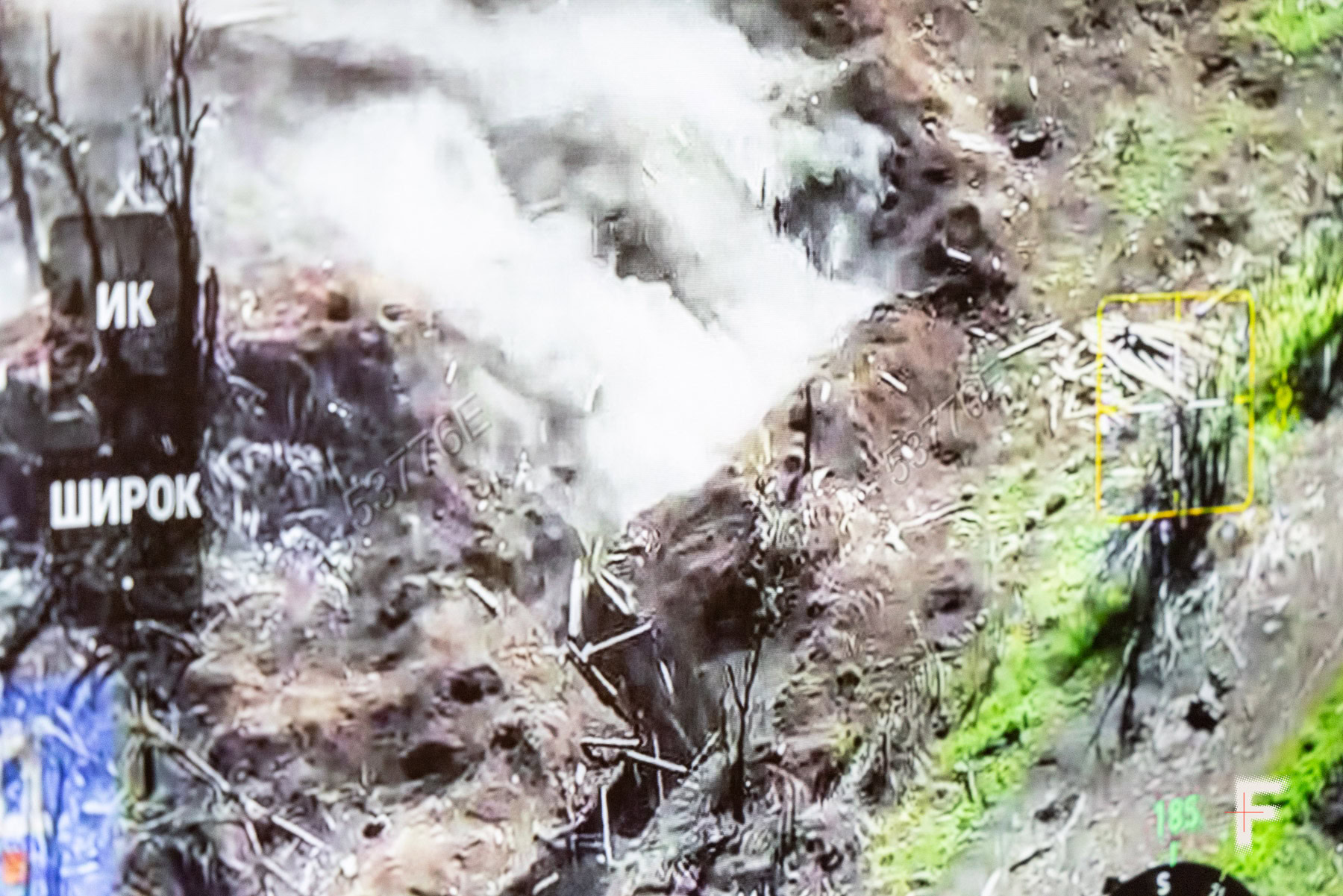
Shown on the monitor: Russian positions are struck by Ukrainian artillery and drones. Command post of the 1st Assault Regiment named after Dmytro Kotsiubailo, Dobropillia area, April 28, 2025. (Andriy Dubchak/Frontliner)
-
Shown on the monitor: a tree line is struck by artillery and drones during an assault by Ukrainian infantry. Command post of the 1st Assault Regiment named after Dmytro Kotsiubailo, Dobropillia area, April 28, 2025. (Andriy Dubchak/Frontliner)
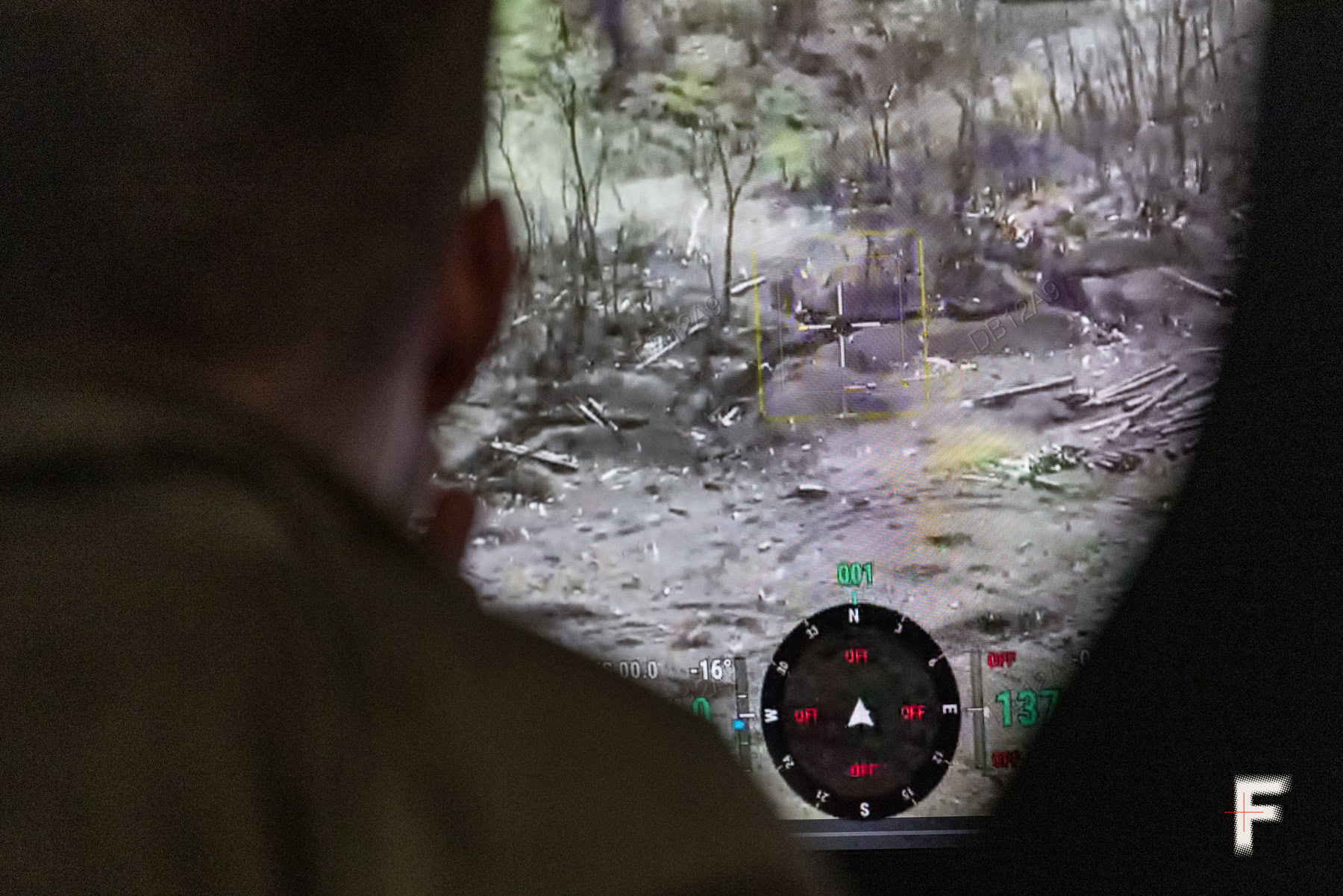
“Turyst” calls for artillery support: “Your next mission is to the position. Prepare one high-explosive shell and one fragmentation round. If it goes smoothly, next time you’ll take three.”
The ratio of heavy artillery in this operation is roughly even with the enemy, but the Russians have a large number of mortars, which they use efficiently and quickly.

At 7:27 p.m., another MaxxPro armored personnel carrier drops off infantry from the 1st Assault Brigade. The vehicle is hit by an enemy drone, but the driver and the crew manage to jump out and take cover in the tree line. “Tantsor” worries that the Russians might spot the concentration of troops.
“Load the smoke rounds and get airborne before they get blown up out there!” “Tantsor” shouts.
“Wind is from the south, above the tree line,” “Turyst” immediately calls out the coordinates and gives the order to provide cover.

“Guys, keep moving, don’t bunch up – there’s definitely cover nearby,” shouts the company commander, “Yozh,” over the radio. Then, for almost the first time during the operation, two infantrymen, “Tykhyi” and “Maniunia,” respond – they’ve just run out of the vehicle hit by a drone. Everyone at the command post falls silent to hear what they say.
By 8:00 p.m., half the group is experiencing communication issues.
Mission at 50% completion
“Tantsor” and “Turyst” step outside for a smoke. They need a moment to catch their breath before the next phase of the assault. Other soldiers take over at the command post while they are away.
There’s an unwritten rule for assault troops:
‘If 50% is done, it’s already a success.’

“We managed to get two groups onto two different flanks, split the enemy’s attention, and take two of the five planned objectives so far. One objective couldn’t be secured because the enemy struck our vehicle with a drone, and the motorcyclists hit a mine. We’ve completed at least half of what was planned. There’s an unwritten rule for assault troops: ‘If 50% is done, it’s already a success.’ That’s why we’re reinforcing our forces and aiming to take another objective,” says “Tantsor.”
According to him, the enemy is formidable. The Russians will try to counterattack and will reinforce their forces overnight. Right now, it’s crucial to prepare for heavy firepower strikes. As “Tantsor” says, it’s standard procedure. Tough fighting lies ahead, and what has already been captured must be held.

At night, the enemy attacks again. On the first day of Operation Bezia, 50 Russian soldiers are killed. The major assault actions continue for three days. In the end, three of the five planned objectives are captured. For the following week, the infantry clears the tree line that had been under enemy control.
This marked the beginning of the enemy’s current operations
Frontliner was on-site the evening of April 27, 2025, for the planning of Operation Bezia. At that time, the commander, “Perun,” ordered his troops to hold the five main attack objectives for ten days before handing the positions over to a neighboring unit. However, events unfolded differently.
“The positions we stormed were completely destroyed. So we cleared the area, returned to our original defensive line, and handed the positions over to another brigade. Overall, it was worth it,” says company commander “Yozh.”
Back then, we managed to stop them,
but now they are trying to break through again,

According to him, at that time the enemy’s behavior in the Pokrovsk direction was not typical.
“This was the start of the current enemy methods — they began sending in reconnaissance and sabotage groups, small infantry units. They were well-camouflaged and well-armed. Their main routes ran through narrow tree lines. They still use this tactic, but now it’s even more refined. Back then, we managed to stop them, but now they are trying to break through again,” says “Yozh.”
Despite the operation’s logistical complexity and the loss of life, “Yozh” says that not carrying it out would have brought even greater peril to Ukrainian defenders. Overall, the unit considers the maneuvers conducted during this assault a success. Enemy losses were far higher than those of the Ukrainian forces, and the advance toward Kotlyne and Pokrovsk was halted, giving time for defensive units to prepare.
Assault actions by the enemy in the Kotlyne area continue to this day, and the Russians have made some gains. Pokrovsk suffers from urban fighting and sabotage attacks. Dobropillia is also under heavy bombardment, as Russian forces have pushed toward the city. Russian drones are now reaching unprecedented distances – up to 40 kilometers – expanding the kill zone along the front.
After Operation Bezia concludes, part of the first group still doesn’t make contact. A week after the assault begins, “Maniunia” and “Tykhyi” manage to leave the tree line they held until the end.


***
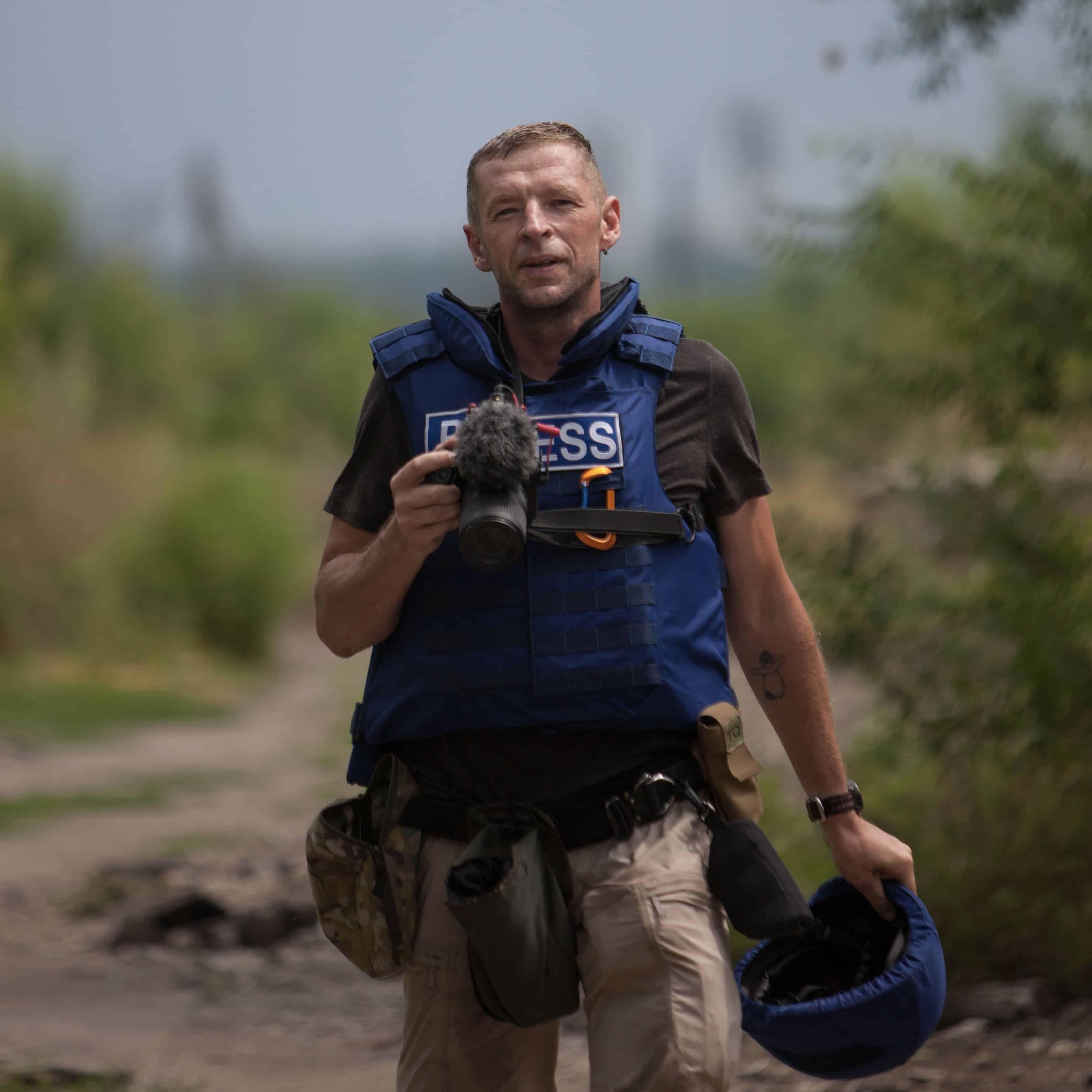
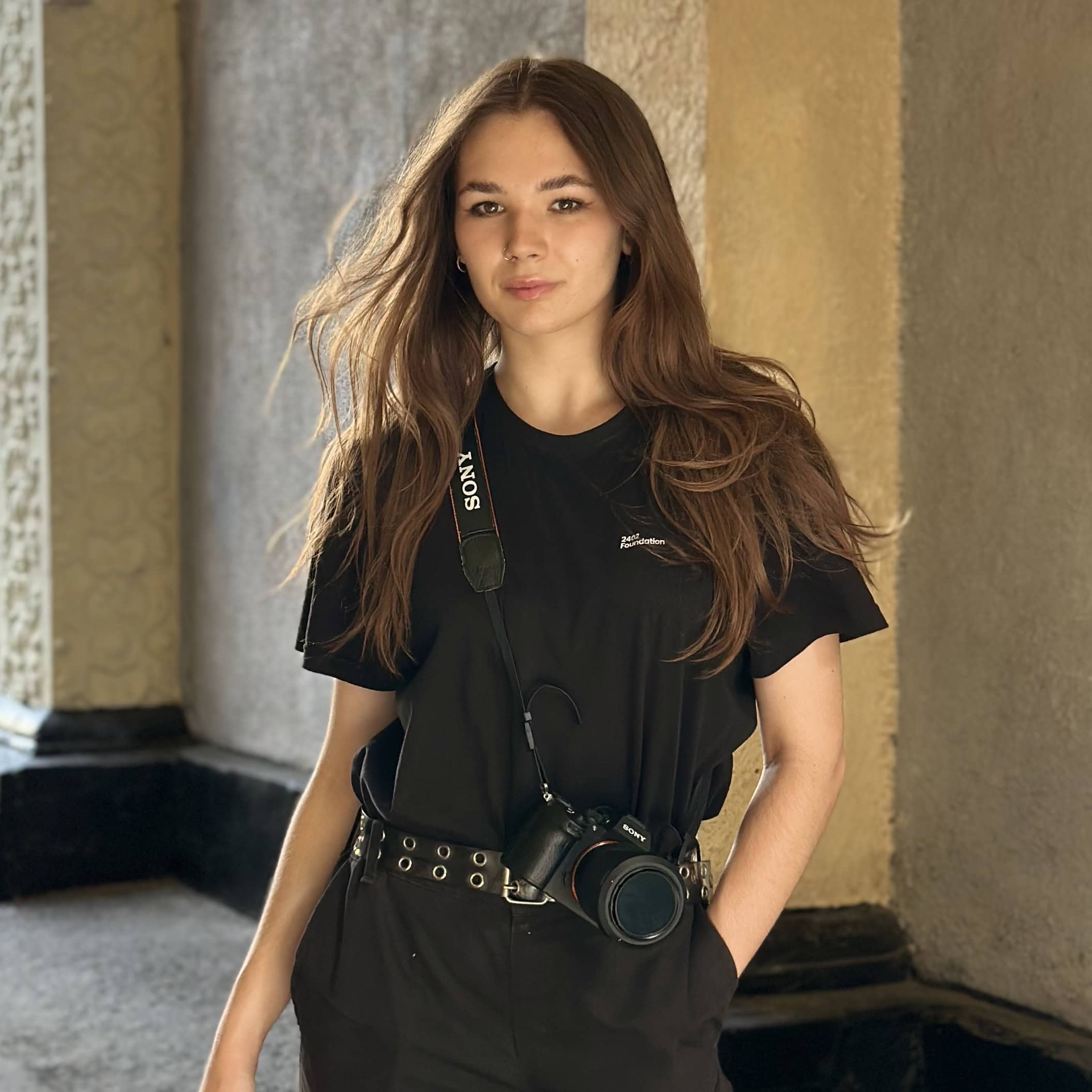
Hi, we are Andriy and Albina, the authors of this article. Thank you for reading to the end.
The MaxxPro column has already started its engines.
In front of me is the face of the youngest assault rifleman, 22-year-old “Sukhar.” He gives a thumbs-up and nods: everything will be fine. The armored vehicle’s tail closes – the column moves. The assault is ahead.
That day, “Sukhar” disappeared without a trace. And he was not alone.
This assault stopped the Russian advance near Pokrovsk. It was one of thousands of battles that held the defense for months.
You should know about it.
We are publishing this material a year after those events.
***