Life among the ruins and abandoned gardens of frontline Pokrovske
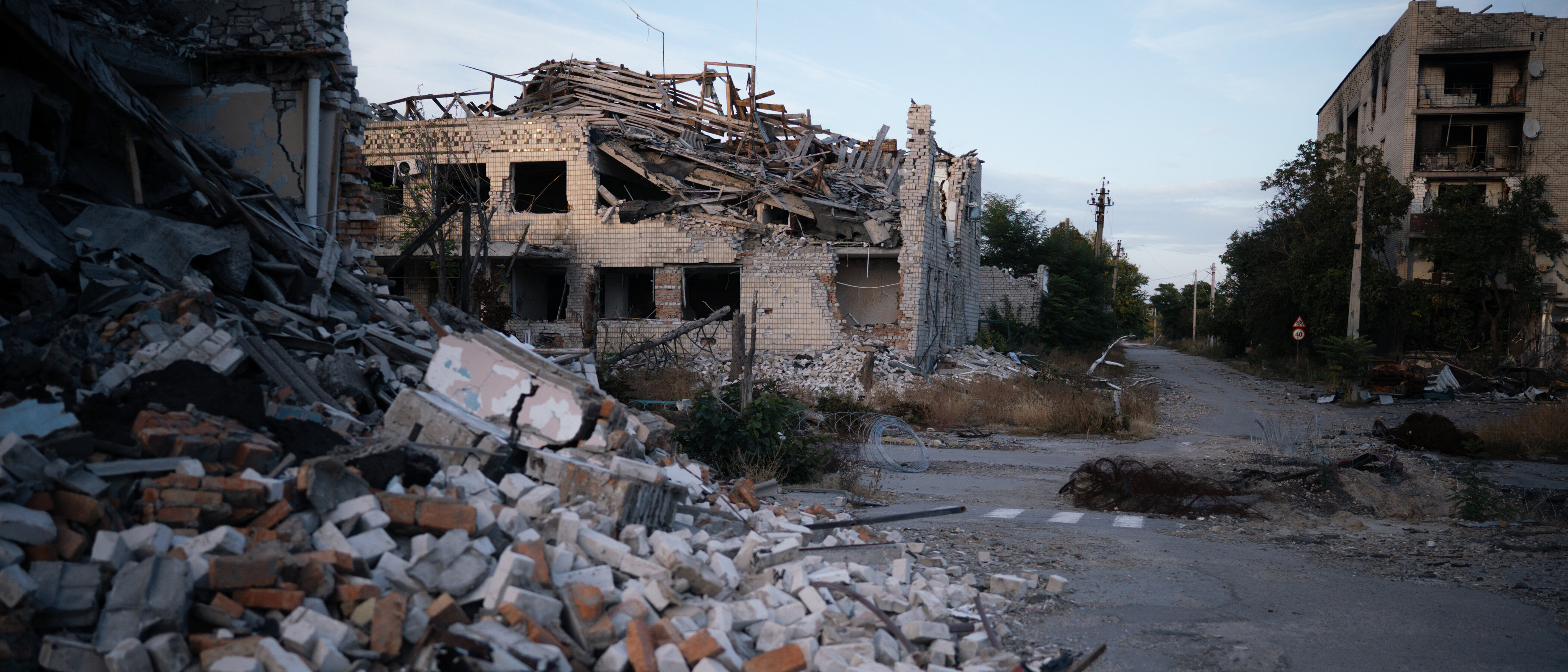
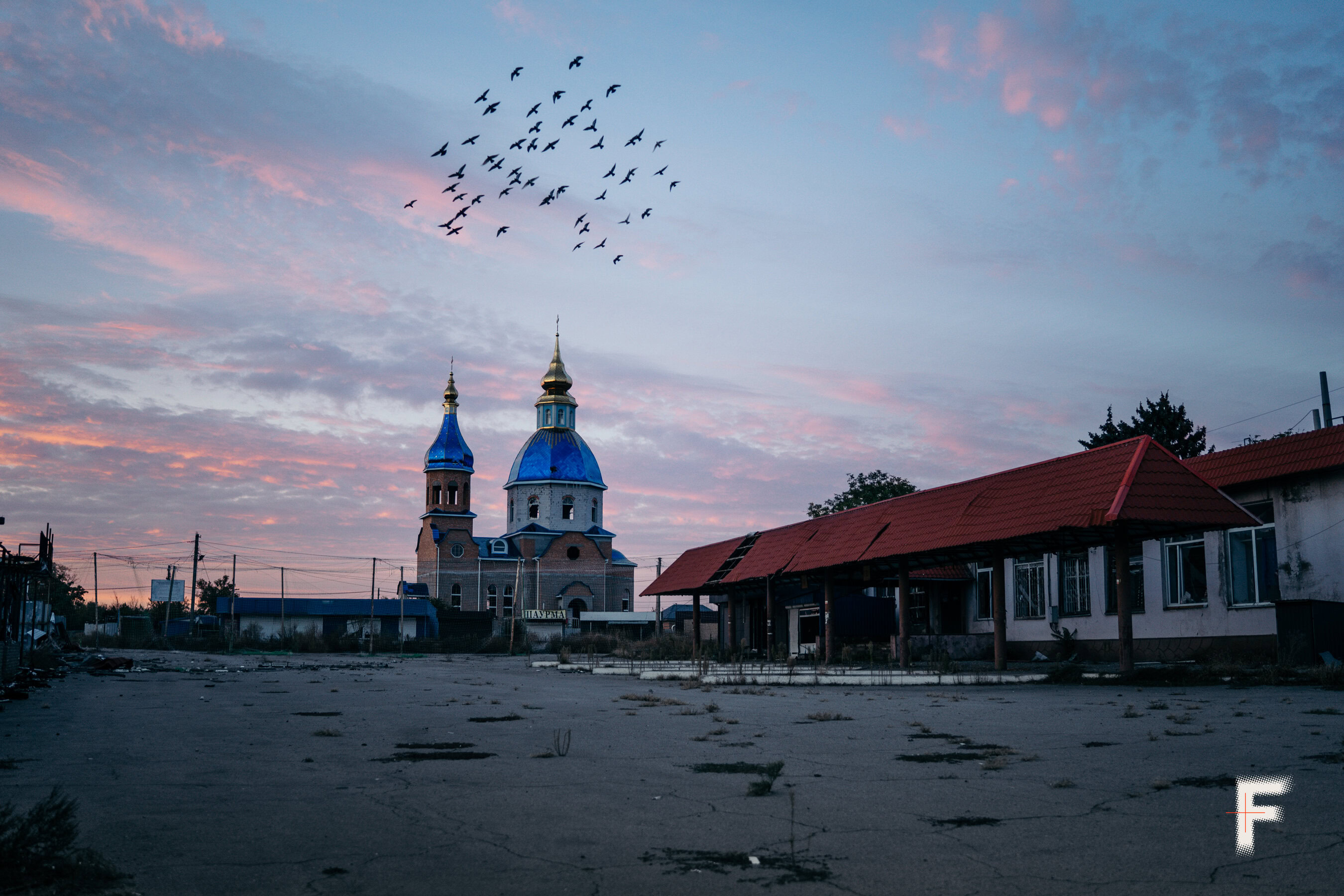
Human voices are barely heard in Pokrovske, Dnipropetrovsk region. Explosions, the buzz of first-person-view (FPV) drones and the barking of abandoned dogs pierce the silence. Amid the ruined houses in the village center stands the damaged Holy Protection Church, once Pokrovske's symbol. Despite being close to the front line and facing constant danger, residents who do not want to leave their homes remain here. The Frontliner report explores how they survive just a couple of dozen kilometers from the hostilities.
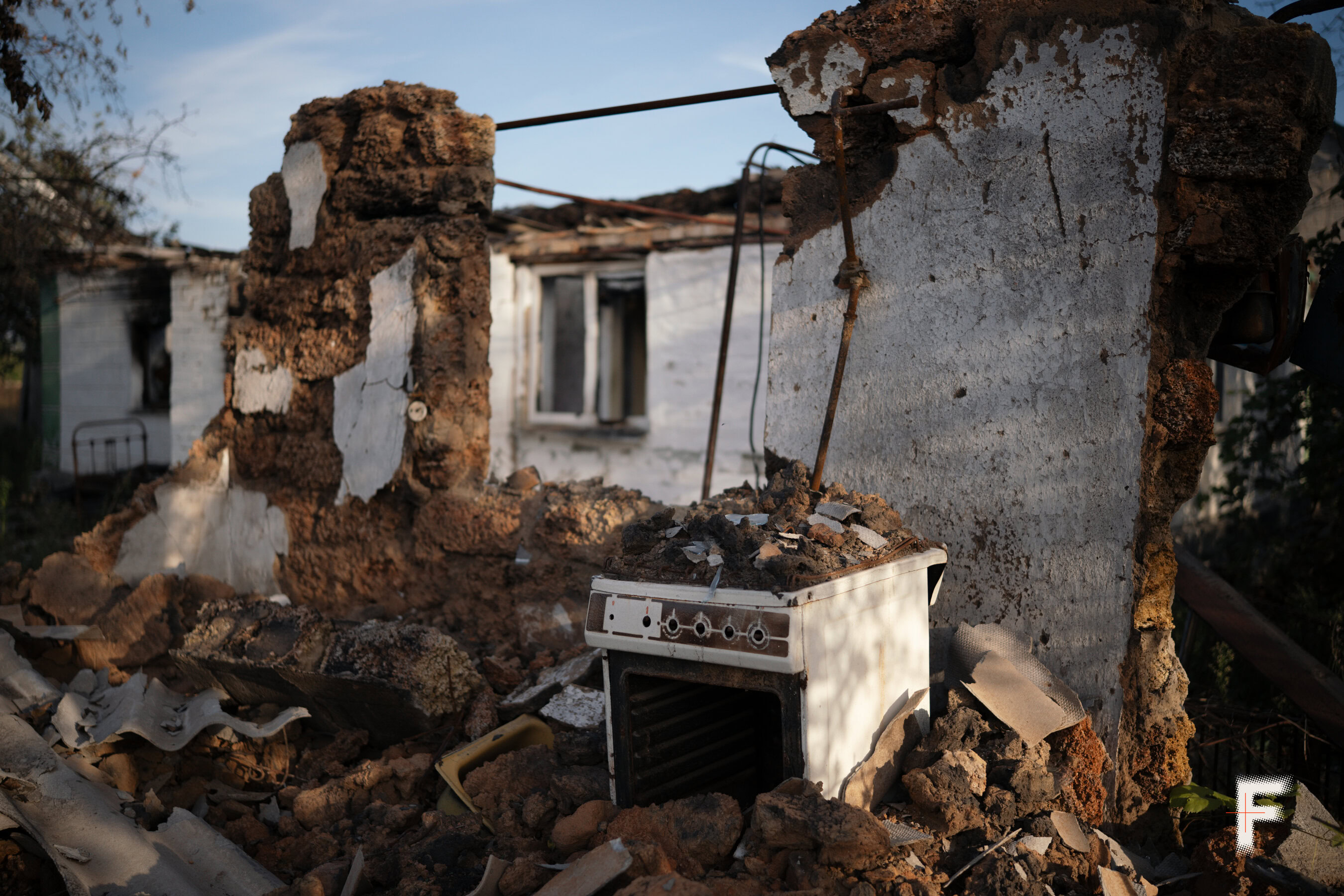
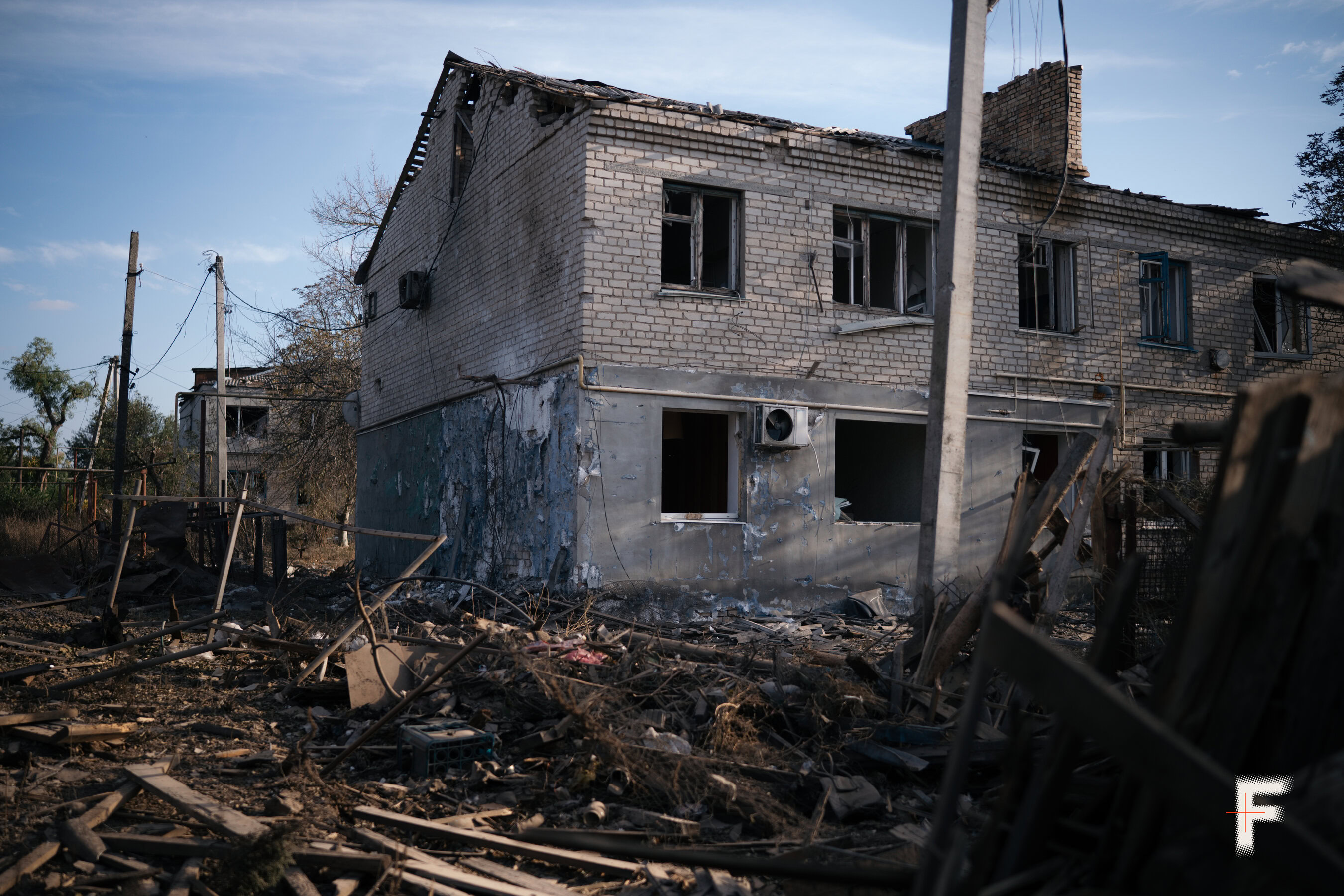
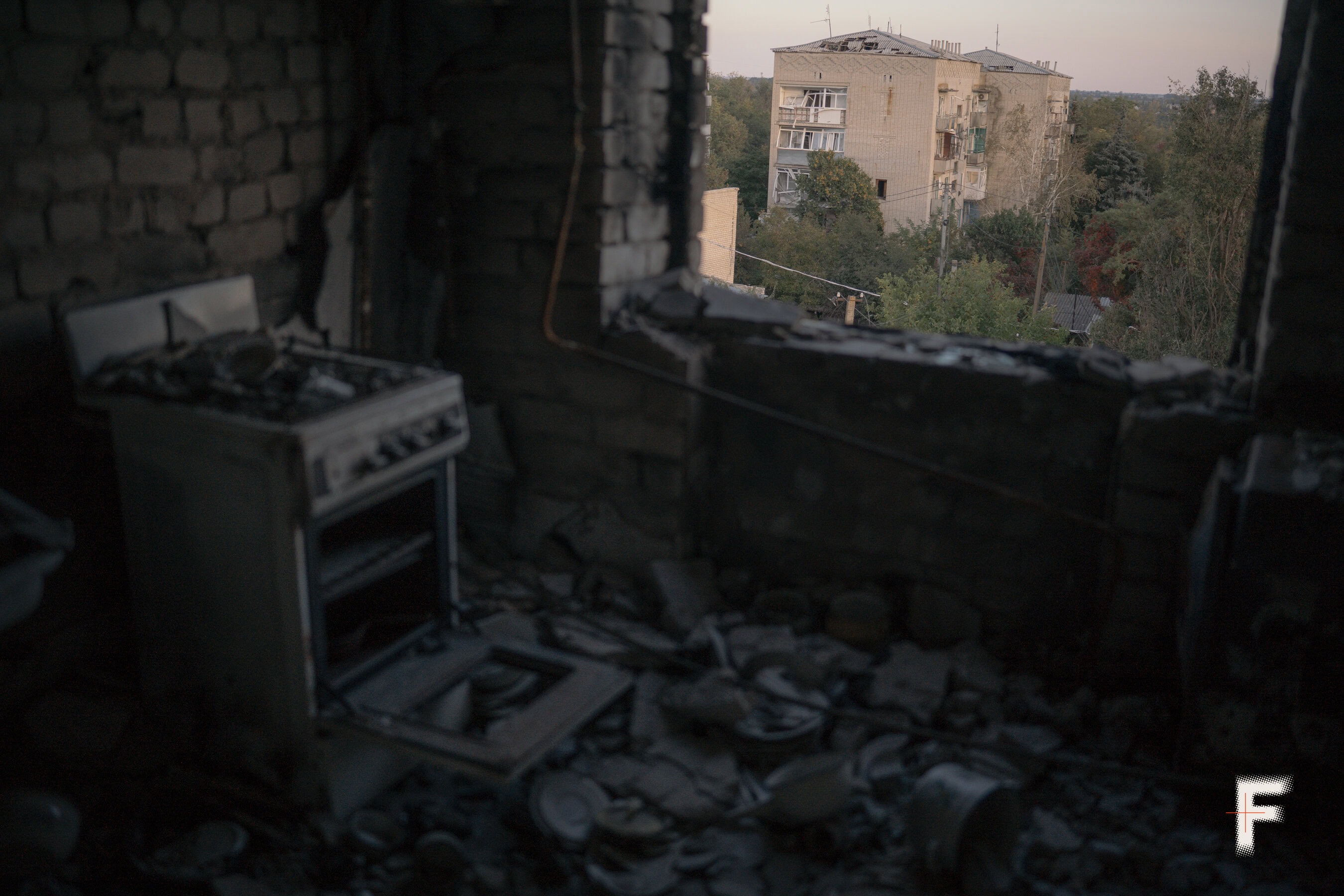
The streets of Pokrovske are pockmarked with craters from Russian airstrikes. Broken branches are scattered everywhere. Inside the ruined homes, battered furniture and residents’ personal belongings remain among the debris of brick and glass. Russian shelling, which intensified at the end of 2025, has destroyed and damaged numerous buildings. A monument to a MiG-21 fighter jet towers in the center. Nearby, there are shattered market pavilions and battered administrative buildings.
-
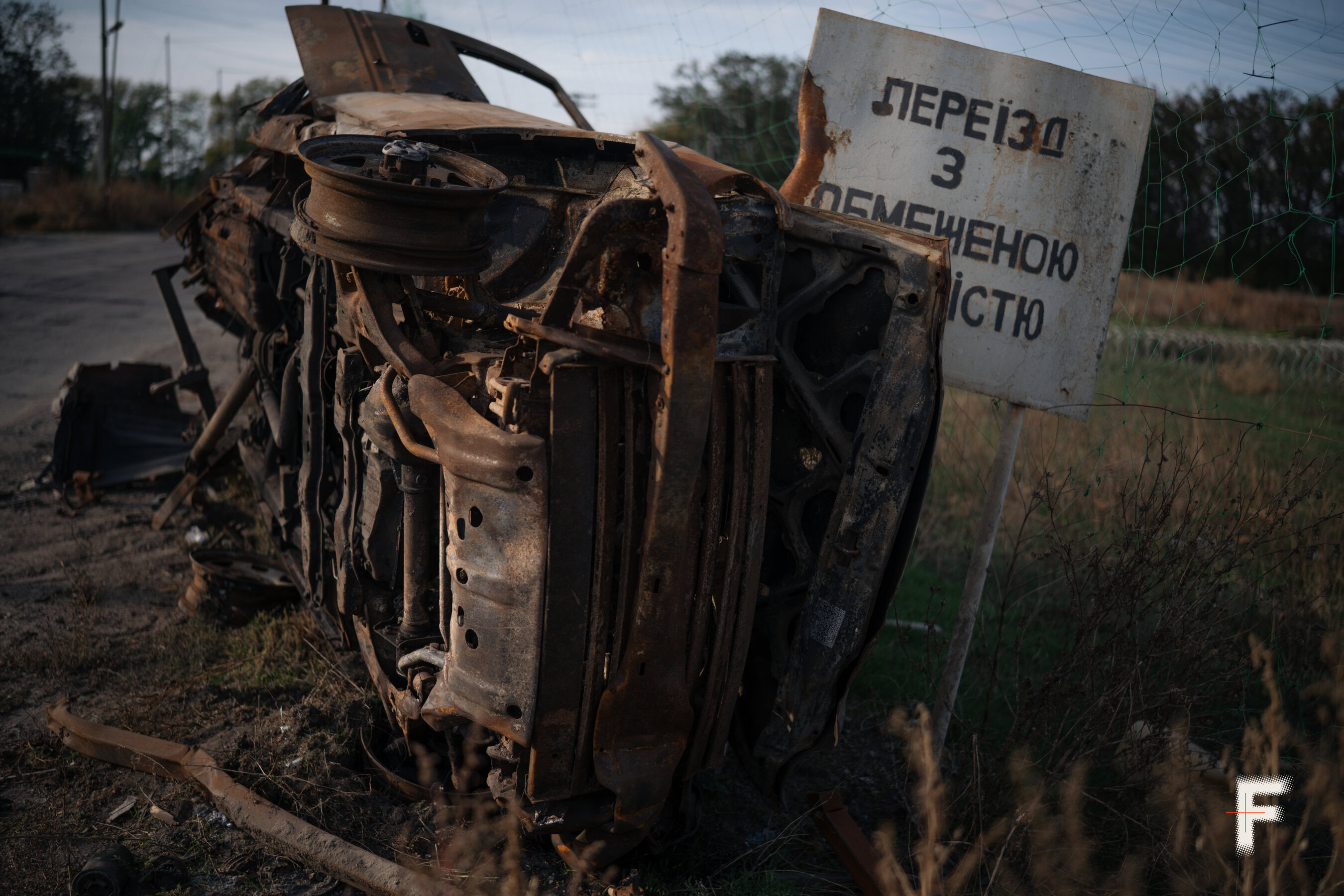
A destroyed car, Pokrovske, Dnipropetrovsk region, Ukraine, Oct. 8, 2026. (Marharyta Fal/Frontliner)
-
A ruined house, Pokrovske, Dnipropetrovsk region, Ukraine, Oct. 8, 2026. (Marharyta Fal/Frontliner)
-
Shattered yards, Pokrovske, Dnipropetrovsk region, Ukraine, Oct. 8, 2026. (Marharyta Fal/Frontliner)
Oleksandrivka axis: How Ukrainian forces stopped the Russians
According to the Ukrainian Air Assault Forces Command, the distance from Pokrovske to the line of contact was approximately 10 kilometers in May 2026. Now, it has grown to 24 kilometers. Pokrovske lies in the Oleksandrivka axis, where Ukrainian Armed Forces units, including the Air Assault troops, have carried out defensive and counteroffensive operations between January and August. This area marks the junction of the Donetsk, Dnipropetrovsk and Zaporizhzhia regions.
During the operation, the Ukrainian forces liberated 745 square kilometers of territory and 26 settlements, including 12 in the Dnipropetrovsk region. According to the military, Russians aimed to capture Pokrovske to create a staging ground for future offensives. Capturing the settlement would have opened the way to Mezhova and Pavlohrad and created a direct threat to the regional capital.

The Ukrainian military managed to halt the Russians on the outskirts of Pokrovske, says Serhii Kolesnichenko, a press officer for the 148th Artillery Brigade who goes by the call sign “Spets.” Since then, the intensity of shelling in the settlement has decreased. However, the military officer warns against lingering on the deserted streets.

Roughly every 40 minutes, FPV drones fly overhead,
along with Lancet loitering munitions,
He constantly reminds everyone to listen closely and keep an eye on the sky.
Abandoned orchards and left-behind dogs
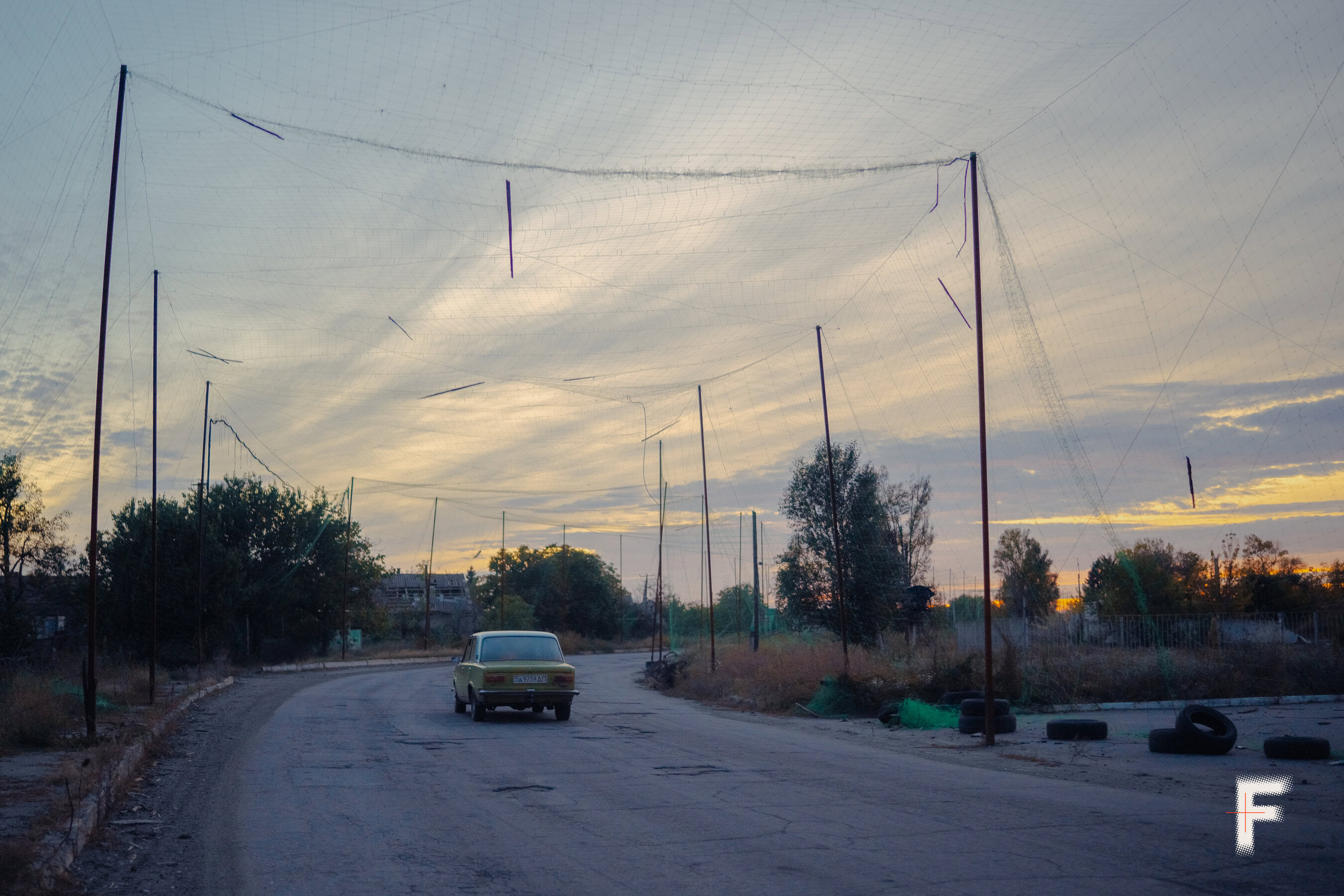
Spirals of barbed wire stretch along the settlement’s streets, and burned-out cars sit on the roadsides. Trees and fences are entangled in a thin web of fiber optics. Beyond them lie the damaged roofs of private houses. Judging by the architecture and the layout of the yards, these were expensive country homes with modern finishes, of which almost nothing remains. Here and there, abandoned gardens and orchards can still be seen.

“Be careful, there are a lot of dogs here, and they are very aggressive,” Kolesnichenko says.
The barking of dogs echoes through the streets of Pokrovske. Due to a sudden intensification of shelling, residents were forced to flee their homes, leaving their pets behind, some even chained up.
Kolesnichenko advises stopping only in places that offer at least partial cover, such as under tree canopies or in yards with overhangs. In one such spot, “Spets” takes out the pet food he brought with him. As soon as he opens a can of wet food, three dogs rush over to him.

“The locals who stay behind feed them. But otherwise, they are homeless, dying from the shelling and from starvation,” Kolesnichenko says.
Without electricity, water and the desire to leave
According to the State Statistics Service of Ukraine, 9,500 people lived in the settlement before the full-scale invasion. In December 2025, a mandatory evacuation was announced in the community. It is unknown how many residents remain in Pokrovske today, but locals say they are predominantly elderly.
According to residents, they almost never go out after 3 p.m. because of the threat of FPV drones, which can attack at any moment. Suddenly, a woman’s voice breaks the silence.
An elderly woman carrying bags walks through the yard of a five-story apartment block. She talks about living without electricity, gas and water.
We have nothing, no electricity, no gas and no water!
It’s been gone for a long time.
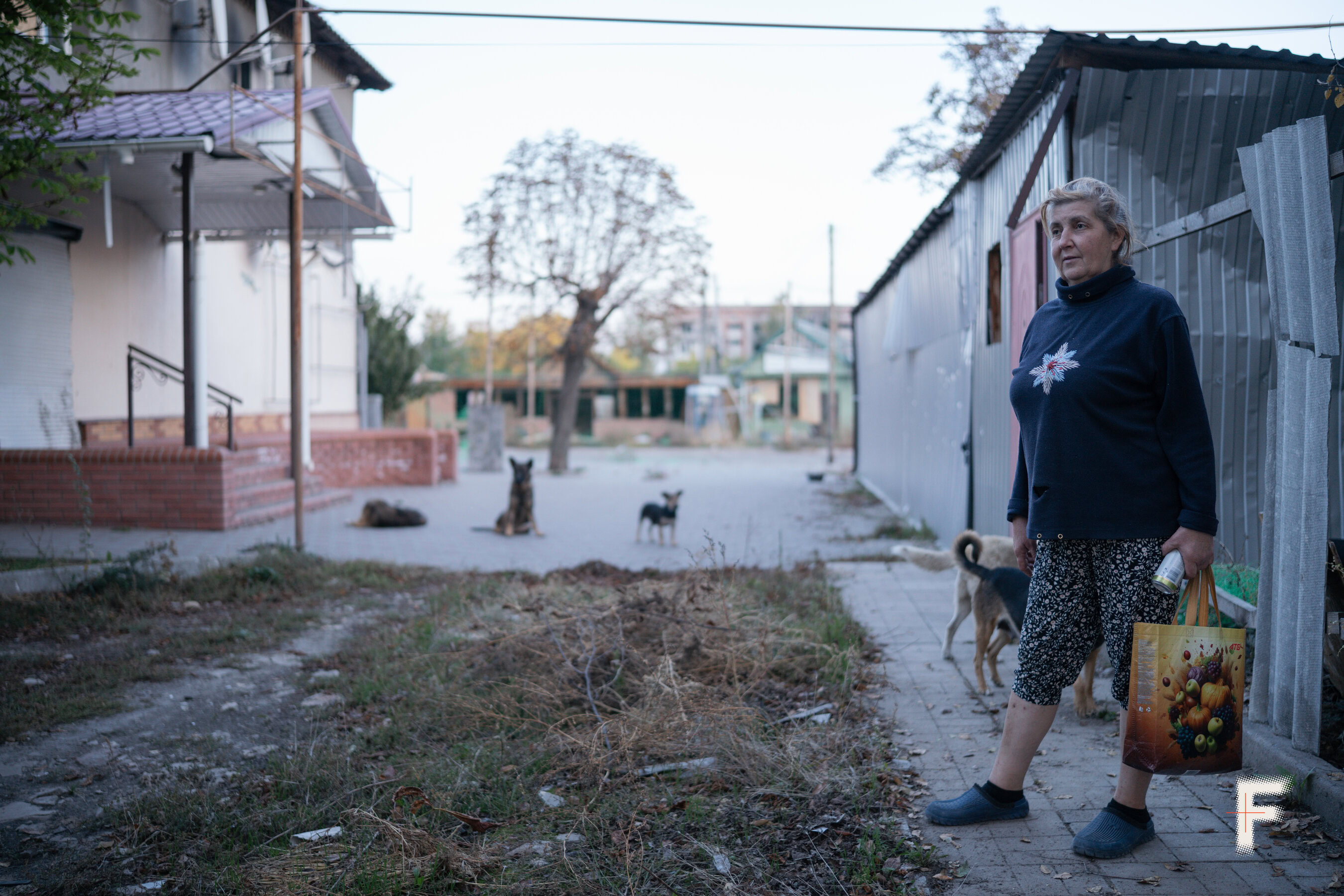
“We have nothing, no electricity, no gas and no water! It’s been gone for a long time. We stay out of sight because drones are constantly flying overhead. They [the Russians – ed.] are watching from the sky. They see how people move, and then those places get hit. Who needs that?” the local resident says emotionally. She refuses to give her name, not wanting anyone to know her whereabouts.
Pokrovske has no electricity, gas or centralized water supply. Mobile service is spotty, and there is no internet. Locals draw water from wells and cook their meals using gas cylinders. Shops are closed, and residents say volunteers bring humanitarian aid irregularly. As a result, they have to rely on supplies stocked up back in the summer.
“We have already adapted to these conditions. Though, believe me, we don’t like it at all. But where would I go? Where would I live? How would I pay for it?” she says. “My pension barely covers food. I left once and came back. I’m not leaving again.”
They want to live here.
Because this is their home.
Other locals interviewed also do not plan to evacuate. One of them, who also asked to remain anonymous, claims that hundreds of people are still staying in Pokrovske.
“The fact that we don’t walk the streets and stay out of sight is the right thing to do, because we don’t want to provoke the enemy [Russians – ed.],” the resident says. “But there are a lot of people here. And they are doing the right thing by living their lives. As this is not the first or second line of the front. This is the rear. You are doing the right thing telling people about the war. Make sure to mention that people here are holding on to life because they want to live here. Because this is their home.”
Winter in their own basement
As twilight fades into darkness, an elderly couple cleans the yard of their private house. Antonina and Mykhailo Illienko remain in Pokrovske, even though they are forced to live in the basement of their own home.

“We had a strike right here. I was hit hard on the head and barely survived. My blood pressure spiked to nearly 240. We are terrified. But we are staying to look after the household,” Antonina says.
Mykhailo points to a fresh crater just five meters from their house. He says such strikes are not uncommon here.
“The crater is deep. It’s terrifying,” he says.
The Illienko family, like other residents of Pokrovske, face another winter without electricity, gas and water. Locals say they are prepared for the cold. Some stockpile firewood, while others are setting up wood-burning stoves or looking for basements to spend the winter in.

***
Frontliner is independent. Our readers help fund our reporting on the war and the people living through it. Subscribe on Patreon to keep us on the road.
***