Riding the rails between air raids: How war changed train travel in Ukraine
One passenger is returning from her husband's funeral, another is traveling to Lviv for studies, and a passenger in a different carriage is heading to a concert in Kyiv. Everyone has their own destination, yet they are all bound by a journey that an evacuation due to the threat of a Russian strike could cut short. Despite this, voices and laughter echo through the carriages, and the conductors keep pouring boiling water into glasses with metal holders. Frontliner rode the Kharkiv-Uzhhorod train to find out how the war has changed railway travel.
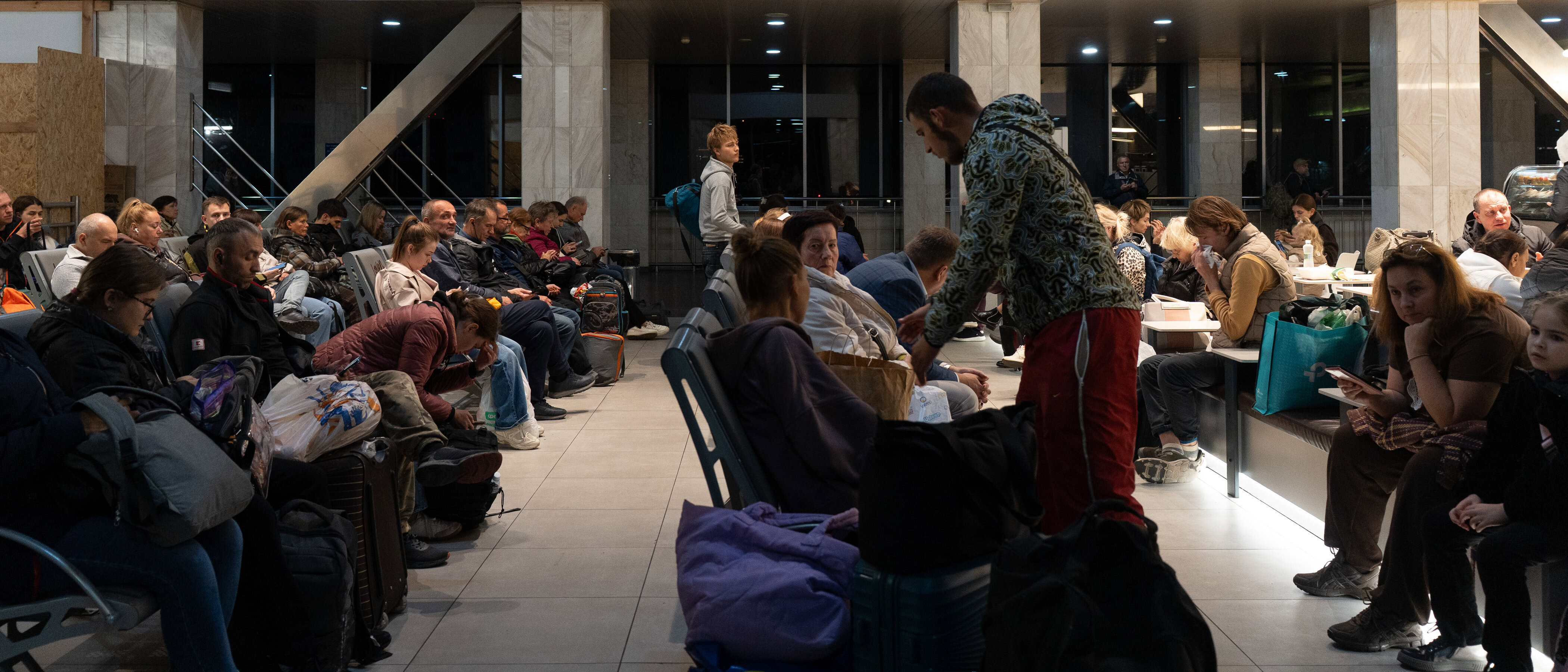
An air raid alert delays the train’s departure from Kharkiv by half an hour. The station is busy: service members and passengers with large suitcases wait to board. Conductors check tickets near the train carriages. Following the delay, the train finally sets off. Fields, villages and damaged buildings glide past the windows as the carriages sway over the joints in the tracks.
A conductor walks down the aisle, smiling as he offers passengers tea and coffee. On his shoulder, instead of the standard Ukrainian Railways patch, Dmytro Konovalenko wears one that, he says, means “Ukraine will win.” He has worked on the railway for 17 years.
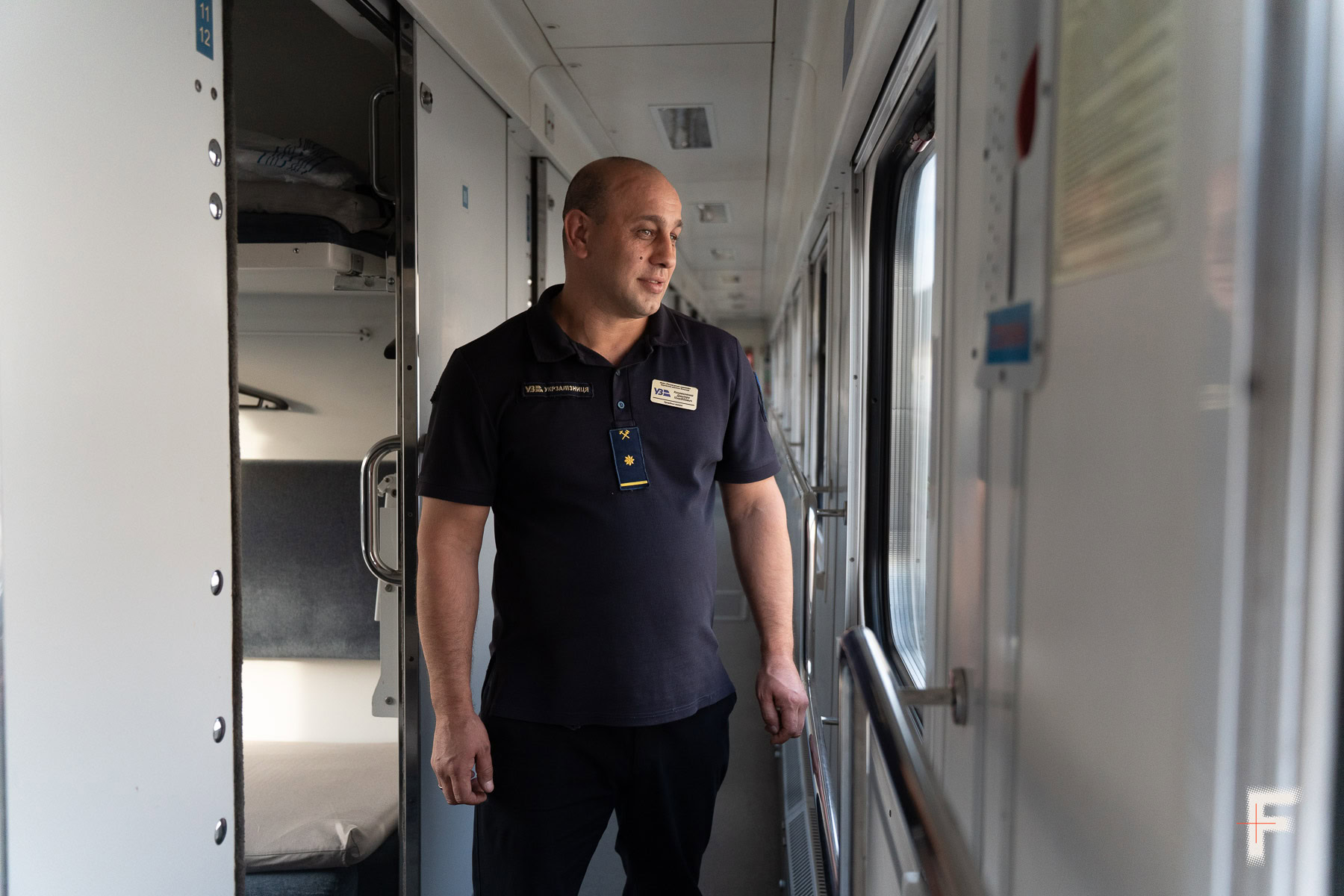
Already during boarding, Dmytro pays close attention to passengers with limited mobility. He explains that he finds people in advance who can help them reach a safe place in case of an evacuation. If the train chief orders a stop and evacuation, Dmytro turns on the loudspeaker and repeats the instructions several times. He asks passengers to take their documents, phones, medication and water, and updates them on the weather outside. If it is cold or rainy, he suggests taking a blanket or raincoat.
Often, not all passengers are willing to leave the carriage, Dmytro says. While official protocols do not require him to convince every person, he tries to explain why staying put isn’t worth the risk. He tells them that everything will be fine, but warns against tempting fate.
According to Dmytro’s observations, passenger numbers on his routes dropped noticeably in July 2026. He attributes this to intensified Russian attacks on the railway and the resulting increase in unscheduled stops.
A passenger interrupts Dmytro mid-sentence, stepping into the conductor’s compartment to order coffee. Dmytro asks him to wait for the kettle to boil, promising to stop by his compartment later to walk him through all the coffee options provided by the railway.

“Nothing in life is perfect, but we strive to be better,” Dmytro says of his work.
Over the years of the full-scale war, he has noticed a shift in passenger behavior. In 2022, when evacuation trains from Kharkiv were overcrowded, people supported each other more often, the conductor says. Once, the conductors were looking for diapers for a passenger with a 3-month-old baby. When they found them, the woman took only three (just enough to last until her stop) and left the rest for others.
Now, Dmytro notes, passengers are less willing to sacrifice their own comfort. Some refuse to trade seats with people who struggle to reach the upper bunk. Others come to the conductors with complaints about things beyond their control: the wrong kind of carriage, a slow train or having to get off during an air raid alert.
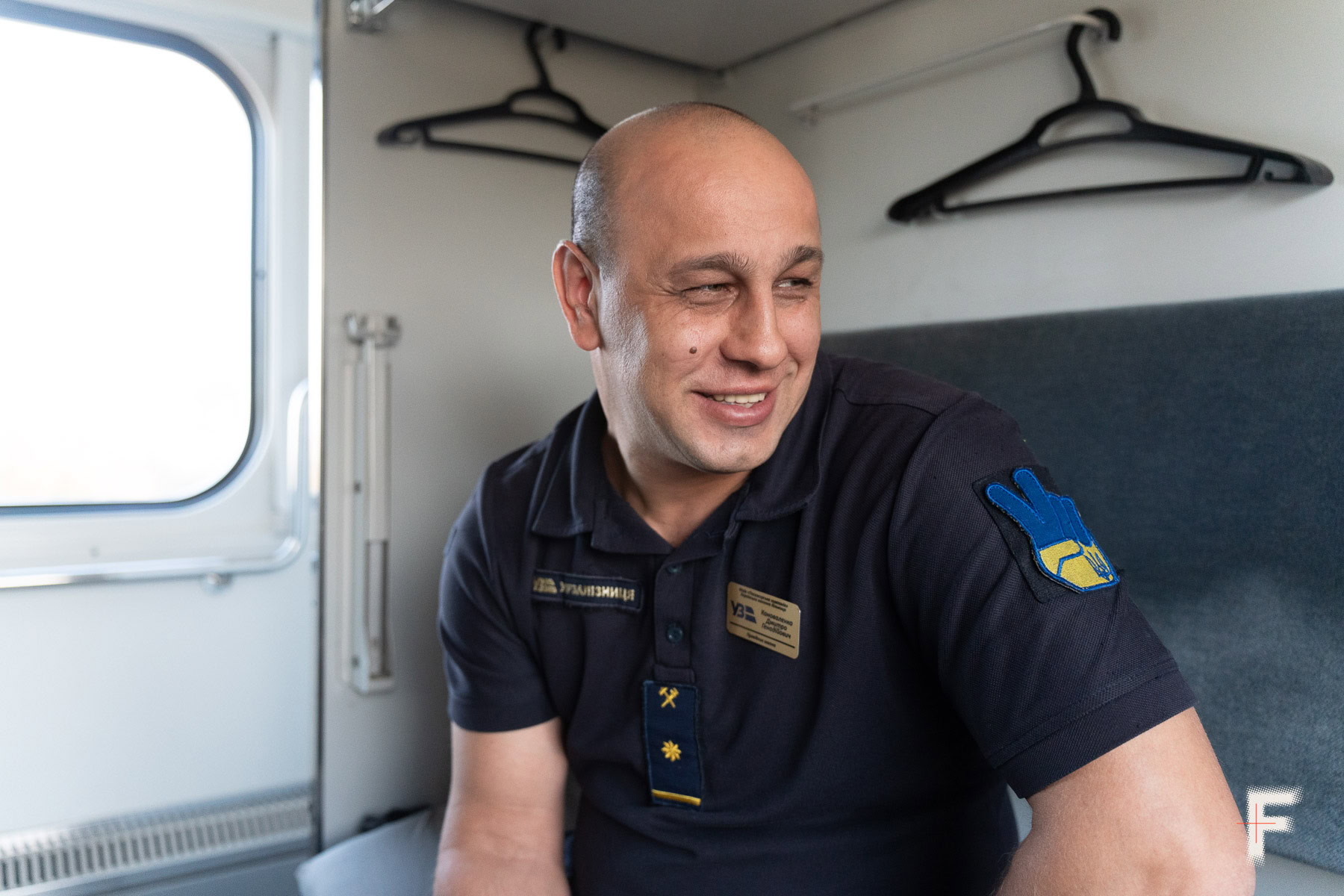
Despite his commitment to the job, Dmytro acknowledges that after so many years, it has become a routine. Due to a staff shortage, there is often only one conductor left in the carriage. Over a few days on the route, there can be two, three or even four evacuations. Between evacuations, he must clean the carriage, attend to passengers and sometimes calm down those who have had too much to drink. He has almost no time to rest: even when he gets a chance to lie down, someone approaches with a question or asks for assistance.
At the station in Poltava, Dmytro steps out onto the platform to help passengers carry their luggage and to check the tickets of those boarding. He greets everyone with his usual smile. “Seat 12, third compartment, right this way,” the conductor says, assisting passengers with their heavy suitcases.
Getting home
In the brightly lit compartment, empty coffee glasses sit on the table as passengers engage in lively conversation. Among them is Oksana Sievierina. She smiles despite the visible fatigue and slightly smudged makeup on her face.

Oksana is traveling from Kharkiv via Uzhhorod back to Slovakia, where her daughter is waiting for her. Her daughter insisted that she take the train instead of a bus: after everything she had been through, Oksana needed rest and comfort. Oksana had traveled to Kharkiv to attend the funeral of her husband, Artem. He was in a car with Oksana’s mother when a Russian drone attacked the vehicle. Her mother suffered burns and another concussion. Oksana’s husband did not survive.
The journey to Kharkiv proved longer and more difficult than Oksana had expected: due to repeated evacuations, the train was delayed by eight hours. But at the time, she barely noticed the stops. Her mother-in-law was in the intensive care unit after learning of her son’s death, her own mother was suffering from burns, and Oksana did not know when she could say goodbye to her husband. Evacuations were the last thing on her mind, she says, as her only goal was reaching Kharkiv.
A Russian missile hit Oksana’s apartment in Kharkiv on Easter 2022 while the family was home. Her mother sustained her first concussion during the attack, and shrapnel wounded Oksana’s daughter. After the strike, the daughter relocated to Slovakia, where Oksana visits her from time to time.
Oksana says that after everything she has been through, she has almost stopped fearing danger and pays little attention to potential evacuations. Despite the threat of strikes, she says she will return to Kharkiv as soon as her daughter is okay with it.
“Even if the war is endless, if my daughter lets me go, I’ll head straight to Kharkiv,” Oksana says.
For her journey home, she notes, she will most likely choose the train again.

Eight hours in a shelter instead of resting
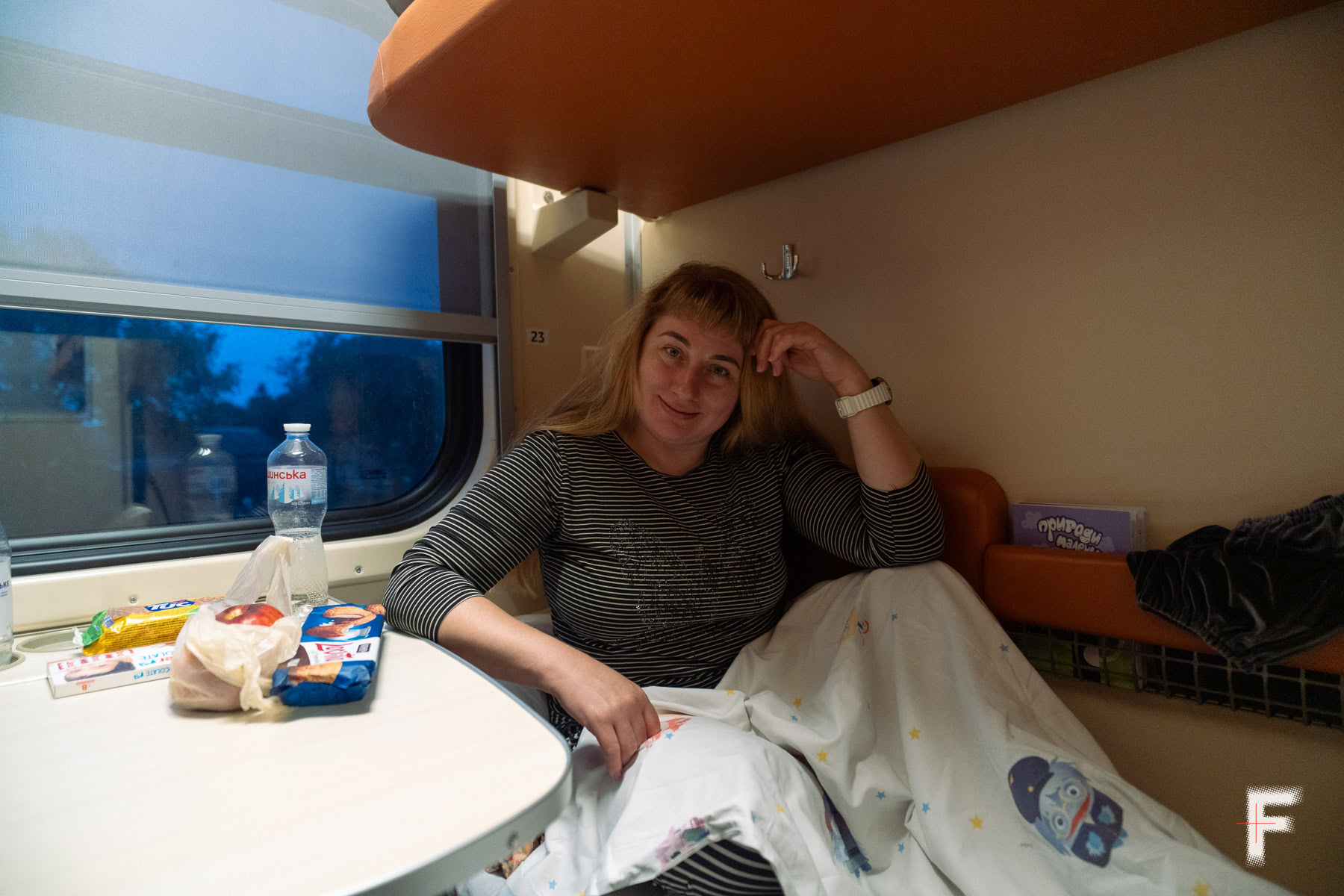
As the sun slowly sets, lights flick on inside the carriages. The laughter of two women echoes from behind a partially open compartment door. They have already changed into their pajamas and are resting. The bottom bunks are covered with cartoon-themed bed linen, and cookies and apples rest on the table.
The two psychologists are traveling from Kharkiv to Lviv for training. One of them, Mila Frantsen, says she frequently travels for training and retreats where psychologists can recharge and master new therapeutic methods. Despite the danger, she prefers the train for her journeys. For her, it is essential to have a lower bunk, grab a cup of coffee, use the restroom and get some rest along the way.
At the same time, she knows that an ordinary journey can turn out to be much longer than expected. In July 2026, she was traveling to a retreat, but instead of resting, she spent eight hours in a basement during a train evacuation caused by the threat of a Russian strike. The passengers chatted among themselves until the sounds of air defenses intercepting targets drowned out their voices, Mila recalls.
Over the course of eight hours, hunger caught up with the passengers. Not everyone had brought food, having expected a short trip. When one child grew hungry, people began sharing what they had. Eventually, they received food packs from the railway.
Now, Mila prepares for lengthy train evacuations well in advance. For this trip, she packed sliced bread and other food. Besides provisions, her backpack holds a tourniquet, medical gloves, and some first-aid supplies. It brings her peace of mind to know that in an emergency, she can take care of herself.
Traveling despite the danger
At the end of the carriage, a passenger looks closely out the window of a nearly empty compartment. Maksym Likhva is heading from Kharkiv to Kyiv for a concert. He often travels on weekends and during his time off. He says that trips help him recharge after exhausting days working two jobs. He says he prefers trains: you can get on in Kharkiv in the evening and arrive in Lviv or Ivano-Frankivsk by morning. Along the way, Maksym enjoys taking in the Ukrainian scenery and getting to know fellow passengers.
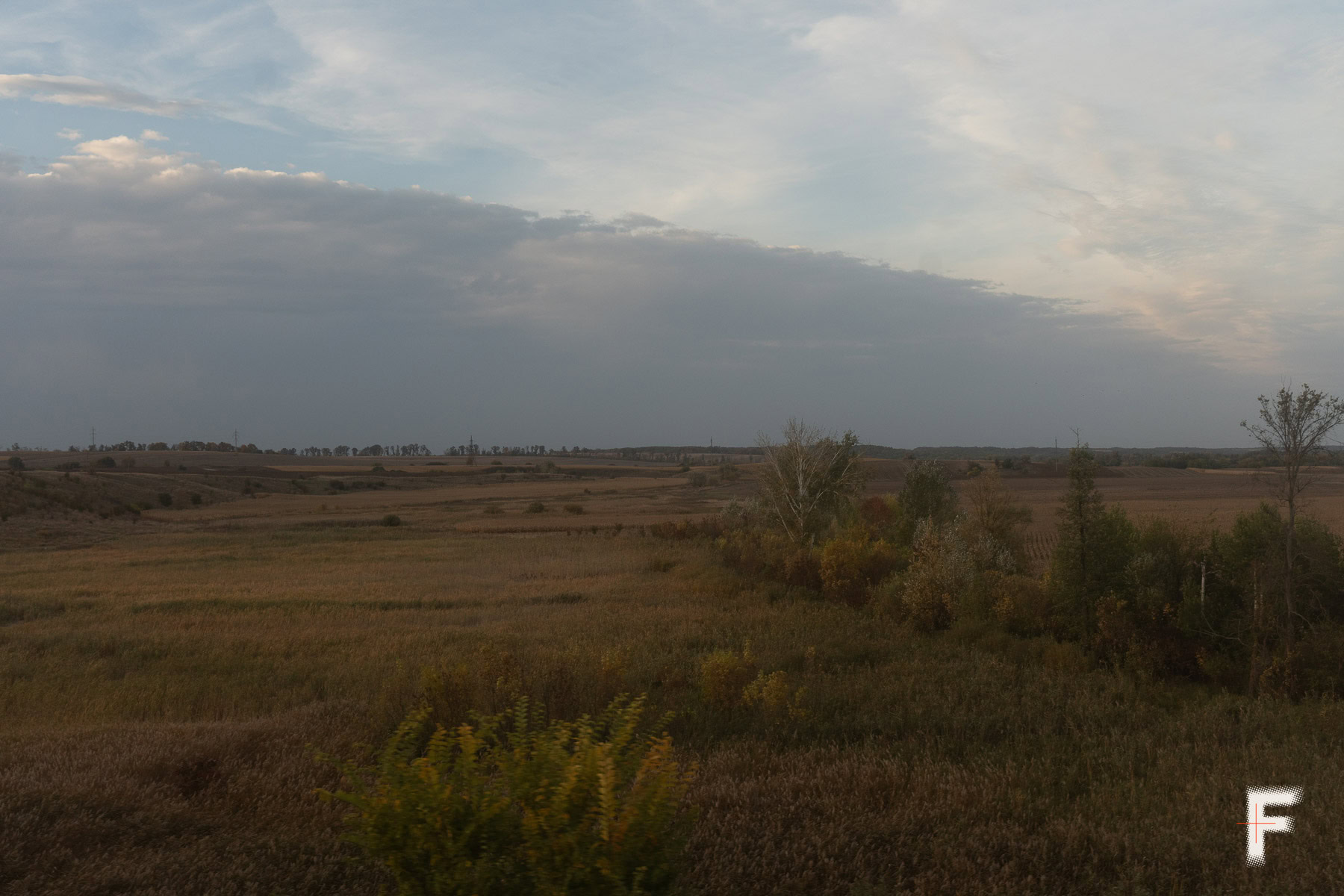
Even if he faces a delay this time due to an air raid alert, it does not bother him much. He factors in a few extra hours for his journey in advance to ensure he makes it to everything on time:
When it comes to comfort, pleasure and price, this is a better fit for me,
even knowing we might be evacuated for an hour due to an alert,
He says he tries to focus not on the danger, but on what gives him the strength to keep going. Maksym believes people must find ways to adapt to the new reality and continue doing what matters, including traveling:
“It is harder, more difficult, but it’s a journey. As the saying goes, the road is mastered by those who walk it,” he says.

This time, the Kharkiv-Uzhhorod train arrived at its final destination on time. Despite the delay at the start of the journey, passengers did not have to leave the carriages again to wait out an air raid alert. However, a timely arrival does not mean train travel has become any more predictable.
In September 2026, the threat of Russian drone strikes forced the evacuation of passengers from 5,831 trains, averaging 205 trains a day, Ukrainian Railways told AFP, as cited by Deutsche Welle. The longest forced stop in September lasted six and a half hours.

Meanwhile, since the beginning of 2026, the Russian army has damaged 310 Ukrainian locomotives. For comparison, a total of 227 locomotives were damaged from the start of the full-scale invasion through the end of 2025, Mykola Kalashnyk, Ukraine’s minister of restoration, infrastructure and transport, reported on September 18.
Responding to a request from Frontliner, the Ukrainian Railways press service said it could not provide general statistics on delays and evacuation numbers, stating it does not currently keep such records.
However, the company noted that the situation on the railway has deteriorated sharply since late summer following renewed, massive Russian attacks on energy and transport infrastructure.
“Amid air raid alerts and enemy threats, the safety of passengers and railway workers remains our priority. Ukrainian Railways is taking all possible measures to ensure stable train operations and the safe transportation of passengers,” the Ukrainian Railways response stated.
***
What amazed me most was how vastly different the stories of people sharing the same train can be. Every action has an underlying cause, and pain can hide behind a smile. I will always remember the humanity and dedication of train conductor Dmytro, Mila’s kindness, Oksana’s smile when she spoke about Kharkiv, and Maksym’s ability to find positivity in tough circumstances. This journey reminded me how important it is to be kinder to one another, as we never know what someone has been through before crossing our path.
Frontliner is independent. Our readers help fund our reporting on the war and the people living through it. Subscribe on Patreon to keep us on the road.
***