Leaving Hoverla behind for Romania: Guarding the border high in the mountains
In the Carpathian Mountains, at an elevation of nearly 1,800 meters (5,900 feet), lies one of the highest stretches of Ukraine’s border. This is the Marmaros massif, a range divided between the two countries, with a smaller portion in Ukraine and the larger share in Romania. In the past, guards frequently detained smugglers here. Today, these mountains attract citizens seeking to cross the border illegally and flee Ukraine. The mountain route is treacherous, and border guards often find themselves acting as rescuers for those breaking the law. Other times, they must carry down the bodies of those who did not survive. Frontliner reports on how border guards operate along one of the highest-altitude sections of Ukraine's border.
Nestled in Zakarpattia’s Rakhiv district, the village of Bohdan is surrounded by the tallest mountain ranges in the Ukrainian Carpathians, the Chornohora and the Marmaros. On one side lies Hoverla, Ukraine’s highest peak, and on the other is Pip Ivan Marmaroskyi, which tourists call the “almost two-thousander.” While Hoverla continues to welcome crowds of travelers in almost all seasons, even during the war, the Marmaros range is currently entirely closed to tourism. The reason is the border, which runs directly along the ridge.
Before the full-scale invasion, the Marmaros range attracted not only nature lovers but also tobacco smugglers. Cigarettes were carried across the border in backpacks, flown over on homemade aircraft, or hidden in forest stashes. Today, contraband smugglers have given way to people-smuggling guides and the individuals attempting to cross the border illegally. Would-be border crossers are charged between $6,000 and $12,000 for a route across the Tysa River or through the mountains into Romania. Typically, guides drop their clients off at a specific location, leaving them to navigate the rest of the way alone. Often, these individuals underestimate the rugged terrain, harsh weather, and their own physical limits. For many, the mountains ultimately claim their lives.
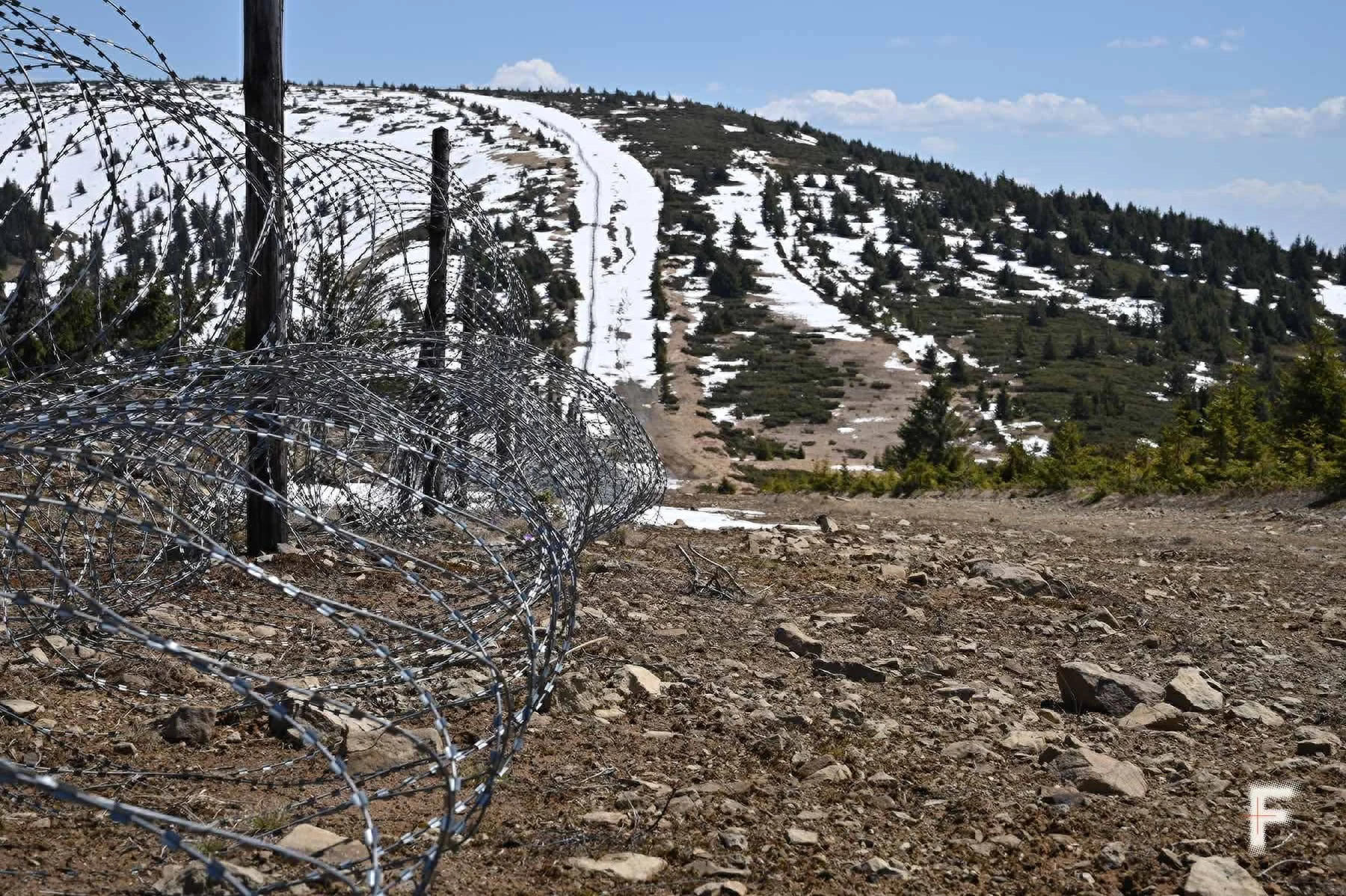
The Mezhypotoky peak is located right on the border between Ukraine and Romania, at an altitude of over 1,700 meters. While it almost feels like summer down in the village, up here, the highlands are still covered in snow and crocuses. The border runs exactly along the ridge: a few meters in one direction is Ukraine, and in the other is Romania. Nearby, still on the Ukrainian side, there are the so-called Rocks of Death. Barbed wire lines the boundary. Border guards say there was no need for it before the full-scale invasion, but today, the surging number of individuals seeking to cross the border illegally makes it a necessity.
Border guards patrol dozens of kilometers of highlands daily
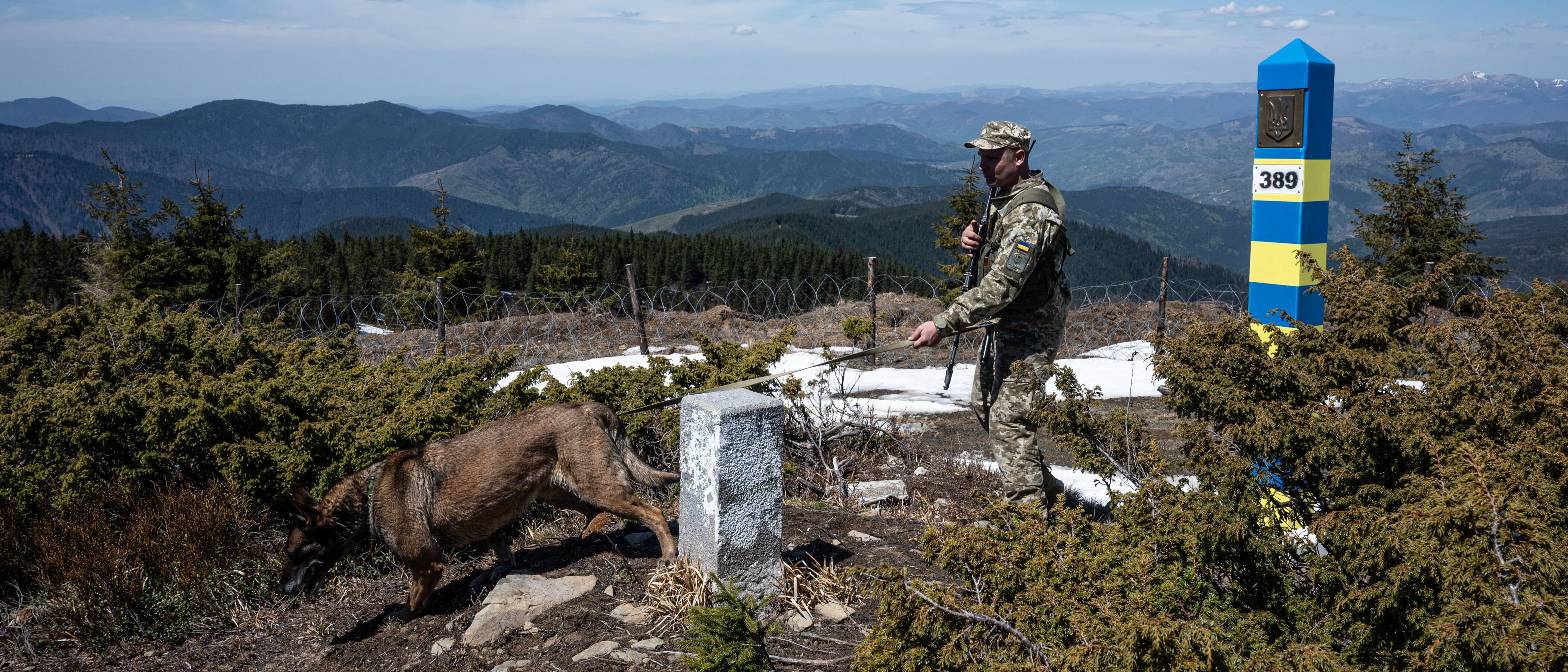
Border guards Yevhen Hnatiuk and Vladyslav Vlokh, accompanied by their service dog, Freya, head out for a highland patrol. For over two years, they have been serving at the Bohdan border unit right on the Ukraine-Romania line. The guards often patrol on foot, which involves trekking dozens of kilometers through challenging mountainous terrain. While they can rely on specialized vehicles in emergencies, the job usually demands long hours of walking.

A shift lasts between 8 and 11 hours, depending on the specific patrol sector. Just reaching Mezhypotoky is a challenge in itself. Border guards say that most trespassers simply do not realize what they are getting into; if they did, they would abandon the idea entirely.
This particular sector currently sees the highest number of illegal border crossing attempts. It is surpassed only by the Tysa River. Draft-age men often choose to swim across the river to reach the EU, failing to account for the strong current. This frequently ends in death, or for the lucky ones, apprehension.
One of the highest-altitude sections of the Ukraine-Romania border is monitored 24/7. Some areas are covered by guard details, while others are monitored using technology including trail cameras, optical and thermal imaging cameras, drones, and manned aircraft.
Navigating this kind of terrain is exceptionally difficult,
and such attempts often end in tragedy,

Escaping through the Carpathians often ends in tragedy
In 2025, guards in the Mukachevo border detachment sectors detained around 4,000 draft-age men and exposed 88 human smuggling networks. This year, patrols have already shut down more than 35 such channels.
“Navigating this kind of terrain is exceptionally difficult, and such attempts often end in tragedy,” says Lesia Fedorova, spokesperson for the Mukachevo border detachment, which includes the Bohdan unit. “The people heading into the mountains do not even realize what they are exposing themselves to, stepping into snow, rain, wind, and severe weather conditions. They don’t realize that covering one and a half to two kilometers on a flat plain takes an entirely different physical toll than conquering a high mountain pass.”
In the past, there were frequent cases of people dying in the mountains while attempting to cross the border illegally but this happens less often now. According to Lesia Fedorova, the overall number of attempts to flee to Romania through the high mountains has decreased since August 2025. The reasons include the permission recently granted for men aged 18 to 22 to leave the country, as well as an increase in the number of smuggler arrests. Fewer attempts to cross the border mean fewer tragic incidents.

Yevhen Hnatiuk surveys a section of the Romanian border near a post marking the boundary between the two countries. Over his left shoulder is Pip Ivan Marmaroskyi (1,938 meters), and over his right is Hoverla (2,061 meters). From this point, the Chornohora range is 50 kilometers away in a straight line, but the walking route is about 80 kilometers. Sometimes, escapees trek for nearly a month. Captain Ivan Babiichuk, head of the Bohdan border unit, recounts a case where a draft-age man walked through forests and mountains for 28 days. He nearly died; rescuers and a border patrol eventually found him unconscious.
Border guards rescue people abandoned by smugglers
Some escapees map out their own routes, but the majority pay large sums to smugglers. Walking dozens of kilometers through the mountains without preparation is difficult. When they find themselves in danger, the men or their relatives call border guards and emergency services asking for help.
A person gets exhausted quickly in the mountains. Trespassers often get into trouble.
While you can walk three kilometers in the mountains in two hours in good, dry weather,
in the winter snow, it will take a person six hours to cover those same kilometers.
There are many cases where we, together with the State Emergency Service,
have rescued them in the mountains.
Originally from the Khmelnytskyi region, he dreamed of working in the mountains. He admits he did not expect it to be so difficult, but he has grown to love the mountainous terrain, and his professional life continually brings him back to the mountains. The area of responsibility for the Bohdan border unit, commanded by Ivan Babiichuk, covers 528 square kilometers, including the rear areas. The borderline itself stretches from Pip Ivan Marmaroskyi along the ridge for nearly 24 kilometers.

Having taken the money, these smugglers couldn’t care less
if a person actually makes it across the border alive,
Typically, border trespassers hike from the direction of the Chornohora range toward the Marmaros mountains to reach Romania. However, getting from there to here requires covering nearly 80 kilometers on foot.
“I had a case where a person walked through the mountains for 28 days,” says Ivan Babiichuk. “When he was found, the man sincerely thanked us for rescuing him. We fed him, warmed him up, and he will live. We treat them like human beings: if they are in danger, we help.” He adds that sometimes they still have to fire warning shots into the air when they catch up to the violators and they refuse to comply with orders to stop.
Smugglers couldn’t care less about the lives of escapees
Last year, border guards in the mountains received more than 40 distress calls from draft-age men making their way to Romania through the highlands. In total, since 2022, 15 men have died in this border sector while attempting to enter the EU illegally. However, no one can provide the complete data at this time. While joint statistics are kept with the Romanian side, it is unknown how many more bodies will be found in the forest in the coming years.
“People arriving here from other regions are completely clueless about what they are walking into,” says Lesia Fedorova. “Having taken the money, these smugglers couldn’t care less if a person actually makes it across the border alive, they simply do not care. But they are very careful to ensure that the men have no information left about them, no correspondence, and they even take away their phones.”

Relatives often report draft evaders who find themselves in danger in the Carpathians. One escapee was reported by his mother; she called the hotline and said her son had not been in contact for several days. Border guards found the young man not far from Romanian territory, recalling that they simply called out to him: “Dima, come out, your mom is looking for you!” While that incident had a happy ending, another nearly resulted in death:
“In the winter, together with the rescuers, we found an unconscious man literally 10 meters from the border,” says Ivan Babiichuk. “He was lying there with his eyes rolled back, barely breathing. A little bit longer, and he would have died.”
The Carpathian border remains a deadly escape route
If someone manages to reach an elevation of 1,700 to 1,800 meters without being spotted by a border patrol, they find themselves in a place of extraordinary beauty. On a clear day, Romania stretches out before them, while behind them rises Hoverla, Ukraine’s most iconic mountain peak. The fleeing man leaves it behind, much like the country itself.

Since the beginning of the full-scale war, border guards have detained over 68,000 people for attempting to cross the border illegally. Nearly 30,000 of them were apprehended along the Romanian border. Across the entire western border, the State Border Guard Service reports a total of 70 deaths linked to illegal crossing attempts. Over the past year alone, 10 people were reported missing within the sector overseen by the Bohdan border unit. Officially. The actual number of people lost in the highlands could be much higher. It is unknown how many reached Romania, and how many remain among the mountains forever.
***
Hi, I am Anna, the author of this article. Thank you for reading to the end.
The war has transformed the role of border guards. Beyond their traditional tasks of patrolling the frontier and detaining smugglers, they are now tracking down border trespassers and their guides. They also partially take on the role of rescuers, forced to save the lives of those attempting to flee the country through the mountains.
Every story starts with your support. Join the Frontliner community so we can keep up documenting Russia’s war against Ukraine from the front line and the rear.
***